
Your Toolkit for Wellbeing: Top SelfPaced CBT Programs Explored


Welcome to Mind Care Guide!
Feeling overwhelmed? You're not alone. We understand the journey towards mental well-being can feel daunting, and finding the right support is crucial. That's why we've created this space – a supportive resource dedicated to empowering you.
Are you curious about how CBT programs for mental health can help you navigate life's challenges? In this article, we'll explore the top self-paced options available, offering insights and guidance to help you discover the best fit for your individual needs. Let's embark on this journey together and unlock your potential for lasting well-being.
Your Toolkit for Wellbeing: Top Self-Paced CBT Programs Explored
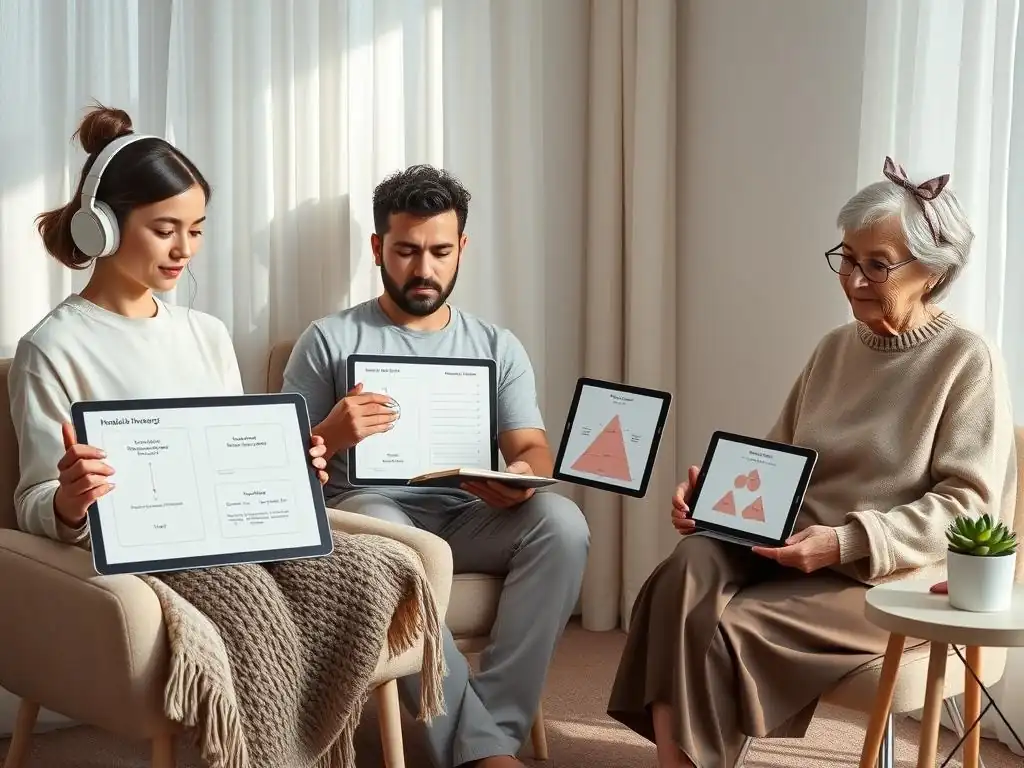
Cognitive Behavioral Therapy (CBT) is a widely recognized and effective approach for addressing various mental health challenges, from anxiety and depression to stress management and phobias. Traditionally delivered through face-to-face sessions with a therapist, CBT is now highly accessible through self-paced online programs. These digital tools offer flexibility, privacy, and often a more affordable path to learning valuable coping skills and understanding the connection between your thoughts, feelings, and behaviors. Engaging with CBT programs for mental health allows individuals to work through structured modules at their own speed, fitting therapy into their busy lives.
Choosing the right self-paced CBT program for mental health can feel overwhelming given the array of options available today. Each program has its unique strengths, target audience, and delivery method, whether it's a website, a mobile app, or an AI chatbot. The key is to find a program that resonates with your personal learning style and specific needs. Self-paced learning requires self-discipline, but it empowers you to revisit concepts, practice techniques repeatedly, and integrate them into your daily routine at a pace that feels comfortable and sustainable for your journey toward improved mental wellbeing.
- Finding the Right CBT Program for Mental Health: A Self-Paced Guide
- Top Self-Paced CBT Programs for Mental Health Improvement: Our Expert Picks
- Comparing Self-Paced CBT Programs: Which One is Right for You?
- Maximizing the Benefits of Your CBT Program: Tips and Strategies
- Investing in Your Mental Health: The Power of Self-Paced CBT Programs
-
Frequently Asked Questions
- What are CBT programs, and how can they benefit my mental health?
- Are self-paced CBT programs effective for everyone?
- What types of mental health challenges can CBT programs address?
- How do I choose the right self-paced CBT program for my needs?
- What are the key features to look for in a high-quality CBT program?
- Final Reflection: Cultivating Your Inner Resilience Through CBT
- Unlock Your Inner Calm: Start Your Self-Paced CBT Journey Today!
Finding the Right CBT Program for Mental Health: A Self-Paced Guide
Embarking on a journey with self-paced CBT programs for mental health begins with understanding what you hope to achieve. Are you looking to manage symptoms of a specific condition like social anxiety or mild depression? Or are you interested in general stress reduction and improving emotional regulation? Clarifying your goals will significantly narrow down the options and help you select a program whose curriculum and focus align with your objectives. Consider programs that are specifically designed for your target concern, as they often provide more tailored content and exercises.
Furthermore, evaluating the format and interactivity of a self-paced CBT program is crucial for sustained engagement. Some individuals thrive with highly structured modules and reading material, while others benefit more from interactive exercises, quizzes, or even conversational interfaces. Think about how you learn best and what kind of platform you would be most likely to use consistently. A program might be highly recommended, but if its format doesn't suit your preferences, you may struggle to complete it and reap the full benefits offered by CBT programs for mental health.
Top Self-Paced CBT Programs for Mental Health Improvement: Our Expert Picks
1. MoodGym: Comprehensive CBT for Mood Disorders
Key Features of MoodGym:
MoodGym stands out as an early pioneer in online CBT programs for mental health, specifically targeting depression and anxiety. Its foundation is built upon well-established cognitive behavioral principles, guiding users through modules that teach skills like identifying and challenging unhelpful thinking patterns, understanding the link between thoughts and feelings, and developing problem-solving strategies. The program's structure is highly educational, presenting information clearly before introducing practical exercises.
The platform incorporates interactive elements like questionnaires, mood charting tools, and cognitive restructuring exercises presented in a step-by-step manner. Users learn to recognize cognitive distortions, such as catastrophizing or black-and-white thinking, and are guided on how to replace them with more balanced and realistic perspectives. This focus on practical application ensures that the theoretical concepts of CBT are translated into actionable skills that users can apply to their daily lives.
Pricing and Value of MoodGym:
MoodGym is entirely free to use, a significant advantage that removes financial barriers to accessing evidence-based mental health tools. This accessibility makes it a valuable resource for individuals globally who might not have the means to afford traditional therapy or subscription-based programs. There are no hidden costs, premium tiers, or subscription requirements.
The value provided by MoodGym is substantial, offering a comprehensive introduction to CBT techniques at no cost. While it may not offer the personalized interaction of a therapist or the slick interface of newer apps, its robust curriculum is based on decades of research into the effectiveness of CBT for mood disorders. For someone seeking a thorough, educational, and completely free entry point into self-guided CBT, MoodGym represents excellent value.
Unique Benefits of MoodGym for Mental Wellbeing:
Its most striking unique benefit is its complete freeness and widespread accessibility. This ensures that anyone with internet access, regardless of their financial situation, can benefit from a structured CBT intervention. It has been used by hundreds of thousands of people worldwide since its inception, demonstrating its broad reach and utility as a public health resource.
Another key benefit is its gamified approach, which attempts to make the learning process more engaging than simply reading text. While perhaps basic by modern app standards, the use of quizzes, points, and progress tracking can help maintain user motivation through the modules. This approach is particularly beneficial for individuals who might find traditional self-help books or purely textual online resources less stimulating, making the journey through CBT programs for mental health more interactive.
2. Woebot: AI-Powered CBT Chatbot for Daily Support
Key Features of Woebot:
Woebot is an AI-powered chatbot designed to deliver CBT programs for mental health through conversational text interactions, primarily via a mobile app. It utilizes Natural Language Processing (NLP) to understand user input and respond with relevant therapeutic techniques, psychoeducation, and mood tracking prompts. The core experience feels like texting a supportive friend who is knowledgeable in CBT and mindfulness.
The app guides users through daily check-ins, helping them identify their current mood and the thoughts or events associated with it. Woebot introduces various CBT and mindfulness exercises, such as gratitude practice, thought challenging ("unsticking thinking"), and breathing exercises, often breaking them down into simple, manageable steps. The conversational format allows for a dynamic interaction where the AI can adapt slightly based on user responses, offering a personalized, albeit automated, experience.
Pricing and Value of Woebot:
Woebot operates on a subscription model after a free trial period. While the exact pricing can vary, it typically involves a monthly or annual fee. This subscription cost provides ongoing access to the AI chatbot, allowing for unlimited daily interactions and access to all available CBT and mindfulness tools within the app.
The value lies in its convenience and accessibility. For the cost of a subscription, users gain 24/7 access to immediate mental health support and a wide range of CBT techniques. This can be particularly valuable for individuals who need support outside of traditional therapy hours or prefer the anonymity and ease of interacting with an AI. The subscription covers all content and features, providing a comprehensive toolkit for regular self-guided practice.
Unique Benefits of Woebot for Mental Wellbeing:
Woebot's standout feature is its availability around the clock. Unlike human therapists, Woebot is available whenever a user needs to talk or practice a skill, offering instant support during moments of distress or when processing challenging situations. This constant availability can be incredibly reassuring for individuals experiencing anxiety or loneliness.
The conversational interface provides a low-pressure environment to explore thoughts and feelings. Users might feel more comfortable sharing openly with an AI than with a person initially. This unique format makes learning and applying CBT techniques feel less like a clinical process and more like a supportive conversation, potentially lowering the barrier to entry for some individuals seeking CBT programs for mental health.
3. CBT Thought Diary: Mobile App for Cognitive Restructuring
Key Features of CBT Thought Diary:
CBT Thought Diary is primarily a mobile application focused on the core CBT technique of cognitive restructuring, often referred to as thought challenging or disputing. The app provides a structured framework for users to record their negative thoughts, identify the associated emotions and physical sensations, and then systematically challenge the validity of those thoughts by examining evidence for and against them.
Beyond simple thought recording, the app guides users through identifying cognitive distortions present in their thoughts (e.g., 'all-or-nothing thinking', 'mind reading'). It then prompts them to generate alternative, more balanced thoughts based on a rational evaluation of the evidence. The app also includes features for tracking mood over time, allowing users to visualize patterns and see how challenging their thoughts impacts their emotional state.
Pricing and Value of CBT Thought Diary:
CBT Thought Diary uses a freemium model. A free version is available that offers core functionality for recording and challenging thoughts, which can be sufficient for many users starting out. This provides significant value by allowing free access to a fundamental CBT skill-building tool.
To unlock the full suite of features, including more advanced analysis, detailed statistics, and potentially a wider range of exercises or customization options, a paid subscription is required. The subscription cost provides enhanced tools for deeper self-reflection and tracking, offering additional value for users who want to delve further into their cognitive patterns and maximize the benefits of using CBT programs for mental health via this app.
Unique Benefits of CBT Thought Diary for Mental Wellbeing:
Its primary unique benefit is its focused, portable approach to cognitive restructuring. By making the process of recording and challenging thoughts readily available on a smartphone, users can practice this essential CBT skill in real-time, precisely when unhelpful thoughts occur. This immediacy is powerful for disrupting negative cycles.
The app's guided process for challenging thoughts is particularly helpful for beginners who may not know how to effectively dispute their negative self-talk. It breaks down the process into manageable steps, making a complex therapeutic technique accessible and practical for daily use. For individuals who find journaling helpful and want a structured digital tool for applying CBT to their thoughts, this app is highly beneficial.
Comparing Self-Paced CBT Programs: Which One is Right for You?
Choosing among the many self-paced CBT programs for mental health requires careful consideration of your individual circumstances and preferences. There isn't a single "best" program; the most effective one is the one you will actually use consistently and that addresses your specific needs. Taking the time to evaluate what you're looking for in terms of content, format, support level, and cost will help you make an informed decision and set yourself up for success in your mental wellness journey.
Think about the features that are most important to you. Do you need extensive educational content like MoodGym provides, or do you prefer the immediate, conversational support of an AI like Woebot? Is having a dedicated tool for thought tracking and challenging, like CBT Thought Diary, your priority? Reflecting on these aspects will guide you towards a program that not only teaches CBT principles but also fits seamlessly into your lifestyle and learning habits, ensuring you get the most out of your chosen CBT program for mental health.
Key Considerations When Choosing a CBT Program for Mental Health:
- Your Specific Needs: Identify the mental health challenges you want to address.
- Learning Style: Consider your preferred learning format (e.g., interactive exercises, AI chatbot, mobile app).
- Budget: Determine how much you are willing to spend on a CBT program.
- Time Commitment: Assess how much time you can dedicate to the program each week.
Selecting the right CBT program for mental health hinges on a clear understanding of your personal goals and how you learn best. If you are primarily dealing with symptoms of anxiety or depression, a program like MoodGym might be a good fit due to its structured, educational approach grounded in extensive research. If you need immediate, anytime support and find conversational interfaces helpful, Woebot could be more suitable. For those focused specifically on changing negative thought patterns through journaling and guided challenges, CBT Thought Diary offers specialized tools.
Beyond the therapeutic focus, practical considerations like cost and time commitment are vital. MoodGym's freeness makes it universally accessible, while Woebot and CBT Thought Diary offer different pricing models (subscription vs. freemium) that require evaluating your budget. Consider how much time you realistically have each day or week to dedicate to working through modules, practicing exercises, or interacting with the program. Some programs require more dedicated session time, while others are designed for short, frequent interactions.
Side-by-Side Comparison Table: Features, Pricing, and Benefits
| Feature / Program | MoodGym | Woebot | CBT Thought Diary |
|---|---|---|---|
| Primary Focus | Depression & Anxiety (Structured Modules) | General Mental Wellness (Conversational AI) | Cognitive Restructuring (Thought Tracking) |
| Format | Website | Mobile App (Chatbot) | Mobile App |
| Learning Style | Structured, Educational, Interactive | Conversational, Daily Interactions | Practice-Oriented, Journaling-Based |
| Key Tools | Modules, Quizzes, Mood Charting | AI Chatbot, Mood Tracking, Exercises | Thought Recording, Challenging, Mood Charts |
| Pricing Model | Free | Subscription (Free Trial) | Freemium (Free w/ Paid Subscription) |
| Accessibility | High (Free, Web-based) | Moderate (Subscription Required) | High (Free Version Available) |
| Availability | Anytime | 24/7 | Anytime |
| Unique Benefit | Completely Free & Comprehensive | Instant, 24/7 AI Support | Focused, Portable Thought Challenging |
This comparison table offers a quick overview to help you differentiate between these popular CBT programs for mental health. MoodGym provides a deep, educational dive into CBT principles through structured modules, ideal for those who prefer a traditional course-like format at no cost. Woebot offers a unique, conversational experience with an AI, providing immediate support and making CBT feel more like a daily check-in, though it requires a subscription. CBT Thought Diary is highly specialized in the core CBT skill of challenging thoughts, offering a practical mobile tool for real-time application, with a free tier available.
When reviewing this table, align each program's features and benefits with your personal requirements. If budget is a primary concern, MoodGym or the free tier of CBT Thought Diary are strong contenders. If you need constant access and prefer a conversational approach, Woebot might be worth the subscription cost. If you specifically want to master thought challenging, CBT Thought Diary is highly focused. Consider which combination of primary focus, format, learning style, and pricing best fits your path towards improved mental wellbeing using CBT programs for mental health.
Maximizing the Benefits of Your CBT Program: Tips and Strategies
Simply signing up for a self-paced CBT program for mental health is the first step; actively engaging with it is where the real progress happens. To truly integrate the principles and techniques into your life and experience lasting benefits, consistency and practice are key. Approach the program not just as information to consume, but as a set of skills to develop, much like learning a new instrument or sport. The more you practice, the more automatic and effective the techniques will become in managing your thoughts and feelings.
Establishing a routine for using your chosen program can significantly boost its effectiveness. Whether it's dedicating 15-20 minutes each morning to working through a module, using a thought diary app whenever a challenging thought arises, or checking in with an AI chatbot before bed, finding a consistent rhythm helps reinforce learning. Remember that progress isn't always linear; there will be good days and challenging days. Be patient and compassionate with yourself, and view setbacks as opportunities to practice the skills you are learning through CBT programs for mental health.
Integrating CBT Techniques into Your Daily Life:
- Practice CBT exercises regularly.
- Track your progress and identify areas for improvement.
- Seek support from friends, family, or a therapist.
Successfully integrating CBT techniques means making them a natural part of your daily routine. Start small by identifying one specific technique from your program, like challenging a negative thought or scheduling a pleasant activity, and commit to practicing it daily for a week. For example, if you're working on cognitive restructuring using a program like CBT Thought Diary, make it a habit to log at least one challenging thought each day. Consistent, even brief, practice is far more effective than infrequent, long sessions.
Tracking your progress provides valuable insights and motivation. Most CBT programs for mental health include some form of mood tracking or progress indicators. Pay attention to these; notice if your mood improves after practicing a technique, or if you're catching negative thoughts earlier in the process. Beyond the app, you might keep a simple journal to note when you successfully used a CBT skill and what the outcome was. Sharing your journey or challenges with trusted friends, family, or a therapist can also provide support, perspective, and accountability, reinforcing the skills learned in the self-paced program.
Maintaining Mental Wellbeing After Completing Your CBT Program:
- Continue practicing CBT techniques.
- Develop healthy coping mechanisms.
- Seek professional help if needed.
Completing a self-paced CBT program for mental health is a significant achievement, but it's important to view it as building a foundation rather than a final destination. Mental wellbeing is an ongoing process, and the skills learned through CBT are tools for lifelong use. Continue to integrate the techniques that were most helpful for you into your daily life. This might involve maintaining a thought diary, regularly practicing relaxation techniques, or continuing to schedule activities that bring you joy and a sense of accomplishment.
Diversifying your mental wellness toolkit beyond the specific program is also beneficial. Explore other healthy coping mechanisms like regular exercise, mindfulness meditation, maintaining a balanced diet, ensuring adequate sleep, and nurturing social connections. These lifestyle factors significantly impact mental health and complement the cognitive skills learned through CBT.
Remember that self-paced programs are excellent resources, but they are not a substitute for professional help when dealing with severe or complex mental health issues. If you find yourself struggling significantly after completing a program, or if new challenges arise, do not hesitate to reach out to a qualified mental health professional for support and guidance.
Investing in Your Mental Health: The Power of Self-Paced CBT Programs
Choosing to engage with self-paced CBT programs for mental health is a proactive and empowering step towards taking control of your emotional wellbeing. These programs offer a flexible, accessible, and often affordable way to learn evidence-based strategies for managing challenging thoughts, feelings, and behaviors. Whether you opt for a free comprehensive platform like MoodGym, the 24/7 support of an AI like Woebot, or a focused tool for cognitive restructuring like CBT Thought Diary, you are equipping yourself with valuable skills.
Ultimately, the power of these programs lies in your commitment to using them. By consistently practicing the techniques learned, integrating them into your daily life, and viewing mental wellness as an ongoing journey, you can build resilience and improve your overall quality of life. Investing your time and effort into a self-paced CBT program for mental health is an investment in yourself, offering a pathway to better understanding your mind and developing healthier ways of navigating life's challenges.
Frequently Asked Questions
What are CBT programs, and how can they benefit my mental health?
CBT programs are structured therapeutic interventions based on Cognitive Behavioral Therapy. They help individuals identify and change negative thought patterns and behaviors contributing to mental health challenges, ultimately improving overall well-being.
Are self-paced CBT programs effective for everyone?
While self-paced CBT programs can be incredibly beneficial, their effectiveness depends on individual needs and commitment to the program. Some individuals may require the guidance of a therapist for optimal results, especially with more complex conditions.
What types of mental health challenges can CBT programs address?
CBT programs are effective for a wide range of issues, including anxiety, depression, panic disorder, and social anxiety. They can also be helpful in managing stress and improving coping mechanisms.
How do I choose the right self-paced CBT program for my needs?
Consider your specific mental health concerns, the program's credentials and reviews, and whether its structure aligns with your learning style and preferences. Mind Care Guide offers resources to help you make an informed decision.
What are the key features to look for in a high-quality CBT program?
Look for programs that are evidence-based, structured with clear modules, and offer practical exercises and tools. Consider those that provide progress tracking and support resources, even in a self-paced format.
Final Reflection: Cultivating Your Inner Resilience Through CBT
The accessibility of effective self-paced CBT programs is revolutionizing mental healthcare, democratizing access to tools that were once the exclusive domain of expensive therapy. This shift empowers individuals to take control of their mental wellbeing, fostering a proactive approach to mental health that is both empowering and necessary in our increasingly demanding world. The sheer number of available programs, however, highlights the importance of careful selection and understanding of individual needs.
The exploration of various self-paced CBT programs in this article underscores the profound impact readily available mental health resources can have on individuals and communities. The ability to learn coping mechanisms and strategies at one's own pace, in the comfort of one's own home, is a game-changer. This resonates deeply with my own belief in the power of self-directed learning and the importance of destigmatizing mental health challenges. The mind is everything. What you think you become.
- Buddha. This ancient wisdom is powerfully reinforced by the modern application of CBT, demonstrating the enduring relevance of mental wellness practices.
Now, consider your own journey towards wellbeing. Which of the discussed programs resonates most with your needs and learning style? What small step can you take today to invest in your mental health? Perhaps it's exploring a free introductory module, setting aside time for mindful practice, or simply acknowledging the importance of prioritizing your mental wellbeing. Remember, the path to resilience is a personal one, and the tools are readily available. Embrace the opportunity to cultivate your inner strength and build a life filled with greater peace and fulfillment.
Unlock Your Inner Calm: Start Your Self-Paced CBT Journey Today!
Thanks for taking the time to explore the world of self-paced CBT programs with us! We hope this guide has empowered you with the knowledge to choose the right path towards improved mental wellbeing. Ready to take the next step?
- Begin your chosen program today: Don't wait another day to invest in your mental health. Start working through the modules and experience the positive changes firsthand.
- Share your experience: Let others know about your journey by sharing this article with friends or family who may benefit from these programs. Your story could inspire someone else to take a similar step.
- Explore additional resources: Dive deeper into the world of CBT by researching complementary techniques or mindfulness practices to further enhance your self-care routine.
What specific aspect of your chosen program are you most excited to begin working on, and how do you plan to incorporate it into your daily life?