
Early Asylums? Confinement and Care for the Mentally Ill in Medieval Institutions


Welcome to Mind Care Guide, a sanctuary for understanding and navigating the complexities of mental well-being. Ever wondered how our ancestors grappled with the challenges of mental health centuries ago? Prepare to be surprised as we delve into the fascinating, and often unsettling, world of Medieval mental health treatment methods. Discover the unexpected approaches, the glimmers of compassion, and the stark realities of care within early institutions. Are you ready to uncover the secrets of the past and gain a new perspective on our present? Let's begin.
Early Asylums: Confinement and Care for the Mentally Ill in Medieval Institutions
- Introduction: Understanding Medieval Approaches to Mental Health
- The Emergence of Institutions: Beyond Simple Confinement
- Examining Medieval Mental Health Treatment Methods
- Life Within Medieval Institutions: A Glimpse into Daily Routines
- Comparing and Contrasting: Medieval vs. Modern Asylums
- Challenging Misconceptions: Separating Fact from Fiction
- The Legacy of Medieval Institutions: Lessons for Today
- Conclusion: A More Comprehensive View of Medieval Mental Health
-
Frequently Asked Questions
- How were individuals with mental illness typically viewed in Medieval society?
- What were some of the common "treatment" methods employed in Medieval asylums?
- Did Medieval asylums focus on curing mental illness, or were they primarily for containment?
- What role did religious institutions play in the care of the mentally ill during the Medieval period?
- How did the understanding of mental illness in the Medieval period differ from modern psychiatric perspectives?
- Final Reflection: Echoes of the Past, Lessons for the Present
- Unlock the Mysteries of Medieval Mental Healthcare
Introduction: Understanding Medieval Approaches to Mental Health
The concept of mental illness and its treatment has undergone profound transformations throughout history. While modern society often views mental health through a lens of neuroscience, psychology, and therapeutic intervention, the medieval period operated within a vastly different framework of understanding. During the Middle Ages, roughly spanning from the 5th to the 15th centuries, perceptions of mental unwellness were heavily influenced by religious beliefs, humoral theories of medicine, and societal fears.
Rather than a purely medical condition as understood today, mental distress was often attributed to spiritual causes, imbalances within the body, or even demonic possession. This complex interplay of factors shaped the approaches taken towards individuals exhibiting symptoms of mental illness, leading to a variety of responses ranging from community care to isolation and institutionalization. Exploring these historical approaches provides valuable context for understanding the evolution of mental health treatment methods.
Medieval societies did not possess the specialized psychiatric hospitals we know today. Instead, care and confinement for the mentally ill were often integrated into existing social and religious structures. Monasteries, hospitals (which served a broader function than just medical care, often housing the poor, sick, and travelers), and even private homes became places where individuals struggling with mental health issues might find themselves.
The primary goals were often containment and control, driven by a mix of fear, misunderstanding, and a desire to protect both the individual and the community. However, within this context, various Medieval mental health treatment methods were employed, reflecting the prevailing beliefs about the causes of affliction. Understanding these early forms of care requires looking beyond modern definitions and appreciating the unique challenges and worldviews of the era.
The Emergence of Institutions: Beyond Simple Confinement
While not "asylums" in the modern sense, certain institutions in the medieval period began to serve a function of housing and managing individuals deemed unable to care for themselves or posing a perceived risk due to mental disturbance. These were often offshoots of hospitals or religious foundations. St. Mary of Bethlehem in London, later notoriously known as "Bedlam," was founded in 1247 as a priory and later began admitting patients with mental illness, becoming dedicated almost exclusively to their care by the 14th century.
This shift marked an early, albeit crude, form of specialized institutionalization. Such places were not solely about confinement; they represented an attempt, however rudimentary, to provide some form of structured environment and care, distinct from simply chaining individuals in dungeons or abandoning them.
These nascent institutions varied significantly in their nature and the quality of care provided. Some were extensions of monastic charity, offering basic shelter and sustenance alongside spiritual guidance. Others, like Bedlam, evolved into places primarily focused on housing the mentally ill, often under harsh conditions driven by limited resources and a lack of effective Medieval mental health treatment methods.
Records from the period are sparse and often biased, making it challenging to fully understand the daily reality within these walls. However, they suggest a move towards separating those with severe mental disturbances from the general population, laying the groundwork for later developments in institutional care, even if the initial focus was more on containment than therapeutic intervention.
Examining Medieval Mental Health Treatment Methods

The approaches to treating mental illness in the Middle Ages were a blend of medical theory (based on the four humors), religious practices, and folk remedies. There was no single, standardized method, and treatment often depended on the perceived cause of the illness and the resources available. Physicians, clergy, and local healers all played roles, sometimes in collaboration, sometimes in conflict, reflecting the diverse beliefs about mental affliction. The range of Medieval mental health treatment methods highlights the era's struggle to comprehend and alleviate suffering that manifested outside the realm of physical injury or easily identifiable disease.
Bloodletting and Purging: Common Medical Practices
Based on the prevalent humoral theory, which posited that health depended on the balance of four bodily fluids (blood, phlegm, yellow bile, and black bile), many physical and mental illnesses were attributed to an imbalance or excess of one or more humors. Mental disturbances, particularly those associated with melancholy (believed to be caused by an excess of black bile), were often treated by attempting to restore this balance.
Bloodletting, or phlebotomy, was a common procedure, involving the withdrawal of blood from veins, often in specific locations believed to correspond to affected parts of the body or humors. While precise figures on how frequently this was used specifically for mental illness are hard to come by, historical medical texts indicate it was a standard therapeutic tool for a wide range of ailments, including those affecting the mind.
Alongside bloodletting, purging methods were also extensively used as part of the Medieval mental health treatment methods. This involved administering laxatives, emetics (substances causing vomiting), or enemas to clear the body of perceived excess humors or toxins. Herbs like hellebore, scammony, or rhubarb were frequently prescribed.
The rationale was that by expelling bodily fluids, the humoral imbalance causing the mental distress could be corrected. For instance, melancholia might be treated with strong purges to expel black bile. While these practices lacked modern scientific basis and could be debilitating or even dangerous, they were considered legitimate medical interventions within the humoral framework of the time, reflecting a physical approach to conditions we now understand as primarily neurological or psychological.
Religious Rituals and Exorcism: Addressing Spiritual Causes
Given the deeply religious nature of medieval society, it was common to attribute mental illness, especially symptoms involving confusion, bizarre behavior, or apparent changes in personality, to spiritual causes. This included divine punishment, demonic possession, or the influence of evil spirits. Consequently, religious rituals formed a significant part of the Medieval mental health treatment methods. Prayer, fasting, pilgrimages to holy sites, and the use of relics were all employed as means of seeking divine intervention or expelling malevolent forces. Monasteries often housed individuals seeking spiritual solace and healing for various afflictions, including those of the mind.
Exorcism was a more dramatic form of religious intervention, specifically aimed at driving out demons believed to be inhabiting or influencing the afflicted individual. While not universally applied to all forms of mental illness, it was certainly a recognized practice, particularly when symptoms were interpreted as signs of possession, such as speaking in unknown tongues, exhibiting unusual strength, or expressing blasphemous thoughts.
Accounts from the period, such as those found in hagiographies (lives of saints), sometimes describe instances of saints performing exorcisms on individuals exhibiting symptoms we might now associate with severe mental illness or neurological conditions like epilepsy. While the effectiveness of these rituals is viewed differently through a modern lens, within the medieval worldview, they represented a primary and often hopeful method of combating what was perceived as a spiritual battle for the individual's soul and mind.
Life Within Medieval Institutions: A Glimpse into Daily Routines
Life within the emerging medieval institutions for the mentally ill was likely harsh and rudimentary by modern standards. These places were often overcrowded and lacked sanitation. The primary focus was on basic custodial care: providing shelter, food, and some degree of supervision. There were no structured therapies or activities designed to address the underlying mental conditions.
Daily routines would have centered around basic survival, prayer, and perhaps simple chores if the individual was capable. Confinement methods, such as chains or restraints, were sometimes used, particularly for individuals deemed violent or uncontrollable, reflecting the limited understanding and management techniques available. The lack of trained staff specifically in mental health care meant that attendants were often drawn from religious orders, general hospital staff, or simply hired guardians whose primary qualification was the ability to manage difficult individuals.
The conditions varied depending on the institution's funding, religious affiliation, and the general attitudes of its administrators. Some monastic hospitals might have offered a more compassionate environment rooted in Christian charity, while secular institutions or those struggling financially could be little more than places of warehousing and neglect. Accounts from visitors or inspectors (though rare) often painted a grim picture, highlighting the suffering endured by inhabitants.
While some individuals might have found basic safety and sustenance, the environment was generally not conducive to recovery or well-being as understood today. The limited historical records offer glimpses, but a comprehensive picture of daily life for the majority of individuals confined in these early institutions remains challenging to fully reconstruct.
Case Studies: Examining Individual Experiences
While detailed, personal accounts from individuals within medieval institutions for the mentally ill are exceedingly rare, historical records and literary works offer fragmented insights into potential experiences. One illustrative example, albeit not a specific, documented case study from within an institution, can be gleaned from the Canterbury Tales by Geoffrey Chaucer, written in the late 14th century.
The "Man of Law's Tale" features Constance, who suffers immense hardship and distress, exhibiting signs of profound psychological trauma and despair. While she is not institutionalized for this, her story reflects the medieval understanding of severe emotional and mental suffering as a consequence of external misfortune and divine will, often leading to withdrawal, muteness, and apparent detachment from reality – symptoms that might lead to confinement in some cases.
The narrative suggests that spiritual solace and divine intervention are the paths to her eventual recovery, aligning with the religious Medieval mental health treatment methods of the era.
Another perspective comes from historical chronicles and court records which occasionally mention individuals deemed "lunatic" or "idiot," terms used loosely to describe various forms of mental incapacity or disturbance. For instance, a record might note a noblewoman deemed mentally incompetent, leading to her estate being managed by others and her being kept in a form of supervised confinement within her own household or a relative's.
While not an institution per se, this highlights how individuals from different social strata experienced varying forms of restraint and care. Though specific patient diaries or clinical notes are absent, these historical fragments, when pieced together, suggest that experiences ranged from neglect and harsh conditions to attempts at compassionate, albeit rudimentary, care within the limited understanding and resources available, shaped profoundly by the prevailing Medieval mental health treatment methods.
Comparing and Contrasting: Medieval vs. Modern Asylums
Comparing medieval institutions for the mentally ill with modern psychiatric hospitals reveals stark differences but also some surprising continuities in underlying challenges. The most obvious contrast lies in the foundational understanding of mental illness. Medieval views were steeped in humoral theory and spiritual beliefs, leading to treatments like bloodletting, purging, prayer, and exorcism.
Modern psychiatry is based on neuroscience, genetics, psychology, and social factors, employing pharmacological treatments, psychotherapy, and structured rehabilitative programs. The physical environments also differ dramatically, with medieval institutions often being basic, unsanitary custodial facilities, while modern hospitals aim for therapeutic environments, though historical periods of overcrowded, neglectful "asylums" certainly existed in the intervening centuries.
However, some challenges persist across the ages. Both medieval and historical modern institutions have struggled with underfunding, overcrowding, and a lack of adequately trained staff relative to the need. Stigma surrounding mental illness has been a constant barrier, leading to isolation and marginalization in both eras.
The tension between confinement for societal safety and providing compassionate care for the individual is a theme that runs from the earliest institutions to contemporary debates about involuntary commitment. While the specific Medieval mental health treatment methods were vastly different, the fundamental human struggle to understand and care for those experiencing severe mental distress remains a shared challenge across historical periods.
Challenging Misconceptions: Separating Fact from Fiction
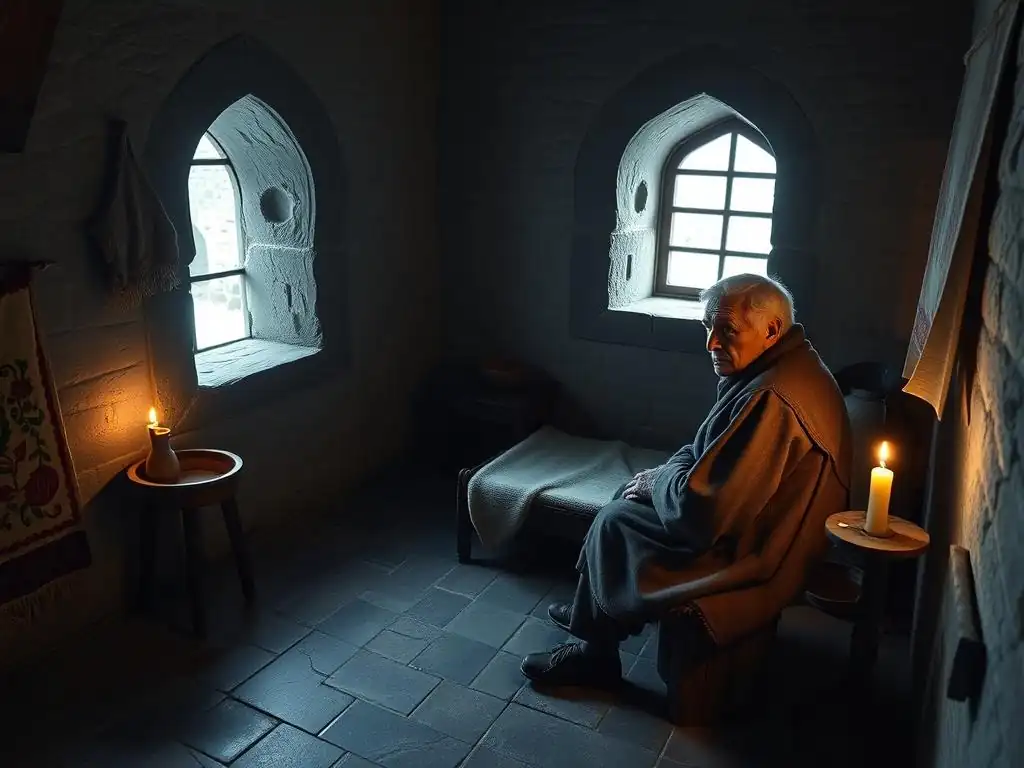
Popular culture often portrays medieval institutions for the mentally ill as uniformly barbaric dungeons where individuals were simply tortured or left to rot. While conditions were undoubtedly harsh by modern standards and understanding of mental illness was limited, this simplistic view overlooks the complexity and variety of approaches. Not all individuals exhibiting mental distress were confined, and not all confinement was purely punitive.
Religious foundations often provided care rooted in charity, offering shelter and spiritual support, even if their "treatments" were ineffective from a scientific standpoint. The term "asylum" itself originally carried connotations of a place of safety and refuge, a far cry from the later negative associations.
Furthermore, the historical record suggests a range of responses, from community support for individuals with milder conditions to various forms of care and control for those with more severe symptoms. While some practices, like restraints or harsh purges, were indeed cruel, they were often rooted in genuine, albeit misguided, attempts at healing based on the medical and spiritual knowledge of the time, rather than pure sadism. Challenging the myth of universal medieval cruelty allows for a more nuanced understanding of the historical context and the gradual, often difficult, evolution of Medieval mental health treatment methods and care practices.
The Legacy of Medieval Institutions: Lessons for Today
The early medieval institutions, despite their limitations, represent foundational steps in the societal response to mental illness. They highlight the long-standing need for dedicated spaces and systems to support individuals who cannot function independently due to mental health challenges.
Their evolution, particularly the shift towards more specialized (though initially custodial) centers, illustrates the gradual recognition that mental illness required a different kind of care than general physical ailments. The failures and harshness of many historical institutions, including those that developed from medieval roots, serve as crucial warnings about the dangers of neglecting humane treatment, adequate resources, and a scientific understanding of mental health.
The legacy also underscores the persistent influence of societal beliefs and stigma on care practices. The medieval intertwining of spiritual, moral, and physical explanations for mental illness resonates in modern debates about personal responsibility, weakness, or the role of lifestyle versus biological factors in mental health.
By examining these early approaches and Medieval mental health treatment methods, we gain perspective on the long journey towards compassionate, evidence-based care. It reminds us that our current understanding and practices are the result of centuries of trial and error, and that vigilance is required to ensure that care remains rooted in empathy, dignity, and scientific knowledge, avoiding the pitfalls of past misunderstandings and prejudices.
Conclusion: A More Comprehensive View of Medieval Mental Health
Examining early institutions and the approaches to mental illness in the medieval period reveals a complex landscape shaped by religious faith, humoral medicine, and societal pragmatism. While lacking the scientific understanding and therapeutic tools of modern psychiatry, medieval societies did attempt to address mental suffering through a variety of means, including confinement in nascent institutions and the application of Medieval mental health treatment methods such as bloodletting, purging, and religious rituals. These practices, while often harsh and ineffective by today's standards, were logical within the prevailing worldview of the time.
Understanding this history requires moving beyond simplistic portrayals and appreciating the context in which these early forms of care emerged. It highlights the long and often difficult evolution of societal responses to mental illness, from spiritual or humoral interpretations to modern biomedical and psychological models.
The legacy of these early institutions serves as a reminder of the progress made, the challenges that persist, and the ongoing need for compassionate, informed care for individuals experiencing mental health difficulties. By studying the past, including its limitations and misguided practices, we can better appreciate the present and strive for a future where mental health is understood and treated with dignity and effectiveness.
Frequently Asked Questions
How were individuals with mental illness typically viewed in Medieval society?
Individuals were often viewed through a lens of religious or supernatural explanation. Mental illness was sometimes attributed to demonic possession or divine punishment, influencing treatment approaches.
What were some of the common "treatment" methods employed in Medieval asylums?
While "treatment" might be a generous term, confinement and supervision were primary. Other methods included bloodletting, herbal remedies, and attempts at exorcism.
Did Medieval asylums focus on curing mental illness, or were they primarily for containment?
The primary focus was containment and control. The concept of curing mental illness in the modern sense was largely absent, with the goal being to manage disruptive behavior.
What role did religious institutions play in the care of the mentally ill during the Medieval period?
Religious institutions, particularly monasteries, often provided shelter and basic care. They sometimes offered a more compassionate approach compared to secular asylums, though still within a religious framework.
How did the understanding of mental illness in the Medieval period differ from modern psychiatric perspectives?
The understanding differed significantly. Medieval views were heavily influenced by religious beliefs and superstitions, lacking the scientific understanding of brain function and mental disorders that we have today.
Final Reflection: Echoes of the Past, Lessons for the Present
The medieval approach to mental illness, far from being a relic of a bygone era, continues to cast a long shadow on our understanding of mental health. The methods employed, often brutal and rooted in superstition, serve as a stark reminder of how far we've come—and how far we still need to go in achieving truly compassionate and effective care. The enduring legacy of these early asylums forces us to confront the persistent societal stigma surrounding mental illness.
The lasting impact of these historical practices is undeniable. The very concept of "madness" and its societal implications are deeply rooted in the historical narratives we've inherited. The history of madness is not simply a history of institutions; it is also a history of the ways in which societies have defined and dealt with difference.
This quote highlights the crucial connection between societal attitudes and the treatment of mental illness, a connection that remains relevant today as we grapple with issues of access to care, appropriate treatment, and the ongoing fight against stigma.
Consider the parallels between the medieval reliance on confinement and the modern struggles with over-reliance on medication or institutionalization. Reflect on the ways in which societal biases still influence our perceptions of mental illness. You, the reader, hold the power to challenge these biases and advocate for a more humane and understanding approach to mental health. Let the echoes of the past inspire you to build a future where compassion and evidence-based care are the cornerstones of mental health treatment for all.
Unlock the Mysteries of Medieval Mental Healthcare
Thanks for exploring the fascinating, often overlooked, history of mental health care in the medieval period! You’ve gained valuable insights into the complexities of confinement and care during this era. Now it's time to take that knowledge further.
- Dive deeper: Research a specific medieval institution or figure mentioned in the article. This could involve a simple online search, or even a visit to a local historical society or museum.
- Share your newfound knowledge: Discuss what surprised you most from the article with friends or family. Spark a conversation about the evolution of mental health understanding and treatment.
- Consider the ethical implications: Reflect on the differences between medieval approaches and modern mental healthcare practices. What lessons can we learn from the past?
What aspects of medieval mental health care resonate most with you, and why?