
Rewiring for Empathy: Can We Train Our Brains to Be More Compassionate?


Welcome to Mind Care Guide, a space dedicated to nurturing your mental well-being.
Ever wondered if you could actively cultivate more empathy and compassion? Dive into our exploration of " Training brain empathy compassionately" and discover the fascinating ways neuroscience is revealing how we can rewire our brains for a more connected and understanding world. Prepare to uncover practical strategies and gain a deeper insight into the neuroscience of mental health – your journey to greater compassion starts here.
Rewiring for Empathy: Can We Train Our Brains to Be More Compassionate?
- Understanding Empathy and Its Role in Mental Well-being
- Brain Plasticity: The Foundation for Training Brain Empathy
- Training Brain Empathy Compassionately: Techniques and Strategies
- The Science Behind Empathy Training: Research and Evidence
- Challenges and Considerations in Empathy Training
- Integrating Empathy Training into Daily Life
- Resources for Cultivating Empathy and Compassion
-
Frequently Asked Questions
- How does "Rewiring for Empathy" relate to mental well-being?
- What does it mean to "train brain empathy compassionately"?
- What are some benefits of increased empathy and compassion, according to "Mind Care Guide"?
- What specific resources does "Mind Care Guide" offer for developing empathy?
- Is it truly possible to "rewire" the brain for greater compassion?
- Final Reflection: The Enduring Power of a Compassionate Mind
- Unlock Your Empathetic Heart: Start Cultivating Compassion Today!
Understanding Empathy and Its Role in Mental Well-being
Defining Empathy: Cognitive and Emotional Components
Empathy, a cornerstone of human connection, is not a monolithic concept but rather a complex construct comprising distinct cognitive and emotional components. Cognitive empathy, sometimes referred to as perspective-taking, is the intellectual ability to understand another person's feelings, thoughts, and intentions from their point of view. It's about putting yourself in someone else's shoes mentally, figuring out what they are thinking or feeling based on cues, but without necessarily experiencing the same emotion yourself. This aspect is crucial for effective communication and navigating social situations, allowing us to predict behavior and respond appropriately.
Emotional empathy, on the other hand, involves feeling with another person. It's the capacity to share or be affected by another person's emotional state. This can manifest in different ways, from feeling a pang of sadness when seeing someone cry (empathic resonance) to feeling distressed because someone else is in pain (empathic concern). While cognitive empathy is more about understanding, emotional empathy is about connecting on a feeling level. Both components are vital for building strong relationships and fostering a sense of community, and both are areas where training brain empathy compassionately can have a significant impact.
The Neuroscience of Empathy: Brain Regions Involved
The capacity for empathy is rooted in a distributed network of brain regions, highlighting its complexity. Key areas involved include the anterior insula and anterior cingulate cortex (ACC), which are particularly active during emotional empathy, especially when witnessing or feeling pain or distress. These regions are thought to be involved in processing subjective feeling states and integrating bodily sensations with emotions, allowing us to resonate with others' experiences.
Beyond emotional resonance, cognitive empathy relies heavily on regions like the medial prefrontal cortex (mPFC), temporo-parietal junction (TPJ), and precuneus. The mPFC is involved in thinking about others' mental states, while the TPJ is crucial for distinguishing between one's own perspective and the perspective of another.
The precuneus also plays a role in self-referential processing and integrating information from different brain regions. Research using fMRI (functional magnetic resonance imaging) has shown increased activity in these areas when individuals are asked to consider others' viewpoints, underscoring their importance in the cognitive aspects of empathy and the potential targets for training brain empathy compassionately.
Why Empathy Matters: Benefits for Mental Health and Relationships
Empathy is not just a desirable trait; it's a fundamental element for healthy individual mental well-being and robust interpersonal relationships. For the individual, higher levels of empathy are associated with lower levels of stress, anxiety, and depression. Understanding and connecting with others can reduce feelings of isolation and increase a sense of belonging. Furthermore, practicing empathy can lead to more fulfilling social interactions, which are known protective factors against various mental health challenges. It allows us to navigate conflicts more constructively and respond to others' needs effectively.
In relationships, empathy acts as social glue. It enables deeper connection, trust, and mutual understanding. When we feel understood and validated by others, our relationships become stronger and more resilient. Similarly, being able to understand and respond empathetically to the needs of partners, family, friends, and colleagues fosters a supportive environment. This positive feedback loop – empathy leading to better relationships, which in turn supports mental health – illustrates why nurturing this capacity through training brain empathy compassionately is so valuable.
Brain Plasticity: The Foundation for Training Brain Empathy
What is Brain Plasticity and How Does it Work?
Brain plasticity, also known as neuroplasticity, refers to the brain's remarkable ability to reorganize itself throughout life. This isn't just about learning new facts; it's about the physical structure and functional organization of the brain changing in response to experience, learning, and even injury. At a fundamental level, neuroplasticity involves changes at the synaptic level – the connections between neurons. When we engage in new activities or learn new skills, the synaptic connections involved become stronger and more numerous. Conversely, connections that are used less frequently can weaken or be eliminated, a process sometimes called "synaptic pruning."
Beyond changes in synaptic strength, neuroplasticity also involves the formation of new neurons (neurogenesis, primarily in certain areas like the hippocampus), the reorganization of neural pathways, and changes in the size and structure of specific brain regions. This dynamic adaptability means that our brains are not fixed entities determined solely by genetics or early development. Instead, they are constantly being shaped by our environment, our behaviors, and even our thoughts. This inherent flexibility provides the biological basis for learning, memory, and the potential for recovery from brain injury, as well as the capacity for training brain empathy compassionately.
The Brain's Capacity for Change: Neuroplasticity and Empathy
The principles of neuroplasticity directly apply to our social and emotional capacities, including empathy. Just as practicing a musical instrument or learning a new language can alter the structure and function of brain regions associated with those skills, engaging in activities that cultivate empathy can reshape the brain's empathy network. This means that empathy is not necessarily a fixed trait we are born with; it is a skill that can be developed and strengthened over time through conscious effort and practice.
Research provides evidence for this. Studies have shown that engaging in certain types of mental training, such as mindfulness and compassion meditation, can lead to measurable changes in brain areas associated with empathy and emotional regulation, including increases in gray matter density in regions like the insula and ACC. These findings support the idea that the brain's plasticity allows us to intentionally enhance our empathic responses and underscores the potential effectiveness of training brain empathy compassionately as a means of personal growth and improved social interaction.
The Role of Neuroplasticity in Developing Compassionate Behaviors
Developing compassionate behaviors is closely linked to neuroplasticity, particularly through the strengthening of neural pathways associated with empathy and prosocial actions. Compassion involves not just understanding or sharing another's suffering (empathy) but also having a desire to alleviate that suffering and taking action to do so. This active component engages brain circuits related to reward, motivation, and caregiving, such as the ventral striatum and specific areas within the prefrontal cortex.
When individuals repeatedly engage in compassionate thoughts, feelings, or actions – whether through formal training like compassion meditation or through daily acts of kindness – they are actively exercising and reinforcing these neural pathways. This consistent practice, leveraging the brain's neuroplastic capacity, can lead to more automatic and effortless compassionate responses over time. Essentially, training brain empathy compassionately helps to build a more robust neural infrastructure for both understanding others' states and being motivated to help, making compassionate behavior a more ingrained part of one's character.
Training Brain Empathy Compassionately: Techniques and Strategies

Mindfulness Meditation for Enhanced Empathy
Mindfulness meditation is a practice that involves paying attention to the present moment without judgment. While not directly focused on others, it lays crucial groundwork for empathy by enhancing self-awareness and emotional regulation, which are prerequisites for understanding and responding to others' emotions. By becoming more attuned to our own internal states – our thoughts, feelings, and bodily sensations – we build a better foundation for recognizing and interpreting these same cues in others.
Regular mindfulness practice can increase activity and structure in brain regions like the insula, which is involved in interoception (awareness of internal bodily states) and emotional awareness. A study involving participants who underwent an 8-week mindfulness program reported a significant increase in self-reported empathy scores compared to a control group. This suggests that by cultivating a clearer, more stable awareness of one's own emotional landscape, individuals become better equipped to perceive and understand the emotional landscapes of those around them, a key step in training brain empathy compassionately.
How Mindfulness Cultivates Emotional Awareness
Mindfulness cultivates emotional awareness by encouraging us to observe our emotions as they arise, without immediately reacting or getting swept away by them. Through practice, we learn to identify emotions more accurately, understand their triggers, and recognize the physical sensations associated with them. For example, someone practicing mindfulness might notice a tightening in their chest when they feel anxious or a warmth in their face when they feel embarrassed.
This enhanced ability to recognize and label our own emotions translates directly to a better ability to recognize and understand emotions in others. If you can clearly identify the subtle physical and mental cues of your own frustration, you are more likely to pick up on similar cues in a colleague or family member. This improved emotional literacy, fostered by consistent mindfulness practice, is a fundamental component in the process of training brain empathy compassionately, making us more sensitive and responsive to the emotional world of others.
Practical Mindfulness Exercises for Empathy Development
- Body Scan Meditation: Lie down and systematically bring your attention to different parts of your body, noticing any sensations without judgment. This builds awareness of physical states, which are often linked to emotional states.
- Mindful Breathing: Simply focus on the sensation of your breath entering and leaving your body. When your mind wanders (as it will), gently bring it back. This trains attention control, essential for staying present when interacting with others.
- Mindful Observation: Choose an everyday object or a natural scene and observe it with full attention, noticing details you might usually miss. This practice hones your ability to pay close attention to nuances, a skill transferable to observing others' non-verbal cues.
- Mindful Walking: Pay attention to the sensations of walking – the feeling of your feet hitting the ground, the movement of your legs, the swing of your arms. This grounds you in the present moment.
These exercises, practiced consistently for even just 10-15 minutes daily, can gradually sharpen your ability to notice subtle cues, both within yourself and in others, thereby supporting the goal of training brain empathy compassionately.
Compassion Meditation: A Powerful Tool for Rewiring the Brain
Compassion meditation, particularly Loving-Kindness Meditation (LKM), is a practice specifically designed to cultivate feelings of warmth, care, and compassion towards oneself and others. Unlike mindfulness, which focuses on present moment awareness, compassion meditation actively directs intentions and feelings towards specific targets, starting with oneself, then loved ones, neutral people, difficult people, and finally, all beings.
Research on compassion meditation has shown remarkable effects on the brain. Studies indicate that regular LKM practice can increase activity in brain regions associated with empathy, emotional regulation, and positive emotions, such as the anterior insula, temporal parietal junction, and even areas linked to the brain's reward system. For example, a study at Emory University found that participants who completed compassion training showed increased neural responses to images of suffering in brain areas related to empathy. This targeted practice appears to directly strengthen the neural circuits underlying compassionate responses, making it a potent method for training brain empathy compassionately.
Understanding Compassion Meditation and its Benefits
Compassion meditation involves systematically cultivating feelings of kindness, warmth, and care. It typically follows a structured approach, directing these positive intentions progressively outwards. The core idea is that by intentionally generating feelings of compassion, we can strengthen the neural pathways associated with these feelings, making them more accessible in daily life.
The benefits extend beyond increased feelings of warmth. Regular practice has been linked to reduced stress, anxiety, and depression, likely due to its effects on emotional regulation circuits. It can also improve social connection, decrease feelings of loneliness, and even enhance physical health markers like immune function. By deliberately focusing on goodwill towards others, compassion meditation counteracts tendencies towards judgment or indifference, actively rewiring the brain towards a more open and caring disposition. This makes it a direct and powerful strategy for training brain empathy compassionately at its core.
Guided Compassion Meditation Techniques for Daily Practice
A common structure for guided compassion meditation, often called Loving-Kindness Meditation (LKM), involves repeating specific phrases while focusing on different groups:
- Towards oneself: Repeat phrases like "May I be happy. May I be healthy. May I be safe. May I be free from suffering." Focus on truly wishing these things for yourself.
- Towards a loved one: Bring to mind someone you love easily. Repeat the same or similar phrases, directing these wishes towards them: "May you be happy. May you be healthy. May you be safe. May you be free from suffering."
- Towards a neutral person: Think of someone you don't have strong feelings about, like an acquaintance or someone you see regularly but don't know well. Direct the phrases towards them. This step helps expand your circle of concern.
- Towards a difficult person: Bring to mind someone you find challenging. This can be difficult, so start small. Direct the phrases towards them, acknowledging the difficulty but making the intention. This is a powerful step in overcoming aversion.
- Towards all beings: Extend the wishes outwards to all living beings, everywhere. "May all beings be happy. May all beings be healthy. May all beings be safe. May all beings be free from suffering."
Practicing this sequence daily for 10-20 minutes can help build the "muscle" of compassion, actively contributing to training brain empathy compassionately by strengthening neural connections related to positive social emotions.
Perspective-Taking Exercises: Stepping into Others' Shoes
Perspective-taking is a cognitive skill that involves actively trying to understand a situation or experience from another person's point of view. It requires suspending your own immediate perspective and consciously considering what someone else might be thinking, feeling, or experiencing. This skill is a crucial component of cognitive empathy and is highly trainable.
Engaging in perspective-taking exercises can enhance activity in brain regions like the temporo-parietal junction (TPJ), which is critical for distinguishing self from other and mentally simulating another's viewpoint. Research, including studies using social cognition training programs, indicates that deliberate practice in perspective-taking can improve performance on tasks requiring this skill and lead to measurable changes in brain activity patterns associated with social cognition. This demonstrates that actively working on seeing the world through another's eyes is a direct method for training brain empathy compassionately, specifically targeting the cognitive dimension.
The Importance of Perspective-Taking for Empathy
Perspective-taking is vital because it moves empathy beyond mere emotional resonance. While feeling with someone is powerful, truly understanding their situation requires grasping their unique context, beliefs, and motivations. Without perspective-taking, emotional empathy can sometimes be overwhelming or lead to projection, where we assume others feel exactly as we would in their situation, which may not be accurate.
By actively practicing perspective-taking, we develop a more nuanced and accurate understanding of others. This allows for more effective communication, conflict resolution, and problem-solving. It helps us tailor our support or response to what the other person actually needs, rather than what we think they need. This cognitive effort is a trainable skill that significantly enhances our overall empathic capacity, making it an essential element in the process of training brain empathy compassionately.
Practical Exercises to Improve Perspective-Taking Skills
- "Walking in Their Shoes" Scenario: When encountering someone with a different viewpoint or who is acting in a way you don't understand, consciously pause. Ask yourself: What might their background be? What experiences might have shaped their perspective? What pressures or challenges might they be facing that I'm unaware of?
- Role-Playing: Practice role-playing different scenarios with a friend or therapist, taking on the perspective of someone you find challenging or someone from a different background. This can help illuminate alternative viewpoints.
- Journaling from Another's View: Write a journal entry describing a shared event or interaction, but write it entirely from the perspective of another person involved. Try to capture their likely thoughts, feelings, and interpretations.
- Active Inquiry: In conversations, instead of assuming you understand, practice asking open-ended questions to truly understand the other person's reasoning or feelings. Use phrases like, "Can you tell me more about how you see this?" or "What was that experience like for you?"
Consistent practice of these exercises helps strengthen the cognitive muscles required for perspective-taking, contributing significantly to training brain empathy compassionately by building the capacity to understand the world from multiple viewpoints.
Active Listening: Fostering Connection and Understanding
Active listening is a communication technique that goes beyond simply hearing words. It involves fully concentrating on, understanding, responding to, and remembering what is being said, both verbally and non-verbally. It's about being present with the speaker and demonstrating genuine interest in their message and emotional state.
Engaging in active listening can strengthen the neural pathways involved in social cognition and empathy. By paying close attention to subtle cues – tone of voice, body language, facial expressions – we activate brain regions associated with processing social information and emotional signals, such as the superior temporal sulcus and parts of the prefrontal cortex. This focused attention and processing of another person's communication is a practical, real-time method for training brain empathy compassionately during interpersonal interactions.
The Art of Active Listening: Beyond Hearing
Hearing is a passive process; active listening is a dynamic, intentional engagement. It requires setting aside distractions – both external (like your phone) and internal (like formulating your response while the other person is still talking). The goal is to truly absorb the speaker's message, including the underlying emotions and unspoken context.
Key components of active listening include maintaining eye contact (where culturally appropriate), using encouraging nods and facial expressions, and offering verbal affirmations like "I see" or "Go on." It also involves summarizing or paraphrasing what the speaker has said to confirm your understanding ("So, if I understand correctly, you're feeling frustrated because..."). This level of focused attention and validation not only helps you understand the other person better but also makes them feel heard and valued, deepening the connection.
Active Listening Techniques to Enhance Empathy
- Pay Full Attention: Put away distractions. Make eye contact. Give the speaker your undivided attention.
- Listen for Understanding, Not to Reply: Focus on grasping the speaker's message and feelings, rather than planning your rebuttal or advice.
- Use Non-Verbal Cues: Nod, smile, and use other appropriate facial expressions to show you are engaged.
- Provide Verbal Affirmations: Use small verbal cues like "Uh-huh," "Yes," or "I understand."
- Summarize and Paraphrase: Periodically restate what you've heard in your own words to check for understanding. "It sounds like you're saying..." or "So, your main concern is..."
- Ask Open-Ended Questions: Encourage the speaker to elaborate by asking questions that can't be answered with a simple yes or no. "How did that make you feel?" or "What happened next?"
- Reflect Feelings: Try to identify and name the emotions you sense in the speaker. "It sounds like you were really hurt by that," or "That must have been frustrating."
- Avoid Interrupting: Allow the speaker to finish their thoughts before you respond.
Mastering these techniques in daily conversations is a practical and effective way of training brain empathy compassionately, improving both your understanding of others and the quality of your relationships.
Empathy-Building Through Storytelling and Literature
Narratives, whether in books, movies, or personal stories, offer a powerful pathway to empathy. When we engage with a compelling story, we often become deeply invested in the characters' experiences, challenges, and emotions. This immersion allows us to mentally simulate their reality and feel with them, activating empathic circuits in the brain.
Neuroscience research supports the idea that reading fiction can enhance empathy. Studies have shown that reading narrative fiction can increase activity in brain regions associated with theory of mind (understanding others' mental states) and perspective-taking, specifically areas like the medial prefrontal cortex and the temporo-parietal junction. By stepping into the shoes of diverse characters and experiencing the world through their eyes, even hypothetically, we expand our capacity to understand perspectives different from our own. This makes engaging with stories a valuable, albeit indirect, method for training brain empathy compassionately by expanding our understanding of human experience.
The Power of Narrative to Cultivate Empathy
Stories provide a safe space to explore complex human emotions, motivations, and social dynamics. They allow us to witness events and situations from perspectives we might never encounter in our own lives. By identifying with characters, even those vastly different from us, we practice adopting alternative viewpoints and feeling emotions we might not otherwise experience.
This process of narrative transportation – becoming absorbed in a story – can temporarily blur the lines between self and other, making us more receptive to the characters' feelings and thoughts. This emotional and cognitive engagement with fictional worlds translates into enhanced social understanding and empathic ability in the real world. The more diverse the stories we consume, the broader our understanding of the human condition becomes, significantly aiding in the ongoing process of training brain empathy compassionately.
Using Stories to Understand Diverse Perspectives
To intentionally use storytelling for empathy development, seek out narratives that feature characters from backgrounds, cultures, or experiences different from your own. Read books, watch films, or listen to podcasts that tell the stories of people with different beliefs, facing different challenges, or living in different circumstances.
- Read Diverse Fiction: Choose novels by authors from varied cultural backgrounds or featuring protagonists with different life experiences (e.g., different socioeconomic statuses, abilities, sexual orientations, ethnicities).
- Explore Memoirs and Biographies: Reading non-fiction accounts of real people's lives offers direct insight into their struggles, triumphs, and perspectives.
- Listen to Personal Storytelling Podcasts: Podcasts like "The Moth" or "StoryCorps" share intimate personal narratives that can foster deep connection and understanding.
- Discuss Stories with Others: Talk about the characters and themes with friends or in book clubs. Discussing different interpretations can further enhance perspective-taking skills.
By actively engaging with a wide range of stories, we challenge our assumptions, broaden our understanding of the world, and cultivate a more profound sense of connection to the diverse tapestry of human experience, thereby effectively contributing to training brain empathy compassionately.
The Science Behind Empathy Training: Research and Evidence
Studies on the Effectiveness of Empathy-Enhancing Interventions
Numerous studies across psychology and neuroscience have investigated whether empathy can be enhanced through targeted interventions. Research consistently suggests that it can. Meta-analyses, which combine findings from many studies, indicate that various empathy-training programs, including those based on mindfulness, compassion meditation, and perspective-taking, yield moderate but significant improvements in self-reported empathy and behavioral measures. For instance, a meta-analysis of 18 studies on compassion meditation found significant increases in self-compassion, compassion for others, and empathy.
Specific training programs, such as the Compassion Cultivation Training (CCT) developed at Stanford University, have demonstrated measurable effects. Participants in CCT programs have shown increased activity in brain regions associated with empathy and prosocial behavior, alongside reduced stress responses. While results can vary depending on the duration and type of training, the cumulative evidence strongly supports the idea that deliberate practice can indeed enhance empathic capacity, providing a scientific basis for the methods used in training brain empathy compassionately.
How Empathy Training Changes Brain Activity and Structure
Neuroimaging studies provide compelling evidence for how empathy training physically alters the brain. Functional MRI (fMRI) scans taken before and after training show changes in brain activity patterns. For example, after compassion meditation practice, individuals often exhibit stronger neural responses in areas like the anterior insula and cingulate cortex when exposed to images or descriptions of suffering, suggesting increased emotional resonance. They may also show increased connectivity between regions involved in emotion processing and those involved in regulation, indicating improved ability to manage empathic distress.
Structural MRI studies have revealed changes in gray matter density. Long-term meditators, particularly those practicing compassion or mindfulness, have been found to have increased gray matter in areas like the insula, hippocampus (involved in learning and memory, including emotional memory), and parts of the prefrontal cortex (involved in attention and emotional regulation). While structural changes usually require more extended practice than functional changes, these findings underscore the brain's remarkable plasticity and its capacity to be physically reshaped through dedicated practice, confirming that training brain empathy compassionately can lead to tangible neural changes.
Long-Term Effects of Training Brain Empathy Compassionately
The benefits of training brain empathy compassionately appear to extend beyond the immediate training period, suggesting lasting changes in both brain and behavior. Follow-up studies of participants in empathy and compassion training programs indicate that self-reported increases in empathy and compassion can be maintained months or even years after the formal training ends, particularly if individuals continue a regular practice.
Furthermore, sustained practice is associated with more pronounced and enduring neural changes. Individuals with years of meditation experience often show distinct patterns of brain activity and structure compared to novices, including thicker cortex in certain areas and altered resting-state connectivity in empathy-related networks. These findings suggest that training brain empathy compassionately is not just a temporary fix but a path towards cultivating a more permanently empathic and compassionate way of being, embedded in the brain's structure and function.
Challenges and Considerations in Empathy Training
Potential Pitfalls of Forced Empathy
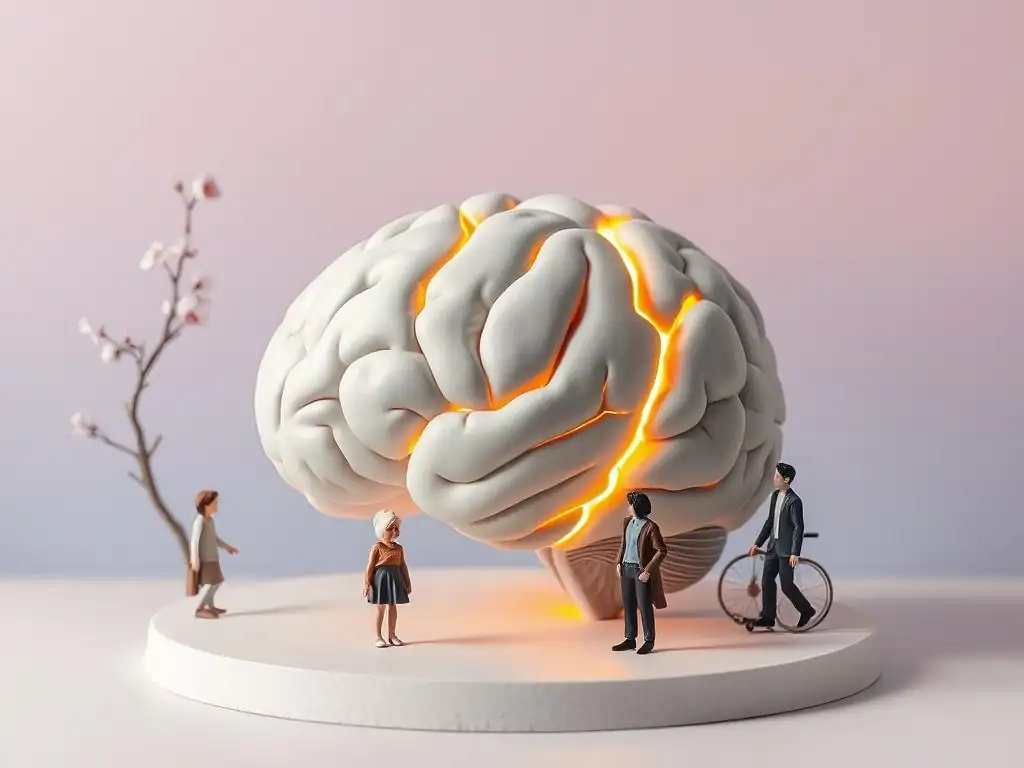
While training brain empathy compassionately offers significant benefits, it's important to acknowledge potential pitfalls, particularly the concept of "forced empathy." Trying to force yourself to feel or express empathy when it's not genuine can feel inauthentic and be emotionally draining. It can lead to superficial interactions rather than true connection. Furthermore, in certain contexts, attempting to feel another's intense pain without adequate emotional regulation skills can be overwhelming and detrimental to one's own well-being.
It's crucial to approach empathy training with a spirit of gentle exploration and practice, rather than demanding immediate, profound emotional shifts. The goal is to cultivate the capacity for empathy, which includes both understanding and feeling, but this capacity is best developed gradually and authentically. Recognizing that empathy is not always appropriate or possible in every situation is also important; sometimes, simple kindness or respect is the more suitable response. Avoiding the pressure of forced emotional resonance is key to sustainable and healthy development when training brain empathy compassionately.
Maintaining Empathy: Preventing Compassion Fatigue
A significant challenge for individuals in caring professions or those who are highly empathic is compassion fatigue. This is a state of emotional and physical exhaustion that can result from the chronic use of empathy, particularly when exposed to the suffering of others without adequate self-care or support. Symptoms can include burnout, reduced empathy, cynicism, and withdrawal.
Preventing compassion fatigue requires intentional strategies. These include practicing self-compassion (extending the same kindness and understanding to oneself that one offers to others), maintaining clear boundaries, ensuring adequate rest and self-care, and seeking support from peers or supervisors. Shifting the focus from empathic resonance (feeling the other's pain) to empathic concern (desiring to alleviate the pain while maintaining emotional balance) can also be helpful. Integrating self-care into the process of training brain empathy compassionately is not selfish; it's essential for long-term effectiveness and well-being.
Individual Differences in Empathy Capacity and Training
It's important to recognize that individuals vary in their baseline levels of empathy, influenced by a complex interplay of genetics, upbringing, personality, and life experiences. Some people may naturally find empathy easier or more challenging than others. Consequently, the path and pace of training brain empathy compassionately will differ for each person.
Factors such as past trauma, certain neurological conditions, or personality traits (like high levels of narcissism or psychopathy) can significantly impact empathic capacity and the effectiveness of training. While research suggests that empathy is trainable for most people, the degree of change and the specific techniques that are most effective may vary. Acknowledging these individual differences fosters a more patient, personalized, and compassionate approach to empathy development, ensuring that training is supportive rather than frustrating.
Integrating Empathy Training into Daily Life
Building Empathy into Relationships and Interactions
Integrating empathy training into daily life transforms it from a formal practice into a way of being. In personal relationships, this means actively listening to loved ones, validating their feelings even when you don't agree with their perspective, and making a conscious effort to understand their experiences. It involves being present during conversations, noticing non-verbal cues, and responding with care and understanding.
- Practice Active Listening: In every conversation, make a deliberate effort to listen fully before responding.
- Seek to Understand Before Being Understood: When disagreements arise, prioritize understanding the other person's viewpoint before presenting your own.
- Validate Feelings: Even if you can't fix a problem, acknowledge and validate the other person's emotions ("It makes sense that you feel frustrated").
- Regularly Check In: Ask others how they are genuinely feeling and be prepared to listen to the answer.
These simple, consistent efforts to apply the principles learned while training brain empathy compassionately can profoundly improve the quality and depth of personal connections.
Using Empathy in Professional Settings
Empathy is increasingly recognized as a critical skill in the workplace, impacting leadership effectiveness, team collaboration, customer relations, and overall organizational culture. Applying empathy in professional settings involves understanding the perspectives and challenges of colleagues, clients, and stakeholders.
For example, a manager practicing empathy might take the time to understand the personal challenges affecting an employee's performance rather than immediately resorting to disciplinary action. A salesperson might focus on truly understanding a client's needs and pain points rather than just pushing a product. In healthcare, empathy is essential for building trust with patients and providing compassionate care. Integrating principles from training brain empathy compassionately into professional interactions leads to better communication, stronger working relationships, and a more positive and productive environment.
The Future of Empathy Training: Technology and Innovation
The field of training brain empathy compassionately is evolving, with technology playing an increasingly significant role. Virtual reality (VR) is being explored as a powerful tool for empathy induction, allowing users to experience scenarios from another person's point of view, such as living with a disability or experiencing discrimination. Studies using VR empathy experiences have shown promising results in increasing participants' understanding and emotional connection to the simulated perspective.
Mobile apps are also making mindfulness, compassion meditation, and perspective-taking exercises more accessible to a wider audience. Biofeedback and neurofeedback technologies might offer personalized approaches to empathy training by providing real-time data on physiological or neural responses related to emotional processing. As our understanding of the brain grows and technology advances, the tools and methods available for training brain empathy compassionately are likely to become even more sophisticated and widely available, offering new avenues for cultivating this vital human capacity.
Resources for Cultivating Empathy and Compassion
- Article on "Introduction to Mindfulness: How to Get Started"
- Article on "The Benefits of Daily Meditation Practice"
- Article on "Mindfulness for Stress Reduction"
- Article on "Exploring Different Meditation Techniques"
Resources on Building Healthy Relationships
- Article on "Effective Communication Skills for Stronger Connections"
- Article on "Setting Healthy Boundaries in Relationships"
- Article on "Resolving Conflict Constructively"
- Article on "The Importance of Trust and Vulnerability"
Support Groups Focused on Compassion and Empathy
- Information on local or online groups practicing Loving-Kindness Meditation.
- Resources for Compassion Cultivation Training (CCT) programs.
- Groups focused on non-violent communication (NVC), which emphasizes empathy.
- Support networks for caregivers dealing with compassion fatigue.
Frequently Asked Questions
How does "Rewiring for Empathy" relate to mental well-being?
This article focuses on training brain empathy compassionately, a key aspect of improving mental well-being by fostering stronger connections and understanding with others. It offers insights into how cultivating empathy can lead to a more fulfilling and balanced life.
What does it mean to "train brain empathy compassionately"?
It refers to the process of actively learning and practicing techniques to enhance empathy and compassion. This involves conscious efforts to understand others' perspectives and respond with kindness and understanding, ultimately rewiring neural pathways.
What are some benefits of increased empathy and compassion, according to "Mind Care Guide"?
Increased empathy and compassion can lead to improved relationships, reduced stress, and a greater sense of purpose. It fosters a more supportive and understanding environment, contributing to overall mental health and resilience.
What specific resources does "Mind Care Guide" offer for developing empathy?
While the article itself provides guidance, "Mind Care Guide" generally offers information, support, and resources for various mental health challenges, including those related to empathy deficits. Check the site for specific exercises and techniques.
Is it truly possible to "rewire" the brain for greater compassion?
Yes, neuroplasticity suggests our brains are adaptable. Through consistent practice and targeted techniques, we can strengthen the neural pathways associated with empathy and compassion, effectively "rewiring" the brain over time.
Final Reflection: The Enduring Power of a Compassionate Mind
The ability to cultivate empathy is not a mere luxury; it's a fundamental necessity for navigating an increasingly complex and interconnected world. Our capacity for compassion, far from being fixed, is a skill that can be honed and strengthened, offering a powerful antidote to the pervasive challenges of division and indifference that plague our societies. This article has explored the fascinating science behind empathy, revealing its malleability and the potential for targeted training to enhance our emotional intelligence.
The journey towards greater empathy is a deeply personal one, a continuous process of self-discovery and growth. It requires conscious effort, a willingness to step outside of our own perspectives, and a commitment to understanding the experiences of others. This journey is not without its challenges; biases and ingrained assumptions can be difficult to overcome. Yet, the rewards are immeasurable. As the Dalai Lama wisely stated, If you want others to be happy, practice compassion. If you want to be happy, practice compassion.
This sentiment underscores the profound interconnectedness between our own well-being and the well-being of others.
Now, consider your own capacity for empathy. How might you consciously incorporate practices discussed in this article – mindfulness, perspective-taking, active listening – into your daily life? What small steps can you take today to cultivate a more compassionate heart and mind? The path to a more empathetic world begins with each of us, with our individual choices and actions. Let us choose to nurture this vital human capacity, building a future where understanding and compassion prevail.
Unlock Your Empathetic Heart: Start Cultivating Compassion Today!
Thanks for taking the time to explore the fascinating world of empathy with us! We hope you gained valuable insights into how you can cultivate more compassion in your life. Now, let's put that knowledge into action.
- Prioritize a daily practice of mindful reflection: Spend just 5 minutes each day considering someone else's perspective – even a fictional character. This simple act can significantly impact your empathetic abilities.
- Share this article with someone you care about: Let's spread the message of compassion and inspire others to explore their own empathetic capacity.
- Challenge yourself to engage in one act of kindness: A small gesture, like holding the door or offering a sincere compliment, can be surprisingly impactful on both the recipient and yourself.
What small step will you take today to nurture your empathy and connect with others on a deeper level?