
Spirituality for Young Adults: Navigating Life's Questions and Finding Meaning


Welcome to Mind Care Guide.
Are you a young adult grappling with life's big questions, searching for something more? Many feel lost in the whirlwind of expectations and pressures. This is normal. But there is a path forward. Dive into "Spirituality for Young Adults: Navigating Life's Questions and Finding Meaning" to explore how cultivating your inner self can bring clarity, purpose, and a profound sense of belonging. Ready to discover your own definition of spirituality young adult meaning? Let's begin.
Spirituality for Young Adults: Navigating Life's Questions and Finding Meaning
- Introduction: The Spiritual Quest in Young Adulthood
- Common Questions and Challenges Faced by Young Adults Seeking Meaning
- Exploring Different Spiritual Practices for Young Adults
- Finding Meaning and Purpose in Everyday Life
- The Benefits of Spirituality for Young Adults' Mental Health
- Practical Tips for Cultivating Spirituality as a Young Adult
- Common Myths and Misconceptions About Spirituality in Young Adults
- Conclusion: Embracing Spirituality for a Fulfilling Life
-
Frequently Asked Questions
- What does spirituality mean for young adults, especially when the concept seems so broad?
- How can young adults explore their spirituality without feeling pressured to conform to traditional religious beliefs?
- Why is spirituality important for young adults navigating the challenges of early adulthood?
- Where can young adults find resources and support to explore their spirituality in a healthy and balanced way?
- How does spirituality differ from religion, and why is this distinction important for young adults to understand?
- Final Reflection: Finding Your Path, Finding Yourself
- Unlock Your Inner Wisdom: Start Your Spiritual Journey Today!
Introduction: The Spiritual Quest in Young Adulthood
Why Spirituality Matters for Young Adults' Mental Well-being
Young adulthood is a period marked by significant transitions, including navigating educational paths, entering the workforce, forming independent identities, and establishing lasting relationships. These changes often bring a unique set of pressures, anxieties, and existential questions. During this phase, many young adults grapple with finding their place in the world, understanding their values, and seeking a sense of purpose beyond material achievements. This innate drive towards deeper understanding and connection often manifests as a spiritual quest, which can profoundly impact mental health by providing a framework for navigating uncertainty and building resilience.
Research and anecdotal evidence consistently highlight the connection between spiritual engagement and improved mental health outcomes among younger populations. Studies suggest that young adults who report a higher level of spiritual or religious involvement tend to exhibit lower rates of depression and anxiety, better coping mechanisms against stress, and a greater sense of well-being.
For instance, a study published in the Journal of Religion and Health indicated that spiritual practices were associated with lower distress and higher life satisfaction among college students. This suggests that exploring spirituality can offer young adults valuable tools for emotional regulation, stress reduction, and finding stability amidst the turbulence of this life stage.
Defining Spirituality: Beyond Religion for Young Adults
Spirituality for young adults is often a personal journey that transcends traditional religious dogma or institutional affiliation. It encompasses the search for meaning and purpose in life, the experience of connection to something larger than oneself, and the exploration of one's inner self and values. While for some, this path may intersect with organized religion, for many young adults today, spirituality is a more fluid concept, involving practices like mindfulness, meditation, spending time in nature, creative expression, or engaging in acts of service. It's about cultivating a sense of awe, wonder, and connection in everyday life.
This broader definition resonates deeply with many young adults who may feel disconnected from or disillusioned with traditional religious structures but still crave a sense of belonging, meaning, and transcendence. The focus shifts from prescribed beliefs to personal experience and ethical living.
For example, a young adult might find spiritual meaning in volunteering for a cause they believe in, feeling connected to humanity and a larger purpose, even if they don't identify with any specific faith. This individualized approach allows young adults to define their own path, integrating their search for spirituality with their evolving understanding of themselves and the world around them.
Common Questions and Challenges Faced by Young Adults Seeking Meaning
The Pressure to Conform: Finding Your Own Spiritual Path
Young adults face significant pressure to conform, whether it's to societal expectations regarding career and success, peer group norms, or even familial spiritual traditions. This pressure can make it challenging to explore one's own authentic spiritual path. The fear of judgment, misunderstanding, or alienation from friends and family can be a major barrier, leading some to suppress their spiritual curiosity or pretend to adhere to beliefs they don't fully embrace. This internal conflict can cause stress and hinder genuine self-discovery, particularly when seeking spirituality's young adult meaning in a way that deviates from the norm.
Navigating this pressure requires courage and a commitment to introspection. Many young adults find it helpful to connect with others who are also exploring non-traditional spiritual paths or questioning conventional norms. Online communities, university groups focused on interfaith dialogue or mindfulness, or even just supportive friends can provide a safe space to share experiences and challenge the impulse to conform.
For instance, a young person raised in a strictly religious household might find their spirituality in environmental activism, which is different from their upbringing but feels deeply meaningful to them. Finding this personal alignment, despite external pressures, is crucial for authentic spiritual growth and discovering the true spirituality young adult meaning holds for them.
Dealing with Doubt and Skepticism in Spirituality
Doubt and skepticism are natural components of intellectual growth and critical thinking, and they are particularly prevalent during young adulthood. Questioning existing beliefs, exploring different worldviews, and grappling with life's complexities can lead to periods of uncertainty regarding spiritual matters. This can feel unsettling, especially if one is seeking solid answers or a clear spiritual framework. The scientific and logical thinking emphasized in education can sometimes feel at odds with the more experiential or faith-based aspects of spirituality, leading to internal conflict or dismissal of spiritual exploration altogether.
It's important to recognize that doubt is not the opposite of spirituality but can be an integral part of the journey. Approaching doubt with curiosity rather than fear can open up new avenues for exploration. Many spiritual traditions acknowledge the role of questioning and seeking.
Engaging with philosophical texts, exploring different spiritual practices without commitment, and having open conversations with trusted individuals can help process skepticism. For example, a young adult skeptical about organized religion might find meaning and connection through silent meditation, which is a practice rather than a belief system. Embracing doubt as a catalyst for deeper inquiry can lead to a more robust and personally meaningful understanding of spirituality young adult meaning.
Overcoming Feelings of Isolation in Your Spiritual Journey
While spirituality is often a deeply personal journey, feeling isolated in this exploration can be a significant challenge for young adults. Unlike childhood where spiritual or religious practices might have been a communal family activity, young adults are often charting their own course, which can feel solitary. Friends might not share similar interests, family members might not understand, and finding a like-minded community can be difficult, especially if one is exploring less conventional paths or questioning their upbringing. This isolation can amplify feelings of loneliness and make the spiritual quest feel less rewarding or even overwhelming.
Actively seeking community is vital for counteracting this isolation. This doesn't necessarily mean joining a traditional religious institution, although that is an option for some. It could involve joining a meditation group, attending workshops on mindfulness or spiritual topics, finding online forums dedicated to specific spiritual paths or philosophies, or even starting a small discussion group with friends interested in similar questions.
Universities often have clubs related to various faiths or spiritual practices. For example, a young person interested in Buddhist philosophy might find a local sangha or a university meditation club that provides both guidance and community support. Sharing experiences and insights with others who are also exploring spirituality helps validate the journey and provides a sense of belonging, enriching the understanding of spirituality young adult meaning.
Exploring Different Spiritual Practices for Young Adults
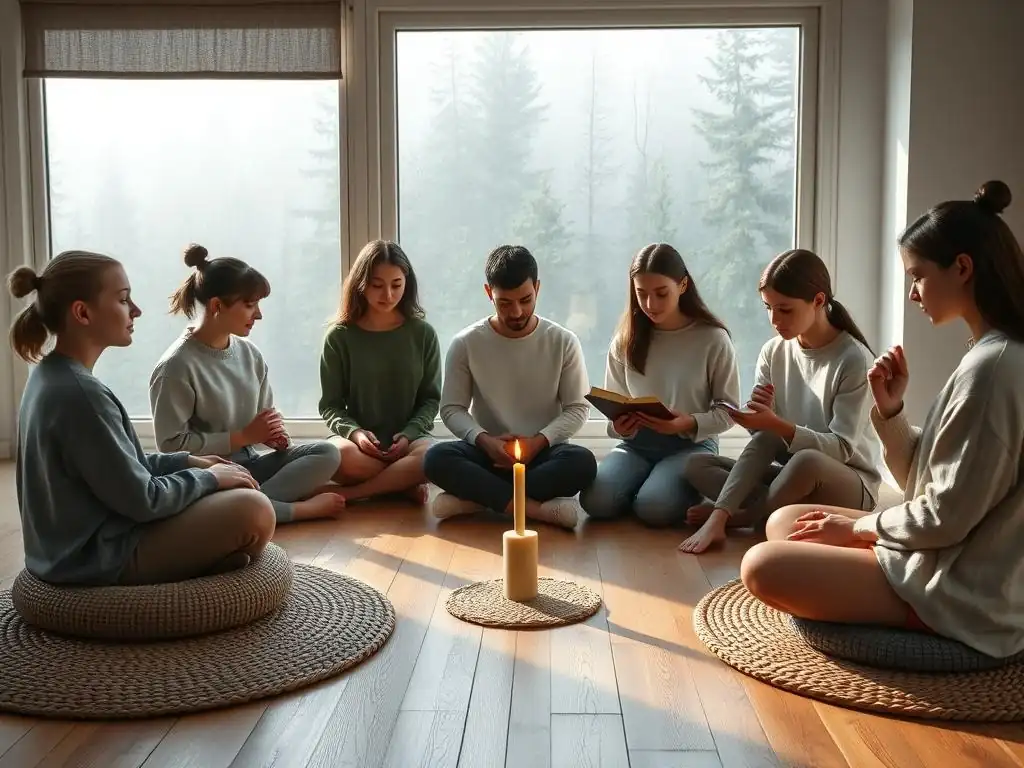
Mindfulness and Meditation for Inner Peace and Clarity
Mindfulness and meditation have gained significant traction among young adults as accessible entry points into spiritual practice, largely due to their documented benefits for mental health. Mindfulness involves paying attention to the present moment without judgment, while meditation often involves focused attention or open awareness.
These practices offer a respite from the constant mental chatter, stress, and distractions prevalent in modern life, particularly for young adults juggling academics, work, and social pressures. They provide a practical way to cultivate inner peace, improve focus, and gain clarity on one's thoughts and emotions, which are essential for navigating the complexities of life and finding spirituality young adult meaning.
Regular practice of mindfulness and meditation has been shown in numerous studies to reduce symptoms of anxiety and depression, improve emotional regulation, and increase self-awareness. For instance, research from universities shows that even short, consistent meditation practices (like 10-15 minutes daily) can lead to measurable changes in brain activity related to stress response and self-compassion within just a few weeks.
These practices don't require adherence to any specific belief system, making them appealing to young adults from diverse backgrounds. They offer a practical, empirical way to explore the inner landscape, fostering a deeper connection with oneself and providing a foundation for broader spiritual exploration.
Practical Mindfulness Exercises for Young Adults
Here are a few simple mindfulness exercises young adults can easily integrate into their day:
- Mindful Breathing:
- Sit comfortably.
- Close your eyes or soften your gaze.
- Bring your attention to your breath.
- Notice the sensation of air entering and leaving your nostrils or the rise and fall of your abdomen.
- When your mind wanders (which it will! ), gently guide your attention back to your breath without judgment.
- Start with 3-5 minutes daily.
- Body Scan Meditation:
- Lie down or sit comfortably.
- Bring attention to different parts of your body, starting from your toes and moving up to your head.
- Notice any sensations (warmth, tingling, pressure, absence of sensation) without trying to change them.
- This helps increase body awareness and release physical tension.
- Mindful Walking:
- When walking, pay attention to the physical sensations: the feeling of your feet hitting the ground, the movement of your legs, the swing of your arms.
- Notice the sights, sounds, and smells around you without getting lost in thought about them.
- This can turn a simple walk into a grounding spiritual practice.
- Mindful Eating:
- Before eating, take a moment to observe your food – its colors, textures, smells.
- Chew slowly, paying attention to the taste and texture of each bite.
- Notice the sensations of chewing and swallowing.
- This practice enhances appreciation and can improve digestion.
These exercises are accessible and can be practiced anywhere, offering young adults tangible tools to cultivate presence and inner calm as part of their spiritual journey.
Connecting with Nature: Finding Spirituality Outdoors
For many young adults, spending time in nature offers a powerful avenue for spiritual connection and finding spirituality young adult meaning. The natural world provides a sense of perspective, reminding us of our place within a larger ecosystem and the interconnectedness of all living things.
Stepping away from urban environments and digital screens allows for a grounding experience, reducing stress and fostering a sense of awe and wonder. Whether it's hiking in mountains, walking along a beach, sitting quietly in a park, or simply observing the stars, being in nature can facilitate reflection, peace, and a feeling of being part of something vast and ancient.
Ecotherapy and research on the benefits of nature exposure support this connection, showing that time spent outdoors can lower cortisol levels (the stress hormone), improve mood, and enhance cognitive function. For example, a study from Stanford University found that a 90-minute walk in nature reduced activity in a part of the brain associated with depression, compared to walking in an urban environment.
This experience of finding solace and connection in the natural world aligns with many spiritual paths that emphasize the sacredness of creation. Engaging with nature mindfully – observing its details, feeling the elements, and reflecting on its cycles – can be a profound spiritual practice for young adults seeking meaning and connection outside conventional structures.
Creative Expression: Spirituality Through Art, Music, and Writing
Creative expression serves as a powerful outlet for exploring inner worlds, processing emotions, and connecting with a deeper part of oneself, making it a significant aspect of spirituality for many young adults. Whether through painting, drawing, playing music, singing, writing poetry, journaling, or engaging in other creative arts, these practices can be a form of meditation, prayer, or dialogue with the unconscious.
Creativity allows young adults to give form to abstract feelings, explore complex questions, and express aspects of their identity and spiritual journey that words alone might not capture. It's a way of bringing the inner spiritual landscape into tangible reality.
Engaging in creative activities has well-documented benefits for mental health, including stress reduction, improved mood, and enhanced self-awareness. For example, studies on expressive writing have shown it can help individuals process traumatic experiences and gain new perspectives. For a young adult grappling with questions of purpose or identity, channeling these thoughts into a song, a painting, or a story can be a cathartic and clarifying process.
This form of spiritual practice emphasizes intuition, imagination, and the unique voice of the individual, offering a deeply personal way to explore the meaning of spirituality young adult experiences. It allows for non-linear exploration and can reveal insights that are not accessible through purely rational thought.
Community and Connection: Finding Spiritual Support Groups
While individual practice is important, finding a supportive community is often crucial for nurturing spirituality as a young adult. Sharing one's journey, questions, and insights with others who are on a similar path can alleviate feelings of isolation, provide encouragement, and offer new perspectives.
Spiritual support groups can take many forms, from traditional religious congregations that are welcoming to young adults, to meditation centers, philosophical discussion groups, volunteer organizations focused on social justice, or even informal gatherings of friends who meet to discuss life's deeper questions. The key is finding a space where one feels accepted, understood, and safe to explore their beliefs and doubts.
Belonging to a community provides a sense of connection that is fundamental to human well-being and spiritual growth. Research on social support networks consistently shows benefits for mental health, including reduced stress and increased resilience. Within a spiritual context, this community can offer guidance, shared rituals or practices, and accountability, helping young adults stay engaged with their spiritual path.
For instance, participating in a weekly discussion group focused on ethical living can provide both intellectual stimulation and emotional support. Finding these connections is vital for young adults seeking spirituality's meaning, offering a shared space to navigate the complexities of their inner and outer lives.
Finding Meaning and Purpose in Everyday Life
Integrating Spirituality into Daily Routines
Integrating spirituality into daily life moves it beyond a separate activity to a lived experience, helping young adults find consistent meaning and purpose. This doesn't require hours of meditation or complex rituals; it's about infusing everyday moments with awareness, intention, and connection.
Simple practices like taking a few mindful breaths before starting a task, expressing gratitude during a meal, pausing to appreciate nature during a commute, or setting a daily intention can transform routine activities into opportunities for spiritual engagement. It's about cultivating a continuous awareness of one's values and connection to something larger, weaving the search for spirituality young adult meaning into the fabric of daily existence.
Making spirituality a daily practice helps ground young adults amidst the busyness and distractions of modern life. It serves as a regular reminder of what truly matters, helping to prioritize activities that align with their deeper values and sense of purpose. For example, a young adult might start their day by journaling for five minutes about what they are grateful for or setting an intention to approach challenges with patience.
These small, consistent actions build a spiritual muscle, strengthening their connection to their inner self and providing a stable anchor as they navigate the demands of school, work, and relationships. This integration fosters a sense of coherence and fulfillment, showing how spirituality and young adult meaning are deeply intertwined in the rhythm of life.
Spirituality and Relationships: Building Meaningful Connections
Spirituality significantly influences how young adults form and maintain relationships, emphasizing qualities like empathy, compassion, forgiveness, and open communication. A spiritual perspective often encourages seeing the inherent worth in others and approaching interactions with kindness and understanding. For young adults, navigating friendships, romantic relationships, and family dynamics can be challenging, and spiritual principles can offer a guiding framework for building connections that are not only enjoyable but also deeply meaningful and supportive. It encourages moving beyond superficial interactions to cultivate authentic presence and mutual respect.
Applying spiritual principles in relationships involves active listening, practicing non-judgment, and being willing to offer and receive forgiveness. For instance, a young adult who practices mindfulness might be better equipped to handle conflict calmly and communicate their needs effectively in a relationship. Empathy, often cultivated through spiritual practices like loving-kindness meditation, allows for deeper understanding and connection with others' experiences. By bringing their spiritual values into their interactions, young adults can foster relationships characterized by trust, vulnerability, and mutual growth, enriching their lives and providing a shared space to explore the collective dimensions of spirituality young adult meaning.
Spirituality and Career: Finding Purpose in Your Work
Choosing a career path and finding satisfaction in work are major concerns for young adults. Spirituality can play a crucial role in this process by helping them discern work that aligns with their values and provides a sense of purpose beyond financial gain or status.
Instead of viewing work solely as a means to an end, a spiritual perspective encourages finding meaning in the work itself or seeing the work as a way to contribute positively to the world. This often involves seeking roles or industries that resonate with their ethical beliefs, passions, or desire to serve others, making the pursuit of spirituality young adult meaning relevant to their professional lives.
Finding purpose in work can involve many paths: it might be working directly for a cause they believe in, bringing ethical practices to a conventional industry, or simply approaching their daily tasks with mindfulness and dedication. For example, a young adult working in a seemingly mundane job might find spiritual meaning by focusing on doing their best, helping colleagues, or seeing their contribution as part of a larger system that serves others.
This perspective can transform a job into a calling, reducing feelings of drudgery and increasing job satisfaction and overall well-being. Integrating spirituality into career choices helps young adults build a life that is not only successful by external standards but also deeply fulfilling on a personal and spiritual level.
The Benefits of Spirituality for Young Adults' Mental Health
Reduced Stress and Anxiety Through Spiritual Practices
Engaging in spiritual practices offers young adults effective strategies for managing the high levels of stress and anxiety often experienced during this life stage. Practices such as meditation, prayer, spending time in nature, or engaging in mindful activities activate the body's relaxation response, counteracting the physiological effects of stress. Furthermore, spiritual beliefs often provide a framework for understanding challenges, fostering acceptance, and cultivating hope, which can significantly reduce worry and fear about the future. This provides a buffer against the pressures of academics, career building, and social dynamics.
Numerous studies support the anxiety-reducing effects of spiritual and religious involvement. For instance, research consistently shows that individuals who engage in regular meditation report lower levels of perceived stress and anxiety symptoms. Similarly, connecting with nature has been linked to reduced rumination and improved mood. By providing tools for calming the mind, gaining perspective, and fostering a sense of hope, spirituality offers young adults tangible benefits for their mental well-being, helping them navigate stress more effectively and cultivate inner peace as they explore spirituality young adult meaning.
Increased Self-Awareness and Emotional Regulation
Spirituality encourages introspection and self-reflection, leading to increased self-awareness – a crucial component of mental health. Practices like journaling, meditation, or contemplative prayer help young adults become more attuned to their thoughts, emotions, and bodily sensations without judgment. This heightened awareness allows them to recognize emotional patterns, understand their triggers, and respond to challenging feelings with greater intention rather than reactivity. Developing self-awareness is fundamental to emotional regulation, enabling young adults to manage intense emotions like anger, sadness, or fear more effectively.
Through spiritual exploration, young adults often develop a deeper understanding of their core values, strengths, and areas for growth. This self-knowledge is empowering and contributes to a stronger sense of identity and self-compassion. For example, a young adult who practices mindful reflection might notice a pattern of negative self-talk and, through their spiritual practice, learn to cultivate a more compassionate inner voice. This increased self-awareness and improved emotional regulation capacity are vital for navigating relationships, making wise decisions, and building resilience against life's inevitable difficulties, profoundly impacting their understanding of spirituality young adult meaning.
Enhanced Resilience and Coping Mechanisms
Spirituality provides young adults with enhanced resilience and robust coping mechanisms for facing adversity. A spiritual framework often offers a sense of hope, meaning, and connection to something larger than oneself, which can be a powerful source of strength during challenging times. Believing in a benevolent force, having faith in a positive outcome, or finding meaning in suffering can help young adults endure hardship with greater fortitude. Spiritual practices like prayer, meditation, or seeking guidance from spiritual texts or mentors provide active ways to process difficulties and find comfort.
Furthermore, spiritual communities offer social support, which is a critical factor in resilience. Sharing burdens with others, receiving encouragement, and participating in communal rituals can reduce feelings of isolation and provide practical assistance.
For example, a young adult facing a significant setback, like failing a major exam or losing a job, might draw strength from their spiritual beliefs about perseverance or find solace in discussions with a spiritual mentor. By fostering hope, providing a framework for understanding suffering, and building supportive networks, spirituality equips young adults with essential tools to bounce back from challenges and navigate life's ups and downs with greater strength and adaptability, solidifying the positive impact of spirituality young adult meaning.
Practical Tips for Cultivating Spirituality as a Young Adult

Starting Small: Simple Steps to Explore Spirituality
Cultivating spirituality doesn't require radical life changes; young adults can begin with small, manageable steps. The key is consistency and finding practices that resonate personally. Instead of trying to adopt a complex spiritual discipline all at once, start with something simple and accessible. This could be dedicating five minutes each morning to quiet reflection, taking a few deep breaths before meals, spending 15 minutes walking in nature each week, or keeping a gratitude journal. The goal is to integrate moments of spiritual awareness into the existing rhythm of daily life.
- Start with 5-10 minutes of quiet time daily.
- Try one mindful activity each day (e.g., mindful eating, walking, washing dishes).
- Spend time in nature for at least 20 minutes weekly.
- Keep a gratitude journal, listing 3-5 things you're thankful for each day.
- Explore guided meditations online or via apps (many are free).
- Read short passages from spiritual texts or philosophical writings that interest you.
These small steps build momentum and make the process feel less daunting, allowing young adults to gently explore what spirituality means to them and discover their unique path towards finding spirituality young adult meaning.
Setting Intentions and Reflecting on Your Spiritual Journey
Setting intentions and dedicating time for reflection are powerful practices for guiding and deepening a young adult's spiritual journey. An intention is a conscious aim or purpose for a practice or activity – for example, setting an intention before meditation to cultivate self-compassion, or before a challenging conversation to speak with kindness. Setting intentions brings focus and purpose to spiritual efforts. Reflection, on the other hand, involves pausing to look back on experiences, thoughts, and feelings related to one's spiritual path. This can be done through journaling, contemplative walks, or quiet contemplation.
Regular reflection helps young adults understand their progress, identify challenges, and gain insights into their evolving beliefs and values. It provides an opportunity to notice how spiritual practices are impacting their daily life, relationships, and overall well-being. For instance, reflecting on a difficult situation might reveal how a spiritual principle, like forgiveness or patience, helped them navigate it. Setting aside dedicated time – weekly or even monthly – for reflection allows for a deeper processing of experiences and a clearer understanding of the personal significance of spirituality young adult meaning in their lives.
Seeking Guidance from Mentors or Spiritual Leaders
While the spiritual journey is personal, seeking guidance from experienced individuals can be incredibly beneficial for young adults. Mentors or spiritual leaders can offer wisdom, support, and perspectives gained from their own paths.
This guidance is not about being told what to believe, but rather about having someone who can listen, offer insights, suggest practices, and help navigate doubts and challenges. A mentor could be a trusted elder in a faith community, a teacher of meditation or yoga, a therapist who integrates spiritual perspectives, or even an older friend or family member with whom one feels a deep connection and who embodies qualities they admire.
Finding the right mentor requires seeking someone whose approach resonates with you and who fosters your independence and growth rather than dependency. For example, a young adult interested in exploring Stoicism might seek out a philosophy professor or a member of a Stoic discussion group with more experience. A mentor can provide accountability, offer resources, and help clarify complex spiritual concepts. This guidance can be invaluable for young adults navigating the sometimes confusing terrain of spiritual exploration, providing support as they actively seek spirituality young adult meaning.
Local Resources: Spiritual Centers and Retreats
Exploring local resources can provide young adults with opportunities for both individual practice and community connection. Many cities and towns offer a variety of spiritual centers beyond traditional places of worship, such as meditation centers (Buddhist, secular, etc. ), yoga studios with a spiritual focus, interfaith centers, or community centers offering workshops on mindfulness or contemplative practices. These centers often host classes, group meditations, lectures, and events tailored to different levels of experience.
Additionally, local or regional retreat centers offer opportunities for more intensive spiritual practice and reflection, ranging from day retreats to weekend or longer immersions. While some retreats might be associated with specific traditions, many offer general mindfulness or silent retreats suitable for anyone seeking quiet contemplation.
For example, a young adult living near a Zen center might attend a beginner's meditation class, or one looking for a deeper experience might attend a weekend silent retreat. Exploring these local resources can provide structured environments for practice, access to experienced teachers, and opportunities to connect with like-minded individuals, enriching the search for spirituality young adult meaning.
Common Myths and Misconceptions About Spirituality in Young Adults
Myth: Spirituality is Only for Older Generations
One prevalent myth is that spirituality is primarily a concern for older individuals who are nearing the end of their lives and reflecting on mortality or seeking comfort in tradition. This perspective overlooks the dynamic and critical nature of young adulthood, a period inherently focused on identity formation, questioning the status quo, and grappling with fundamental questions about life's purpose.
Young adults are actively building their worldview and future, making the search for meaning and connection not just relevant, but often urgent. Data from surveys suggests that while formal religious affiliation might be declining among young adults in some regions, interest in personal spirituality, mindfulness, and ethical living remains significant or is even growing.
The forms that spirituality takes among young adults may differ from older generations; it is often less institutional and more individualized, focusing on personal experience, social justice, environmentalism, or creative expression as avenues for transcendence and meaning. For example, a young person passionate about climate action might find deep spiritual meaning in working to protect the Earth, seeing it as a sacred duty, even if they don't attend religious services.
This demonstrates that spirituality is not confined to age but evolves in its expression across generations, with young adults actively shaping what spirituality and young adult meaning look like in the modern world.
Myth: Spirituality Requires Abandoning Logic and Reason
Another common misconception is that spirituality is incompatible with rational thought and requires blind faith or the rejection of scientific understanding. This myth creates an unnecessary divide, suggesting that one must choose between intellect and spiritual exploration. In reality, many spiritual traditions and practices encourage critical thinking, questioning, and a deeper understanding of reality that can complement scientific inquiry. Philosophy, which is closely related to many spiritual paths, is fundamentally based on logic and reason. Practices like mindfulness and meditation, while experiential, are increasingly supported by neuroscience and psychological research.
For young adults who value education and critical thinking, this myth can be a significant barrier to exploring spirituality. However, many find that integrating their intellectual curiosity with their spiritual search leads to a richer, more nuanced understanding of the world.
For example, a young adult studying physics might find a spiritual connection in contemplating the vastness of the universe or the intricate laws of nature, seeing science as revealing the awe-inspiring complexity of existence. Spirituality, at its core, is often about exploring consciousness, connection, and meaning – areas that can be approached through both rational inquiry and experiential practice, demonstrating that spirituality young adult meaning can be found through various lenses, including reason.
Myth: Spirituality is a Quick Fix for Life's Problems
It's a misconception that engaging in spiritual practices will instantly solve all of life's problems or eliminate suffering. While spirituality can provide comfort, guidance, and resilience, it is not a magic bullet. Life will continue to present challenges, setbacks, and difficulties, regardless of one's spiritual path. Viewing spirituality as a quick fix can lead to disappointment and disillusionment when faced with hardship. The spiritual journey is often described as a path of growth, which inherently involves navigating difficulties and learning from them.
Rather than eliminating problems, spirituality offers tools and perspectives for navigating them with greater grace, wisdom, and resilience. It helps young adults develop inner strength, find meaning even in suffering, and connect with resources (internal and external) that support them through difficult times.
For example, while meditation might not make a stressful exam disappear, it can help a young adult manage their anxiety and approach the situation with a clearer mind. Understanding that spirituality is a journey of ongoing practice and learning, not a destination where all troubles cease, is crucial for a realistic and sustainable approach to finding spirituality young adult meaning.
Conclusion: Embracing Spirituality for a Fulfilling Life
The Ongoing Journey of Spiritual Growth
Embracing spirituality is not a one-time decision but an ongoing journey of exploration, learning, and growth. For young adults, this journey is particularly dynamic, evolving alongside their identity, experiences, and understanding of the world. There will be periods of clarity and connection, as well as times of doubt, questioning, and perhaps even stepping away from practice. This fluidity is natural and reflects the process of navigating adulthood. The key is to approach this journey with curiosity, patience, and self-compassion, recognizing that spiritual growth is a lifelong process with no definitive endpoint.
Continuing to engage with practices that resonate, seeking new knowledge, reflecting on experiences, and connecting with others are all part of this ongoing path. Like any form of personal development, spiritual growth requires consistent effort and a willingness to adapt. The spirituality young adult meaning discovered today may deepen and transform over time, reflecting the individual's evolving perspective and life circumstances. Embracing this journey as continuous allows for flexibility and resilience, ensuring that spirituality remains a vital and relevant part of a fulfilling life.
Finding Your Unique Path to Meaning and Purpose
Ultimately, the essence of spirituality for young adults lies in finding their unique path to meaning and purpose. There is no single correct way to be spiritual, and what resonates deeply for one person may not for another. The exploration of spirituality is a personal invitation to discover what brings a sense of awe, connection, and purpose into one's life. This might involve traditional religious practices, secular mindfulness, engagement with nature, creative expression, acts of service, philosophical inquiry, or a combination of many elements.
The process involves listening to one's inner voice, exploring different practices and perspectives, and discerning what feels authentic and life-giving. By embracing this personalized approach, young adults can weave spirituality into the fabric of their lives in a way that supports their mental well-being, enhances their relationships, and provides a stable foundation for navigating the complexities of adulthood. Finding this unique spirituality young adult meaning is a powerful act of self-discovery and empowers them to live a life that is not only successful by external measures but also rich in internal fulfillment and connection.
Frequently Asked Questions
What does spirituality mean for young adults, especially when the concept seems so broad?
Spirituality for young adults often revolves around personal meaning-making and connection. It's less about rigid dogma and more about finding what resonates with their values and beliefs, offering a sense of purpose.
How can young adults explore their spirituality without feeling pressured to conform to traditional religious beliefs?
Exploration can involve practices like mindfulness, meditation, nature walks, or engaging in creative activities. The key is to find practices that foster inner peace and self-discovery without external pressure.
Spirituality can provide a sense of grounding and resilience during times of uncertainty and stress. It offers a framework for understanding their place in the world and coping with life's inevitable challenges.
Where can young adults find resources and support to explore their spirituality in a healthy and balanced way?
Resources include online communities, spiritual mentors or counselors, and books or workshops focused on mindfulness and self-discovery. It's crucial to seek guidance from reliable and supportive sources.
How does spirituality differ from religion, and why is this distinction important for young adults to understand?
Spirituality is often seen as a personal journey focused on inner peace and meaning, while religion is a structured system of beliefs and practices. Understanding this difference allows young adults to explore their own path without feeling confined by religious dogma.
Final Reflection: Finding Your Path, Finding Yourself
The search for meaning is a universal human experience, and for young adults navigating the complexities of adulthood, this quest is particularly potent. This generation faces unprecedented challenges – from climate change anxieties to economic instability – making the need for a strong sense of purpose and inner peace more critical than ever. The exploration of spirituality, in its broadest sense, offers a powerful framework for addressing these challenges and building a fulfilling life.
The impact of spirituality on young adults is profound and multifaceted. It's not just about religious affiliation; it's about finding connection, purpose, and a sense of belonging in a rapidly changing world. It's about fostering resilience in the face of adversity and cultivating compassion for oneself and others. As the poet Mary Oliver so eloquently stated: Tell me, what is it you plan to do with your one wild and precious life?
This question, central to the spiritual journey, compels us to examine our values, our priorities, and our contribution to the world. It's a question that resonates deeply with young adults seeking to define their place within the larger human story.
Now, consider your own journey. What resonates with you from the exploration of spirituality presented in this article? What questions does it raise for you personally? I invite you to take a moment to reflect on your own values, your aspirations, and the meaning you seek in your life. Embrace the uncertainty, the exploration, and the potential for growth that lies ahead. Your unique path to meaning is waiting to be discovered, and the journey itself is a testament to the richness and resilience of the human spirit.
Unlock Your Inner Wisdom: Start Your Spiritual Journey Today!
Thanks for taking the time to explore the world of spirituality with us! We hope this article helped you uncover some powerful tools for navigating life's big questions. Now, it's time to put that newfound wisdom into action.
- Begin a daily mindfulness practice: Even five minutes a day can make a profound difference in your sense of peace and clarity. Try focusing on your breath or simply observing your thoughts without judgment. This is the most important step to building a stronger spiritual foundation.
- Connect with a supportive community: Share your reflections and experiences with others on a similar path. Consider joining a local meditation group or online forum. You might be surprised at the connections you make.
- Explore a new spiritual practice: Try journaling your thoughts and feelings, listening to inspiring music, or spending time in nature. Let your curiosity guide you— there’s no right or wrong way to explore your spirituality.
What small step will you take today to cultivate a deeper sense of meaning and purpose in your life?