
Hobbies for Happiness: Engaging in Activities to Reduce Stress

Welcome to Mind Care Guide, a sanctuary for your mental well-being.
Feeling overwhelmed? You're not alone. Discover how engaging in simple, enjoyable activities can significantly reduce stress and anxiety. Our latest guide, "Hobbies for Happiness," explores the power of hobbies to calm your mind and boost your mood. Curious to learn how a simple pastime can dramatically improve your mental health? Let's explore how hobbies reduce stress anxiety together.
Hobbies for Happiness: Engaging in Activities to Reduce Stress
- Introduction: The Power of Hobbies for Stress Relief and Mental Well-being
- Understanding the Link Between Hobbies and Stress Reduction
- Choosing the Right Hobby to Reduce Stress and Anxiety
- Types of Hobbies That Effectively Reduce Stress and Anxiety
- Practical Tips for Incorporating Hobbies into Your Daily Life
- Measuring the Impact of Hobbies on Your Stress Levels
- Hobbies Reduce Stress Anxiety: Real-Life Examples and Success Stories
- Conclusion: Embracing Hobbies for a Happier, Less Stressed Life
-
Frequently Asked Questions
- How do hobbies actually help to reduce stress and anxiety?
- What types of hobbies are most effective for stress reduction?
- How much time should I dedicate to hobbies each week to see a noticeable reduction in stress?
- Can learning a new hobby be stressful at first, and if so, how can I overcome that?
- Where can I find resources to help me discover new hobbies that align with my interests and reduce stress?
- Final Reflection: Cultivating Joy Through Engaging Hobbies
- Unlock Your Joy: Find Your Perfect Stress-Busting Hobby!
Introduction: The Power of Hobbies for Stress Relief and Mental Well-being
Why Hobbies are Essential for Managing Stress and Anxiety
In the relentless pace of modern life, stress and anxiety have become unwelcome companions for many. The constant demands of work, personal responsibilities, and the digital world can leave us feeling overwhelmed and drained. While clinical interventions are crucial for severe conditions, everyday stress management often requires accessible and enjoyable tools. This is where hobbies step in, offering a powerful, yet often underestimated, pathway to relief. Engaging in activities purely for pleasure provides a vital escape valve, allowing the mind and body to recover from daily pressures.
Prioritizing activities that bring joy is not a luxury; it's a necessity for maintaining psychological balance. Research consistently shows that carving out time for personal interests can significantly lower stress levels and improve overall mood. For example, a study published in the Journal of Occupational Health Psychology found that engaging in leisure activities was associated with higher levels of positive affect and lower levels of depression and fatigue among workers. These findings underscore the essential role hobbies play in building resilience against stress and anxiety, offering a proactive approach to mental well-being.
How Engaging in Hobbies Improves Mental Health
The benefits of hobbies extend far beyond simple distraction; they actively contribute to improved mental health through several mechanisms. When you immerse yourself in a hobby, whether it's painting, gardening, or playing a musical instrument, you enter a state often described as "flow," where you are fully focused and absorbed in the activity. This state reduces rumination on stressors and promotes a sense of calm and presence. Furthermore, completing a project or mastering a new skill within your hobby provides a sense of accomplishment, boosting self-esteem and confidence, which are often eroded by chronic stress and anxiety.
Beyond the individual experience, many hobbies offer opportunities for social connection. Joining a book club, a hiking group, or a crafting circle can combat feelings of isolation, a known exacerbator of anxiety and depression. Shared interests foster a sense of belonging and provide a supportive community. This social engagement, combined with the inherent pleasure and sense of achievement derived from the activity itself, creates a powerful synergy that helps manage and mitigate the negative impacts of stress, demonstrating how hobbies reduce stress anxiety effectively.
Understanding the Link Between Hobbies and Stress Reduction
The Science Behind Hobbies: Dopamine, Endorphins, and Cortisol Reduction
Engaging in enjoyable activities triggers a cascade of beneficial neurochemical responses in the brain. When you participate in a hobby you love, your brain releases dopamine, a neurotransmitter associated with pleasure and reward. This creates positive feelings and reinforces the behavior, making you more likely to engage in the hobby again. Physical hobbies, such as running or dancing, also stimulate the release of endorphins, often referred to as the body's natural painkillers and mood elevators, producing feelings of euphoria and reducing the perception of stress.
Crucially, hobbies have been shown to help regulate the body's stress response system. Chronic stress leads to elevated levels of cortisol, a stress hormone that can have detrimental effects on physical and mental health over time. Studies suggest that regular engagement in relaxing and enjoyable hobbies can lead to a significant decrease in cortisol levels. For instance, research on gardening as a hobby has indicated that it can lower cortisol levels more effectively than other forms of relaxation, highlighting the tangible physiological impact of hobbies on stress reduction.
Hobbies as a Form of Active Relaxation: Shifting Focus Away from Stressors
Unlike passive forms of relaxation like watching television, hobbies often require active engagement and focus. This active participation is key to their stress-reducing power. When you are concentrating on knitting a scarf, perfecting a yoga pose, or solving a complex puzzle, your attention is deliberately shifted away from the worries and anxieties that typically occupy your mind. This mental redirection provides a necessary break from stress-inducing thoughts and allows your brain to enter a more relaxed state.
This process is similar to mindfulness, where the focus is on the present moment. Hobbies naturally encourage this present-moment awareness; you are focused on the task at hand, the materials you are using, the sensations in your body, or the sounds around you. This immersion in the activity helps to quiet the constant internal dialogue of stress and anxiety, offering a period of mental respite. It's not just a distraction; it's an active practice of redirecting mental energy towards something positive and engaging, which is fundamental to how hobbies reduce stress anxiety.
While stress reduction is a primary benefit, hobbies offer a wealth of other advantages that contribute to overall well-being. Many hobbies nurture creativity, providing an outlet for self-expression and innovation. Whether it's writing poetry, composing music, or designing a garden, engaging in creative pursuits can unlock new perspectives and provide a sense of purpose and fulfillment that extends beyond daily routines. This creative outlet can also be a powerful tool for processing emotions and gaining insight.
Furthermore, hobbies are excellent catalysts for building and strengthening social connections. Joining groups or communities centered around shared interests provides opportunities to meet like-minded individuals, fostering friendships and support networks. These social ties are invaluable, offering emotional support, reducing feelings of isolation, and providing a sense of belonging. The combination of creative expression, social interaction, and personal enjoyment makes hobbies a holistic tool for enhancing not just stress management but overall quality of life.
Choosing the Right Hobby to Reduce Stress and Anxiety
Identifying Your Interests: What Activities Bring You Joy?
The first step in finding a hobby that effectively helps you reduce stress and anxiety is to look inward and identify what genuinely interests you. Think about activities you enjoyed in the past, things you've always wanted to try, or subjects that pique your curiosity. What do you do in your free time that makes you lose track of time? Is it reading, being outdoors, building things, creating art, or learning about history? There's no right or wrong answer; the key is to find something that personally resonates with you and sparks a sense of enjoyment and curiosity.
Consider what kind of experience you are seeking. Do you want something calming and meditative, like knitting or painting? Or do you prefer something more active and energizing, like dancing or hiking? Perhaps you crave intellectual stimulation through puzzles or learning a new language. Making a list of potential activities and exploring them without pressure can help you narrow down options. Remember, the goal is to find an activity that feels like a welcome escape, not another chore, making the process of using hobbies to reduce stress anxiety enjoyable itself.
Considering Your Personality and Lifestyle: Finding Hobbies That Fit
Your personality and current lifestyle play a significant role in determining which hobbies will be a good fit and sustainable for you. If you are an introvert who finds large groups draining, a solo hobby like writing, photography, or playing a musical instrument at home might be more beneficial than joining a large sports team. Conversely, if you thrive on social interaction, a hobby that involves group activities, like choir, a running club, or a board game group, could be ideal.
Time commitment is also a crucial factor. If you have a very busy schedule, choosing a hobby that requires significant blocks of time daily might become another source of stress. Look for activities you can engage in for shorter periods, such as 15-30 minutes of sketching, practicing a language app, or tending to a small indoor plant collection. The hobby should fit realistically into your life without adding pressure, ensuring it truly serves as a tool to reduce stress and anxiety.
Matching Hobbies to Specific Stress Triggers: Tailoring Activities for Maximum Impact
Understanding what specifically triggers your stress and anxiety can help you choose a hobby that directly addresses those challenges. If your stress stems from feeling overwhelmed and out of control, a hobby that involves structure and completion, like organizing, model building, or following recipes, might provide a sense of order and accomplishment. If your anxiety manifests as restlessness or pent-up energy, physical hobbies like brisk walking, cycling, or martial arts can be excellent outlets.
For those whose stress is linked to excessive screen time and mental clutter, hobbies that are tactile and require focus on the physical world, like pottery, woodworking, or gardening, can be grounding. If you struggle with perfectionism and self-criticism, choosing a hobby where the process is more important than the outcome, such as free-form drawing or improvisational dance, can be liberating. Tailoring your hobby choice to your specific needs enhances its effectiveness in helping you manage stress and anxiety.
Types of Hobbies That Effectively Reduce Stress and Anxiety
Creative Hobbies: Painting, Writing, Music, and Crafting for Stress Management
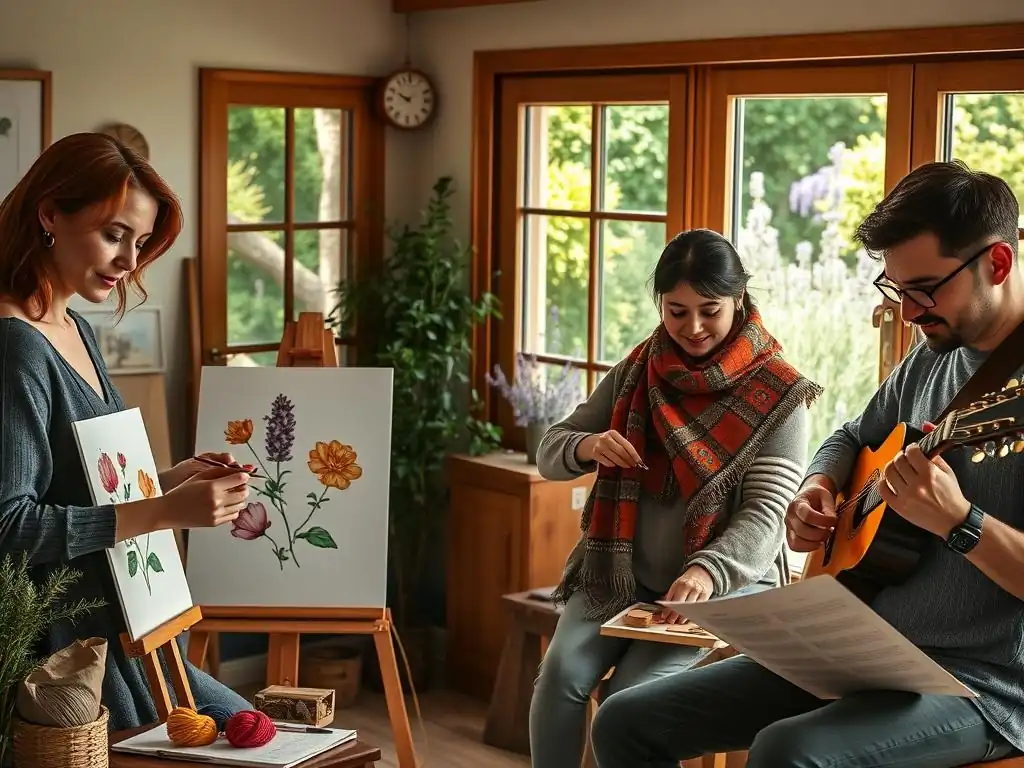
Creative hobbies provide a powerful avenue for self-expression and emotional processing, making them excellent tools for managing stress and anxiety. Activities like painting, drawing, sculpting, or even adult coloring books allow you to channel feelings and thoughts into a visual form, which can be cathartic. The act of creating something tangible can also provide a sense of accomplishment and control, which is particularly helpful when feeling overwhelmed by stressors.
Writing, whether journaling, poetry, or fiction, offers a space to explore emotions, gain perspective, and organize chaotic thoughts. Putting feelings into words can reduce their intensity and help you understand them better. Similarly, engaging with music, by playing an instrument, singing, or even just actively listening, can be deeply therapeutic, altering mood and promoting relaxation. Crafting activities like knitting, sewing, or scrapbooking involve repetitive motions that can be meditative and calming, providing a focused activity that distracts from worries.
The Therapeutic Benefits of Art Therapy for Anxiety Relief
Art therapy, a recognized form of psychotherapy, utilizes creative processes to improve mental health. While engaging in art as a hobby is not a substitute for professional therapy, it taps into similar mechanisms that make art therapeutic. The focus is on the process of creation itself, not the final product, allowing for non-verbal expression of complex emotions that may be difficult to articulate. This can be incredibly beneficial for individuals struggling with anxiety, providing a safe outlet for feelings of fear, worry, or tension.
Studies have shown that even short periods of creative activity can significantly reduce stress and improve mood. For example, a study published in the Journal of the American Art Therapy Association found that just 45 minutes of creative activity significantly lowered cortisol levels, regardless of artistic experience. This highlights that you don't need to be an accomplished artist to reap the anxiety-reducing benefits; the act of creating is what matters.
Using Creative Writing as a Tool for Emotional Release
Creative writing serves as a powerful tool for emotional processing and release, offering a structured way to explore thoughts and feelings related to stress and anxiety. Journaling, in particular, has been widely studied for its benefits. Writing about stressful events or anxious thoughts can help externalize them, making them feel less overwhelming and providing a sense of distance. This practice can lead to insights into triggers and patterns, empowering individuals to better manage their responses.
Beyond journaling, writing poetry, short stories, or even stream-of-consciousness exercises can allow for symbolic expression of emotions. Creating narratives, even fictional ones, can help process experiences and gain a sense of control over the story of one's life. The act of writing requires focus and structure, providing a calming mental anchor amidst turbulent emotions, reinforcing how hobbies reduce stress anxiety through focused engagement.
Music as a Pathway to Relaxation and Stress Reduction
Music has a profound impact on our emotional and physiological state, making it an effective hobby for stress and anxiety reduction. Listening to calming music can lower heart rate, blood pressure, and cortisol levels. Engaging with music actively, by playing an instrument or singing, offers even deeper benefits. The focus required to read music, coordinate movements, or control breath can be incredibly grounding, pulling attention away from stressors.
Learning an instrument or practicing singing provides a sense of accomplishment and mastery over time, boosting confidence. Group music activities, like joining a choir or band, also add the benefit of social connection and collaborative creation. The rhythmic and harmonic nature of music can induce a state of relaxation and even alter brainwave patterns towards calmer states, demonstrating music's unique ability to soothe the nervous system and help hobbies reduce stress anxiety.
Physical Hobbies: Exercise, Yoga, Gardening, and Outdoor Activities for Mental Well-being
Physical hobbies are well-documented for their positive impact on both physical and mental health, serving as potent stress and anxiety reducers. Engaging in regular physical activity helps the body process stress hormones and releases mood-boosting chemicals. Activities like running, swimming, cycling, or team sports provide a vigorous outlet for pent-up energy and frustration, leaving you feeling calmer and more centered afterward.
Yoga and activities like Tai Chi combine physical movement with mindfulness and controlled breathing, offering a holistic approach to stress management. Gardening and spending time outdoors connect us with nature, which has inherent calming effects. These hobbies not only improve physical fitness but also provide a mental break from daily pressures, fostering a sense of peace and well-being.
The Power of Exercise in Reducing Stress Hormones
Exercise is one of the most effective natural ways to reduce stress and anxiety. When you engage in physical activity, your body releases endorphins, which have mood-lifting and pain-relieving effects. Exercise also helps to reduce the levels of stress hormones like cortisol and adrenaline. Regular physical activity trains your body's response to stress, making it more resilient over time.
Furthermore, focusing on physical movement can provide a distraction from worries, and the repetitive nature of activities like running or swimming can be meditative. Studies consistently show that even moderate exercise, such as a brisk 30-minute walk several times a week, can significantly decrease symptoms of anxiety and depression. It's a tangible way that physical hobbies reduce stress anxiety.
Yoga and Mindfulness: A Combined Approach to Anxiety Management
Yoga is a practice that combines physical postures (asanas), breathing techniques (pranayama), and meditation or relaxation. This combination makes it uniquely effective for managing anxiety. The physical postures help release muscular tension often held during stress, while the focus on breath regulates the nervous system, promoting a sense of calm. The mindfulness aspect encourages present-moment awareness, reducing rumination on past worries or future fears.
Regular yoga practice has been shown to lower heart rate, blood pressure, and cortisol levels, directly impacting the physiological stress response. Many individuals report feeling more grounded, centered, and less reactive to stressors after incorporating yoga into their routine. It's a powerful example of how a physical hobby integrated with mindfulness practices can significantly help manage anxiety.
Gardening and Nature: Connecting with the Earth for Inner Peace
Spending time in nature and engaging in activities like gardening offers profound benefits for mental well-being. The natural environment has an inherent calming effect, reducing feelings of stress and promoting relaxation. Gardening involves physical activity, exposure to sunlight (which helps regulate mood), and the satisfaction of nurturing living things. The tactile experience of working with soil and plants can be incredibly grounding and meditative.
Research has shown that viewing natural scenes or spending time outdoors can lower blood pressure and stress hormone levels. Gardening specifically has been linked to reduced symptoms of depression and anxiety, likely due to the combination of physical activity, sensory engagement, and the connection with the natural world. It provides a peaceful escape from the demands of modern life, illustrating another way hobbies reduce stress anxiety.
Mental Hobbies: Reading, Puzzles, Learning New Skills for Cognitive Stimulation and Stress Relief
Mental hobbies challenge the mind and offer a different kind of escape from stress. Engaging in activities like reading, doing puzzles, or learning a new language keeps the brain active and focused on something other than stressors. These hobbies can provide a sense of accomplishment, boost cognitive function, and offer a quiet retreat from the external world.
Reading allows you to immerse yourself in different stories and perspectives, providing a mental vacation. Puzzles and brain games require concentration and problem-solving, diverting mental energy from worries. Learning new skills, whether it's coding, playing chess, or studying history, boosts confidence and provides a sense of progress and intellectual growth, all of which can counteract feelings of helplessness or overwhelm associated with stress.
The Joy of Reading: Escaping into Different Worlds to Reduce Stress
Reading is a simple yet powerful hobby for stress reduction. Losing yourself in a good book provides an immediate escape from your own thoughts and worries. Studies have shown that reading for just six minutes can reduce stress levels by up to 68%, slowing down heart rate and easing muscle tension. It allows you to step into another world, offering a mental break from your own reality.
Beyond escapism, reading can also broaden your perspective, introduce you to new ideas, and increase empathy, all of which can contribute to greater emotional resilience. Whether you prefer fiction or non-fiction, the focused yet relaxed state induced by reading makes it an accessible and effective way that hobbies reduce stress anxiety.
Puzzles and Brain Games: Sharpening the Mind and Reducing Anxiety
Engaging in puzzles and brain games, such as crosswords, Sudoku, jigsaw puzzles, or strategic board games, requires focused concentration and problem-solving skills. This intense focus on the task at hand naturally pushes distracting, anxious thoughts to the background. The challenge and subsequent feeling of accomplishment upon solving a puzzle or completing a level can significantly boost mood and self-esteem.
These activities stimulate different areas of the brain, promoting cognitive flexibility and potentially warding off cognitive decline. For individuals prone to overthinking or rumination, the structured challenge of a puzzle provides a productive outlet for mental energy, helping to redirect focus away from anxiety-inducing loops.
Learning New Skills: Boosting Confidence and Combating Stress
Embarking on the journey of learning a new skill, whether it's playing an instrument, speaking a foreign language, or coding, can be incredibly empowering and stress-reducing. The process of setting goals, practicing, and gradually improving provides a sense of purpose and measurable progress. Mastering a new skill builds confidence and self-efficacy, which are strong buffers against stress and anxiety.
Focusing on the learning process requires dedication and patience, shifting attention away from stressors. The sense of accomplishment derived from reaching milestones, like playing a simple song or holding a basic conversation in a new language, provides positive reinforcement that counteracts feelings of inadequacy often associated with stress. It's an active investment in yourself that pays dividends in terms of mental well-being.
Practical Tips for Incorporating Hobbies into Your Daily Life
Scheduling Time for Hobbies: Making Hobbies a Priority
One of the biggest challenges in maintaining a hobby is finding the time. In busy lives, hobbies often feel like a luxury that gets pushed aside. However, viewing your hobby time as essential self-care, rather than optional leisure, is crucial. Just as you schedule work meetings or appointments, schedule dedicated time for your hobby in your calendar. Even short bursts, like 15-30 minutes daily or an hour a few times a week, can make a significant difference in helping hobbies reduce stress anxiety.
Be intentional about this time. Turn off notifications, let others in your household know you need uninterrupted time, and resist the urge to fill that slot with chores or other obligations. Start small if needed; consistency is more important than duration. Making your hobby a non-negotiable part of your routine signals to yourself that your mental well-being is a priority.
Overcoming Obstacles: Time Constraints, Lack of Motivation, and Fear of Failure
Various obstacles can prevent you from engaging in hobbies. Time constraints are common, requiring creative scheduling and potentially choosing hobbies that fit into smaller pockets of time. Lack of motivation can strike, especially when feeling stressed or tired. On those days, remind yourself why you started the hobby – for enjoyment and stress relief – and commit to just a few minutes. Often, starting is the hardest part.
Fear of failure or not being "good enough" can also be paralyzing. Remember that hobbies are for personal enjoyment, not for professional evaluation. There is no pressure to be perfect. Embrace the process of learning and experimentation. Focus on the enjoyment the activity brings, rather than the outcome. Reframe mistakes as learning opportunities, and celebrate small achievements. Overcoming these hurdles is key to letting hobbies reduce stress anxiety consistently.
Creating a Dedicated Space for Your Hobbies
Having a dedicated space, no matter how small, for your hobby can make it easier to engage in regularly and help hobbies reduce stress anxiety. If you enjoy painting, having your easel and supplies set up in a corner means you can start creating whenever you have a few spare minutes, without the hassle of setting up and packing away. If you love reading, having a comfortable chair and good lighting makes it an inviting activity.
This space serves as a physical cue to transition from stressful activities to your chosen form of relaxation and enjoyment. It can be a craft corner, a small desk for writing, a cleared floor space for yoga, or just a designated shelf for your books or puzzles. Creating this personal sanctuary makes your hobby more accessible and reinforces its importance in your self-care routine.
Measuring the Impact of Hobbies on Your Stress Levels
Self-Assessment Techniques: Monitoring Your Mood and Stress Levels
Becoming more aware of your internal state is crucial for understanding how your hobbies are affecting your stress and anxiety. Before and after engaging in your hobby, take a moment to check in with yourself. How are you feeling? Use a simple scale, perhaps from 1 to 10, to rate your current stress level. Note your mood, energy level, and any physical sensations of tension.
Over time, you can start to notice patterns. Do you consistently feel calmer, more relaxed, or happier after spending time on your hobby? Does it help clear your head or provide a needed energy boost? Simple self-assessment techniques like this provide valuable qualitative data on the impact of your hobby on your mental state, confirming how hobbies reduce stress anxiety for you.
Tracking Your Progress: Journaling and Reflection
Keeping a journal can be an excellent way to track the impact of your hobbies on your stress levels and overall well-being. You don't need to write extensively; even brief notes about how you felt before, during, and after your hobby session can be illuminating. You might note things like: "Felt agitated (7/10 stress) before knitting, felt calm (3/10 stress) after 30 mins," or "Spent an hour gardening, felt grounded and less worried about work."
Reflecting on these entries over weeks and months allows you to see trends. You might discover which specific hobbies are most effective for you on different types of stressful days. Journaling also provides a record of your engagement, helping you stay accountable and motivated. This tangible record reinforces the value of your hobby time and its role in managing stress and anxiety.
Adjusting Your Hobby Choices: Adapting to Your Changing Needs
Life circumstances and stress levels change, and so too might the effectiveness of certain hobbies. What was calming during one period might not be as helpful during another. It's important to be flexible and willing to adjust your hobby choices based on your current needs. If a physically demanding hobby feels too exhausting when you're particularly stressed, perhaps switch to a more sedentary, relaxing one like reading or gentle crafting for a while.
Conversely, if you're feeling restless and need an outlet, a more active hobby might be necessary. Regularly assessing how your hobbies are serving you, perhaps every few months, allows you to adapt. Don't be afraid to try new activities or revisit old ones. The goal is to have a toolkit of hobbies that you can draw upon depending on what you need to effectively reduce stress and anxiety at any given time.
Hobbies Reduce Stress Anxiety: Real-Life Examples and Success Stories
From Panic Attacks to Palette Knives: How Painting Became Sarah's Sanctuary
Sarah, a 35-year-old graphic designer, struggled with chronic anxiety and occasional panic attacks, often triggered by work deadlines and social pressures. She felt constantly on edge, her mind racing. Traditional stress management techniques offered limited relief. One evening, on a whim, she bought a small canvas and some paints. She hadn't painted since school but found herself completely absorbed in mixing colors and applying them to the canvas.
Sarah started dedicating 30 minutes each evening to painting. She didn't aim for masterpieces, just enjoyed the tactile process and the vibrant colors. She found that the intense focus required quieted her anxious thoughts.
The rhythmic movement of the brush was soothing, and the act of creating something tangible gave her a sense of control she often lacked in other areas of her life. Over several months, she noticed a significant decrease in her overall anxiety levels and the frequency of her panic attacks lessened considerably. Painting became her sanctuary, a reliable tool to help her mind unwind and reduce stress anxiety, proving the therapeutic power of creative expression.
From Boardroom to Bloom: John's Journey with Gardening and Stress Reduction
John, a 50-year-old executive, carried the weight of high-pressure decisions and long work hours, leading to persistent stress and difficulty sleeping. He felt disconnected from anything outside of his professional life. His doctor recommended finding a hobby to de-stress, and he reluctantly decided to try gardening, inspired by his childhood memories of helping his grandmother. He started small, clearing a neglected patch in his backyard and planting some simple vegetables and flowers.
He quickly discovered the calming effect of working with the earth. The physical labor of digging and weeding provided a healthy outlet for tension. The simple rhythm of watering plants and watching them grow brought a sense of peace and connection to something tangible and alive, far removed from the abstract world of business.
He found he slept better on nights he had spent time in the garden. Over a year, he transformed his yard into a thriving oasis and, more importantly, significantly reduced his stress levels. Gardening became his escape and a powerful way for him to manage stress and anxiety.
The Soothing Symphony of Self-Care: Emily's Experience with Learning the Piano
Emily, a 28-year-old teacher, found herself overwhelmed by the emotional demands of her job and the constant noise of daily life. She often felt drained and struggled to switch off her mind in the evenings, leading to increased anxiety. Remembering her childhood dream of playing the piano, she decided to take adult lessons. The initial challenge of learning notes and chords was demanding but in a focused, engaging way that felt different from her usual mental stress.
Practicing the piano required her full concentration, leaving no room for anxious thoughts to intrude. The physical act of playing and the beautiful sounds she created were incredibly soothing. She found that even 15-20 minutes of practice after work helped her transition from the day's stress to a calmer evening. As she progressed and could play simple pieces, the sense of accomplishment boosted her confidence. Learning the piano became her personal symphony of self-care, a structured, beautiful activity that helped her significantly reduce stress and anxiety.
Conclusion: Embracing Hobbies for a Happier, Less Stressed Life
The Long-Term Benefits of Consistent Hobby Engagement
Consistently engaging in hobbies offers profound long-term benefits for mental and physical health. Beyond immediate stress relief, regular participation in enjoyable activities builds resilience, equipping you with better coping mechanisms for future stressors. Over time, hobbies can lead to significant improvements in mood, increased life satisfaction, and a greater sense of purpose. They provide a stable source of joy and accomplishment outside of work or obligations, contributing to a more balanced and fulfilling life.
Furthermore, the skills developed and the social connections made through hobbies can enrich your life in unexpected ways. Whether it's the physical fitness gained from hiking, the mental agility from learning a language, or the supportive network from a craft group, these positive outcomes accumulate, reinforcing your overall well-being and creating a virtuous cycle where engagement in hobbies continues to reduce stress anxiety and enhance happiness.
Encouragement to Explore and Experiment with Different Hobbies
Finding the perfect hobby is often a process of exploration and experimentation. Don't feel pressured to find "the one" right away. Be open to trying different activities that pique your interest, even if they seem unconventional. You might discover a passion you never knew you had. Give each new hobby a fair chance – perhaps a few weeks or months – to see if it resonates with you and if it effectively helps you manage stress and anxiety.
It's also okay if your interests change over time. What you enjoy today might not be what you enjoy a year from now, and that's perfectly normal. Allow yourself the freedom to move on from a hobby that no longer serves you and explore new avenues. The journey of discovering what brings you joy is a valuable part of prioritizing your mental health.
Final Thoughts: Prioritizing Self-Care and Mental Well-being Through Hobbies
In a world that often glorifies busyness, making time for activities purely for enjoyment is a powerful act of self-care. Hobbies are not a frivolous waste of time; they are an essential component of a healthy, balanced life. They offer a tangible way to actively combat stress and anxiety, boost mood, foster creativity, and build connections.
Embracing hobbies is about prioritizing your mental well-being. It's about recognizing that you deserve time for joy, relaxation, and personal growth. By integrating hobbies into your life, you are investing in your happiness and building a stronger, more resilient self, confirming the profound truth that consistent engagement in hobbies reduce stress anxiety and leads to a more fulfilling life.
Frequently Asked Questions
How do hobbies actually help to reduce stress and anxiety?
Hobbies provide a distraction from stressors, allowing the mind to focus on a pleasurable activity. This promotes relaxation and a sense of control, which counteracts feelings of anxiety. They also foster a sense of achievement and purpose.
What types of hobbies are most effective for stress reduction?
The most effective hobbies are those that you genuinely enjoy and find engaging. Activities involving mindfulness and creativity, such as painting, gardening, or meditation, are often particularly beneficial. The key is personal enjoyment.
How much time should I dedicate to hobbies each week to see a noticeable reduction in stress?
Even short bursts of hobby time can be impactful. Aim for at least 30 minutes, a few times a week, to begin experiencing the stress-reducing benefits. Consistency is more important than length.
Can learning a new hobby be stressful at first, and if so, how can I overcome that?
Yes, the initial learning curve can be frustrating. Focus on enjoying the process, not perfection. Break down the hobby into smaller, manageable steps and celebrate small victories to stay motivated.
Where can I find resources to help me discover new hobbies that align with my interests and reduce stress?
Websites like Mind Care Guide offer information and suggestions for various hobbies. Local community centers often provide classes and workshops. Explore online forums and social media groups dedicated to specific hobbies for inspiration.
Final Reflection: Cultivating Joy Through Engaging Hobbies
The pursuit of hobbies isn't merely a pastime; it's a powerful antidote to the pervasive stress and anxiety of modern life. In a world increasingly demanding our attention and energy, carving out time for activities we genuinely enjoy is not a luxury, but a necessity for maintaining mental and emotional well-being. The research presented clearly demonstrates the profound impact hobbies can have on reducing stress hormones, improving mood, and fostering a sense of accomplishment.
The exploration of various hobby types throughout this article underscores the diverse ways we can nurture our inner selves and find solace in creative expression, physical activity, or intellectual stimulation. The sheer variety available highlights the personal journey involved in discovering what truly resonates with each individual. This resonates deeply with my own experience; finding my passion for pottery not only provided a creative outlet but also a sanctuary from the pressures of daily life. The greatest happiness is to know the source of happiness.
– Swami Vivekananda. This quote perfectly encapsulates the journey of self-discovery that engaging in hobbies facilitates.
Now, consider your own life. What sparks your curiosity? What activity makes you lose track of time? Don't let the demands of daily life overshadow the importance of nurturing your passions. Take a moment today to identify one hobby you'd like to explore, even if it's just for 15 minutes a week. Start small, be patient with yourself, and allow the joy of engagement to unfold. The benefits – reduced stress, increased happiness, and a deeper connection with yourself – are well worth the investment.
Unlock Your Joy: Find Your Perfect Stress-Busting Hobby!
We hope this article helped you discover the powerful connection between hobbies and happiness! You've gained valuable insights into reducing stress and finding joy in everyday life. Now it's time to put that knowledge into action.
- Identify your top three potential hobbies based on what resonated with you in the article. This could be anything from painting to gardening, coding to knitting - the possibilities are endless! Start small with a quick online search or a visit to a local craft store to explore materials.
- Share your newfound enthusiasm! Tell a friend, family member, or colleague about the hobby that excites you the most. Talking about it can boost your motivation and create a supportive network.
- Join a relevant online community or local group. Connecting with like-minded individuals can provide inspiration, guidance, and a sense of belonging – turning your new hobby into a fulfilling social experience.
What's the first step you'll take to find your perfect stress-busting hobby today?