
The Scientific Revolution's Impact on Understanding the Brain and Mind

Welcome to Mind Care Guide, a space dedicated to nurturing your mental well-being.
Ever wondered how our modern understanding of the mind evolved? This article delves into the fascinating Brain science historical impact of the Scientific Revolution, exploring how groundbreaking discoveries shaped our perception of the brain and its intricate workings. Join us on this journey through history, and discover how past innovations pave the way for present-day mental health care. What secrets will you uncover?
The Scientific Revolution's Impact on Understanding the Brain and Mind
- Brain Science Historical Impact: Introduction to the Scientific Revolution
- Shifting Paradigms: The Scientific Revolution's Influence on Mental Health
- The Birth of Neuroscience: Early Explorations of the Brain
- Impact on Psychology: The Mind as a Subject of Scientific Inquiry
- Brain Science Historical Impact: Specific Discoveries and Innovations
- The Enlightenment and Mental Health: A More Humane Approach
- The Legacy of the Scientific Revolution for Modern Brain Science
- Brain Science Historical Impact: Conclusion
-
Frequently Asked Questions
- How did the Scientific Revolution change our understanding of the brain?
- What were some key discoveries about the brain during this period?
- Who were some important figures in the development of brain science during the Scientific Revolution?
- How did the development of new technologies impact brain research?
- What is the lasting legacy of the Scientific Revolution on modern brain science?
- Final Reflection: Echoes of Revolution in the Mind
- Unlock Your Brain's Potential: Start Exploring Now!
Brain Science Historical Impact: Introduction to the Scientific Revolution
Setting the Stage: The Pre-Revolutionary Understanding of the Brain
Before the seismic shifts of the Scientific Revolution, understanding of the brain and mind was largely rooted in ancient philosophical traditions and anatomical observations that had remained largely unchallenged for centuries. The prevailing medical model, largely influenced by the Greek physician Galen (c. 129–210 AD), posited the theory of the four humors: blood, yellow bile, black bile, and phlegm. These bodily fluids were believed to govern temperament, health, and even mental states.
Imbalances in these humors were thought to cause illness, including what we now recognize as mental health conditions. The brain's role was acknowledged, but its function was often viewed through the lens of housing spirits or coordinating these humoral flows, rather than as the primary seat of thought, emotion, and behavior based on its physical structure and processes.
Furthermore, societal understanding of mental distress was often intertwined with superstition and religious beliefs. Mental illness was frequently attributed to demonic possession, divine punishment, or moral weakness. Treatments were often punitive, involving exorcisms, confinement in harsh conditions, or even physical punishments, rather than therapeutic interventions aimed at the physical or psychological well-being of the individual.
The lack of systematic, empirical investigation meant that explanations for complex phenomena like consciousness, memory, or mental disorders remained speculative and lacked a basis in observable fact or rigorous analysis. This pre-revolutionary period was characterized by a reliance on received wisdom and authority, leaving little room for the kind of questioning and experimentation that would come to define the scientific era.
The Dawn of a New Era: Key Figures and Ideas of the Scientific Revolution
The Scientific Revolution, broadly spanning the 16th and 17th centuries, marked a radical departure from previous modes of thought, laying the groundwork for a profound brain science historical impact. Driven by a new emphasis on observation, experimentation, and mathematical reasoning, figures like Nicolaus Copernicus, Galileo Galilei, Johannes Kepler, and Isaac Newton fundamentally altered humanity's understanding of the cosmos and the physical world. This intellectual ferment wasn't confined to astronomy and physics; it fostered a general skepticism towards unquestioned authority and promoted the idea that the natural world, including the human body, could be understood through systematic investigation.
Central to this new era was the development of the scientific method – a process involving formulating hypotheses, conducting experiments, and analyzing results to draw conclusions. This methodical approach provided a powerful tool for dissecting complex problems and moving beyond mere speculation.
Philosophers like Francis Bacon championed inductive reasoning based on empirical evidence, while René Descartes, though a dualist who separated mind and body, contributed significantly by advocating for the use of reason and systematic doubt in the pursuit of knowledge. This shift towards empirical inquiry and rational analysis created an environment where the mysteries of the human body, including the brain, could finally begin to be explored with unprecedented rigor, initiating a new chapter in the historical impact on brain science.
Shifting Paradigms: The Scientific Revolution's Influence on Mental Health
From Humors to Anatomy: A Change in Perspective
The Scientific Revolution catalyzed a critical shift away from the ancient humoral theory towards a greater emphasis on anatomy and physiology. As scientists began to dissect and study the human body with more detail and accuracy, they started to understand organs not just as containers for humors but as complex structures with specific functions.
Andreas Vesalius, with his groundbreaking 1543 work De humani corporis fabrica (On the Fabric of the Human Body), meticulously documented human anatomy based on direct observation from dissections, correcting many long-held errors based on Galen's work (which was often derived from animal anatomy). This anatomical focus encouraged viewing illness, including mental illness, as potentially rooted in physical abnormalities or dysfunctions of the body, rather than purely in humoral imbalances or external forces.
This anatomical perspective, while still rudimentary in its understanding of the brain's intricate functions, provided a new framework for thinking about mental states. Instead of attributing melancholy solely to an excess of black bile, researchers and physicians began to consider the possibility that the brain itself, or other bodily organs, might be involved.
This transition wasn't immediate or complete, and humoral theories persisted for some time, but the foundation was laid for a future where mental health would be increasingly seen through a biological lens. The focus on observable physical structure provided a tangible starting point for investigation that the abstract concept of humors lacked, marking a significant step in the brain science historical impact on health views.
Challenging Traditional Views of Mental Illness
The Scientific Revolution's emphasis on reason and natural explanations inherently challenged the prevailing supernatural interpretations of mental illness. As scientific understanding of the physical world grew, the idea that conditions like madness or melancholia were caused by demonic possession or witchcraft began to lose credibility among educated elites, although these beliefs persisted in popular culture for much longer.
The new scientific mindset encouraged seeking observable causes within the natural realm, including the human body itself. This intellectual shift opened the door for considering mental illness as a form of physical ailment or disorder, akin to other diseases affecting the body.
This challenge to traditional views didn't immediately lead to humane treatment, and many mentally ill individuals continued to face harsh conditions. However, it planted the seed for a more medicalized understanding. By framing mental illness as potentially a physical problem, it became a subject potentially amenable to scientific study and, eventually, therapeutic intervention based on that study. This move away from purely spiritual or moral explanations was a crucial prerequisite for the later development of psychiatry and psychology as medical and scientific disciplines, demonstrating a profound brain science historical impact on societal and medical perceptions.
The Birth of Neuroscience: Early Explorations of the Brain
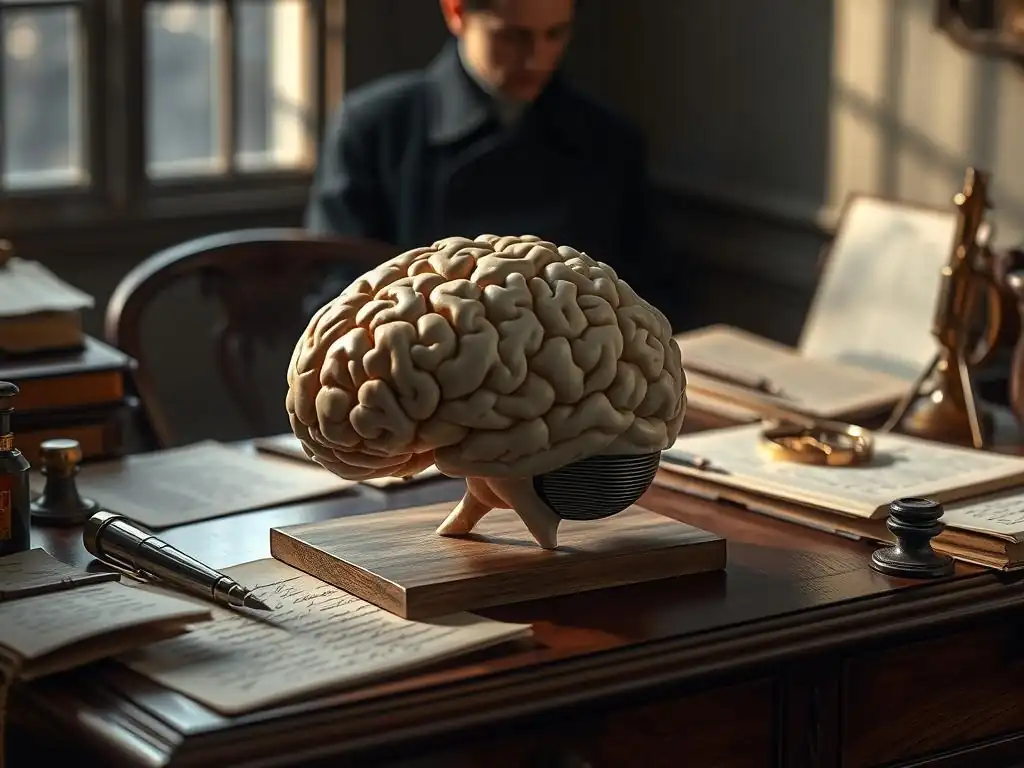
Early Anatomical Studies: Vesalius's "De humani corporis fabrica"
Andreas Vesalius's monumental 1543 work, De humani corporis fabrica, stands as a landmark achievement in the history of anatomy and a foundational text for subsequent brain science historical impact. Based on his extensive dissections of human cadavers, Vesalius provided unprecedentedly accurate and detailed illustrations and descriptions of the human body, including the brain and nervous system. He corrected numerous errors that had been perpetuated for over a thousand years based on Galen's work, which often relied on animal dissections. Vesalius's meticulous approach and insistence on direct observation revolutionized the study of anatomy.
Regarding the brain, Vesalius provided detailed drawings of its structure, including the ventricles, meninges, and major nerves. While his functional understanding was still limited and he retained some Galenic ideas about spirits flowing through ventricles, his accurate anatomical mapping provided a solid basis for future investigations. His work established the importance of empirical observation in understanding the body's physical form, setting a precedent for future scientists who would seek to understand the brain's function by first understanding its structure. This rigorous anatomical foundation was an essential step towards developing a scientific understanding of the physical basis of the mind.
The Rise of Localization Theory: Phrenology and Early Attempts to Map Brain Functions
Following the anatomical groundwork laid by figures like Vesalius, the focus began to shift towards understanding what different parts of the brain do. This led to the rise of localization theory – the idea that specific mental faculties or functions are located in particular areas of the brain. One of the most prominent early, albeit flawed, attempts at localization was phrenology, popularized in the late 18th and early 19th centuries by Franz Joseph Gall.
Gall proposed that the brain was composed of distinct 'organs,' each responsible for a specific mental trait or propensity (e.g., combativeness, benevolence, language). He believed the size of these organs influenced the shape of the skull, and thus, by examining skull bumps, one could assess an individual's character and abilities.
While phrenology was ultimately debunked due to its lack of scientific rigor and reliance on superficial skull measurements rather than direct brain study, it was significant for its time. It represented a bold attempt to link specific brain regions to specific behaviors and traits, moving away from the idea of the brain as an undifferentiated mass.
Despite its flaws, phrenology stimulated interest in the idea of functional localization, prompting later, more scientifically sound investigations into how different parts of the brain contribute to different aspects of the mind and behavior. This early, speculative phase was a necessary precursor to the development of modern functional neuroanatomy, contributing to the long arc of brain science historical impact.
The Chemical Imbalance Theory: Early Ideas Linking Bodily Fluids to Temperament
While the humoral theory of Galen was gradually being superseded by anatomical understanding, the idea that bodily fluids or chemistry influenced mental states persisted and evolved, foreshadowing later concepts of neurochemistry and chemical imbalances. Even within the emerging scientific framework, some researchers considered how substances within the body might affect temperament and behavior.
Thinkers like Thomas Willis, a 17th-century physician and anatomist, made significant contributions to neuroanatomy, accurately describing the circle of Willis (an arterial structure at the base of the brain). While still influenced by older concepts, Willis also speculated on the role of "animal spirits" and chemical processes within the brain and nerves in producing movement, sensation, and thought.
These early ideas, though vague by modern standards, represented a transition towards considering internal biological chemistry as a factor in brain function and mental states. They moved beyond the simple four humors to think about more complex interactions within the body's systems.
This nascent biochemical perspective, combined with growing anatomical knowledge and the application of physical principles (like Galvani's later work on 'animal electricity'), laid some of the earliest groundwork for the eventual understanding that neurotransmitters and other brain chemicals play a critical role in regulating mood, cognition, and behavior, forming another thread in the complex tapestry of brain science historical impact.
Impact on Psychology: The Mind as a Subject of Scientific Inquiry
The Empiricist View: Locke's Tabula Rasa and the Importance of Experience
The philosophical underpinnings of the Scientific Revolution profoundly influenced the study of the mind, paving the way for psychology as a scientific discipline. A key figure in this transition was John Locke, an English philosopher whose 1689 Essay Concerning Human Understanding argued forcefully against the idea of innate ideas. Locke proposed the concept of the mind as a tabula rasa, or blank slate, at birth.
According to this view, all knowledge and ideas are derived from sensory experience and reflection upon that experience. This empiricist perspective fundamentally shifted the focus from internal, predetermined structures of the mind to the external world and the individual's interaction with it as the source of understanding.
Locke's empiricism had a significant brain science historical impact on how the mind was conceptualized. If the mind was shaped by experience, then understanding the mind required studying those experiences and the processes by which they are acquired and organized. This provided a philosophical justification for investigating human behavior, sensation, and perception through observation and analysis, much like natural scientists studied the physical world. It framed the mind as a subject that could be studied empirically, paving the way for later psychological research into learning, memory, and the development of thought.
The Development of Experimental Psychology: Wundt's Leipzig Laboratory and the Study of Consciousness
While the Scientific Revolution provided the philosophical and methodological foundations, the formal birth of experimental psychology is often attributed to Wilhelm Wundt, who established the first dedicated psychological laboratory at the University of Leipzig, Germany, in 1879. Wundt aimed to study consciousness using methods adapted from experimental physiology. He employed techniques like introspection under controlled conditions, measuring reaction times and analyzing sensory experiences to break down mental processes into their basic components.
Wundt's work, though occurring well after the core Scientific Revolution period, was a direct descendant of its principles: the application of systematic observation, measurement, and experimentation to understand a natural phenomenon – in this case, the mind. His laboratory trained a generation of psychologists who went on to establish the field in other countries, solidifying the idea that the mind, like the body, was amenable to scientific investigation.
This marked a crucial step in the brain science historical impact, transitioning the study of the mind from purely philosophical speculation to empirical science, laying the groundwork for modern cognitive neuroscience and psychophysiology.
Brain Science Historical Impact: Specific Discoveries and Innovations
The Discovery of Nerve Cells: Ramón y Cajal's Neuron Doctrine
A pivotal moment in understanding the brain's fundamental structure came with the work of Santiago Ramón y Cajal in the late 19th and early 20th centuries. Using staining techniques developed by Camillo Golgi, Cajal meticulously examined nervous tissue under the microscope. Contrary to the prevailing reticular theory, which held that the nervous system was a continuous network, Cajal provided compelling evidence that it was composed of discrete, individual cells.
This became known as the Neuron Doctrine. He demonstrated that neurons were the basic structural and functional units of the nervous system, communicating with each other across tiny gaps (later termed synapses).
Cajal's detailed drawings and observations revolutionized neuroanatomy and neurophysiology. Identifying the neuron as the fundamental building block provided a concrete unit of analysis for studying brain function. Understanding that information is transmitted between these distinct cells laid the groundwork for understanding neural circuits and communication, which is central to all aspects of brain function, from simple reflexes to complex thought. This discovery is arguably one of the most significant in the history of brain science, with an enduring historical impact on our understanding of neurological processes and disorders.
Early Tools and Techniques for Brain Study: Galvani's Animal Electricity and Early Dissection Techniques
The Scientific Revolution and subsequent periods saw the development and refinement of tools and techniques that allowed for more direct investigation of the nervous system. While dissection had been practiced for centuries, figures like Vesalius brought unprecedented rigor and systematicity to anatomical dissection, allowing for detailed mapping of brain structures. Beyond static anatomy, however, came explorations into the activity of the nervous system.
Luigi Galvani, an 18th-century physician and physicist, conducted experiments showing that the muscles of dead frogs twitched when struck by an electrical spark or connected to a source of electricity. He proposed the concept of "animal electricity" inherent in nerve and muscle tissue.
Galvani's work, though misinterpreted in some ways initially, was groundbreaking because it suggested that electrical signals were involved in nerve function and muscle contraction. This was a radical departure from earlier ideas about spirits or humors flowing through nerves. It introduced the concept of bioelectricity, which would become a cornerstone of neurophysiology.
These early techniques – systematic dissection for structure and experiments exploring electrical properties for function – were rudimentary but essential steps. They provided the first empirical methods for probing the physical and physiological workings of the nervous system, contributing significantly to the methodological side of brain science historical impact.
The Enlightenment and Mental Health: A More Humane Approach
The Decline of Superstition: Moving Away From Demonic Possession as Explanation
Flowing directly from the rational and empirical spirit of the Scientific Revolution, the Enlightenment era (roughly 18th century) saw a further decline in the acceptance of supernatural explanations for natural phenomena, including mental illness. As scientific understanding grew and reason was championed, the idea that mental disorders were caused by demonic forces or witchcraft became increasingly untenable among intellectual and medical circles. This shift didn't happen overnight and superstitions persisted, but the dominant discourse among thinkers and reformers began to favor naturalistic explanations.
This move away from superstition was critical for paving the way for more humane treatment. If mental illness was not a sign of moral failing or demonic influence, but potentially a medical problem, then the response should be care and treatment, not punishment or exorcism. This intellectual transformation, rooted in the scientific emphasis on natural causes, was a necessary prerequisite for the later reforms aimed at improving the conditions and treatment of individuals with mental health challenges, highlighting the indirect yet powerful brain science historical impact on societal attitudes towards illness.
The Rise of Moral Treatment: Pinel's Reforms at La Bicêtre Hospital
One of the most significant practical outcomes of this changing perspective during the Enlightenment was the rise of "Moral Treatment." This approach, championed by figures like Philippe Pinel in France and William Tuke in England, advocated for treating patients with kindness, dignity, and respect, providing them with a supportive environment, engaging them in activities, and talking with them about their problems.
Pinel's reforms at the Bicêtre Hospital for men in Paris in the 1790s are particularly famous. He famously unchained patients, allowed them to move freely within the hospital grounds, and treated them as individuals deserving of compassion and therapeutic intervention rather than mere custody.
Pinel's reforms were not based on a deep understanding of brain science as we know it today, but they were profoundly influenced by the broader scientific and philosophical shifts of the preceding era. They reflected a belief that mental illness was potentially reversible and treatable, not an irreversible state caused by sin or demons.
The emphasis was on providing a structured, humane, and rational environment designed to promote recovery, reflecting the Enlightenment values of reason, humanity, and the potential for improvement. This movement marked a turning point in the history of mental healthcare, demonstrating the practical, ethical impact of the intellectual revolution on the care of the mentally ill.
Philippe Pinel: Champion of Humane Treatment for the Mentally Ill
Philippe Pinel (1745–1826) was a French physician who is widely regarded as a pioneer of psychiatry and a central figure in the movement for the humane treatment of the mentally ill. Educated during the height of the Enlightenment, Pinel was deeply influenced by its emphasis on reason, observation, and human rights. He applied these principles to his work with patients suffering from mental disorders, who were often kept in deplorable conditions, chained, neglected, and treated as incurable lunatics. Appointed to the Bicêtre Hospital in 1793 and later to the Salpêtrière Hospital for women, Pinel initiated radical reforms.
Pinel advocated for what he called "moral treatment," which involved unchaining patients, providing them with clean and comfortable living conditions, healthy food, and opportunities for exercise and engaging in work or recreational activities. Crucially, he also emphasized the importance of therapeutic conversations, listening to patients, and attempting to understand their individual histories and experiences. He believed that mental illness was a medical disorder influenced by psychological and social factors, not a moral failing or supernatural affliction.
His systematic approach to observing and classifying different forms of mental illness also contributed to the development of psychiatric diagnostics. Pinel's work had a lasting brain science historical impact not just on the theoretical understanding of mental health, but on the practical, ethical standards of care, influencing reforms across Europe and North America.
The Legacy of the Scientific Revolution for Modern Brain Science
Foundations for Future Research: Neurochemistry, Electrophysiology, and Cognitive Neuroscience
The Scientific Revolution's insistence on empirical observation, experimentation, and mechanistic explanation provided the essential intellectual foundation for the vast and complex field of modern brain science. The early anatomical studies paved the way for detailed neuroanatomy.
The initial explorations into 'animal electricity' were the precursors to electrophysiology, the study of the electrical properties of neurons and neural circuits, which is fundamental to understanding how the brain processes information. The philosophical shift towards viewing the mind as shaped by experience and amenable to empirical study laid the groundwork for experimental psychology and, eventually, cognitive neuroscience, which seeks to understand the neural basis of cognitive processes like memory, language, and consciousness.
Furthermore, the early, albeit speculative, links between bodily fluids and temperament anticipated the field of neurochemistry. Today, we understand that neurotransmitters, hormones, and other biochemicals play crucial roles in regulating mood, behavior, and cognition.
The development of psychopharmacology, which uses drugs to target these chemical systems to treat mental health conditions, is a direct descendant of this line of inquiry. Thus, the Scientific Revolution didn't provide the answers, but it provided the method and the mindset – a commitment to studying the brain and mind as natural phenomena using scientific principles – that enabled all subsequent progress in these fields, leaving an undeniable brain science historical impact.
The Ongoing Quest to Understand the Brain and Mind: Unraveling Consciousness and Neurological Disorders
The legacy of the Scientific Revolution is evident in the ongoing, ambitious quest to fully understand the human brain and mind. Modern neuroscience, building on the foundations laid centuries ago, employs sophisticated tools like fMRI, EEG, genetic sequencing, and advanced computational modeling to explore the brain's structure, function, and connectivity at multiple levels, from individual molecules to complex networks. We are making significant strides in understanding the neural basis of learning, memory, perception, and emotion.
Simultaneously, this scientific endeavor is crucial for unraveling the mysteries of neurological and psychiatric disorders. Conditions like Alzheimer's disease, Parkinson's disease, schizophrenia, depression, and anxiety are increasingly understood as disorders of the brain, involving complex interactions between genetic predisposition, environmental factors, and specific neural circuit dysfunctions. The scientific approach allows researchers to investigate the biological mechanisms underlying these conditions, paving the way for developing more effective diagnostics, treatments, and preventative strategies. The journey started by questioning ancient dogma continues today with cutting-edge research, demonstrating the enduring and evolving brain science historical impact on our understanding of health and illness.
Brain Science Historical Impact: Conclusion
The Enduring Influence of the Scientific Revolution on Mental Well-being
The Scientific Revolution represented a profound paradigm shift that fundamentally altered humanity's approach to understanding the world, including the complex relationship between the brain and the mind. By championing empirical observation, rational inquiry, and systematic experimentation, it provided the essential framework for moving beyond speculative theories and supernatural explanations towards a scientific investigation of human biology and psychology. This intellectual revolution laid the groundwork for the birth of modern anatomy, physiology, and eventually, neuroscience and experimental psychology.
The impact of this shift on mental well-being has been immense and continues to unfold. It transformed the understanding of mental illness from a spiritual or moral failing to a condition potentially rooted in the physical body or its processes, paving the way for medical and scientific approaches to treatment. It inspired the Enlightenment era's movement towards more humane care for the mentally ill, based on principles of reason and compassion rather than fear and punishment.
The tools, concepts, and methodologies developed during and after this period form the bedrock of contemporary brain research and psychiatric care. The brain science historical impact of this transformative era underscores the power of scientific inquiry to illuminate the darkest corners of human experience and improve lives.
Frequently Asked Questions
How did the Scientific Revolution change our understanding of the brain?
The Scientific Revolution shifted focus from philosophical speculation to empirical observation and experimentation, leading to the dissection of brains and early studies of their structure.
What were some key discoveries about the brain during this period?
Important discoveries included the identification of different brain regions and their potential functions, along with the emerging idea that the brain was the seat of thought and emotion, not the heart.
Who were some important figures in the development of brain science during the Scientific Revolution?
Figures like Andreas Vesalius made significant contributions to anatomical knowledge, while René Descartes' work on mind-body dualism sparked debate and further inquiry into the brain's role.
How did the development of new technologies impact brain research?
The invention of the microscope allowed scientists to examine the cellular structure of the brain, opening up new avenues for understanding its complexity at a microscopic level.
What is the lasting legacy of the Scientific Revolution on modern brain science?
The Scientific Revolution laid the foundation for modern neuroscience, establishing the importance of scientific inquiry and paving the way for advancements in understanding and treating mental health challenges.
Final Reflection: Echoes of Revolution in the Mind
The Scientific Revolution's impact on our understanding of the brain and mind isn't just a historical footnote; it's the bedrock upon which modern neuroscience is built. Its legacy continues to shape our approaches to mental health, cognitive enhancement, and even our understanding of consciousness itself. The shift from purely philosophical speculation to empirical observation, driven by figures like Descartes and Galileo, irrevocably altered the trajectory of brain science, paving the way for the incredible advancements we see today.
The enduring influence of this revolution is palpable; its echoes resonate in every fMRI scan, every cognitive behavioral therapy session, and every ethical debate surrounding neurotechnology. The very idea that the brain, once considered the seat of a mysterious soul, could be systematically studied and understood is a testament to the power of scientific inquiry. The brain is the most complex organ in the known universe,
a statement often repeated, underscores the vastness of the territory opened up by the Scientific Revolution's initial explorations. This journey, far from being complete, continues to challenge and inspire us.
Consider the implications of this historical shift. You, the reader, are a beneficiary of centuries of research, built upon the foundations laid during the Scientific Revolution. How will you contribute to this ongoing exploration? Will you seek to understand the brain's complexities further?
Will you advocate for ethical considerations in neuroscience research? The future of brain science depends not only on technological advancements but also on our collective commitment to responsible innovation and a deeper understanding of the mind. Let the legacy of the Scientific Revolution inspire you to engage with this crucial field, shaping its future with wisdom and compassion.
Unlock Your Brain's Potential: Start Exploring Now!
Thanks for diving into the fascinating world of the brain and mind! We hope you gained valuable insights into the Scientific Revolution's lasting impact on our understanding of this complex landscape. Ready to take your knowledge further?
- Dive deeper: Explore related articles on MindCareGuide.org to uncover more hidden connections between science, history, and the human mind. This is your chance to unlock even more brainpower!
- Share your thoughts: What surprised you most about the Scientific Revolution's influence on neuroscience? Let’s discuss in the comments below! Spark a conversation and help others learn!
- Consider a mindful brain exercise: Take 5 minutes to practice deep breathing and observe your own thoughts. How does this feel after learning about the history of brain science?
What new discoveries await you on your journey to understanding the brain?