
Talismans, Charms, and Rituals: Magical Thinking in Medieval Mental Healthcare

Welcome to Mind Care Guide, a space dedicated to nurturing your mental well-being.
Ever wondered how our ancestors coped with the challenges of the mind? Delve into the fascinating world of Medieval mental health rituals in our latest article. Discover how talismans, charms, and seemingly "magical" thinking played a vital role in providing comfort and care during a time vastly different from our own. Curious to learn more about these ancient practices and their surprising relevance? Keep reading to uncover the secrets of mental healthcare in the Middle Ages…
Talismans, Charms, and Rituals: Magical Thinking in Medieval Mental Healthcare
- Introduction: Medieval Beliefs and Mental Well-being
- Talismans as Protective Amulets in Medieval Mental Health
- Charms and Incantations for Healing the Mind
- Rituals and Ceremonies: Addressing Mental Distress
- The Interplay Between Religion, Magic, and Medieval Mental Healthcare
- Criticism and Skepticism: Questioning the Efficacy of Magical Practices
- The Legacy of Medieval Mental Health Rituals
- Conclusion: Re-evaluating Medieval Approaches to Mental Well-being
-
Frequently Asked Questions
- What were some common talismans and charms used in Medieval mental healthcare?
- How did religious beliefs influence mental health rituals during the Medieval period?
- What was the role of magical thinking in Medieval approaches to mental well-being?
- Were there any secular or non-religious approaches to mental healthcare in the Medieval era?
- How did social stigma impact individuals experiencing mental health challenges in Medieval society?
- Final Reflection: The Enduring Power of Ritual in Mental Wellbeing
- Unleash Your Inner Medieval Healer: Explore the Power of Ritual
Introduction: Medieval Beliefs and Mental Well-being
Understanding the Context: Mental Illness in the Middle Ages
Mental illness in the Middle Ages was understood through a complex lens that blended humoral theory, religious belief, and astrological influences. Unlike modern classifications, conditions we might recognize as depression, anxiety, or psychosis were often attributed to imbalances of the four humors (blood, phlegm, yellow bile, black bile), demonic possession, divine punishment, or the influence of celestial bodies. Medical texts, such as those by Constantine the African or the School of Salerno, described conditions like melancholia (often linked to black bile) and mania, prescribing treatments that ranged from dietary changes and herbal remedies to bleeding and purging.
However, these physical treatments were frequently intertwined with spiritual and magical interventions, reflecting a holistic worldview where the body, mind, and soul were inseparable. The suffering experienced by individuals was real, and the search for relief encompassed every available avenue, including what we might now categorize as medieval mental health rituals.
The societal response to mental distress varied significantly. While some individuals might be cared for within families or monastic communities, others, particularly those exhibiting disruptive or violent behavior, could face isolation, ridicule, or even persecution, especially if their condition was interpreted as demonic. Hospitals and almshouses sometimes provided care, though often basic and religiously oriented.
The lack of a purely biomedical understanding meant that diagnosis and treatment often relied on interpreting signs and symptoms through a framework heavily influenced by faith, folklore, and the pervasive belief in invisible forces. This context is crucial for understanding why talismans, charms, and rituals became significant components of the attempts to restore mental well-being.
The Role of Magical Thinking in Medieval Healthcare
Magical thinking, the belief that one's thoughts, words, or actions can influence external events in ways not governed by natural laws, was deeply embedded in medieval society. In healthcare, this manifested in the use of objects (talismans), spoken words (charms), and prescribed actions (rituals) believed to have supernatural efficacy. These practices were not always seen as distinct from or opposed to conventional medicine or religion; rather, they often existed in a continuum.
A physician might recommend a specific herb and a protective amulet, or a cleric might perform an exorcism and advise on diet. This integration highlights the pragmatic approach of a society facing illness with limited scientific understanding – people used every tool they believed might work. Medieval mental health rituals were thus part of a broader system of healing that sought to address the perceived spiritual, physical, and external (e.g., astrological) causes of suffering.
The effectiveness of these practices, from a medieval perspective, lay in their symbolic power, their connection to divine or mystical forces, and potentially their placebo effect. Wearing a talisman inscribed with sacred words or symbols was believed to ward off evil influences or restore balance. Reciting a charm was thought to invoke healing energies or command the illness to depart.
Participating in a ritual provided a structured way to seek divine intervention, community support, or psychological reassurance. While modern science dismisses the literal magical efficacy, these practices provided comfort, hope, and a sense of agency in a world where illness, particularly mental distress, felt unpredictable and terrifying. They were deeply meaningful cultural responses to suffering, reflecting the available frameworks for understanding and attempting to control the inexplicable.
Talismans as Protective Amulets in Medieval Mental Health
Types of Talismans Used for Mental Ailments
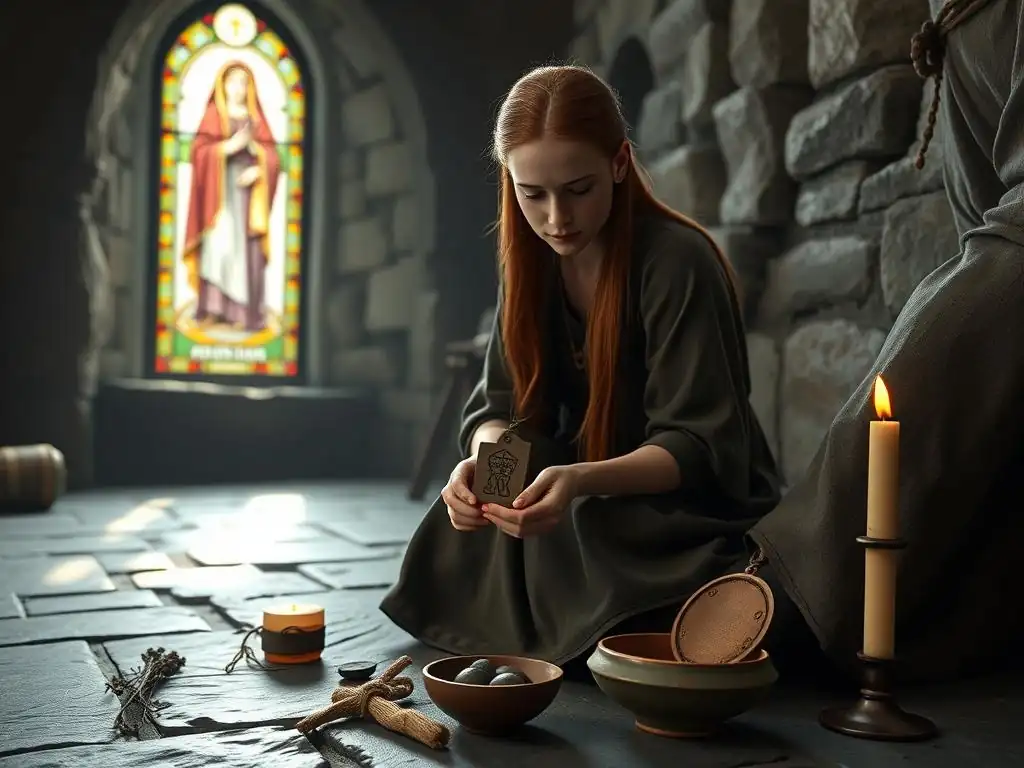
Talismans used for mental ailments in the medieval period varied widely in form and material. Common types included small pouches containing herbs, stones, or written prayers; metal pendants or rings inscribed with symbols, names of saints, or astrological signs; and pieces of parchment or paper bearing specific words or diagrams.
Materials were often chosen for their symbolic properties – certain stones like amethyst were associated with sobriety and calming the mind, while metals might be linked to planetary influences believed to affect temperament. For instance, lead was sometimes associated with Saturn, the planet linked to melancholia, and could be used in talismans intended to counter its negative effects.
These objects were often consecrated or blessed by a cleric or wise person, imbuing them with perceived spiritual power. The specific design or contents of a talisman were crucial; they were not random objects but carefully constructed items intended to channel particular forces or protections.
Beyond physical objects, written talismans were also prevalent. These often took the form of "magic squares," palindromic phrases, or combinations of letters and numbers believed to hold power. One famous example is the SATOR square (SATOR AREPO TENET OPERA ROTAS), found throughout Europe and often used as a protective charm, sometimes specifically against madness or fevers.
Another type involved writing biblical verses or the names of angels or saints on parchment, which would then be worn around the neck or placed under a pillow. The belief was that the very act of writing and carrying these powerful words created a barrier against harmful influences, including those thought to cause mental disturbance. These diverse forms of talismans reflect a rich tradition of seeking material aid imbued with spiritual or magical properties to support mental and physical well-being.
The Power of Intention: How Talismans Were Believed to Work
The perceived efficacy of talismans in medieval mental health rituals was deeply intertwined with intention – both the intention of the creator or consecrator and the intention of the wearer. It was not merely the object itself but the power invested in it through specific words, prayers, or rituals during its creation that was believed to activate its protective or healing properties. A talisman made with the wrong intention or consecrated improperly might be considered powerless or even harmful.
This highlights that these practices were not simply superstitious gestures but were embedded within a complex system of belief requiring specific knowledge and adherence to tradition. The wearer's faith and belief in the talisman's power were also considered essential; skepticism could potentially negate its effects.
Furthermore, talismans were believed to work by influencing unseen forces. If mental illness was caused by demonic influence, a talisman bearing sacred symbols or divine names was thought to repel the demon. If the cause was astrological, a talisman linked to a benevolent planet or counteracting a malevolent one could rebalance cosmic influences.
If the issue was an imbalance of humors, specific herbs or stones within a pouch might be chosen for their perceived properties in restoring equilibrium, often linked metaphorically or symbolically to the humor in question. For example, herbs associated with warmth might counter the coldness of black bile. The talisman acted as an interface between the physical world and the spiritual or cosmic realms, a tangible object channeling intangible power to protect the vulnerable mind.
Examples of Medieval Talismans and Their Intended Effects on Mental Health
Specific historical examples illustrate the variety and purpose of medieval talismans aimed at mental well-being. Manuscripts from the period, such as grimoires or medical treatises, sometimes describe or depict these objects. One common practice involved using amulets against the "nightmare," a term that could encompass sleep paralysis, disturbing dreams, or even more severe psychological distress believed to be caused by demonic or spectral assault during sleep.
Talismans for this purpose often depicted protective symbols like crosses, pentagrams, or specific angelic names, intended to ward off the perceived entity. Amulets containing verses from Psalm 91, known for its protective qualities, were also widely used to alleviate fear and anxiety, particularly that experienced during the night.
Another example involves the use of precious or semi-precious stones, each attributed with specific powers based on lapidaries (texts describing stones' properties). Agate, for instance, was believed to calm the mind and prevent madness, while sapphire was associated with clarity of thought and countering melancholy. These stones might be worn in rings or pendants or placed in proximity to the afflicted person.
Written charms intended to be worn, such as the "Charm Against Madness" found in some English manuscripts, would contain specific phrases or sequences of letters believed to bind the madness or drive it away. While the precise number of people using these talismans is impossible to quantify, their widespread description in various texts suggests they were a common and accepted part of medieval mental health rituals and healing practices.
Charms and Incantations for Healing the Mind
Verbal Remedies: The Significance of Spoken Charms
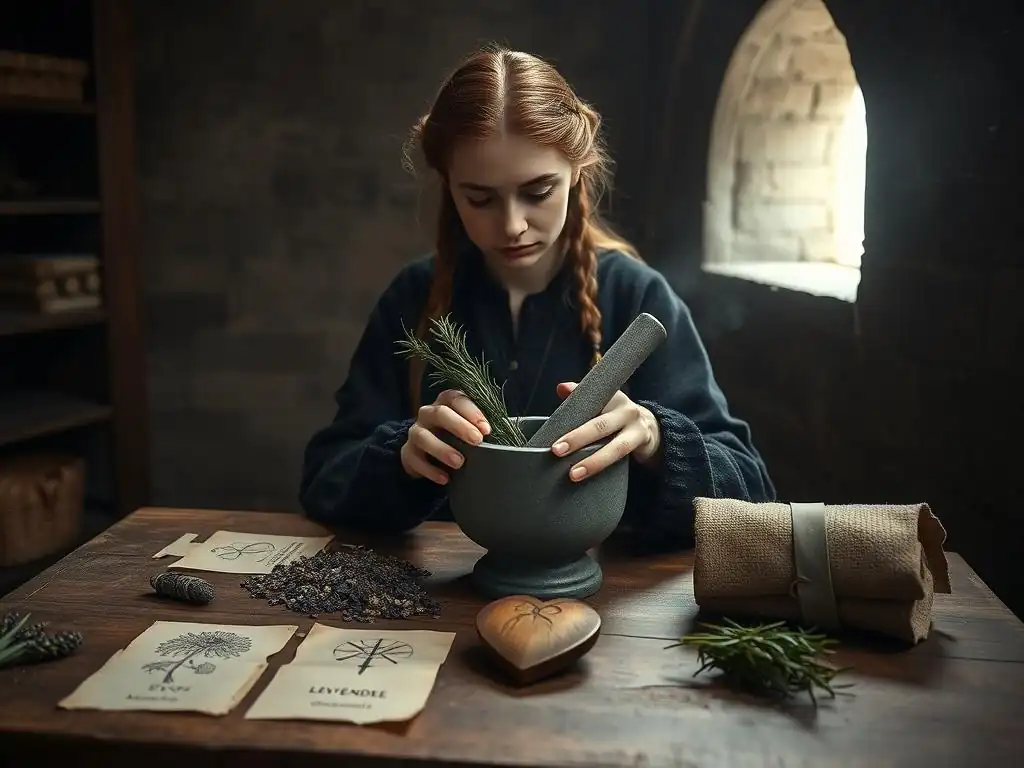
Spoken charms and incantations were a vital part of medieval healthcare, including attempts to heal the mind. Unlike talismans, which were physical objects, charms relied on the power of words – their meaning, sound, and perceived inherent magical or divine energy. These were often short, rhyming verses or prose passages, sometimes incorporating Latin phrases, biblical references, or seemingly nonsensical words believed to hold ancient power (like abraxas or abracadabra).
The act of speaking the charm itself was central; it was a performative act intended to influence reality, whether by invoking divine aid, commanding an illness to leave, or creating a protective barrier. The person reciting the charm – who might be a healer, a wise woman, a cleric, or even the afflicted individual or a family member – needed to do so with belief and often according to specific instructions regarding time of day, posture, or accompanying gestures.
The significance of spoken charms lay in their accessibility and versatility. They required no special materials beyond the ability to speak and remember the words. They could be performed anywhere, at any time the need arose. While some charms were highly ritualized and performed by specialists, others were part of common folklore, passed down through generations.
For mental distress, charms might target specific symptoms like sleeplessness, irrational fears, or the voices heard by those believed to be possessed. They provided a direct, immediate response to suffering, offering comfort through the familiar rhythm of the words and the hope invested in their power. This tradition of verbal healing highlights the deep cultural belief in the potency of language to shape experience and influence the forces believed to govern health and illness.
Charm Composition: Common Themes and Imagery
The composition of medieval charms for mental ailments often drew upon common themes and imagery rooted in Christian belief, classical mythology (though often Christianized), and folk traditions. A pervasive theme was the idea of binding or expelling the illness, often personified as a malevolent entity or spirit.
Charms might invoke the power of Christ, the Virgin Mary, or specific saints known for healing, such as Saint Dymphna, the patron saint of those suffering from mental afflictions. For example, a charm against "phrensy" (a term for delirium or madness) might call upon God to bind the illness as Christ bound the demon in the Gerasene lunatic.
Another common theme was the use of narrative elements, often referencing biblical events with healing significance. A charm might describe Christ's journey or miracles, implying that the power shown in those events could be brought to bear on the current suffering. The repetition of key words or phrases was also a common feature, intended to enhance the charm's power through insistence and rhythm.
Imagery often included symbols of purity, protection (like walls or barriers), and divine light dispelling darkness. While precise statistics on which charms were most popular for mental health are not available, manuscripts containing collections of charms provide insight into the types of afflictions they were intended to treat, with symptoms we now associate with anxiety, depression, and psychosis frequently mentioned. These verbal formulas were intricate cultural artifacts, reflecting a society's attempts to grapple with profound suffering through language imbued with power.
Case Studies: Effectiveness of Charms in Melancholia
While detailed, objective case studies in the modern sense are absent from the medieval period, contemporary accounts and medical texts offer glimpses into how charms were applied, particularly for conditions like melancholia, which was a broad term encompassing symptoms akin to modern depression, chronic anxiety, and even some psychotic features. Melancholia was often attributed to an excess of black bile, influenced by the planet Saturn, and could manifest as profound sadness, fear, irrational thoughts, and withdrawal. Alongside dietary changes, purgatives, and bloodletting, charms were frequently recommended as part of the therapeutic regimen.
Consider the example of a person suffering from deep, persistent sadness and irrational fears – symptoms consistent with melancholia. A healer might prescribe a charm to be recited daily, perhaps one invoking the Virgin Mary to intercede and lift the heavy spirit, or a charm referencing Christ's suffering and resurrection, offering hope and spiritual solace.
While we cannot measure a "cure rate" in a modern clinical trial sense, the belief in the charm's power could offer psychological comfort, reduce anxiety, and provide a sense of agency to the afflicted person and their caregivers. The act of performing the charm became a medieval mental health ritual that structured time, focused intention, and connected the individual to a larger spiritual or communal framework.
Historical accounts occasionally mention individuals recovering after such interventions, though attributing recovery solely to the charm is impossible and often intertwined with other treatments, environmental changes, or natural remission. However, the consistent presence of charms in medical and popular texts suggests they were perceived as having value in alleviating suffering, even if the mechanism was understood differently than today.
Rituals and Ceremonies: Addressing Mental Distress
Religious Rituals for Mental Purification and Healing
Religious rituals formed a significant part of medieval mental health rituals, deeply intertwined with beliefs about sin, demonic influence, and divine grace. Confession and penance were often recommended for individuals experiencing mental distress, particularly if their symptoms were interpreted as a result of sin or moral failing. The act of confessing one's sins and receiving absolution was believed to cleanse the soul and potentially alleviate suffering caused by spiritual burden.
Participation in Mass, receiving communion, and undertaking pilgrimages to sacred sites were also seen as ways to seek divine intervention and healing. Relics of saints, believed to possess potent spiritual power, were frequently used in healing rituals, either by being touched, worn, or incorporated into prayers and blessings.
Beyond individual acts, communal religious ceremonies could also serve therapeutic purposes. Special prayers were sometimes offered for the sick, including those afflicted in mind. The laying on of hands by a cleric was a ritual believed to transmit divine healing energy.
These rituals provided not only spiritual solace but also a structured way for the community to support the suffering individual, reinforcing social bonds and offering a sense of hope and belonging. The emphasis was on purification – cleansing the individual from perceived spiritual impurities or negative influences that might be causing the mental affliction. While the primary goal was often spiritual salvation, the perceived effect included alleviating earthly suffering, including that of the mind.
Medieval society was highly communal, and rituals often involved the participation of family, friends, and the wider community. These community-based medieval mental health rituals provided crucial social support, even if their primary purpose was framed in religious or magical terms. For example, a healing ceremony might involve neighbors gathering to pray over the afflicted person or participate in a procession. The collective intention and shared belief could create a powerful sense of solidarity and hope. In cases of perceived demonic possession, the entire community might participate in prayers and vigils.
Beyond explicitly healing rituals, the regular rhythms of medieval life – attending church services, participating in festivals, joining in communal labor – provided a framework of social inclusion that could mitigate some forms of mental distress like isolation or despair. While not specifically designated as mental health interventions, these communal activities offered structure, purpose, and social connection, elements recognized as important for well-being even today.
The support offered through these community rituals, whether through prayer, practical help, or simply presence, likely provided a buffer against the profound sense of isolation and fear that mental illness could induce in a society with limited understanding of its causes. While specific data on the number of people benefiting is unavailable, the structure of medieval life suggests that communal support, facilitated by shared rituals, was a significant, albeit informal, factor in coping with mental suffering.
The Ritual of Exorcism: Treating Possession and Mental Disturbance
The ritual of exorcism was perhaps the most dramatic and well-documented medieval mental health ritual, specifically aimed at treating conditions believed to be caused by demonic possession. Symptoms such as irrational speech, violent outbursts, convulsions, or hearing voices were frequently interpreted through this theological framework.
Exorcism was a formal religious ceremony, typically performed by a priest or bishop, involving prayers, blessings, the use of holy water and relics, and direct commands to the demon to leave the afflicted person's body. Texts like the Rituale Romanum (though codified later, its practices existed in earlier forms) provided guidelines for performing exorcisms, emphasizing the authority of the Church over evil spirits.
While modern medicine views these symptoms through a neurological or psychological lens, in the medieval context, exorcism was a legitimate and often first-line treatment for severe disturbances interpreted as possession. The ritual was intended to expel the malevolent entity believed to be causing the suffering. Historical accounts describe exorcisms ranging from relatively quiet affairs to highly dramatic public spectacles.
While some individuals may have experienced temporary relief or psychological shifts due to the intense focus, belief, and suggestion inherent in the ritual, others likely remained unchanged or were further traumatized. The practice highlights the profound impact of theological beliefs on the understanding and treatment of severe mental illness in the Middle Ages, viewing it not as a disease of the brain but as a battle for the soul.
The Interplay Between Religion, Magic, and Medieval Mental Healthcare
The Church's Perspective on Mental Illness and Demonic Influence
The medieval Church held a complex and often contradictory perspective on mental illness. While some conditions, like melancholia, were sometimes viewed through a humoral or naturalistic lens, others, particularly those involving erratic behavior, delusions, or voices, were frequently attributed to demonic influence as a form of spiritual warfare or divine punishment. This view was supported by biblical accounts of Christ casting out demons.
The Church provided the primary framework for understanding the supernatural world, and its teachings heavily influenced popular beliefs about the causes of suffering. Clerics were often called upon as healers, offering prayers, blessings, and, in severe cases, performing exorcisms.
However, the Church's stance wasn't monolithic. While some theologians and clergy readily attributed mental distress to demons, others were more cautious, distinguishing between natural illness and genuine possession. Figures like Thomas Aquinas discussed the influence of passions and bodily humors on the mind.
Monasteries sometimes served as places of refuge and care for the mentally afflicted, offering a structured environment and spiritual support, although the quality of care varied greatly. The Church's authority meant that its interpretation of mental illness significantly shaped how individuals were treated, often prioritizing spiritual remedies and medieval mental health rituals aimed at the soul over purely physical interventions. This perspective also led to the persecution of those whose behaviors were deemed heretical or aligned with witchcraft, sometimes blurring the lines between mental illness and perceived evil.
Folk Magic and Its Integration into Healing Practices
Alongside the formal practices of the Church and academic medicine, folk magic played a significant role in medieval healing, including approaches to mental health. This included practices passed down through generations, often involving charms, amulets, and rituals drawing on local traditions, herbal knowledge, and belief in various spirits or forces of nature. Folk healers, often known as wise women or cunning men, were consulted by people from all social strata, particularly in rural areas where access to formal medical or clerical help was limited. These practitioners often combined practical skills, like herbalism or bone-setting, with magical practices.
For mental ailments, folk magic might involve creating specific talismans containing local herbs gathered under particular astrological signs, performing rituals at crossroads or specific natural sites, or using charms unique to a particular region or lineage. While the Church often viewed these practices with suspicion, sometimes condemning them as superstition or even witchcraft, they remained popular because they were accessible, affordable, and deeply rooted in community belief systems.
The lines between accepted religious practice (like using holy water or relics) and folk magic (like using charmed objects or incantations) were often blurred in practice, as people pragmatically combined whatever methods they believed might bring relief from suffering. This integration highlights the pervasive nature of magical thinking in medieval society as a response to perceived threats, including those impacting mental well-being.
The Blurred Lines: Distinguishing Between Religious Practice and Magical Ritual
In the medieval context, the distinction between religious practice and magical ritual was often fluid and subject to interpretation. Both relied on belief in supernatural forces, the use of symbolic objects and words, and the intention to influence events beyond ordinary means.
A prayer asking for healing from a saint might look very similar to a charm invoking the saint's power, and a blessed amulet might function similarly in popular belief to a folk talisman. The Church itself utilized rituals and sacraments that, to an outside observer, could resemble magical acts – the consecration of bread and wine, the blessing of objects, the performance of exorcism.
The key difference, from the Church's perspective, lay in the source of the power invoked. True religious practice drew power from God, mediated through authorized channels (clergy, saints). Magic, particularly folk magic not sanctioned by the Church, was often viewed as drawing power from potentially dangerous or demonic sources.
However, for the average person seeking relief from mental anguish, the primary concern was efficacy. If a specific prayer, a blessed relic, or a traditional charm seemed to work, its precise categorization might be less important than the alleviation of suffering. This pragmatic approach meant that medieval mental health rituals often blended elements from formal religion and folk traditions, creating a rich tapestry of practices aimed at restoring balance to the troubled mind, reflecting a worldview where the sacred and the seemingly magical were deeply intertwined.
Criticism and Skepticism: Questioning the Efficacy of Magical Practices
Doubts and Controversies Surrounding Talismans, Charms, and Rituals
While talismans, charms, and rituals were widely used in medieval mental healthcare, they were not without their critics and controversies. Within both medical and religious circles, there were voices of skepticism regarding the efficacy and legitimacy of purely magical practices. Some physicians, while acknowledging the influence of spiritual factors, emphasized humoral or naturalistic explanations for illness and preferred treatments based on diet, herbs, and physical interventions. They might view charms and amulets as mere superstition, lacking a basis in observable bodily processes.
The Church, while endorsing prayer, blessings, and exorcism, often condemned folk magic and the use of talismans not explicitly sanctioned by religious authority. These practices were sometimes associated with paganism or, more seriously, with witchcraft and allegiance to the devil. This led to efforts by the Church to suppress certain forms of magic, creating a tension between official doctrine and popular practice.
Individuals who relied heavily on folk charms or who were perceived as practicing unsanctioned magic for healing could face suspicion or even prosecution. This internal debate within medieval society highlights that the acceptance of medieval mental health rituals was not universal and that there were ongoing discussions about the boundaries between faith, medicine, and potentially illicit magic.
Alternative Approaches to Mental Healthcare in the Medieval Period
Despite the prevalence of magical and religious approaches, alternative, more 'naturalistic' methods were also employed in medieval mental healthcare, albeit often alongside the former. Humoral theory provided a framework for physical interventions. Physicians prescribed specific diets to balance humors – for melancholia, this might involve warming, moistening foods and avoiding cold, dry ones. Herbal remedies were widely used; for instance, borage was believed to lift the spirits, and poppy was used for sedation to treat sleeplessness or agitation. Phlebotomy (bloodletting) and purgatives were common treatments intended to expel excess humors or toxins believed to cause mental imbalance.
Furthermore, environmental factors were considered important. Rest, quiet surroundings, pleasant music, and engaging in enjoyable activities were sometimes recommended, particularly for those suffering from melancholia or 'phrensy'. Baths and massage were also used.
While these methods might seem more akin to modern therapeutic approaches, they were still understood within the medieval framework of humors and natural forces. Importantly, these 'naturalistic' treatments were rarely used in isolation. A physician prescribing a specific diet might simultaneously recommend wearing an amulet or saying certain prayers, illustrating the integrated nature of medieval healing practices, where physical, spiritual, and perceived magical interventions were often combined in the attempt to restore mental well-being.
John of Salisbury's Critique of Superstitious Practices
A notable example of medieval skepticism towards purely magical practices comes from figures like John of Salisbury (c. 1120-1180), an English philosopher and bishop. In his work Policraticus, John critically examined various aspects of medieval life and thought, including superstitions and belief in omens, astrology, and magical charms. While he accepted the reality of demonic influence and the efficacy of prayer and sacraments, he was highly critical of practices he considered vain or superstitious, particularly those involving the manipulation of demons or reliance on astrological predictions for personal gain or healing outside of divine will.
John of Salisbury argued against the use of talismans and charms that were based on what he saw as empty formulas or demonic pacts, distinguishing them from legitimate religious acts. He criticized the credulity of people who placed more faith in such practices than in God's providence or sound reasoning.
His critique reflects a strain of thought within the medieval intellectual elite that sought to rationalize belief and distinguish between genuine piety and what they considered misguided or dangerous superstition. While his views might not have eliminated the widespread use of folk practices, they demonstrate that there was an intellectual counter-current questioning the uncritical acceptance of all medieval mental health rituals and magical interventions, particularly those perceived as stepping outside the bounds of orthodox Christian belief.
The Legacy of Medieval Mental Health Rituals
Influence on Modern Beliefs and Superstitions
The legacy of medieval mental health rituals is still subtly visible in modern beliefs and superstitions, particularly those related to luck, protection, and unexplained phenomena. While we no longer attribute mental illness to humoral imbalances or demonic possession in a clinical sense, the idea of external forces influencing our well-being persists in various forms. Wearing a "lucky" charm for an important event, avoiding black cats, knocking on wood, or crossing fingers are all examples of modern superstitions that echo the medieval reliance on symbolic actions and objects for protection or favorable outcomes.
More directly, some folk healing traditions in various cultures still incorporate elements reminiscent of medieval practices, such as the use of specific herbs combined with prayers or blessings, or the belief in the 'evil eye' and the use of amulets to ward it off. While these are generally not considered part of mainstream mental healthcare today, they persist in cultural practices and can provide psychological comfort and a sense of control for individuals who believe in them.
The enduring appeal of these practices suggests a fundamental human desire to find tangible or ritualistic ways to influence unpredictable aspects of life, including health, reflecting a continuity of magical thinking from the medieval period to the present day.
Studying medieval mental health rituals offers valuable lessons about the social and cultural construction of mental illness. It demonstrates that understandings of distress are deeply embedded within the prevailing worldview, including religious beliefs, scientific paradigms (like humoral theory), and folk traditions. What is considered a symptom, what is seen as a cause, and what is deemed an appropriate treatment are not universal but are shaped by the historical and cultural context. The medieval period reminds us that mental suffering has always been a human constant, but the way it is interpreted and addressed varies dramatically across time and place.
This historical perspective encourages empathy and humility when considering different approaches to mental well-being. While we may view medieval magical practices as scientifically unfounded, they were genuine attempts to alleviate suffering based on the best available knowledge and belief systems of the time. Understanding these practices helps us appreciate the human need for meaning, hope, and agency in the face of illness.
It also highlights the powerful role of social support, ritual, and belief in the healing process, factors that are still relevant in modern mental healthcare, even if framed differently. The medieval experience underscores that effective care must consider not just the biological aspects of illness but also the individual's psychological, social, and spiritual context.
The Importance of Compassionate Care, Then and Now
Perhaps the most enduring lesson from examining medieval approaches to mental well-being, including their medieval mental health rituals, is the fundamental importance of compassionate care. Regardless of the theoretical framework used to understand mental illness – whether humors, demons, or neurochemistry – individuals experiencing distress are vulnerable and in need of support, understanding, and empathy. Medieval texts and accounts, despite their different explanations for suffering, often reveal a desire to help and heal, expressed through prayer, physical care, and communal rituals.
While the specific methods employed in the Middle Ages may seem alien to us today, the underlying human need for connection, comfort, and a sense of hope in the face of overwhelming internal experience remains constant. Modern mental healthcare, with its evidence-based treatments and scientific understanding, stands in stark contrast to medieval practices.
However, the historical record serves as a reminder that effective care is not solely about clinical intervention; it is also about treating individuals with dignity, providing social support, fostering hope, and acknowledging the profound impact of belief and context on the experience of illness. The compassionate intent behind many medieval efforts to alleviate mental suffering, even through practices we now deem magical, is a thread that connects their world to our own.
Conclusion: Re-evaluating Medieval Approaches to Mental Well-being
The Enduring Appeal of Magical Thinking
The study of medieval mental health rituals reveals the enduring appeal of magical thinking as a response to uncertainty and suffering. In a world where the causes of mental illness were largely unknown and uncontrollable through conventional means, turning to talismans, charms, and rituals provided a sense of agency and hope.
These practices offered explanations rooted in the prevailing spiritual and cosmic frameworks and provided tangible (or audible) actions that individuals and communities could take. While modern society largely rejects overt magical explanations for health, the psychological comfort derived from ritual, symbolism, and belief in unseen forces persists in various forms, from personal superstitions to the placebo effect in medicine.
This enduring appeal speaks to a fundamental human need for narrative, meaning, and control in the face of the unpredictable nature of illness. Medieval practices, however unscientific by today's standards, fulfilled these needs within their cultural context. Recognizing this helps us understand why, throughout history and in various cultures, people have turned to practices that transcend purely material explanations when confronting the mysteries of the mind.
The Need for Evidence-Based Mental Healthcare
Examining the limitations and potential harms of medieval magical practices for mental health underscores the critical need for evidence-based mental healthcare. While medieval interventions were rooted in genuine attempts to help, their efficacy was based on belief and anecdotal observation rather than systematic testing. This could lead to ineffective treatments, wasted resources, and, in cases like harmful exorcisms or social ostracism based on misinterpretations, significant harm to the afflicted individual. The lack of a scientific understanding meant that effective treatments were often missed, and harmful ones were sometimes employed.
Today, mental healthcare relies on rigorous scientific research to understand the biological, psychological, and social factors contributing to mental illness and to develop treatments with demonstrated efficacy. Therapies like cognitive behavioral therapy, medication, and peer support are based on evidence from clinical trials and scientific studies.
While acknowledging the historical context and the compassionate intent behind medieval practices, the stark contrast in outcomes and understanding highlights the immense progress made through the development of evidence-based approaches. This historical perspective serves as a powerful reminder of why relying on tested and proven methods is essential for providing the best possible care for those experiencing mental distress.
Reflections on Medieval Mental Health Rituals and Modern Mental Health Practices
Reflecting on medieval mental health rituals in light of modern practices reveals both differences and surprising points of connection. The primary difference lies in the underlying explanatory models and the methods derived from them – a shift from supernatural and humoral theories to neurobiological, psychological, and social models. This has led to the development of highly effective treatments unimaginable in the Middle Ages.
However, some elements resonate across the centuries. The importance of social support and community involvement, central to medieval healing rituals, is recognized as crucial in modern recovery models. The psychological power of ritual, belief, and hope, inherent in medieval practices, is acknowledged in the placebo effect and the therapeutic alliance in modern therapy.
Ultimately, the history of medieval mental health rituals is a story of humanity grappling with profound suffering using the tools and understanding available at the time. It is a history marked by both misguided attempts and genuine compassion.
By examining these past practices, we gain a deeper appreciation for the progress made in understanding and treating mental illness while also being reminded of the enduring human needs for hope, connection, and compassionate care – needs that transcend historical periods and theoretical frameworks. The journey from medieval charms to modern therapy reflects a continuous human effort to bring light and healing to the complex landscape of the mind.
Frequently Asked Questions
What were some common talismans and charms used in Medieval mental healthcare?
Common talismans included amulets inscribed with religious symbols or believed to possess protective powers. Charms were often verbal incantations or written spells aimed at warding off evil spirits or promoting healing.
How did religious beliefs influence mental health rituals during the Medieval period?
Religion played a central role, with rituals often involving prayer, pilgrimage to holy sites, and reliance on saints' intercession. Mental illness was sometimes viewed as divine punishment or demonic possession.
What was the role of magical thinking in Medieval approaches to mental well-being?
Magical thinking attributed supernatural causes to mental distress, leading to practices like exorcism and the use of potions believed to alter the patient's mental state.
Were there any secular or non-religious approaches to mental healthcare in the Medieval era?
While religion dominated, some physicians used herbal remedies and focused on balancing the humors (bodily fluids). These were often supplementary to religious rituals.
Mental illness carried significant stigma, leading to social isolation, discrimination, and even persecution. Individuals were often labeled as possessed or mad, impacting their treatment and societal acceptance.
Final Reflection: The Enduring Power of Ritual in Mental Wellbeing
The exploration of medieval mental health practices reveals a surprising truth: the human need for ritual and symbolic healing transcends time. While our understanding of mental illness has evolved dramatically, the fundamental desire to find solace and meaning in the face of suffering remains a constant. The seemingly "magical" rituals employed in the medieval period, though rooted in a different worldview, offer a powerful lens through which to examine our own contemporary approaches to mental wellbeing.
The enduring legacy of these practices lies not in their literal efficacy, but in their profound impact on the human psyche. The act of performing a ritual, whether it involves a specific talisman or a carefully orchestrated ceremony, creates a sense of agency and control in the face of overwhelming uncertainty. This resonates deeply with modern therapeutic approaches that emphasize mindfulness, self-care, and the power of intention. The greatest magic a person can possess is the magic of believing in themselves.
This simple truth, though perhaps not explicitly articulated in medieval times, underpins the effectiveness of many of the rituals described.
Consider the power of ritual in your own life. What practices, routines, or beliefs bring you comfort, strength, or a sense of purpose? Perhaps it's a morning meditation, a cherished tradition, or simply a quiet moment of reflection. Embrace the inherent human need for ritual and explore its potential to enhance your own mental and emotional wellbeing. By understanding the historical context of these practices, we can gain a deeper appreciation for the enduring power of symbolic healing and its relevance in our own lives today.
Unleash Your Inner Medieval Healer: Explore the Power of Ritual
Thanks for diving into the fascinating world of medieval mental healthcare! You've now gained insights into the surprisingly nuanced approaches to healing used centuries ago. Ready to take this knowledge further?
- Craft your own simple ritual: Based on the practices explored in the article, design a personal ritual to promote calm or focus. Even a small, mindful act can make a difference.
- Share your thoughts: What aspects of medieval healing practices resonate most with you, and why? Let's discuss in the comments below!
- Explore further: Research other historical healing traditions and their potential relevance to modern well-being.
What unique ritual could you create to address a modern-day challenge, drawing inspiration from the past?