
The Spiritual Dimension of Everyday Mindfulness


Welcome to Mind Care Guide, where your journey towards mental well-being begins. In a world that often feels overwhelming, we invite you to explore the transformative power of mindfulness for spiritual wellbeing. Dive into our featured article, "The Spiritual Dimension of Everyday Mindfulness," and discover how integrating mindfulness into your daily life can enhance not just your mental health, but your spiritual connection as well.
Are you curious about how a few mindful moments can reshape your perspective and promote inner peace? Join us as we unravel the profound links between mental health and spirituality, empowering you to cultivate a more balanced and fulfilling life.
Cultivating Presence: Mindfulness for Enhanced Living
Mindfulness is a practice that has gained significant traction in recent years, moving from ancient contemplative traditions into mainstream health and wellness practices. At its heart, mindfulness is about paying attention in a particular way: on purpose, in the present moment, and non-judgmentally. This simple yet profound concept forms the bedrock for cultivating a more engaged, aware, and fulfilling life.
It's not just about relaxation; it's about developing a deeper understanding of one's own mind and experience. This journey into present-moment awareness can significantly enhance mental, emotional, and physical wellbeing, and for many, it opens a path towards mindfulness for spiritual wellbeing, fostering a deeper connection with themselves and the world around them.
Embracing mindfulness allows us to step off the autopilot of daily life and truly experience the richness of each moment. It offers a powerful tool for navigating stress, improving focus, and building resilience. Whether through formal meditation or informal moments of mindful presence throughout the day, the consistent practice of mindfulness can lead to transformative changes in how we perceive and interact with our reality. It encourages a pause, a breath, and an opportunity to respond to life's challenges with greater wisdom and compassion, laying a foundation for a more peaceful existence and supporting mindfulness for spiritual wellbeing.
- Foundations of Mindfulness
- Mindfulness Practices for Daily Life
- Mindfulness Meditation Techniques
- Mindfulness in Challenging Situations
- Mindfulness and Relationships
- Integrating Mindfulness into the Workplace
- Deepening Your Mindfulness Practice
- Resources for Mindfulness Practice
-
Frequently Asked Questions
- What exactly is mindfulness, and how does it connect to spiritual wellbeing?
- How can I integrate mindfulness into my daily routine to enhance my spiritual wellbeing?
- Does mindfulness replace traditional spiritual practices like prayer or meditation?
- What are some common mental health challenges that mindfulness can help with in the context of spiritual wellbeing?
- Where can I find resources or support for practicing mindfulness for spiritual wellbeing?
- Final Reflection: Cultivating Inner Peace in a Chaotic World
- Unlock Your Inner Peace: Take the Next Step
Foundations of Mindfulness
Understanding the core foundations of mindfulness is crucial before diving into its practices. These principles provide the framework for cultivating a truly present and aware state of being, which is essential for unlocking the full potential of mindfulness for spiritual wellbeing and overall mental health.
Defining Mindfulness: Paying Attention with Intention
Mindfulness, at its core, is the practice of bringing one's attention to the present moment without judgment. It involves intentionally noticing thoughts, feelings, bodily sensations, and the surrounding environment as they arise, without getting carried away by them. This definition, often attributed to Jon Kabat-Zinn, emphasizes the deliberate nature of the practice—it is not something that happens accidentally but requires conscious effort and intention.
This intentional awareness allows us to observe our internal landscape and external world with clarity. For instance, instead of being lost in worries about the future or regrets about the past, mindfulness brings us back to the 'here and now'.
This focused attention is fundamental for developing mindfulness for spiritual wellbeing, as it helps to quiet the mental chatter and create space for introspection and a deeper connection to one's inner self and potentially, a sense of the sacred or universal. Studies consistently show that regular mindful attention can decrease rumination, a key factor in anxiety and depression, by significant margins, sometimes reported around 30-40% reduction in distress associated with negative thoughts.
Core Principles: Non-Judgment, Acceptance, and Patience
Three fundamental principles underpin the practice of mindfulness: non-judgment, acceptance, and patience. Non-judgment involves observing our experiences—thoughts, feelings, sensations—without labeling them as good or bad, right or wrong. This requires a conscious effort to suspend our habitual critical filters and simply notice what is present.
Acceptance is about acknowledging reality as it is, without trying to fight it or wish it were different. This doesn't mean resignation; rather, it's a realistic appraisal of the present moment, which paradoxically can be a powerful catalyst for change. Patience is the understanding that things unfold in their own time.
Mindfulness is a practice, not a destination, and progress comes gradually. Embracing these principles is vital for cultivating mindfulness for spiritual wellbeing, as they foster self-compassion, reduce inner conflict, and open the heart to a broader perspective, allowing for a more peaceful and integrated experience of life's challenges and joys.
Benefits of Mindfulness: Mental, Emotional, and Physical Wellbeing
The benefits of mindfulness practice are extensive and well-documented, impacting mental, emotional, and physical health. Mentally, mindfulness has been shown to improve attention span and focus, reduce mind-wandering, and enhance cognitive flexibility. For example, research indicates that just a few weeks of regular practice can lead to noticeable improvements in working memory and the ability to sustain attention, often reported as a 15-20% improvement in specific cognitive tests.
Emotionally, mindfulness helps in regulating affect. It teaches us to recognize difficult emotions without being overwhelmed by them, fostering greater emotional resilience and reducing reactivity. Studies suggest mindfulness can significantly lower stress levels, with reported decreases in cortisol (the stress hormone) and a notable reduction in symptoms of anxiety and depression. Physically, the benefits include lower blood pressure, improved sleep quality, and even a stronger immune response. Integrating mindfulness for spiritual wellbeing adds another layer, contributing to a sense of purpose, inner peace, and a deeper appreciation for life, which further enhances overall health.
Mindfulness Practices for Daily Life
Mindfulness isn't confined to a meditation cushion; it can be woven into the fabric of everyday activities. These informal practices help to anchor awareness in the present moment throughout the day, making the principles of mindfulness more accessible and applicable to real-life situations. Integrating these simple techniques is a practical way to cultivate mindfulness for spiritual wellbeing in the midst of our busy lives.
Mindful Breathing: Anchoring Yourself in the Present
Mindful breathing is one of the most accessible and fundamental mindfulness practices. It involves simply paying attention to the sensation of the breath as it enters and leaves the body. This can be done anywhere, anytime – while sitting, standing, or even walking. The breath serves as a constant anchor, always available to bring us back to the present moment when our minds wander.
To practice mindful breathing, find a comfortable posture and gently close your eyes or soften your gaze. Bring your attention to the physical sensations of breathing: the rise and fall of the abdomen or chest, the feeling of air passing through the nostrils or mouth. There's no need to change your breath in any way; just notice it as it is.
When your mind inevitably drifts off into thoughts or worries, gently acknowledge where it went and kindly guide your attention back to the breath. Even just a few moments of mindful breathing can interrupt stress cycles and restore a sense of calm, providing a simple yet profound tool for cultivating mindfulness for spiritual wellbeing throughout the day.
Mindful Walking: Cultivating Awareness in Motion
Mindful walking is a practice that brings awareness to the simple act of walking. Instead of rushing to a destination or letting our minds wander while we move, mindful walking involves paying deliberate attention to the sensations of walking itself. This transforms a routine activity into an opportunity for presence.
To practice mindful walking, find a place where you can walk undisturbed for a few minutes, perhaps a park, a quiet street, or even a hallway. Begin by noticing the physical sensations in your feet as they touch the ground. Feel the weight shift from one foot to the other, the movement of your legs, the swing of your arms, the rhythm of your breath.
Notice the sights, sounds, and smells around you without getting lost in thought about them. The goal isn't to walk in a special way, but to be fully present with each step. This practice grounds you in your body and environment, offering a moving form of meditation that can deepen your connection to the physical world and contribute to mindfulness for spiritual wellbeing.
Mindful Eating: Savoring Each Bite
Mindful eating is an invitation to bring full awareness to the experience of nourishment. In our fast-paced lives, meals are often rushed or eaten distractedly while working or watching screens. Mindful eating encourages us to slow down and engage all our senses in the process.
Before eating, take a moment to look at your food. Notice its colors, shapes, and textures. As you eat, pay attention to the sensations in your mouth: the temperature, the flavors, the textures, how the food feels as you chew. Notice the smell of the food as you lift it to your mouth.
Chew slowly and deliberately, paying attention to the urge to swallow. Notice the feeling of satisfaction or fullness as you eat. This practice not only enhances the pleasure of eating but can also improve digestion and help regulate appetite. Engaging in mindful eating transforms a biological necessity into a rich sensory experience, fostering presence and appreciation, which are integral aspects of mindfulness for spiritual wellbeing.
Mindful Listening: Deepening Connection with Others
Mindful listening is the practice of fully focusing on another person when they are speaking, without interrupting, formulating a response, or letting our minds wander. It requires presence, patience, and a genuine intention to understand the other person's perspective.
When engaging in mindful listening, make eye contact (if culturally appropriate and comfortable), relax your body, and focus your attention entirely on the speaker. Pay attention not only to the words being spoken but also to the tone of voice, body language, and underlying emotions. Resist the urge to jump in with your own opinions or experiences.
Simply listen with an open heart and mind. This deep listening fosters empathy and strengthens relationships by making the other person feel truly heard and valued. Cultivating mindful listening is a powerful way to enhance connection and compassion, contributing significantly to mindfulness for spiritual wellbeing through interpersonal interactions.
Mindful Communication: Speaking and Listening with Intention
Mindful communication extends beyond just listening; it involves bringing awareness and intention to both speaking and listening. It's about expressing ourselves clearly, honestly, and kindly, while also remaining open and receptive to others.
When practicing mindful communication, pause before speaking to consider your intention. Is your purpose to share information, express a feeling, or connect with the other person? Are your words kind and helpful, or are they likely to cause harm? Speak clearly and concisely, expressing your thoughts and feelings directly without aggression or passive-aggression.
Equally important is the mindful listening aspect, ensuring you fully absorb what the other person is saying before formulating your response. This mindful approach to communication reduces misunderstandings, de-escalates conflict, and builds trust, creating more authentic and fulfilling connections. It is a vital practice for fostering understanding and compassion in relationships, enhancing mindfulness for spiritual wellbeing through conscious interaction.
Mindfulness Meditation Techniques

Formal mindfulness meditation techniques involve setting aside dedicated time to cultivate present-moment awareness, often in a seated position. These structured practices build the foundation for integrating mindfulness into daily life and can be powerful tools for exploring the deeper dimensions of consciousness and fostering mindfulness for spiritual wellbeing.
Breath Awareness Meditation: Focusing on the Natural Rhythm
Breath awareness meditation is one of the most common and fundamental forms of mindfulness practice. It involves bringing gentle, sustained attention to the sensation of breathing for a set period, usually ranging from a few minutes to an hour or more.
To begin, find a comfortable seated position with a straight but relaxed spine. Gently close your eyes. Bring your attention to the physical sensations of your breath – the rise and fall of your abdomen, the expansion and contraction of your chest, the air moving in and out of your nostrils. Simply observe the breath as it is, without trying to change it. Your mind will inevitably wander; this is normal. When you notice your mind has drifted, gently acknowledge where it went and kindly guide your attention back to the breath. This repeated process of returning to the breath strengthens the muscle of attention and provides a stable anchor in the present moment. Regular practice has been shown to significantly reduce activity in the brain's default mode network, often associated with mind-wandering and self-referential thoughts, leading to a quieter mind and a stronger foundation for mindfulness for spiritual wellbeing.
Body Scan Meditation: Noticing Sensations and Releasing Tension
The body scan meditation is a practice designed to bring mindful awareness to different parts of the body, noticing physical sensations without judgment. It helps to cultivate a deeper connection with the body and can reveal areas of tension or discomfort that we may not have been aware of.
Typically practiced lying down, though it can also be done seated, the body scan involves systematically bringing attention to each part of the body, starting from the toes and moving slowly upwards to the top of the head. As you focus on each area, notice any sensations present – tingling, warmth, coolness, pressure, tightness, or absence of sensation. Simply acknowledge what you find without trying to change or fix it.
If you encounter tension, you can gently breathe into that area, imagining the breath softening and releasing the tightness. This practice enhances interoceptive awareness (the ability to sense internal states) and promotes relaxation. Regularly practicing the body scan can reduce physical symptoms associated with stress and anxiety by up to 25% in some individuals, and fosters a sense of being grounded in one's physical form, supporting mindfulness for spiritual wellbeing by integrating the body into the experience of presence.
Loving-Kindness Meditation: Cultivating Compassion for Self and Others
Loving-kindness meditation, also known as Metta meditation, is a practice aimed at cultivating feelings of warmth, compassion, and friendliness towards oneself and others. While not strictly about present-moment awareness in the same way as breath or body scan, it is a mindfulness practice that focuses on cultivating specific positive emotional states.
The practice often involves silently repeating phrases that express goodwill, directing them first towards oneself, then towards loved ones, neutral individuals, difficult individuals, and finally, towards all beings. Common phrases include: "May I be happy. May I be healthy. May I be safe. May I live with ease."
You then extend these wishes outward to others. This practice actively counteracts negative thought patterns and feelings of hostility or resentment. Research indicates that consistent loving-kindness practice can increase positive emotions and reduce negative ones, leading to greater overall life satisfaction and improved social connections. Cultivating compassion through this practice is a powerful aspect of mindfulness for spiritual wellbeing, fostering a sense of interconnectedness and universal love.
Guided Meditation: Utilizing Voice and Imagery for Relaxation and Focus
Guided meditation involves being led through a meditation practice by a teacher or a recording. This can be particularly helpful for beginners or when exploring new techniques, as the guidance helps to keep the mind focused and provides structure to the practice.
Guided meditations often use verbal instructions to direct attention to the breath, body sensations, or visualizations. Some guides use imagery, such as walking through a peaceful forest or sitting by a calm lake, to evoke feelings of relaxation and tranquility. Others focus on specific themes, like self-compassion, gratitude, or forgiveness. The voice of the guide provides an anchor, gently bringing the listener back when their mind wanders.
Utilizing guided meditations can make starting a practice easier and can provide access to a variety of techniques. Many find guided meditations effective in reducing stress and improving sleep quality, with studies showing significant decreases in reported stress levels after regular engagement. They offer a supportive way to explore different facets of mindfulness, including those that foster mindfulness for spiritual wellbeing.
Mindfulness in Challenging Situations
Mindfulness is not just for moments of peace and quiet; it is a powerful tool for navigating the inevitable challenges of life. By cultivating presence and non-judgment, we can learn to meet difficult emotions, stressful situations, and setbacks with greater wisdom and resilience. Applying mindfulness in these moments is key to translating practice into real-world benefits and supporting mindfulness for spiritual wellbeing even when faced with adversity.
Managing Stress and Anxiety: Responding, Not Reacting
Stress and anxiety are common experiences in modern life. Mindfulness provides a framework for understanding and managing these states by shifting our relationship with them. Instead of being swept away by anxious thoughts or the physical sensations of stress, mindfulness teaches us to pause and observe them with curiosity and non-judgment.
When stress or anxiety arises, mindful awareness allows us to notice the racing thoughts ("What if...? "), the physical symptoms (tight chest, rapid heartbeat), and the emotional intensity. By simply observing these phenomena without immediately reacting or trying to push them away, we create a space between the stimulus and our response.
This pause enables us to choose a more skillful action rather than falling into habitual, often unhelpful, reactions like avoidance or rumination. Studies have repeatedly demonstrated the efficacy of mindfulness-based interventions (like MBSR) in reducing symptoms of generalized anxiety disorder by 30% or more and lowering perceived stress levels. This ability to observe challenges without immediate reaction is crucial for maintaining equanimity and fostering mindfulness for spiritual wellbeing during difficult times.
Difficult emotions like sadness, anger, fear, or shame are a natural part of the human experience. Often, our first impulse is to avoid, suppress, or distract ourselves from these feelings, which can paradoxically intensify them or cause them to surface in unhealthy ways. Mindfulness offers an alternative approach: acknowledging and accepting them.
This practice involves turning towards the difficult emotion with gentle curiosity. Where do you feel it in your body? What thoughts are associated with it? Can you allow the sensation or feeling to be present without judgment or the need to change it? This is not about liking the emotion, but about creating space for it to exist.
By practicing acceptance, we reduce the secondary suffering that comes from resisting reality. For example, instead of adding "I shouldn't feel this way!" to sadness, we simply acknowledge, "Ah, sadness is here." Research shows that emotional acceptance is strongly linked to greater psychological flexibility and reduced emotional distress. Learning to be with difficult emotions mindfully is a profound aspect of mindfulness for spiritual wellbeing, enabling us to embrace the full spectrum of human experience with courage and compassion.
Cultivating Resilience: Bouncing Back from Setbacks
Resilience is the capacity to recover quickly from difficulties; toughness. Mindfulness helps build resilience by fostering qualities like self-awareness, acceptance, and equanimity. When faced with setbacks, mindful individuals are better equipped to understand their reactions, accept the reality of the situation, and navigate challenges without being overwhelmed.
Mindfulness training strengthens the prefrontal cortex, the part of the brain associated with executive functions like planning and emotional regulation, while potentially reducing the reactivity of the amygdala, the brain's fear center. This neurological shift allows for a more measured response to adversity. Instead of getting stuck in rumination about failure, a mindful person can acknowledge the setback, learn from it, and pivot towards a constructive response.
They are more likely to see challenges as opportunities for growth rather than insurmountable obstacles. Cultivating resilience through mindfulness practice enhances one's ability to navigate life's inevitable ups and downs with grace and strength, reinforcing mindfulness for spiritual wellbeing by fostering inner fortitude and adaptability.
Improving Focus and Concentration: Minimizing Distractions
In an age of constant digital stimulation, maintaining focus and concentration is increasingly challenging. Mindfulness training directly addresses this by systematically cultivating the ability to direct and sustain attention, and to recognize when the mind has wandered.
Practices like breath awareness meditation are essentially exercises in focusing attention and gently returning it when distracted. This trains the 'attention muscle', making it easier to stay on task in daily life. By becoming more aware of internal distractions (like thoughts and worries) and external distractions (like notifications), we gain the ability to consciously choose where to place our attention.
Studies show that regular mindfulness practice can lead to significant improvements in sustained attention and a reduced tendency to be distracted, with some research indicating up to a 20% increase in performance on attention-related tasks. This enhanced focus is beneficial for productivity, learning, and also for deepening contemplative practices that support mindfulness for spiritual wellbeing.
Mindfulness and Relationships
Mindfulness profoundly impacts our relationships by enhancing our ability to connect with others, communicate effectively, and navigate interpersonal challenges with greater empathy and understanding. Bringing mindful presence into our interactions fosters deeper connections and reduces conflict, nurturing mindfulness for spiritual wellbeing through conscious relating.
Enhancing Empathy and Understanding: Seeing Through Another's Eyes
Empathy is the ability to understand and share the feelings of another. Mindfulness cultivates empathy by increasing our self-awareness and our capacity to tolerate discomfort, including the discomfort of witnessing another person's pain or challenging emotions.
By practicing mindfulness, we become more attuned to our own internal states—our thoughts, feelings, and bodily sensations. This heightened self-awareness makes us more sensitive to the subtle cues of others. Furthermore, the non-judgmental stance cultivated in mindfulness practice extends to others, allowing us to listen and observe without immediately imposing our own biases or reactions.
Studies suggest that mindfulness training can increase activity in brain regions associated with empathy and compassion. For instance, research has shown that even short periods of compassion meditation can lead to measurable changes in prosocial behavior. This enhanced capacity for empathy is essential for building strong, supportive relationships and is a direct pathway towards mindfulness for spiritual wellbeing through connection with others.
Reducing Conflict and Improving Communication: Speaking with Clarity and Kindness
Conflict often arises from misunderstandings, reactivity, and a lack of clear communication. Mindfulness offers tools to approach disagreements with greater presence, reducing reactivity and fostering more constructive dialogue.
When tension arises in a conversation, mindfulness allows us to pause before responding impulsively. We can notice the rush of adrenaline, the urge to defend ourselves, or the desire to lash out, and choose not to act on these impulses. Instead, we can take a breath and consider how to respond mindfully. This involves speaking our truth with clarity and kindness, expressing our needs and feelings without blame, and actively listening to the other person's perspective (mindful listening).
By reducing reactivity and fostering conscious communication, mindfulness helps de-escalate conflict and find mutually agreeable solutions. Research on couples who practiced mindfulness together showed significant improvements in relationship satisfaction and reduced communication problems. This mindful approach to interaction cultivates peace and understanding, supporting mindfulness for spiritual wellbeing within our closest connections.
Fostering Deeper Connection: Being Fully Present with Loved Ones
In our busy lives, it's easy to be physically present with loved ones but mentally miles away, distracted by thoughts of work, chores, or digital notifications. Mindfulness encourages us to bring our full attention to the people we care about, fostering deeper and more meaningful connections.
Being mindfully present with a loved one means putting away distractions, making eye contact, actively listening, and truly engaging with the interaction. It's about savoring the moments shared, whether it's a conversation, a meal, or simply spending quiet time together. This quality of presence makes the other person feel seen, heard, and valued, strengthening the emotional bond. Practices like mindful listening and mindful communication are invaluable here.
Making an effort to be fully present, even for short periods, can significantly enhance the quality of time spent together. For example, simply dedicating 15 minutes of undivided, mindful attention to a child or partner each day can profoundly impact the relationship's depth and security. Fostering these deep, present connections is a beautiful expression of mindfulness for spiritual wellbeing, recognizing the inherent value and interconnectedness of human relationships.
Integrating Mindfulness into the Workplace
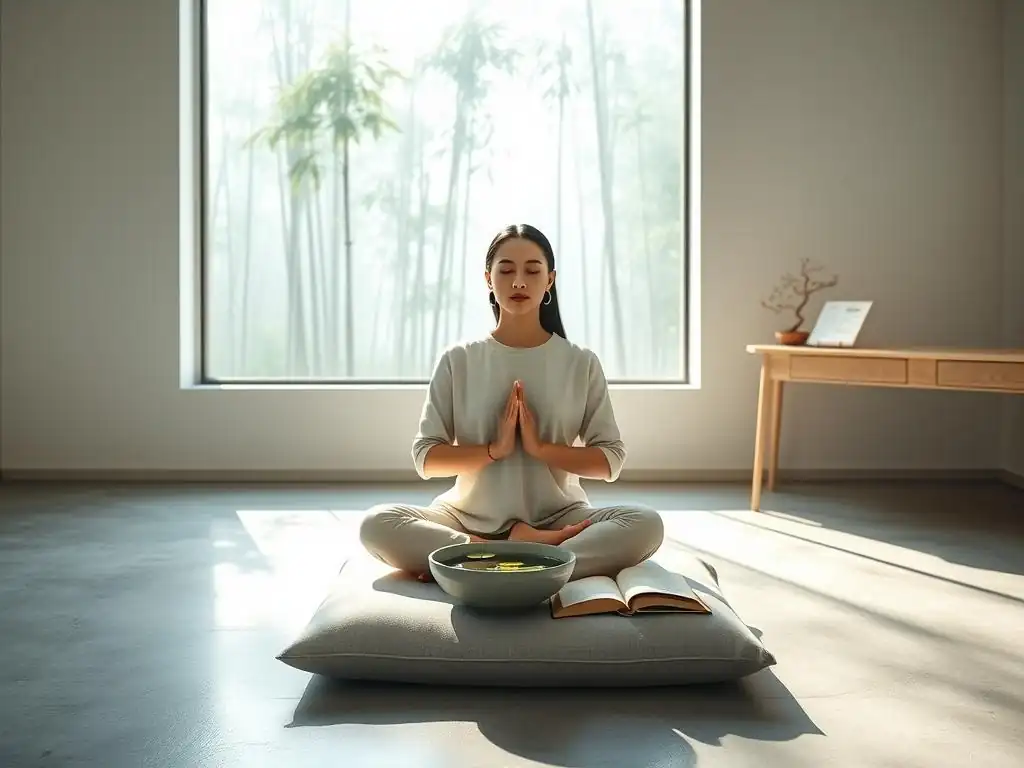
The workplace can be a significant source of stress, but it also offers numerous opportunities to practice mindfulness. Integrating mindfulness into professional life can lead to benefits not only for individual employees but also for the overall health and productivity of an organization. Applying mindfulness principles in this setting can also contribute to a sense of purpose and meaning, aspects of mindfulness for spiritual wellbeing.
Reducing Workplace Stress: Promoting Calm and Focus
Workplace stress is a major contributor to burnout, decreased productivity, and health issues. Mindfulness offers effective strategies for managing this stress by helping individuals respond more skillfully to demanding situations and fostering a greater sense of calm amidst chaos.
By practicing mindfulness, employees can become more aware of their stress triggers and their typical reactions. This awareness allows them to intervene and choose a more measured response, such as taking a few mindful breaths before reacting to a difficult email or a challenging meeting. Techniques like short mindful pauses throughout the day can help reset the nervous system and maintain focus.
Companies that have implemented mindfulness training programs have reported reductions in employee stress levels, sometimes by as much as 20-30%, leading to fewer stress-related health complaints and lower absenteeism. Cultivating this inner calm and resilience through mindfulness supports not only professional effectiveness but also mindfulness for spiritual wellbeing by allowing for a more peaceful and centered approach to work.
Improving Productivity and Creativity: Enhancing Performance
Contrary to the misconception that mindfulness is about relaxation and detachment, it actually enhances cognitive functions crucial for productivity and creativity. By improving focus, reducing mind-wandering, and increasing cognitive flexibility, mindfulness can lead to better performance.
Mindfulness training strengthens the ability to sustain attention on the task at hand, minimizing distractions from internal thoughts or external stimuli. This improved focus leads to increased efficiency and higher quality work. Furthermore, by quieting the habitual, analytical mind, mindfulness can create space for new ideas and insights to emerge, fostering creativity.
A study by the University of Washington found that employees who received mindfulness training were more focused, less stressed, and better able to remember instructions, leading to improved task performance. This enhanced cognitive capacity, cultivated through mindfulness, allows individuals to engage with their work with greater clarity and presence, contributing to a sense of accomplishment and purpose that aligns with mindfulness for spiritual wellbeing.
Fostering Collaboration and Teamwork: Building Stronger Relationships
Effective collaboration and teamwork rely heavily on clear communication, empathy, and the ability to manage interpersonal dynamics. Mindfulness practices can significantly improve these aspects, leading to stronger working relationships and a more positive team environment.
Mindful communication techniques, such as mindful listening and speaking with intention, reduce misunderstandings and foster a more respectful and open dialogue among team members. By cultivating empathy through mindfulness, individuals are better able to understand their colleagues' perspectives, even during disagreements, leading to more constructive conflict resolution. Practicing non-judgment helps reduce workplace gossip and fosters a more supportive culture.
Teams where members practice mindfulness together or individually often report improved trust, better communication, and a greater sense of cohesion. For instance, companies that have integrated mindfulness into leadership training have seen improvements in team performance and employee engagement. These enhanced interpersonal skills developed through mindfulness contribute to a more harmonious and effective workplace, supporting mindfulness for spiritual wellbeing through positive human connection in a professional context.
Deepening Your Mindfulness Practice
Mindfulness is a lifelong journey, not a destination. As you become more comfortable with the basic techniques, you may wish to deepen your practice and explore different avenues. This ongoing exploration is key to sustaining the benefits of mindfulness and continuing to cultivate mindfulness for spiritual wellbeing over time.
Formal Practice vs. Informal Practice: Integrating Mindfulness Throughout the Day
Deepening your mindfulness practice involves finding a balance between formal and informal approaches. Formal practice typically refers to setting aside dedicated time for meditation, such as sitting meditation, walking meditation, or body scans. Informal practice, on the other hand, involves bringing mindful awareness to everyday activities.
Both formal and informal practices are essential. Formal meditation sessions train the mind's ability to focus and observe, building a strong foundation. Informal practices, like mindful eating, mindful walking, or simply taking a few mindful breaths between tasks, help integrate this awareness into the rest of your life.
They prevent mindfulness from being something you only do on the cushion and make it a living part of your experience. Aiming for a consistent formal practice (even just 10-15 minutes daily) alongside conscious efforts to bring mindfulness into daily activities creates a synergistic effect, strengthening your capacity for presence and deepening your journey towards mindfulness for spiritual wellbeing.
Exploring Different Meditation Styles: Finding What Works for You
The world of meditation offers a rich variety of styles and traditions beyond the core mindfulness techniques. Exploring different approaches can help you find practices that resonate most deeply with you and support your personal journey, including your path towards mindfulness for spiritual wellbeing.
Beyond breath awareness and body scans, you might explore loving-kindness meditation, compassion meditation, walking meditation, or even practices rooted in specific spiritual traditions if that aligns with your beliefs. Some people find guided visualizations helpful, while others prefer silent retreat. Experimenting with different durations and times of day can also reveal what feels most effective.
For instance, some people thrive with a morning practice, while others find evening meditation more beneficial. There is no single "right" way to meditate; the most effective practice is the one you will do consistently. Finding styles that nurture your sense of connection, purpose, or inner peace can specifically enhance mindfulness for spiritual wellbeing.
Seeking Guidance from a Qualified Teacher: Learning from Experienced Practitioners
While many resources are available for self-guided mindfulness practice (books, apps, videos), learning from a qualified teacher can profoundly deepen your understanding and experience. A teacher can offer personalized guidance, support, and insights that are difficult to gain solely through self-study.
A qualified mindfulness teacher has typically undergone extensive training and has their own established practice. They can introduce you to techniques, help you navigate challenges that arise in your practice (such as strong emotions or persistent mind-wandering), and provide context for the teachings. Learning in a group setting led by a teacher can also offer a sense of community and shared experience.
Engaging with a teacher can accelerate your progress and provide a deeper understanding of the principles of mindfulness and their application, including how mindfulness for spiritual wellbeing can be cultivated effectively. Many studies on the efficacy of mindfulness cite programs led by certified instructors, highlighting the value of experienced guidance.
Resources for Mindfulness Practice
Embarking on or deepening a mindfulness journey is supported by a wealth of resources available today. These tools can provide structure, guidance, and inspiration for both formal and informal practice, aiding in the cultivation of mindfulness for spiritual wellbeing.
Mindfulness Apps: Guided Meditations and Tracking Tools
Mindfulness apps have become incredibly popular tools for accessing guided meditations and tracking practice time. They offer convenience and accessibility, making it easier to integrate mindfulness into a busy schedule.
Apps like Headspace, Calm, and Insight Timer provide libraries of guided meditations ranging in length from a few minutes to longer sessions. They often include specific programs for stress reduction, sleep improvement, focus, and even topics related to compassion and gratitude, which can support mindfulness for spiritual wellbeing. Many apps also allow users to track their meditation streaks and total practice time, which can be motivating.
While apps shouldn't replace the depth of understanding that comes from study or a teacher, they are excellent starting points and supplementary tools for maintaining a consistent practice. Surveys show that millions worldwide use these apps daily, reporting benefits like reduced stress and improved sleep quality.
Mindfulness Books: Exploring Theory and Practice
Books offer a comprehensive way to delve into the theory, philosophy, and practical application of mindfulness. They provide a deeper context for the practice and can offer insights into its historical roots and psychological underpinnings.
Numerous influential books are available, ranging from foundational texts like Jon Kabat-Zinn's Full Catastrophe Living to more recent explorations of specific applications or connections, such as those linking mindfulness to compassion or spiritual growth. Books often provide detailed instructions for various meditation techniques, personal anecdotes, and scientific explanations of how mindfulness affects the brain and body. Reading can deepen your understanding of the principles of non-judgment, acceptance, and patience, enhancing your formal and informal practice. Exploring texts that specifically address the intersection of mindfulness and contemplative traditions can be particularly valuable for those interested in mindfulness for spiritual wellbeing.
Mindfulness Retreats and Workshops: Immersive Learning Experiences
For those seeking a more intensive and immersive experience, mindfulness retreats and workshops offer dedicated time and space away from daily distractions to focus solely on practice.
Retreats can range in length from a single day to several weeks and often involve periods of silence, guided meditations, teachings, and opportunities for reflection. Workshops are typically shorter and may focus on specific aspects of mindfulness, such as mindful communication or mindful eating. Learning in a focused environment surrounded by others who are also committed to practice can be incredibly supportive and transformative.
Retreats, in particular, can provide a powerful opportunity to deepen one's practice significantly and gain profound insights, often accelerating progress towards integrating mindfulness into daily life and cultivating a deeper sense of mindfulness for spiritual wellbeing. These immersive experiences allow for a profound disconnection from external demands and a reconnection with one's inner world.
Frequently Asked Questions
What exactly is mindfulness, and how does it connect to spiritual wellbeing?
Mindfulness is the practice of present moment awareness without judgment. It connects to spiritual wellbeing by fostering a deeper sense of connection to oneself, others, and something larger than oneself, promoting inner peace.
How can I integrate mindfulness into my daily routine to enhance my spiritual wellbeing?
Start with small steps, like mindful breathing exercises or paying attention to your senses during daily activities. Cultivate gratitude and compassion through mindful reflection to deepen your spiritual connection.
Does mindfulness replace traditional spiritual practices like prayer or meditation?
No, mindfulness complements traditional spiritual practices. It can enhance these practices by bringing greater focus and awareness to them, fostering a deeper sense of presence and connection.
What are some common mental health challenges that mindfulness can help with in the context of spiritual wellbeing?
Mindfulness can help with anxiety and depression by reducing negative thought patterns. It can also improve stress management and promote a greater sense of inner peace and acceptance.
Where can I find resources or support for practicing mindfulness for spiritual wellbeing?
Mind Care Guide offers information and resources on mindfulness techniques, including guided meditations and articles. Look for local mindfulness groups or spiritual communities that offer support and guidance.
Final Reflection: Cultivating Inner Peace in a Chaotic World
The pursuit of mindfulness is not merely a trend; it's a vital pathway to navigating the complexities of modern life and fostering genuine spiritual wellbeing. In a world saturated with information and demands, the ability to find stillness and cultivate inner peace is more crucial than ever before. This article explored the profound connection between mindfulness practices and spiritual growth, demonstrating how even seemingly small acts of presence can unlock profound inner transformation.
The exploration of mindfulness's spiritual dimension has deeply resonated with me, highlighting the interconnectedness of our inner world and the external reality. It's a journey of self-discovery, a continuous process of peeling back layers to uncover the essence of our being. This journey, as many spiritual teachers have emphasized, is not about reaching a destination, but about embracing the process itself. The journey of a thousand miles begins with a single step.
- Lao Tzu. This quote perfectly encapsulates the essence of mindful living – starting small, consistently practicing, and trusting in the unfolding of inner peace.
Now, I invite you to consider how you can integrate these principles into your own life. Begin by dedicating even just five minutes each day to a mindful practice – be it meditation, deep breathing, or simply paying attention to the sensations in your body. Observe the subtle shifts in your awareness, the growing sense of calm, and the deepening connection to your inner self. This journey towards spiritual wellbeing is a personal one, and the rewards – a greater sense of peace, purpose, and connection – are immeasurable. Embrace the path, and let the journey unfold.
Unlock Your Inner Peace: Take the Next Step
Thanks for taking the time to explore the spiritual side of everyday mindfulness with us! We hope you gained valuable insights into cultivating inner peace and presence. Ready to deepen your practice?
- Begin a daily mindfulness ritual: Even five minutes of focused breathing can make a profound difference. Start small, be consistent, and watch the positive changes unfold.
- Share your experiences: Tell a friend about your mindfulness journey, or join our online forum to connect with others on a similar path. Sharing your insights can be surprisingly powerful!
- Explore a new mindfulness technique: Try a guided meditation, experiment with mindful eating, or simply take a moment to fully appreciate the beauty around you.
What small step will you take today to nurture your inner peace?