
Your Personalized Plan for Managing Digital Anxiety


Welcome to Mind Care Guide, a sanctuary for your mental well-being.
Feeling overwhelmed by the constant demands of the digital world? You're not alone. Many struggle with the anxieties that technology can bring. That's why we've created a space to explore practical strategies and resources to help you navigate this ever-evolving landscape. Let's begin crafting your personalized Digital Anxiety Management Plan, designed to bring calm and control back into your life. Ready to take the first step towards a healthier relationship with technology?
Managing Social Media Anxiety: A Personalized Plan
- Understanding Social Media Anxiety and Its Impact
-
Creating Your Social Media Anxiety Management Plan: A Step-by-Step Guide
- Step 1: Assessing Your Current Social Media Habits and Anxiety Levels
- Step 2: Setting Realistic Goals for Reducing Social Media Overload
- Step 3: Implementing Strategies for Managing Social Media Anxiety
- Step 4: Building a Supportive Digital Environment
- Step 5: Practicing Self-Care and Mental Health Techniques
- Tools and Resources for Social Media Anxiety Relief
- Maintaining Your Social Media Anxiety Management Plan for Long-Term Well-being
-
Frequently Asked Questions
- What is a Digital Anxiety Management Plan?
- Why do I need a Digital Anxiety Management Plan?
- What are some key components of a Digital Anxiety Management Plan?
- How can Mind Care Guide help me create a Digital Anxiety Management Plan?
- How often should I review and adjust my Digital Anxiety Management Plan?
- Final Reflection: Reclaiming Your Digital Wellbeing
- Unleash Your Digital Wellbeing: Take Control Now!
Social media anxiety refers to feelings of stress, worry, or apprehension related to using social media platforms. This isn't a formal clinical diagnosis but describes a common experience where individuals feel pressure to present a perfect online image, constantly compare themselves to others, or fear missing out (FOMO) on social activities or trends they see online. It matters because it can significantly impact mental well-being, contributing to feelings of inadequacy, isolation, and even depression in some cases. Recognizing social media anxiety is the first step toward developing an effective digital anxiety management plan.
This form of anxiety often manifests when users are overly concerned with likes, comments, follower counts, or the perceived success and happiness of others online. For example, seeing carefully curated posts from friends or strangers can trigger feelings of jealousy or the belief that one's own life is somehow lacking. This constant comparison can create a cycle of negative self-talk and heightened anxiety every time the app is opened. Understanding these underlying mechanisms is crucial for anyone seeking to manage their social media use more healthily and implement a personal social media anxiety management plan.
Excessive engagement with social media has been linked to various negative psychological outcomes. Studies, such as one often cited from the University of Pennsylvania involving young adults, suggested that limiting social media use to about 30 minutes per day led to significant reductions in loneliness, depression, and anxiety over a three-week period compared to a control group. This highlights how the sheer volume of time spent scrolling can contribute to mental distress.
Furthermore, the algorithmic nature of many platforms is designed to keep users engaged for as long as possible, often presenting content that evokes strong emotional responses, which can include anxiety or envy. The constant stream of information and social cues can overwhelm the brain, leading to feelings of mental fatigue or 'digital burnout'. For individuals already prone to anxiety, this environment can exacerbate symptoms, making a structured digital anxiety management plan even more necessary.
Identifying what specifically triggers your social media anxiety is a critical step in creating a personalized management plan. Triggers can vary widely from person to person. Common examples include seeing posts about others' achievements, vacation photos, relationship updates, or even specific types of content like news or political discussions that evoke strong emotions. Pay attention to the accounts or types of posts that consistently leave you feeling stressed, sad, jealous, or inadequate.
Symptoms of social media anxiety can include physical manifestations like restlessness, difficulty concentrating after using social media, disrupted sleep patterns, or even a racing heart when anticipating checking notifications. Emotionally, you might experience increased irritability, feelings of worthlessness, or a persistent fear that you are missing out on something important happening online. Keeping a simple journal for a week, noting how you feel before, during, and after social media sessions, can provide valuable insights into your specific triggers and symptoms, forming the basis of your social media anxiety management plan.
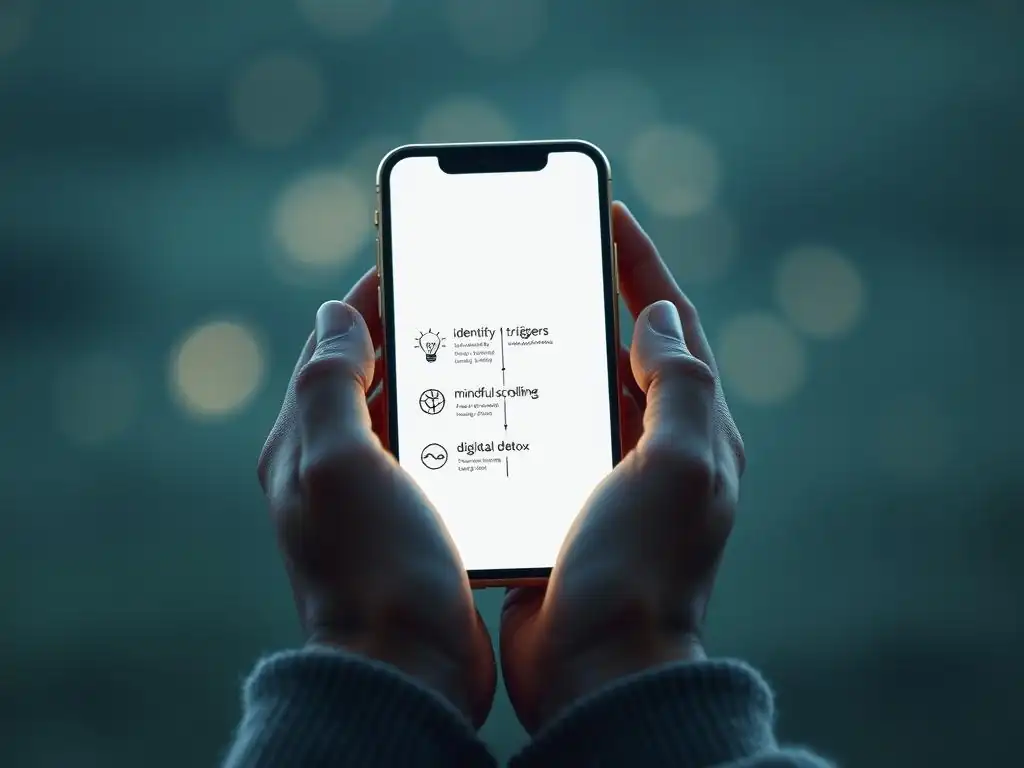
Before you can manage social media anxiety, you need a clear picture of your current relationship with it. This involves honestly assessing how much time you spend on platforms and how that usage impacts your emotional state. Many people underestimate their actual screen time until they see the data. This assessment is the foundational step in building an effective digital anxiety management plan tailored to your specific needs.
Understanding not just the quantity but also the quality of your social media interactions is vital. Are you passively scrolling, actively engaging in conversations, or primarily consuming content? Do certain times of day or specific platforms correlate with higher levels of anxiety? A thorough assessment provides the data points needed to set realistic goals for your social media anxiety management plan.
Using Screen Time Tracking on iOS/Android to Monitor Usage
Most modern smartphones have built-in tools to track screen time. On iOS, it's called "Screen Time," and on Android, it's typically found under "Digital Wellbeing." These features provide detailed reports on how much time you spend on your phone overall, as well as breaking down usage by specific apps. They can show you daily and weekly averages, and even how many times you pick up your phone.
Using these tools for a week or two without trying to change your behavior can give you an accurate baseline. You might be surprised to find you're spending several hours a day on social media apps. This objective data is incredibly powerful for confronting habits and understanding the scale of the challenge you face in managing social media anxiety.
Self-Assessment Questionnaire: Identifying Anxiety-Related Behaviors on Social Media
Complementing screen time data with a self-assessment helps connect usage patterns to feelings. Consider asking yourself questions like:
- Do I feel compelled to check social media first thing in the morning or late at night?
- Do I compare myself negatively to others based on what I see online?
- Do I feel anxious if I haven't posted something in a while?
- Do I constantly seek validation through likes or comments?
- Do I worry about missing out on events or news if I'm not constantly connected?
Answering these questions honestly can reveal specific behavioral patterns linked to your social media anxiety. For instance, realizing you feel anxious primarily when comparing your life to curated online versions of others' lives points toward comparison as a major trigger. This qualitative data, combined with screen time figures, paints a comprehensive picture for your digital anxiety management plan.
Once you have assessed your current habits and identified triggers, the next step in your social media anxiety management plan is to set clear, achievable goals. Simply saying "I want to use social media less" is often too vague. Specific, measurable, achievable, relevant, and time-bound (SMART) goals are far more effective. For example, instead of unlimited scrolling, aim to limit a specific app like Instagram to 30 minutes per day.
It's important to start small to avoid feeling overwhelmed or discouraged. If you currently spend two hours a day on social media, trying to cut down to 10 minutes overnight is likely unsustainable. A more realistic approach might be to aim for a 20% reduction in the first week, then gradually decrease further. This phased approach makes your digital anxiety management plan feel more manageable and increases the likelihood of long-term success.
Defining Achievable Social Media Detox Goals
Social media detox goals can range from complete abstinence for a set period (e.g., a weekend or a week) to simply reducing usage during specific times (e.g., no social media after 9 PM or before 9 AM). Another common goal is to reduce the number of platforms you actively use, focusing only on those that provide genuine value or connection.
Consider setting goals related to when and how you use social media, not just how much. For instance, a goal could be "I will not check social media during meals" or "I will only check social media once per day." These behavioral goals can be easier to track and achieve than purely time-based limits for some individuals, contributing effectively to their social media anxiety management plan.
Prioritizing Offline Social Interactions for Mental Well-being
A key component of reducing reliance on social media and managing anxiety is actively nurturing offline connections. Schedule time to meet friends or family in person, join a club or group related to your interests, or volunteer in your community. These real-world interactions provide genuine social support and a sense of belonging that online interactions often cannot replicate.
Make a conscious effort to fill the time you used to spend scrolling with engaging offline activities. This could be reading a book, pursuing a hobby, exercising, or spending time in nature. Shifting your focus and energy away from the digital realm towards enriching real-life experiences is a powerful strategy within any digital anxiety management plan.
Setting goals is important, but implementing practical strategies is where your social media anxiety management plan comes to life. There are numerous techniques you can employ to reduce the urge to check apps, limit exposure to triggering content, and change the way you interact with platforms. Consistency in applying these strategies is key to seeing results.
These strategies aim to create friction between you and the potentially anxiety-inducing aspects of social media, making it less automatic and more intentional. By building these small barriers and changing your interaction patterns, you regain control over your digital habits, which is fundamental for managing social media anxiety effectively.
Time Blocking for Limiting Social Media Screen Time
Time blocking involves allocating specific, limited periods during your day for social media use. For example, you might decide you will only check social media for 15 minutes during your lunch break and another 15 minutes in the evening. Outside of these designated blocks, you commit to not opening the apps.
This method helps structure your usage and prevents mindless scrolling throughout the day. Many smartphone tracking tools allow you to set app limits, which can automatically block access once your allocated time is up, providing an external constraint that supports your internal commitment to your social media anxiety management plan.
Strategies for Ignoring Social Media Notifications
Notifications are designed to pull you back into the app, often triggering an immediate urge to check. Disabling notifications for social media apps is one of the most effective ways to break the cycle of constant checking and reduce anxiety. You can turn off push notifications entirely or selectively disable badges, sounds, and banners in your phone's settings.
Consider also muting group chats or specific conversations that cause stress or distraction. By removing these constant digital nudges, you reduce the interruption of your focus and lower the ambient sense of urgency, making it easier to stick to your planned usage times and significantly aiding your digital anxiety management plan.
Mindful Social Media Use: Focusing on Intentional Interactions
Instead of aimlessly scrolling, approach social media with intention. Before opening an app, ask yourself: Why am I going on social media right now? What do I hope to get out of this interaction? Am I looking to connect with specific people, find information, or just trying to avoid something else?
When you are on the platform, be present. Pay attention to how certain posts or interactions make you feel. If you encounter something that triggers anxiety, acknowledge it without judgment and consciously choose how to respond – perhaps by closing the app or making a note of the trigger. Mindful use transforms social media from a reactive habit into a more controlled and less anxiety-provoking activity, central to a successful social media anxiety management plan.
Step 4: Building a Supportive Digital Environment
Your social media feeds should ideally be places that uplift and inform you, not sources of stress. Actively curating the content you see is a powerful strategy within your digital anxiety management plan. Think of your feed as a garden; you need to weed out what's harmful and cultivate what helps you flourish.
This step is about taking control of the information you consume online. By being selective about who and what you follow, you can significantly reduce exposure to triggers and create a more positive online experience, which is vital for managing social media anxiety in the long term.
Curating Your Social Media Feeds for Positive Content
Make an effort to follow accounts that inspire you, make you laugh, teach you something new, or share content that aligns with your values and interests in a healthy way. Seek out accounts focused on mental well-being, hobbies, nature, art, or positive news. Many platforms allow you to prioritize certain accounts or topics.
Actively engaging with positive content can help shift your overall perception of social media from a source of comparison and anxiety to one of connection and inspiration. This proactive approach to shaping your online world is a key component of a comprehensive digital anxiety management plan.
Unfollowing or Muting Accounts That Trigger Anxiety
This is a crucial step. If certain friends, influencers, news sources, or types of content consistently make you feel bad about yourself, anxious, angry, or inadequate, it's okay to remove them from your feed. You don't need to announce it; most platforms offer options to unfollow, mute, or snooze posts from specific accounts without notifying them.
Be ruthless in pruning your feed. Your mental health is more important than any perceived social obligation to follow everyone you know. Removing these negative inputs directly reduces your exposure to triggers, making your social media anxiety management plan much more effective.
Step 5: Practicing Self-Care and Mental Health Techniques
Managing social media anxiety isn't just about changing your online habits; it's also about strengthening your overall mental resilience. Incorporating self-care practices and proven mental health techniques into your daily routine provides a buffer against anxiety, whether it stems from digital sources or elsewhere.
These practices help regulate your nervous system, improve your mood, and build a stronger sense of self-worth that is less dependent on external validation, including that sought on social media. They are essential pillars supporting your entire digital anxiety management plan.
Incorporating Mindfulness and Meditation into Your Daily Routine
Mindfulness involves paying attention to the present moment without judgment. Practicing mindfulness or meditation for even a few minutes each day can help you become more aware of your thoughts and feelings, including those triggered by social media, without getting swept away by them. Apps like Headspace or Calm offer guided meditations, but simply taking a few deep breaths and noticing your surroundings can be a form of mindfulness.
Regular practice can reduce overall anxiety levels and improve your ability to consciously choose how to respond to social media triggers rather than reacting automatically. This heightened self-awareness is invaluable for adhering to your social media anxiety management plan.
Engaging in Physical Activity to Reduce Anxiety
Exercise is a powerful stress and anxiety reducer. Physical activity releases endorphins, which have mood-boosting effects, and can help distract you from anxious thoughts. Aim for regular physical activity, whether it's a brisk walk, jogging, yoga, dancing, or playing a sport.
Even moderate exercise for 30 minutes a few times a week can make a noticeable difference in your overall mental state. Integrating exercise into your routine provides a healthy outlet for stress and complements your efforts to manage digital anxiety through changes in online behavior.
Prioritizing Sleep for Optimal Mental Health
Adequate sleep is fundamental for mental and physical health. Sleep deprivation can exacerbate anxiety and make it harder to cope with stressors, including those from social media. Aim for 7-9 hours of quality sleep per night.
Establish a relaxing bedtime routine, avoid screens (including social media) for at least an hour before bed, and ensure your bedroom is dark, quiet, and cool. Prioritizing sleep provides your brain with the rest it needs to function optimally and manage emotional challenges, thereby strengthening your capacity to maintain your social media anxiety management plan.

Fortunately, you don't have to navigate managing social media anxiety alone. A variety of tools and resources are available that can support your efforts, from technology designed to help you control your usage to communities where you can find understanding and shared experiences.
Leveraging these resources can provide practical assistance and emotional support as you implement your personalized digital anxiety management plan. They can help you stay accountable, learn new strategies, and feel less isolated in your journey.
Beyond the built-in phone features, several third-party apps offer more advanced functionalities for tracking and limiting social media use. Apps like Freedom, StayFree, or OffScreen allow you to block specific apps or websites for set periods, schedule internet downtime, and provide detailed reports on your usage patterns across devices.
Some apps offer gamification features or motivational prompts to encourage you to stick to your limits. Exploring these options can help you find a tool that best supports your specific goals within your social media anxiety management plan, providing an external structure to reinforce your intentions.
Connecting with others who understand the challenges of social media anxiety can be incredibly validating. Online forums, support groups on platforms like Reddit (e.g., r/nosurf, r/digitaldetox), or specialized mental health communities can offer a space to share experiences, challenges, and strategies.
Hearing how others are navigating their digital anxiety management plan can provide new perspectives and a sense of camaraderie. While these communities can be helpful, it's important to choose platforms that foster positive and supportive interactions, avoiding those that might inadvertently increase anxiety.
If social media anxiety is significantly impacting your daily life, relationships, work, or overall well-being, it may be beneficial to seek professional help. Therapists or counselors specializing in anxiety disorders or technology addiction can provide personalized strategies and support.
Cognitive Behavioral Therapy (CBT) or other forms of talk therapy can help you understand the root causes of your anxiety, challenge negative thought patterns related to social media, and develop healthier coping mechanisms. A mental health professional can offer tailored guidance and support that strengthens your individual digital anxiety management plan and addresses any underlying issues.
Creating a social media anxiety management plan is a significant achievement, but consistency is key for long-term success. Managing digital anxiety is often an ongoing process that requires regular review and adjustment as your habits and triggers may evolve over time.
Viewing your plan not as a one-time fix but as a dynamic guide will help you stay adaptable and committed to maintaining a healthy relationship with social media. This final section focuses on strategies for sustaining your progress and ensuring your digital well-being remains a priority.
Regularly Reviewing and Adjusting Your Goals
Life changes, and so might your social media habits and the impact they have on you. Schedule regular check-ins with yourself – perhaps monthly or quarterly – to review how well your social media anxiety management plan is working. Look at your screen time data, reflect on your emotional state, and consider whether your current goals are still realistic and serving you.
If you've successfully met a goal, consider setting a new one to continue reducing usage or improving the quality of your interactions. If you've struggled to stick to your plan, try to understand why and adjust your strategies or goals accordingly. Flexibility is crucial for long-term success in managing social media anxiety.
As you spend less time on social media or change your usage patterns, you might find that new triggers emerge or existing ones change in intensity. Stay mindful of how different content or interactions make you feel. Perhaps a new trend or a specific topic starts causing you stress.
When you identify a new trigger, apply the strategies you've learned: unfollow, mute, limit exposure, or use mindfulness techniques to process the feeling. Continuously monitoring your reactions and proactively addressing new challenges is vital for sustaining your digital anxiety management plan.
Acknowledge and celebrate your successes along the way, no matter how small they seem. Did you stick to your time limit today? Did you resist the urge to check your phone during dinner? Recognizing these achievements reinforces positive behavior and motivates you to continue your efforts in managing social media anxiety.
Maintaining a healthy balance doesn't necessarily mean eliminating social media entirely. For many, it means using it intentionally and mindfully, as a tool for connection or information rather than a source of anxiety or comparison. The goal is to cultivate a relationship with social media that supports your mental well-being, allowing you to engage with the digital world on your terms as part of a sustainable digital anxiety management plan.
Frequently Asked Questions
What is a Digital Anxiety Management Plan?
A Digital Anxiety Management Plan is a personalized strategy to help individuals manage and reduce anxiety related to technology use. It often involves setting boundaries, practicing mindfulness, and utilizing digital tools effectively.
Why do I need a Digital Anxiety Management Plan?
Excessive technology use can lead to feelings of stress, overwhelm, and anxiety. A Digital Anxiety Management Plan helps you regain control over your digital life, improving your mental well-being and overall quality of life.
What are some key components of a Digital Anxiety Management Plan?
Common components include setting screen time limits, scheduling digital detox periods, and practicing mindfulness techniques while using technology. It also involves identifying triggers and developing coping mechanisms.
How can Mind Care Guide help me create a Digital Anxiety Management Plan?
Mind Care Guide provides information, support, and resources to help you understand digital anxiety and create a personalized plan. We offer practical tips, tools, and guidance for managing your digital well-being.
How often should I review and adjust my Digital Anxiety Management Plan?
It's recommended to review your plan regularly, ideally every few weeks or months. Adjustments should be made based on your progress, changing needs, and any new challenges you encounter in the digital world.
Final Reflection: Reclaiming Your Digital Wellbeing
The pervasive nature of technology in modern life means that managing digital anxiety is no longer a niche concern, but a crucial skill for navigating the 21st century. Ignoring the subtle (and sometimes not-so-subtle) ways technology impacts our mental health is a recipe for burnout and unhappiness. This isn't about disconnecting entirely, but about consciously crafting a relationship with technology that serves you, not the other way around.
The strategies discussed in this article—from mindful tech usage to setting boundaries and prioritizing real-world connections—are not just theoretical exercises; they represent a growing cultural shift towards a more balanced and intentional approach to digital life. The impact of constant connectivity on our mental wellbeing is increasingly acknowledged, leading to a broader conversation about digital detoxing, mindful technology use, and the importance of offline experiences. The greatest danger for most of us is not that our aim is too high and we miss it, but that it is too low and we reach it.
- Michelangelo. This quote reminds us that aiming for a healthier relationship with technology is not settling for less, but striving for a richer, more fulfilling life.
You now have the tools to create your personalized plan for managing digital anxiety. Take a moment to reflect on your own digital habits. Where can you implement the strategies outlined here? What boundaries need to be set? Remember, this is a journey, not a destination. Start small, be patient with yourself, and celebrate your progress along the way. By actively shaping your relationship with technology, you are reclaiming your mental wellbeing and building a more balanced and fulfilling life, one mindful click at a time.
Unleash Your Digital Wellbeing: Take Control Now!
Thanks for taking the time to explore strategies for managing digital anxiety! You've now got the tools to create a healthier relationship with technology. Ready to put your plan into action?
- Prioritize your digital detox: Start by identifying just ONE digital habit you'd like to reduce this week. Even small changes can make a big difference.
- Share your experience: Tell us about your chosen detox strategy – what are you giving up and what are you looking forward to gaining?
- Join the conversation: Have a tip to share with others on reducing digital overwhelm? Let's build a supportive community in the comments!
What’s ONE small step you can take today to reclaim your peace of mind?