
Free Alternatives: Great Free Apps If Headspace/Calm Are Too Much for Beginners


Welcome to Mind Care Guide, your trusted companion on the journey to mental well-being. Feeling overwhelmed by the sheer volume of mental wellness apps out there? You're not alone. Many beginners find established platforms like Headspace and Calm a bit daunting. That's why we've curated a guide to free mental wellness apps beginners can easily use. Discover accessible and effective tools to start prioritizing your mental health, today! Intrigued? Let's explore these fantastic, cost-free alternatives…
Free Alternatives: Great Free Apps If Headspace/Calm Are Too Much for Beginners
- Finding the Right Free Mental Wellness Apps for Beginners
- Top Free Mental Wellness Apps for Beginners: A Comparative Overview
- Option 1: Insight Timer - A Massive Library of Free Content
- Option 2: Smiling Mind - Free Mindfulness Programs for All Ages
- Option 3: UCLA Mindful Awareness Research Center (MARC) - Free Guided Meditations
- Option 4: Healthy Minds Program - Science-Backed Meditation for Beginners
- Choosing the Right Free Meditation App for You: Key Considerations
- Beyond Apps: Other Free Mental Wellness Resources for Beginners
- Taking the Next Step: Building a Sustainable Mindfulness Practice
-
Frequently Asked Questions
- What are some free mental wellness apps suitable for beginners who find Headspace or Calm overwhelming?
- Why might someone prefer a free alternative app to Headspace or Calm for starting their mental wellness journey?
- What features should I look for in a good free mental wellness app designed for beginners?
- Are free mental wellness apps as effective as paid subscriptions like Headspace and Calm?
- How can I ensure the free mental wellness app I choose is safe and reliable?
- Final Reflection: Finding Your Calm in a World of Noise
- Unlock Your Inner Calm: Start Your Free Mindfulness Journey Today!
Finding the Right Free Mental Wellness Apps for Beginners
Starting a meditation or mindfulness practice can feel like a significant step towards better mental well-being. For many, popular apps like Headspace and Calm are the first names that come to mind. These platforms are widely recognized and offer extensive libraries of guided meditations, sleep stories, and mindfulness exercises. However, their comprehensive nature and subscription models can sometimes present hurdles for newcomers, leading many beginners to seek more accessible and affordable entry points into the world of digital mental wellness tools.
The search for suitable tools often begins with looking for free mental wellness apps for beginners. The digital landscape offers a wealth of resources, and finding the right fit is crucial for establishing a sustainable practice. This article explores several excellent free alternatives that cater specifically to those just starting out, providing simple, effective, and cost-free ways to begin incorporating mindfulness and meditation into daily life without the pressure of a paid subscription or overwhelming complexity.
Is Headspace or Calm Too Intimidating? You're Not Alone
It's a common experience for beginners to feel a bit daunted when first encountering highly polished, feature-rich apps like Headspace or Calm. While these apps are incredibly valuable for many users, their extensive content libraries, daily reminders, progress tracking, and social features can sometimes feel like "too much" when you're simply trying to sit down and breathe for a few minutes. The sheer volume of options – from specific meditation styles to themed courses and sleep aids – can make it hard to know where to start, creating a barrier instead of an invitation.
This feeling of intimidation is perfectly normal. Many people seeking free mental wellness apps for beginners are looking for simplicity and ease of use, not a complex digital ecosystem. They want to explore mindfulness without feeling overwhelmed by choices or pressured to commit to a daily streak from day one. Fortunately, numerous free alternatives exist that prioritize a straightforward approach, making the initial steps into meditation and mindfulness feel much more manageable and less intimidating for newcomers.
Understanding the Challenges: Why Beginners Struggle with Popular Meditation Apps
Beginners often face specific challenges when trying out mainstream meditation apps, which can sometimes hinder their progress or even discourage them entirely. Recognizing these common roadblocks is the first step in finding a free mental wellness app for beginners that truly meets their needs. The issues often revolve around cost, complexity, and the structure of the content itself, particularly the length of guided sessions offered.
Overcoming these challenges is key to building a consistent practice. By identifying what makes the initial experience difficult, beginners can better select apps that offer a gentler introduction. The goal is to find tools that feel supportive and accessible, allowing users to explore mindfulness at their own pace without feeling overwhelmed by features or the financial commitment of a subscription.
-
High Subscription Costs: Exploring Free Options
The most obvious barrier for many is the price tag. Premium subscriptions for popular apps can range from approximately $10 to $15 per month, or over $70 per year. For someone just exploring if meditation is right for them, this can feel like a significant investment, especially when unsure if they will stick with it. This high cost drives many to actively search for free mental wellness apps for beginners, seeking effective tools that don't require a financial commitment upfront.
Fortunately, the market has responded with numerous high-quality free options. These apps and resources provide core meditation and mindfulness practices without requiring payment, making them accessible to anyone regardless of their budget. Exploring these free alternatives allows beginners to experiment with different styles and approaches to find what resonates without financial pressure, proving that effective mental wellness support doesn't always come with a price tag.
-
Complex Features: Keeping it Simple for Beginners
Beyond the core meditation content, many popular apps include a wealth of additional features: mood trackers, progress graphs, social features, sleep sounds, ambient music, and more. While useful for experienced users, this array of options can be confusing for someone simply trying to learn how to meditate. Navigating menus and deciding which feature to use can add unnecessary complexity to what should be a simple, calming activity.
Beginners often benefit from apps that have a clear, uncluttered interface and focus primarily on providing guided meditation sessions. Simple navigation and a limited set of core features reduce cognitive load and allow the user to focus on the practice itself, rather than on learning how to use the app. The best free mental wellness apps for beginners prioritize ease of use and a straightforward user experience.
-
Lengthy Guided Meditations: Starting with Shorter Sessions
Some popular apps feature guided meditations that are 10, 15, or even 20 minutes long as standard. While these lengths are appropriate for some, they can feel like a significant time commitment for someone new to meditation or with a very busy schedule. Beginners might find it easier to start with shorter sessions, perhaps just 3-5 minutes, to build the habit gradually.
Finding free mental wellness apps for beginners that offer a wide range of session lengths, including very short options, is crucial. Starting small helps build consistency and prevents the practice from feeling like a chore. As users become more comfortable, they can gradually increase the duration of their meditations, making the integration of mindfulness into daily life much smoother and more sustainable.
Top Free Mental Wellness Apps for Beginners: A Comparative Overview
Exploring the landscape of digital tools reveals several excellent free mental wellness apps specifically designed with beginners in mind. These platforms offer different approaches, content libraries, and features, ensuring there's likely a good fit for various preferences and needs. While they may not have the extensive resources of their paid counterparts, they provide solid foundations for starting a mindfulness or meditation practice without any cost.
Comparing these options involves looking at their core offerings, ease of use, the types of content available, and any potential drawbacks. The goal is to highlight apps that remove common barriers for beginners and make the journey into mental wellness accessible and enjoyable. Each app presented here has unique strengths that make it a compelling choice for someone seeking a free entry point into meditation and mindfulness.
Best Free Meditation Apps for Beginners: Our Top Picks
Choosing the "best" app is subjective, as it depends on individual preferences and goals. However, several free mental wellness apps consistently receive positive feedback for their accessibility and suitability for newcomers. Our top picks prioritize ease of use, provide quality guided content, and offer features that support the initial stages of a meditation practice without requiring payment.
These apps represent different philosophies and content structures, giving beginners a range of options to explore. Whether you prefer a vast library, structured courses, simple guided sessions, or a science-backed approach, there's likely a free app that can serve as an excellent starting point for your mental wellness journey. The key is to try a few and see which one feels most comfortable and supportive for you.
-
Focusing on Ease of Use and Accessibility
When selecting free mental wellness apps for beginners, ease of use and accessibility are paramount. An app should have an intuitive interface that doesn't require a steep learning curve. Finding guided meditations or basic mindfulness exercises should be simple and quick. The app should ideally function smoothly on most devices without technical glitches that could disrupt the practice.
Accessibility also refers to the availability of content. Are core features locked behind paywalls? Do you need to register extensively just to try a basic meditation? The best free options provide substantial value without requiring payment or jumping through hoops. They make it easy for anyone, regardless of their technical skill or financial situation, to begin exploring the benefits of mindfulness and meditation.
Option 1: Insight Timer - A Massive Library of Free Content
Insight Timer stands out as one of the most popular and comprehensive free meditation apps available. Launched in 2010, it boasts an enormous library of guided meditations, talks, music tracks, and courses contributed by over 16,000 teachers worldwide. Its sheer scale is impressive, offering something for almost every interest and level, though its vastness is sometimes cited as a potential challenge for absolute beginners.
Despite the volume, Insight Timer has structured its content to be navigable, including specific sections and filters for beginners. Its core offering – the vast majority of its guided meditations and music – is entirely free, supported primarily by optional premium subscriptions for advanced features and courses, as well as donations. This model makes it an incredibly powerful resource for anyone seeking free mental wellness apps for beginners.
Insight Timer: Features and Benefits for New Meditators
Insight Timer provides a rich environment for beginners to explore meditation and mindfulness. Its primary benefit is the unparalleled amount of free content. Users can access tens of thousands of guided meditations ranging from 1 minute to over an hour, covering topics like stress, sleep, anxiety, and focus. There are also numerous free talks and lectures from mindfulness experts, as well as a vast library of ambient music and sounds suitable for unguided meditation or relaxation.
For absolute newcomers, the app includes specific "Beginner" sections and curated collections of short meditations. Many teachers also offer free multi-day courses specifically designed to introduce the basics of meditation and mindfulness. The app also features a popular meditation timer for unguided practice, allowing users to set custom intervals and sounds. This flexibility makes Insight Timer a versatile tool among free mental wellness apps for beginners.
-
Vast Free Library: Guided Meditations, Talks, and Music
Insight Timer's most significant asset is its extensive collection of free resources. With over 100,000 free tracks available, users have access to an incredible variety of guided meditations covering almost any topic imaginable, from cultivating gratitude to managing difficult emotions. This content is created by a diverse global community of teachers, offering many different styles and voices.
Beyond guided sessions, the app provides thousands of free talks and workshops on mindfulness, psychology, and well-being. There's also an enormous library of free music and sounds for relaxation, focus, or unguided meditation, including nature sounds, instrumental tracks, and ambient noise. This unparalleled free library makes Insight Timer a go-to resource when searching for free mental wellness apps for beginners.
-
Beginner-Friendly Courses: Starting with the Basics
While the main library can seem overwhelming, Insight Timer features structured multi-day courses, many of which are free. These courses are often specifically designed for beginners, introducing fundamental concepts like mindful breathing, body scan meditation, and cultivating awareness. A typical free beginner course might span 5 to 10 days with short, daily guided sessions and brief introductory talks.
These structured programs provide a clear path for newcomers, breaking down the practice into manageable steps. They help build consistency and provide a foundational understanding of mindfulness principles before users dive into the broader library. The availability of these free, structured learning paths significantly enhances Insight Timer's value as one of the leading free mental wellness apps for beginners.
-
Community Features: Connecting with Other Meditators
Insight Timer includes optional community features that allow users to connect with others. Users can see how many people are meditating concurrently around the world, join discussion groups related to specific topics or teachers, and follow their favorite instructors. While not essential for a beginner's practice, these features can provide a sense of connection and shared experience.
For some beginners, knowing they are part of a larger community can be motivating and comforting. The ability to read comments on meditations or participate in groups can offer support and insights from others on a similar journey. These community aspects add another layer of value to Insight Timer, distinguishing it among other free mental wellness apps for beginners.
-
Monetization: Optional Premium Subscription for Enhanced Features
While the core content is free, Insight Timer offers an optional premium subscription called MemberPlus. This subscription unlocks additional features such as offline listening, advanced player options (repeat, fast forward), high-quality audio, and access to exclusive premium courses and events. The vast free library remains accessible without this subscription.
This monetization model allows Insight Timer to sustain its platform while keeping the majority of its content free for everyone. Beginners can explore the app's extensive free offerings without ever needing to pay, and only consider the premium option if they find the app valuable and desire the enhanced features or exclusive content. This makes it a genuinely accessible free mental wellness app for beginners.
Insight Timer: Pros and Cons
Insight Timer's strengths lie in its immense variety and the generosity of its free content, but its scale can also be a challenge.
-
Pros: Huge Variety, Free Content, Community
The sheer volume of free guided meditations, music, and talks is unparalleled among free mental wellness apps for beginners. Users can explore countless topics and styles. The platform supports a large community, which can be a positive for those seeking connection. The meditation timer is highly customizable and completely free.
-
Cons: Can Be Overwhelming, Ads in Free Version
For some beginners, the vast library can be intimidating, making it hard to choose where to start. The free version includes occasional banner ads, which some users find disruptive, although they are not frequent during meditation sessions themselves. Navigating the app initially can feel less streamlined than simpler alternatives.
Option 2: Smiling Mind - Free Mindfulness Programs for All Ages
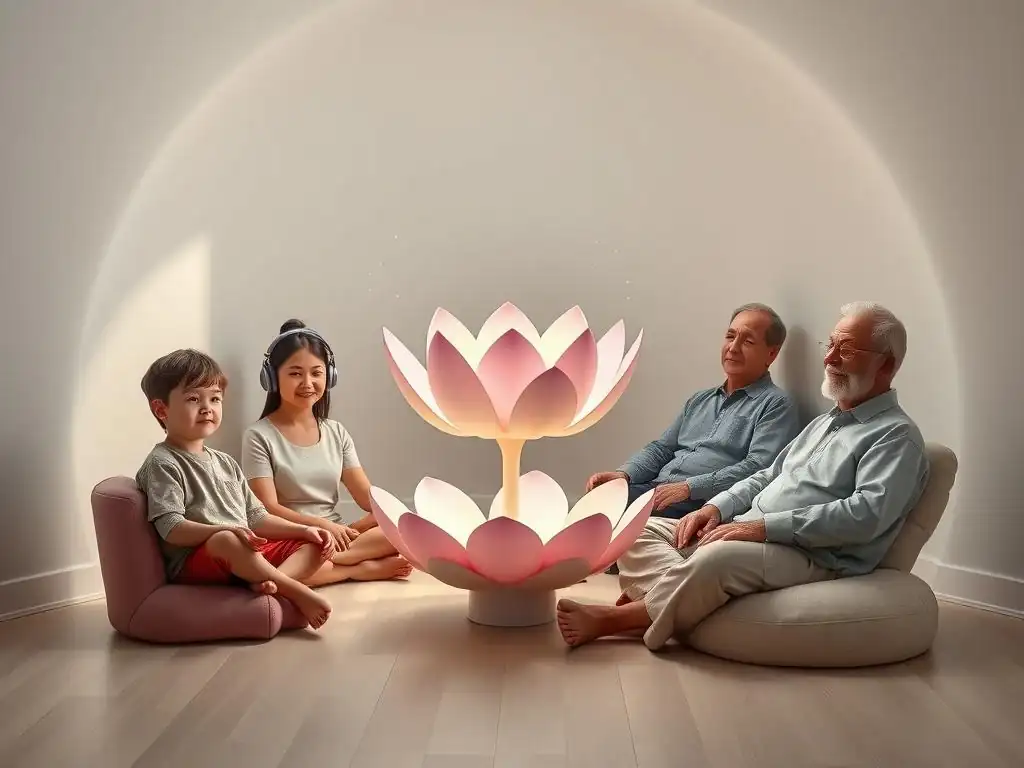
Smiling Mind is a unique offering in the space of free mental wellness apps for beginners, primarily because it is a non-profit organization dedicated to making mindfulness accessible to everyone. Developed by psychologists and educators, the app provides completely free, structured mindfulness programs tailored for different age groups, from children as young as 3 to adults. There are no ads, and all content is freely available.
This app focuses on providing sequential, evidence-based programs designed to teach mindfulness skills over time. Rather than offering a vast, unstructured library, Smiling Mind guides users through specific courses, making it feel less overwhelming for beginners who prefer a clear path. Its non-profit status and focus on public well-being make it a truly distinct option among free mental wellness apps for beginners.
Smiling Mind: A Free, Non-Profit Option Focused on Mindfulness
As a non-profit, Smiling Mind's mission is to provide accessible mindfulness training to build healthier, happier communities. The app is a core part of this mission, offering structured programs based on psychological principles and research. This focus on structured learning sets it apart from apps that primarily offer a large, searchable library of individual sessions.
The app's content is entirely free, with no hidden costs or paywalls. Its sustainability relies on donations and partnerships, aligning with its goal of universal accessibility. This makes Smiling Mind an excellent choice for anyone specifically looking for a completely free mental wellness app for beginners that offers guided, progressive learning paths in mindfulness.
-
Free Mindfulness Programs: Structured Courses for Beginners
Smiling Mind's core offering is its collection of structured mindfulness programs. Instead of browsing individual meditations, users select a program based on their age or specific needs (e.g., "Introduction to Mindfulness," "Mindfulness for Sleep," "Mindfulness in the Classroom"). Each program consists of a series of guided audio sessions designed to be completed sequentially.
For instance, the "Introduction to Mindfulness" program for adults might include sessions on body scan, mindful breathing, and mindful movement, progressing over several days or weeks. This guided, step-by-step approach is particularly beneficial for beginners who may not know where to start or how to build a practice. The structure provides a clear framework, making it easy to follow along and develop skills incrementally, positioning it as a strong contender among free mental wellness apps for beginners.
-
Age-Specific Content: Tailored for Kids, Teens, and Adults
A key feature of Smiling Mind is its content tailored for different age groups. The app includes programs specifically designed for children (ages 3-6, 7-9, 10-12), youth (ages 13-15, 16-18), and adults. There are also programs for specific contexts like families, schools, and workplaces. This ensures the language, duration, and themes of the sessions are appropriate and engaging for the target audience.
This unique focus makes Smiling Mind an invaluable resource not just for individual adults but also for parents, educators, and anyone looking to introduce mindfulness to younger populations. The availability of age-appropriate, free content distinguishes it significantly within the landscape of free mental wellness apps for beginners and beyond.
-
Short Meditation Sessions: Perfect for Busy Schedules
Many of Smiling Mind's sessions, particularly in the introductory programs, are relatively short, often ranging from 3 to 10 minutes. This makes it easy for beginners with limited time to fit mindfulness into their day without feeling overwhelmed. Short sessions are also less daunting for those new to sitting still or focusing their attention.
The emphasis on brevity in many programs encourages consistency, as it's easier to commit to a 5-minute session than a 20-minute one, especially when just starting out. This focus on manageable session lengths makes Smiling Mind highly practical for busy individuals seeking free mental wellness apps for beginners that can be integrated into a hectic lifestyle.
-
Monetization: Donations Accepted
As a non-profit, Smiling Mind relies on donations and partnerships to fund its operations and keep the app entirely free for users. There are no advertisements, paywalls, or premium subscriptions within the app itself. Users are offered the opportunity to donate if they wish, but it is never required to access any content.
This pure donation-based model ensures that financial barriers are completely removed, making mindfulness accessible to everyone. It reinforces the app's mission-driven approach and makes it a truly altruistic option among free mental wellness apps for beginners.
Smiling Mind: Pros and Cons
Smiling Mind's non-profit model and structured, age-specific programs are major advantages, particularly for certain users.
-
Pros: Completely Free, Evidence-Based Programs, Age-Specific Content
The app is entirely free with no ads or paywalls, aligning with its mission of accessibility. The programs are developed with psychological expertise and offer a structured, progressive way to learn mindfulness. The tailored content for different age groups is a unique and valuable feature.
-
Cons: Less Variety Than Insight Timer, Fewer Community Features
Compared to Insight Timer, the overall volume and variety of content is much smaller. The app focuses on its specific programs rather than a vast library of individual sessions. There are no community features like forums or the ability to connect with other users within the app.
Option 3: UCLA Mindful Awareness Research Center (MARC) - Free Guided Meditations
The UCLA Mindful Awareness Research Center (MARC) offers a collection of free guided meditations created by their expert staff. While not a full-fledged app with extensive features, UCLA MARC provides high-quality audio recordings of core mindfulness practices accessible through their website and dedicated app. This resource is straightforward, academic-backed, and completely free, making it an excellent, no-frills option among free mental wellness apps for beginners.
The focus is purely on providing effective guided meditation sessions based on research and clinical experience. There are no community features, progress trackers, or large libraries of music and talks. This simplicity is precisely what makes it appealing to beginners who want a direct and authoritative source for learning foundational meditation techniques without any distractions.
UCLA MARC: Simple and Effective Free Guided Meditations
UCLA MARC's offering is characterized by its simplicity and the credibility of its source. The guided meditations are led by experienced mindfulness teachers and researchers affiliated with the university. The content focuses on fundamental mindfulness practices that are widely taught and supported by scientific evidence, such as body scan, sitting meditation with breath awareness, and loving-kindness meditation.
The sessions are available as audio files through their website and a basic app. The interface is clean and easy to navigate, allowing users to quickly find and play the desired meditation. This direct access to expert-led, foundational practices makes UCLA MARC a highly effective and accessible choice when exploring free mental wellness apps for beginners.
-
Free Guided Meditations: Led by Experts at UCLA
The core offering is a collection of guided meditations provided for free. These are not user-submitted but are produced by the Mindful Awareness Research Center at UCLA, ensuring a high standard of quality and instruction. The sessions cover essential mindfulness techniques and are typically 5, 10, or 15 minutes in length, suitable for beginners.
Having meditations led by credible experts from a renowned institution provides a level of trust and assurance for newcomers. They know they are learning techniques that are widely recognized and studied. Access to these expert-led sessions at no cost is a significant benefit for anyone seeking free mental wellness apps for beginners rooted in academic rigor.
-
Focus on Core Mindfulness Practices: Body Scan, Breath Awareness
The content specifically focuses on core, foundational mindfulness practices. You'll find multiple variations of the body scan meditation, guided breath awareness practices, and meditations on cultivating compassion (loving-kindness). This narrow focus ensures that beginners learn the fundamental techniques thoroughly before potentially exploring more advanced or varied practices.
This deliberate limitation on content variety helps prevent decision fatigue for beginners. It provides a clear curriculum of essential skills to build a solid foundation in mindfulness. By mastering these core techniques, beginners gain confidence and a deeper understanding of the practice, making UCLA MARC an effective tool among free mental wellness apps for beginners.
-
Accessible and Easy to Use: Perfect for Beginners
The UCLA MARC meditations are accessible via their website and a very simple app available on major app stores. The app is bare-bones but functional, allowing users to browse the available meditations and play them. There are no complex features, settings, or social components to navigate.
This emphasis on ease of access and a minimalist interface makes it ideal for beginners who want to start meditating with minimal technical hurdles. You simply open the app or website, choose a meditation, and press play. This straightforward approach positions it as one of the easiest-to-use free mental wellness apps for beginners.
-
Monetization: Donations Accepted
Similar to Smiling Mind, UCLA MARC is a non-profit entity, and its free resources are supported by donations. There are no ads or paid features within their app or on the section of their website hosting the free meditations. Users can choose to donate to support the center's research and outreach efforts.
The donation model ensures that the guided meditations remain freely available to anyone who wishes to use them. This commitment to accessibility aligns with the public service mission of a university research center, making it a credible and genuinely free mental wellness app for beginners.
UCLA MARC: Pros and Cons
UCLA MARC's main appeal is its expert-led, foundational content and extreme simplicity.
-
Pros: Evidence-Based, Simple, Free
The meditations are developed by experts and based on scientific understanding of mindfulness. The app and website are incredibly simple and easy to navigate, perfect for those who want no distractions. All content is completely free with no ads or paywalls.
-
Cons: Limited Variety, No Community Features
The selection of meditations is much smaller and focuses only on core practices compared to apps with vast libraries. There are no community features, progress tracking, or additional content like music or talks. The app is very basic in terms of features.
Option 4: Healthy Minds Program - Science-Backed Meditation for Beginners
The Healthy Minds Program app, developed by the Center for Healthy Minds at the University of Wisconsin-Madison, offers a unique, science-backed approach to training the mind for well-being. Founded by neuroscientist Dr. Richard Davidson, known for his research on meditation's impact on the brain, this app translates scientific discoveries into practical, guided exercises. It's offered entirely for free, supported by the Center's non-profit work.
The program is structured around training four pillars of well-being: Awareness, Connection, Insight, and Purpose. It combines seated meditation with active practice exercises that can be done throughout the day. Its research-driven foundation and focus on tangible skills for emotional regulation make it a compelling free mental wellness app for beginners interested in the 'why' behind the practice.
Healthy Minds Program: Features and Benefits for Beginner Meditation
The Healthy Minds Program provides a structured curriculum designed to systematically cultivate skills associated with well-being. Unlike apps that might offer standalone meditations, this program guides users through a progressive series of lessons and practices across its four pillars. Each pillar builds upon the last, offering a comprehensive framework for mental training.
The app includes a mix of seated guided meditations and "active practices" which are short exercises users can do while commuting, walking, or doing chores. This integration of mindfulness into daily activities is a key benefit for beginners seeking practical ways to apply what they learn. The content is presented through accessible audio lessons and guided practices, making complex scientific concepts understandable and applicable, positioning it as a robust free mental wellness app for beginners.
-
Science-Backed Approach: Based on neuroscience and psychology
A major draw of the Healthy Minds Program is its foundation in neuroscience and psychology research conducted at the Center for Healthy Minds. The exercises and lessons are designed based on scientific understanding of how the brain can be trained for greater well-being. This appeals to beginners who are interested in the empirical evidence supporting meditation and mindfulness.
The app often includes brief explanations rooted in science before guided practices, helping users understand the rationale behind the techniques they are learning. This evidence-based approach provides a sense of confidence in the effectiveness of the practice, making it a trusted option among free mental wellness apps for beginners who value scientific credibility.
-
Personalized Programs: Tailored to individual needs and goals
Upon starting, the Healthy Minds Program allows users to set goals (e.g., reduce stress, improve focus, enhance relationships) and tailors the program path accordingly. While the core pillars remain the same, the emphasis and specific practices may vary based on the user's stated intentions. This personalization helps make the learning journey feel more relevant and engaging.
The app also adjusts the frequency and duration of practices based on user input, allowing for flexibility. This adaptive element helps beginners integrate the practice into their lives at a pace that feels manageable, increasing the likelihood of consistency. This tailored approach is a valuable feature in a free mental wellness app for beginners.
-
Focus on Emotional Regulation: Develop skills for managing emotions
A central theme throughout the Healthy Minds Program is the cultivation of skills for managing one's emotional landscape. The practices and lessons are designed to help users develop greater awareness of their emotions, understand their patterns, and respond to them with greater skill and less reactivity. This focus goes beyond simple relaxation techniques.
By explicitly teaching skills like navigating difficult emotions or cultivating positive ones, the app provides tangible tools for improving emotional well-being in daily life. This practical application of mindfulness makes it particularly beneficial for beginners seeking ways to cope with stress, anxiety, or other challenging feelings, setting it apart as a free mental wellness app for beginners focused on emotional intelligence.
Healthy Minds Program: Pros and Cons
The Healthy Minds Program offers a scientifically informed, structured path to well-being, but requires consistent engagement with its curriculum.
-
Pros: Evidence-Based, Personalized, Focus on Emotional Well-being
The program is built on robust scientific research, offering credibility and depth. It provides a degree of personalization based on user goals. Its explicit focus on developing skills for emotional regulation is a significant benefit for practical application. It is completely free.
-
Cons: Requires commitment, less emphasis on community
The structured program format means it works best when followed sequentially, which requires more commitment than simply dropping into standalone meditations. There are no in-app community features for connecting with other users or teachers. It might feel less flexible than apps with vast searchable libraries.
Choosing the Right Free Meditation App for You: Key Considerations

With several excellent free mental wellness apps available for beginners, deciding which one to use can still be a process. The "best" app isn't universal; it depends entirely on your personal preferences, goals, and lifestyle. Taking a moment to consider what you're looking for in a practice and an app can help narrow down the options and find the tool that will be most supportive of your journey into mindfulness and meditation.
Ask yourself a few key questions about what feels comfortable and what kind of experience you hope to have. Reflecting on these points will guide you toward the free mental wellness app for beginners that is most likely to resonate with you and help you establish a consistent practice. It's often helpful to try a couple of different apps for a week or two each before settling on one.
What Type of Meditation Resonates With You?
Different apps offer different styles and approaches to meditation. Some focus heavily on traditional mindfulness techniques like breath awareness and body scans (like UCLA MARC). Others integrate practices like loving-kindness or focus on applying mindfulness to daily activities (like Healthy Minds Program). Apps like Insight Timer offer a vast array, including transcendental meditation, Zen, and more, from various teachers.
Consider if you prefer a very traditional approach, something more focused on emotional skills, or if you want the freedom to explore many different styles. Some beginners find a structured program (like Smiling Mind or Healthy Minds Program) less daunting than a vast library. Thinking about the style of practice you'd like to explore can help you choose among the free mental wellness apps for beginners.
How Much Time Can You Dedicate to Meditation Each Day?
Your daily schedule plays a significant role in determining which app is a good fit. If you only have 5-10 minutes free each day, look for apps that offer plenty of short sessions (Smiling Mind, UCLA MARC, Insight Timer often have many short options). If you anticipate having longer periods, apps with more extensive guided meditations or lessons might be suitable.
Be realistic about the time you can commit, especially when starting out. Choosing an app that offers session lengths compatible with your busy schedule will make it much easier to build consistency. Many free mental wellness apps for beginners understand that time is a barrier and offer very short sessions to accommodate busy lives.
Do You Prefer Guided Meditations or Unstructured Practice?
Most beginners start with guided meditations, where an instructor's voice leads you through the practice. All the apps mentioned offer guided content. However, some apps, like Insight Timer, also provide robust meditation timers with customizable sounds and intervals for those who eventually want to practice without guidance.
Consider if you only want guided sessions or if you might eventually want to explore sitting in silence with just a timer. While beginners typically rely on guidance, having the option for unguided practice in the future might influence your choice among free mental wellness apps for beginners.
Beyond Apps: Other Free Mental Wellness Resources for Beginners
While free mental wellness apps for beginners are incredibly convenient and accessible, the digital world and local communities offer many other free resources to support your journey into mindfulness and well-being. Exploring these alternatives can complement your app-based practice or provide different avenues for learning and connection.
Expanding your search beyond apps can uncover workshops, online courses, and community groups that offer different learning environments and support systems. These resources often provide a more interactive or in-depth experience than an app alone, offering valuable perspectives and guidance as you build your practice.
Free Online Meditation Courses and Workshops
Many organizations, universities, and mindfulness centers offer free online introductory meditation courses or workshops. These can range from single live sessions to multi-week email or video series. Examples include free courses offered by universities like UC Berkeley's Greater Good Science Center or various non-profit mindfulness organizations.
These online courses often provide a more structured and educational experience than an app, including theoretical background, different types of practices, and opportunities for Q&A (depending on the format). They can be an excellent way to gain a deeper understanding of mindfulness principles alongside using a free mental wellness app for beginners.
Local Mindfulness Groups and Meetups
Many cities and towns have local meditation or mindfulness groups that meet regularly, often offering sessions on a donation basis or for free. These groups can meet in community centers, libraries, or meditation centers. Websites like Meetup.com often list local mindfulness and meditation gatherings.
Attending a local group can provide a sense of community and allow you to practice with others, which some beginners find motivating. It also offers the opportunity to receive guidance from local teachers and ask questions in person. This face-to-face interaction complements the digital experience offered by free mental wellness apps for beginners.
Utilizing Free Resources from Mental Health Organizations
Many national and local mental health organizations provide free resources on mindfulness and meditation as tools for managing stress, anxiety, and depression. These resources can include articles, guides, audio recordings, or links to reputable free online content. Examples include resources from organizations focused on mental health advocacy or support.
These resources often present mindfulness within a broader context of mental well-being and can provide valuable information on how the practice can support specific mental health challenges. Accessing these free guides and materials can enhance your understanding and application of the techniques learned through free mental wellness apps for beginners.
Taking the Next Step: Building a Sustainable Mindfulness Practice
Finding a great free mental wellness app for beginners is an excellent starting point, but the real journey is about integrating mindfulness into your life consistently. Building a sustainable practice takes time, patience, and dedication. It's not about achieving perfect stillness or emptying your mind, but about showing up regularly and cultivating awareness with kindness towards yourself.
Think of your chosen app as a tool to support this ongoing process. The goal is not just to use the app, but to develop the skill of mindfulness that you can eventually carry into all aspects of your day. The steps you take now to establish a routine will lay the foundation for a practice that can contribute to your mental well-being for years to come.
Consistency is Key: Making Meditation a Daily Habit
The most important factor in benefiting from meditation is consistency. Even short, daily sessions are more effective than occasional long ones. Try to set aside a specific time each day, even if it's just 5 minutes, to use your free mental wellness app for beginners. Pairing it with an existing habit, like before breakfast or after brushing your teeth, can help make it stick.
Don't get discouraged if you miss a day or find your mind wandering constantly. This is a normal part of the process. Simply return to your practice the next day without judgment. Building the habit is the primary focus initially, and your chosen free mental wellness app for beginners can provide the structure and reminders you need.
Tracking Your Progress and Celebrating Milestones
While not all free mental wellness apps for beginners offer robust progress tracking, you can keep your own simple record. Note down how often you practiced each week or how you felt before and after a session. Recognizing your efforts and small victories, like completing a week of daily meditations or noticing a moment of mindfulness during your day, is important.
Celebrating these milestones, no matter how small, helps reinforce the positive habit and keeps you motivated. Focus on the consistency of showing up rather than the perceived "quality" of the meditation itself. Your journey with a free mental wellness app for beginners is about building a new, supportive habit.
Exploring Paid Apps When You're Ready to Go Deeper
Once you've established a consistent practice using a free mental wellness app for beginners and feel ready to explore more extensive content, guided programs, or premium features like offline listening, you might consider subscribing to a paid app like Headspace or Calm. Having built a foundation, you'll be better equipped to utilize the full breadth of what these platforms offer.
However, remember that excellent free resources exist and can support a lifelong practice. Moving to a paid app is an option for deeper exploration, not a requirement for continued growth in mindfulness. Many find that their chosen free mental wellness app for beginners continues to meet their needs perfectly well.
Frequently Asked Questions
What are some free mental wellness apps suitable for beginners who find Headspace or Calm overwhelming?
There are several apps that offer a gentler introduction to mental wellness. Consider apps like Insight Timer, which provides a vast library of free meditations, or Smiling Mind, a non-profit app with programs for all ages.
Why might someone prefer a free alternative app to Headspace or Calm for starting their mental wellness journey?
Headspace and Calm can be perceived as too intense or expensive initially. Free alternatives often offer a less structured approach and allow beginners to explore different techniques without financial commitment.
What features should I look for in a good free mental wellness app designed for beginners?
Look for apps with guided meditations, breathing exercises, and sleep stories. Also, prioritize apps with a user-friendly interface and a variety of short, introductory sessions.
Are free mental wellness apps as effective as paid subscriptions like Headspace and Calm?
While paid subscriptions often offer more features and personalized content, free apps can be highly effective for basic mental wellness practices. The key is consistency and finding an app that meets your individual needs.
How can I ensure the free mental wellness app I choose is safe and reliable?
Check the app's privacy policy and look for apps developed by reputable organizations or mental health professionals. Read user reviews to get an idea of the app's effectiveness and safety.
Final Reflection: Finding Your Calm in a World of Noise
The pursuit of mental wellness shouldn't break the bank. This article highlighted several fantastic free apps offering accessible and effective tools for beginners navigating the often-intimidating world of mindfulness and meditation. The increasing awareness of mental health's importance makes readily available resources like these more crucial than ever.
The journey to self-care is deeply personal, and the impact of readily available, affordable tools cannot be overstated. These apps democratize access to practices that were once considered a luxury, empowering individuals to prioritize their mental wellbeing regardless of their financial situation. The greatest wealth is health,
a proverb often repeated, rings truer than ever in our fast-paced, demanding world. These free apps offer a tangible step towards building that wealth.
Consider the apps discussed within this article – not just as tools, but as stepping stones. They are invitations to explore your inner landscape, to cultivate self-awareness, and to build a foundation for a more peaceful and resilient you. Take the time to experiment, find what resonates with you, and integrate these practices into your daily life. Your mental wellbeing is an investment worth making, and the journey begins with a single, free download.
Unlock Your Inner Calm: Start Your Free Mindfulness Journey Today!
Thanks for taking the time to explore the world of free mindfulness apps! We hope you found the perfect tool to begin your journey towards a calmer, more focused you. Ready to take the next step?
- Download your chosen app and dedicate just 5 minutes today to a guided meditation. This small step can make a big difference!
- Share this article with a friend who might also benefit from these free resources. Spread the calm!
- Join our Mind Care Guide community (fictional for this example) and share your experience with your favorite app. Let's support each other on this path to wellbeing.
What small act of self-care will you prioritize today to nurture your inner peace?