
Healing Generational Wounds: Exploring Bowenian Family Therapy


Welcome to Mind Care Guide, a sanctuary for exploring the depths of mental well-being. Are you carrying burdens that feel inherited, wounds echoing from generations past? Discover how Bowenian therapy can offer a path to healing trauma within the family system. Let's unravel the threads of your family history and embark on a journey towards a brighter, healthier future, starting with our in-depth look at how Bowenian therapy heal trauma.
Healing Generational Wounds: Exploring Bowenian Family Systems Therapy
- Understanding Generational Trauma and Family Systems
- What is Bowenian Family Systems Therapy? A Comprehensive Overview
- How Bowenian Therapy Helps Heal Trauma
- Techniques Used in Bowenian Family Therapy
- Benefits of Bowenian Therapy for Trauma Recovery
- Is Bowenian Therapy Right for You? Considerations and Suitability
- Finding a Qualified Bowenian Therapist
- Bowenian Therapy: A Path to Healing Family Trauma and Creating Healthier Generations
-
Frequently Asked Questions
- What is Bowenian therapy and how does it relate to healing trauma?
- How can Bowenian therapy help address generational trauma specifically?
- What are the key concepts of Bowenian therapy relevant to trauma healing?
- Is Bowenian therapy suitable for individuals without strong family relationships?
- How long does Bowenian therapy typically take to see results in trauma healing?
- Final Reflection: The Enduring Legacy of Unresolved Trauma
- Unlock Your Family's Potential: Start Healing Today
Understanding Generational Trauma and Family Systems
Defining Generational Trauma: Its Impact on Family Dynamics
Generational trauma, also known as intergenerational trauma, refers to the transmission of trauma responses and patterns of behavior from one generation to the next. This occurs when the effects of a traumatic event, such as war, genocide, slavery, or systemic oppression, are not fully processed or healed by the original generation.
Instead, the emotional, psychological, and even physiological impacts are passed down, often unconsciously, affecting subsequent generations' emotional regulation, relationship patterns, and overall well-being. Children and grandchildren may exhibit symptoms like heightened anxiety, depression, difficulty forming secure attachments, hypervigilance, or difficulty trusting, even if they did not directly experience the original trauma.
The impact of this transmitted trauma can profoundly shape family dynamics. Communication may be indirect or avoidant, emotional expression might be suppressed or volatile, and there can be a pervasive sense of unease or unresolved tension. For example, a study published in Biological Psychiatry in 2015 provided evidence suggesting that trauma can affect gene expression, potentially influencing stress responses in offspring.
While the mechanisms are complex and still being researched, the lived reality for many families is that past hurts continue to resonate, creating cycles of conflict, emotional distance, or enmeshment that hinder healthy connection and individual growth. Addressing these deep-seated patterns is crucial for breaking the cycle and fostering healing.
The Role of Family Systems Theory in Understanding Trauma
Family Systems Theory, pioneered by Dr. Murray Bowen, views the family as a complex emotional unit where members are deeply interconnected. This perspective is vital when considering trauma because it understands that an individual's symptoms or struggles are often best understood within the context of their family's history and current dynamics. Trauma, whether individual or collective, creates ripples throughout the system, affecting how members interact, manage anxiety, and relate to one another. The theory posits that families operate with predictable patterns and processes that develop over generations, influencing how stress and emotional reactivity are handled.
Within this framework, individual issues are not seen in isolation but as manifestations of the system's functioning. For instance, a person struggling with anxiety might be reacting to unresolved tensions or undifferentiated emotional processes within their family network. Understanding these systemic patterns is key to effective intervention.
Research often highlights how family environment significantly impacts mental health outcomes; for example, a 2018 review in the Journal of Family Psychology noted that family cohesion and adaptability are protective factors against the negative impacts of stress and trauma. Family Systems Theory provides a lens to identify these patterns, understand their historical roots, and develop strategies for healthier functioning, making it a powerful approach for exploring how Bowenian therapy helps heal trauma.
Bowenian Therapy: A Framework for Healing
Bowenian Family Systems Therapy offers a unique framework for addressing the complex layers of generational trauma and family dysfunction. Unlike approaches that focus solely on individual symptoms or specific incidents, Bowenian therapy examines the emotional processes within the family system across multiple generations. The core idea is that improving the overall functioning of the family system leads to improved individual well-being. It emphasizes understanding patterns of interaction, managing anxiety, and increasing differentiation of self – the ability to maintain one's sense of self and thoughts separate from the emotional reactivity of others.
This therapeutic approach is particularly well-suited for exploring how Bowenian therapy helps heal trauma because it doesn't just address the symptoms arising from past trauma but delves into the underlying family dynamics that perpetuate its effects. By mapping out family history using tools like genograms, therapists and clients can visualize patterns of anxiety, conflict, and cutoff that might be linked to historical trauma.
The focus shifts from blaming individuals to understanding the system, empowering family members to change their own reactive patterns and, in doing so, influence the entire system towards healthier functioning. This process is deliberate and often long-term, aiming for sustainable change rooted in increased self-awareness and emotional maturity.
What is Bowenian Family Systems Therapy? A Comprehensive Overview
Core Principles of Bowenian Therapy
Bowenian Family Systems Therapy is built upon eight interconnected concepts that describe the functioning of the human family system. Understanding these principles is fundamental to grasping how Bowenian therapy helps heal trauma. These concepts provide a roadmap for identifying patterns, predicting behavior under stress, and guiding therapeutic interventions aimed at increasing differentiation and reducing emotional reactivity within the system.
- Differentiation of Self: The cornerstone concept, referring to the ability to separate one's intellectual and emotional functioning. A highly differentiated person can maintain their beliefs and values while remaining in emotional contact with others, even in the face of disagreement or pressure.
- Triangles: The smallest stable relationship system. When anxiety increases between two people, they often "triangle in" a third person or issue to diffuse the tension.
- Nuclear Family Emotional Process: Describes the emotional patterns in a single nuclear family that manifest in marital conflict, dysfunction in one spouse, impairment of one or more children, or emotional distance.
- Family Projection Process: The primary way parents transmit their immaturity and lack of differentiation to children. The parents' anxiety focuses on one or more children, leading those children to have lower levels of differentiation than their siblings.
- Multigenerational Transmission Process: Describes how small differences in differentiation levels between parents and children lead to significant differences in differentiation across generations. This is a key concept in understanding how trauma patterns are transmitted.
- Sibling Position: The idea that a person's birth order (e.g., oldest, youngest) tends to influence personality characteristics and relationship patterns.
- Societal Emotional Process: Describes how the emotional processes in families are mirrored in society, affecting everything from social trends to political conflicts.
These principles are not seen as isolated phenomena but as interconnected forces shaping family life. A therapist using Bowenian therapy to heal trauma will help clients see how these principles are playing out in their own family system, providing insight into the roots of their struggles and the pathways to change.
Differentiation of Self: Key to Individual and Family Wellbeing
Differentiation of Self is arguably the most crucial concept in Bowenian theory and central to how Bowenian therapy helps heal trauma. It describes the degree to which a person's emotions are fused with their intellect and the degree to which a person is dependent on others for approval and acceptance. Someone with a high level of differentiation can think clearly and calmly in the face of emotional pressure, make decisions based on principles rather than reactivity, and maintain close relationships without losing themselves in the process. They can distinguish their own thoughts and feelings from those of others.
Conversely, individuals with low differentiation tend to be more emotionally reactive and fused with others. Their sense of self is highly dependent on external validation, making them susceptible to anxiety and conflict in relationships. When faced with stress or trauma, low differentiation can exacerbate symptoms, leading to emotional cutoff, intense conflict, or over-functioning/under-functioning patterns within the family.
A core goal of using Bowenian therapy to heal trauma is to increase the client's differentiation, enabling them to navigate difficult family dynamics with greater autonomy, manage their own anxiety more effectively, and break free from reactive patterns passed down through generations. This increased self-awareness and emotional regulation are vital steps in processing and moving beyond the legacy of trauma.
Triangles: Understanding Emotional Reactivity
Triangles are the basic building blocks of any emotional system, according to Bowenian theory. A triangle forms when tension between two people involves a third person or issue. For example, when a husband and wife experience conflict, they might focus their energy on a problem child (triangling in the child) or confide excessively in a friend or relative (triangling in the friend/relative) to diffuse the direct tension between them. While triangling can temporarily reduce anxiety in the dyad, it ultimately stabilizes the problem and prevents the original two people from resolving their issues directly.
In families affected by trauma, triangles can become particularly rigid and dysfunctional. For instance, a child might be triangled into parental conflict stemming from the parents' own unresolved trauma responses, becoming a repository for the family's anxiety. Or, family members might form rigid alliances or cutoffs that create fixed triangles, preventing flexible and healthy interactions.
Understanding and identifying these triangles is a key step in Bowenian therapy to heal trauma. By recognizing how they are involved in triangles, individuals can learn to "detriangulate" – to step out of their usual reactive position and relate more directly and calmly to the other two parties, thereby disrupting the dysfunctional pattern and reducing the overall anxiety in the system.
Nuclear Family Emotional Process: Patterns of Interaction
The Nuclear Family Emotional Process describes the specific patterns of interaction and emotional functioning within a single generation, typically between spouses and their children. Bowen identified four main relationship patterns that can develop in a nuclear family under stress: marital conflict, dysfunction in one spouse, impairment of one or more children, and emotional distance. These patterns are different manifestations of the underlying emotional process and reflect how the family manages anxiety and maintains equilibrium, even if that equilibrium is dysfunctional.
When generational trauma is present, these nuclear family patterns can be significantly impacted. For example, unresolved trauma in one or both parents might manifest as chronic marital conflict, or one parent might develop significant dysfunction (e.g., substance abuse, chronic illness) as a way of managing overwhelming anxiety.
Children are particularly vulnerable and may become the focus of the family's anxiety through the Family Projection Process, leading to behavioral problems, anxiety, or other difficulties. Recognizing which of these patterns is dominant in a family is essential for using Bowenian therapy to heal trauma, as it helps identify the specific ways the family system is struggling and where interventions aimed at increasing differentiation and reducing reactivity might be most effective.
Family Projection Process: Transmitting Anxiety
The Family Projection Process is a primary mechanism by which parents transmit their emotional immaturity and lack of differentiation to one or more children. It's a specific instance of triangling where the parental anxiety focuses on a child, leading that child to absorb a disproportionate amount of the family's stress and emotional reactivity. The child who is the focus of projection often develops difficulties, such as anxiety, behavioral problems, or physical symptoms, which then become the focus of the family's attention, further stabilizing the dysfunctional pattern.
In the context of generational trauma, the Family Projection Process can be particularly potent. Parents carrying the burden of unresolved trauma may unconsciously project their fear, anxiety, or helplessness onto a child.
This child may then internalize these feelings and behaviors, developing a lower level of differentiation than their siblings and becoming more susceptible to the psychological and emotional difficulties associated with the family's trauma history. Understanding this process is critical in Bowenian therapy to heal trauma, as it allows the therapist and client to identify how the trauma legacy is being transmitted through specific interactions and to develop strategies for interrupting this cycle, shifting the focus from the "problem child" to the underlying family dynamics.
Multigenerational Transmission Process: The Cycle of Trauma
The Multigenerational Transmission Process describes how variations in the degree of differentiation are passed down through the generations. Over many generations, small differences in the levels of differentiation between parents and children can lead to marked differences in differentiation among members of a large extended family. Individuals with lower levels of differentiation are more vulnerable to stress and emotional problems, and they are also more likely to pass this vulnerability on to their children through the Family Projection Process.
This concept is fundamental to understanding how generational trauma persists. The emotional reactivity, anxiety, and undifferentiated patterns stemming from historical trauma are not just confined to the generation that experienced the trauma; they are transmitted through this process.
A grandchild might exhibit anxiety or difficulty forming relationships that are directly linked to the unresolved trauma responses of a grandparent, mediated through the emotional patterns of their parents. Using Bowenian therapy to heal trauma involves tracing these patterns across generations using tools like the genogram, helping clients see how their current struggles are connected to their family's history and empowering them to interrupt the transmission process by increasing their own differentiation.
Sibling Position: Influences on Personality
Sibling position, the concept that a person's birth order tends to influence their personality and typical relationship patterns, is another principle integrated into Bowenian theory. While not as central as differentiation or triangulation, understanding sibling position can provide additional insights into how an individual functions within their family system. For example, oldest children often take on more responsibility, while youngest children may be more accustomed to being taken care of.
When considering how Bowenian therapy helps heal trauma, sibling position can sometimes shed light on how different children in the same family might be affected differently by the family's trauma legacy. One child, perhaps an oldest, might over-function to compensate for parental anxiety related to trauma, while a youngest might under-function and become the focus of the family's projection. Recognizing these potential influences can add another layer of understanding to the complex interplay of factors shaping an individual's experience within the family system and inform the therapeutic approach.
Societal Emotional Process: External Influences
The Societal Emotional Process is the concept that the same emotional processes observed in families also operate in society at large. Bowen suggested that periods of societal regression (increased anxiety, polarization, conflict) are analogous to periods of increased reactivity in families. Societal stress can influence family functioning, just as family stress can influence individual well-being.
While the primary focus of Bowenian therapy is often on the family system, the Societal Emotional Process acknowledges that external factors, including societal trauma, discrimination, or economic stress, can significantly impact family dynamics and individual mental health. When using Bowenian therapy to heal trauma that has societal roots, such as the trauma of systemic racism or political violence, recognizing the broader context is important. The therapist helps clients understand how societal anxiety and emotional processes might be contributing to their family's stress levels and influencing their individual experiences, providing a wider perspective on the forces shaping their lives.
How Bowenian Therapy Helps Heal Trauma
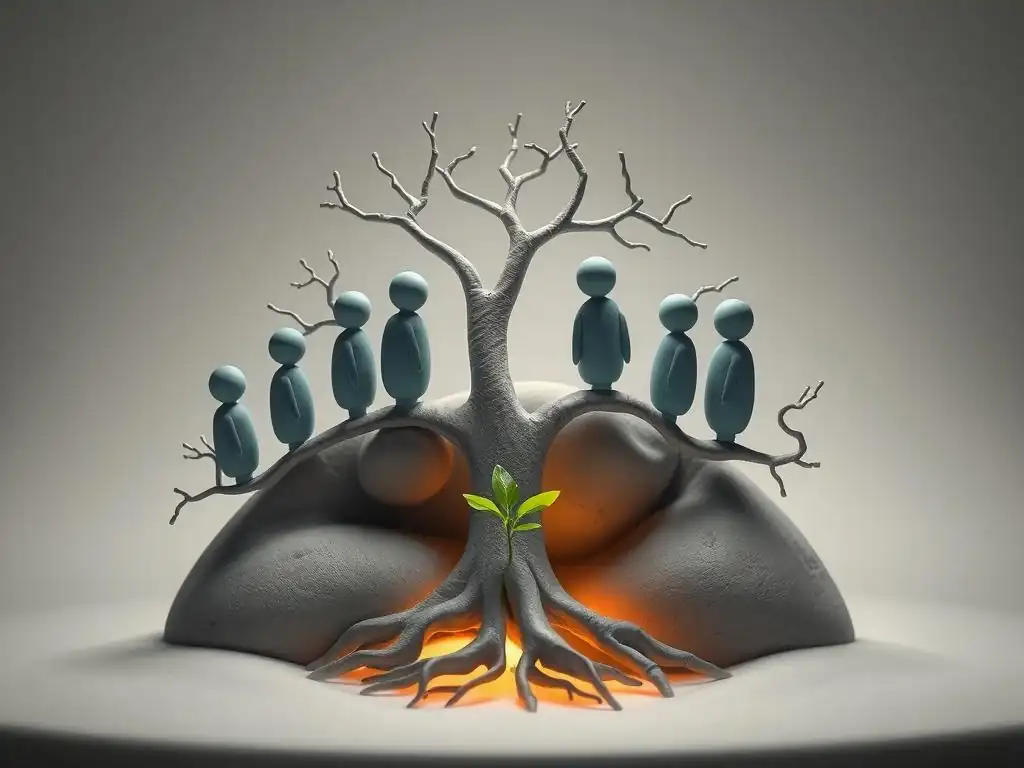
Identifying and Addressing Generational Trauma Patterns
A primary way Bowenian therapy helps heal trauma is by systematically identifying and addressing the patterns of behavior and emotional reactivity that have been passed down through generations. The therapist works with clients to construct a genogram, a detailed family map that goes back at least three generations. This visual tool helps uncover recurring themes, relationship dynamics, significant life events (including known traumas like war, migration, loss, or addiction), and patterns of interaction, such as emotional cutoffs, conflicts, or fusion.
By mapping these patterns, clients can begin to see how their current struggles, anxieties, or relationship difficulties might be connected to their family's history. For instance, a client struggling with intense anxiety in close relationships might discover a pattern of emotional cutoff or conflict avoidance in previous generations following a significant loss or trauma.
This process of identification is not about assigning blame but about gaining insight into the systemic forces at play. Once these patterns are identified, the therapist guides the client in understanding how they are participating in these dynamics and how they can choose to respond differently, thereby interrupting the transmission of the trauma legacy.
Increasing Self-Differentiation to Break the Cycle
Increasing differentiation of self is the central mechanism through which Bowenian therapy aims to heal trauma and break the cycle of intergenerational transmission. As individuals become more differentiated, they become less reactive to the emotional intensity within their family system. They gain the capacity to think more clearly about their relationships, manage their own anxiety more effectively, and make choices based on their own values and principles rather than being driven by emotional fusion or reactivity to others' expectations or anxieties.
For someone grappling with generational trauma, increasing differentiation means developing the ability to observe the family's emotional patterns without being automatically swept up in them. It involves learning to stay in contact with family members while maintaining one's own sense of self, even when there is disagreement or emotional tension.
This is not about becoming emotionally distant but about developing the capacity for calm, principle-based functioning within the system. As individuals become more differentiated, they are less likely to transmit their own unresolved anxiety and trauma responses to the next generation, thus helping to heal trauma not just for themselves but for the future of their family.
Managing Anxiety and Emotional Reactivity in Family Relationships
High levels of anxiety and emotional reactivity are hallmarks of families struggling with the legacy of trauma. Conflicts can escalate quickly, minor issues can trigger intense emotional storms, and family members may feel overwhelmed by the emotional intensity. Bowenian therapy provides strategies specifically designed to help individuals and families manage this heightened anxiety and reactivity. The therapist acts as a coach, helping clients learn to observe their own emotional responses and the dynamics within the family system from a more objective stance.
Through this process, clients learn techniques to regulate their own anxiety and avoid getting pulled into reactive triangles or cycles of conflict. They practice responding thoughtfully rather than reacting impulsively. For example, instead of immediately defending themselves or attacking back during an argument, they might learn to pause, observe the interaction, and choose a more measured response.
Reducing chronic anxiety within the system allows for clearer communication, more flexible interactions, and a greater capacity for genuine connection. Learning to manage anxiety is a critical step in using Bowenian therapy to heal trauma, as it empowers individuals to navigate challenging family interactions without being consumed by the emotional intensity stemming from past hurts.
Improving Communication and Problem-Solving Skills
While not the primary focus on the same level as differentiation and anxiety management, improving communication and problem-solving skills is a natural outcome of successful Bowenian therapy, particularly when using Bowenian therapy to heal trauma. As individuals become more differentiated and less emotionally reactive, they are better equipped to communicate clearly, listen effectively, and engage in constructive problem-solving.
When chronic anxiety is reduced and individuals are less fused, they can express their thoughts and feelings without fear of overwhelming others or being overwhelmed themselves. They can discuss difficult topics related to family history or current challenges with greater calm and perspective.
This improved capacity for open and respectful communication allows families to address long-standing issues that may have been avoided due to the intensity of emotion. For instance, families might finally be able to discuss the impact of a historical trauma or address patterns of behavior that have been silently causing distress for years, laying the groundwork for genuine healing.
Techniques Used in Bowenian Family Therapy
Genograms: Mapping Family History and Trauma
The genogram is perhaps the most recognizable tool in Bowenian therapy and is indispensable when using Bowenian therapy to heal trauma. It is essentially an expanded family tree that maps relationships and interactions over several generations, typically three or more. Beyond basic demographic information like names, dates of birth, and deaths, the genogram includes symbols and notations to represent key relationship dynamics (e.g., close, distant, conflictual, fused, cutoffs), significant life events (e.g., marriages, divorces, migration, illnesses, deaths), and important patterns (e.g., addiction, mental health issues, career choices, education levels).
Constructing a genogram allows the therapist and client to visualize the complex emotional system of the family and identify recurring patterns that might be linked to the transmission of trauma. For example, a genogram might reveal a pattern of emotional cutoff following instances of abuse or loss in multiple generations, or show how anxiety about a specific issue (like financial instability stemming from a historical trauma) has manifested differently in various family members.
This mapping process provides invaluable insights into the roots of current difficulties and helps the client see their individual challenges within the broader context of their family's history, making it a powerful starting point for using Bowenian therapy to heal trauma.
Process Questions: Encouraging Self-Reflection
Process questions are a key technique used by Bowenian therapists to guide clients towards greater self-reflection and understanding of family dynamics. Unlike content questions that focus on the details of specific events, process questions focus on how things happen in relationships – the patterns of interaction, the emotional reactions, and the roles individuals play within the system. These questions are designed to help clients think about their own functioning and their part in the family's emotional processes.
Examples of process questions might include: "When your parents argued, how did you typically respond?" "When you feel anxious in your relationship with your sibling, what do you find yourself doing?" "How does your anxiety level change when you are discussing sensitive topics with your family?"
"If you were to respond differently to your mother's criticism, what might that look like?" By focusing on the 'how,' process questions help clients observe their own reactivity and patterns, rather than getting caught up in the 'what' (the specific issue being discussed). This self-observation is crucial for increasing differentiation and learning to respond to challenging situations stemming from trauma history with greater thoughtfulness and less emotional reactivity.
Detriangulation: Breaking Free from Emotional Triangles
Detriangulation is the therapeutic process of helping clients learn to step out of their habitual roles in emotional triangles. As discussed earlier, triangles are a way families manage anxiety, but they prevent direct, authentic communication and resolution between the original two parties. When using Bowenian therapy to heal trauma, detriangulation is essential because trauma often increases anxiety and leads to rigid, dysfunctional triangles.
The therapist coaches the client on how to recognize when they are being pulled into a triangle and how to resist the pressure to take sides, blame, or become overly involved in the conflict between others. This often involves learning to stay in contact with both members of the original dyad while remaining a separate, non-anxious presence.
For example, if a client is habitually triangled into their parents' arguments stemming from their parents' unresolved trauma, the therapist would help the client learn to listen to each parent without agreeing with one or blaming the other, and without trying to fix the situation or take responsibility for their parents' emotions. Successfully detriangulating reduces the client's anxiety, disrupts the dysfunctional pattern, and encourages the original dyad to manage their own relationship more directly.
Coaching: Guiding Clients Towards Differentiation
The role of the Bowenian therapist is often described as a coach. The therapist does not position themselves as an expert who will "fix" the family but rather as a guide who helps individuals learn about their family system and increase their own differentiation. The coaching process is collaborative and educational, focusing on intellectual understanding of the family's emotional process and supporting the client's efforts to change their own patterns of interaction.
The therapist helps the client develop a more objective view of their family dynamics, manage their own emotional reactivity, and experiment with new ways of relating to family members. This might involve encouraging the client to have one-to-one conversations with family members they typically avoid or with whom they are fused, or helping them practice responding calmly in situations that previously triggered intense reactions.
The coaching approach empowers the client to take responsibility for their own change and growth, recognizing that changing oneself is the most effective way to influence the family system towards healthier functioning, which is a key aspect of using Bowenian therapy to heal trauma.
Benefits of Bowenian Therapy for Trauma Recovery
Increased Self-Awareness and Emotional Regulation
One of the significant benefits of using Bowenian therapy to heal trauma is the profound increase in self-awareness and improved emotional regulation that clients experience. By studying their family's emotional process and their own role within it, individuals gain a deeper understanding of their automatic emotional reactions, triggers, and patterns of behavior. This self-awareness is the first step towards change.
As clients increase their differentiation, they develop a greater capacity to observe their emotions without being overwhelmed by them. They learn to pause before reacting, to distinguish between their own feelings and those of others, and to respond thoughtfully rather than impulsively. This enhanced ability to regulate emotions is invaluable for individuals who have experienced trauma, as trauma can often lead to dysregulated emotional responses, such as hypervigilance, intense fear, or emotional numbness. Increased self-awareness and emotional regulation empower clients to navigate challenging situations, both within and outside the family, with greater calm and control.
Improved Family Relationships and Communication
While the primary focus is on individual differentiation, a significant outcome of using Bowenian therapy to heal trauma is often a marked improvement in family relationships and communication. As individuals become more differentiated, they are less likely to participate in dysfunctional patterns like triangulation, fusion, or cutoff. This change in one part of the system can ripple outward, influencing the interactions of other family members.
For example, as a client learns to manage their anxiety and communicate more directly, other family members may respond in kind, leading to more open and honest conversations. Resolving chronic triangles can reduce tension and conflict. While not all family members may choose to engage in therapy or change their behavior, one person's increased differentiation can create space for healthier interactions and shift the overall emotional climate of the family. This can lead to reduced conflict, increased understanding, and stronger, more authentic connections between family members, helping to heal the rifts created by trauma.
Reduced Anxiety and Stress
Families impacted by generational trauma often live with a pervasive undercurrent of chronic anxiety and stress. This anxiety can manifest in various ways, including physical symptoms, emotional reactivity, relationship conflict, or a general sense of unease. A core aim of Bowenian therapy is to reduce this chronic anxiety within the family system.
By increasing differentiation, individuals learn to manage their own anxiety more effectively and avoid absorbing the anxiety of others. By addressing dysfunctional patterns like triangulation and fusion, the sources of anxiety within relationships are reduced. As the overall emotional climate of the family becomes calmer, individuals typically experience a significant reduction in their personal levels of anxiety and stress. This relief from chronic stress is a vital part of the healing process, allowing individuals to allocate their energy towards growth and well-being rather than constantly managing overwhelming emotions stemming from the trauma legacy.
Enhanced Resilience and Coping Mechanisms
Successfully navigating the process of using Bowenian therapy to heal trauma significantly enhances an individual's resilience and coping mechanisms. The therapy equips clients with a deeper understanding of complex relationship dynamics and their own emotional functioning, skills that are transferable to all areas of life, not just the family.
Learning to manage anxiety, differentiate from others, and observe patterns empowers individuals to face future challenges with greater strength and adaptability. They develop a clearer sense of self, making them less vulnerable to external pressures and more capable of maintaining their well-being in the face of adversity. This increased resilience is particularly important for individuals with a history of trauma, as it provides them with the internal resources needed to navigate life's inevitable stresses without being pulled back into old, trauma-based patterns of reactivity.
Is Bowenian Therapy Right for You? Considerations and Suitability

Individual Readiness for Self-Reflection and Change
Bowenian therapy is a process-oriented approach that requires a significant degree of individual readiness for self-reflection and a commitment to personal change. It is not a quick fix and does not focus on providing immediate solutions to specific problems. Instead, it challenges individuals to examine their own role in family dynamics, understand their emotional reactivity, and take responsibility for changing their own behavior. This requires a willingness to look inward, explore potentially uncomfortable family history, and engage in sustained effort.
Individuals who are seeking a therapist to "fix" their family members or who are not prepared to explore their own functioning within the system may find Bowenian therapy less suitable initially. However, for those who are motivated to gain insight into their patterns, understand the systemic roots of their struggles, and are committed to the challenging but rewarding work of increasing differentiation, Bowenian therapy can be incredibly transformative, especially when using Bowenian therapy to heal trauma that has deep historical roots.
Family Willingness to Participate in Therapy
While Bowenian therapy is a family systems approach, it does not always require the participation of the entire family. Often, significant change can occur when even just one individual within the system commits to the therapeutic process and works on their own differentiation. This is because, as one part of an emotional system changes, it inevitably impacts the other parts.
However, the willingness of key family members to participate, even periodically, can sometimes accelerate the process or provide the therapist with richer data about the family's dynamics. If the goal is to make significant changes to the overall family system, having more members involved can be beneficial. If family members are unwilling or unable to participate, the therapy can still be effective by focusing solely on the individual's work on differentiation and their understanding of the system. Therefore, while family participation is a consideration, lack of it does not necessarily preclude the use of Bowenian therapy to heal trauma.
Complexity of Family Dynamics and Trauma History
The complexity of a family's dynamics and the depth of its trauma history are important considerations when assessing the suitability of Bowenian therapy. This approach is particularly well-suited for understanding and addressing complex, long-standing patterns that have developed over generations. It provides a framework for making sense of intricate relationship structures, chronic conflicts, and deeply ingrained ways of managing anxiety that might be overwhelming in other therapeutic models.
For families where trauma has resulted in severe dysfunction, safety must be the first priority, and other therapeutic approaches might be necessary initially to stabilize the system or address acute symptoms. However, once a baseline of safety is established, Bowenian therapy can offer a powerful lens for understanding the historical roots of the dysfunction and working towards systemic healing. The therapist will assess the family's capacity to engage with the process and tailor the approach accordingly, recognizing that addressing complex trauma with Bowenian therapy to heal trauma requires patience, depth, and a skilled practitioner.
Finding a Qualified Bowenian Therapist
Licensing and Certification in Family Therapy
When seeking a therapist who practices Bowenian Family Systems Therapy, particularly when the goal is to use Bowenian therapy to heal trauma, it is crucial to find a qualified and licensed professional. Look for therapists who are licensed mental health professionals in your region (e.g., Licensed Marriage and Family Therapists - LMFT, Licensed Professional Counselors - LPC, Licensed Clinical Social Workers - LCSW, psychologists).
Beyond basic licensure, consider seeking therapists who have specific training or certification in family systems therapy. Many therapists integrate principles from various models, but finding someone who has dedicated study or supervision in Bowenian theory indicates a deeper understanding of its nuances and application. Professional organizations related to family therapy can be good resources for finding qualified practitioners. Verifying their credentials ensures you are working with someone who has met specific educational and practice standards.
Experience with Trauma and Bowenian Therapy
While Bowenian therapy is a powerful approach for addressing the systemic impact of trauma, it is beneficial to find a therapist who not only understands Bowenian theory but also has experience working with clients who have experienced trauma. Trauma-informed care involves understanding the widespread impact of trauma and incorporating this understanding into practice.
A therapist experienced in both trauma and Bowenian therapy will be adept at recognizing how trauma manifests within the family system, how it influences differentiation levels, and how it contributes to dysfunctional patterns. They will also be sensitive to the potential triggers and emotional challenges that can arise when exploring family history related to trauma. Discussing the therapist's experience with both Bowenian therapy and trauma in an initial consultation can help determine if they are the right fit for your specific needs in using Bowenian therapy to heal trauma.
Theoretical Orientation and Therapeutic Approach
Therapists often draw from multiple theoretical orientations, but it is helpful to understand a therapist's primary approach. When seeking Bowenian therapy to heal trauma, confirming that the therapist's core theoretical orientation is indeed Bowenian Family Systems Theory is important. This ensures they are grounded in the principles and techniques specific to this model.
During an initial consultation, ask the therapist about their theoretical orientation and how they approach working with trauma within a family systems framework. A good Bowenian therapist will be able to explain how they use concepts like differentiation, triangles, and the genogram to understand and address the impact of trauma. Their approach should feel collaborative, educational, and focused on helping you understand and change your own functioning within the system. Finding a therapist whose approach resonates with you and who can clearly articulate how they use Bowenian therapy to heal trauma is key to a successful therapeutic journey.
Bowenian Therapy: A Path to Healing Family Trauma and Creating Healthier Generations
Fostering Emotional Maturity and Responsibility
A significant outcome of engaging in Bowenian therapy, particularly when using Bowenian therapy to heal trauma, is the fostering of emotional maturity and increased personal responsibility. The therapy encourages individuals to move away from blaming others or being defined by their circumstances (including their trauma history) towards understanding their own part in the family system and taking ownership of their responses and behaviors.
Emotional maturity, within the Bowenian framework, is closely linked to differentiation – the ability to manage one's emotions, think clearly under pressure, and maintain a sense of self in relationships. As clients work on increasing their differentiation, they become less reactive and more thoughtful in their interactions. They learn to take responsibility for their own feelings and actions, rather than expecting others to regulate their emotions or solve their problems. This shift towards greater emotional maturity and responsibility is empowering and foundational for breaking free from the passive or reactive patterns often associated with unresolved trauma.
Promoting Healthier Intergenerational Relationships
Bowenian therapy offers a powerful pathway towards promoting healthier relationships not just in the present generation but also between generations. By addressing the patterns of anxiety and reactivity that have been transmitted through the Multigenerational Transmission Process, individuals can change the way they relate to their parents, siblings, children, and extended family.
As individuals increase differentiation, they can engage with family members with greater calm, clarity, and authenticity. They can set appropriate boundaries without resorting to cutoff and maintain connection without fusion. This often leads to a reduction in chronic conflict and tension within the family. By modeling differentiated functioning, individuals also create a healthier emotional environment for the next generation, reducing the likelihood of transmitting unresolved trauma responses. Using Bowenian therapy to heal trauma thus has a ripple effect, fostering more open, respectful, and resilient intergenerational connections.
Empowering Individuals to Break Free from Generational Patterns
Ultimately, the goal of using Bowenian therapy to heal trauma is to empower individuals to break free from the limiting and often painful patterns that have been passed down through generations. While we cannot change the past trauma our families experienced, we can change how we respond to its legacy in the present.
Through the process of understanding the family system, increasing differentiation, managing anxiety, and changing reactive patterns, individuals gain a sense of agency and control over their own lives. They are no longer simply products of their family history but conscious architects of their future.
This empowerment allows them to build relationships based on choice and principle rather than obligation and reactivity, to pursue their own goals, and to live more fulfilling lives, free from the unconscious constraints of unresolved generational trauma. It is a journey of self-discovery and transformation that benefits not only the individual but also the health and well-being of the entire family system for generations to come.
Frequently Asked Questions
What is Bowenian therapy and how does it relate to healing trauma?
Bowenian therapy, also known as Bowen family systems therapy, is a therapeutic approach that focuses on understanding family dynamics and intergenerational patterns. It helps individuals identify and address unresolved emotional issues and trauma passed down through generations, facilitating healing and improved family functioning.
How can Bowenian therapy help address generational trauma specifically?
Bowenian therapy helps by examining family history, identifying recurring patterns of behavior, and increasing awareness of how past traumas influence current relationships and individual well-being. This understanding allows individuals to differentiate themselves from these patterns and develop healthier coping mechanisms.
What are the key concepts of Bowenian therapy relevant to trauma healing?
Key concepts include differentiation of self, which encourages individuals to develop their own identity apart from their family's emotional pressures, and triangulation, which examines how stress is managed within the family system, often through involving a third person. Understanding these concepts is crucial for addressing trauma.
Is Bowenian therapy suitable for individuals without strong family relationships?
Yes, Bowenian therapy can still be beneficial. While it focuses on family systems, the principles of differentiation and understanding emotional patterns can be applied to improve self-awareness and address trauma even in the absence of close family ties.
How long does Bowenian therapy typically take to see results in trauma healing?
The duration of Bowenian therapy varies depending on the complexity of the trauma and the individual's progress. It is generally considered a long-term approach, with noticeable improvements often seen over several months to years as individuals gain insight and develop healthier coping strategies.
Final Reflection: The Enduring Legacy of Unresolved Trauma
The ripple effect of unresolved family trauma is undeniable, impacting not only individuals but entire generations. We've explored the powerful framework of Bowenian Family Therapy, a method uniquely positioned to address these deeply ingrained patterns and facilitate healing. Understanding the dynamics of differentiation, triangulation, and multigenerational transmission processes is crucial in breaking the cycle of inherited pain and fostering healthier family relationships.
The impact of Bowenian therapy extends far beyond the individual; it offers a pathway towards collective healing within families and communities. It challenges us to confront the often-uncomfortable truths embedded in our family histories, acknowledging the influence of past experiences on our present lives. This process, while challenging, is ultimately empowering. The family is the primary unit of human experience, and understanding its dynamics is essential to understanding the individual.
This quote encapsulates the core principle of Bowenian therapy, highlighting the interconnectedness of individual well-being and family health.
Now, consider your own family history. What patterns have you observed repeating across generations? Are there unresolved conflicts or traumas that continue to cast a shadow? Take this opportunity to reflect on these questions, and consider seeking support if you feel the weight of these patterns hindering your personal growth. Bowenian Family Therapy offers a powerful tool for navigating these complexities and building a healthier, more fulfilling future for yourself and your family. Embrace the journey towards healing; the strength and resilience you discover along the way will be transformative.
Unlock Your Family's Potential: Start Healing Today
Thank you for taking the time to explore the power of Bowenian Family Therapy. We hope you gained valuable insights into understanding and resolving generational patterns. Now, let's put that knowledge into action!
- Schedule a consultation with a Bowenian Family Therapist: This is the most impactful step towards healing and creating healthier family dynamics. It’s a chance to discuss your specific needs and begin your journey towards resolution.
- Share this article with a family member: Opening up a dialogue about family patterns can be transformative. This is a simple, powerful way to start the conversation.
- Explore additional resources on Bowenian Family Therapy: Deepen your understanding and discover practical tools for self-reflection and family communication through further research.
Ready to begin your family's healing journey? What's one small step you can take today to improve your family's communication and well-being?