
What is Vipassana? Discover the Power of Insight Meditation

Welcome to Mind Care Guide, a space dedicated to nurturing your inner peace.
Feeling overwhelmed? You're not alone. We understand the challenges life throws our way. That's why we've created this sanctuary to help you navigate the complexities of mental well-being. In this article, we delve into a powerful practice that could be a game-changer: Vipassana meditation. Curious about the transformative Vipassana meditation benefits mental health? Let's explore how this ancient technique can unlock clarity, reduce stress, and cultivate a more grounded and resilient you. Keep reading to discover the power of insight meditation.
Vipassana Meditation: Cultivating Insight and Equanimity
- The Foundations of Vipassana Meditation
- Benefits of Vipassana Meditation: Evidence-Based Research
- A Practical Guide to Vipassana Meditation
- Advanced Vipassana Techniques and Practices
- Vipassana Compared to Other Mindfulness Practices
- Addressing Challenges in Vipassana Practice
- Long-Term Benefits of Vipassana Meditation
- Considerations Before Starting Vipassana
-
Frequently Asked Questions
- What exactly is Vipassana meditation, and how does it differ from other types of meditation?
- How can Vipassana meditation specifically benefit my mental health, according to Mind Care Guide?
- Is Vipassana meditation difficult to learn, and are there any prerequisites?
- Where can I learn Vipassana meditation techniques, and what resources does Mind Care Guide recommend?
- What are the potential long-term effects of practicing Vipassana meditation on my overall well-being?
- Final Reflection: Unveiling the Transformative Power of Vipassana
- Unlock Your Inner Peace: Start Your Vipassana Journey Today
The Foundations of Vipassana Meditation
Origins and Historical Context of Vipassana
Vipassana, meaning "to see things as they really are," is one of India's most ancient techniques of meditation. It was rediscovered by Gautama Buddha more than 2,500 years ago and taught by him as a universal remedy for universal ills, an art of living. This non-sectarian technique aims at the total eradication of mental impurities and the attainment of full liberation. Initially passed down through an unbroken chain of teachers, it remained relatively inaccessible to the general public for centuries, often confined to monastic traditions.
The technique as taught today traces its lineage through teachers like Ledi Sayadaw and Saya Thetgyi in Myanmar, and most prominently, S.N. Goenka, who brought Vipassana to India in the 1960s and subsequently to the world. His structured ten-day retreat format became the primary vehicle for its modern transmission, emphasizing accessibility for laypeople from all walks of life. This revival allowed Vipassana meditation benefits mental health to become more widely recognized and studied.
The Three Pillars of Vipassana: Sila, Samadhi, Panna
The practice of Vipassana is built upon three fundamental pillars: Sila (morality), Samadhi (concentration), and Panna (wisdom or insight). Sila provides the ethical foundation, involving abstaining from actions that cause harm to oneself and others. This includes precepts like abstaining from killing, stealing, sexual misconduct, false speech, and intoxicants. By adhering to Sila, the mind becomes less agitated by guilt and remorse, creating a stable base for meditation.
Samadhi, or concentration, is developed through techniques like Anapana meditation (mindfulness of breath), which is often taught as a preparatory step for Vipassana. Focusing the mind on a single object, such as the breath, helps to quiet the incessant chatter of thoughts and develop mental focus. This sharpened concentration then allows the meditator to penetrate deeper into the nature of reality through Panna, which is the development of insight into the impermanent, suffering, and non-self characteristics of existence. This insight arises from direct observation of one's own physical and mental processes.
Benefits of Vipassana Meditation: Evidence-Based Research
Vipassana's Impact on Stress Reduction and Anxiety Management
Research into Vipassana meditation benefits mental health consistently highlights its efficacy in reducing stress and anxiety. Studies have shown that participants in Vipassana retreats or regular practitioners often report significant decreases in perceived stress levels. For instance, a study published in Health Psychology examining intensive meditation retreats found reductions in psychological distress and improvements in mindfulness scores that were sustained for months post-retreat.
Another area where Vipassana shows promise is in managing generalized anxiety disorder (GAD). While more research is needed specifically on Vipassana for GAD, studies on similar mindfulness-based interventions, which share core principles with Vipassana, have demonstrated clinically significant reductions in anxiety symptoms. The practice of observing bodily sensations and mental states without judgment helps individuals develop a different relationship with anxious feelings, reducing reactivity and fostering a sense of calm amidst internal turbulence.
Vipassana for Enhanced Emotional Regulation and Self-Awareness
Vipassana meditation cultivates a profound level of self-awareness, which is crucial for improved emotional regulation. By observing the arising and passing of emotions without getting caught up in them, practitioners learn to recognize emotional patterns and triggers. This detached observation, rooted in the principle of equanimity, allows individuals to respond to emotions skillfully rather than reacting impulsively. For example, instead of immediately acting on anger, a practitioner learns to notice the physical sensations associated with anger and the thoughts that accompany it, creating space to choose a different response.
This enhanced self-awareness extends beyond emotions to encompass physical sensations and thought processes. Regular Vipassana practice helps individuals become more attuned to the subtle signals of their body and mind. This can lead to earlier recognition of stress building up or the onset of negative thought spirals, enabling proactive intervention. Studies have shown increases in emotional clarity and decreases in difficulty regulating emotions among individuals practicing Vipassana, contributing significantly to Vipassana meditation benefits mental health.
Vipassana and its Effects on Attention and Cognitive Function
The concentration training inherent in Vipassana, particularly through Anapana, significantly impacts attention and cognitive function. By repeatedly bringing the mind back to the breath or bodily sensations, practitioners strengthen their ability to focus and sustain attention. Research using neuroimaging techniques has indicated that experienced meditators show differences in brain regions associated with attention networks, such as the prefrontal cortex and anterior cingulate cortex.
Furthermore, Vipassana practice has been linked to improvements in working memory and cognitive flexibility. The ability to observe thoughts without judgment helps reduce mental clutter and rumination, freeing up cognitive resources. While specific data points vary across studies, general findings suggest that consistent Vipassana practice can lead to enhanced mental clarity, improved concentration span, and a greater capacity to manage complex tasks, underscoring the cognitive Vipassana meditation benefits mental health.
A Practical Guide to Vipassana Meditation
Establishing a Daily Vipassana Practice: Posture and Environment
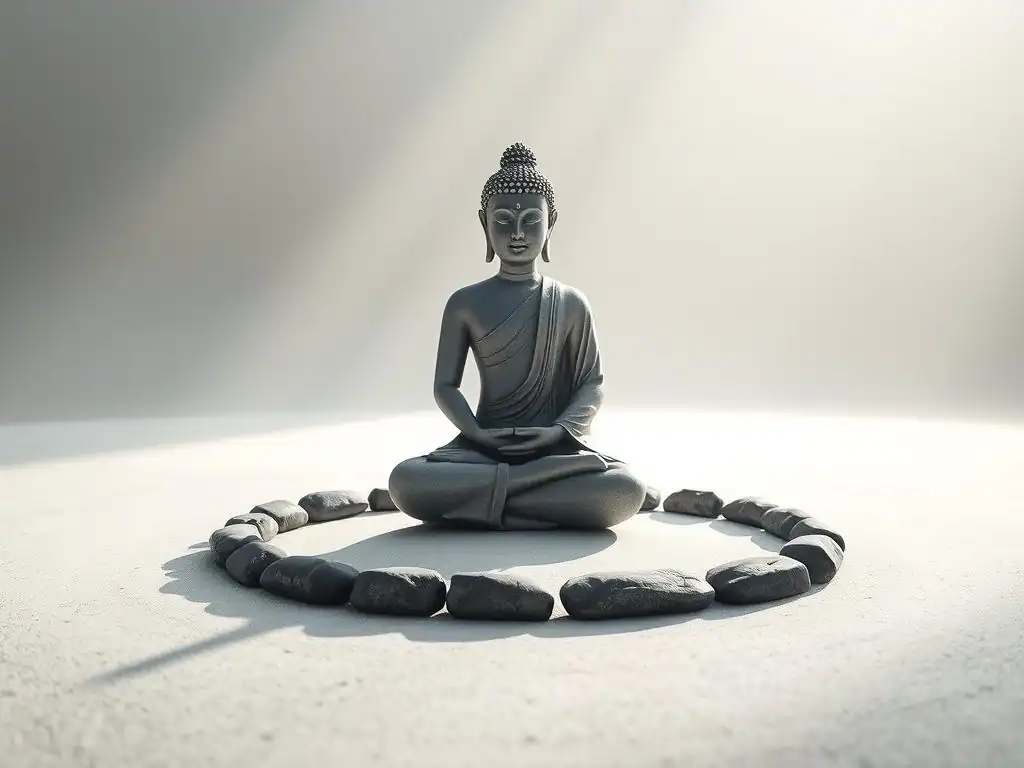
Establishing a consistent daily Vipassana practice is key to experiencing its benefits. While intensive retreats offer a powerful immersion, regular short sessions at home are essential for integration. Find a quiet space where you won't be disturbed, even if it's just for 15-30 minutes. The environment should be clean and conducive to stillness.
Posture is important for maintaining alertness and comfort. Sit with a straight spine, whether on a cushion on the floor or on a chair, ensuring your back is unsupported if possible. Your hands can rest comfortably in your lap or on your knees. The eyes are typically closed gently. The goal is a posture that allows you to remain still and aware without excessive strain. Consistency in time and place can also help make the practice a natural part of your routine.
Mindfulness of Breath: The Primary Object of Attention
The initial stage of Vipassana practice, often called Anapana, focuses on mindfulness of breath. Sit in your chosen posture and simply bring your attention to your natural respiration. Do not try to control or alter the breath in any way – just observe it as it is. Notice the sensation of the breath entering and leaving the nostrils, or the rise and fall of the abdomen.
The breath is the primary object of attention because it is always present and provides an anchor for the wandering mind. When your mind inevitably drifts off into thoughts, memories, or plans, gently acknowledge that it has wandered and kindly bring your attention back to the sensation of the breath. This repeated process of noticing the wandering and returning to the breath is the core training for developing concentration and mindfulness.
Observing Sensations and Thoughts with Equanimity
Once a degree of concentration is established through mindfulness of breath, the practice expands to observing bodily sensations. The Vipassana technique involves systematically scanning the body, part by part, noticing any physical sensations that arise – heat, cold, tingling, pressure, pain, itching, etc. The crucial aspect is to observe these sensations objectively, without reacting with craving (wanting pleasant sensations to stay) or aversion (wanting unpleasant sensations to go away).
Similarly, as thoughts and emotions arise during practice, they are observed as mental phenomena, like clouds passing in the sky. The instruction is not to suppress thoughts, but to notice them without judgment and without getting drawn into their content. This practice of observing sensations, thoughts, and emotions with equanimity – a balanced, non-reactive awareness – is the essence of developing insight into the impermanent nature of all phenomena, which is central to Vipassana meditation benefits mental health.
Advanced Vipassana Techniques and Practices
Metta Meditation: Cultivating Loving-Kindness
Metta meditation, or loving-kindness meditation, is often practiced as a complement to Vipassana, particularly towards the end of intensive retreats or daily sessions. While Vipassana focuses on objective observation of reality, Metta actively cultivates positive emotions towards oneself and others. The practice typically involves silently repeating phrases wishing well-being, happiness, and freedom from suffering, directing these wishes first towards oneself, then loved ones, neutral persons, difficult persons, and finally all beings.
This practice is considered vital for purifying the mind and softening the heart, balancing the often rigorous analytical process of Vipassana. Cultivating Metta helps to dissolve feelings of ill-will, anger, and resentment, creating a more compassionate and harmonious inner state. Many practitioners find that Metta enhances the benefits derived from Vipassana by fostering a kinder attitude towards oneself and the world, reinforcing the positive Vipassana meditation benefits mental health.
Vipassana and the Development of Insight (Vipassana-nana)
The ultimate aim of Vipassana is the development of Panna, or insight (Vipassana-nana). This insight is not intellectual understanding but a direct, experiential realization of the impermanent (anicca), suffering (dukkha), and non-self (anatta) nature of reality. Through sustained, equanimous observation of the continuous arising and passing away of physical sensations and mental phenomena, the meditator begins to see that nothing is static, everything is constantly changing.
This direct experience of impermanence undermines the illusion of a permanent, unchanging self and reveals the inherent unsatisfactoriness (suffering) that arises from clinging to things that are by nature impermanent. As these insights deepen, attachment and aversion gradually lessen, leading to liberation from suffering. This transformative understanding is the profound core of Vipassana and its potential to bring lasting positive change to mental well-being.
Intensive Vipassana Retreats: Structure and Benefits
Intensive Vipassana retreats, typically lasting 10 days, provide a structured and supportive environment for deep practice. The schedule is rigorous, often involving 10-11 hours of meditation per day, starting early in the morning and ending in the evening. Participants observe a strict code of discipline (Sila), including noble silence (no talking, reading, writing, or communication with others).
The immersive nature of retreats allows practitioners to delve deeply into the technique without the distractions of daily life. This sustained effort under guidance often leads to significant breakthroughs in understanding and experience, accelerating the process of mental purification and insight development. While challenging, the benefits reported by participants, including profound shifts in perspective and substantial improvements in mental well-being, highlight the power of this format in experiencing the full potential of Vipassana meditation benefits mental health.
Vipassana Compared to Other Mindfulness Practices
Distinguishing Characteristics of Vipassana and Samatha-Vipassana
While both Vipassana and Samatha are types of Buddhist meditation aimed at cultivating the mind, they have distinct primary goals and methods. Samatha (tranquility) meditation aims to calm and concentrate the mind, often by focusing on a single object like the breath or a mantra to the exclusion of distractions, leading to states of deep absorption (jhana). The goal is mental stillness and peacefulness.
Vipassana, on the other hand, uses the concentrated mind developed through Samatha (or concurrently with it) to investigate the nature of reality. Its primary object is not a single point, but the constantly changing flow of physical and mental phenomena. The goal is not just calm, but insight into impermanence, suffering, and non-self. Some traditions teach Samatha and Vipassana as distinct paths, while others, like the Mahasi Sayadaw tradition which influenced S.N. Goenka, teach a "dry insight" (Vipassana without prior deep Samatha absorption) approach where concentration and insight develop together.
Synergies Between Vipassana and Other Mindfulness Techniques
Despite their differences, Vipassana shares core principles with many other mindfulness-based practices and can be synergistic with them. Techniques like body scan meditation, which involves systematically bringing attention to different parts of the body and noticing sensations, are very similar to fundamental Vipassana scanning practices. Mindfulness-Based Stress Reduction (MBSR) and Mindfulness-Based Cognitive Therapy (MBCT) programs, widely used for promoting mental health, incorporate elements of both Samatha (like breath focus) and Vipassana (observing thoughts and sensations).
Practices like walking meditation, mindful eating, and mindful movement (such as yoga or tai chi) can complement formal sitting Vipassana by extending the principles of awareness and equanimity into daily activities. Integrating these techniques can help cultivate a continuous state of mindfulness throughout the day, reinforcing the insights gained in sitting practice and amplifying the broad range of Vipassana meditation benefits mental health.
Addressing Challenges in Vipassana Practice

Managing Physical Pain and Discomfort During Meditation
Physical pain and discomfort are common experiences during long meditation sits, especially for beginners or during intensive retreats. The Vipassana approach to pain is to observe it with equanimity, just like any other sensation. Instead of reacting with aversion or trying to ignore it, the instruction is to explore the pain with curiosity – notice its location, intensity, quality (throbbing, stabbing, burning), and how it changes over time.
By observing pain impersonally as just sensation, rather than "my" pain or a problem to be fixed, its power to disturb the mind often diminishes. While adjusting posture if necessary is acceptable to prevent injury, the core practice is to work with the discomfort mindfully. This process builds resilience and teaches the profound truth of impermanence, as even intense pain sensations inevitably change and pass away, reinforcing a key insight gained through Vipassana.
Working with Strong Emotions: Fear, Anger, and Grief
Encountering strong emotions like fear, anger, sadness, or grief is also a natural part of deep meditation practice. These emotions, often suppressed in daily life, may surface when the mind becomes quieter. In Vipassana, the approach is not to analyze the story behind the emotion, but to observe the sensations associated with it in the body. Anger might manifest as heat or tension, fear as tightness or trembling, sadness as heaviness.
By observing these physical manifestations of emotion with equanimity – without judgment or getting swept away – the practitioner learns that emotions, like sensations, are impermanent phenomena. This detached observation allows for a deeper understanding of how emotions arise and pass, lessening their grip and reactivity. Over time, this practice helps to process difficult feelings and cultivate emotional resilience, contributing significantly to Vipassana meditation benefits mental health.
Overcoming Mind Wandering and Mental Restlessness
Mind wandering is perhaps the most universal challenge in meditation. The mind is naturally active and tends to jump from one thought to another. In Vipassana, mind wandering is not seen as a failure, but as an opportunity to practice. Each time you notice your mind has wandered, it's a moment of mindfulness. The practice is simply to gently acknowledge the thought (e.g., "thinking") and kindly bring your attention back to the breath or the current object of observation (sensations).
Mental restlessness, characterized by fidgeting, impatience, or a strong urge to stop, is also addressed through mindful observation. Instead of acting on the urge, the practitioner observes the sensations and thoughts associated with the restlessness. This patient, persistent returning to the object of attention strengthens the muscle of concentration and equanimity, gradually reducing the frequency and intensity of mind wandering and restlessness over time.
Long-Term Benefits of Vipassana Meditation
Cultivating Wisdom and Understanding Through Vipassana
The core long-term benefit of consistent Vipassana practice is the cultivation of Panna, or wisdom. This wisdom is not intellectual knowledge but a direct, experiential understanding of the nature of reality – particularly the truths of impermanence, suffering, and non-self. As practitioners continue to observe the arising and passing of phenomena within themselves, they develop a deep-seated realization that clinging to anything impermanent inevitably leads to suffering.
This understanding gradually transforms one's perspective on life. Problems that once seemed overwhelming are seen in the context of constant change. Attachments and aversions loosen their hold. This profound shift in understanding leads to less reactivity, greater acceptance, and a more realistic and compassionate view of oneself and the world. This deepening wisdom is arguably the most transformative of the Vipassana meditation benefits mental health.
Developing Equanimity and Inner Peace
Equanimity, the ability to maintain a balanced mind amidst the ups and downs of life, is a key fruit of Vipassana practice. By repeatedly observing pleasant and unpleasant sensations, thoughts, and emotions without reaction, practitioners train the mind to remain stable and non-reactive. This doesn't mean becoming emotionless, but rather developing the capacity to experience life's challenges without being overwhelmed by them.
Over time, this cultivated equanimity leads to a profound sense of inner peace. When the mind is less tossed about by craving and aversion, there is a natural settling into a state of calm contentment. This inner peace is not dependent on external circumstances but arises from within, as a direct result of seeing things as they are and accepting their impermanent nature. This stable, peaceful state is a significant and lasting outcome of dedicated Vipassana practice.
Considerations Before Starting Vipassana
Prerequisites for Starting a Vipassana Practice
While Vipassana is considered a universal technique, certain prerequisites can make the practice more accessible and beneficial. A genuine desire to understand oneself and a willingness to work hard and face challenges are essential. Patience and persistence are also key, as results unfold gradually. While not strictly required, having a basic level of physical and mental stability is helpful, especially for longer retreats.
It's important to approach Vipassana with an open mind, free from strong preconceptions or expectations. The technique is experiential, and intellectual understanding alone is insufficient. A commitment to adhering to the code of discipline, particularly Sila, is also crucial, as it lays the necessary groundwork for concentration and insight.
Contraindications and Potential Challenges
Vipassana practice can be intense and may not be suitable for everyone, especially those experiencing acute mental health crises. Individuals with severe depression, active psychosis, unmanaged bipolar disorder, or significant trauma should exercise caution and ideally consult with a mental health professional before undertaking intensive practice. While Vipassana meditation benefits mental health for many, the introspective nature can sometimes be overwhelming for vulnerable individuals.
Challenges during practice can include significant physical pain, the surfacing of difficult emotions or traumatic memories, intense restlessness, or feelings of doubt and discouragement. These are often part of the purification process, but require resilience and appropriate support. Being aware of these potential difficulties helps in approaching the practice realistically.
Finding a Qualified Vipassana Teacher
Finding a qualified teacher is paramount for practicing Vipassana correctly and safely. The technique is traditionally taught through direct instruction from an experienced teacher. While introductory information is available, authentic learning typically occurs in a structured setting under guidance. Teachers help explain the technique, clarify doubts, and provide support in navigating difficulties.
The tradition transmitted by S.N. Goenka, through the Vipassana International Academy and numerous centers worldwide, is one widely recognized lineage offering structured courses based on this approach. Seeking out established centers associated with reputable lineages ensures that you receive instruction in the authentic technique. A qualified teacher can provide the necessary framework and support to truly unlock the potential Vipassana meditation benefits mental health.
Frequently Asked Questions
What exactly is Vipassana meditation, and how does it differ from other types of meditation?
Vipassana, meaning "insight meditation", is an ancient Indian technique focusing on observing the present moment without judgment. Unlike some meditations that use mantras or visualizations, Vipassana emphasizes direct experience of sensations.
How can Vipassana meditation specifically benefit my mental health, according to Mind Care Guide?
Mind Care Guide suggests Vipassana helps by increasing self-awareness, reducing stress and anxiety, and promoting emotional regulation. These benefits stem from observing thoughts and feelings without getting carried away by them.
Is Vipassana meditation difficult to learn, and are there any prerequisites?
Vipassana can be challenging initially, requiring dedication and patience. There are no formal prerequisites, but a willingness to commit to regular practice is essential for reaping the benefits.
Where can I learn Vipassana meditation techniques, and what resources does Mind Care Guide recommend?
You can learn Vipassana through retreats, online courses, and guided meditations. Mind Care Guide likely recommends reputable centers and apps that offer structured Vipassana instruction, focusing on mindfulness practices.
What are the potential long-term effects of practicing Vipassana meditation on my overall well-being?
Consistent Vipassana practice can lead to improved mental clarity, greater emotional resilience, and a deeper sense of inner peace. These long-term effects contribute to enhanced overall well-being and reduced vulnerability to mental health challenges.
Final Reflection: Unveiling the Transformative Power of Vipassana
The practice of Vipassana meditation isn't just an ancient technique; it's a vital tool for navigating the complexities of modern life and fostering robust mental well-being. In a world increasingly characterized by stress, anxiety, and uncertainty, the ability to cultivate inner peace and self-awareness is not a luxury, but a necessity. This article has explored the core principles of Vipassana, highlighting its profound impact on mental health through the development of mindfulness, emotional regulation, and self-compassion.
The journey of self-discovery through Vipassana is deeply personal, yet its effects resonate far beyond the individual. The practice's emphasis on direct experience and non-judgmental observation fosters a sense of groundedness and resilience that can positively influence our relationships, our work, and our overall approach to life. As the Buddha himself said, To conquer oneself is a greater victory than to conquer thousands in battle.
This sentiment encapsulates the transformative power of Vipassana, a practice that encourages us to engage in the most important battle of all – the one within ourselves.
Now, consider your own life. What areas feel burdened by stress or negativity? How might the principles of mindful observation and self-compassion, central to Vipassana, help you navigate these challenges? I invite you to explore the practice further, perhaps through a guided meditation or a retreat. Embrace the opportunity to cultivate inner peace and unlock the transformative potential within yourself. The journey may be challenging at times, but the rewards – a calmer mind, a more compassionate heart, and a greater sense of self-awareness – are immeasurable.
Unlock Your Inner Peace: Start Your Vipassana Journey Today
Thanks for taking the time to explore the world of Vipassana meditation with us! We hope you gained a deeper understanding of this powerful practice and its potential to transform your life. Now it's time to put your newfound knowledge into action.
- Begin your Vipassana practice: Even 10 minutes a day can make a profound difference. Find a quiet space, sit comfortably, and focus on your breath. Let the insights unfold naturally. This is the core step to experiencing the benefits.
- Share your experience: Connect with others on their Vipassana journey. Share your reflections (or questions!) in the comments below – a supportive community can accelerate your progress.
- Explore guided meditations: There are many free resources available online to help you deepen your practice. Try different approaches to find what resonates with you.
Ready to embark on this incredible journey of self-discovery? What small step will you take today to cultivate inner peace?