
Your Home Sanctuary: Practicing Qigong Anywhere for Mental Balance

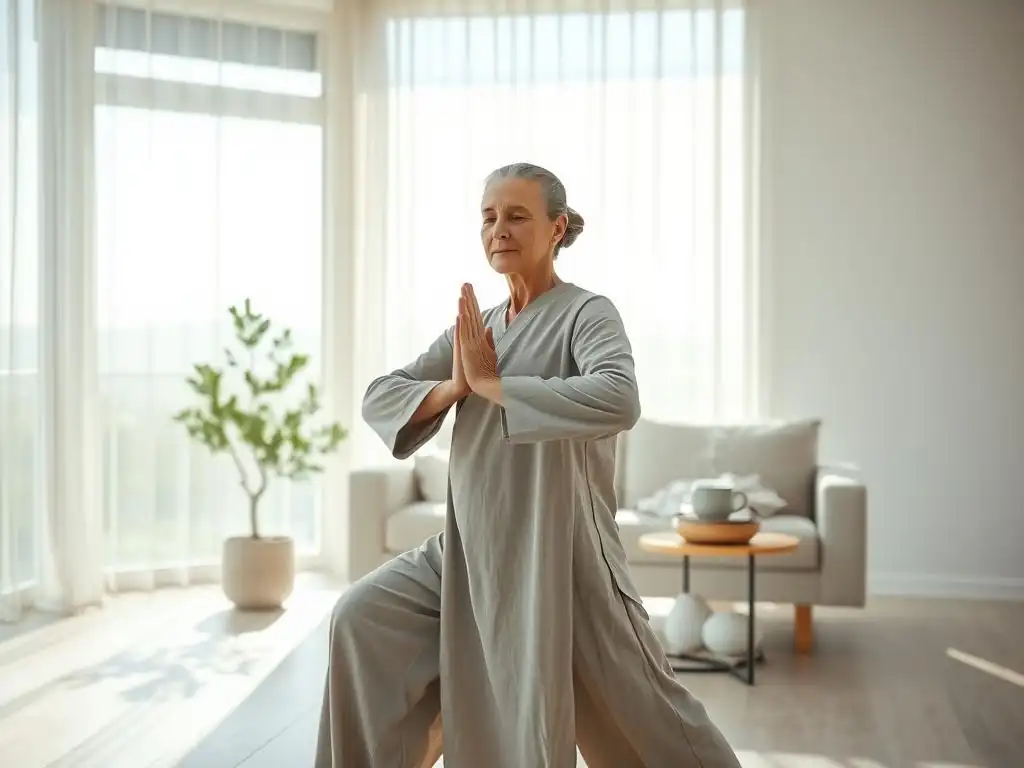
Welcome to Mind Care Guide, a sanctuary for your mental well-being. Feeling overwhelmed? Discover how Qigong for mental balance stress can become your accessible path to inner peace, practiced right in the comfort of your own home. Curious to learn how simple movements can unlock a calmer, more centered you? Let's begin your journey toward serenity...
- Qigong for Stress Reduction and Emotional Balance: Designing Your Home Practice
- Exploring Qigong and its Mental Health Benefits
- Establishing a Dedicated Qigong Space at Home
- Effective Qigong Exercises for Mental Clarity and Emotional Stability
- Incorporating Qigong into Daily Life for Ongoing Mental Wellness
- Overcoming Obstacles and Optimizing Your Home Qigong Experience
- The Enduring Benefits of Qigong for Mental and Emotional Strength
-
Frequently Asked Questions
- What is Qigong and how does it relate to mental balance?
- Can I really practice Qigong anywhere for mental balance?
- How often should I practice Qigong to see improvements in my stress levels?
- What are some simple Qigong exercises I can start with at home?
- Are there any risks associated with practicing Qigong?
- Final Reflection: Cultivating Inner Peace in a Chaotic World
- Unleash Your Inner Calm: Start Your Qigong Journey Today!
Qigong for Stress Reduction and Emotional Balance: Designing Your Home Practice
Practicing Qigong for mental balance stress is a powerful approach, offering a pathway to tranquility amidst life's demands. The gentle movements, controlled breathing, and focused intention inherent in Qigong work synergistically to calm the nervous system and quiet the often-noisy mind. By cultivating a regular Qigong practice, even for short periods, individuals can build resilience against daily stressors, improve mood regulation, and enhance overall emotional well-being. This ancient Chinese practice provides practical tools to navigate challenging emotions and foster a deeper connection with one's inner state, making it an invaluable resource for anyone seeking greater peace.
Creating a dedicated space and routine for Qigong at home transforms it from an occasional activity into a foundational element of self-care. This commitment helps solidify the habit, allowing the cumulative benefits of Qigong for mental balance stress to manifest more profoundly over time. Consistency is often cited as a key factor in experiencing the full range of positive impacts, from reduced anxiety levels to increased feelings of clarity and presence. Approaching home practice with intention and patience allows the subtle, yet significant, shifts in mental and emotional states to unfold naturally.
Exploring Qigong and its Mental Health Benefits
What is Qigong? An Ancient Practice for Mind-Body Harmony
Qigong is an ancient Chinese mind-body practice that involves slow, deliberate movements, meditation, and regulated breathing. The term "Qigong" translates loosely to "cultivating life energy," or "skillful work with Qi." Qi (pronounced "chee") is understood in traditional Chinese medicine as the vital energy or life force that flows through the body. The practice aims to balance and enhance this flow, promoting physical health, mental clarity, and emotional stability. It is rooted in principles dating back thousands of years, drawing from philosophical and medical traditions.
Unlike more vigorous exercises, Qigong emphasizes gentle, flowing movements that are accessible to people of varying ages and physical conditions. The focus is less on physical exertion and more on intentional movement synchronized with breath and mental focus. This unique combination makes Qigong particularly effective for addressing the mental and emotional aspects of well-being, including using Qigong for mental balance stress management. Regular practice is believed to harmonize the body's energy systems, leading to a state of relaxed alertness and inner peace.
How Qigong Reduces Cortisol Levels and Promotes Relaxation
Research suggests that Qigong practice can significantly impact the body's stress response, particularly by influencing cortisol levels. Cortisol, often referred to as the "stress hormone," is released by the adrenal glands in response to stress. Chronically elevated cortisol levels are linked to numerous health problems, including anxiety, depression, sleep disturbances, and impaired cognitive function. Qigong's combination of slow movement, deep breathing, and mindfulness helps activate the parasympathetic nervous system, often called the "rest and digest" system.
This activation counteracts the "fight or flight" response governed by the sympathetic nervous system, which is responsible for cortisol release. Studies involving participants practicing Qigong have shown reductions in salivary cortisol concentrations after just a few weeks of regular practice.
For instance, one study might show a decrease in cortisol levels among participants compared to a control group, indicating a physiological shift towards a more relaxed state. This biochemical effect provides a tangible link between the practice of Qigong and its efficacy in promoting relaxation and reducing the physiological burden of stress, contributing directly to its use as Qigong for mental balance stress reduction.
The Relationship Between Qi Circulation, Nervous System Regulation, and Mental Focus
In the framework of Qigong and traditional Chinese medicine, balanced Qi circulation is fundamental to health. Stagnant or blocked Qi is believed to contribute to various ailments, including emotional imbalances and lack of mental clarity. The flowing movements and gentle stretching in Qigong are designed to remove these blockages and facilitate smooth energy flow throughout the meridians, the body's energy pathways. This improved circulation is thought to nourish the nervous system, leading to better regulation.
From a Western perspective, the rhythmic, controlled movements and breathwork in Qigong influence the autonomic nervous system. By promoting vagal nerve tone – a key component of the parasympathetic system – Qigong helps the body become more efficient at switching out of the stress response and into a state of calm.
This enhanced nervous system regulation has a direct impact on mental focus and emotional stability. When the nervous system is balanced, the mind is less prone to racing thoughts, worry, and distraction, allowing for greater concentration and a more grounded emotional state, which is the essence of using Qigong for mental balance stress.
Establishing a Dedicated Qigong Space at Home
Selecting a Quiet and Comfortable Area for Your Practice
Finding the right location within your home is crucial for establishing a consistent and effective Qigong practice. The ideal spot should be relatively quiet, allowing you to focus inward without excessive external distractions. It doesn't need to be a large area, but you should have enough space to extend your arms and legs comfortably in all directions. A corner of a living room, a spare bedroom, or even a quiet spot in a hallway can work, provided it offers some degree of privacy and tranquility.
Consider the time of day you plan to practice. If you're an early riser, a spot that catches the morning sun might be invigorating. If you prefer evening practice, ensure the space can be softly lit. The floor should be stable and non-slippery. While some people use mats, many Qigong forms are practiced standing or sitting directly on the floor. Prioritize comfort and a sense of calm when selecting your personal sanctuary for practicing Qigong for mental balance stress.
Enhancing the Atmosphere: Lighting, Sound, and Sensory Elements
Once you've chosen your space, consider simple ways to enhance its atmosphere to support your practice. Soft, natural lighting is often preferred over harsh overhead lights. If practicing in the evening, a lamp with a warm glow or even candlelight (used safely) can create a soothing environment. The use of sound can also be beneficial; gentle instrumental music, nature sounds, or simply silence can help set a meditative mood. Avoid music with lyrics that might distract your focus.
Sensory elements can further deepen the experience. Some practitioners find that using aromatherapy, such as diffusing essential oils like lavender or frankincense, helps promote relaxation and focus. Keeping the space clean and clutter-free also contributes to a sense of calm and order, which can positively impact your mental state before and during practice. The goal is to create an environment that feels welcoming, peaceful, and conducive to turning inward and engaging in Qigong for mental balance stress relief.
Minimizing Interruptions and Fostering Concentration
Minimizing interruptions is key to maintaining focus during your Qigong session. Communicate with others in your household about your practice time and request not to be disturbed. Turning off your phone or putting it on silent mode is essential to avoid digital distractions. If possible, choose a time when the house is naturally quieter, perhaps early morning or late evening.
Creating a simple ritual around starting your practice can also help signal to your mind and body that it's time to transition into a focused state. This could be as simple as taking three deep breaths before beginning, lighting a candle, or bowing slightly to the space. Consistency in time and place helps establish a routine that makes it easier to enter a state of concentration each time you practice. By consciously reducing external disturbances and cultivating an internal environment of readiness, you maximize the benefits of Qigong for mental balance stress reduction.
Effective Qigong Exercises for Mental Clarity and Emotional Stability
Abdominal Breathing Techniques for Calming the Nervous System
Breathing is a cornerstone of Qigong, and abdominal breathing (also known as diaphragmatic breathing) is particularly effective for calming the nervous system. This technique involves breathing deeply into the belly, allowing the diaphragm to descend and the abdomen to expand on the inhale, and contracting the abdomen slightly on the exhale. Unlike shallow chest breathing, which can signal stress, abdominal breathing activates the parasympathetic nervous system, promoting relaxation and reducing heart rate and blood pressure.
To practice, find a comfortable seated or standing position. Place one hand on your chest and the other on your abdomen just below the rib cage. Breathe in slowly through your nose, feeling your abdomen rise while your chest remains relatively still. Exhale slowly through your mouth or nose, feeling your abdomen fall. Focus on the sensation of the breath entering and leaving your body. Practicing this simple technique for just a few minutes can significantly reduce feelings of anxiety and promote a sense of calm, making it a fundamental tool in using Qigong for mental balance stress relief.
"Eight Brocades" Sequence for Releasing Tension and Improving Circulation
The "Eight Brocades" (Ba Duan Jin) is one of the most popular and accessible Qigong sequences, renowned for its effectiveness in promoting physical health and mental well-being. This sequence consists of eight distinct movements, each targeting different organ systems and energy pathways in the body. The movements are gentle, stretching, and strengthening, designed to release physical tension that often accumulates when experiencing stress or anxiety.
For example, one movement, "Holding Up the Heavens," involves reaching the arms overhead with interlaced fingers, stretching the entire body and promoting circulation. Another, "Drawing the Bow to Shoot the Eagle," involves a gentle stance and arm movement that stretches the chest and shoulders, areas where tension often resides.
Regularly practicing the Eight Brocades helps improve Qi and blood circulation, loosens joints and muscles, and fosters a sense of groundedness and tranquility. Integrating this sequence into your home practice provides a structured way to address physical stiffness linked to stress and enhance emotional flow, embodying the principles of Qigong for mental balance stress management.
Inner Smile Meditation for Cultivating Positive Emotions
The Inner Smile is a meditative practice within Qigong that focuses on generating positive emotions by directing a gentle, smiling awareness inward towards the internal organs and glands. This practice is based on the belief that emotions have a direct impact on physical health and that cultivating positive feelings can improve organ function and overall vitality. It's a simple yet profound technique for shifting your emotional state and fostering inner peace.
To practice, sit or stand comfortably. Close your eyes or soften your gaze. Begin by bringing a gentle smile to your face, feeling the muscles around your eyes and mouth relax.
Then, bring this smiling awareness inward, directing it sequentially to different parts of your body – your brain, heart, lungs, stomach, intestines, kidneys, and reproductive organs. Imagine these organs smiling back at you, filled with warmth, kindness, and gratitude. This practice helps release accumulated emotional tension, cultivate self-compassion, and generate feelings of happiness and contentment, serving as a powerful tool within Qigong for mental balance stress reduction and emotional resilience.
Incorporating Qigong into Daily Life for Ongoing Mental Wellness
Short Qigong Practices for Stressful Moments
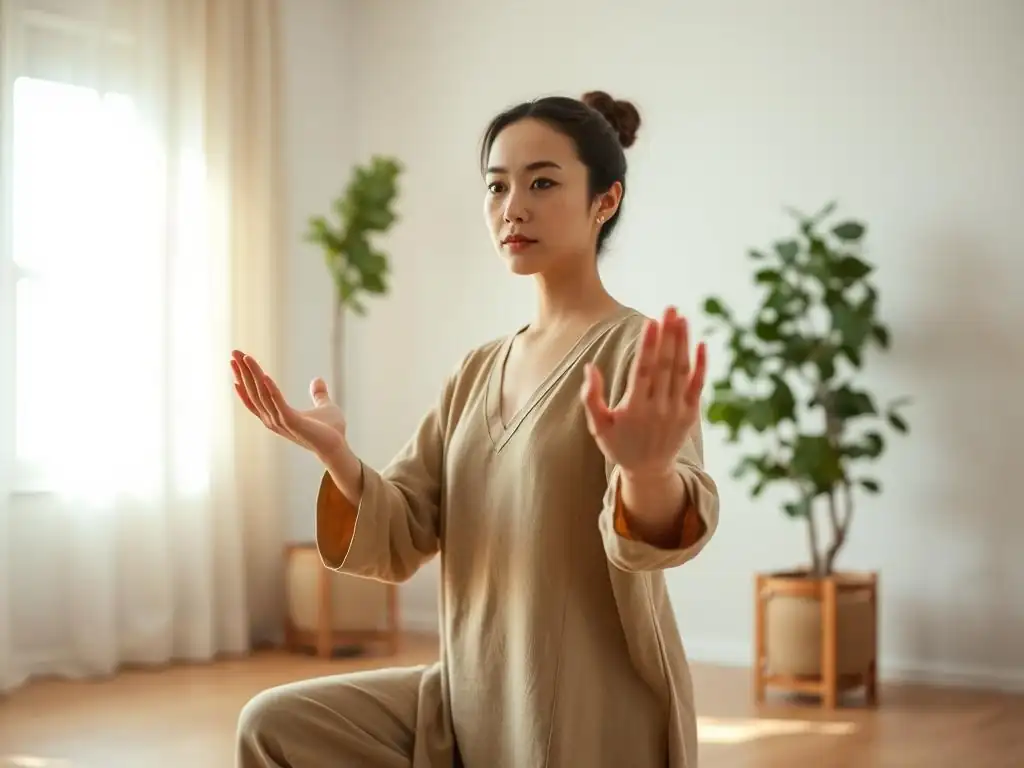
One of the greatest advantages of Qigong is its adaptability. Even short, focused practices can be incredibly effective in managing stress in the moment. When faced with a stressful situation, taking just 3-5 minutes to perform a simple Qigong exercise can make a significant difference. This could involve a few rounds of abdominal breathing, a gentle shaking movement to release tension, or a standing meditation focusing on rooting and grounding.
For example, before a challenging meeting or during a moment of overwhelm, step away for a few minutes. Find a quiet corner, take several deep abdominal breaths, perhaps combined with a simple movement like "Separating Heaven and Earth" (from the Eight Brocades, gently raising one hand while lowering the other). This brief practice helps to interrupt the stress response cycle, bring you back into your body, and restore a sense of calm and presence. Integrating these micro-practices throughout your day enhances your ability to use Qigong for mental balance stress management on demand.
Creating a Consistent Practice Schedule: Prioritizing Self-Care
Consistency is key to unlocking the deeper benefits of Qigong for mental balance stress reduction. While spontaneous practice is valuable, establishing a regular schedule helps make Qigong a non-negotiable part of your routine, much like brushing your teeth. Even 15-20 minutes daily can yield significant improvements in stress levels, mood, and overall mental clarity over time.
Consider when you feel most able to commit to practice. For some, it's first thing in the morning to set a calm tone for the day. For others, it's in the evening to unwind before sleep. Start small if needed; committing to just 10 minutes daily is better than planning an hour and never starting. Write your Qigong time into your schedule or set reminders. Viewing this time as a priority for self-care, rather than a luxury, reinforces its importance for sustained mental wellness.
Mindful Movement: Integrating Qigong Principles into Everyday Activities
The principles learned in Qigong, such as mindful awareness, relaxed posture, and deep breathing, can be integrated into everyday activities, transforming mundane tasks into opportunities for practice. This concept of "mindful movement" extends the benefits of your dedicated Qigong session throughout your day.
For instance, when walking, pay attention to your posture, keep your shoulders relaxed, and synchronize your steps with your breath. When standing in line, practice abdominal breathing and gentle grounding. Even while sitting at a desk, you can incorporate mindful posture and conscious breathing. By bringing the awareness cultivated during your formal practice into daily life, you maintain a state of relaxed presence and continue to use Qigong for mental balance stress reduction actively, rather than just during scheduled sessions.
Overcoming Obstacles and Optimizing Your Home Qigong Experience
Common Posture and Alignment Mistakes to Avoid
Practicing Qigong at home offers flexibility but also means you might not have immediate feedback on your form. While Qigong is gentle, paying attention to basic posture and alignment is important to maximize benefits and avoid strain. Common mistakes include locking the knees, hunching the shoulders, holding tension in the neck, or holding the breath.
Ensure your knees are softly bent, never locked. Maintain a sense of length in your spine, as if suspended gently from the crown of your head. Relax your shoulders down away from your ears. The pelvis should be slightly tucked, creating a stable base. Your weight should be balanced evenly through your feet. Consciously check in with your body during practice to release unnecessary tension. Correcting these simple alignment issues enhances the flow of Qi and deepens the effectiveness of using Qigong for mental balance stress relief.
Modifying Qigong Exercises for Different Physical Abilities
Qigong is highly adaptable and can be modified to suit various physical abilities and limitations. If standing for extended periods is challenging, many Qigong forms and exercises can be practiced while seated. Movements can be performed with a smaller range of motion if needed.
For example, standing sequences like the Eight Brocades can often be adapted to a seated position, focusing on the upper body movements and breathwork. If balance is an issue, practice near a wall or sturdy chair for support. Individuals with joint pain can reduce the depth of stances or the height of arm movements. The core principles of relaxed movement, breath, and intention remain the same, regardless of physical modification. The key is to practice within your comfortable range of motion and listen to your body, ensuring that Qigong for mental balance stress remains accessible and beneficial for everyone.
Seeking Expert Advice: Online Classes and Certified Instructors
While home practice is convenient, learning from a qualified instructor can significantly enhance your understanding and practice of Qigong. An instructor can provide personalized guidance on posture, breathing, and energy sensation, ensuring you are practicing safely and effectively. They can also offer variations and address specific questions related to your personal needs.
With the rise of online resources, accessing expert instruction is easier than ever. Many certified Qigong instructors offer live online classes or pre-recorded video courses. Look for instructors with recognized certifications from reputable Qigong or Tai Chi organizations. While videos are helpful, interactive online classes or occasional in-person workshops (if available) allow for direct feedback. Investing in expert guidance can deepen your practice, help you avoid common pitfalls, and accelerate your progress in using Qigong for mental balance stress reduction and overall well-being.
The Enduring Benefits of Qigong for Mental and Emotional Strength
Strengthening the Vagus Nerve Through Regular Qigong Practice
Regular Qigong practice has a profound impact on the vagus nerve, the longest cranial nerve, which plays a crucial role in the parasympathetic nervous system and the body's ability to relax and recover from stress. Stimulating the vagus nerve through practices like deep, slow breathing and gentle, rhythmic movements improves vagal tone. Higher vagal tone is associated with greater resilience to stress, better mood regulation, reduced inflammation, and improved heart rate variability – all indicators of a healthier stress response system.
The controlled, mindful movements and integrated breathwork in Qigong are particularly effective at engaging the vagus nerve. For instance, the slow, deliberate exhales common in Qigong breathing techniques directly stimulate vagal activity. The overall calming effect of the practice helps to reset the autonomic nervous system balance, shifting it away from sympathetic dominance (stress response) towards parasympathetic dominance (rest and repair). This physiological strengthening is a key mechanism by which Qigong enhances mental and emotional resilience, making it a powerful tool for Qigong for mental balance stress management.
Qigong as a Supportive Practice for Anxiety and Depression
While not a replacement for medical or psychological treatment, Qigong can serve as a highly effective supportive practice for individuals managing anxiety and depression. The combination of gentle physical activity, focused breathing, and mindful awareness helps to interrupt the negative thought loops often associated with these conditions. The physical movement helps release endorphins, natural mood elevators, while the breathwork calms the nervous system.
Studies have indicated that regular Qigong practice can lead to reductions in symptoms of anxiety and depression. For example, research might show a statistically significant decrease in scores on standardized anxiety or depression scales among participants practicing Qigong consistently over several weeks or months. The practice provides a sense of agency and self-efficacy, empowering individuals to actively participate in their own healing process. By fostering a connection between mind and body, Qigong helps individuals cultivate a greater sense of presence and emotional regulation, directly supporting their journey towards improved mental health and using Qigong for mental balance stress relief.
Maintaining a Lifelong Qigong Practice for Sustained Wellbeing
The benefits of Qigong deepen over time with consistent practice. Viewing Qigong not just as a temporary fix for stress but as a lifelong commitment to well-being yields sustained improvements in mental clarity, emotional stability, and physical vitality. As practitioners become more attuned to their bodies and energy, the practice becomes more intuitive and profound.
Integrating Qigong into the fabric of daily life, even for short periods, ensures that its positive effects continue to accumulate. Over years, a consistent Qigong practice can contribute to better aging, enhanced cognitive function, and a greater capacity to navigate life's challenges with grace and resilience. It becomes a wellspring of inner strength and peace, a reliable sanctuary accessible anytime, anywhere, solidifying its role as a fundamental practice for achieving and maintaining Qigong for mental balance stress reduction throughout life.
Frequently Asked Questions
What is Qigong and how does it relate to mental balance?
Qigong is an ancient Chinese practice involving coordinated breathing, movement, and meditation. It promotes mental balance by calming the mind and regulating the flow of qi, or vital energy.
Can I really practice Qigong anywhere for mental balance?
Yes, a major benefit of Qigong is its adaptability. Many forms can be practiced anywhere, even in small spaces, making it convenient for managing stress and promoting mental well-being.
How often should I practice Qigong to see improvements in my stress levels?
While individual results vary, aiming for at least 15-20 minutes of Qigong practice 3-4 times a week is often recommended to experience noticeable improvements in stress reduction and mental clarity.
What are some simple Qigong exercises I can start with at home?
Begin with gentle movements like Eight Brocades Qigong or Five Element Qigong. Focus on deep, mindful breathing and smooth, flowing motions to cultivate inner peace.
Are there any risks associated with practicing Qigong?
Qigong is generally safe, but it's always advisable to consult with a healthcare professional before starting any new exercise program, especially if you have pre-existing health conditions. Start slowly and listen to your body.
Final Reflection: Cultivating Inner Peace in a Chaotic World
The pursuit of mental balance in our increasingly stressful world is not a luxury, but a necessity. The simple yet profound practices of Qigong, as explored in this article, offer a powerful antidote to the anxieties and pressures of modern life. By understanding and implementing even the most basic Qigong movements, we can reclaim our inner peace and cultivate a sense of calm amidst the storm.
The impact of Qigong extends far beyond the individual; its influence ripples outwards, touching our relationships, our work, and our communities. By fostering inner tranquility, we become more resilient, compassionate, and capable of navigating life's challenges with greater ease. As the ancient Chinese proverb states: The best time to plant a tree was 20 years ago. The second best time is today.
This holds true for the practice of Qigong; the benefits accrue over time, building a foundation of mental and emotional strength that serves us throughout our lives.
Now, consider your own life. Where do you feel the weight of stress most acutely? What small adjustments can you make today to incorporate even a few minutes of Qigong into your daily routine? Perhaps it's a gentle stretching sequence during your lunch break, or a mindful breathing exercise before bed. Start small, be consistent, and allow the transformative power of Qigong to gently unfold within you. Embrace this journey towards inner peace, and discover the sanctuary that resides within your own being.
Unleash Your Inner Calm: Start Your Qigong Journey Today!
Thanks for taking the time to explore the power of Qigong with us! We hope you found practical techniques to cultivate mental balance and inner peace. Now it's time to put your newfound knowledge into practice.
- Begin your daily Qigong practice: Even 5 minutes a day can make a significant difference. Start with the simple movements we outlined, focusing on your breath and body awareness.
- Share your experience: Tell us about your first Qigong session! What did you notice? What felt most impactful? Sharing your journey inspires others.
- Explore Qigong resources: Investigate other Qigong styles and find a community of like-minded individuals online or in your area. This can deepen your practice and provide support.
Ready to transform your daily life with the soothing power of Qigong? What small step will you take today to prioritize your mental well-being?