
Yoga Poses for Stress Relief: Gentle Movements to Unwind

Welcome to Mind Care Guide, your compassionate companion on the journey to mental well-being. Feeling overwhelmed? You're not alone. Discover how to gently release tension and find inner peace with our guide to Yoga poses for stress relief. Ready to breathe a little easier? Let's begin.
Yoga Poses for Stress Relief: Gentle Movements to Unwind
Stress is a pervasive challenge in modern life, impacting not only our mental state but also our physical health. Finding effective ways to manage stress is crucial for overall well-being. While numerous techniques exist, the ancient practice of yoga has gained significant recognition for its profound ability to calm the mind and soothe the body. Focusing on gentle yoga poses for stress relief can be a powerful tool in your self-care arsenal, helping you navigate life's pressures with greater ease and resilience.
- Understanding the Connection Between Yoga and Stress Reduction
-
Top Yoga Poses for Immediate Stress Relief
- Child's Pose (Balasana): Finding Inner Calm
- Corpse Pose (Savasana): Deep Relaxation and Rejuvenation
- Legs-up-the-Wall Pose (Viparita Karani): Easing Tension and Fatigue
- Cat-Cow Pose (Marjaryasana to Bitilasana): Gentle Spinal Movement
- Standing Forward Bend (Uttanasana): Releasing Tension in the Neck and Shoulders
- Gentle Yoga Flow for Stress Reduction
- Adapting Yoga for Individual Needs and Limitations
- Integrating Yoga into Your Daily Routine for Long-Term Stress Management
-
Frequently Asked Questions
- What types of yoga poses are best for stress relief?
- How does yoga help reduce stress?
- How often should I practice yoga for stress relief to see results?
- Are there any yoga poses to avoid if I have specific physical limitations or injuries?
- Can yoga completely eliminate stress, or is it just a coping mechanism?
- Final Reflection: Finding Stillness in the Storm
- Unwind and Rediscover Your Inner Peace
Understanding the Connection Between Yoga and Stress Reduction
Yoga is far more than just physical postures; it's a holistic discipline that integrates movement, breath, and mindfulness. This powerful combination works on multiple levels to counteract the physiological and psychological effects of stress. Regular practice of yoga poses for stress relief can lead to measurable changes in your body's stress response system, promoting a state of calm and balance.
The Science Behind Yoga's Calming Effects
Research has shown that practicing yoga can significantly impact the body's stress hormones. Studies, including those published in journals like the Journal of Alternative and Complementary Medicine, indicate that consistent yoga practice can lead to a reduction in cortisol levels. Cortisol, often referred to as the "stress hormone," is released by the adrenal glands during times of stress and can have detrimental effects on health when chronically elevated. By engaging in gentle movements and controlled breathing, yoga activates the parasympathetic nervous system, the body's "rest and digest" state, counteracting the "fight or flight" response triggered by stress.
Furthermore, yoga has been linked to increased levels of gamma-aminobutyric acid (GABA) in the brain. GABA is a neurotransmitter that helps regulate nerve activity, and low levels are associated with anxiety and stress. A 2010 study by Boston University School of Medicine found that just one hour of yoga increased GABA levels by 27%. This neurochemical change contributes to the feeling of calm and reduced anxiety often experienced after a yoga session. Incorporating specific yoga poses for stress relief can directly target these physiological pathways, offering tangible benefits for mental well-being.
How Yoga Differs from Other Stress Management Techniques
While many stress management techniques focus primarily on the mind (like meditation or therapy) or the body (like exercise or massage), yoga uniquely integrates both. Unlike strenuous exercise, which can sometimes initially increase cortisol before reducing it, gentle yoga practices are designed to immediately soothe the nervous system. It combines physical activity with breath awareness and mindful presence, creating a holistic approach that addresses stress on multiple fronts.
Compared to passive relaxation techniques, yoga is an active form of stress management that empowers individuals through movement and breath control. It teaches body awareness, helping you recognize physical signs of stress and tension. For example, learning to identify tension held in the shoulders or jaw through yoga can be a crucial step in releasing it. This proactive engagement with both mind and body sets yoga poses for stress relief apart, offering a comprehensive strategy for managing daily pressures.
Yoga for Anxiety and Stress: A Holistic Approach
Yoga provides a powerful framework for managing both anxiety and stress by addressing their interconnected nature. Anxiety often manifests as excessive worry and fear, while stress is a response to perceived threats or demands. Yoga's emphasis on the present moment through breathwork and mindful movement helps interrupt the cycle of anxious thoughts that can perpetuate stress. By focusing on the physical sensations of each pose, practitioners are gently guided away from rumination about the past or future.
The holistic approach of yoga extends beyond the mat. Regular practice cultivates resilience, improves sleep quality, and enhances emotional regulation – all factors crucial for long-term stress and anxiety management. For instance, consistent practice of yoga poses for stress relief can help individuals develop a greater tolerance for discomfort, both physical and emotional, making them better equipped to handle stressful situations when they arise. It's not just about temporary relief but building sustainable coping mechanisms.
Top Yoga Poses for Immediate Stress Relief
When stress hits, certain yoga poses can offer immediate comfort and calm. These poses are generally gentle, accessible, and designed to soothe the nervous system, release physical tension, and promote a sense of grounding. Practicing even a few of these yoga poses for stress relief can make a significant difference in your state of mind.
Child's Pose (Balasana): Finding Inner Calm
Child's Pose is a deeply comforting and grounding posture that encourages surrender and relaxation. It's often used at the beginning, middle, or end of a yoga practice, or whenever you need a moment to rest and reconnect with your breath. The gentle compression of the abdomen against the thighs can be soothing, and the forward fold helps calm the nervous system.
How to perform Child's Pose for maximum relaxation
Start on your hands and knees. Bring your big toes to touch and widen your knees mat-width apart, or keep them closer together for a more compact shape. Lower your hips back towards your heels. Extend your arms forward along the mat, or bring them back alongside your body with palms facing up. Rest your forehead on the mat.
Allow your shoulders to relax and let your torso sink heavily between your thighs. Focus on the sensation of your breath expanding your back body. Stay here for 5-10 breaths, or longer if desired, allowing yourself to fully release tension with each exhale. This simple yet profound yoga pose for stress relief offers a sanctuary of calm.
Modifications for comfort and accessibility
If your hips don't comfortably reach your heels, place a rolled blanket or block between your hips and heels. If your forehead doesn't reach the mat, stack your fists or use a block to support your head. For knee sensitivity, place a blanket under your knees. If keeping knees wide is uncomfortable, bring them closer together. You can also place a bolster or pillow under your torso for extra support and a deeper sense of ease, making this accessible yoga pose for stress relief comfortable for almost anyone.
Corpse Pose (Savasana): Deep Relaxation and Rejuvenation
Savasana, or Corpse Pose, is deceptively simple but incredibly powerful. It is the final pose in most yoga practices and is essential for integrating the benefits of the postures and allowing the body and mind to fully relax. It requires conscious effort to remain still and release all physical and mental tension, making it a key yoga pose for stress relief.
Savasana technique for complete physical and mental release
Lie flat on your back with your legs extended, letting your feet fall open naturally. Your arms should rest alongside your body, slightly away from your torso, with palms facing upwards. Ensure your head and spine are in a neutral position. Close your eyes gently. Begin by consciously scanning your body from the tips of your toes to the crown of your head, actively releasing tension in each part.
Allow your breath to be natural and effortless. The goal is complete surrender – letting go of any effort or control. Stay in Savasana for at least 5-15 minutes to fully reap its restorative benefits. This essential yoga pose for stress relief facilitates deep rest.
Diaphragmatic Breathing to Enhance Savasana
To deepen the relaxation in Savasana, practice diaphragmatic (or belly) breathing. As you inhale, allow your belly to rise, filling with air like a balloon. As you exhale, gently draw your navel towards your spine, letting the belly fall.
Place one hand on your belly and one hand on your chest to feel the movement. The chest should remain relatively still while the belly expands and contracts. This type of breathing slows the heart rate, lowers blood pressure, and signals the nervous system that it is safe to relax, amplifying the stress-relieving effects of this crucial yoga pose for stress relief.
Legs-up-the-Wall Pose (Viparita Karani): Easing Tension and Fatigue
Legs-up-the-Wall Pose is a gentle inversion that helps to reverse the effects of gravity, promoting circulation and calming the nervous system. It's particularly effective for relieving tired legs, feet, and lower back tension, common symptoms of prolonged standing or sitting and significant contributors to overall stress. This restorative yoga pose for stress relief offers a sense of physical and mental lightness.
Step-by-step guide to Legs-up-the-Wall Pose
Sit with one hip close to the wall. Swing your legs up the wall as you simultaneously lie down on your back. Scoot your hips as close to the wall as is comfortable (it doesn't have to touch the wall). Your legs should be extended straight up the wall, or slightly bent if your hamstrings are tight. Your torso and head rest on the floor.
You can place a folded blanket or bolster under your hips for added comfort and a gentle inversion. Rest your arms out to the sides, palms up, or place one hand on your heart and one on your belly. Remain here for 5-15 minutes, focusing on your breath and allowing your body to relax. This simple yoga pose for stress relief is incredibly effective for unwinding.
Benefits of Viparita Karani for stress and circulation
Viparita Karani helps to drain stagnant fluid from the legs and feet, reducing swelling and fatigue. The gentle inversion calms the nervous system by activating the parasympathetic response. It can help lower blood pressure and heart rate. By taking pressure off the feet and legs, it promotes relaxation throughout the body. This pose is also thought to gently stretch the hamstrings and lower back. Many find this yoga pose for stress relief deeply calming, making it a favorite for winding down at the end of a long day or after prolonged periods of standing.
Cat-Cow Pose (Marjaryasana to Bitilasana): Gentle Spinal Movement
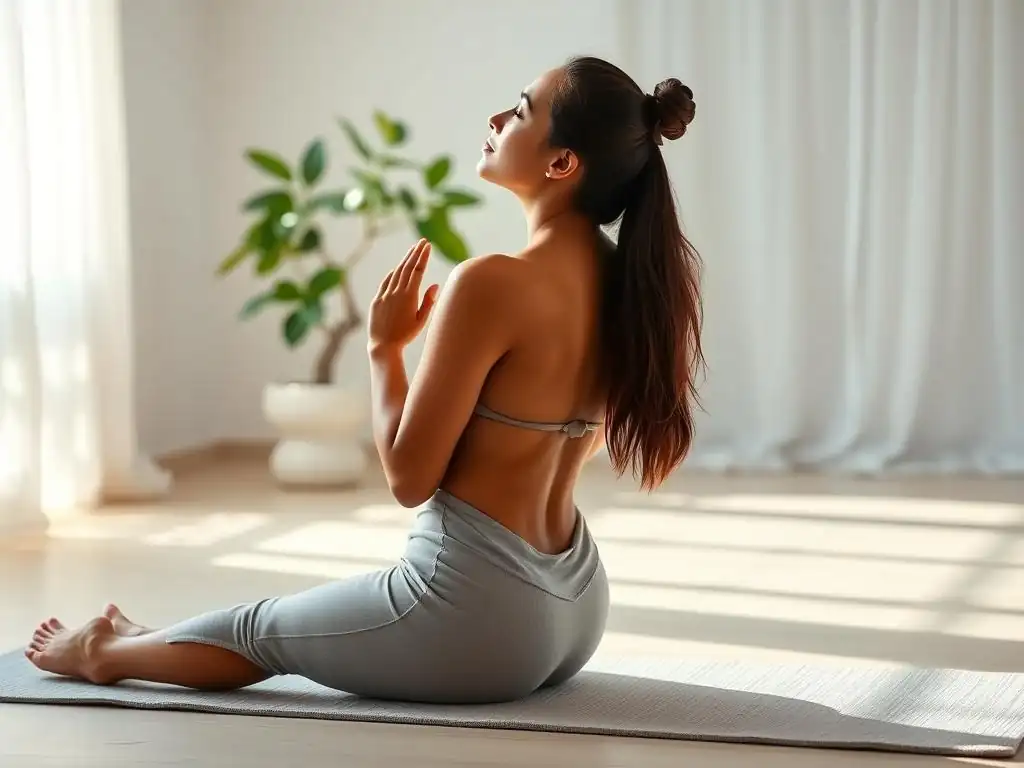
Cat-Cow Pose is a simple, flowing movement that warms up the spine, improves flexibility, and connects breath with movement. This gentle undulation of the spine helps to release tension held in the back, neck, and shoulders, areas where stress often accumulates. It's a foundational pose for promoting spinal health and fostering mindfulness.
Synchronizing breath with Cat-Cow Pose
Start on your hands and knees, with your wrists directly under your shoulders and your knees directly under your hips. On an inhale, drop your belly towards the mat, lift your chest and tailbone, and look slightly up (Cow Pose). On an exhale, round your spine towards the ceiling, tuck your chin towards your chest, and draw your navel towards your spine (Cat Pose).
Continue flowing between these two poses, coordinating each movement with the rhythm of your breath. Move slowly and mindfully, feeling the stretch and release along your spine. Performing 5-10 cycles of this gentle yoga pose for stress relief can significantly ease back tension.
Relieving back pain and promoting mindfulness
The gentle flexion and extension of the spine in Cat-Cow helps to lubricate the vertebral joints, improve spinal mobility, and stretch the muscles along the back. This can provide significant relief from stiffness and mild back pain often associated with stress and sedentary lifestyles. The rhythmic nature of the pose, combined with synchronized breathing, helps to anchor the mind in the present moment, reducing mental clutter and promoting mindfulness. This simple yoga pose for stress relief is accessible and beneficial for people of all levels.
Standing Forward Bend (Uttanasana): Releasing Tension in the Neck and Shoulders
Standing Forward Bend is a classic yoga pose that stretches the hamstrings, calves, and hips while allowing the head to hang heavy, releasing tension in the neck and shoulders. The inversion aspect of the pose can also help calm the nervous system by sending fresh blood flow to the brain. It's a powerful yoga pose for stress relief when performed with awareness and proper modifications.
Proper alignment for a safe and effective Forward Fold
Stand with your feet hip-width apart. On an exhale, hinge at your hips and fold forward, allowing your torso to hang towards your thighs. You can keep a generous bend in your knees, especially if your hamstrings are tight. Let your head and neck relax completely – shake your head gently "yes" and "no" to ensure you're not holding tension.
You can rest your hands on the floor, blocks, or your shins, or even hold opposite elbows. The goal isn't to touch your toes but to release the spine and allow gravity to stretch the back of the legs and the back itself. Hold for 5-10 breaths, focusing on releasing tension with each exhale. This posture is a key yoga pose for stress relief for the upper body.
Modifications for tight hamstrings
If your hamstrings are tight, bending your knees significantly is crucial to protect your lower back and allow the spine to lengthen. You can even rest your belly on your thighs if needed. Using blocks under your hands brings the floor closer, making the pose more accessible. Focusing on releasing the upper body and letting the head hang heavy should be the priority, rather than achieving straight legs. Over time, with consistent practice of this yoga pose for stress relief, hamstring flexibility may improve, but never force the stretch.
Gentle Yoga Flow for Stress Reduction
Combining individual yoga poses for stress relief into a gentle flow can enhance their benefits by creating a moving meditation. A simple sequence allows the body to warm up gradually, move fluidly, and transition smoothly towards deeper relaxation. This section outlines a basic, gentle flow specifically designed to unwind and manage stress.
Warm-up: Preparing the Body and Mind
Beginning with a gentle warm-up is essential to prepare your muscles and joints for movement and to transition your mind from external distractions to your inner experience. This phase focuses on slow, deliberate movements that increase circulation and body awareness without causing strain.
Neck Rolls, Shoulder Rolls, Wrist Rotations
Start in a comfortable seated position. Gently drop your chin towards your chest and slowly roll your head from side to side, feeling a stretch in your neck. Repeat 3-5 times in each direction. Then, sitting or standing, roll your shoulders forward in large circles 5-8 times, then reverse the direction.
This helps release tension often stored in the upper back and shoulders. Finally, extend your arms forward and make circles with your wrists, 5-8 times in each direction, and then flex and extend your fingers. These simple movements are excellent preparation for incorporating yoga poses for stress relief into a flow.
Flow Sequence: Combining Poses for Stress Management
A gentle flow links several yoga poses for stress relief together, often synchronized with the breath. This creates a rhythmic, calming experience that helps quiet the mind. This example uses modified Sun Salutations, a classic yoga sequence adapted for a stress-reducing practice.
Sun Salutations with Modified Poses
Begin standing at the top of your mat. Inhale, sweep your arms up overhead (Mountain Pose, Tadasana). Exhale, hinge at the hips and fold forward with bent knees (Modified Uttanasana). Inhale, lift halfway up, placing hands on shins or thighs, lengthening the spine. Exhale, fold forward again. Inhale, step your right foot back into a low lunge, dropping the back knee to the mat (Modified Low Lunge). Exhale, step back to hands and knees (Tabletop Pose).
Inhale here. Exhale, lower your chest towards the mat, keeping hips high (Puppy Pose or Ashtanga Namaskara modification). Inhale, slide forward onto your belly, and gently lift your chest for a low Cobra Pose (Bhujangasana). Exhale, press back to Child's Pose (Balasana). Inhale, return to Tabletop. Exhale, step your right foot forward between your hands for a Modified Low Lunge on the other side.
Inhale here. Exhale, step your left foot forward to meet the right, returning to Modified Uttanasana. Inhale, rise all the way up to standing, sweeping arms overhead. Exhale, bring hands to heart center. Repeat this sequence, perhaps starting by stepping back with the left foot. Moving through these modified yoga poses for stress relief creates a calming rhythm.
Cool-down: Transitioning Back to Daily Life
The cool-down phase is crucial for allowing your body and mind to integrate the benefits of the practice and transition smoothly back to your daily activities. It typically involves seated poses and a period of stillness.
Seated Meditation and Gentle Stretching
After your flow, find a comfortable seated position, perhaps on a cushion or folded blanket to elevate your hips. Close your eyes and rest your hands on your knees or lap. Spend 5-10 minutes simply observing your breath without trying to change it.
Allow your body to settle and your mind to quiet. You can then add some gentle seated stretches, such as a gentle spinal twist (inhale to lengthen, exhale to twist), or a seated forward fold (inhale to lengthen, exhale to fold gently with a rounded back, tucking the chin). These final moments of stillness and gentle movement help solidify the feeling of calm achieved through the yoga poses for stress relief.
Adapting Yoga for Individual Needs and Limitations
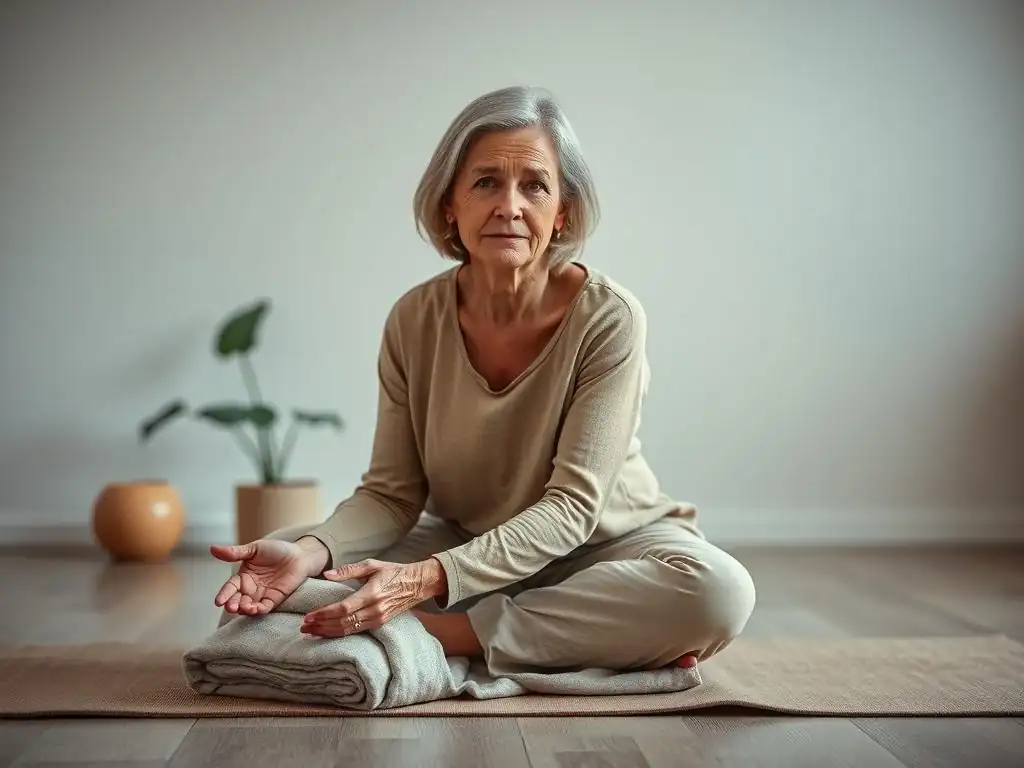
Yoga is a highly adaptable practice. The goal is never to force your body into a shape but to find variations of poses that work for your body on any given day. This is particularly important when using yoga poses for stress relief, as forcing yourself into uncomfortable positions can actually increase tension.
Yoga for Beginners: Starting Your Stress Relief Journey
If you're new to yoga, start slowly and don't worry about perfection. Focus on your breath and how the poses feel in your body. Begin with shorter practice sessions, perhaps 10-15 minutes, incorporating just a few of the gentle yoga poses for stress relief mentioned earlier, like Child's Pose, Cat-Cow, and Savasana. Consider attending a beginner-specific class or using online resources designed for newcomers. Listen carefully to your body's signals and rest whenever you need to. The most important thing is to create a positive and nurturing experience.
Modifying Poses for Physical Limitations or Injuries
Yoga can be adapted for a wide range of physical conditions, including injuries, chronic pain, or mobility limitations. For example, if you have knee issues, you can practice Cat-Cow on your forearms or seated in a chair. Standing poses can often be done using a chair for support.
Forward folds can be done with hands on a wall or a chair back. Always inform a yoga instructor about any physical limitations or injuries you have. The key is to find variations of yoga poses for stress relief that are safe and supportive for your specific needs, allowing you to experience the calming benefits without exacerbating discomfort.
Using Props to Enhance Comfort and Support
Yoga props like blankets, blocks, bolsters, and straps are invaluable tools, especially when practicing yoga poses for stress relief. They are not crutches for those who are "not good enough" but rather aids that help you find ease and proper alignment in poses. For instance, placing a block under your forehead in Child's Pose can deepen relaxation.
Using a bolster under your knees in Savasana can relieve lower back strain. A strap can help you access a gentle stretch without straining. Incorporating props allows you to fully surrender into the posture and release tension, making your yoga poses for stress relief practice more effective and comfortable.
Integrating Yoga into Your Daily Routine for Long-Term Stress Management
Consistency is key to unlocking the full potential of yoga poses for stress relief for long-term well-being. While a single session can provide immediate calm, regular practice builds resilience, improves mood, and enhances your ability to handle stress over time. Making yoga a habit can transform your relationship with stress.
Creating a Consistent Yoga Practice
Finding time for yoga doesn't mean you need hours on the mat every day. Even 10-20 minutes of focused practice can be incredibly beneficial. Try scheduling short yoga breaks throughout your day – perhaps a few Cat-Cows in the morning, Legs-up-the-Wall before bed, or a quick Child's Pose when you feel overwhelmed. Starting small and gradually increasing the duration or frequency can make it easier to stick to a routine. The aim is to make yoga poses for stress relief a regular part of your self-care, like brushing your teeth.
Combining Yoga with Other Mindfulness Practices
Yoga naturally complements other mindfulness techniques, such as meditation, deep breathing exercises, and journaling. Practicing yoga poses for stress relief can prepare your body and mind for meditation by releasing physical restlessness. Incorporating breathwork (pranayama) learned in yoga into your daily life, even off the mat, can provide instant moments of calm during stressful situations. Pairing a short yoga session with a few minutes of mindful journaling about your experience can further enhance the stress-reducing benefits and cultivate greater self-awareness.
The Benefits of Daily Yoga for Mental Well-being
Daily practice of yoga poses for stress relief contributes significantly to improved mental well-being. Over time, it can lead to reduced symptoms of anxiety and depression, improved sleep patterns, increased self-compassion, and a greater sense of presence and calm in daily life. The physical benefits, such as improved flexibility, strength, and reduced muscle tension, also contribute to feeling better overall, creating a positive feedback loop that enhances mental resilience. Making gentle yoga poses for stress relief a daily ritual is an investment in your long-term health and happiness.
Frequently Asked Questions
What types of yoga poses are best for stress relief?
Gentle and restorative poses are generally most effective. Examples include child's pose, corpse pose (Savasana), and legs-up-the-wall pose.
How does yoga help reduce stress?
Yoga combines physical postures (asanas), breathing techniques (pranayama), and meditation to calm the nervous system and promote relaxation. This helps lower cortisol levels and increase endorphins.
How often should I practice yoga for stress relief to see results?
Even short, regular sessions can be beneficial. Aim for at least 15-30 minutes several times a week. Consistency is key for noticeable stress reduction.
Are there any yoga poses to avoid if I have specific physical limitations or injuries?
Yes, it's important to listen to your body and modify poses as needed. Consult with a qualified yoga instructor or healthcare professional to address any concerns or limitations, especially concerning existing injuries.
Can yoga completely eliminate stress, or is it just a coping mechanism?
Yoga is a powerful tool for managing stress and promoting well-being. While it may not completely eliminate stress, it can significantly improve your ability to cope with stressors and build resilience.
Final Reflection: Finding Stillness in the Storm
The relentless pace of modern life leaves many of us feeling overwhelmed and stressed, but the ancient practice of yoga offers a powerful antidote. Finding moments of calm amidst the chaos is not a luxury, but a necessity for our physical and mental well-being, and the simple yoga poses explored in this article provide a readily accessible path to that peace.
The impact of stress on our society is undeniable, manifesting in everything from increased rates of anxiety and depression to strained relationships and decreased productivity. Yoga is not about touching your toes; it's about what you learn on the way down.
This quote perfectly encapsulates the journey of self-discovery that yoga offers, a journey far beyond the physical postures themselves. It's about cultivating self-awareness, understanding our limitations, and building resilience in the face of adversity – skills crucial for navigating the complexities of modern life.
Consider the gentle stretches and mindful breathing techniques discussed within this article. They are not just exercises; they are tools. I invite you to incorporate even just one or two of these poses into your daily routine. Start small, breathe deeply, and allow yourself to experience the transformative power of stillness. Notice the subtle shifts in your body and mind. This is your opportunity to cultivate a deeper connection with yourself and find a sanctuary within, no matter the storms raging outside.
Unwind and Rediscover Your Inner Peace
Thank you for taking the time to explore the world of stress-relieving yoga with us! We hope you found valuable techniques to incorporate into your daily life. Now, it's time to put your newfound knowledge into practice.
- Prioritize your well-being: Begin with just five minutes of gentle yoga stretching today – focus on the poses that resonated most with you. Even a small commitment can make a big difference.
- Share the calm: Introduce a friend or family member to the power of yoga for stress relief. Share this article or suggest a relaxing yoga session together.
- Dive deeper: Explore MindCareGuide.org for more resources on stress management and holistic wellness.
Ready to experience the transformative power of consistent self-care? What simple yoga pose will you incorporate into your routine first?