
Quick Breathing Hacks to Calm Anxiety During Your Workday


Welcome to Mind Care Guide.
Feeling overwhelmed and anxious during your workday? You're not alone. We understand the daily pressures can take a toll on your mental well-being. Imagine feeling a sense of calm wash over you, even amidst the chaos. This feeling is achievable. Explore our guide on " Calm anxiety workday breathing" and discover simple, yet powerful breathing techniques that can help you regain control and find moments of peace throughout your day. Ready to breathe easier?
Quick Breathing Hacks to Calm Anxiety During Your Workday
- Understanding Workplace Anxiety and the Power of Breathing
- Simple Breathing Exercises for Immediate Anxiety Relief During Work
- Integrating Breathing Exercises into Your Daily Work Routine
- Advanced Breathing Techniques for Deeper Anxiety Relief at Work
- Creating a Calming Work Environment to Support Your Breathing Practices
- Overcoming Challenges and Maintaining Consistency with Breathing Exercises
-
Frequently Asked Questions
- How can quick breathing exercises help me manage anxiety during the workday?
- What are some examples of "quick breathing hacks" I can use at my desk?
- How often should I practice these breathing techniques during my workday to effectively calm anxiety?
- Are these breathing exercises a replacement for professional mental health treatment?
- Can anyone benefit from these "Calm Anxiety Workday Breathing" techniques, or are they only for specific individuals?
- Final Reflection: Breathing Your Way to a Calmer Workday
- Unleash Your Inner Calm: Simple Steps to a Stress-Free Day
Understanding Workplace Anxiety and the Power of Breathing
Identifying Anxiety Triggers at Work
Workplace anxiety is a common challenge, often stemming from specific triggers within the professional environment. These can range from high-pressure deadlines and demanding workloads to difficult interpersonal dynamics with colleagues or superiors. Public speaking or presenting in meetings is another significant source of anxiety for many, with surveys often indicating it's one of the most feared activities. The uncertainty surrounding job security, organizational changes, or even just the daily commute can also contribute to a persistent sense of unease.
Recognizing these specific triggers is the first step in managing the anxiety they provoke. For instance, someone might notice their heart rate increases and palms sweat specifically before a presentation, while another feels a knot in their stomach every time they check their overflowing email inbox. Understanding what situations or tasks consistently lead to feelings of stress or panic allows you to anticipate them and proactively deploy strategies, such as targeted breathing techniques, to help calm anxiety workday breathing before it escalates. Identifying these patterns empowers you to take control rather than feeling overwhelmed by unexpected anxious responses.
The Science Behind Breathing and Anxiety Reduction
When faced with a perceived threat or stressor, your body activates the sympathetic nervous system, triggering the "fight or flight" response. This physiological cascade includes increased heart rate, rapid and shallow breathing, muscle tension, and a rush of stress hormones like cortisol. While useful in genuine emergencies, this response is detrimental when constantly activated by workplace pressures, contributing to chronic anxiety and physical discomfort. Shallow chest breathing, common during stress, limits oxygen exchange and can perpetuate feelings of panic.
Controlled, deep breathing, particularly diaphragmatic breathing, shifts your body towards the parasympathetic nervous system's "rest and digest" state. This is mediated significantly by the vagus nerve, which connects the brain to many vital organs, including the heart and lungs. Slow, deep breaths stimulate the vagus nerve, signaling the body to calm down.
Research, including studies published in journals like Frontiers in Psychology, has shown that mindful breathing exercises can lead to a measurable decrease in heart rate variability (an indicator of stress resilience) and lower cortisol levels. This scientific basis explains why targeted breathing is such an effective, immediate tool to calm anxiety workday breathing.
Simple Breathing Exercises for Immediate Anxiety Relief During Work
The 4-7-8 Breathing Technique for Workday Calm
The 4-7-8 breathing technique, popularized by Dr. Andrew Weil, is a simple yet powerful method designed to promote relaxation and reduce anxiety quickly. It acts as a natural tranquilizer for the nervous system, helping to slow down a racing heart and quiet a busy mind. This technique is particularly effective because the extended exhale helps to expel residual air from the lungs, allowing for a deeper subsequent inhale and promoting a more balanced oxygen and carbon dioxide exchange, which can rapidly calm anxiety workday breathing.
Practicing 4-7-8 breathing regularly can enhance its effectiveness during moments of acute stress. It doesn't require any special equipment or location, making it an ideal tool for discreet use right at your desk, in a bathroom stall, or even during a challenging phone call. The structured counting provides a focal point, diverting attention away from anxious thoughts and grounding you in the present moment, facilitating a state of calm even amidst workplace pressures.
How to Perform 4-7-8 Breathing at Your Desk
Here are the steps to practice 4-7-8 breathing discreetly at your workstation:
- Sit upright with your back straight. Rest your hands comfortably on your lap or desk.
- Exhale completely through your mouth, making a gentle "whoosh" sound.
- Close your mouth and inhale quietly through your nose for a count of 4.
- Hold your breath for a count of 7.
- Exhale completely through your mouth, making the "whoosh" sound, for a count of 8.
- Repeat this cycle for a total of four breaths.
Benefits of 4-7-8 Breathing for Reducing Anxiety
- Rapid Calming Effect: Often provides immediate relief from acute anxiety symptoms.
- Portable and Discreet: Can be done anywhere, anytime, without drawing attention.
- Lowers Heart Rate: Helps regulate the cardiovascular response to stress.
- Promotes Relaxation: Activates the parasympathetic nervous system.
- Improves Sleep: Can also be used before bed to calm the mind.
Box Breathing for Workplace Stress Management
Box Breathing, also known as Square Breathing, is a technique often used by athletes, military personnel, and first responders to stay calm and focused under pressure. Its simplicity and symmetrical structure make it highly effective for bringing a sense of order and control to a chaotic internal state. By regulating the breath into equal phases, Box Breathing helps to stabilize blood pressure and heart rate, making it an excellent technique to calm anxiety workday breathing when you feel overwhelmed.
The equal counts for inhaling, holding, exhaling, and holding again provide a clear rhythm that occupies the mind, interrupting the cycle of anxious thoughts. This mental engagement, combined with the physiological regulation, makes it a powerful tool for managing stress during demanding work periods or before high-stakes situations like important meetings or presentations. Practicing Box Breathing can help you regain composure and think more clearly when anxiety threatens to derail your focus.
Steps for Practicing Box Breathing During Meetings
You can practice Box Breathing quite subtly:
- Sit tall with your feet flat on the floor.
- Exhale completely to empty your lungs.
- Inhale slowly through your nose for a count of 4.
- Hold your breath at the top of the inhale for a count of 4.
- Exhale slowly through your nose or mouth for a count of 4.
- Hold your breath at the bottom of the exhale for a count of 4.
- Repeat the cycle (inhale 4, hold 4, exhale 4, hold 4) for several minutes. You can visualize drawing a box as you do this.
Why Box Breathing Works for Stress and Anxiety
- Creates Mental Focus: The counting pattern helps to distract from anxious thoughts.
- Regulates Breathing Pattern: Promotes a steady, calm respiratory rate.
- Stabilizes Physiological Responses: Helps regulate heart rate and blood pressure.
- Provides a Mental Reset: Offers a quick way to regain composure during stressful events.
- Reduces Stress Hormones: Regular practice can help lower overall cortisol levels.
Diaphragmatic Breathing (Belly Breathing) to Manage Anxiety at Work
Diaphragmatic breathing, or belly breathing, is a fundamental technique that encourages full oxygen exchange and slows the heart rate. Unlike shallow chest breathing, which primarily uses accessory muscles and can exacerbate feelings of stress, belly breathing engages the diaphragm, a large muscle located below the lungs. This allows for deeper breaths, bringing more oxygen into the bloodstream and promoting a profound sense of relaxation, which is crucial for long-term management and helping to calm anxiety workday breathing effectively.
Mastering diaphragmatic breathing is foundational because it teaches your body the most efficient way to breathe for relaxation. While other techniques build upon this principle, simply returning to deep belly breaths can be incredibly grounding during moments of stress. It's a skill that improves with practice, gradually becoming your default breathing pattern, leading to reduced baseline anxiety over time and making you more resilient to daily workplace stressors.
How to Engage Your Diaphragm for Calming Breaths
To practice diaphragmatic breathing:
- Sit comfortably or lie down. Place one hand on your chest and the other on your belly, just below your rib cage.
- Inhale slowly and deeply through your nose, feeling your belly rise against your hand. Your chest should remain relatively still.
- Exhale slowly through pursed lips, gently contracting your abdominal muscles to push the air out. Feel your belly fall.
- Repeat, focusing on the movement of your belly with each inhale and exhale. Aim for a slower exhale than inhale.
Benefits of Diaphragmatic Breathing for Long-Term Anxiety Relief
- Increases Oxygen Intake: More efficient gas exchange promotes relaxation.
- Reduces Heart Rate and Blood Pressure: Directly impacts physiological stress responses.
- Strengthens the Diaphragm: Improves overall breathing efficiency.
- Foundational Technique: Enhances the effectiveness of other breathing exercises.
- Promotes Deeper Relaxation: Encourages the body's natural relaxation response.
Integrating Breathing Exercises into Your Daily Work Routine
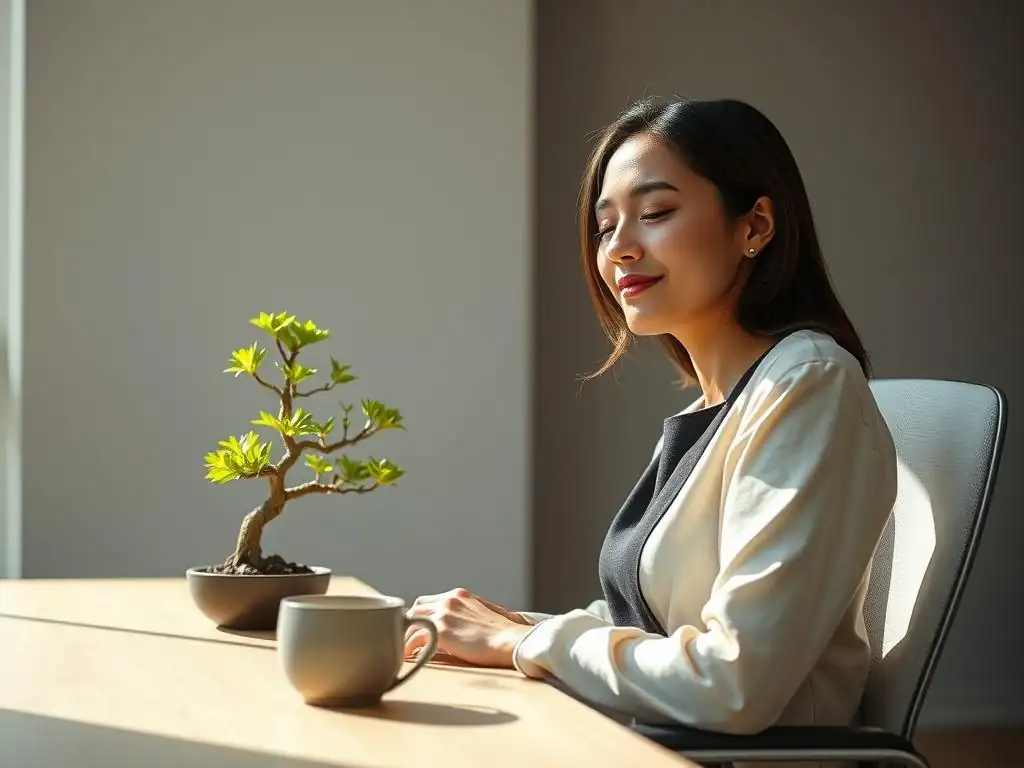
Scheduling Short Breathing Breaks Throughout the Day
Proactively incorporating short breathing breaks into your workday schedule is far more effective than only reacting when anxiety strikes. Think of it like preventative maintenance for your mental well-being. Setting aside even just 2-3 minutes several times a day can significantly impact your overall stress levels and enhance your ability to calm anxiety workday breathing when unexpected challenges arise. These brief pauses allow your nervous system to reset and prevent stress from accumulating to overwhelming levels.
Consider scheduling these breaks at natural transition points in your day: before checking emails in the morning, after a major task is completed, before lunch, or before heading into a potentially stressful meeting. Setting a discreet reminder on your phone or computer can be helpful initially. For example, a reminder pops up at 10:30 AM saying "Breathe break!" This structured approach ensures that these calming practices become a regular part of your routine, reinforcing the habit and making it easier to access the benefits when you need them most to calm anxiety workday breathing.
Using Breathing Techniques During Stressful Work Situations
The true test of your breathing practice comes when you're in the thick of a stressful situation. Whether it's a difficult conversation with a colleague, a looming deadline with unexpected complications, or a technical issue that brings your work to a halt, these moments are prime opportunities to deploy your breathing hacks. Instead of letting panic take over, pause for just a few breaths. Techniques like 4-7-8 or Box Breathing are designed for these immediate applications.
Even a single cycle of controlled breathing can interrupt the anxiety spiral. If you feel your heart pounding before a presentation, take a few slow, deep breaths backstage. If an email sparks frustration, take a moment to do Box Breathing before you draft a response. The key is to remember that you have this tool available and to make a conscious choice to use it. Over time, practicing calm anxiety workday breathing in these specific moments will retrain your brain's response to stress, making panic less automatic.
Combining Breathing with Other Relaxation Techniques at Work (e.g., Mindfulness)
Breathing exercises are powerful on their own, but their effectiveness can be amplified when combined with other simple relaxation techniques that can be done at work. Integrating mindful awareness with your breath, for instance, involves simply paying attention to the sensation of the breath entering and leaving your body without trying to change it. This practice grounds you in the present moment and can be done during any breathing exercise, deepening its calming effect.
Other combinations might include incorporating a brief period of progressive muscle relaxation (tensing and releasing muscles) while focusing on your breath, or pairing your breathing practice with a short, mindful walk around the office or outside. Even something as simple as taking a moment to stretch or sip a calming tea while focusing on your breath can enhance the benefits. These combined approaches provide multiple pathways to reduce tension and stress, making it easier to calm anxiety workday breathing and promote overall well-being throughout the day.
Advanced Breathing Techniques for Deeper Anxiety Relief at Work
Alternate Nostril Breathing (Nadi Shodhana) for Balanced Energy
Alternate Nostril Breathing, known in yoga as Nadi Shodhana Pranayama, is a powerful technique for balancing the energy channels in the body and calming the nervous system. While it might require a bit more privacy than other methods, its effects on reducing stress, clearing the mind, and promoting a sense of equilibrium are profound. This technique is believed to balance the left and right hemispheres of the brain, leading to enhanced focus and reduced anxiety, making it a valuable tool for deeper calm anxiety workday breathing.
Regular practice of Nadi Shodhana can help regulate the body's natural rhythms and improve overall respiratory function. It's particularly useful during times of high mental demand or when feeling scattered and anxious. Finding a quiet spot, like a break room or an empty meeting room, for even five minutes of this practice can provide a significant mental reset, allowing you to return to your tasks with greater clarity and a sense of inner peace, effectively helping to calm anxiety workday breathing from a deeper level.
Performing Alternate Nostril Breathing at Your Workstation
If you have a quiet space, follow these steps:
- Sit comfortably with a straight spine.
- Close your eyes gently.
- Bring your right hand up towards your nose. Rest your index and middle fingers on your forehead between your eyebrows.
- Close your right nostril with your thumb.
- Inhale slowly and deeply through your left nostril.
- Close your left nostril with your ring finger (both nostrils are now held shut). Hold your breath for a moment if comfortable.
- Release your right nostril (ring finger still closing left) and exhale slowly through your right nostril.
- Inhale slowly through your right nostril.
- Close your right nostril with your thumb (both nostrils are now held shut). Hold your breath for a moment if comfortable.
- Release your left nostril (thumb still closing right) and exhale slowly through your left nostril.
- This completes one cycle. Continue alternating, always inhaling through the nostril you just exhaled from.
Benefits of Nadi Shodhana for Mental Clarity and Calm
- Balances Energy: Harmonizes the body's energy channels (nadis).
- Calms the Mind: Reduces mental chatter and promotes focus.
- Reduces Stress and Anxiety: Activates the parasympathetic nervous system.
- Improves Respiratory Function: Encourages full, deep breathing.
- Enhances Mental Clarity: Promotes a sense of balance and concentration.
Progressive Muscle Relaxation with Breathwork
Progressive Muscle Relaxation (PMR) is a technique that involves tensing and then releasing different muscle groups in the body. This process helps you become more aware of physical tension and learn how to release it. When combined with conscious breathwork, PMR becomes an even more potent tool for combating anxiety, as anxiety often manifests as physical tension (tight shoulders, clenched jaw, etc.). Integrating breath control amplifies the release of tension and deepens the relaxation response, contributing significantly to the ability to calm anxiety workday breathing by addressing its physical symptoms.
By systematically moving through the body, tensing on the inhale and releasing on the exhale, you actively release physical stress while simultaneously calming your nervous system through regulated breathing. This dual approach is particularly effective for those whose anxiety primarily presents with physical symptoms. Practicing this during a break can help alleviate physical discomfort and promote mental ease, offering a comprehensive strategy to calm anxiety workday breathing.
Integrating Breath Control with Muscle Relaxation Exercises
Follow these steps for PMR with breath:
- Find a comfortable seated position. Close your eyes if comfortable.
- Take a few deep breaths to center yourself, focusing on your belly rising and falling.
- Start with your feet. Inhale deeply and tense the muscles in your feet tightly for a count of 5-10.
- Exhale completely and release the tension in your feet, noticing the feeling of relaxation.
- Move up your body: lower legs, thighs, hips, abdomen, back, hands, forearms, upper arms, shoulders, neck, jaw, eyes, forehead.
- For each muscle group, inhale and tense for 5-10 seconds, then exhale and release.
- After releasing the final muscle group, take a few more deep breaths, noticing the overall feeling of relaxation in your body.
How This Combination Helps Reduce Anxiety
- Targets Physical Tension: Directly addresses a common symptom of anxiety.
- Increases Body Awareness: Helps you recognize where you hold stress.
- Promotes Deep Relaxation: The combination is more potent than either technique alone.
- Interrupts Stress Cycle: Breaks the link between mental anxiety and physical tension.
- Comprehensive Relief: Addresses both the mental and physical aspects of anxiety.
Creating a Calming Work Environment to Support Your Breathing Practices

Optimizing Your Workspace for Relaxation and Reduced Anxiety
Your physical workspace significantly impacts your stress levels and ability to find moments of calm. A cluttered, uncomfortable, or visually jarring environment can contribute to feelings of overwhelm and make it harder to effectively practice breathing techniques to calm anxiety workday breathing. Simple adjustments to your immediate surroundings can create a more supportive atmosphere for relaxation and focus.
Consider decluttering your desk to reduce visual noise and create a sense of order. Ensure your chair is ergonomic and comfortable, promoting good posture which can aid in deeper breathing. If possible, position yourself near natural light or add a desk lamp with warm, soft lighting. Incorporating a small plant can bring a touch of nature indoors, which has been shown to reduce stress. Personalizing your space with a few meaningful items can also create a sense of comfort and control, making it easier to pause and practice your breathing exercises throughout the day.
Using Essential Oils and Aromatherapy to Enhance Breathing Exercises
Aromatherapy can be a powerful complement to breathing exercises, as the sense of smell is directly linked to the brain's limbic system, which controls emotions and memory. Certain essential oils have properties known to promote relaxation and reduce anxiety. Incorporating these scents into your breathing practice can deepen the calming effect and create a positive sensory anchor for your relaxation moments, enhancing your efforts to calm anxiety workday breathing.
Using a small diffuser at your desk (if permitted and mindful of colleagues) or applying a rollerball blend to pulse points before a breathing session can enhance the experience. Popular choices for calming include lavender, chamomile, bergamot, frankincense, and ylang-ylang. As you inhale during your breathing exercises, focus on the calming scent. This adds another layer of sensory engagement that helps to ground you and reinforce the relaxation response, making your breathing hacks even more effective tools against workplace anxiety.
Overcoming Challenges and Maintaining Consistency with Breathing Exercises
Addressing Common Difficulties When Starting Out
Starting a new practice, even something as simple as breathing exercises, can come with challenges. You might feel awkward or self-conscious trying techniques at work, especially if you're in an open office. It's also common to find your mind wandering constantly or even feel more anxious initially as you become more aware of your internal state. Don't be discouraged; these are normal parts of the learning process when you begin to actively try and calm anxiety workday breathing.
If you feel awkward, start by practicing in private spaces like a restroom stall or during your commute if you're not driving. If your mind wanders, gently guide your focus back to your breath or the counting; the act of returning is part of the practice. If you feel worse at first, reduce the duration and frequency, or try a different technique; some people find deeper breaths initially bring up discomfort. Remember that consistency, not perfection, is the goal. Be patient and compassionate with yourself as you develop this new skill to calm anxiety workday breathing.
Tips for Staying Consistent with Your Breathing Practice at Work
Maintaining consistency is key to reaping the long-term benefits of breathing exercises for managing workplace anxiety. It's easy to forget to practice when you're busy or feeling overwhelmed, which is precisely when you need it most. Developing strategies to integrate these hacks seamlessly into your daily routine will significantly improve your ability to calm anxiety workday breathing consistently.
Consider tying your breathing practice to existing habits: take three deep breaths before opening your email, do Box Breathing during your computer's startup time, or practice 4-7-8 breathing while waiting for your coffee to brew. Set recurring reminders on your phone or calendar. Track your practice for a week to see how often you remember and identify opportunities to add more moments.
Share your goal with a supportive colleague or friend for accountability. Remember that even one minute of conscious breathing is beneficial. The more consistently you practice, the more readily available this tool will be when you need to calm anxiety workday breathing effectively.
- Set small, achievable goals (e.g., "3 breaths every hour").
- Use reminders (phone, calendar, sticky notes).
- Tie practice to existing routines (e.g., before/after meetings).
- Find a quiet space if needed for longer sessions.
- Don't aim for perfection; just aim for presence.
- Celebrate small victories and acknowledge the effort.
- Remember why you started: to calm anxiety workday breathing and improve your well-being.
Frequently Asked Questions
How can quick breathing exercises help me manage anxiety during the workday?
Quick breathing exercises, like box breathing or diaphragmatic breathing, can help regulate your nervous system and reduce feelings of anxiety by promoting relaxation and mindfulness. They are easily accessible and discreet.
What are some examples of "quick breathing hacks" I can use at my desk?
Examples include box breathing (inhale for 4, hold for 4, exhale for 4, hold for 4), 4-7-8 breathing, and diaphragmatic breathing. These techniques can be performed anywhere, anytime.
How often should I practice these breathing techniques during my workday to effectively calm anxiety?
Practice these techniques whenever you feel anxiety rising. Aim for at least 3-5 minutes per session, and repeat as needed throughout the day for the best results in managing anxiety levels.
Are these breathing exercises a replacement for professional mental health treatment?
No, these exercises are a supplementary tool. If you're experiencing persistent or severe anxiety, it's crucial to seek professional help from a therapist or mental health professional.
Can anyone benefit from these "Calm Anxiety Workday Breathing" techniques, or are they only for specific individuals?
Generally, most people can benefit from these breathing techniques. However, if you have any underlying medical conditions, consult with your doctor before starting any new breathing exercises to ensure safety and avoid complications.
Final Reflection: Breathing Your Way to a Calmer Workday
The relentless pace of modern work life often leaves us feeling overwhelmed, and anxiety becomes a constant companion. Learning to manage this stress is not a luxury, but a necessity for both our mental well-being and professional success. The simple breathing techniques explored in this article offer a powerful, readily accessible tool to combat the anxieties that creep into our workday.
The impact of chronic stress on our mental and physical health is undeniable, and the pervasiveness of anxiety in the workplace is a growing concern. Stress doesn't go away; it just changes form.
This quote highlights the importance of proactive strategies, like mindful breathing, to manage stress rather than simply attempting to ignore or suppress it. These techniques aren't just about calming down in the moment; they build resilience and cultivate a healthier relationship with stress over time, influencing not only our individual well-being but also the overall atmosphere of our workplaces.
Now, consider how these simple breathing exercises can transform your workday. Take a moment to reflect on your own stress triggers and identify when you might incorporate these techniques. Commit to practicing just one breathing exercise daily, even for a few minutes. Notice the subtle shifts in your energy levels, your focus, and your overall sense of calm. By making this small, consistent effort, you are investing in your well-being and creating a more peaceful and productive work environment for yourself and those around you.
Unleash Your Inner Calm: Simple Steps to a Stress-Free Day
Thanks for taking the time to explore these quick breathing techniques! We hope you now feel equipped to handle moments of workplace anxiety with more ease. Ready to put your newfound knowledge into practice?
- Prioritize one breathing exercise: Choose the technique that resonated most with you and practice it daily for just 5 minutes. Notice the difference it makes in your energy levels and focus.
- Share this article with a colleague: Spread the calm! Sharing this with someone who might also benefit will create a supportive network and help you both manage stress effectively.
- Experiment with different variations: Try incorporating these techniques at different points in your workday—before a challenging meeting, during a busy period, or before going home to unwind.
What small, yet impactful change will you make today to prioritize your mental well-being at work?