
Rome's Restless Minds: Mental Distress in the Roman Empire


Welcome to Mind Care Guide, a sanctuary for understanding the nuances of mental well-being across time.
Ever wonder if the anxieties and pressures we face today are truly unique? Prepare to be surprised. Our journey begins in an unexpected place: the Roman Empire. Delve into " Rome's Restless Minds: Mental Distress in the Roman Empire" and discover the surprisingly familiar mental health struggles of a civilization long past. Unearth the historical roots of mental distress and perhaps, find a new perspective on your own well-being. Let's explore together...
Rome's Restless Minds: Mental Distress in the Roman Empire
- Introduction: Unveiling Mental Health in Ancient Rome
- Perceptions of Mental Illness in the Roman Empire
- Common Mental Health Struggles in the Roman Empire
- Roman Approaches to Mental Health Treatment
- Prominent Figures and Their Mental Health Battles
- The Legacy of Roman Mental Health Understanding
- Conclusion: Reflecting on Mental Well-being in the Roman Empire
-
Frequently Asked Questions
- What types of mental health struggles might have been common in the Roman Empire?
- How did Roman society view and treat individuals experiencing mental distress?
- Did the Roman Empire have any institutions or systems in place to care for those with mental health issues?
- How might the concept of "stress" have manifested in Roman society, considering their specific social and political context?
- What can we learn from studying mental health in the Roman Empire that is relevant to our understanding of mental well-being today?
- Final Reflection: Echoes of the Roman Mind in Our Own
- Uncover Rome's Hidden Struggles: Explore Ancient Mental Health
Introduction: Unveiling Mental Health in Ancient Rome
Exploring the Landscape of Roman Empire Mental Health Struggles
Delving into the annals of the Roman Empire reveals a society grappling with challenges that, while distinct in their historical context, bear striking resemblances to modern mental health concerns. Life in Rome, from the bustling Forum to distant military outposts, was marked by intense social pressures, political instability, economic fluctuations, and the pervasive specter of war and disease.
These environmental factors undoubtedly contributed to a range of psychological distress among the populace, from the elite senators to the common plebeians and enslaved individuals. Examining historical texts, medical writings, and philosophical treatises allows us to piece together a picture, albeit incomplete, of how individuals experienced and expressed mental health struggles in this powerful civilization.
Understanding the nuances of Roman Empire mental health struggles requires navigating a complex historical landscape where the concept of "mental illness" as a distinct medical category differed significantly from today. While Romans lacked the neuroscientific understanding we possess, they observed and documented behaviors that we would recognize as symptoms of anxiety, depression, trauma, and other conditions.
Their interpretations were often interwoven with moral judgments, philosophical beliefs, and religious explanations, creating a unique framework for understanding and responding to psychological suffering. The sheer scale and diversity of the empire meant that experiences of mental distress varied greatly depending on social status, geographic location, and personal circumstances, from the anxieties of leadership in Rome to the trauma faced by soldiers on the frontier or the despair of those in servitude.
Why Understanding Ancient Mental Health Matters Today
Studying the history of mental health, particularly within a civilization as influential as the Roman Empire, offers profound insights that resonate with contemporary discussions. It highlights the enduring presence of mental health struggles throughout human history, demonstrating that conditions like anxiety, depression, and trauma are not solely modern afflictions but universal aspects of the human experience. By examining how Romans perceived, categorized, and attempted to treat mental distress, we gain perspective on the evolution of mental healthcare and the long, often challenging, journey towards understanding the human mind.
Furthermore, exploring Roman Empire mental health struggles can challenge our own assumptions and biases. It reminds us that cultural context heavily influences how mental health is understood and addressed. The Roman emphasis on virtue, duty, and emotional control, for example, shaped how distress was expressed and perceived.
Comparing their approaches – from philosophical resilience to medical interventions often intertwined with spiritual beliefs – with modern practices can illuminate alternative perspectives on healing and well-being. Ultimately, understanding the historical roots of mental health challenges fosters empathy and provides a richer, more nuanced backdrop against which to view current mental health issues and the ongoing efforts to destigmatize and improve care.
Perceptions of Mental Illness in the Roman Empire
Defining "Madness": Roman Terminology for Mental Distress
The Romans used a variety of terms to describe states of mental distress or perceived irrationality, none of which map perfectly onto modern diagnostic categories. Words like insania (madness, unsoundness of mind), amentia (lack of mind, senselessness), and delirium (going off the furrow, often associated with fever or illness) were used to describe severe disturbances of thought and behavior.
Melancholia (black bile) was a term borrowed from Greek medicine, particularly associated with states of prolonged sadness, lethargy, and sometimes irrational fears or fixations, bearing some resemblance to modern depression. Less severe states might be described using terms like cura (care, worry, anxiety) or tristitia (sadness).
These terms often carried different connotations depending on the context. Insania could range from divine inspiration (as with prophets or Sibyls) to dangerous frenzy. Melancholia, while seen as a medical condition by physicians, could also be associated with intellectual depth or artistic temperament, as suggested by Aristotle's earlier ideas. The lack of a single, clear term equivalent to "mental illness" underscores that Romans viewed these states through multiple lenses – medical, philosophical, moral, and religious. This multifaceted understanding influenced how individuals experiencing Roman Empire mental health struggles were perceived and treated by their families, communities, and authorities.
Societal Attitudes Towards Mental Health Challenges in Ancient Rome
Societal attitudes towards individuals experiencing mental health challenges in ancient Rome were complex and varied, often depending on the severity and nature of the condition, as well as the individual's social status. Severe insania could lead to marginalization, fear, or even ridicule. Roman law, for instance, addressed cases of furor (fury or madness), sometimes limiting the rights of individuals deemed mentally incapacitated, particularly regarding property and legal matters. The famous jurist Gaius discussed the legal status of the furiosus, noting they could not conduct business, reflecting a practical approach to perceived incapacity.
However, there was also room for empathy and care, particularly within families and philosophical schools. Seneca, the Stoic philosopher, wrote extensively on managing emotions like anger and grief, offering strategies for maintaining mental equilibrium. Physicians like Celsus and Galen approached certain conditions, like melancholia or phrenitis (inflammation of the brain, often associated with delirium), as medical issues requiring treatment.
While formal institutions for mental healthcare as we know them did not exist, some temples, like those dedicated to Aesculapius, offered healing spaces where individuals sought relief for various ailments, potentially including psychological distress. The public spectacle of conditions was often met with curiosity or scorn, but private care and philosophical guidance offered more nuanced responses to Roman Empire mental health struggles.
Supernatural Explanations: Gods, Spirits, and Roman Mental Ailments
Alongside medical and philosophical perspectives, Romans frequently attributed mental distress to supernatural causes, reflecting a worldview deeply intertwined with religion and magic. It was common to believe that gods could inflict madness as punishment or, conversely, bestow it as a form of divine inspiration. The Furies, for instance, were mythological figures associated with driving individuals to madness as retribution for crimes. Possession by malevolent spirits or the effects of curses and witchcraft were also considered potential causes for inexplicable changes in behavior or mood.
This belief in supernatural origins meant that religious rituals, prayers, amulets, and visits to temples or oracles were often sought as forms of intervention for Roman Empire mental health struggles. Exorcism-like practices, though not systematically documented in the same way as later periods, were likely employed.
Physicians sometimes incorporated amulets or incantations into their treatments, blurring the lines between medical and magical remedies. While elite medical writers like Galen sought rational explanations rooted in humoral theory, popular belief often defaulted to divine or demonic influence, particularly when symptoms were dramatic or resistant to conventional treatments, illustrating the diverse explanatory models coexisting in Roman society.
Common Mental Health Struggles in the Roman Empire

Anxiety and Stress in Roman Daily Life: A Breeding Ground for Mental Strain
Life in the Roman Empire was characterized by significant sources of stress that could easily contribute to anxiety among its inhabitants. For the elite, political life was fraught with danger, involving constant competition for power, potential exile, or even assassination. Seneca, in his letters, frequently addresses the anxieties of ambition, wealth, and the fear of death, reflecting the pervasive unease even among the privileged. Economic instability, reliance on fluctuating harvests, and the ever-present threat of debt created considerable financial stress for many, from landowners to urban workers.
Beyond the immediate pressures of survival and status, the sheer pace and density of urban life in major centers like Rome contributed to sensory overload and stress. Juvenal's satires paint vivid pictures of the dangers and annoyances of the city – crowded streets, noise day and night, the risk of fire or building collapse.
For enslaved persons, the constant threat of violence, separation from family, and lack of control over their lives represented an extreme form of chronic stress and trauma. These widespread environmental and social factors acted as a breeding ground for anxiety and contributed significantly to the spectrum of Roman Empire mental health struggles experienced by the diverse population.
Depression and Melancholy: Unpacking Roman Sadness
Descriptions in Roman literature and medical texts suggest that states akin to modern depression were recognized, often under the umbrella term melancholia. Physicians like Celsus described symptoms including persistent sadness, fearfulness without cause, aversion to food, sleeplessness, and irrational thoughts or impulses. Galen further elaborated on the humoral theory of melancholy, attributing it to an excess of black bile, which could affect the brain and lead to altered moods and cognition. He noted variations, including melancholic states caused by physical illness or originating directly in the brain.
Literary sources provide personal accounts that resonate with depressive experiences. Cicero's letters following the death of his beloved daughter Tullia express profound grief, despair, and difficulty functioning, illustrating the depth of sorrow that could overwhelm even a prominent figure. While grief was a natural response, prolonged and debilitating states of sadness and withdrawal were noted and sometimes considered pathological. The Roman emphasis on Stoic resilience aimed to combat excessive emotion, but the very need for such philosophy indicates that deep sadness and despair were common Roman Empire mental health struggles that individuals grappled with.
Trauma and PTSD: The Impact of War and Violence on Roman Minds
The Roman Empire was almost constantly engaged in military conflict, from large-scale conquests to suppressing rebellions and defending vast borders. Soldiers faced horrific violence, the constant threat of death, witnessing atrocities, and enduring extreme physical and psychological hardship. While the concept of Post-Traumatic Stress Disorder (PTSD) is modern, historical accounts strongly suggest that Roman veterans suffered from the psychological wounds of war. Symptoms like nightmares, intrusive memories, emotional numbing, and hypervigilance are described in various historical periods and are highly probable among Roman soldiers.
Beyond the battlefield, Roman society was often violent. Public executions, gladiatorial games, slavery, and harsh punishments were commonplace, exposing many to trauma. The trauma of conquest impacted conquered populations, and the trauma of enslavement was a daily reality for hundreds of thousands.
While Romans didn't have a clinical framework for understanding trauma's psychological effects, the descriptions of veterans struggling to reintegrate into civilian life, exhibiting irritability or emotional flatness, align with modern understandings of trauma responses. The pervasive nature of violence meant that trauma-related Roman Empire mental health struggles were likely widespread, though often interpreted through lenses of physical injury, moral failing, or supernatural affliction.
Hysteria and Nervous Disorders: Understanding Gendered Mental Health in Rome
The concept of "hysteria," primarily associated with women and believed to originate from a "wandering womb," was a prominent framework for understanding certain mental and physical symptoms in Roman medicine, inherited from the Greeks. Symptoms attributed to hysteria included anxiety, fainting spells, shortness of breath, paralysis, and altered emotional states. While modern medicine rejects the "wandering womb" theory and views these symptoms as potentially related to anxiety disorders, conversion disorder, or other conditions, the Roman understanding significantly shaped how women's mental health struggles were perceived.
Physicians like Galen discussed treatments for hysteria, often involving strong-smelling substances or attempts to "settle" the womb. This gendered medical view meant that women's expressions of distress were frequently pathologized through this specific lens, potentially masking a variety of underlying Roman Empire mental health struggles unique to women's experiences in a patriarchal society, such as the pressures of marriage, childbirth, and limited autonomy.
While men were not diagnosed with "hysteria," they were susceptible to other nervous or psychosomatic complaints, often discussed in terms of humoral imbalances or external stressors, highlighting how both gender and medical theory influenced the categorization of mental and physical ailments.
Roman Approaches to Mental Health Treatment
Philosophical Perspectives: Stoicism, Epicureanism, and Mental Well-being
Philosophy played a significant role in Roman life, not just as abstract thought but as a practical guide for living and maintaining mental well-being. Stoicism, with proponents like Seneca, Epictetus, and Marcus Aurelius, emphasized virtue, reason, and the acceptance of what is beyond one's control.
Stoics sought to cultivate emotional resilience ( apatheia – not absence of feeling, but freedom from disturbing passions) by focusing on internal judgments rather than external events. They practiced techniques like negative visualization (contemplating potential misfortunes to reduce their impact) and mindfulness (focusing on the present moment) as ways to manage anxiety and fear, offering a form of cognitive therapy aimed at preventing or mitigating Roman Empire mental health struggles.
Epicureanism, while often misunderstood, also offered a path to mental tranquility ( ataraxia – freedom from disturbance). Epicureans sought pleasure not in Hedonistic excess, but in the absence of pain and fear, particularly the fear of death and divine retribution.
They valued friendship, simple living, and intellectual pursuits, believing these contributed to a calm and contented mind. Both Stoicism and Epicureanism provided frameworks for understanding human suffering and offered actionable strategies for cultivating inner peace, serving as important resources for Romans seeking to navigate life's difficulties and maintain psychological balance in the face of potential Roman Empire mental health struggles.
Medical Interventions: Roman Physicians and Their Mental Health Practices
Roman medicine, heavily influenced by Greek traditions, approached mental health challenges primarily through the lens of humoral theory. Physicians like Celsus and Galen believed that imbalances in the four humors (blood, phlegm, yellow bile, and black bile) caused illness, including mental disturbances. Treatments aimed to restore this balance through diet, exercise, bathing, bloodletting, purging (using laxatives or emetics), and herbal remedies. For melancholia, treatments might include warm baths, gentle massage, soothing music, cheerful company, and remedies believed to expel black bile.
Beyond humoral treatments, Roman physicians also employed methods that might be considered early forms of psychotherapy or environmental therapy. Celsus recommended travel, distraction, and engaging in pleasant activities for those suffering from melancholy. Galen discussed the importance of the physician-patient relationship and the physician's role in offering reassurance and guidance. While their understanding of the mind was limited by the science of their time, Roman medical practitioners offered tangible interventions based on their theoretical frameworks, representing a key part of the response to Roman Empire mental health struggles, alongside philosophical and religious approaches.
Therapeutic Environments: Sanctuaries and Healing Spaces in the Roman Empire
While dedicated psychiatric hospitals did not exist in the Roman sense, certain locations served as therapeutic environments where individuals sought healing for various ailments, including those we might consider mental health related. Temples dedicated to healing deities, most notably Aesculapius (the god of medicine), were popular destinations.
Patients would undergo rituals, including incubation (sleeping within the temple precincts in hopes of receiving divine visions or guidance), and priests might offer advice or perform healing ceremonies. These sanctuaries provided a sense of hope, community, and a structured environment focused on recovery, which could have a significant placebo effect or simply offer respite from daily stressors contributing to Roman Empire mental health struggles.
Furthermore, wealthy Romans might retreat to villas or country estates to escape the pressures of urban life, seeking tranquility and a change of environment as a way to restore their mental and physical health. Baths, a central feature of Roman social life, also served a therapeutic purpose, offering relaxation and social interaction. While not specifically designed for mental illness, these spaces and practices contributed to overall well-being and provided avenues for managing stress and seeking comfort, representing informal therapeutic resources available within the Roman world.
The Role of Diet and Lifestyle in Roman Mental Health
Roman physicians and philosophers recognized the connection between physical health, diet, and lifestyle, and mental state. Galen, for example, extensively discussed the impact of food on the humors and recommended specific diets to balance them, including for conditions like melancholy. He believed that heavy or cold foods could exacerbate imbalances, while lighter, warmer foods were beneficial. Celsus also offered dietary advice as part of his medical treatments, reflecting a holistic approach that considered the body's influence on the mind.
Beyond diet, lifestyle recommendations were common. Regular exercise, adequate sleep, moderation in drinking and eating, and avoiding excessive stress or emotional extremes were all seen as crucial for maintaining both physical and mental health. Philosophers like Seneca advocated for a simple, disciplined life, free from the excesses that could disturb the mind. The Roman emphasis on a healthy mind in a healthy body ( mens sana in corpore sano) encapsulated this belief, suggesting that maintaining physical well-being through diet, exercise, and balanced living was considered fundamental to preventing and managing Roman Empire mental health struggles.
Prominent Figures and Their Mental Health Battles
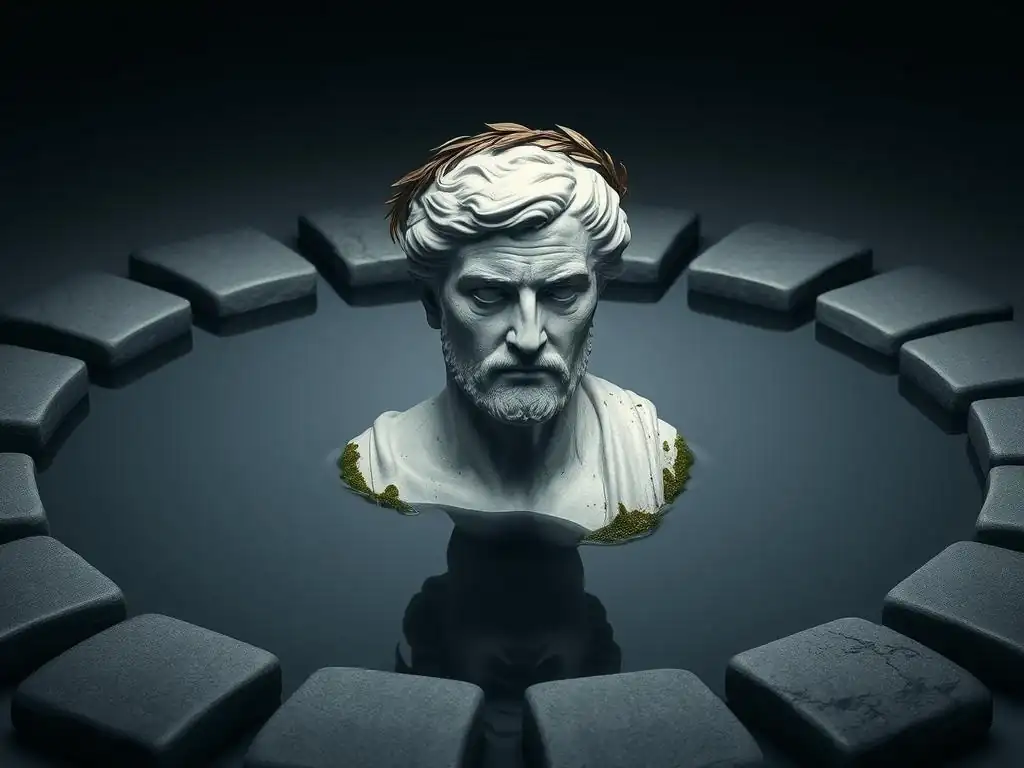
Emperor Nero: Examining Potential Mental Instability and its Impact
Emperor Nero remains one of the most controversial figures in Roman history, with accounts describing increasingly erratic and cruel behavior, including the murder of his mother and other relatives, and his perceived indifference or even pleasure during the Great Fire of Rome. While diagnosing historical figures retrospectively is challenging and must be approached with caution, historical sources from Tacitus, Suetonius, and Cassius Dio describe actions that have led some modern historians and psychologists to speculate about potential mental instability, perhaps related to personality disorders, paranoia, or the corrupting influence of absolute power.
Nero's reign (54-68 AD) was marked by extreme swings in popularity, lavish spending, artistic pretensions, and sudden, violent outbursts. His actions caused immense suffering and political upheaval, ultimately leading to his deposition and suicide. Whether his behavior stemmed from a defined mental illness as understood today, or was a product of his upbringing, environment, and unchecked authority, his story serves as a stark example of how the psychological state of a powerful individual could have devastating consequences for the entire empire, underscoring the significant impact of potential Roman Empire mental health struggles at the highest level of society.
Marcus Tullius Cicero, the renowned orator, statesman, and philosopher, provides a well-documented case of an elite Roman grappling with profound emotional distress. His letters and philosophical works reveal his struggles, particularly following the death of his beloved daughter Tullia in 45 BC. Cicero fell into a deep depression, expressing overwhelming grief, despair, and an inability to function. He retreated from public life and sought solace in writing, composing works like the Tusculan Disputations, which explored the nature of grief, fear, and other emotional disturbances from a philosophical perspective.
Cicero's experience highlights how personal tragedy and political upheaval (he lived through the tumultuous period of the late Republic, marked by civil wars and the rise of dictators) could severely impact even resilient individuals. His turn to philosophy, particularly drawing on Stoic and Academic ideas, was his primary method of coping with his Roman Empire mental health struggles. He actively sought intellectual and philosophical answers to his suffering, demonstrating the vital role that philosophical inquiry played for some Romans in processing trauma and maintaining psychological resilience.
Lessons from History: The Personal Toll of Roman Empire Mental Health Struggles
The experiences of figures like Nero and Cicero, along with countless unnamed individuals from different social strata, underscore the personal toll exacted by Roman Empire mental health struggles. From the anxieties of ambition and political survival to the deep sorrow of personal loss, the trauma of war, and the despair of enslavement, mental distress was a pervasive aspect of life in the ancient world. While their understanding and treatment methods differed vastly from ours, the accounts reveal a shared human vulnerability to psychological suffering.
Examining these historical cases teaches us that mental health is not a modern invention but an ancient challenge. It reminds us that societal structures, political environments, and personal circumstances profoundly impact well-being. The ways Romans coped – through philosophy, medicine, religion, or simply enduring – offer historical perspectives on resilience and the varied human responses to adversity. Their struggles, though separated by millennia, resonate with contemporary experiences and reinforce the ongoing importance of addressing mental health in all its forms.
The Legacy of Roman Mental Health Understanding
Influence on Later Medical and Philosophical Thought
The Roman engagement with mental health, particularly through the preservation and development of Greek medical and philosophical traditions, had a lasting impact on subsequent Western thought. Roman physicians like Galen, whose humoral theory dominated medical thinking for over a thousand years, profoundly influenced the understanding of mental illness in the Middle Ages and Renaissance. His detailed descriptions of melancholia, mania, and other conditions, along with his therapeutic recommendations, formed the basis of medical approaches to psychological disorders for centuries, shaping how mental health struggles were diagnosed and treated long after the empire fell.
Similarly, Roman philosophical traditions, especially Stoicism, continued to influence ethical thought and approaches to emotional regulation throughout history. Thinkers from the Renaissance humanists to Enlightenment philosophers found value in Roman ideas about virtue, resilience, and the pursuit of tranquility. These philosophical frameworks offered non-medical strategies for managing distress and achieving well-being, providing an alternative or complementary approach to understanding Roman Empire mental health struggles and their management that extended far beyond the empire's lifespan.
Modern Relevance: Lessons from Ancient Rome for Contemporary Mental Health Care
While Roman medical practices are outdated, their approaches offer lessons relevant to contemporary mental health care. The Roman recognition of the mind-body connection, emphasized in their belief in mens sana in corpore sano, aligns with modern holistic approaches that integrate physical health, diet, and lifestyle into mental health treatment. Their use of therapeutic environments, such as temples and retreats, highlights the importance of supportive spaces and respite, concepts explored in modern residential treatment centers or therapeutic communities.
Furthermore, the Roman reliance on philosophical guidance as a means of coping with stress and emotional turmoil underscores the value of psychological frameworks and coping strategies, paralleling modern cognitive-behavioral therapies and mindfulness practices. Studying Roman Empire mental health struggles and their responses reminds us that effective care involves more than just medication; it includes environmental factors, lifestyle, personal resilience, and frameworks for understanding one's place in the world. Their history encourages a broader perspective on mental well-being that encompasses physical, social, and existential dimensions.
Further Resources: Exploring Ancient Views on Mental Illness
For those interested in delving deeper into Roman Empire mental health struggles, a wealth of primary and secondary sources are available. Key primary texts include the medical writings of Celsus and Galen, the philosophical works of Seneca, Epictetus, and Marcus Aurelius, and historical accounts by authors like Tacitus, Suetonius, and Plutarch, which offer anecdotes and descriptions of individuals experiencing distress. Roman poetry and drama also contain insights into the emotional lives and psychological challenges faced by people in ancient times.
Secondary sources, including academic books and articles by historians, classicists, and medical historians, provide analysis and interpretation of these ancient texts, contextualizing Roman views on mental illness within their cultural and scientific frameworks. Exploring these resources allows for a richer understanding of the complexities of Roman Empire mental health struggles and the multifaceted ways in which this influential civilization perceived and responded to the challenges of the human mind.
Conclusion: Reflecting on Mental Well-being in the Roman Empire
Exploring Roman Empire mental health struggles reveals a society that, despite lacking modern diagnostic tools and scientific understanding, recognized and grappled with a spectrum of psychological distress. From the anxieties of daily life and the trauma of war to states akin to depression and conditions labeled as hysteria, Romans experienced the universal challenges of the human mind. Their responses were a blend of medical theory (primarily humoral), philosophical guidance (Stoicism, Epicureanism), religious belief (divine or demonic influence), and practical lifestyle advice.
While their treatments and explanations differed vastly from ours, the Roman experience underscores the enduring presence of mental health challenges throughout history. It reminds us that culture, belief systems, and societal structures profoundly shape how distress is understood and addressed. By examining Roman Empire mental health struggles, we gain valuable perspective on the long history of human efforts to comprehend and alleviate suffering, finding both differences and surprising continuities with our contemporary concerns about mental well-being.
Frequently Asked Questions
What types of mental health struggles might have been common in the Roman Empire?
The Romans likely experienced conditions similar to modern anxieties and depressions, although they may have been understood differently. Their lifestyle, marked by political instability and social pressures, could have contributed to these struggles.
How did Roman society view and treat individuals experiencing mental distress?
Roman society's understanding of mental health was limited. Treatment often involved supernatural explanations and practices like bloodletting or purging, rather than evidence-based approaches.
Did the Roman Empire have any institutions or systems in place to care for those with mental health issues?
Formal institutions dedicated to mental healthcare were largely absent in the Roman Empire. Care was primarily provided by family members or through religious practices, but there was no structured system in place.
The constant threat of warfare, political intrigue, and economic instability likely created significant stress. This stress could have manifested in ways that we would now recognize as symptoms of anxiety or trauma.
What can we learn from studying mental health in the Roman Empire that is relevant to our understanding of mental well-being today?
Studying the past helps us understand the cultural and historical context of mental health. Recognizing that mental distress is not a new phenomenon can reduce stigma and encourage open conversations.
Final Reflection: Echoes of the Roman Mind in Our Own
The struggles with mental health, so often perceived as a modern affliction, resonate deeply with the experiences of individuals within the Roman Empire. The evidence, though fragmented, paints a vivid picture of anxiety, depression, and other forms of distress that transcended time and culture, reminding us that the human experience of mental illness is a timeless constant. This shared vulnerability across millennia underscores the enduring need for understanding and compassion.
The exploration of mental distress in ancient Rome reveals not just historical curiosity, but a powerful mirror reflecting our own societal challenges. The societal pressures, the anxieties surrounding status and success, and the lack of adequate support systems—all these factors mirror contemporary struggles. The unexamined life is not worth living,
Socrates famously declared, a sentiment that rings just as true today as it did in ancient Rome. This timeless wisdom highlights the ongoing importance of self-awareness and seeking help when needed, regardless of the era.
Consider the parallels between the Roman world and our own. You, the reader, are living in a world that, despite its advancements, still grapples with the same fundamental human vulnerabilities. Take a moment to reflect on your own mental well-being, and consider how the lessons learned from the past can inform your present and future.
Reach out for support if you need it; remember that seeking help is a sign of strength, not weakness. Let the echoes of Rome's restless minds inspire you to prioritize your mental health and build a more compassionate and understanding world for yourself and others.
Thanks for taking the time to delve into the fascinating—and often heartbreaking—world of mental health in ancient Rome! You've gained a unique perspective on how our struggles with mental distress transcend time. Now, let's take this journey further:
- Dive deeper: Research a specific Roman figure known for potential mental health challenges. Consider their story and how it resonates with modern perspectives. This is a great way to apply what you've learned.
- Share your thoughts: What surprised you most about the mental health practices (or lack thereof) in the Roman Empire? Start a conversation in the comments below! Let's explore this topic together.
- Challenge yourself: Could you imagine applying any of the described Roman coping mechanisms (like philosophy or communal baths) to your own life? Reflect on how ancient approaches could inform modern self-care.
What ancient coping mechanism could best address the mental health challenges we face today?