
Improving Family Communication: How Different Approaches Work

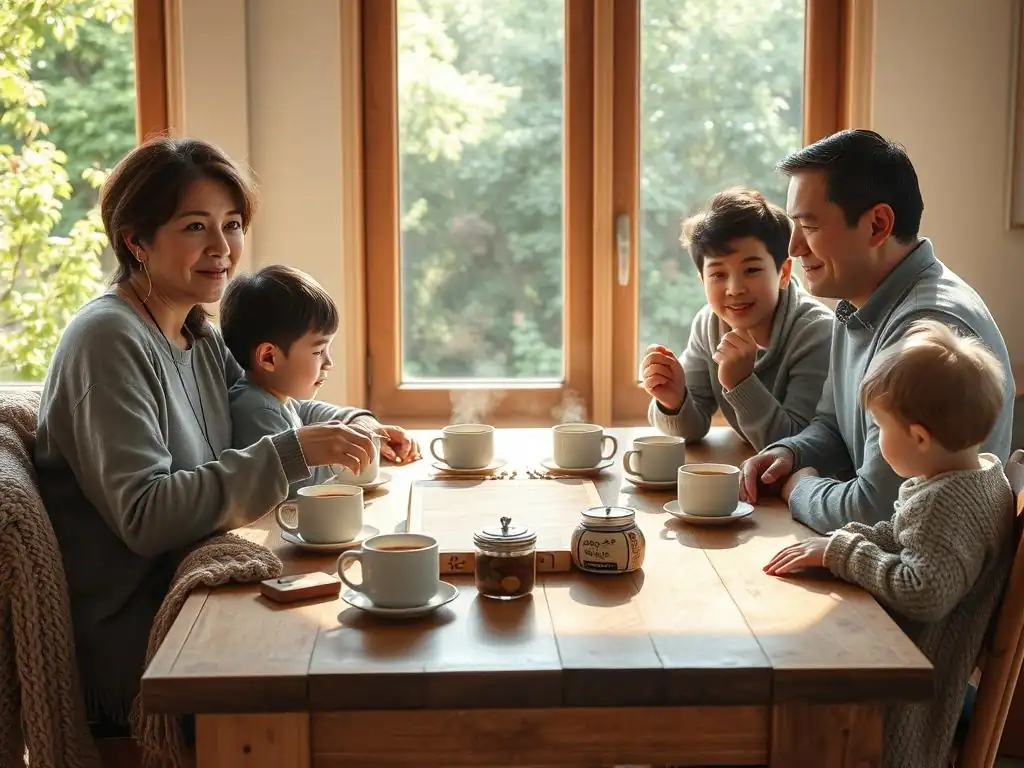
Welcome to Mind Care Guide, a sanctuary for your mental well-being.
Are you yearning for deeper, more meaningful connections within your family? Discover how effective family communication strategies improve not just your relationships, but also the overall mental health of your loved ones. We understand the challenges families face, and we're here to offer practical, insightful guidance. Ready to unlock the secrets to a more harmonious home? Let's begin.
- Improving Family Communication: Effective Strategies for a Healthier Home
- Understanding the Importance of Effective Family Communication Strategies
- Common Barriers to Effective Family Communication and How to Overcome Them
-
Different Family Therapy Approaches to Enhance Communication
- Exploring Family Therapy Modalities for Improved Dialogue
- Family Systems Therapy: Understanding the Family as a Unit
- Structural Family Therapy: Addressing Dysfunctional Family Patterns
- Strategic Family Therapy: Focusing on Problem-Solving and Communication Techniques
- Narrative Therapy: Reframing Family Stories and Communication Patterns
- Specific Communication Skills to Foster in Your Family
-
Implementing Effective Family Communication Strategies: A Step-by-Step Guide
- Step 1: Creating a Safe and Supportive Communication Environment
- Step 2: Scheduling Regular Family Meetings for Open Dialogue
- Step 3: Practicing Active Listening and Empathetic Communication
- Step 4: Addressing Conflicts with Respect and Understanding
- Step 5: Seeking Professional Help When Needed: When Communication Breakdown Persists
- Real-Life Examples of Improved Family Communication
- Maintaining Effective Family Communication Long-Term
-
Frequently Asked Questions
- What are some basic effective family communication strategies?
- Why is effective communication so important for family well-being?
- How can families improve their active listening skills?
- What role do "I" statements play in improving family communication?
- What are some common barriers to effective family communication, and how can we overcome them?
- Final Reflection: The Enduring Power of Family Connection
- Unlock Deeper Family Connections Today!
Improving Family Communication: Effective Strategies for a Healthier Home
Mind Care Guide: Nurturing Family Relationships Through Open Dialogue
Effective family communication strategies improve the connection, understanding, and overall health of family units. At Mind Care Guide, we understand that the way families interact verbally and non-verbally forms the foundation of their relationships. Nurturing these connections through open dialogue creates a supportive environment where individuals feel heard, valued, and understood. This is not just about talking more, but about talking better – with intention, empathy, and clarity.
Developing effective family communication strategies is a continuous process, essential for navigating life's challenges together. It helps build trust, resolve conflicts constructively, and strengthen bonds across generations. A family where communication flows freely and respectfully is better equipped to handle stress, support individual growth, and foster a sense of belonging for every member. This guide explores various approaches and techniques to help your family enhance its communication patterns.
Understanding the Importance of Effective Family Communication Strategies
Why Open Communication is Crucial for Family Well-being
Open communication is the lifeblood of a healthy family system. It fosters an environment where members feel safe to express their thoughts, feelings, needs, and concerns without fear of judgment or reprisal. This transparency builds trust and mutual respect, which are fundamental pillars for strong relationships. When family members can openly share their experiences, whether positive or negative, it prevents misunderstandings from festering and allows for timely support during difficult times.
Moreover, open dialogue enables families to navigate transitions and challenges more effectively. Whether it's dealing with adolescent changes, parental stress, or external pressures, discussing issues openly allows for collaborative problem-solving. Studies consistently show that families with high levels of open communication report greater satisfaction with their relationships and exhibit higher resilience when faced with adversity. For example, research indicates that families where teenagers feel comfortable discussing problems with parents show significantly lower rates of risky behaviors.
The Link Between Communication and Mental Health in Families
The quality of family communication has a profound impact on the mental health of its members. Families that practice effective communication strategies improve not only their relationships but also create a protective factor against various mental health issues. When communication is poor – characterized by criticism, avoidance, or hostility – it can lead to increased stress, anxiety, depression, and isolation among family members. Children growing up in environments with limited or negative communication may struggle with emotional regulation and developing healthy interpersonal skills.
Conversely, families that prioritize empathetic and clear communication provide a stable emotional environment. This supportive atmosphere helps individuals feel secure, understood, and validated, which are crucial for maintaining good mental health. For instance, a study might show that individuals from families with strong communication patterns report lower levels of stress and higher levels of self-esteem compared to those from families with dysfunctional communication. Learning and implementing effective family communication strategies improve the emotional landscape of the home, fostering resilience and well-being for everyone.
Common Barriers to Effective Family Communication and How to Overcome Them
Identifying Communication Roadblocks: Blaming, Interrupting, Avoiding
Effective family communication strategies improve interaction patterns, but numerous roadblocks can hinder progress. One common barrier is blaming, where instead of addressing the issue, individuals point fingers at others. This defensive posture shuts down dialogue and creates resentment. Another significant obstacle is interrupting, which signals disrespect and the listener's lack of interest in fully understanding the speaker's perspective. When someone is constantly interrupted, they are less likely to share openly in the future.
Avoiding difficult conversations is another prevalent barrier. Families might sidestep sensitive topics like finances, health issues, or emotional struggles to maintain superficial peace. However, this avoidance allows problems to escalate and prevents genuine connection. Other roadblocks include making assumptions, using 'you' statements that sound accusatory ( You always do this!), passive-aggressive behavior, and failing to listen actively. Recognizing these patterns is the first step towards dismantling them and paving the way for healthier interactions.
Practical Tips for Breaking Down Communication Barriers
Overcoming communication barriers requires conscious effort and practice. To combat blaming, focus on 'I' statements ( I feel hurt when...) rather than 'you' statements ( You hurt me when...). This shifts the focus to your feelings and needs without accusing the other person. To reduce interrupting, establish a family rule: one person speaks at a time, and others listen fully before responding. You could even use a visual cue, like a talking stick, in structured discussions.
Addressing avoidance involves scheduling dedicated time to discuss challenging topics in a calm setting. Start with less sensitive issues and gradually move to more complex ones. Practice active listening techniques, like paraphrasing what you heard ( So, if I understand correctly, you're saying...) to ensure understanding and show you are engaged. Encourage empathy by trying to see the situation from the other person's perspective. Small, consistent changes in these habits can significantly improve effective family communication strategies.
Different Family Therapy Approaches to Enhance Communication

Exploring Family Therapy Modalities for Improved Dialogue
Family therapy provides a structured environment to identify and change dysfunctional communication patterns. Various modalities exist, each offering unique perspectives and techniques to help families improve their interactions. These therapeutic approaches recognize that family members are interconnected and that an issue affecting one person often impacts the entire system. By working with a trained therapist, families can learn new ways of relating, expressing needs, and resolving conflicts, ultimately enhancing their effective family communication strategies.
Therapy offers a safe space to practice difficult conversations, understand underlying family dynamics, and develop healthier ways of interacting. It's not about finding fault but about identifying patterns and learning skills. Whether dealing with specific issues like conflict resolution or broader challenges like adapting to major life changes, different therapy modalities offer tailored strategies to help families communicate more effectively and strengthen their bonds.
Family Systems Therapy: Understanding the Family as a Unit
Family Systems Therapy, pioneered by figures like Murray Bowen, views the family as a complex social system where individuals are interconnected. This approach emphasizes that each member's behavior influences and is influenced by others in the system. Communication problems are often seen as symptoms of underlying patterns and dynamics within the family structure, rather than solely individual issues. The goal is to understand these systemic patterns, such as triangulation (bringing a third person into a conflict between two) or emotional cutoff (reducing contact to manage anxiety).
Therapists using this approach help family members recognize their roles and patterns of interaction. They explore how past family experiences and dynamics might be influencing current communication. By increasing insight into these systemic forces, families can learn to differentiate themselves emotionally while remaining connected, reducing reactivity, and fostering more open and honest dialogue. This systemic perspective is crucial because effective family communication strategies improve when the entire family unit's dynamics are considered.
Structural Family Therapy: Addressing Dysfunctional Family Patterns
Structural Family Therapy, developed by Salvador Minuchin, focuses on the family's structure, particularly the boundaries and hierarchies within the system. Dysfunctional communication often arises from unclear boundaries (e.g., parents acting like peers with their children) or rigid structures that prevent adaptation. The therapist actively enters the family system during sessions to observe interactions directly and identify problematic patterns like enmeshment (overly diffuse boundaries) or disengagement (overly rigid boundaries).
The therapist then works to restructure these patterns, often by strengthening parental hierarchy, clarifying boundaries between generations, and creating space for different subsystems (like the parental subsystem or sibling subsystem) to function effectively. By altering the structure, the therapist aims to change the interactional sequences that lead to poor communication. For example, helping parents establish clearer boundaries with a defiant teenager can reduce conflict and open channels for more respectful communication. Effective family communication strategies improve as the underlying structural issues are addressed.
Strategic Family Therapy: Focusing on Problem-Solving and Communication Techniques
Strategic Family Therapy is a brief, directive approach that focuses on solving specific problems and changing interactional sequences that maintain the problem. Therapists using this model are less concerned with underlying history and more focused on identifying the specific communication patterns that are problematic and implementing strategies to interrupt them. Techniques might include prescribing specific tasks for the family to complete between sessions or reframing the problem in a new way.
This approach often involves identifying "communication sequences" – the predictable pattern of interactions that occur around a specific issue. For instance, a child misbehaves, the parent yells, the child withdraws, and the parent gives up. The therapist would devise a strategy to break this sequence, perhaps by instructing the parent to respond differently or tasking the child with a specific behavior change. The emphasis is on implementing changes in behavior and communication to resolve the presenting problem quickly. Effective family communication strategies improve through targeted interventions aimed at specific interactional patterns.
Narrative Therapy: Reframing Family Stories and Communication Patterns
Narrative Therapy views problems as separate from the people experiencing them. It focuses on the stories families tell about themselves and their relationships, recognizing that these stories shape their understanding of reality and their communication patterns. For example, a family might have a dominant story that "we are always fighting," which influences how they interpret interactions and perpetuate conflict.
The narrative therapist helps families identify these dominant, problem-saturated stories and explore alternative, more empowering narratives. Through conversations, they help family members "re-author" their stories, highlighting strengths, positive exceptions to the problem story, and preferred ways of relating. By externalizing the problem (e.g., "The conflict seems to have taken over our discussions") and exploring different perspectives, families can create new meanings and open up possibilities for different, more constructive communication patterns. This process helps reinforce that effective family communication strategies improve when families can change their perspective on their own interactions.
Specific Communication Skills to Foster in Your Family
Active Listening: A Key Component of Effective Communication
Active listening is more than just hearing words; it's about fully concentrating on, understanding, responding to, and remembering what is being said. In family communication, active listening makes the speaker feel valued and understood, reducing misunderstandings and building trust. It involves paying attention non-verbally through eye contact and nodding, as well as verbally through techniques like paraphrasing and asking clarifying questions.
For example, if your teenager is talking about a problem at school, active listening means putting away your phone, making eye contact, and saying something like, "So, it sounds like you're feeling frustrated with your math class because the new teacher's style is hard to follow. Is that right?" This shows you've processed their message and gives them an opportunity to correct or elaborate. Practicing active listening is fundamental because effective family communication strategies improve dramatically when members feel truly heard.
Empathetic Communication: Understanding and Validating Feelings
Empathetic communication involves understanding and sharing the feelings of another person. It's about putting yourself in their shoes and acknowledging their emotional experience, even if you don't agree with their perspective or actions. Validating feelings doesn't mean you endorse the behavior associated with those feelings, but simply that you recognize the emotion itself is real for the other person.
Statements like "It makes sense that you would feel disappointed after that happened" or "I can see how upsetting this is for you" are examples of empathetic validation. This skill is crucial in families because it creates a sense of emotional safety. When family members feel their emotions are acknowledged and respected, they are more likely to open up and communicate honestly. Fostering empathy helps ensure effective family communication strategies improve the emotional climate of the home.
Non-Violent Communication (NVC): Expressing Needs and Feelings Clearly
Non-Violent Communication (NVC), developed by Marshall Rosenberg, provides a framework for expressing oneself honestly and listening empathetically in a way that meets everyone's needs. NVC focuses on four components:
- Observations: Stating specific behaviors without judgment (
When I saw dirty dishes in the sink...). - Feelings: Expressing your emotions related to the observation (
...I felt frustrated...). - Needs: Connecting your feelings to your underlying universal human needs (
...because I need order and cleanliness in our shared space.). - Requests: Making a clear, actionable request (
Would you be willing to wash your dishes after you use them?).
Using NVC helps reduce conflict by focusing on needs rather than blame. It provides a clear template for difficult conversations. For instance, instead of "You're so lazy, you never clean up," an NVC approach would be, "When I see your clothes on the floor (Observation), I feel overwhelmed (Feeling) because I need help keeping the house tidy (Need). Would you be willing to put your clothes in the hamper before dinner? (Request)." Learning NVC principles significantly aids in implementing effective family communication strategies.
Conflict is a natural part of family life; the key is how it's managed. Effective conflict resolution skills allow families to navigate disagreements constructively, leading to stronger relationships rather than damaged ones. These skills include staying calm, listening actively, identifying the core issue, focusing on the problem rather than the person, brainstorming solutions together, and being willing to compromise.
A structured approach to conflict, like taking a break when emotions are high, using 'I' statements, and working towards a mutually acceptable solution, prevents arguments from escalating into hurtful fights. Teaching children and adults how to disagree respectfully is vital. Families that learn effective conflict resolution techniques demonstrate that effective family communication strategies improve their ability to handle inevitable disagreements in a healthy way.
- Stay calm and take breaks if needed.
- Use 'I' statements to express feelings and needs.
- Listen actively to understand the other's perspective.
- Focus on finding solutions, not assigning blame.
- Be open to compromise and finding common ground.
Implementing Effective Family Communication Strategies: A Step-by-Step Guide

Step 1: Creating a Safe and Supportive Communication Environment
The first step in implementing effective family communication strategies is establishing an environment where everyone feels safe to speak honestly and openly. This means minimizing criticism, avoiding ridicule, and ensuring that conversations, especially difficult ones, happen in a calm and respectful manner. Designate specific times and places for important discussions free from distractions like phones or television.
It's also crucial to model the behavior you want to see. Parents, in particular, should demonstrate active listening, empathy, and respectful expression of feelings. When mistakes happen – and they will – apologize sincerely and discuss what could be done differently next time. A safe environment encourages vulnerability and makes all subsequent steps possible.
Step 2: Scheduling Regular Family Meetings for Open Dialogue
Consistency is key when you improve effective family communication. Scheduling regular family meetings, even if just for 15-30 minutes weekly, provides a dedicated time for everyone to check in, share updates, discuss upcoming schedules, address minor issues before they become major problems, and offer support. This routine normalizes open dialogue and makes it a regular part of family life.
During these meetings, give each person a chance to speak without interruption. Use this time to practice the skills discussed earlier, like active listening and empathetic responses. A simple agenda can help keep things on track:
- Check-ins: How is everyone feeling?
- Updates: Share news or upcoming events.
- Discussion Items: Address any topics or issues raised by family members.
- Appreciations: Share something you appreciate about another family member.
This structured approach ensures that communication isn't just reactive but proactive.
Step 3: Practicing Active Listening and Empathetic Communication
Actively incorporating active listening and empathetic communication into daily interactions, not just during family meetings, is vital. When a family member is speaking, truly listen to understand, rather than just to respond. Practice reflective listening by summarizing what you heard: "So, you're saying..." or "It sounds like you feel...".
Make a conscious effort to acknowledge and validate feelings. Even simple phrases like "That sounds tough" or "I can see why you'd be upset" can make a big difference. Encourage family members to practice these skills with each other. Role-playing or discussing scenarios can be helpful ways to build these muscles. Consistent practice ensures that effective family communication strategies improve day-to-day interactions.
Step 4: Addressing Conflicts with Respect and Understanding
Conflicts are inevitable, but they don't have to be destructive. When disagreements arise, approach them with the goal of understanding and resolution, not winning. Encourage family members to express their perspectives using 'I' statements. Set ground rules for conflict, such as no yelling, no name-calling, and no bringing up past grievances unrelated to the current issue.
Focus on the specific issue at hand and brainstorm solutions together. Teach compromise – finding a middle ground that partially satisfies everyone's needs. If a discussion becomes too heated, agree to take a break and revisit it later when everyone is calmer. Learning to navigate conflict respectfully is a powerful component of effective family communication strategies.
Step 5: Seeking Professional Help When Needed: When Communication Breakdown Persists
Despite best efforts, sometimes families face deeply entrenched communication problems that are difficult to resolve on their own. This is where seeking professional help from a family therapist is invaluable. A therapist can provide an objective perspective, identify complex underlying dynamics, and teach advanced communication techniques tailored to the family's specific challenges.
Signs that professional help might be beneficial include:
- Constant conflict or arguing
- Lack of communication or emotional distance
- Difficulty resolving recurring issues
- Dealing with major life changes (divorce, loss, illness) that strain communication
- Concerns about a family member's mental health impacting interactions
A therapist can guide the family through difficult conversations, mediate conflicts, and help establish healthier patterns. Recognizing the need for external support is a sign of strength and a crucial step in ensuring effective family communication strategies improve long-term well-being.
Real-Life Examples of Improved Family Communication
Case Studies: How Families Benefited from Implementing Communication Strategies
Consider the case of the Miller family, struggling with frequent arguments between parents and their teenage son. Communication was often accusatory and defensive. They sought family therapy, where they learned active listening and began implementing weekly family meetings. Initially awkward, these meetings became a platform for discussing issues calmly.
The parents practiced validating their son's feelings, and the son learned to express his needs using 'I' statements instead of withdrawing or lashing out. Within six months, their conflict decreased significantly, and the overall atmosphere at home became more positive. This demonstrates how implementing effective family communication strategies improve daily life.
Another example is the Garcia family, who felt emotionally distant. They rarely shared feelings or discussed anything beyond logistics. They started practicing empathetic communication, making a conscious effort to ask about each other's feelings and respond with understanding. The parents began sharing their own feelings more openly, modeling vulnerability. This shift encouraged the children to share more, leading to deeper connections and increased mutual support during stressful times. These real instances highlight the tangible benefits when effective family communication strategies improve interactions.
Testimonials: Sharing Success Stories of Enhanced Family Dynamics
Families who have focused on improving communication often share inspiring stories. One parent noted, "We used to shout to be heard. After learning to listen actively and use 'I' statements, our dinner table conversations are actually enjoyable. It feels like we're a team again." A young adult shared, "My relationship with my parents completely changed when we started talking openly instead of avoiding hard topics. I feel so much closer to them now."
Another testimonial from a sibling described the impact: "My sister and I fought constantly. Learning conflict resolution skills in family therapy helped us understand each other's perspectives and find ways to compromise. We still disagree, but we don't let it damage our relationship anymore." These personal accounts underscore the transformative power of prioritizing communication. They serve as powerful reminders that effective family communication strategies improve not just interactions but the core bonds between family members.
Maintaining Effective Family Communication Long-Term
Strategies for Consistent and Open Dialogue
Maintaining effective family communication strategies requires ongoing effort and commitment. It's not a one-time fix but a continuous practice. One key strategy is consistency: sticking to regular check-ins or family meetings, even when life gets busy. Treat communication as a priority, like any other important appointment.
Another strategy is to regularly review and adapt your communication practices. What worked last year might not work this year as family dynamics change. Ask for feedback from family members: What's working? What could be better? Be willing to adjust techniques. Celebrating communication successes, no matter how small, reinforces positive habits. For instance, acknowledging when a difficult conversation was handled well encourages future open dialogue.
Adapting Communication Strategies to Changing Family Dynamics
Families evolve over time – children grow up, members move away, new members join, and life circumstances change. Effective family communication strategies improve when they are flexible and adaptable to these shifts. Communication with a young child will differ significantly from communication with a teenager or an adult child.
As children enter adolescence, communication might need to shift from directive to more collaborative. When children leave home, finding new ways to stay connected becomes important. Dealing with aging parents might require different communication approaches focusing on support and shared decision-making. Recognizing these changing needs and being willing to adjust how, when, and about what you communicate ensures that family bonds remain strong and communication remains effective across the lifespan.
Resources for Continued Learning and Support: Books, Websites, Local Support Groups
Fortunately, numerous resources are available to support families in their journey to improve effective family communication strategies. Books on communication skills, parenting, and family dynamics offer valuable insights and techniques. Websites from reputable mental health organizations often provide free articles, tips, and guides on family communication.
Local community centers or mental health organizations may offer workshops or support groups focused on communication or parenting skills. Family therapy remains an excellent resource for complex or persistent issues. Continuously seeking knowledge and support reinforces the importance of communication and provides new tools and perspectives for strengthening family relationships over the long term. Investing in learning is investing in the health and well-being of the entire family unit.
Frequently Asked Questions
What are some basic effective family communication strategies?
These strategies include active listening, which involves fully concentrating on what others are saying, using "I" statements to express feelings, and establishing regular family meetings to discuss issues openly.
Why is effective communication so important for family well-being?
Effective communication fosters stronger relationships, promotes a sense of belonging and understanding, and helps families navigate challenges and conflicts more effectively.
How can families improve their active listening skills?
Practice giving your full attention to the speaker, avoid interrupting, and summarize what they've said to ensure understanding. Non-verbal cues, like eye contact, are also important.
What role do "I" statements play in improving family communication?
"I" statements allow individuals to express their feelings and needs without blaming or accusing others. This promotes a more constructive and understanding dialogue by focusing on personal experience.
What are some common barriers to effective family communication, and how can we overcome them?
Barriers include lack of time, fear of conflict, and poor listening habits. Overcoming these involves scheduling dedicated family time, learning conflict resolution skills, and practicing active listening.
Final Reflection: The Enduring Power of Family Connection
Effective family communication strategies improve not just individual well-being, but the very fabric of our society. The strength of a family unit, built on open dialogue and mutual understanding, ripples outwards, impacting everything from academic success and mental health to community stability and societal progress. Ignoring the importance of healthy communication within families is to ignore a fundamental building block of a thriving world.
The impact of communication styles learned in childhood resonates throughout our lives, shaping our relationships, our careers, and even our political views. We carry these patterns forward, influencing how we interact with our partners, our friends, and our colleagues. As the saying goes, The family you come from isn't as important as the family you create.
But the family we create is profoundly shaped by the family we came from, and the communication skills (or lack thereof) we inherited. Understanding and actively working to improve family communication is therefore not just a personal endeavor, but a crucial step in building a more empathetic and understanding world.
Consider the ways in which you communicate within your own family. Are there patterns you'd like to change? Are there unspoken rules or unresolved conflicts hindering genuine connection? Take this opportunity to reflect on your own communication style and commit to fostering a more open, honest, and loving environment within your family. The journey towards improved family communication is ongoing, but the rewards – stronger bonds, deeper understanding, and a more fulfilling life – are immeasurable.
Unlock Deeper Family Connections Today!
Thanks for taking the time to explore new ways to improve communication within your family! We hope you gained valuable insights into different approaches and found strategies that resonate with you. Now, let's put that knowledge into action.
- Prioritize one communication technique: Choose the approach that feels most manageable and impactful for your family, and commit to practicing it consistently this week. Start small and build from there.
- Share this article with a loved one: Open a dialogue about improving your family communication by sharing this article and sparking a conversation together.
- Experiment with a new family activity: Plan a fun activity that encourages open communication and connection. Consider a game night, a family hike, or even just a dedicated "family talk" time.
What small step will you take this week to foster deeper connections within your family?