
Beyond Basics: Apps That Grow with You as a Beginner Meditator


Welcome to Mind Care Guide, your compassionate companion on the journey to mental well-being.
Feeling overwhelmed by the thought of meditation? You're not alone. Finding the right tools can make all the difference. That's why we're here to guide you through the noise and introduce you to our Beginner meditation app recommendations, carefully selected to nurture your practice from the very first breath. Ready to discover which app can unlock your inner calm?
Beyond Basics: Apps That Grow with You as a Beginner Meditator
- Finding the Right Beginner Meditation App: Your Guide to Mindful Growth
-
Top Beginner Meditation App Recommendations: Free and Paid Options
- 1. Headspace: Gentle Introductions and Progressive Learning
- 2. Calm: Soothing Sounds and Guided Meditations for Newbies
- 3. Insight Timer: A Vast Library of Free Meditations for Beginners
- 4. Simple Habit: Short, Targeted Meditations for Busy Schedules
- 5. Smiling Mind: Free Mindfulness Programs Developed by Psychologists
- Comparing the Best Meditation Apps for New Users: A Side-by-Side Analysis
- Choosing the Right App Based on Your Needs and Goals: A Personalized Approach
- Maximizing Your Meditation Practice with Your Chosen App
- Beyond the App: Resources for Continued Growth in Meditation
- Conclusion: Embarking on Your Meditation Journey with Confidence
-
Frequently Asked Questions
- What are some beginner meditation app recommendations that are suitable for long-term use?
- How important is it that a beginner meditation app offer different meditation lengths?
- What kind of support and resources should I look for in a meditation app besides guided sessions?
- Are there beginner meditation apps that offer personalized recommendations based on my stress levels or mood?
- How can I determine if a beginner meditation app is genuinely helpful for my mental well-being?
- Final Reflection: Cultivating a Lifelong Meditation Practice
- Unlock Your Inner Peace: Start Your Meditation Journey Today!
Finding the Right Beginner Meditation App: Your Guide to Mindful Growth
Embarking on a meditation journey can feel like stepping into a vast, uncharted territory. For many, the idea of sitting still and quieting the mind seems daunting, especially when starting out. This is where technology steps in, offering valuable beginner meditation app recommendations to guide you through those initial steps. A good meditation app designed specifically for newcomers can demystify the practice, making it accessible and manageable, fostering a sense of calm and presence from the very first session.
Selecting the right tool is crucial for building a sustainable meditation habit. The best meditation apps for beginners provide structured guidance, gentle encouragement, and a variety of content to keep you engaged without feeling overwhelmed. They serve as personal instructors available anytime, anywhere, offering short sessions perfect for busy schedules and longer ones as you grow. Finding the perfect fit among the myriad of options is the first step toward integrating mindfulness into your daily life effectively.
Why Choose a Meditation App Designed for Beginners?
Starting meditation can be challenging, often leading to feelings of frustration or self-doubt if you don't have the right support. Apps specifically tailored for beginners anticipate these hurdles, offering foundational courses that explain the basics – like focusing on breath, dealing with wandering thoughts, and finding a comfortable posture.
These apps break down the practice into simple, digestible steps, making it less intimidating and more approachable for someone with zero prior experience. They often include short, guided sessions lasting just a few minutes, perfect for easing into the practice without feeling like you need to dedicate a large chunk of time initially.
Moreover, a beginner-focused app often uses language that is encouraging and non-judgmental, creating a safe space to explore mindfulness. They typically feature introductory series that build upon previous lessons, gradually introducing new techniques and concepts as you become more comfortable. This structured progression helps build confidence and understanding, laying a solid groundwork for future practice.
For instance, many apps offer a free introductory course, often around 5-10 sessions, designed to cover the absolute essentials, which is a great way to dip your toes in without commitment. Data suggests that users who complete a structured beginner series are more likely to continue meditating regularly compared to those who try to start on their own or with unstructured content.
Key Features to Look for in Beginner Meditation Apps: A Comprehensive Overview
When exploring beginner meditation app recommendations, several features stand out as particularly beneficial for new practitioners. Look for apps that offer structured introductory courses that teach the fundamentals, such as basic breathing exercises, body scans, and techniques for observing thoughts without judgment. The presence of diverse guided meditations, varying in length from 3 to 20 minutes, is also vital, allowing you to fit practice into different moments of your day. Clear, calm narration from experienced instructors is paramount, ensuring the guidance is easy to follow and soothing.
Additionally, features like progress tracking can be highly motivating for beginners. Seeing a log of your completed sessions or the total minutes you've meditated can provide a sense of accomplishment and encourage consistency. Gentle reminders to meditate, customizable to your schedule, can also help establish a routine.
While not strictly necessary for a beginner, access to sleep stories, calming music, or nature sounds can enhance the overall experience and provide alternative ways to use the app for relaxation. Some apps even offer short, targeted meditations for specific situations like stress relief or before a meeting, which can be very practical for integrating mindfulness into daily life. Approximately 70% of users report that reminder features significantly help them maintain a consistent practice.
Top Beginner Meditation App Recommendations: Free and Paid Options
1. Headspace: Gentle Introductions and Progressive Learning
Headspace is often cited among top beginner meditation app recommendations due to its friendly approach and comprehensive foundational content. Created by a former monk, it excels at breaking down complex mindfulness concepts into simple, engaging lessons. The app's signature illustrated animations explain the 'why' behind meditation techniques in an accessible way, helping beginners understand what they're doing and why it's beneficial.
The core of Headspace's offering for new users is its "Basics" course, which is available for free. This series guides users through the essentials of mindfulness and meditation over several sessions, typically around 10. Each session builds upon the last, introducing concepts like focus, handling distractions, and observing emotions in a gradual, non-intimidating manner. Users often report feeling more confident and less overwhelmed after completing this introductory series, finding it a solid starting point for establishing a regular meditation practice.
Headspace's Beginner-Friendly Features: A Deep Dive
Headspace provides a welcoming environment for those new to mindfulness. Beyond the core "Basics" course, it offers short, guided meditations specifically labeled for different beginner needs, such as "Just 3 Minutes" or "Feeling Overwhelmed." The app uses soothing voice guidance and simple instructions, making it easy for anyone to follow along, even during their first attempt. The visual design is clean and uncluttered, reducing potential distractions.
Another standout feature is the variety of content beyond just meditation. While the focus for beginners is on the core practice, Headspace also includes sleepcasts (stories designed to help you fall asleep), mindful movement exercises, and focus music. This breadth of content allows beginners to explore different aspects of mindfulness and well-being within a single platform, potentially finding complementary practices that resonate with them. For instance, someone struggling with sleep might find the sleepcasts a perfect entry point into using the app, eventually leading them to try a short meditation session.
Headspace Pricing and Subscription Options: Worth the Investment?
Headspace operates on a freemium model, offering a limited amount of free content, primarily the introductory "Basics" course. To access the vast library of guided meditations, courses on specific topics (like stress or focus), sleep content, and mindful movement exercises, a paid subscription is required. The subscription is typically offered monthly or annually.
As of an approximate recent pricing structure, the annual subscription often provides significant savings compared to the monthly option. While the exact cost can vary based on location and promotions, expect the monthly price to be in the range of roughly $10-15 USD and the annual price around $70-100 USD. For a beginner who completes the free course and feels ready to explore further, the subscription unlocks hundreds of hours of content designed to support continued growth, making it a worthwhile investment for those committed to developing a consistent practice and exploring the full spectrum of mindfulness tools offered.
2. Calm: Soothing Sounds and Guided Meditations for Newbies
Calm is another highly recommended app for beginner meditators, known for its serene interface and focus on relaxation and sleep. Upon opening the app, users are greeted with calming nature scenes and sounds, immediately setting a tranquil mood. This emphasis on creating a peaceful atmosphere makes it particularly appealing to those seeking stress reduction or help with insomnia as their primary motivation for starting meditation.
The app provides a solid foundation for beginners through its "7 Days of Calm" or "21 Days of Calm" programs. These guided series introduce core meditation principles and techniques in a gentle, accessible manner. Calm's guided meditations often feature soothing voices and background music, which many new users find helpful for settling into the practice. The app's design prioritizes ease of use, allowing beginners to quickly find and start a session without feeling overwhelmed by too many options initially.
Calm's Focus on Sleep and Relaxation: Perfect for Anxious Beginners?
Calm distinguishes itself with its extensive library of content specifically designed for sleep and relaxation. This includes "Sleep Stories" narrated by well-known voices, calming music playlists, and guided meditations aimed at unwinding before bed or reducing anxiety. For beginners who may be feeling anxious about meditation itself or are primarily seeking mindfulness to alleviate stress and improve sleep, Calm's focus can be particularly beneficial.
The app offers specific meditation programs targeting anxiety, stress reduction, and improving sleep quality, all presented in a beginner-friendly format. For example, a program might guide you through techniques for managing anxious thoughts or practicing body scan meditations to release physical tension. This targeted approach allows anxious beginners to immediately address their primary concerns while simultaneously learning the fundamentals of meditation in a supportive environment.
Calm's Premium Content: Unlocking Advanced Meditation Techniques
While Calm offers some free content, including a selection of guided meditations and nature scenes, the vast majority of its library requires a premium subscription, known as Calm Premium. This subscription unlocks the full catalog of Sleep Stories, exclusive music tracks, masterclasses taught by mindfulness experts, and hundreds of hours of guided meditations, including more advanced sessions and multi-part programs.
Calm Premium is available on a monthly or annual basis, with approximate pricing similar to Headspace, typically ranging from $10-15 USD monthly and around $70-100 USD annually. They also sometimes offer a lifetime subscription option, though this is a significantly higher one-time cost, possibly in the range of $300-400 USD. For a beginner who finds the free content helpful and wishes to deepen their practice, explore different meditation styles, or utilize the app extensively for sleep and relaxation, the premium subscription provides substantial value and access to content that supports growth beyond the initial stages.
3. Insight Timer: A Vast Library of Free Meditations for Beginners
Insight Timer stands out among beginner meditation app recommendations primarily because of its incredibly extensive free library. It boasts tens of thousands of free guided meditations, talks, and music tracks contributed by thousands of teachers from around the world. This makes it an excellent choice for beginners who want to explore a wide variety of styles, voices, and lengths of meditations without any financial commitment.
For new users, navigating such a large library might seem daunting, but Insight Timer offers filters and curated lists specifically for beginners. You can easily find meditations categorized by duration (from 1 minute up to 30 minutes or more), topic (like 'Starting Out,' 'Focus,' or 'Anxiety'), or teacher. This allows beginners to sample different approaches and find what resonates best with them without being locked into a single methodology or voice.
Insight Timer's Community Features: Connecting with Other Meditators
One of Insight Timer's unique aspects is its strong community component. The app shows you how many people are currently meditating with the app in real-time and allows you to see who is meditating near you (with privacy settings). Users can also follow teachers they like, join discussion groups on various topics, and thank teachers after completing a meditation.
While some beginners may prefer a solitary practice, the community features can offer a sense of connection and motivation. Seeing that thousands of others are also dedicating time to meditation can be inspiring. For those who enjoy connecting with others on a similar path, being able to engage with teachers and fellow practitioners can enhance the meditation journey and provide support, especially when encountering challenges common to new meditators.
Insight Timer's Plus Subscription: Is it Necessary for Beginners?
Given the immense amount of free content available on Insight Timer, the question arises whether a beginner needs the paid subscription, known as Insight Timer Plus. The free version provides unlimited access to the vast library of guided meditations, music, and talks, as well as the meditation timer feature. For many beginners, this is more than sufficient to start and build a consistent practice for a long time.
Insight Timer Plus unlocks features like offline listening, advanced player options (repeat, loop, fast forward), high-quality audio, and access to exclusive courses and workshops. While the courses can be valuable for structured learning, a beginner can easily find free guided series that serve a similar purpose. Therefore, for most beginners, the free version of Insight Timer offers an unparalleled resource, and the Plus subscription is typically not necessary unless they specifically want offline access or are ready to delve into the more in-depth premium courses.
4. Simple Habit: Short, Targeted Meditations for Busy Schedules

Simple Habit positions itself as the meditation app for busy people, focusing on short, practical meditations designed to fit into a hectic day. Many beginner meditation app recommendations overlook the time constraint faced by potential users, but Simple Habit addresses this directly by offering sessions often as short as 5 minutes, tailored for specific moments like commuting, taking a break, or before a difficult conversation.
This focus on brevity and relevance makes it an excellent choice for beginners who feel they "don't have time" to meditate or are intimidated by the idea of longer sessions. The app's content is organized around different situations and emotions, making it easy to find a relevant meditation quickly. For instance, you might find a 5-minute meditation for "Waking Up," "Commute," or "Before a Meeting." This practical, situation-based approach helps beginners see how mindfulness can be integrated into the fabric of their daily lives, rather than being a separate, time-consuming activity.
Simple Habit's Focus on Specific Life Situations
A key strength of Simple Habit for beginners is its extensive library of meditations categorized by specific life events and emotions. Beyond generic introductory sessions, the app offers guidance for dealing with common challenges such as stress at work, relationship issues, or feeling overwhelmed. This targeted content makes the practice feel immediately applicable and relevant to the user's current experiences.
For example, a beginner feeling anxious about a presentation can quickly find a short meditation specifically designed to calm nerves before public speaking. This problem-solution approach can be highly motivating for new users who are looking for practical tools to manage daily stress and improve their emotional well-being. The app makes it easy to search for meditations based on how you're feeling or what you're doing, providing instant access to relevant mindfulness techniques.
Simple Habit's Premium Features: Personalized Recommendations and Expert Talks
Simple Habit offers a limited free version with access to a few introductory meditations. To unlock the full library of thousands of meditations for various situations, multi-day courses, and exclusive content from teachers, a premium subscription is required. Like other apps, this is typically offered on a monthly or annual basis.
Approximate pricing for Simple Habit Premium is usually in the range of $10-15 USD per month or $80-100 USD per year. The premium subscription provides access to a much wider range of teachers and meditation styles, as well as personalized recommendations based on your usage and stated goals. For a beginner who finds the short, targeted approach effective and wants to explore a broader array of specific mindfulness techniques for different life situations, the premium subscription offers significant value.
5. Smiling Mind: Free Mindfulness Programs Developed by Psychologists
Smiling Mind is a unique entry among beginner meditation app recommendations because it is a non-profit organization offering all of its content completely free of charge. Developed by a team of psychologists and educators, the app provides structured mindfulness programs tailored for different age groups and life stages, including specific programs for adults, youth, classrooms, and families.
The app's adult programs are well-suited for beginners, offering progressive modules that guide users through the fundamentals of mindfulness meditation. The content is presented in a clear, educational manner, focusing on building understanding as well as practice. The fact that it's entirely free removes any financial barrier, making high-quality mindfulness instruction accessible to everyone, which is a significant advantage for budget-conscious beginners.
Smiling Mind's Accessibility and Child-Friendly Content
Smiling Mind's design emphasizes accessibility and ease of use for a wide range of users, including children and adolescents. It features specific programs designed for different school levels, from kindergarten up through high school, making it a valuable resource for families and educators looking to introduce mindfulness to younger individuals. The language used in the guided meditations is simple and clear, suitable for beginners of all ages.
For adult beginners, the app offers core programs that introduce the practice step-by-step, often focusing on practical application in daily life. The interface is straightforward, allowing users to easily find and start the appropriate program. The availability of content tailored for various age groups highlights the app's commitment to making mindfulness a lifelong practice accessible from an early age.
Smiling Mind's Limitations: Focus on General Well-being
While Smiling Mind excels in providing free, structured mindfulness programs, its library of content may be less extensive or varied compared to the premium offerings of apps like Headspace or Calm. The focus is primarily on foundational mindfulness and general well-being, with less emphasis on specialized content like sleep stories, specific types of music, or advanced meditation techniques found in paid apps.
For a beginner looking for a solid, free introduction to mindfulness meditation and structured learning, Smiling Mind is an excellent resource. However, if you are seeking a vast library of diverse guided meditations, content specifically for sleep or anxiety beyond general mindfulness, or features like community forums or expert talks, you might find its offerings more limited than some of the paid options. It serves as a fantastic starting point but may require exploring other apps as your practice deepens and your needs evolve.
Comparing the Best Meditation Apps for New Users: A Side-by-Side Analysis
Choosing the right app from the many beginner meditation app recommendations can depend heavily on individual preferences and goals. While all the apps discussed offer content suitable for newcomers, they each have distinct strengths and focuses. Understanding these differences side-by-side can help you make an informed decision tailored to your specific needs as you begin your meditation journey.
Comparing features beyond just guided meditations is important. Consider the app's overall user experience, the quality and style of the narration, the availability of supporting content like music or talks, and whether community features are important to you. For instance, someone who values a playful, animated approach might prefer Headspace, while someone seeking a serene, nature-focused experience might lean towards Calm. Those prioritizing cost or variety in free content will find Insight Timer appealing, while busy individuals might favor Simple Habit's short sessions. Smiling Mind is a strong contender for anyone seeking high-quality, free, structured learning.
Feature Comparison Chart: Headspace vs. Calm vs. Insight Timer vs. Simple Habit vs. Smiling Mind
Here is a simplified look at key features for beginner meditation app recommendations:
- Introductory Courses:
- Headspace: Strong, animated "Basics" course (free).
- Calm: "7 Days of Calm" / "21 Days of Calm" (some free).
- Insight Timer: Many free beginner series available from various teachers.
- Simple Habit: Some free introductory sessions.
- Smiling Mind: Multiple free structured programs for adults.
- Guided Meditation Library:
- Headspace: Extensive premium library.
- Calm: Extensive premium library.
- Insight Timer: Massive free library.
- Simple Habit: Large premium library focused on situations.
- Smiling Mind: Free, structured programs with moderate session variety.
- Session Lengths for Beginners:
- Headspace: Offers short sessions (e.g., 3 minutes).
- Calm: Offers short sessions.
- Insight Timer: Many options from 1 minute up.
- Simple Habit: Strong focus on 5-10 minute sessions.
- Smiling Mind: Sessions typically range from 5-15 minutes in programs.
- Sleep/Relaxation Content:
- Headspace: Yes (premium).
- Calm: Strong focus, extensive library (premium).
- Insight Timer: Yes, large free library of music and talks.
- Simple Habit: Yes (premium).
- Smiling Mind: Limited, focus on general relaxation within programs.
- Community Features:
- Headspace: Limited within app, active online.
- Calm: Limited.
- Insight Timer: Strong community features (free).
- Simple Habit: Limited.
- Smiling Mind: Limited.
- Offline Access:
- Headspace: Yes (premium).
- Calm: Yes (premium).
- Insight Timer: Yes (Plus subscription).
- Simple Habit: Yes (premium).
- Smiling Mind: No.
Pricing Comparison: Which Beginner Meditation App Offers the Best Value?
Evaluating the value of beginner meditation app recommendations involves looking at both the free offerings and the cost of premium access relative to the content provided.
Smiling Mind offers the absolute best value for budget-conscious beginners as it is entirely free and provides high-quality, structured programs. Insight Timer also offers incredible value with its vast free library, making it possible to sustain a practice for a long time without paying anything. Headspace, Calm, and Simple Habit all have similar premium pricing structures, typically ranging from approximately $70 to $100 annually.
The value of these depends on how much you utilize their specific premium content – Headspace for its structured courses and animations, Calm for sleep/relaxation and serene interface, and Simple Habit for its targeted, short meditations. For a beginner who isn't ready to commit financially, starting with Smiling Mind or the free tier of Insight Timer is often the most cost-effective approach to explore the practice before potentially investing in a paid subscription.
Choosing the Right App Based on Your Needs and Goals: A Personalized Approach
Selecting the best meditation apps for beginners isn't a one-size-fits-all decision. Your personal reasons for wanting to meditate, your daily schedule, and your preferred learning style should all influence your choice. Consider what you hope to gain from meditation – is it stress reduction, better sleep, increased focus, or just a general sense of calm?
Think about how much time you realistically have to dedicate each day and whether you prefer a highly structured learning path or the freedom to explore different meditations. Also, consider your budget; while premium apps offer extensive libraries, excellent free options exist. Don't be afraid to try the free versions or trials of a couple of different beginner meditation app recommendations before committing to one.
For the Anxious Beginner: Calm
If anxiety is a primary reason you're exploring beginner meditation app recommendations, Calm's focus on creating a tranquil environment and its extensive library of content specifically designed for relaxation and sleep may be particularly beneficial. The app's serene interface and soothing guided meditations provide a comforting space to begin practicing mindfulness techniques aimed at managing anxious thoughts and physical tension.
Calm's "Sleep Stories" and calming music can also serve as accessible entry points into using the app for overall well-being, even before fully diving into guided meditation. The presence of programs specifically titled for anxiety or stress reduction ensures that you can find relevant content quickly, addressing your immediate needs while gently introducing you to the practice of mindfulness.
For the Busy Beginner: Simple Habit
For those with packed schedules who feel they can only spare a few minutes at a time, Simple Habit is often the most practical beginner meditation app recommendation. Its core offering of short, targeted meditations makes it easy to integrate mindfulness into brief pockets of time throughout the day – during a commute, a coffee break, or while waiting in line.
The organization of content by situation allows busy beginners to find immediate relevance and utility in the practice. Instead of needing to carve out 20-30 minutes, you can benefit from a quick 5-minute session tailored to help you navigate a specific challenge you're facing right now. This focus on practicality can make starting and maintaining a meditation habit feel much more achievable when time is a significant constraint.
For the Budget-Conscious Beginner: Smiling Mind
If you're seeking high-quality beginner meditation app recommendations without any cost, Smiling Mind is an outstanding choice. As a non-profit organization, it provides all of its structured mindfulness programs completely free. Developed by psychologists, the content is reliable and educational, offering a solid foundation in mindfulness principles and practice.
Smiling Mind's programs are progressive, guiding users step-by-step through the fundamentals, which is ideal for someone with no prior experience. While it may not have the vast, diverse library of premium apps, it offers more than enough content for a beginner to establish a consistent practice and understand the core concepts of mindfulness meditation without any financial commitment.
Maximizing Your Meditation Practice with Your Chosen App
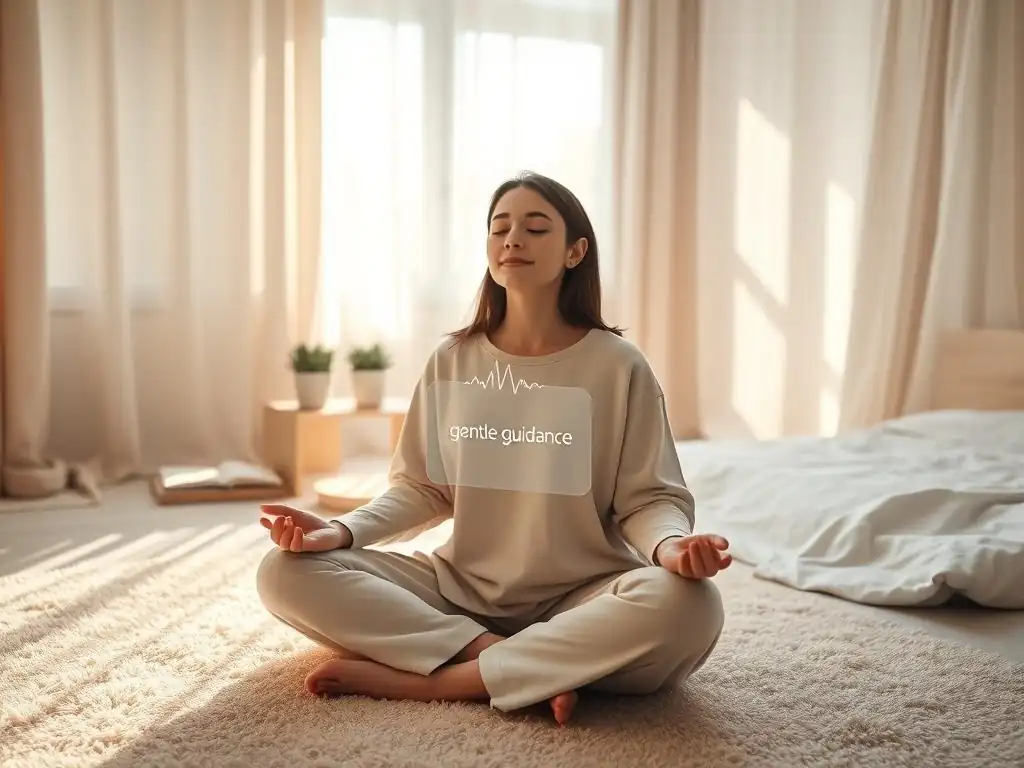
Simply downloading a beginner meditation app is just the first step. To truly benefit from the practice and ensure it becomes a sustainable habit, it's important to actively engage with the app and integrate meditation into your daily life effectively. Your chosen app is a tool; how you use it will determine the impact it has on your well-being.
Consistency is often more important than duration when starting out. Aim to meditate regularly, even if it's just for a few minutes each day, rather than attempting long, infrequent sessions. Use the features your app offers to support this consistency and deepen your understanding of mindfulness.
Setting Realistic Goals: Start Small and Build Consistency
As a beginner meditator, setting achievable goals is crucial for maintaining motivation. Instead of aiming for 30 minutes of meditation daily from day one, start with a more realistic goal, perhaps 5 or 10 minutes. Many beginner meditation app recommendations offer sessions as short as 3-5 minutes, which are perfect for building the habit.
Focus on consistency over length. Aim to meditate at roughly the same time each day, even if it's just for a short period. As you become more comfortable and find the practice beneficial, you can gradually increase the duration of your sessions. Celebrating small wins, like completing a full week of 5-minute meditations, can help reinforce the habit and build confidence.
Utilizing App Features: Guided Meditations, Reminders, and Progress Tracking
Your chosen app comes equipped with features designed to support your practice. Make full use of them! Start with the beginner or introductory guided meditations offered by the app; these are specifically designed to teach you the basics and make you feel comfortable. Don't be afraid to repeat sessions if you find them particularly helpful.
Set up daily reminders through the app to prompt you to meditate. Life gets busy, and a gentle nudge can make a significant difference in maintaining consistency. Utilize any progress tracking features the app provides. Seeing your meditation streak or the total number of hours you've meditated can be incredibly motivating and provide tangible evidence of your commitment and growth.
Integrating Meditation into Your Daily Routine: Tips and Tricks for Success
Finding a consistent time and place for meditation can help solidify it as a daily habit. Consider meditating first thing in the morning before the day's demands begin, during a lunch break, or in the evening to wind down. Experiment to find what works best for your schedule and energy levels.
Create a dedicated space, if possible, even if it's just a specific cushion or chair where you sit. This helps signal to your brain that it's time to practice mindfulness. Try meditating before or after an existing habit, like brushing your teeth or having your morning coffee, to link the new behavior to an established one. Remember that consistency, even in small doses, is key to experiencing the long-term benefits of meditation.
Beyond the App: Resources for Continued Growth in Meditation
While beginner meditation app recommendations are fantastic tools for getting started and maintaining a regular practice, they are not the only resources available for deepening your understanding and experience of mindfulness. As you progress, you may wish to explore other avenues to complement your app-based practice and connect with the broader world of mindfulness.
Expanding your learning beyond the app can provide new perspectives, introduce different techniques, and offer a deeper theoretical understanding of mindfulness and its origins. Engaging with other resources can enrich your practice and help you navigate challenges that may arise as you continue your journey.
Books and Articles on Mindfulness and Meditation
Reading books and articles can provide valuable context and deeper insights into the principles and philosophy behind mindfulness meditation. Many renowned teachers have written extensively on the subject, offering wisdom that complements the practical guidance found in apps.
Exploring texts that discuss the psychological benefits of mindfulness, its historical roots, or different meditation traditions can broaden your understanding and inspire your practice. Look for books specifically aimed at beginners or those that delve into areas of particular interest to you, such as mindfulness for stress or emotional regulation. Many websites and blogs, including Mind Care Guide, offer articles that can provide additional tips and information.
Local Meditation Centers and Groups: Connecting with a Community
For some, connecting with other practitioners and learning from experienced teachers in person can be a powerful way to deepen their meditation journey. Many cities and towns have meditation centers or groups that offer classes, workshops, and group sittings.
Participating in a local group can provide a sense of community, offer the opportunity to ask questions and receive guidance from an instructor, and expose you to different styles of meditation practice that might not be available on an app. While apps offer convenience and accessibility, the shared experience of meditating with others can be profoundly supportive as you move beyond the beginner stage.
Conclusion: Embarking on Your Meditation Journey with Confidence
Starting a meditation practice is a meaningful step towards cultivating greater peace, focus, and emotional well-being. With the wealth of beginner meditation app recommendations available today, getting started has never been more accessible. Whether you choose a free option like Smiling Mind or Insight Timer, or a premium service like Headspace, Calm, or Simple Habit, the key is to find an app that resonates with you and supports your initial steps.
Remember that meditation is a practice, and like any skill, it takes time and patience to develop. There will be days when your mind feels restless, and that's perfectly normal. Use your chosen app as a guide, be kind to yourself, and celebrate your commitment to showing up for your practice.
Finding the Perfect Beginner Meditation App for a Healthier, More Mindful You.
Ultimately, the best beginner meditation app recommendation is the one you will actually use consistently. Explore the options based on your needs – whether that's budget, time constraints, or specific goals like stress or sleep. Utilize the free trials or free versions to get a feel for the interface, the teachers, and the style of guidance.
Once you find an app that feels like a good fit, commit to using it regularly. By leveraging the tools and resources available through these apps, you can confidently embark on your meditation journey and cultivate a healthier, more mindful relationship with yourself and the world around you.
Frequently Asked Questions
What are some beginner meditation app recommendations that are suitable for long-term use?
Instead of apps with limited features, look for apps that offer progressively challenging content and a variety of meditation styles. Consider apps with guided meditations, unguided options, and personalized features as your skills develop.
How important is it that a beginner meditation app offer different meditation lengths?
Very important! Beginners often benefit from starting with shorter meditations (5-10 minutes) and gradually increasing the duration. This allows for easier integration into daily routines and prevents overwhelm.
What kind of support and resources should I look for in a meditation app besides guided sessions?
Features like sleep stories, ambient soundscapes, and mindfulness exercises can be extremely beneficial. Also, check for educational content on meditation techniques and their benefits.
Are there beginner meditation apps that offer personalized recommendations based on my stress levels or mood?
Yes, some apps use questionnaires or tracking features to understand your current emotional state and suggest relevant meditations. This personalized approach can enhance the effectiveness of your practice.
How can I determine if a beginner meditation app is genuinely helpful for my mental well-being?
Pay attention to how you feel after using the app consistently. Look for reduced stress, improved focus, and a greater sense of calm. Also, consider user reviews and expert opinions before committing to a subscription.
Final Reflection: Cultivating a Lifelong Meditation Practice
The journey to mindfulness isn't a sprint; it's a marathon, and the right app can be your indispensable training partner. Finding the perfect meditation app as a beginner can feel overwhelming, but as this article has shown, the key lies in selecting an app that adapts to your evolving needs and provides a supportive, engaging experience. The right app can transform a fleeting interest into a sustainable practice.
The impact of accessible meditation tools is undeniable. We've seen a surge in the popularity of mindfulness practices, and apps have played a crucial role in democratizing access to this ancient wisdom. Mindfulness isn't about escaping life, it's about finding peace within the chaos.
This quote perfectly encapsulates the power of meditation, and the right app can help you discover that inner peace, regardless of your experience level. The apps discussed here offer more than just guided sessions; they offer a pathway to self-discovery and personal growth, shaping not only our individual well-being but also contributing to a more mindful and compassionate society.
Now, consider your own journey. Which app resonates most with your personal style and goals? Don't be afraid to experiment, to try different approaches, and to find the perfect fit for your unique needs. Remember, the most important aspect is consistency. Start small, be patient with yourself, and allow the practice to unfold organically. Download an app, dedicate a few minutes each day, and witness the transformative power of mindfulness blossom within you. The path to inner peace begins with a single breath, and the right app can help you take that first step.
Unlock Your Inner Peace: Start Your Meditation Journey Today!
Thanks for taking the time to explore the world of meditation with us! We hope you gained valuable insights into finding the perfect app to support your practice. Ready to dive deeper?
- Begin your free trial with one of the recommended apps today. This is the most important step – experience the difference firsthand!
- Share your favorite meditation app or tip on our social media pages! Let’s build a supportive community together.
- Explore additional resources on MindCareGuide.org for even more meditation techniques and mindfulness practices.
What's your biggest hurdle to starting a daily meditation practice, and how can we help you overcome it?