
Beyond Journaling: How Mood Tracking Apps Can Transform Your Mental Wellbeing

Welcome to Mind Care Guide, your sanctuary for navigating the complexities of mental well-being. Feeling overwhelmed by the ebb and flow of your emotions? You're not alone. We understand that finding the right tools to support your mental health journey can be challenging. That's why we're diving deep into a powerful resource: Mood tracking apps. But are they really beneficial? Discover how these digital companions can transform your mental wellbeing, offering insights far beyond traditional journaling. Let's explore the potential together...
- Step 2: Choosing the Right Mood Tracking App for Your Needs
-
Frequently Asked Questions
- What are the main mood tracking apps benefits compared to traditional journaling?
- How can mood tracking apps benefits contribute to identifying potential mental health challenges?
- Can mood tracking apps benefits extend beyond self-awareness to improve overall mental well-being?
- Are there any drawbacks to relying solely on mood tracking apps benefits for mental health management?
- What types of features are typically included in mood tracking apps benefits to enhance their effectiveness?
- Final Reflection: Unlocking Mental Wellbeing Through Technological Empathy
- Unlock Your Mental Wellbeing: Start Tracking Today!
Step 2: Choosing the Right Mood Tracking App for Your Needs
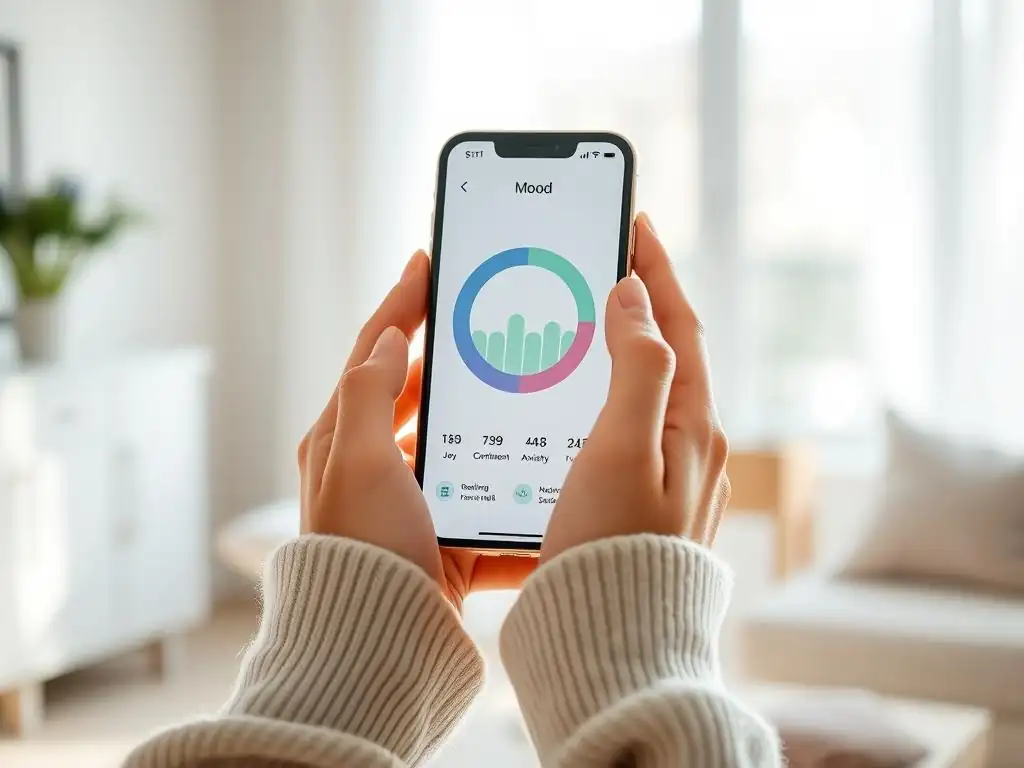
Comparing Top Mood Tracker Apps: Reflectly vs. Daylio vs. Moodpath
When embarking on the journey of using mood tracking apps to enhance your mental wellbeing, the sheer number of options can feel overwhelming. Three popular choices that often come up in discussions are Reflectly, Daylio, and Moodpath. Each offers a distinct approach to tracking, catering to different user preferences and goals for understanding their emotional landscape.
Reflectly, for instance, positions itself as an AI-powered personal journal, focusing heavily on guided reflections and positive affirmations to help users process their feelings and identify patterns. It aims to provide deeper insights into why you feel a certain way, offering personalized prompts based on your entries. This narrative-driven approach can be particularly appealing to those who enjoy journaling alongside their tracking.
Daylio, on the other hand, takes a more minimalist and activity-focused approach. Instead of writing extensive journal entries, users select their mood from a scale (often a simple emoji rating) and then choose from a list of activities they engaged in that day. This method makes tracking incredibly fast and easy, encouraging daily consistency even on busy days. It excels at showing correlations between activities and mood states over time through charts and statistics, providing clear visual data on the mood tracking apps benefits derived from identifying these links.
Moodpath is specifically designed with clinical relevance in mind, often used as a tool to help individuals understand and manage symptoms of depression and anxiety. It asks clinically validated questions and provides regular assessments, offering insights that can be shared with a therapist. Its structured approach is ideal for those seeking a more therapeutic or diagnostic-supportive tracking experience.
Key Features to Consider When Selecting a Mood Tracker
Choosing the right mood tracking app goes beyond just picking a popular one; it's about finding a tool that aligns with your personal needs and comfort levels. Several key features significantly impact the effectiveness and usability of an app, directly influencing the mood tracking apps benefits you can gain. Evaluating these elements before committing to an app ensures that it will be a sustainable and valuable part of your mental wellness routine.
Data Privacy & Security
Your mood data is deeply personal and sensitive. Therefore, understanding how an app handles your information is paramount. Look for apps that clearly state their privacy policy, explaining how data is stored, whether it's encrypted, and if it's shared with third parties. Some apps offer local storage options or emphasize end-to-end encryption, providing a higher level of security. Prioritizing data privacy ensures that your emotional journey remains confidential, building trust in the tool you use daily.
The commitment to robust data security is not just a technical detail; it's fundamental to feeling safe and comfortable sharing your vulnerabilities with the app. An app with strong privacy practices allows you to be completely honest and open in your entries, which is crucial for accurate tracking and gaining meaningful mood tracking apps benefits. Without this trust, you might hesitate to log challenging feelings or sensitive activities, compromising the integrity of your data and limiting the insights you can derive.
Customization Options
The ability to customize your tracking experience is vital because everyone's emotional landscape and daily activities are unique. A good mood tracker should allow you to define your own mood levels (beyond a simple happy/sad scale), add specific activities that are relevant to your life (like "walk with dog," "video call with family," "ate junk food"), and even create custom factors or triggers you want to track (e.g., "sleep quality," "social interaction," "work stress"). This level of personalization makes the data you collect far more relevant and actionable.
Customization extends to how you view your data as well. Can you customize the types of charts and reports the app generates? Can you filter data by specific activities or time periods? The more control you have over inputting and analyzing your data, the better equipped you are to identify specific patterns, understand your unique triggers, and ultimately leverage the mood tracking apps benefits for targeted self-improvement. Without adequate customization, you might feel constrained by pre-set options that don't accurately reflect your experiences.
Integration with Other Mental Wellness Tools
For many, mood tracking is just one piece of a larger mental wellness puzzle. You might also use meditation apps, sleep trackers, fitness apps, or productivity tools. The ability of a mood tracking app to integrate with these other services can provide a more holistic view of how different aspects of your life influence your mood. For example, syncing with a sleep tracker could reveal a strong correlation between sleep duration and mood, offering clear data points for making lifestyle adjustments.
While direct API integrations aren't always necessary, consider apps that allow easy data export or offer features that complement other wellness practices. Some apps might have built-in journaling, meditation prompts, or breathing exercises, reducing the need to switch between multiple applications. Evaluating potential integrations helps streamline your wellness routine and provides a richer dataset for understanding the complex interplay between your mood and other factors, maximizing the mood tracking apps benefits you can access.
User Interface and Ease of Use
Ultimately, the best mood tracking app is one you will actually use consistently. The user interface (UI) needs to be intuitive, clean, and appealing. Logging your mood and activities should be a quick and effortless process, taking mere seconds each day. If the app is clunky, confusing, or requires too many steps, you are less likely to stick with it, regardless of how many features it offers.
Pay attention to the visual design, navigation, and responsiveness of the app. Are charts and data visualizations easy to understand? Is it simple to add new entries or edit old ones? An app that is a pleasure to use encourages daily interaction, building a habit that is essential for collecting sufficient data to identify long-term patterns and truly unlock the mood tracking apps benefits over time. A frustrating interface can quickly turn a helpful tool into a source of annoyance.
Real User Reviews and Ratings: What People Are Saying
Beyond the feature lists and developer descriptions, real user reviews and ratings on app stores provide invaluable insights into the practical experience of using a mood tracking app. These reviews often highlight aspects like reliability, customer support responsiveness, and how well the app performs in day-to-day use. Looking at reviews can give you a sense of common praises and complaints, helping you anticipate potential issues or discover unexpected advantages.
Review scores, typically on a 5-star scale, offer a quick snapshot of overall user satisfaction. While a high average rating (say, 4.5 stars or above) is generally a good sign, reading specific comments is crucial. Users frequently share how the app helped them identify specific triggers, improve self-awareness, or communicate better with their therapist – concrete examples of the mood tracking apps benefits in action. Conversely, reviews might point out recurring bugs, intrusive ads, or dissatisfaction with subscription costs, helping you make a more informed decision based on the collective experience of others.
Frequently Asked Questions
What are the main mood tracking apps benefits compared to traditional journaling?
Mood tracking apps offer data visualization and pattern recognition that journaling often lacks. This allows for a more objective understanding of mood fluctuations and triggers. Apps also provide convenient, on-the-go tracking.
How can mood tracking apps benefits contribute to identifying potential mental health challenges?
By consistently recording your mood and associated factors, you can identify recurring patterns that may indicate underlying issues. This information can then be shared with a mental health professional for accurate diagnosis and treatment.
Can mood tracking apps benefits extend beyond self-awareness to improve overall mental well-being?
Yes, tracking mood can promote mindfulness and encourage proactive coping mechanisms. By understanding your triggers, you can implement strategies to manage your mood and improve overall well-being.
Are there any drawbacks to relying solely on mood tracking apps benefits for mental health management?
Apps are tools, not replacements for professional help. Over-reliance without professional guidance can lead to misinterpretation of data and potential anxiety about perceived mood patterns.
What types of features are typically included in mood tracking apps benefits to enhance their effectiveness?
Many apps offer features like mood diaries, customizable mood scales, activity tracking, and integration with other health apps. These features provide a holistic view of factors influencing your mood.
Final Reflection: Unlocking Mental Wellbeing Through Technological Empathy
The seamless integration of technology into our daily lives presents an unprecedented opportunity to enhance our mental wellbeing, and mood tracking apps are leading the charge. No longer a niche practice, proactively monitoring emotional fluctuations is becoming increasingly recognized as a vital tool for self-awareness and improved mental health management. This shift signifies a crucial step towards a more holistic and personalized approach to mental wellness.
The journey of understanding our own emotional landscape is a deeply personal one, and the impact of mood tracking apps extends far beyond simple data collection. These apps provide a tangible pathway to self-discovery, allowing us to identify triggers, patterns, and coping mechanisms with a level of detail previously unattainable. This increased self-awareness empowers us to make informed decisions about our mental health, fostering a stronger sense of agency and control. Knowing yourself is the beginning of all wisdom.
- Aristotle. This quote resonates deeply with the transformative power of consistent mood tracking; it's a journey of self-knowledge that unlocks a profound understanding of our inner world.
Now, consider your own emotional landscape. What patterns do you notice? What triggers your moods? I encourage you to explore the world of mood tracking apps, not as a replacement for professional help, but as a valuable supplement to your self-care routine. Experiment with different apps, find one that resonates with you, and embark on this journey of self-discovery. By actively engaging with your emotions, you are taking a proactive step towards a healthier, happier, and more fulfilling life. The future of mental wellbeing is personalized, and it starts with you.
Unlock Your Mental Wellbeing: Start Tracking Today!
Thanks for taking the time to explore the power of mood tracking apps! We hope you now see how easily you can gain valuable insights into your mental health. Ready to take the next step?
- Download a mood tracking app and start logging your daily emotions. This is your first step towards understanding your patterns and triggers. Even a few minutes a day can make a difference.
- Share this article with a friend who might also benefit from learning about mood tracking. Supporting each other is key to mental wellbeing.
- Explore different apps to find the perfect fit for your needs. Don't be afraid to try a few before settling on one that truly resonates with you.
What small step will you take today to improve your mental health awareness?