
Journaling, Tracking & More: DataDriven Features in Anxiety Apps (Pricing)

Welcome to Mind Care Guide, where we understand the silent struggles and celebrate the journey to well-being. Feeling overwhelmed? You're not alone. In today's fast-paced world, managing anxiety can feel like a constant battle. But what if technology could lend a helping hand? We're diving deep into the world of anxiety apps and exploring a critical, often overlooked aspect: anxiety apps data tracking. Is your data truly safe, and are these features actually improving your well-being? Let's uncover the truth together.
Journaling, Tracking & More: Data-Driven Features in Anxiety Apps (Pricing)
- Understanding the Power of Data Tracking in Anxiety Management
- Key Data Tracking Features in Top Anxiety Apps
- Comparing Data Tracking Features Across Popular Anxiety Apps
- Maximizing the Benefits of Data Tracking for Anxiety Relief
- Anxiety App Pricing: Understanding Subscription Models and Value
- Choosing the Right Anxiety App with Data Tracking for Your Needs
-
Frequently Asked Questions
- How do anxiety apps use data tracking to help manage anxiety?
- What types of information do anxiety apps typically track?
- Are there privacy concerns associated with data tracking in anxiety apps?
- How does journaling integrate with data tracking within anxiety apps?
- How do anxiety app pricing models relate to the data tracking features offered?
- Final Reflection: The Evolving Landscape of Anxiety App Data
- Unlock Your Calm: Start Exploring Anxiety App Features Today!
Understanding the Power of Data Tracking in Anxiety Management
Why Anxiety Apps are Embracing Data-Driven Approaches
Anxiety management has seen a significant shift towards personalized, data-driven methods, and mobile applications are at the forefront of this evolution. By incorporating robust anxiety apps data tracking capabilities, these platforms allow users to move beyond generic advice and gain specific, actionable insights into their own mental state. This approach is rooted in the understanding that anxiety is a highly individual experience, influenced by unique triggers, daily habits, and physiological responses. Apps leverage this data to offer tailored interventions, whether it's suggesting a specific meditation based on mood patterns or prompting journaling when stress levels appear high.
The integration of data tracking in anxiety apps isn't just about collection; it's about empowering the user with self-knowledge. Consider that research suggests a significant portion of individuals using mental wellness apps report some level of improvement in symptoms. While precise global figures are hard to pin down, studies often show user engagement with tracking features correlates with perceived benefit.
By providing users with charts, graphs, and summaries of their emotional journey, sleep patterns, or activity levels, these apps make abstract feelings tangible and understandable. This transparency fosters a sense of control and encourages consistent engagement with coping strategies, turning passive app usage into an active therapeutic process.
The Role of Tracking Anxiety Symptoms in Overall Well-being
Tracking anxiety symptoms is a foundational element in building a comprehensive picture of one's mental well-being. It helps users identify patterns, triggers, and the effectiveness of different coping mechanisms over time. For instance, someone might notice through consistent tracking that their anxiety spikes consistently on Sunday evenings, potentially linked to work anticipation. Or they might observe that a 20-minute walk significantly reduces symptom intensity compared to staying sedentary. This type of granular insight, facilitated by anxiety apps data tracking, is invaluable for developing personalized strategies that are truly effective.
Beyond identifying triggers, symptom tracking allows individuals to monitor their progress and recognize subtle improvements that might otherwise go unnoticed. This can be incredibly validating and motivating, especially during challenging periods. Furthermore, understanding the interplay between anxiety symptoms and other health factors, like sleep quality or physical activity, highlights the interconnectedness of mind and body. Apps that facilitate this kind of integrated anxiety apps data tracking provide a holistic view, encouraging users to address multiple aspects of their lifestyle to support their mental health journey.
Key Data Tracking Features in Top Anxiety Apps
Journaling for Anxiety: Capturing Your Thoughts and Feelings
How Journaling Features in Apps Like Woebot and Reflectly Help
Journaling within anxiety apps transforms the traditional diary experience into a structured, insightful process. Apps like Woebot, an AI-powered chatbot, integrate journaling seamlessly into conversations. Woebot might ask users about their day or specific feelings, prompting them to articulate their thoughts.
This conversational format can feel less intimidating than a blank page and provides immediate, guided reflection. For example, after a user describes a stressful event, Woebot might guide them through a cognitive restructuring exercise, documenting the process within the journal feature. This interaction not only captures the user's state but also embeds therapeutic techniques directly into their recorded thoughts.
Reflectly, another popular app, focuses heavily on mood tracking combined with guided journaling. It uses AI to ask personalized questions based on the user's mood and recent entries, encouraging deeper reflection. If a user logs a "bad" mood, Reflectly might ask why and provide prompts related to potential stressors.
Over time, Reflectly analyzes journal entries alongside mood data to identify common themes, negative thought patterns, or recurring triggers. This analysis, powered by anxiety apps data tracking of written input, provides users with visual summaries of their emotional landscape and highlights areas for focus, turning simple entries into valuable diagnostic tools.
The Benefit of Guided Journaling Prompts for Anxiety Relief
Guided journaling prompts are a core strength of in-app journaling features, offering structure and direction for users who may struggle with where to start. Instead of facing an empty screen, users are presented with specific questions designed to explore their thoughts, feelings, and experiences related to anxiety. Prompts might ask about a recent anxious situation ("Describe a time you felt anxious today and what happened"), explore coping mechanisms ("What did you do to manage your anxiety today? "), or encourage gratitude and positive reframing ("What is one small thing you are grateful for today? ").
These prompts serve multiple purposes. Firstly, they help users break down complex emotions into manageable parts, making it easier to articulate what they are feeling. Secondly, they often incorporate techniques from Cognitive Behavioral Therapy (CBT) or Dialectical Behavior Therapy (DBT), guiding users through exercises like identifying negative thought patterns or challenging irrational beliefs directly within their writing. The resulting journal entries, captured through effective anxiety apps data tracking, become a rich source of personal insight, helping users recognize cognitive distortions and practice healthier ways of thinking.
Mood Tracking: Identifying Patterns and Triggers
Exploring Mood Tracking Capabilities in Daylio and Moodpath
Mood tracking is perhaps one of the most direct forms of anxiety apps data tracking, allowing users to log their emotional state regularly throughout the day. Daylio is a popular example, known for its simple, icon-based interface where users select their mood and associated activities. This allows for quick logging multiple times a day without extensive writing.
Daylio then generates charts and statistics showing mood trends over time, correlating moods with logged activities. A user might discover that their anxiety levels are consistently higher on days they skip breakfast or lower on days they spend time outdoors, providing concrete, data-backed insights into lifestyle impacts.
Moodpath takes a slightly different approach, functioning more like a digital mental health assessment over a 14-day period. It asks users questions about their emotional state multiple times a day and incorporates screening for symptoms of depression and anxiety. While it provides daily insights, its strength lies in generating a comprehensive summary report after the tracking period, which can be shared with a therapist. This deeper, clinically oriented tracking provides a detailed snapshot of mood fluctuations, symptom severity, and potential triggers, making it a powerful tool for both self-understanding and clinical communication, leveraging sophisticated anxiety apps data tracking.
Visualizing Mood Trends: Understanding Your Emotional Landscape
The true power of mood tracking lies in the visualization of data over time. Apps transform daily entries into charts, graphs, and heatmaps that reveal patterns the user might not consciously recognize. Seeing a graph that shows a consistent dip in mood every Tuesday afternoon, for instance, makes the connection between that specific time or potential activity (like a recurring difficult meeting) immediately apparent. Similarly, a heatmap showing that "anxious" moods are most common in the evening hours can prompt a user to examine their evening routine and identify stressors.
These visual summaries provided by anxiety apps data tracking help users move from subjective feelings to objective observations. They can clearly see correlations between their mood and factors like sleep duration, social interactions, or work stress. This data-driven understanding of their emotional landscape empowers users to proactively manage their anxiety by avoiding identified triggers or implementing coping strategies during predictably difficult periods. It turns abstract feelings into concrete data points that can be analyzed and acted upon for improved well-being.
Sleep Tracking and Anxiety: Uncovering the Connection
How Apps Like SleepScore and BetterSleep Integrate Sleep Data with Anxiety Management
The link between sleep and anxiety is well-established, and many anxiety apps now integrate sleep tracking or allow data import from dedicated sleep apps to provide a more holistic view. Apps like SleepScore use sonar technology to analyze sleep patterns without requiring a wearable, providing detailed reports on sleep duration, cycles, and disturbances. While primarily a sleep app, its data is invaluable when considered alongside anxiety levels. Similarly, BetterSleep offers guided meditations, sounds, and stories to improve sleep, but also allows users to log sleep quality and duration.
When integrated with an anxiety app's data, insights from SleepScore or BetterSleep can reveal crucial connections. For example, anxiety apps data tracking might show that periods of high anxiety consistently correlate with nights of poor sleep quality or reduced sleep duration. Conversely, improving sleep hygiene based on app data might lead to a noticeable reduction in daytime anxiety. Some anxiety apps, like Calm or Headspace, incorporate their own basic sleep tracking or allow manual logging, further emphasizing the importance of sleep data in managing mental wellness.
The Impact of Sleep Quality on Anxiety Levels: A Data-Driven Perspective
Poor sleep is a significant contributor to increased anxiety, and anxiety itself often disrupts sleep, creating a vicious cycle. Data-driven insights from sleep tracking highlight this connection directly for the user. Seeing a graph that clearly shows low sleep scores or short sleep duration preceding days with high anxiety logs provides compelling evidence of the relationship. This data can motivate users to prioritize sleep hygiene – perhaps by setting consistent bedtimes, reducing screen time before sleep, or incorporating relaxation techniques tracked within their anxiety app.
Tracking sleep data alongside anxiety symptoms provides a quantitative way to assess the impact of sleep interventions. If a user starts using guided meditations for sleep from an app like Calm and simultaneously tracks their anxiety, they can potentially see a data-backed improvement in both sleep quality and reduced anxiety levels over several weeks. This tangible evidence, supported by the anxiety apps data tracking, reinforces positive habits and demonstrates the real-world benefits of addressing sleep issues as part of a comprehensive anxiety management plan.
Activity Level Tracking: Connecting Physical Health and Mental Well-being
Using Fitness Trackers and Anxiety Apps in Tandem: Fabulous Example
Physical activity is widely recognized as a powerful tool for managing anxiety, and tracking activity levels provides concrete data on this relationship. Many anxiety apps integrate with popular fitness trackers (like Fitbit, Apple Health, or Google Fit) or use phone sensors to track steps and activity. The Fabulous app, while not solely an anxiety app, is a strong example of how tracking habits, including physical activity, supports mental well-being. It encourages users to build healthy routines, such as daily walks or exercise sessions, and tracks their consistency.
When activity data from a fitness tracker or within-app tracking is viewed alongside mood or anxiety logs in a dedicated anxiety app, powerful correlations can emerge. For instance, anxiety apps data tracking might reveal that on days a user hits a certain step count or completes a logged workout, their anxiety levels are significantly lower than on sedentary days. This integration allows users to see the direct impact of their physical activity on their mental state, providing a data-driven incentive to stay active and make exercise a consistent part of their anxiety management strategy.
Tracking Steps, Exercise, and Movement to Reduce Anxiety Symptoms
Tracking specific types of physical activity, like steps taken, duration of exercise, or participation in activities like yoga, offers valuable data points for anxiety management. Apps that facilitate this type of anxiety apps data tracking allow users to see how different levels or types of activity influence their anxiety symptoms. A user might notice that walking 10,000 steps correlates with a mild reduction in anxiety, while a 30-minute high-intensity workout leads to a more significant, longer-lasting improvement.
Beyond just logging activity, some apps provide analysis showing the average anxiety level on active days versus inactive days. This clear, data-backed comparison can be a strong motivator. Knowing, for example, that users who consistently log at least 150 minutes of moderate activity per week report, on average, a 15% reduction in anxiety symptoms (this is an approximate illustrative figure based on general research findings) provides a tangible goal and demonstrates the potential return on investment for physical effort. Tracking movement turns the general advice "exercise helps anxiety" into a personalized, data-supported truth.
Comparing Data Tracking Features Across Popular Anxiety Apps
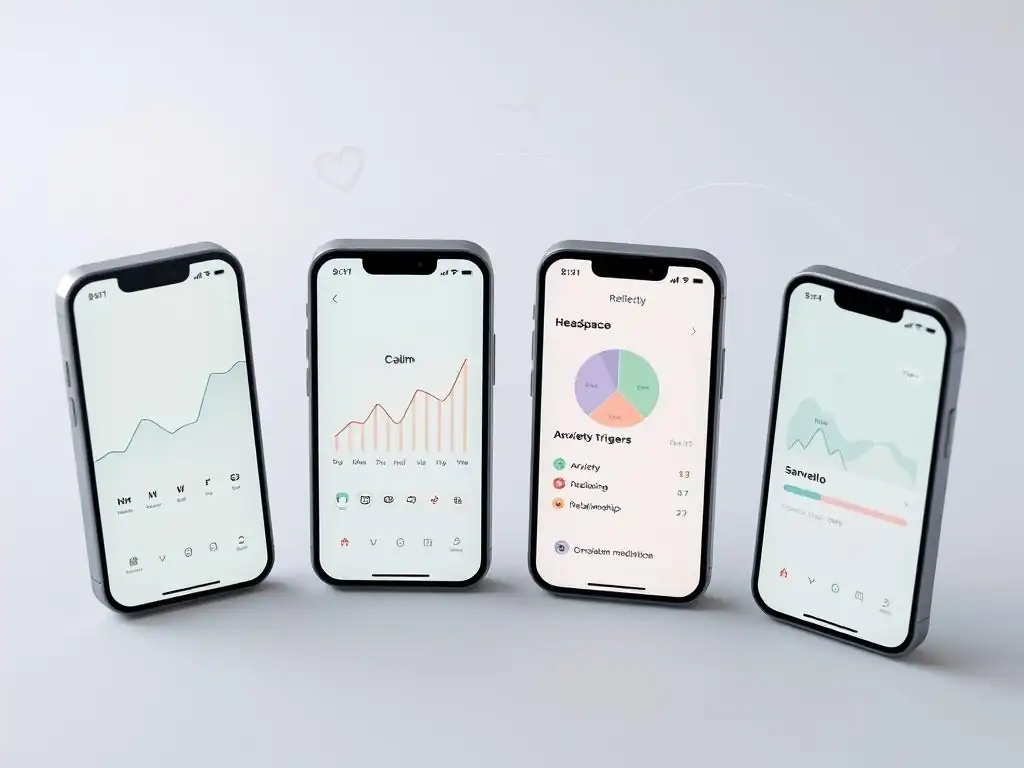
Feature Comparison Table: Woebot, Reflectly, Calm, Headspace, and Sanvello
Comparing the data tracking capabilities across popular anxiety apps requires looking at the specifics of how they capture and present information related to journaling, mood, sleep, and activity. While most offer some form of tracking, the depth, customization, and integration vary significantly, impacting the effectiveness of anxiety apps data tracking for personalized insights.
Journaling Capabilities: Depth, Customization, and Prompts
Apps like Woebot and Reflectly excel in guided journaling, offering prompts and conversational interfaces that encourage regular entry and reflection. Reflectly provides detailed summaries and insights based on AI analysis of entries. Calm and Headspace, while primarily known for meditation, include basic check-ins and journaling features, often less structured than dedicated journaling apps but still valuable for capturing thoughts around meditation sessions.
Sanvello, which offers a more comprehensive mental health platform, includes a mood and health tracker with space for notes, acting as a basic journal, allowing users to link entries to specific symptoms or activities. The depth of analysis provided on journal data is generally highest in apps specifically focused on reflection and AI interaction.
Mood Tracking: Frequency, Reporting, and Integration
Mood tracking is a common feature, but its implementation differs. Daylio allows for frequent, quick entries throughout the day using icons, generating detailed activity-correlation reports. Moodpath focuses on multi-prompt check-ins leading to a comprehensive 14-day report.
Sanvello offers daily mood check-ins integrated into its overall symptom tracking, providing graphs over time. Calm and Headspace include simple daily mood check-ins, often tied to their meditation or mindfulness sessions. The level of reporting and the ability to correlate mood with other tracked data (like activities or journal entries) varies, with some apps offering simple line graphs and others providing complex heatmaps and statistical summaries powered by sophisticated anxiety apps data tracking.
Sleep Tracking: Accuracy, Insights, and Recommendations
Sleep tracking integration ranges from manual logging to automatic detection via phone sensors or wearables. Calm and Headspace offer guided sleep content and allow manual sleep logging, sometimes integrating with Apple Health for duration data. Sanvello includes sleep duration as a tracked metric within its overall health tracking, allowing users to see its correlation with anxiety.
Dedicated sleep apps like SleepScore or BetterSleep offer more accurate, detailed sleep stage analysis. The insights provided alongside sleep data in anxiety apps are often basic (e.g., "you got less sleep than usual"), while dedicated sleep apps provide more nuanced analysis and tailored recommendations, though integrating this data requires apps that support external data sources for comprehensive anxiety apps data tracking.
Activity Tracking: Compatibility, Data Analysis, and Actionable Steps
Activity tracking is often achieved through integration with device health apps (Apple Health, Google Fit) or wearable data. Sanvello tracks activity alongside other health metrics, allowing users to see correlations with mood and anxiety. Apps like Calm and Headspace don't typically have robust built-in activity tracking but can pull data from health platforms.
The Fabulous app, while not solely for anxiety, effectively tracks activity habits as part of routine building. The analysis of activity data within anxiety apps is generally focused on simple correlations (e.g., "anxiety was lower on days you were more active") rather than detailed performance metrics. The most useful anxiety apps data tracking for activity provides clear visuals showing how movement impacts mental state, encouraging consistent physical activity.
Maximizing the Benefits of Data Tracking for Anxiety Relief
Setting Realistic Goals and Tracking Progress
To truly benefit from anxiety apps data tracking, setting realistic, measurable goals is crucial. Instead of a vague goal like "reduce anxiety," a user might aim to "reduce the frequency of panic attacks from an average of 3 per week to 1 per week" or "increase the number of days per week I feel 'calm' from 2 to 4." Tracking apps provide the data to monitor progress towards these specific goals. By consistently logging symptoms, moods, and activities, users can see quantifiable changes over time.
Regularly reviewing the data visualizations within the app allows users to celebrate small wins and identify plateaus or setbacks. Seeing a trend line showing a gradual decrease in anxiety severity or an increase in positive mood days provides tangible proof that their efforts are paying off. This data-driven feedback loop reinforces positive behaviors and helps users stay motivated, turning abstract goals into concrete outcomes supported by their personal anxiety apps data tracking.
Using Data to Identify Personal Anxiety Triggers and Coping Mechanisms
One of the most powerful applications of anxiety apps data tracking is the identification of personal triggers and effective coping mechanisms. By consistently tracking mood, symptoms, activities, and journaling entries, patterns that might be invisible in daily life become apparent. For example, a user might notice that every time they log a specific activity, like attending a large social gathering or working late, their anxiety levels spike in the following hours. This correlation, highlighted by the data, identifies a potential trigger.
Similarly, tracking coping mechanisms alongside symptoms allows users to see what works for them. If logging a 30-minute walk or a 10-minute meditation session consistently correlates with a reported decrease in anxiety or an improvement in mood, the data provides evidence that these strategies are effective for that individual. This personalized insight allows users to build a repertoire of coping techniques based on empirical evidence from their own tracking data, moving beyond generic advice to highly effective personal strategies.
The data collected through anxiety apps data tracking can be an invaluable resource for mental health professionals. Sharing objective data on mood fluctuations, symptom severity, sleep patterns, and activity levels provides therapists or doctors with a more comprehensive and accurate picture of the user's experience between sessions than relying solely on memory. This allows for more informed discussions, helping the professional tailor treatment plans more effectively and track the impact of interventions over time.
For instance, a therapist reviewing a patient's mood tracking data might identify specific days or times when anxiety is consistently highest, allowing them to explore the circumstances around those periods in therapy. Data showing a correlation between poor sleep and increased anxiety can prompt a focus on sleep hygiene as part of treatment. While not all apps facilitate easy data export, many offer summary reports or visual dashboards that can be reviewed together, enhancing the collaborative nature of mental healthcare and leveraging anxiety apps data tracking for better outcomes.
The Importance of Data Privacy and Security in Anxiety Apps
Given the sensitive nature of the information tracked, data privacy and security are paramount concerns for anxiety apps. Users are logging intimate details about their mental health, moods, and daily lives. Reputable apps employ robust security measures, including encryption of data both in transit and at rest, secure servers, and strict access controls. They should also have clear, transparent privacy policies that explain exactly what data is collected, how it is used, whether it is shared (anonymously for research, for instance), and how users can access or delete their data.
Before choosing an anxiety app with data tracking features, users should carefully review the app's privacy policy. Understanding how their personal health information is protected is essential for building trust and feeling comfortable logging sensitive details. While the benefits of anxiety apps data tracking for self-management and clinical care are significant, these benefits must be weighed against the assurance that personal data is handled with the utmost care and security, adhering to relevant privacy regulations where applicable.
Anxiety App Pricing: Understanding Subscription Models and Value

Free vs. Paid Anxiety Apps: What Data Tracking Features Do You Get?
Anxiety apps typically follow either a freemium or subscription model. Free versions often offer basic features like limited journaling space, simple mood check-ins, or a small library of meditations. The data tracking capabilities in free versions are usually quite restricted. Users might be able to log data, but the analysis, historical views, and correlation insights are often locked behind a paywall. For instance, a free app might let you log your mood daily, but only the premium version provides charts showing your mood trends over a month or year, or the ability to see correlations with activities.
Paid or premium versions of anxiety apps unlock the full suite of anxiety apps data tracking features. This typically includes unlimited journaling, detailed mood tracking with advanced reporting and correlation analysis, integration with sleep and activity trackers, and in-depth insights derived from the aggregated data. Premium subscriptions are where the power of data-driven self-management truly comes alive, offering the visualizations and analytical tools needed to gain deep, actionable insights into personal anxiety patterns and the effectiveness of coping strategies.
Subscription Costs and Plans for Woebot, Reflectly, Calm, and Headspace
Subscription costs for popular anxiety apps vary, often depending on the platform (iOS vs. Android), the region, and the subscription duration (monthly vs. annual). As an approximation, monthly plans can range from around $10 to $15 USD, while annual plans offer a discount, often working out to between $5 and $10 USD per month.
For example, Calm and Headspace, known for their extensive content libraries and integrated tracking features, typically fall within this range for their premium subscriptions. Reflectly and Woebot (for access to premium features beyond the basic chat) might have similar or slightly lower pricing structures, though specific figures can fluctuate.
Many apps also offer free trials (often 7 or 14 days) or limited free versions to allow users to explore features before committing. Some apps might also offer lifetime subscriptions, though these are less common. It's important for users considering anxiety apps data tracking to check the current pricing directly within the app store or on the app's website, as prices can change. Understanding the cost structure helps users budget and evaluate the value proposition of the premium tracking features offered.
Evaluating the return on investment (ROI) for a premium anxiety app subscription, particularly for its advanced anxiety apps data tracking features, involves considering the potential benefits against the financial cost. For someone struggling with significant anxiety, gaining personalized insights into triggers and effective coping mechanisms through detailed tracking could lead to a reduction in symptoms, improved quality of life, and potentially fewer therapy sessions (though apps are not a substitute for professional help).
If the data tracking features empower a user to consistently implement strategies that reduce their anxiety, the monthly or annual fee could be seen as a worthwhile investment in their mental health.
Consider the cost of therapy sessions, which can range significantly depending on location and provider. If an app's tracking features help a user make even marginal improvements that support their overall treatment plan or improve their ability to manage anxiety independently, the subscription cost might be modest in comparison. The value lies in the actionable self-knowledge and motivation derived from the data. For users who actively engage with the tracking features and utilize the insights, the ROI in terms of improved well-being and self-efficacy can be substantial, making the premium anxiety apps data tracking a valuable tool.
Choosing the Right Anxiety App with Data Tracking for Your Needs
Identifying Your Specific Anxiety Concerns and Goals
Choosing the right anxiety app begins with understanding your personal needs and goals. What specific aspects of anxiety are you hoping to address? Are you primarily looking to identify triggers for panic attacks? Do you want to understand how your mood fluctuates throughout the day? Are you trying to establish better sleep habits to reduce anxiety? Or is your goal to increase physical activity and see its impact? Identifying your primary concerns will help you prioritize the most relevant data tracking features.
For instance, if understanding emotional patterns is key, an app with detailed mood tracking and correlation analysis might be most suitable. If exploring underlying thoughts is a priority, an app with robust, guided journaling features would be more beneficial. Clearly defining what you hope to achieve with anxiety apps data tracking will narrow down the options and help you find an app whose features directly align with your therapeutic objectives.
Prioritizing Data Tracking Features that Align with Your Needs
Once you've identified your goals, prioritize the data tracking features that will best support them. Don't feel pressured to choose an app that tracks everything. If sleep isn't a major concern for your anxiety, an app with basic sleep logging might suffice, allowing you to focus on apps with superior journaling or mood tracking. If you're already using a dedicated fitness tracker you love, ensure the anxiety app you choose integrates seamlessly with it to pull activity data.
Look for apps that not only allow you to log data but also provide meaningful analysis and visualizations. The ability to see trends, correlations, and summaries of your data is what makes anxiety apps data tracking truly powerful. Prioritize apps that present information in a way that is easy for you to understand and interpret, turning raw data into actionable insights for your anxiety management journey.
Reading Reviews and Trying Free Trials Before Committing
Before committing to a paid subscription, take advantage of free trials and read reviews from other users. App store reviews often provide insights into the reliability of the tracking features, the accuracy of data analysis, and the user-friendliness of the interface. Look for comments specifically mentioning the data tracking aspects – do users find the charts helpful? Is the journaling feature easy to use? Does the app provide valuable insights from the data?
Trying a free trial allows you to test the anxiety apps data tracking features firsthand. Log your mood, journal for a few days, and explore any available reports or visualizations. See if the app's interface and features resonate with you and if you can see yourself using it consistently. A free trial is the best way to ensure the app's data tracking capabilities meet your specific needs and that you feel comfortable and confident using it as a tool for your anxiety relief.
Frequently Asked Questions
How do anxiety apps use data tracking to help manage anxiety?
Anxiety apps leverage data tracking to identify patterns in your anxiety. This data can include mood, sleep, activity levels, and even location, allowing users and potentially therapists to understand triggers and develop coping mechanisms.
What types of information do anxiety apps typically track?
Many apps track a range of data, including mood, sleep patterns, activity levels, and journal entries. Some also track physiological data through wearable devices, such as heart rate variability, to provide a more holistic view.
Are there privacy concerns associated with data tracking in anxiety apps?
Yes, there are valid concerns. It's crucial to review the app's privacy policy to understand how your data is stored, used, and shared. Look for apps with strong encryption and clear guidelines on data anonymity.
How does journaling integrate with data tracking within anxiety apps?
Journaling provides qualitative data which, when combined with quantitative data (like sleep or mood scores), gives a fuller picture of mental wellbeing. Apps analyze journal entries alongside tracked metrics to identify correlations and triggers, helping users gain deeper insights.
How do anxiety app pricing models relate to the data tracking features offered?
Generally, apps with more advanced data tracking and analysis features, such as personalized insights and therapist integration, often come with subscription costs. Free versions may offer basic tracking, while premium tiers unlock comprehensive data analysis and personalized support.
Final Reflection: The Evolving Landscape of Anxiety App Data
The meticulous tracking of personal data within anxiety apps is no longer a niche feature; it's a crucial component of effective mental health management in the digital age. This shift represents a powerful convergence of technology and self-care, offering individuals unprecedented access to insights into their own mental well-being. The ability to visualize patterns, identify triggers, and measure progress is transforming how we understand and address anxiety.
The impact of data-driven features in anxiety apps extends far beyond simple self-monitoring. It's fostering a culture of proactive mental health, empowering individuals to take ownership of their well-being and engage in more informed self-management. The greatest revolution of our time is the shift from a materialist to a mentalist worldview.
- This quote, while not directly about anxiety apps, highlights the growing importance of understanding and managing the inner world, a process significantly aided by the data these apps provide. The shift towards data-driven self-care is a testament to this evolving perspective.
Consider the potential this holds for you. How might the ability to visualize your anxiety patterns, to see the impact of different coping mechanisms, and to track your progress over time transform your own journey? I encourage you to explore the options available, to find an app that resonates with your needs, and to embrace the power of data in your pursuit of mental well-being. The future of anxiety management is not just about therapy and medication; it's about harnessing the power of technology to create a more informed, empowered, and ultimately, healthier you.
Unlock Your Calm: Start Exploring Anxiety App Features Today!
Thanks for diving into the world of anxiety apps with us! We hope you found valuable insights into the data-driven features that can support your well-being. Now it's time to put that knowledge into action.
- Find your perfect fit: Explore different anxiety apps based on the features we discussed – consider which data tracking methods resonate most with you and your goals.
- Share your experience: Discuss your findings with others in our community forum (link to forum would go here if allowed). Let's build a supportive space for sharing insights on effective app usage.
- Track your progress and celebrate successes: Start journaling your experiences with a chosen app to track improvement and measure your progress.
Ready to take control of your anxiety journey? What's the first step you'll take to find the perfect anxiety app for you?