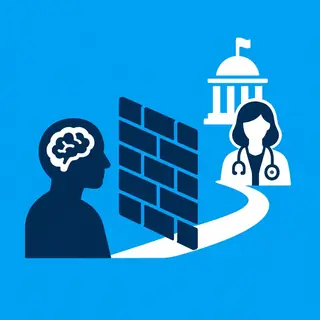
Explore Mental Health Funding: Government and Private Resources
Securing adequate funding is the backbone of effective mental health policy and advocacy. For individuals, providers, and organizations, understanding the landscape of government grants, private foundations, and innovative financing models can mean the difference between a stalled initiative and a thriving program. This subcategory demystifies the complex world of mental health financing, offering actionable insights into public budgets, private philanthropy, and emerging investment strategies. Whether you’re advocating for stronger community services or seeking grants for a new wellness project, this guide equips you with the knowledge to navigate funding pathways confidently.
💵 Understanding Government Mental Health Funding Streams
Public funding for mental health primarily flows through federal agencies like the Substance Abuse and Mental Health Services Administration (SAMHSA) and the National Institute of Mental Health (NIMH), alongside state-level block grants. These streams include formula-based allocations, competitive grants, and Medicaid reimbursements. Expect to learn how to identify timely opportunities, interpret grant announcements, and align your proposal with public priorities like suicide prevention and crisis care expansion. Knowing the annual budget cycles and matching your project’s goals to measurable outcomes is essential for success in this competitive arena.
Beyond federal channels, state and county governments often distribute smaller local grants and contracts. These are particularly valuable for grassroots organizations. Navigating government procurement processes requires patience and precision, but the payoff is sustained, stable funding. This section helps you decode terminology like “ Notice of Funding Opportunity (NOFO)” and “RFP” while providing practical templates for budget justifications that meet strict compliance standards.
🏦 Private Foundations and Corporate Giving in Mental Health
Private foundations—such as the Robert Wood Johnson Foundation, The Jed Foundation, and local community trusts—fill critical gaps that public funds often overlook. They prioritize innovation, stigma reduction, and underserved populations. Here, you’ll discover how to research foundation interests using databases like Candid, craft compelling letters of intent, and build relationships with program officers. Unlike government grants, private funders often favor flexible, long-term partnerships rather than rigid one-year projects, enabling deeper community impact.
Corporate giving also plays a pivotal role, with many businesses now viewing employee mental health as a strategic investment. From sponsorships of employee assistance programs to matching gift initiatives, corporate partnerships require a business-friendly value proposition. This segment explores how to pitch your advocacy work as a win-win for both social mission and talent retention, using case studies of successful nonprofit-corporate collaborations in the mental health space.
🔍 Navigating Grant Writing and Procurement for Mental Health
Strong proposal writing is a skill that can multiply your chances of securing both government and private funds. This section covers the anatomy of a winning grant narrative, from concise problem statements and evidence-based approaches to clear evaluation plans. Expect practical tips on writing for reviewers who are fatigued by jargon—focus instead on measurable outcomes, cultural competence, and feasibility. You’ll also learn how to reuse core content across applications while customizing each proposal to the funder’s specific priorities.
Procurement, especially for state contracts, demands a different approach. Here, we break down the requirements for certifications, insurance, and data reporting that often trip up first-time applicants. Understanding the evaluation rubric is key; we’ll show you how to align your technical approach and staffing plans with the scoring criteria. Additionally, you’ll find guidance on avoiding common pitfalls like cost underestimation or unclear sustainability plans that lead to automatic rejection.
📊 Innovative Financing Models: Social Impact Bonds and Blended Capital
Beyond traditional grants, mental health advocates are increasingly turning to social impact bonds (SIBs), pay-for-success contracts, and outcome-based financing. These models allow private investors to front capital for prevention programs, with governments repaying them based on achieved metrics like reduced hospitalizations. While complex, SIBs can scale effective interventions without upfront public cost. This section demystifies the roles of intermediaries, evaluators, and investors, and highlights real-world examples from mental health pilot projects in the US and Europe.
Blended capital, which mixes philanthropic grants with investment capital, offers another frontier. For example, a foundation might invest in a mental health tech startup while also providing a grant for research. This approach ensures financial sustainability and innovation. Here, you’ll learn how to approach impact investors, define your “social return” metrics, and structure deals that protect your nonprofit’s mission. We also discuss the ethical considerations of profit motives in healthcare funding, ensuring you make informed choices.
🤝 Advocacy for Increased Mental Health Budget Allocations
Funding isn’t just about writing grants—it’s about influencing public policy to prioritize mental health in annual budgets. Grassroots advocacy involves mobilizing constituents, meeting with legislators, and using data to tell powerful stories. This section provides role-play scenarios for budget hearings, templates for one-pagers that convince policymakers, and strategies for building coalitions with other health and social service organizations. You’ll also learn how to track budget cycles and public comments to ensure your voice is heard at the right moment.
Media advocacy is equally important; creating compelling press releases and op-eds can shift public opinion and pressure elected officials. We explore how to frame mental health funding as an economic investment, cutting long-term costs of untreated illness. By partnering with advocacy networks like NAMI or Mental Health America, you can amplify your message. Expect practical checklists for advocacy days, including talking points and preparation for hostile questions from budget-conscious committee members.
Frequently Asked Questions
What is the first step to finding mental health grants for my nonprofit?
Start by conducting a needs assessment and building a clear program model with measurable outcomes. Then, register your organization on SAM.gov for federal grants and subscribe to state procurement emails. Use Candid or GrantStation to search private foundations that match your mission—prioritize funders who support your geographic area and target population.
Can small organizations realistically compete for government funding?
Yes, but focus on smaller local contracts and pilot grants. Many states set aside funds for emerging agencies. Strengthen your bid by partnering with a fiscal sponsor or larger nonprofit, and emphasize your unique community access. Carefully read eligibility criteria; some grants specifically target organizations with budgets under $500,000.
What are the main differences between government and private funding reporting requirements?
Government grants demand strict financial accounting, quarterly progress reports, and audits under the Uniform Guidance. Private foundations usually require simpler narrative and financial reports, often annually. However, private funders may request qualitative stories and participation in site visits, while government agencies focus heavily on performance metrics tied to grant deliverables.
How do social impact bonds work for mental health programs?
In an SIB, private investors fund a preventive service, such as early intervention for youth depression. A government agency agrees to repay investors with interest only if the program meets agreed-upon outcomes, like reduced school dropout rates. An independent evaluator verifies results, mitigating risk for taxpayers while enabling evidence-based expansion.
What is the most effective way to advocate for more mental health funding locally?
Build relationships with key county officials and legislators before budget season. Present clear data on unmet needs, such as waitlists for counseling. Combine personal stories from patients and families with economic impact analyses. Organize letter-writing campaigns and attend public hearings—consistent, coordinated presence is the most persuasive tool for budget champions.