
Your Personal Digital Toolkit for Navigating a Mental Health Emergency


Welcome to Mind Care Guide, a space dedicated to nurturing your mental well-being.
Feeling overwhelmed? You're not alone. We understand that navigating a mental health emergency can be incredibly daunting. That's why we've created a comprehensive resource to help you find immediate support and guidance. Dive into our main article: "Your Personal Digital Toolkit for Navigating a Mental Health Emergency," and discover practical tools and strategies to help you manage a crisis. Ready to take control and find the support you need? Let's begin...
- Your Personal Digital Mental Health Emergency Toolkit: A Mind Care Guide
- Understanding the Need for a Digital Mental Health Crisis Plan
-
Building Your Digital Mental Health Emergency Toolkit: Essential Components
- 1. Crisis Text Lines and Chat Services: Immediate Support at Your Fingertips
- 2. Mental Health Apps for Immediate Relief: Managing Anxiety and Distress
- 3. Helplines and Hotlines: Connecting with Trained Professionals
- 4. Emergency Contact List: Pre-Programming Vital Numbers
- 5. Safety Plan Apps: Creating a Personalized Crisis Strategy
- Optimizing Your Digital Toolkit for a Mental Health Emergency
- Beyond the Digital: Integrating Online and Offline Support
- Digital Crisis Intervention: Ethical Considerations and Best Practices
- Maintaining and Updating Your Digital Mental Health Emergency Toolkit
- Conclusion: Empowering Yourself with a Digital Mental Health Safety Net
- Frequently Asked Questions
- Final Reflection: Empowering Yourself in Times of Crisis
- Take Charge: Build Your Mental Health Emergency Kit Today!
Your Personal Digital Mental Health Emergency Toolkit: A Mind Care Guide
Navigating moments of intense emotional distress or crisis can feel overwhelming and isolating. While professional help and personal support networks are crucial, having readily accessible tools can provide immediate comfort and guidance when you need it most. This is where your personal digital mental health emergency toolkit comes into play – a curated collection of digital resources designed to support you during difficult times. Building and knowing how to use this toolkit is a proactive step towards enhancing your mental well-being and safety.
This guide will walk you through creating your own digital toolkit for mental health crises, explaining its essential components and how to optimize its use. Think of it as a digital safety net, available at your fingertips, offering support and connection when traditional resources might feel out of reach or when immediate assistance is required. Empowering yourself with these digital tools can make a significant difference in managing moments of crisis and connecting with help.
Understanding the Need for a Digital Mental Health Crisis Plan
A mental health crisis can manifest unexpectedly, sometimes without warning signs apparent to others. Having a plan in place before a crisis occurs is vital, and integrating digital resources into this plan makes it more accessible and versatile. Your digital mental health emergency toolkit is a key part of this preparedness. It ensures that even if you are alone or unable to speak, you can potentially access help or reminders of your safety plan.
The modern world offers numerous technological aids that can be leveraged for mental health support. Understanding how these tools fit into a comprehensive crisis strategy is the first step. It's not about replacing human connection or professional therapy, but about augmenting them and providing options for immediate, discreet support when needed most.
Recognizing a Mental Health Emergency: Signs and Symptoms
Identifying a mental health emergency is crucial for seeking timely help. These are situations where a person's thoughts, feelings, or behaviors indicate an immediate risk to themselves or others. Signs can vary widely but often include significant changes from a person's baseline behavior.
Common signs might involve intense suicidal thoughts or intentions, often accompanied by making plans or giving away possessions. Other indicators can include severe panic attacks that are debilitating, psychosis characterized by hallucinations or delusions, inability to function due to extreme anxiety or depression, or aggressive behavior that poses a risk to others. According to the Substance Abuse and Mental Health Services Administration (SAMHSA), recognizing these signs early is key to effective intervention and highlights the importance of having resources like a digital mental health emergency toolkit readily available. It's vital to take any mention of self-harm or suicide seriously and seek help immediately.
The Role of Technology in Crisis Intervention: Benefits and Limitations
Technology has revolutionized access to mental health support, offering significant benefits, particularly during a crisis. Digital tools provide anonymity, allowing individuals to seek help without the fear of stigma. They offer 24/7 availability, crucial when a crisis occurs outside of standard operating hours for clinics or helplines. Furthermore, apps and online services can be accessed from almost anywhere with internet or cellular connectivity, providing immediate support regardless of location. Studies have shown increased engagement with mental health resources when digital options are available, suggesting they lower barriers to access for many.
However, technology is not without its limitations in crisis intervention. Reliance on internet connectivity or cellular service means these tools may be inaccessible in certain areas or situations. The lack of face-to-face interaction can be a drawback for individuals who benefit more from direct human connection. There are also concerns around data privacy and security when using certain apps or platforms. While a digital mental health emergency toolkit is powerful, it should be seen as part of a larger safety plan, not the sole component, and users should be aware of these potential issues.
Building Your Digital Mental Health Emergency Toolkit: Essential Components
Creating your digital mental health emergency toolkit involves selecting and organizing key digital resources on your devices. This process is personal and should be tailored to your specific needs and preferences. The goal is to have quick, intuitive access to support when you are feeling overwhelmed or are in distress.
Think of this toolkit as a personalized folder or screen on your smartphone, containing icons and information that can guide you towards safety and support during a crisis. Organizing these resources beforehand eliminates the need to search for them during a time when clear thinking might be difficult.
1. Crisis Text Lines and Chat Services: Immediate Support at Your Fingertips
Text and chat services offer a discreet way to reach out for help, particularly useful if you are unable or prefer not to speak on the phone. These services connect you with trained crisis counselors who can provide immediate support, listen without judgment, and help you explore coping strategies or next steps.
The anonymity and speed of text-based communication make these services a vital part of a digital mental health emergency toolkit. They are often available 24/7, ensuring help is accessible whenever a crisis arises. Many services handle millions of conversations annually, demonstrating their widespread use and effectiveness in providing support to individuals in distress.
Accessing Crisis Text Line: Text HOME to 741741 (US, Canada, UK) for 24/7 Crisis Support
Crisis Text Line is a prominent example, providing free, 24/7 crisis support via text message. By texting HOME to 741741 in the US, Canada, or the UK, you are connected with a live, trained crisis counselor within minutes. This service is particularly valuable for young people and others who find texting more comfortable than talking on the phone.
The counselors are volunteers who have undergone extensive training to handle various types of crises, from anxiety and depression to suicidal ideation. The conversation is confidential and can provide immediate de-escalation and support, making this number a crucial entry in your digital mental health emergency toolkit. Having this number saved or knowing the simple command can be a lifeline in a moment of need.
Utilizing Online Chat Services: The Trevor Project (for LGBTQ Youth) - trevorproject.org
Many organizations offer specialized online chat services catering to specific populations. The Trevor Project, for example, provides crisis intervention and suicide prevention services to lesbian, gay, bisexual, transgender, queer & questioning (LGBTQ) young people aged 13-24. They offer a confidential online chat service accessible through their website, thetrevorproject.org.
These specialized services ensure that individuals receive support from counselors who are trained to understand their unique challenges and experiences. Including such targeted resources in your digital mental health emergency toolkit ensures that you can connect with support that feels relevant and validating. Exploring the websites of organizations relevant to your identity or experiences can help you find appropriate chat services to include.
2. Mental Health Apps for Immediate Relief: Managing Anxiety and Distress
Mental health apps can serve as powerful tools for immediate symptom management and self-soothing during moments of distress. While not a substitute for professional help, they can offer guided exercises, coping techniques, and tracking features that provide temporary relief and a sense of control.
These apps can be particularly helpful for managing symptoms like anxiety, panic attacks, or intense sadness. They often incorporate evidence-based techniques presented in an accessible format. Adding a few trusted mental health apps to your digital mental health emergency toolkit can provide readily available coping mechanisms wherever you are.
Apps for Grounding Techniques: Rootd - Anxiety & Panic Relief, Calm
Grounding techniques are strategies that help you reconnect with the present moment during anxiety or panic. Apps like Rootd - Anxiety & Panic Relief and Calm offer guided exercises for grounding, deep breathing, and mindfulness. Rootd, for instance, has a specific "panic button" feature designed for immediate support during a panic attack, guiding the user through calming exercises.
Calm offers guided meditations, breathing programs, and soothing sounds that can help reduce acute stress and anxiety. Having one or two of these apps installed and easily accessible in your digital mental health emergency toolkit means you have guided support for managing intense physical and emotional symptoms when they arise. Familiarize yourself with their basic functions beforehand.
Apps for Mood Tracking and Self-Monitoring: Daylio, Moodpath
Understanding your emotional patterns can be a proactive step in managing mental health. Apps like Daylio and Moodpath allow you to track your mood, activities, and symptoms over time. Daylio uses simple icons to quickly log your day and mood, while Moodpath involves answering questions to provide deeper insights into your emotional state and potential signs of depression or anxiety.
While primarily tools for ongoing self-management, these apps can be useful in a crisis by helping you identify potential triggers leading up to distress or by providing a record you can share with a therapist later. Including a mood tracking app in your digital mental health emergency toolkit can foster self-awareness and provide valuable data points.
3. Helplines and Hotlines: Connecting with Trained Professionals
Crisis hotlines offer direct, verbal communication with trained counselors or mental health professionals. These services are designed for immediate support during acute crises, including suicidal thoughts. They provide a confidential space to talk through intense feelings and receive guidance on safety planning and accessing further help.
Having these numbers readily available in your digital mental health emergency toolkit is paramount. Speaking directly to someone can be incredibly grounding during a crisis and provides an opportunity for real-time assessment and support that text or app-based services may not fully replicate. Millions of calls are answered by these services annually, highlighting their critical role.
National Suicide Prevention Lifeline: Dial 988 (US), 111 (UK) for 24/7 Crisis Support
The National Suicide Prevention Lifeline (now accessed via 988 in the US) is a national network of local crisis centers that provides free and confidential emotional support to people in suicidal crisis or emotional distress 24/7. Simply dialing 988 connects you to trained counselors who can provide support and resources. In the UK, dialing 111 can connect you with NHS mental health support.
These numbers are absolutely essential for any digital mental health emergency toolkit. They are designed for immediate, life-saving intervention. Ensure these numbers are saved prominently in your phone's contacts or emergency features, making them accessible even if your screen is locked.
Mental Health America (MHA) Helpline: Find Local Affiliates and Resources via mhanational.org
Beyond immediate crisis lines, organizations like Mental Health America (MHA) offer resources and helplines for navigating the mental healthcare system and finding support before or after a crisis. While not a 24/7 crisis line itself, MHA provides information, screening tools, and connections to local affiliates and resources across the US via their website, mhanational.org.
Knowing how to quickly access resources for ongoing support is also key to preventing future crises. Including information on how to find local mental health services, perhaps saved as a note in your phone or a bookmark accessible via your device, is a valuable addition to your digital mental health emergency toolkit.
4. Emergency Contact List: Pre-Programming Vital Numbers
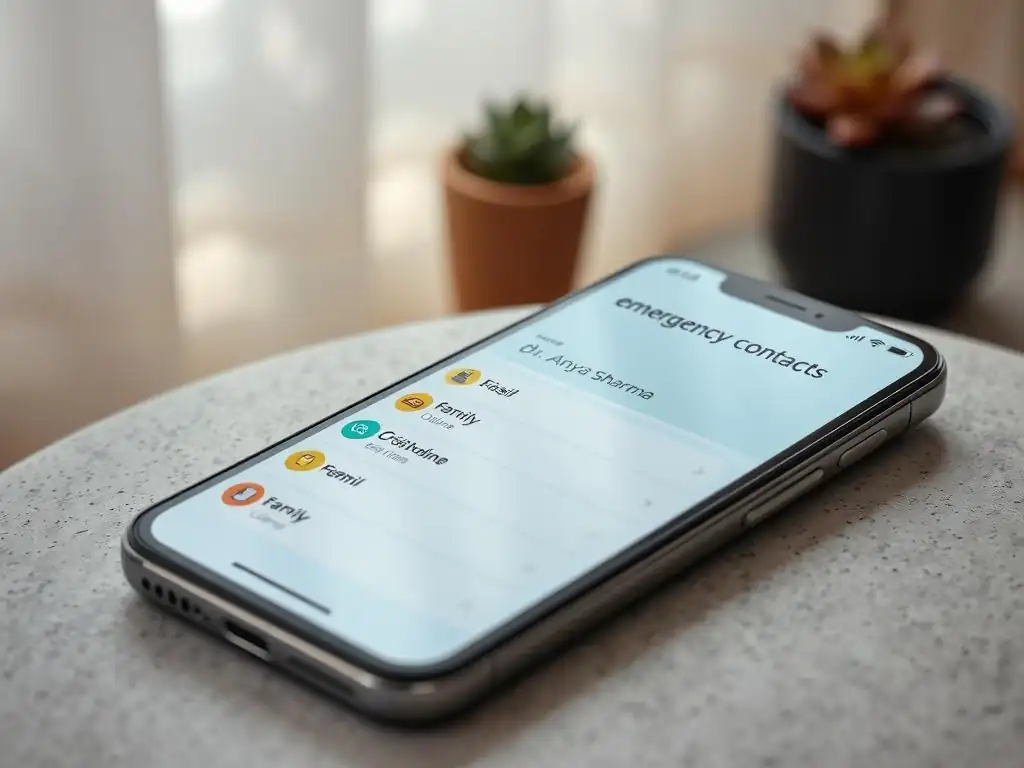
In a crisis, remembering phone numbers or navigating your contact list can be difficult. Pre-programming a dedicated list of emergency contacts who are aware of your mental health challenges and crisis plan is a simple yet critical step.
These contacts could be trusted family members, friends, therapists, or support group members. Ensuring their numbers are easily accessible, even from your lock screen, is a vital part of your digital mental health emergency toolkit. This allows first responders or others assisting you to quickly reach someone who knows how to help.
Adding Emergency Contacts to Your Phone: Assign a "Medical ID" with emergency contacts
Most smartphones have a feature that allows you to list emergency contacts and medical information accessible from the lock screen without needing a password. On iPhones, this is part of the Health app's Medical ID. On Android phones, it's often found under "Emergency Information" in settings or on the lock screen itself.
Set up this feature to include the names and phone numbers of your key emergency contacts. You can also add information about any mental health conditions, medications, or allergies. This ensures that if someone finds you in distress, they can quickly contact your designated support system, making this a non-negotiable element of your digital mental health emergency toolkit.
Sharing Your Emergency Contact Information: Use built-in phone features or password managers
Beyond setting up the lock screen feature, consider how else you might share this information. Some people create a clear note on their phone's home screen background or lock screen image indicating where emergency contacts are listed.
Using a secure password manager app (though remember not to include links!) could also store this information securely, accessible with a master password you or a trusted person knows. The key is to make sure that the people you trust can access the contact information they need if you are unable to provide it yourself. This preparedness is fundamental to a robust digital mental health emergency toolkit.
5. Safety Plan Apps: Creating a Personalized Crisis Strategy
A safety plan is a personalized, step-by-step strategy for coping with suicidal thoughts or other mental health crises. It includes triggers, coping mechanisms, reasons for living, and contact information for support. Digital safety plan apps allow you to create and store this plan on your phone, making it accessible whenever needed.
These apps guide you through the process of building a plan and keep it readily available. Having your safety plan literally in your pocket via a dedicated app significantly enhances the accessibility and utility of your digital mental health emergency toolkit.
Features of a Good Safety Plan App: Triggers, Coping Strategies, Contact Lists, Safe Locations
An effective safety plan app should include several key features. It should allow you to list your personal warning signs or triggers. It should provide space to list coping strategies you can use on your own (like listening to music or taking a walk). It must include sections for listing people you can reach out to and professional contacts (like therapists or crisis lines).
Crucially, it should also allow you to identify safe places you can go to distract yourself or find support. Some apps even allow you to upload photos of loved ones or pets as reminders of your reasons for living. Look for apps that incorporate these elements to create a comprehensive and actionable plan within your digital mental health emergency toolkit.
Examples of Effective Safety Plan Apps: MY3, BRYT
Several apps are designed specifically for creating and storing safety plans. MY3 is a popular example, allowing users to identify their network of three contacts, their warning signs, coping strategies, and safety steps. It also includes direct links to crisis hotlines.
BRYT (Bridge for Resilient Youth in Transition) is another type of app, often used in school settings but illustrating the concept of a digital support system that can include elements of a safety plan and connect users to resources. Researching and choosing a safety plan app that resonates with you and integrating it into your digital mental health emergency toolkit is a proactive measure that can provide structure and guidance during distress.
Optimizing Your Digital Toolkit for a Mental Health Emergency
Having the right tools is only half the battle; ensuring they are accessible and ready for use during a crisis is equally important. Optimizing your digital mental health emergency toolkit involves practical steps to remove potential barriers to access when you need help most.
This includes simple but often overlooked details like battery life and password management. Taking these steps beforehand ensures that your digital safety net is functional and available when you are in a vulnerable state and might struggle with complex tasks.
Charging and Accessibility: Ensuring Your Devices are Ready
A dead phone renders your entire digital mental health emergency toolkit useless. Make it a habit to keep your primary device charged, especially when you are feeling vulnerable or anticipating a difficult period. Consider keeping a portable power bank with you for backup.
Furthermore, ensure your phone is accessible. If you tend to silence your phone or keep it out of reach, think about how you can ensure you can quickly access it during distress. This might involve keeping it in a pocket or on a bedside table. Physical accessibility is just as important as digital organization for your digital mental health emergency toolkit.
Passwords and Security: Protecting Your Privacy During a Crisis
While quick access is important, maintaining the security and privacy of your personal information and communications is also vital. Use strong, unique passwords for your devices and mental health apps where possible. Consider using biometric security (fingerprint or facial recognition) for quick but secure access to your phone.
For emergency contacts or medical ID, as mentioned, utilize the phone's built-in features that allow access without the main password. Be mindful of what information you store in apps and understand their privacy policies. Balancing accessibility for emergencies with robust security is a key consideration when setting up your digital mental health emergency toolkit.
Practice and Familiarization: Knowing How to Use Your Tools
In a state of crisis, cognitive function can be impaired. Trying to figure out a new app or remember how to access a specific feature for the first time during distress is not ideal. Practice using the components of your digital mental health emergency toolkit when you are calm.
Navigate the apps, call the non-emergency lines to understand their process (if appropriate, check their website first), and practice accessing your emergency contacts from the lock screen. Familiarity builds confidence and ensures that you can intuitively use your digital tools when you need them most. Knowing your digital mental health emergency toolkit inside and out reduces friction during a crisis.
Beyond the Digital: Integrating Online and Offline Support
Your digital mental health emergency toolkit is a powerful resource, but it is most effective when integrated into a broader network of support. Technology should complement, not replace, human connection and professional care.
Building a comprehensive safety plan involves leveraging both the convenience and accessibility of digital tools alongside the invaluable support provided by people in your life and mental health professionals. This layered approach provides multiple avenues for help during a crisis.
Combining Digital Tools with Traditional Therapy
Digital tools can significantly enhance traditional therapy. For example, you can use a mood tracking app from your digital mental health emergency toolkit to gather data on your emotional states and triggers, which you can then discuss with your therapist. A safety plan app can be created or reviewed collaboratively with a counselor.
Your therapist might also recommend specific apps or online resources that align with your treatment goals. Using digital tools to practice skills learned in therapy (like mindfulness from an app) can reinforce progress between sessions. This synergy between digital and in-person support strengthens your overall mental health strategy.
Building a Support Network: Family, Friends, and Professionals
No digital tool can replace the empathy and understanding of a trusted person. Your digital mental health emergency toolkit should always point back to your human support network. This includes identifying family members or friends you can confide in, support groups you can attend (either online or in person), and mental health professionals you can contact.
Communicate with your chosen emergency contacts about your safety plan and how they can help. Ensure they know about your digital mental health emergency toolkit and how to access the emergency information on your phone. Building and maintaining strong relationships is a fundamental layer of mental health support, upon which your digital tools can build.
Digital Crisis Intervention: Ethical Considerations and Best Practices

While digital tools offer immense benefits, it's important to use them responsibly and be aware of ethical considerations, particularly regarding privacy and data security. Understanding these aspects ensures you use your digital mental health emergency toolkit safely and effectively.
Choosing reputable services and being mindful of the information you share online are crucial best practices. Technology in mental health is evolving rapidly, and staying informed helps you make better choices for your care.
Privacy and Confidentiality in Digital Mental Health
Data privacy is a significant concern when using mental health apps and online services. Understand how your data is collected, stored, and used. Look for services that are compliant with relevant health data protection regulations (like HIPAA in the US, if applicable) and have clear, transparent privacy policies.
Be cautious about sharing highly sensitive information on platforms that do not explicitly guarantee strong confidentiality and security measures. While the urgency of a crisis is paramount, being aware of the privacy implications of the tools in your digital mental health emergency toolkit is important for your long-term digital well-being.
Responsible Use of Technology During a Crisis
Using your digital mental health emergency toolkit responsibly during a crisis involves focusing on the tools that provide immediate support and guidance rather than getting lost in general internet use or social media, which could potentially exacerbate distress.
Stick to the pre-identified apps, contacts, and resources in your toolkit. If an app or service doesn't feel helpful or safe in the moment, disengage and try another tool or contact a person directly. Responsible use also means understanding the limitations – digital tools are there to support, but professional help or calling emergency services (like 911 or your local equivalent) is necessary in life-threatening situations.
Maintaining and Updating Your Digital Mental Health Emergency Toolkit
Your mental health journey and support network are not static. Therefore, your digital mental health emergency toolkit shouldn't be either. Regularly reviewing and updating its components ensures that it remains relevant, functional, and aligned with your current needs.
Treat your toolkit as a living document or collection that needs occasional attention. Setting reminders to check and update it can be a helpful practice.
Regularly Reviewing Your Apps and Resources
Apps get updated, services change their numbers or features, and new, potentially more helpful resources become available. Periodically check that the apps in your digital mental health emergency toolkit are updated and working correctly. Explore if there are new, highly-rated mental health apps or online services that might be beneficial additions.
Delete apps or resources that you no longer find helpful or that are outdated. Ensure that the contact information for text lines or hotlines is still correct. A quick review every few months ensures your digital mental health emergency toolkit is sharp and ready for use.
Updating Emergency Contacts and Safety Plans
Your support network might change over time. People move, relationships evolve, or you might connect with new therapists or support groups. It's crucial to update the emergency contact list in your phone and any safety plan apps whenever there are changes in the people or professionals you rely on.
Similarly, your personal triggers, coping strategies, or safe places might change as you grow and learn more about yourself. Review your safety plan periodically – perhaps every six months or after a significant life event – to ensure it accurately reflects your current situation and needs. Keeping your digital mental health emergency toolkit current is key to its effectiveness.
Conclusion: Empowering Yourself with a Digital Mental Health Safety Net
Building and maintaining a digital mental health emergency toolkit is a proactive and empowering step towards managing your mental well-being. By curating essential digital resources – from crisis text lines and hotlines to mood trackers and safety plan apps – you create a personal safety net accessible whenever and wherever you need it.
This toolkit, when integrated with your human support network and professional care, provides multiple layers of support during difficult moments. While technology has limitations, its benefits in terms of accessibility, anonymity, and immediate guidance are undeniable. Take the time today to start building or refining your digital mental health emergency toolkit. Familiarize yourself with its components, ensure your devices are ready, and empower yourself with the knowledge and tools to navigate future challenges with resilience and support.
Frequently Asked Questions
What is a Digital Mental Health Emergency Toolkit?
A Digital Mental Health Emergency Toolkit is a collection of online resources and tools designed to help individuals manage a mental health crisis effectively. It includes hotlines, self-help apps, and educational materials.
How can I use the toolkit during a mental health emergency?
You can utilize the toolkit to access immediate support through crisis hotlines, find self-help strategies, and connect with mental health professionals. It serves as a quick reference guide during times of need.
What types of resources are included in the toolkit?
The toolkit typically includes crisis hotlines, chat services, mindfulness apps, and informational articles on coping strategies. These resources aim to provide comprehensive support for various mental health challenges.
Is the Digital Mental Health Emergency Toolkit suitable for everyone?
While the toolkit is designed for general use, it may not address specific needs for all individuals. It is important to consult with a healthcare provider for personalized support, especially if conditions are severe.
Where can I find the Digital Mental Health Emergency Toolkit?
You can find the toolkit on the Mind Care Guide website, which offers a variety of resources to assist individuals facing mental health crises. Simply navigate to the mental health section for access.
Final Reflection: Empowering Yourself in Times of Crisis
The accessibility of digital tools has revolutionized how we approach mental health emergencies, offering a lifeline in moments of profound distress. No longer are individuals solely reliant on immediate, in-person support; a carefully curated digital toolkit can provide crucial resources and strategies during a crisis, potentially bridging the gap to professional help. This is particularly vital in a world where mental health challenges are increasingly prevalent.
The impact of readily available digital mental health resources is undeniable, shifting the landscape of crisis intervention and self-care. It's profoundly moving to witness the growing community support and innovative technological solutions emerging to address this critical need. This shift underscores the importance of proactive self-care and the power of knowledge in navigating difficult times. The greatest weapon against stress is our ability to choose one thought over another.
– William James. This quote highlights the agency we possess, even in the midst of a crisis, to utilize the tools at our disposal to manage our mental well-being.
Now, consider your own digital landscape. What resources are readily available to you? Do you have a plan in place? This article serves as a starting point, a foundation upon which you can build your personalized digital toolkit.
Take the time to explore the resources mentioned, curate your own list, and share this knowledge with others. Your proactive approach to mental health is not just beneficial for you; it's a powerful act of self-care that can ripple outwards, creating a more supportive and understanding community. Let's work together to build a future where everyone feels empowered to navigate mental health emergencies with confidence and resilience.
Take Charge: Build Your Mental Health Emergency Kit Today!
Thanks for taking the time to learn about building your personal digital toolkit for mental health emergencies. We hope you found the information empowering and helpful. Now, let's put this knowledge into action!
Here are a few steps you can take right now:
- Create your personalized emergency contact list: This is the most crucial step. Include phone numbers, addresses, and any relevant details for mental health professionals, trusted friends, and family members.
- Download and familiarize yourself with at least one mental health app: Explore different options and find one that suits your needs and comfort level. This could be a meditation app, a crisis hotline app, or something else entirely.
- Share this article with someone you care about: Spreading awareness and normalizing conversations around mental health is vital.
Ready to start building your own resilient mental health strategy? What's the first step you'll take today?