
Blended Families Thriving: How Therapy Modalities Provide Support


Welcome to Mind Care Guide, a haven for understanding and nurturing your mental well-being.
Are you navigating the complexities of a blended family? Feeling overwhelmed by the unique challenges that arise when merging households? You're not alone. In this article, we delve into proven blended family therapy techniques that can help build stronger bonds, resolve conflicts, and create a harmonious home. Discover how these methods can unlock a path towards a more fulfilling family life. Let's explore together!
Blended Families Thriving: Therapy Modalities for Support and Harmony
- Understanding the Unique Challenges of Blended Families
- Exploring Effective Blended Family Therapy Techniques
-
Specific Therapy Modalities for Blended Families: A Detailed Look
- Structural Family Therapy: Addressing Hierarchies, Boundaries, and Alliances
- Strategic Family Therapy: Problem-Solving, Communication, and Behavioral Change
- Bowen Family Systems Theory: Understanding Intergenerational Patterns and Differentiation
- Cognitive Behavioral Therapy (CBT) for Blended Families: Changing Thoughts, Feelings, and Behaviors
- Solution-Focused Brief Therapy (SFBT): Building on Strengths and Identifying Solutions
- Choosing the Right Therapy Approach for Your Blended Family
- Benefits of Blended Family Therapy: Long-Term Outcomes
-
Finding a Qualified Therapist Specializing in Blended Family Issues
- Where to Find a Therapist Experienced in Blended Family Dynamics: Online Directories, Referrals, and Insurance Providers
- Questions to Ask a Potential Therapist: Ensuring a Good Fit: Experience, Approach, and Fees
- The Importance of a Strong Therapeutic Alliance in Blended Family Therapy: Trust, Empathy, and Collaboration
- Navigating Common Roadblocks in Blended Family Therapy
- Resources for Blended Families: Support and Information
-
Frequently Asked Questions
- How does blended family therapy differ from traditional family therapy?
- What are some common issues addressed in blended family therapy?
- What are some effective "Blended family therapy techniques" used in therapy?
- How can blended family therapy help children adjusting to a new family structure?
- When should a blended family consider seeking therapy?
- Final Reflection: Weaving a Stronger Tapestry: The Future of Blended Family Support
- Unlock Your Blended Family's Potential
Understanding the Unique Challenges of Blended Families
The journey of forming a blended family is a complex undertaking, often requiring significant adjustment from all members. Bringing together individuals from different backgrounds, with distinct histories, traditions, and expectations, creates a dynamic environment ripe for both immense joy and potential conflict. Navigating this transition successfully hinges on understanding the inherent complexities and being prepared to address them proactively. This requires patience, empathy, and often, professional guidance.
The initial phases of forming a blended family can feel like navigating uncharted territory. Prior relationship dynamics, parenting styles, and even simple household routines can clash, leading to friction. Children may struggle with loyalty issues, feeling caught between biological parents or resistant to new authority figures. Adults, too, face challenges in defining their roles, managing ex-partner relationships, and building a cohesive unit while respecting individual needs and histories.
Defining Blended Families: Structures, Roles, and Expectations
A blended family, often referred to as a stepfamily, is formed when one or both partners in a new relationship bring children from a previous relationship into the new family unit. The structure of blended families can vary widely. Some involve children living primarily with one parent and visiting the other, while others see children residing full-time with the blended family. There are also families where both partners bring children, creating complex sibling relationships (stepsiblings, half-siblings if new children are born).
Roles within a blended family are frequently ambiguous and can be sources of tension. The stepparent role, for instance, lacks a clear societal script compared to biological parents. Should a stepparent act as a disciplinarian, a friend, or simply an additional supportive adult?
Expectations about household responsibilities, financial contributions, and holiday traditions can also differ significantly based on prior family experiences. Research suggests that it can take several years, often between two to seven, for a blended family to feel like a cohesive unit, highlighting the need for patience and intentional effort in defining these new roles and managing expectations.
Common Issues Faced by Blended Families: Loyalty Conflicts, Discipline, and Integration
One of the most pervasive challenges in blended families is navigating loyalty conflicts, particularly for children. Children may feel disloyal to their biological parent if they show affection or acceptance towards a stepparent. Similarly, parents might inadvertently create loyalty binds by competing for the child's affection or speaking negatively about an ex-partner. This can place immense emotional strain on children, impacting their adjustment and well-being.
Discipline is another frequent flashpoint. Different parenting styles between partners, or between a biological parent and stepparent, can lead to inconsistency and resentment. A stepparent attempting to discipline a stepchild before establishing a secure relationship can be met with significant resistance. Integration issues extend beyond discipline to encompass everything from merging finances and household rules to blending different cultural traditions and social circles. Successfully integrating these disparate elements requires open communication, compromise, and a willingness to adapt established norms.
The Importance of Therapy for Blended Family Success: Fostering Resilience
Given the inherent complexities and potential for conflict, seeking professional support through therapy is often a crucial step in fostering a thriving blended family. Therapy provides a safe and neutral space for family members to voice their concerns, understand each other's perspectives, and develop healthier communication patterns. It can help families navigate loyalty issues, establish clear boundaries, and address discipline challenges in a way that respects everyone's position.
Therapy doesn't just resolve conflicts; it builds resilience within the family unit. By learning effective coping strategies and communication skills, blended families become better equipped to face future challenges together. Data from various family therapy outcomes studies indicate that therapeutic intervention can significantly improve family functioning, reduce conflict, and enhance relationship satisfaction in blended families, often showing positive changes within 10-20 sessions for many families tackling specific issues.
Exploring Effective Blended Family Therapy Techniques
Blended family therapy is a specialized form of counseling designed to address the unique challenges faced by stepfamilies. It recognizes that the dynamics within a blended family differ significantly from those in a first-marriage family and requires tailored approaches. The overarching goals typically involve improving communication, strengthening relationships, resolving conflicts, and helping all family members adjust to their new roles and the new family structure.
The process of blended family therapy usually begins with an assessment phase where the therapist meets with various family members, individually and together, to understand the specific issues, family history, and individual perspectives. Based on this assessment, the therapist collaborates with the family to set specific, achievable goals. Subsequent sessions focus on working towards these goals using various blended family therapy techniques, providing tools and strategies for managing complex dynamics and fostering a sense of belonging and cohesion.
What is Blended Family Therapy? Goals, Objectives, and Process
Blended family therapy is a form of systemic therapy that views the family as an interconnected system where each member's behavior influences the others. Its primary goal is to help the blended family unit function more effectively and harmoniously. Specific objectives often include clarifying roles and responsibilities, establishing healthy boundaries between households and within the new unit, improving communication, resolving discipline conflicts, and helping children and adults adjust to the changes.
The therapeutic process is collaborative, with the therapist acting as a facilitator and guide. Sessions often involve discussions about family history, current challenges, and future aspirations. The therapist may introduce specific exercises or techniques to help family members practice new ways of interacting, expressing emotions, and solving problems together. Progress is typically reviewed regularly, and goals may be adjusted as the family progresses through the therapeutic journey, utilizing various blended family therapy techniques tailored to their specific needs.
Key Principles Guiding Successful Therapy for Blended Families: Respect, Empathy, and Collaboration
Several key principles underpin effective therapy for blended families. Foremost among these is respect – acknowledging and valuing the unique histories, feelings, and perspectives of every family member, including biological parents not living in the household. Empathy is equally vital, encouraging family members to understand and share the feelings of others, particularly the challenges faced by children navigating loyalty issues or stepparents struggling with acceptance.
Collaboration is essential throughout the therapeutic process. The therapist works with the family, not on them, empowering members to identify solutions and make changes together. This collaborative approach extends to co-parenting relationships, where possible, encouraging biological parents to work together on issues affecting the children, even if they are no longer a couple. These principles guide the application of various blended family therapy techniques, ensuring interventions are sensitive to the complex family dynamics.
Establishing Realistic Expectations in Therapy: Managing Timelines and Progress
It is crucial for blended families entering therapy to establish realistic expectations regarding timelines and progress. Forming a cohesive blended family is a process that takes time, and therapy is a tool to facilitate this process, not an instant fix. While some families may see noticeable improvements in communication or conflict resolution within a few months, addressing deeper-seated issues like trust or loyalty conflicts can take significantly longer, often a year or more of consistent therapy.
Therapists specializing in blended family therapy techniques will typically discuss realistic timelines during the initial sessions. Progress is often non-linear, with periods of significant improvement followed by plateaus or even temporary setbacks. Celebrating small victories, maintaining open communication within the family, and committing to the process outside of therapy sessions are all vital for long-term success and managing expectations effectively.
Specific Therapy Modalities for Blended Families: A Detailed Look
Different therapeutic modalities offer unique perspectives and blended family therapy techniques to address the varied challenges faced by stepfamilies. Understanding these different approaches can help families and therapists select the most suitable method based on the family's specific needs and dynamics. Each modality provides a distinct lens through which to view and intervene in the complex interactions within a blended family system.
While many therapists integrate techniques from multiple modalities, focusing on a primary approach can provide a structured framework for understanding and addressing core issues. Whether the focus is on restructuring family interactions, solving specific behavioral problems, understanding historical patterns, or changing negative thought processes, these modalities offer powerful tools for fostering harmony and resilience in blended families.
Structural Family Therapy: Addressing Hierarchies, Boundaries, and Alliances
Structural Family Therapy, developed by Salvador Minuchin, is a highly influential modality that focuses on the patterns of interaction within a family system. It views family problems as stemming from dysfunctional structures, such as unclear boundaries, rigid hierarchies, or unhealthy alliances. In blended families, these structural issues are particularly common due to the merging of two previously separate systems. The therapist actively works to identify and modify these structures to promote healthier functioning.
For example, a common structural problem in blended families is the peripheral stepparent, where the stepparent is excluded from parenting decisions or feels like an outsider. Another is a child who forms an overly close alliance with one biological parent against the stepparent or the other biological parent. Structural therapy utilizes specific blended family therapy techniques to challenge these patterns and help the family reorganize itself into a more functional structure, often by strengthening the parental subsystem and clarifying boundaries between subsystems (e.g., parent-child, stepparent-stepchild, sibling).
How Structural Family Therapy Benefits Blended Families: Reorganizing Family Systems
Structural Family Therapy is particularly beneficial for blended families because it directly targets the underlying organizational issues that often create conflict. By focusing on how family members interact rather than just what they argue about, it helps the family build a stronger foundation. The therapist might observe interactions during a session and actively intervene to shift communication patterns or challenge existing roles.
For instance, if a biological parent consistently undermines a stepparent's authority, the therapist might use techniques to strengthen the parental subsystem, encouraging the couple to present a united front on discipline. This reorganization helps clarify roles, establishes clear boundaries (e.g., separating parental issues from child issues), and reduces tension caused by structural confusion. A study published in the Journal of Marital and Family Therapy in the early 2000s highlighted the effectiveness of systemic approaches like Structural Therapy in improving communication and reducing conflict in stepfamilies over a 12-month period.
Techniques Used in Structural Family Therapy for Blended Families: Enactment, Boundary Making, and Challenging Assumptions
Key blended family therapy techniques within the Structural model include enactment, boundary making, and challenging assumptions. Enactment involves the therapist prompting the family to interact around a specific problem during the session, allowing the therapist to directly observe and intervene in their typical patterns. For example, the therapist might ask the stepparent and stepchild to discuss a recent conflict while the biological parent observes.
Boundary making involves the therapist helping the family create clearer and healthier boundaries between subsystems. This might involve strengthening the boundary around the parental couple so they can function effectively as a team, or clarifying the boundary between parents and children to prevent triangulation. Challenging assumptions involves the therapist directly questioning the family's rigid beliefs or rules that maintain dysfunctional structures, such as the belief that a stepparent can never be a "real" parent or that children should not express affection for a stepparent. These techniques are active and directive, aiming to create observable shifts in family interaction patterns.
Strategic Family Therapy: Problem-Solving, Communication, and Behavioral Change
Strategic Family Therapy is a goal-oriented and problem-focused approach that emphasizes changing problematic behaviors and communication patterns within the family system. Unlike structural therapy's focus on underlying organization, strategic therapy targets specific symptoms or issues the family presents. The therapist takes a directive role, designing interventions or "directives" intended to disrupt negative cycles and create rapid behavioral change.
This modality is well-suited for blended families struggling with specific, tangible problems like frequent arguments over chores, resistance to household rules, or difficulties in communication between specific family members. The therapist identifies the interaction sequences that maintain the problem and devises a strategy to interrupt these sequences, often using creative or even paradoxical interventions to encourage the family to behave differently. The focus is less on insight and more on action – getting the family to do something different.
Strategic Family Therapy and its Application to Blended Family Issues: Targeting Specific Problems
Strategic Family Therapy is highly applicable to blended family issues because it allows the therapist to hone in on specific areas of conflict. For example, if the primary issue is a stepchild's defiant behavior towards a stepparent, the therapist would analyze the interactions surrounding this behavior (e.g., how the biological parent responds, how the stepparent reacts) and design a strategy to change this specific interaction sequence.
A therapist might use a directive that seems counterintuitive but is designed to shift the dynamic, such as asking the stepparent to stop trying to enforce a specific rule and instead focus solely on building rapport for a set period. This can disrupt the power struggle and open the door for new interactions. Research from the 1990s and early 2000s on brief strategic approaches showed success rates of around 60-80% for families presenting with specific problems, suggesting its effectiveness in addressing targeted issues common in blended families.
Improving Communication Skills: Reframing, Directives, and Paradoxical Interventions
Improving communication is a central element of Strategic Family Therapy, often achieved through techniques like reframing, directives, and paradoxical interventions. Reframing involves the therapist offering a new perspective on a problem, changing its meaning for the family. For example, a stepparent's attempts at discipline might be reframed not as being bossy, but as trying to care for the child in the way they know how.
Directives are specific tasks or instructions given to the family to be completed outside of therapy sessions. These are carefully designed to interrupt problematic patterns. A therapist might direct a couple to schedule a specific time each week to discuss blended family issues without involving the children.
Paradoxical interventions involve prescribing the symptom, asking the family to do the problematic behavior in a controlled way. This can highlight the absurdity of the behavior or give the family a sense of control over it, ultimately leading to its reduction. These blended family therapy techniques are powerful tools for quickly shifting entrenched patterns.
Bowen Family Systems Theory: Understanding Intergenerational Patterns and Differentiation
Bowen Family Systems Theory, developed by Murray Bowen, views the family as an emotional unit and emphasizes the influence of intergenerational patterns on current family dynamics. It focuses on concepts like differentiation of self (the ability to maintain one's individuality while connected to others), triangles (three-person relationship systems), and the transmission of anxiety across generations. This theory is incredibly insightful for blended families, as individuals bring their entire family-of-origin histories and patterns into the new system.
For example, a person who grew up in a family with high conflict avoidance might struggle to address issues directly in their blended family, leading to unresolved tension. Similarly, unresolved emotional attachment or conflict with an ex-partner (part of the family of origin from the prior marriage) can significantly impact the new blended family system. Bowen theory helps family members understand these deeper, often unconscious, influences on their current relationships and behaviors within the blended family.
Applying Bowen Theory to Blended Family Relationships: Addressing Anxiety and Triangles
Applying Bowen Theory to blended family relationships involves understanding how anxiety within the system manifests and how individuals participate in dysfunctional patterns, particularly triangles. Anxiety is often high in blended families due to the inherent stress of transition, loyalty pressures, and financial or co-parenting concerns. This anxiety can lead to decreased differentiation, where individuals become overly reactive to each other's emotions or lose their sense of self within the family unit.
Triangles are particularly common in blended families. A classic example is a child triangulated between their biological parents, or a stepparent feeling triangulated between their partner and the partner's child. The therapist helps identify these triangles and encourages individuals to "detriangulate" – to manage their anxiety and communicate directly with the person they have an issue with, rather than involving a third party. Understanding the concept of the "family projection process" can also help blended families see how parental anxiety might be projected onto a child, potentially leading to behavioral issues.
Differentiation and Emotional Regulation in Blended Family Systems: Fostering Individual Autonomy
A core concept in Bowen Theory, differentiation of self, is crucial for the healthy functioning of blended families. Differentiation is not about becoming emotionally distant, but about maintaining one's thoughts, feelings, and beliefs even when faced with pressure to conform or react emotionally to others. In a blended family, individuals with higher levels of differentiation are better able to navigate loyalty conflicts, manage challenging relationships with ex-partners, and maintain their own well-being amidst family stress.
Therapy using Bowen principles helps individuals increase their level of differentiation. This involves learning to regulate one's own emotions, observe family patterns objectively, and take "I positions" – stating one's own thoughts and feelings clearly without blaming others. As individuals become more differentiated, they are less likely to get caught up in the emotional reactivity of the family system, leading to calmer, more thoughtful interactions.
While there aren't specific outcome statistics solely for Bowen therapy on blended families, studies on differentiation as a concept consistently link higher differentiation levels to improved relationship satisfaction and reduced anxiety in family systems. These are vital outcomes for blended families utilizing blended family therapy techniques informed by Bowen's ideas.
Cognitive Behavioral Therapy (CBT) for Blended Families: Changing Thoughts, Feelings, and Behaviors
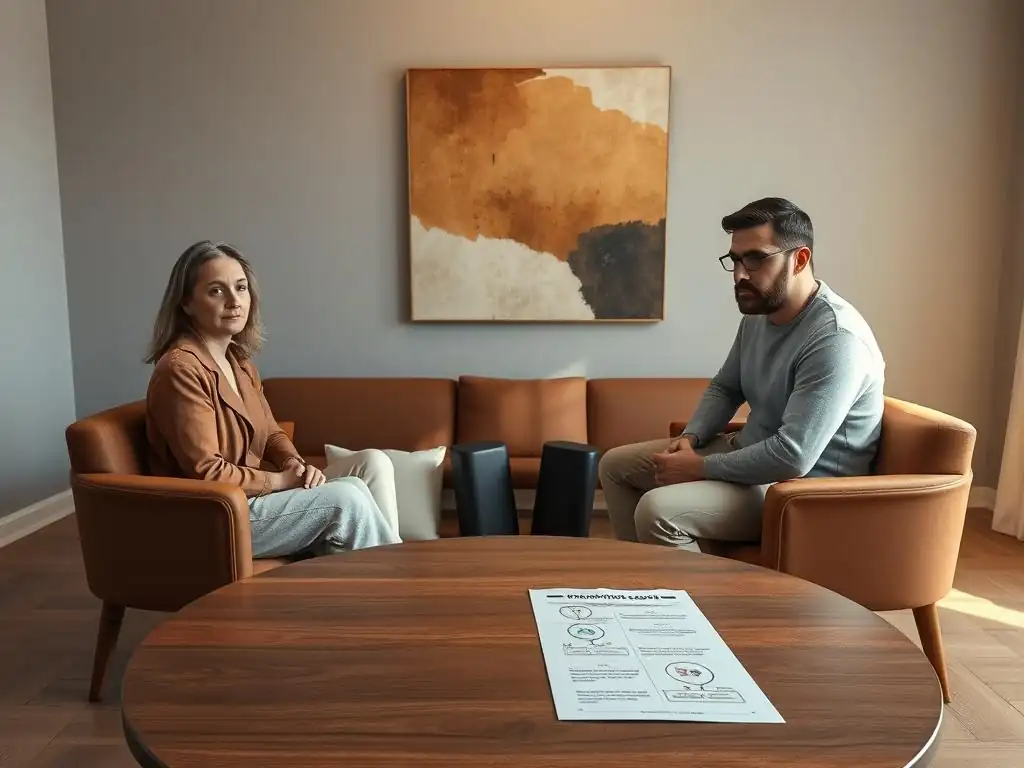
Cognitive Behavioral Therapy (CBT) is a widely-used therapeutic approach that focuses on the interconnectedness of thoughts, feelings, and behaviors. The core principle is that our thoughts significantly influence how we feel and behave. In the context of blended families, CBT helps individuals and the family unit identify negative or unhelpful thought patterns that contribute to distress and conflict, and then work to change those thoughts and the resulting behaviors.
For instance, a stepchild might harbor the thought, "My stepparent is trying to replace my mom/dad," leading to feelings of anger and behaviors like defiance. A stepparent might think, "I'll never be accepted," leading to feelings of hopelessness and behaviors like withdrawing from family interactions. CBT provides structured blended family therapy techniques to challenge these cognitive distortions and develop more realistic and positive ways of thinking about blended family life.
How CBT Can Help with Adjustment and Conflict Resolution: Identifying Cognitive Distortions
CBT is highly effective in helping individuals and families adjust to the changes inherent in blending families and in improving conflict resolution skills. A key focus is identifying cognitive distortions – irrational or inaccurate thought patterns that fuel negative emotions and problematic behaviors. Common distortions in blended families might include "all-or-nothing" thinking ("My stepchild hates me"), "catastrophizing" ("This argument means our family will never work"), or "mind reading" ("My partner secretly resents me for how I handle discipline").
By identifying these distortions, individuals can learn to challenge their validity and replace them with more balanced and realistic thoughts. This process, known as cognitive restructuring, can significantly reduce anxiety, anger, and frustration, making individuals more open to understanding others' perspectives and engaging in constructive conflict resolution. For example, replacing "My stepchild hates me" with "My stepchild is struggling to adjust, and their behavior is a reflection of that struggle, not necessarily personal hatred" can change a stepparent's emotional response and subsequent behavior.
CBT Techniques for Managing Stress and Anxiety in Blended Families: Cognitive Restructuring, Relaxation Techniques, and Exposure Therapy
Beyond cognitive restructuring, CBT offers several practical blended family therapy techniques for managing the significant stress and anxiety often present in blended families. Relaxation techniques such as deep breathing, progressive muscle relaxation, or mindfulness can help individuals calm their nervous system in stressful situations, such as during family conflicts or challenging co-parenting discussions.
Exposure therapy, while more commonly associated with anxiety disorders, can be adapted to help family members gradually confront and cope with difficult situations they might be avoiding, such as having a difficult conversation with a stepchild or interacting with an ex-partner. The therapist guides the individual through facing these situations in a controlled way, helping them build confidence and reduce avoidance behaviors.
While specific success rates for CBT purely in blended families are limited in public data, studies on CBT for family conflict and individual adjustment show high rates of effectiveness, often cited around 70-80% for reducing symptoms of anxiety and depression which are common in individuals struggling with blended family dynamics.
Solution-Focused Brief Therapy (SFBT): Building on Strengths and Identifying Solutions
Solution-Focused Brief Therapy (SFBT) is a future-oriented, goal-directed approach that focuses on identifying and amplifying a family's strengths and resources rather than dwelling on past problems. It operates on the principle that families already possess the resources and abilities to solve their problems, and the therapist's role is to help them access these capabilities and envision a preferred future. This approach is typically brief, often ranging from 5 to 20 sessions.
SFBT is particularly helpful for blended families who feel stuck or overwhelmed by their challenges. Instead of analyzing the roots of conflict, the therapist helps the family identify times when the problem is less severe or absent (exceptions) and explore what they are doing differently during those times. This helps the family recognize their existing coping mechanisms and build upon them. The focus is firmly on constructing solutions and taking small, actionable steps towards the desired future state.
Identifying Strengths and Resources in Blended Families: Amplifying Existing Coping Mechanisms
A core component of SFBT in the context of blended families is actively identifying and highlighting the family's existing strengths and resources. Even amidst conflict, blended families possess resilience, individual talents, positive relationships (even if limited to certain members), and prior successful coping experiences. The therapist intentionally asks questions to draw out these positive aspects.
For example, the therapist might ask, "Despite the challenges, what are you already doing that helps your family function even a little bit better?" or "Tell me about a time when a potential argument was avoided – what did you or someone else do differently?" By focusing on what is working, the family gains confidence and a sense of agency. This strengths-based approach is empowering and helps shift the family's perspective from one of deficit to one of capability, reinforcing existing positive blended family therapy techniques they might already be using unconsciously.
SFBT Techniques for Creating Positive Change Quickly: Miracle Question, Scaling Questions, and Exception Finding
SFBT utilizes several distinct blended family therapy techniques designed to facilitate rapid positive change. The "Miracle Question" is a signature technique: "If a miracle happened tonight while you were sleeping, and the problem was solved, what would be the first small signs you would notice tomorrow morning that would tell you a miracle had occurred?" This question helps the family bypass problem-focused thinking and vividly imagine a solution state, clarifying their goals in concrete terms.
Scaling questions ask the family to rate their problem or progress on a scale (e.g., 0 to 10). "On a scale of 0 to 10, where 10 is your blended family functioning perfectly and 0 is when things were at their worst, where are you today? What would moving up just one number look like? What would be the first tiny step towards that?"
These questions help break down large problems into manageable steps and identify small improvements. Exception finding involves exploring times when the problem didn't happen or was less severe. By examining these exceptions, the family can learn what contributes to better functioning and intentionally replicate those behaviors. A 2019 meta-analysis of SFBT studies indicated overall effectiveness with an effect size comparable to other established therapies, and its brief nature can be particularly appealing for families seeking targeted support.
Choosing the Right Therapy Approach for Your Blended Family
Selecting the most appropriate therapy modality is a crucial step for a blended family seeking support. There is no one-size-fits-all answer, as the effectiveness of different blended family therapy techniques depends heavily on the specific issues the family is facing, the personalities and preferences of family members, and the expertise of the therapist. A careful consideration of these factors can significantly increase the likelihood of a positive therapeutic outcome.
It's important for families to discuss their challenges openly and consider what they hope to achieve from therapy. Researching different modalities and talking to potential therapists about their approach can provide valuable insight. Ultimately, the goal is to find a therapeutic match that feels comfortable, relevant, and effective for the unique dynamics of the blended family unit.
Factors to Consider When Selecting a Therapy Modality: Family Dynamics, Goals, and Therapist Expertise
Several factors should guide the selection of a therapy modality for a blended family. First, consider the primary family dynamics and the nature of the problems. Is the core issue structural (e.g., unclear roles, boundary conflicts)? Is it behavioral (e.g., specific discipline issues, communication breakdowns)? Is it rooted in past family history and intergenerational patterns? Or is the family simply feeling stuck and needing help envisioning solutions? These questions can point towards modalities like Structural, Strategic, Bowenian, or Solution-Focused therapy, respectively.
Second, clearly define the family's goals for therapy. Do they want to completely restructure their family system, or address one or two specific problems? Are they looking for deep insight into family patterns, or practical tools for immediate change? Matching goals to the therapy's focus is key. Finally, and perhaps most importantly, consider the therapist's expertise. Therapists often specialize in certain modalities or have extensive experience working with blended families. Their ability to skillfully apply blended family therapy techniques is paramount. A therapist specializing in blended family dynamics will have a nuanced understanding of the unique challenges involved.
Matching Therapy Techniques to Specific Blended Family Needs: Tailoring Interventions
Effective blended family therapy involves tailoring the blended family therapy techniques to the specific needs and context of the family. A family struggling with a stepchild's resistance to a stepparent's authority might benefit from Strategic techniques focused on changing that specific interaction pattern, combined perhaps with Structural techniques to clarify the stepparent's role. A family grappling with complex loyalty issues stemming from difficult relationships with ex-partners might find Bowenian theory helpful in understanding the emotional triangles and increasing individual differentiation.
A family feeling overwhelmed and hopeless might respond well to the strengths-based, future-oriented approach of SFBT. Conversely, a family dealing with intense emotional reactivity and negative thought spirals might benefit from CBT techniques to manage individual anxiety and improve communication. The therapist plays a vital role in assessing the family's needs and selecting or integrating appropriate blended family therapy techniques to create a customized treatment plan.
The Role of the Therapist in Facilitating Blended Family Harmony: Mediator, Educator, and Advocate
The therapist serves multiple crucial roles in facilitating harmony within a blended family. They act as a neutral mediator, helping family members communicate respectfully, especially during times of conflict. They ensure that all voices are heard and validated, even those of children who may struggle to articulate their feelings.
Furthermore, the therapist is an educator, teaching the family about common blended family dynamics, explaining the rationale behind the blended family therapy techniques being used, and equipping them with practical skills for communication, conflict resolution, and stress management. They also serve as an advocate for the health and well-being of the entire family system, helping members understand each other's perspectives and fostering empathy. A skilled therapist creates a safe space for vulnerability and growth, guiding the family towards greater understanding and connection.
Benefits of Blended Family Therapy: Long-Term Outcomes
Engaging in blended family therapy can yield significant long-term benefits, fostering a more stable, harmonious, and resilient family unit. While the process can be challenging at times, the investment of time and effort often results in profound positive changes that extend far beyond the therapy room. These outcomes contribute to the overall well-being of all family members and strengthen the foundation of the blended family for years to come.
The skills and insights gained in therapy provide families with the tools to navigate future challenges independently. By addressing core issues, improving communication, and strengthening relationships, therapy helps transform potential sources of conflict into opportunities for growth and deeper connection.
Improved Communication and Conflict Resolution Skills: Constructive Dialogue
One of the most immediate and lasting benefits of blended family therapy is a significant improvement in communication and conflict resolution skills. Families learn to express their needs and feelings clearly and respectfully, listen actively to others, and engage in constructive dialogue rather than escalating arguments. Blended family therapy techniques specifically target communication patterns, helping families break cycles of blame, defensiveness, or withdrawal.
Learning to fight fair, use "I" statements, and truly hear each other's perspectives equips the family to navigate disagreements in a healthy manner. Instead of avoiding conflict or letting it fester, they gain the confidence and skills to address issues head-on, finding mutually agreeable solutions. This leads to reduced tension and a greater sense of safety and understanding within the home. A study published in the Journal of Family Psychology found that families who participated in therapy showed sustained improvements in communication and conflict resolution skills even years after therapy concluded.
Stronger Family Bonds and Increased Cohesion: Enhanced Affection and Support
Blended family therapy helps to strengthen the bonds between family members and increase overall family cohesion. As communication improves and conflicts are managed more effectively, trust begins to grow. Therapy provides opportunities for family members to connect on a deeper level, sharing their experiences and building empathy for one another's journey in the blended family.
Stepparent-stepchild relationships, often the most challenging, can develop into supportive and affectionate bonds. Sibling relationships among stepsiblings can move from rivalry to companionship. As the family navigates challenges together in therapy, they build a shared history of overcoming obstacles, fostering a sense of unity and belonging. This enhanced cohesion leads to a more supportive and loving home environment where members feel valued and connected. Data from family therapy outcome studies consistently show improvements in family cohesion scores post-therapy.
Enhanced Individual Well-being for All Family Members: Reduced Stress and Improved Mental Health
The benefits of blended family therapy extend to the individual well-being of each family member. Living in a high-conflict or poorly adjusted blended family can take a significant toll, contributing to stress, anxiety, depression, and behavioral problems, particularly in children. By creating a more harmonious and predictable family environment, therapy reduces these stressors.
Children often show improved behavior, academic performance, and emotional regulation as family tensions decrease. Adults experience reduced stress, improved mood, and greater satisfaction in their relationships. Individuals also gain a better understanding of their own role in family dynamics and develop healthier coping mechanisms.
Ultimately, successful blended family therapy leads to a more peaceful home, contributing to the improved mental health and overall well-being of everyone in the family. A survey of individuals who participated in family therapy for various issues, including blended family challenges, reported significant reductions in personal stress levels and improvements in their overall mental health status post-treatment.
Finding a Qualified Therapist Specializing in Blended Family Issues

Finding the right therapist is a critical step in embarking on the journey of blended family therapy. Not all therapists have specific training or extensive experience working with the unique complexities of stepfamilies. Seeking out a therapist who specializes in blended family therapy techniques ensures that they understand the specific challenges you face and are equipped with the most effective tools to help your family thrive.
Taking the time to research potential therapists, ask pertinent questions, and ensure a good fit is an investment that can significantly impact the success of the therapeutic process. A strong therapeutic alliance built on trust and understanding is fundamental to achieving positive outcomes.
Where to Find a Therapist Experienced in Blended Family Dynamics: Online Directories, Referrals, and Insurance Providers
There are several avenues for finding a therapist experienced in blended family dynamics and blended family therapy techniques. Online directories are a popular starting point. Websites like Psychology Today, the American Association for Marriage and Family Therapy (AAMFT) Therapist Locator, and the National Council on Family Relations (NCFR) often allow you to search for therapists by specialization, location, and insurance accepted. Look for therapists who list "blended families," "stepfamilies," "family therapy," or specific modalities like Structural or Strategic Family Therapy as areas of expertise.
Referrals can also be valuable. Ask your primary care physician, a school counselor, or trusted friends and family if they know of therapists specializing in family issues. If you have insurance, contact your provider for a list of in-network therapists who specialize in marriage and family therapy. Be sure to specifically ask if they have experience with blended family structures. A therapist's website or profile should also provide information about their areas of focus and therapeutic approaches.
Questions to Ask a Potential Therapist: Ensuring a Good Fit: Experience, Approach, and Fees
When contacting potential therapists, preparing a few key questions can help you determine if they are a good fit for your blended family's needs. Ask specifically about their experience working with blended families. How many blended families have they worked with, and for how long? What percentage of their practice is dedicated to family therapy? Inquire about their primary therapeutic approach or modality (e.g., Structural, Strategic, Bowenian, SFBT, CBT) and how they typically apply blended family therapy techniques to common stepfamily issues like loyalty conflicts or discipline.
Discuss their philosophy on working with blended families and how they involve all relevant members, including children of different ages and potentially even non-resident biological parents if appropriate. Finally, clarify practical matters such as their fees, cancellation policy, session frequency, and whether they accept your insurance. Finding a therapist whose experience, approach, and logistical details align with your family's needs is essential.
The Importance of a Strong Therapeutic Alliance in Blended Family Therapy: Trust, Empathy, and Collaboration
Regardless of the specific modality or blended family therapy techniques used, the strength of the therapeutic alliance – the relationship between the family and the therapist – is a powerful predictor of success in blended family therapy. A strong alliance is built on trust, empathy, and collaboration. Family members need to feel that the therapist is a safe, non-judgmental, and understanding presence.
The therapist's ability to demonstrate empathy for the unique struggles of each family member, from the overwhelmed stepparent to the conflicted child, is crucial. Feeling understood fosters trust and openness. Collaboration involves the therapist working with the family as a team, respecting their goals and empowering them in the change process.
When a strong therapeutic alliance is established, family members are more likely to engage fully in the process, be open to trying new blended family therapy techniques, and make meaningful progress towards greater harmony and resilience. Research consistently shows that the quality of the therapeutic alliance is a stronger predictor of positive outcomes than the specific therapy modality used.
While blended family therapy offers immense potential for positive change, the journey is not always smooth. Families may encounter common roadblocks that can challenge their progress and commitment to the process. Recognizing these potential obstacles and having strategies to navigate them is vital for maintaining momentum and achieving therapeutic goals.
Roadblocks can include resistance from family members, the intensity of conflict during sessions, or difficulties maintaining changes outside of therapy. Addressing these challenges proactively with the therapist's guidance can help the family push through difficulties and continue moving towards greater understanding and harmony.
Resistance to Therapy: Addressing Concerns and Fears: Validation and Psychoeducation
Resistance to therapy is a common roadblock, particularly in blended families where members may feel forced to attend or are wary of discussing sensitive issues. Children, especially teenagers, may express resistance verbally or through disengagement during sessions. Adults might be skeptical about the process or fearful of uncovering painful emotions.
Addressing resistance requires a combination of validation and psychoeducation. The therapist should validate the concerns and fears of resistant family members, acknowledging that therapy can feel intimidating or unnecessary. Psychoeducation involves explaining the purpose of therapy, how it works, and how the specific blended family therapy techniques can help them individually and as a family. Highlighting the benefits of improved communication and reduced conflict can also help motivate hesitant members. Sometimes, starting with individual sessions for a resistant member or focusing on less threatening topics initially can help build trust and reduce apprehension.
Managing Conflict During Therapy Sessions: Ground Rules and Mediation Techniques
Conflict is inherent in blended family dynamics, and it's likely to surface during therapy sessions. While healthy conflict resolution is a goal, intense or uncontrolled conflict during sessions can be counterproductive and distressing. Therapists use specific strategies to manage conflict effectively.
Establishing clear ground rules for sessions is fundamental – rules like "one person speaks at a time," "no interrupting," and "respectful language only." The therapist acts as a mediator, stepping in to de-escalate tension, redirect hostile communication, and ensure discussions remain productive. They may use techniques like paraphrasing to ensure understanding, reflecting emotions, or calling for a brief pause if emotions run too high. Learning to manage conflict within the therapy session provides a live model for families to replicate healthier interactions outside of therapy, reinforcing the blended family therapy techniques being taught.
Maintaining Progress and Preventing Relapse After Therapy: Booster Sessions and Continued Communication
Achieving therapeutic goals is a significant accomplishment, but maintaining progress after formal therapy ends requires ongoing effort. Without intentional strategies, families can sometimes slip back into old, unhelpful patterns. Preventing relapse involves consolidating the skills learned and continuing to apply them in daily life.
Booster sessions, scheduled periodically after therapy concludes, can be helpful check-ins to address new challenges, reinforce learned blended family therapy techniques, and celebrate continued progress. Families should also commit to ongoing open communication outside of therapy, scheduling regular family meetings to discuss issues, check in with each other, and maintain connection. Reviewing notes or exercises from therapy, practicing communication skills, and utilizing the resources recommended by the therapist can all contribute to sustaining the positive changes achieved in therapy. Recognizing that managing blended family dynamics is an ongoing process, not a fixed destination, is key to long-term harmony.
Resources for Blended Families: Support and Information
Beyond formal therapy, numerous resources are available to support blended families on their journey. Accessing information, connecting with others facing similar challenges, and continuing to learn about healthy stepfamily dynamics can significantly complement the therapeutic process and provide ongoing support.
These resources offer practical advice, emotional validation, and a sense of community, reminding blended families that they are not alone in navigating the unique path they are on.
Books and Articles on Blended Family Living
A wealth of books and articles offer insights and practical advice specifically tailored to blended family living. These resources cover topics ranging from navigating stepparent roles and discipline to managing relationships with ex-partners and fostering sibling bonds. Authors often share personal anecdotes, research findings, and actionable strategies.
Reading together as a couple or even sharing relevant articles with older children can spark important conversations and provide a shared language for discussing challenges. Many therapists specializing in blended family therapy techniques can recommend specific titles that align with the family's particular needs and the concepts being explored in therapy.
Online Communities and Support Groups
Connecting with other individuals and couples in blended families through online communities and support groups can provide invaluable emotional support and practical tips. Platforms like dedicated forums, social media groups, and non-profit organization websites host communities where members can share experiences, ask questions, and offer encouragement.
These groups provide a sense of belonging and reduce feelings of isolation that can sometimes accompany blended family challenges. While not a substitute for professional therapy, peer support can offer validation, practical advice based on lived experience, and a reminder that the struggles and triumphs of blended family life are shared by many others.
Frequently Asked Questions
How does blended family therapy differ from traditional family therapy?
Blended family therapy addresses the unique challenges of step-parents, step-siblings, and differing family histories. It focuses on creating new shared narratives and navigating complex relationship dynamics that are often absent in traditional families.
What are some common issues addressed in blended family therapy?
Common issues include loyalty conflicts, differing parenting styles between households, and adjusting to new roles and expectations. Therapy helps families develop effective communication and resolve these conflicts constructively.
What are some effective "Blended family therapy techniques" used in therapy?
Techniques include genograms to map family relationships, communication skills training, and restructuring exercises to define new roles and boundaries. These promote understanding and cooperation within the blended family.
How can blended family therapy help children adjusting to a new family structure?
Therapy provides a safe space for children to express their feelings about the changes and helps them develop coping mechanisms for dealing with stress and uncertainty. It also facilitates healthy attachment within the new family.
When should a blended family consider seeking therapy?
A blended family should consider therapy when facing persistent conflicts, difficulty adjusting to new roles, or experiencing communication breakdowns that impact the family's overall well-being. Early intervention is often beneficial.
Final Reflection: Weaving a Stronger Tapestry: The Future of Blended Family Support
The challenges faced by blended families are not merely personal struggles; they are a significant societal issue impacting millions. The unique complexities of merging households, navigating step-parenting roles, and fostering healthy relationships within a newly formed family unit require specialized support, and the demand for effective therapeutic interventions is only growing.
The journey of building a thriving blended family is a testament to resilience, adaptability, and the power of human connection. It's a journey I've witnessed firsthand through the stories shared in this article, and one that underscores the vital role of professional guidance. The family is the first essential cell of human society.
This quote, though simple, highlights the profound impact a healthy family structure has on individuals and society as a whole. The work of therapists in supporting blended families is not just about resolving conflict; it's about building the foundation for a stronger, more resilient society.
Now, consider your own relationships and the families you know. What tools and techniques from this article resonate most with you? Perhaps you've identified a specific therapeutic approach that could benefit your own family or a family you care about.
I encourage you to take the first step, to reach out for support if needed, and to remember that building a strong blended family is a process, not a destination. Embrace the challenges, celebrate the victories, and know that you are not alone in this journey. The future of blended families depends on our collective commitment to understanding, supporting, and celebrating the unique beauty of these complex, evolving family units.
Unlock Your Blended Family's Potential
Thanks for taking the time to explore the power of therapy in building strong blended families! You've gained valuable insights into how different approaches can help navigate the unique challenges and celebrate the incredible opportunities that come with this family structure. Now, it's time to put that knowledge into action.
- Prioritize a family therapy session: This is your first step towards creating a supportive and communicative environment. Even one session can provide invaluable tools and strategies.
- Explore resources tailored to blended families: Search online for support groups, workshops, or books focusing on the specific dynamics of blended family life.
- Share your key takeaway with a friend or family member: Spreading awareness about the benefits of therapy can make a huge difference in other blended families' journeys.
What small step will you take today to nurture your blended family's growth and well-being?