
Celebrating Milestones: Recognizing Progress in Family Mental Health Journeys


Welcome to Mind Care Guide, a space dedicated to nurturing your mental well-being.
We understand that navigating the complexities of family life while prioritizing mental health can be a challenging journey. That's why we're here to offer guidance and support. In this article, we delve into a powerful tool: Family mental health progress tracking. But how can you truly recognize and celebrate the small victories along the way, fostering a more supportive and understanding home environment? Let's explore practical strategies and insights to help you track your family's mental wellness journey and celebrate every milestone, big or small.
Celebrating Milestones: Recognizing Progress in Family Mental Health Journeys
- Understanding the Importance of Tracking Family Mental Health Progress
- Defining Milestones in Family Mental Health Recovery
- Effective Methods for Family Mental Health Progress Tracking
- Recognizing and Celebrating Small Wins in Family Mental Health
- Practical Tools for Family Mental Health Progress Tracking
- Addressing Setbacks and Plateaus in Family Mental Health Journeys
- Maintaining Momentum in Family Mental Health Progress
- Fostering Open Communication About Family Mental Health Progress
- Resources for Family Mental Health Support and Progress Tracking
- Sharing Success Stories: Inspiring Examples of Family Mental Health Improvement
-
Frequently Asked Questions
- How can we effectively track family mental health progress?
- What are some common milestones to celebrate in family mental health journeys?
- Why is it important to celebrate progress, even small steps, in family mental health?
- How can Mind Care Guide assist in family mental health progress tracking?
- What are some potential obstacles to family mental health progress tracking and how can we overcome them?
- Final Reflection: The Enduring Power of Acknowledging Progress in Family Mental Health
- Unlock Your Family's Strength: Celebrate & Thrive Together
Understanding the Importance of Tracking Family Mental Health Progress
Why Family Mental Health Progress Tracking Matters
Embarking on a journey toward improved family mental health is a significant undertaking, and understanding the value of monitoring progress is crucial for maintaining momentum and hope. Family mental health progress tracking provides a tangible way to see how far everyone has come, offering validation for efforts and insights into what strategies are working. Without a system for tracking, subtle improvements might go unnoticed, leading to feelings of stagnation or discouragement, even when positive changes are occurring. This process helps families identify patterns, understand triggers, and reinforce positive behaviors, making the path forward clearer and more manageable.
Furthermore, consistent family mental health progress tracking empowers family members by giving them a sense of agency and control over their collective well-being. It shifts the focus from solely identifying problems to actively participating in solutions and observing the positive outcomes of their joint efforts. This shared experience of tracking and celebrating progress can strengthen family bonds and build a sense of unity and shared purpose in overcoming challenges. It transforms an often isolating experience into a collaborative project, fostering resilience and mutual support within the family unit.
Overcoming Challenges in Monitoring Family Mental Wellbeing
While the benefits of tracking family mental health progress are clear, families often face hurdles in implementing and maintaining a consistent system. One common challenge is inconsistency, where initial enthusiasm fades due to busy schedules or perceived lack of immediate results. It can be difficult to integrate tracking methods into daily routines, especially when dealing with the complexities of multiple family members' lives and varying levels of engagement. Another significant challenge is subjectivity; interpreting emotional states or behavioral changes can be subjective, making it hard to establish objective markers of progress that everyone agrees upon.
Addressing these challenges requires patience, flexibility, and open communication. Finding tracking methods that are practical and adaptable to the family's lifestyle is key. This might involve experimenting with different tools or approaches until a sustainable one is found.
Establishing clear, observable indicators of progress, perhaps with the guidance of a mental health professional, can help reduce subjectivity. For example, instead of tracking "less anxiety," a family might track "number of days a child attended school without distress" or "instances of calm conflict resolution." Regularly reviewing and adjusting the tracking process as a family can also help maintain engagement and ensure it remains a helpful tool rather than a burden.
Defining Milestones in Family Mental Health Recovery
Identifying Key Indicators of Improvement in Family Mental Health
Identifying key indicators is fundamental to effective family mental health progress tracking. These indicators serve as benchmarks, showing concrete signs of improvement beyond simply feeling "better." They can manifest in various ways, such as enhanced communication patterns, a decrease in the frequency or intensity of conflicts, improved sleep habits across family members, or increased participation in shared activities. For instance, a family struggling with depression might track an increase in shared meal times or the initiation of conversations about positive topics. A family dealing with anxiety might note a reduction in avoidance behaviors related to social situations or school.
Specific examples of indicators might include a teenager spending more time outside their room and engaging with the family (e.g., from 1 hour per day to 3 hours per day), a parent reporting fewer sleepless nights (e.g., from 4 nights per week to 1-2 nights per week), or siblings resolving disagreements with less yelling and more compromise (e.g., tracking instances of using 'I feel' statements). These indicators should be specific, measurable, achievable, relevant, and time-bound (SMART) whenever possible, providing clear evidence of forward movement in the family's collective mental wellbeing journey.
Tracking these specific shifts provides a more accurate picture of progress than relying on vague feelings.
Setting Realistic and Achievable Goals for Family Wellbeing
Setting realistic and achievable goals is a cornerstone of effective family mental health progress tracking. Goals should be collaboratively defined by the family, taking into account the unique challenges and capabilities of each member. Unrealistic goals can lead to frustration and a sense of failure, hindering motivation. For example, aiming for a complete absence of arguments overnight is likely unachievable for most families, whereas a goal like "practice active listening during disagreements three times this week" is much more specific and attainable.
Achievable goals are often small, incremental steps that build upon each other. If a family is working on improving communication, an initial goal might be for everyone to participate in a 15-minute family check-in twice a week. Once this is consistently met, the goal could evolve to discussing a specific topic or practicing a new communication skill.
It's helpful to break down larger aspirations, like "reducing family stress," into smaller, actionable steps, such as "implementing a 10-minute daily quiet time" or "planning one fun family activity per month." Celebrating the successful achievement of these smaller goals reinforces positive behavior and encourages continued effort in family mental health progress tracking.
Effective Methods for Family Mental Health Progress Tracking
Utilizing Mental Health Journals for Family Insights
Mental health journals can be a powerful tool for family mental health progress tracking, offering a personal yet shared space for reflection and insight. Individual family members can maintain their own journals, documenting their feelings, experiences, challenges, and successes related to their mental health. This practice encourages self-awareness and provides a record of personal fluctuations and growth over time. Sharing entries, or summaries of entries, with the family (when comfortable and appropriate) can foster empathy and deeper understanding among members, revealing patterns that might not be apparent otherwise.
Beyond individual journaling, families can also keep a shared family journal. This could be a physical notebook or a digital document where family members contribute observations about family dynamics, positive interactions, challenges faced together, and moments of connection. For instance, a family might note down instances where they successfully used a new coping strategy during stress, or record moments of genuine laughter and connection. Reviewing this shared journal periodically can provide a collective perspective on the family's journey and serve as a tangible record of their progress in navigating mental health challenges together.
Implementing Mood Trackers for Family Members
Mood trackers offer a simple, visual method for family mental health progress tracking, particularly useful for identifying emotional patterns over time. Each family member can track their dominant mood daily using a simple scale (e.g., 1-5, sad to happy) or color-coding system. While individual mood tracking provides personal data, aggregating or sharing this information within the family (again, with consent and comfort) can reveal interesting dynamics. For example, a family might notice that everyone's mood tends to dip on Sunday evenings before the start of the school/work week, or that moods improve significantly after spending time outdoors together.
Visualizing mood data through charts or calendars can make trends more apparent. A family might see that after implementing a new family rule or starting therapy, the average mood rating for several members shows a gradual increase over a few weeks or months. This concrete data can validate the effectiveness of interventions and highlight periods where extra support might be needed. Using mood trackers as a conversation starter rather than a judgment tool is crucial, encouraging open discussion about why moods might be fluctuating and what support each person needs, thereby enhancing overall family mental wellbeing.
Leveraging Family Therapy and Professional Assessments
Family therapy is an invaluable resource for family mental health progress tracking, as therapists are trained to observe dynamics, identify patterns, and assess changes within the family system. A therapist can provide objective insights into how the family is functioning, measure progress against therapeutic goals, and adapt interventions as needed. They use various assessment tools and techniques, such as observing communication styles, analyzing interaction patterns during sessions, and using standardized questionnaires or rating scales to gauge symptom severity or relational quality over time.
Professionals can help families define clear, measurable goals and track progress toward them using evidence-based methods. For instance, a therapist might track the frequency of positive interactions observed during sessions, or use a tool like the Family Assessment Device (FAD) at intervals to measure dimensions like problem-solving, communication, and emotional responsiveness, showing quantitative changes. Their guidance in family mental health progress tracking ensures that the focus remains on systemic health and that progress is evaluated from a knowledgeable perspective, providing families with expert validation and strategic direction.
Recognizing and Celebrating Small Wins in Family Mental Health
The Power of Positive Reinforcement in Family Mental Health
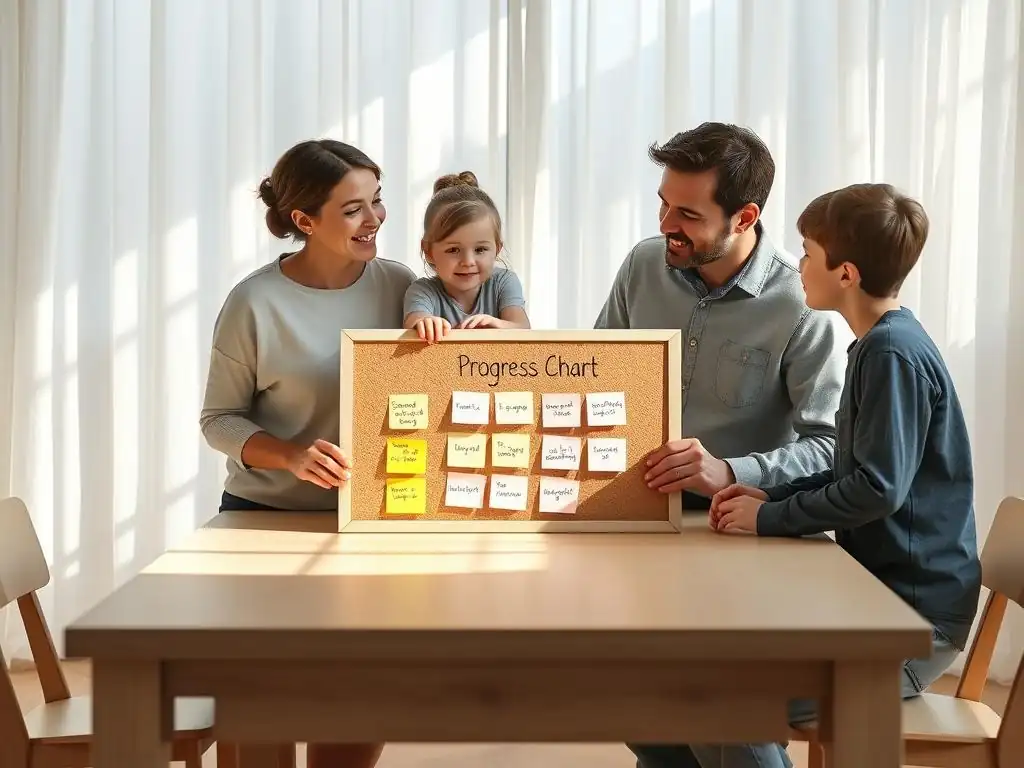
Positive reinforcement is a powerful catalyst in the journey of family mental health progress tracking. Recognizing and celebrating small victories, no matter how minor they seem, reinforces the behaviors and changes that contribute to improved wellbeing. When a family member successfully uses a coping skill, communicates effectively during a difficult conversation, or simply shows up for a planned family activity despite feeling low, acknowledging these efforts validates their struggle and motivates them to continue. This isn't about grand gestures but consistent, genuine appreciation.
For example, if a child with social anxiety manages to participate in a family gathering for 30 minutes, praising their courage and effort ("I'm so proud of you for joining us, I know that was hard") is more impactful than focusing on the fact they didn't stay longer. This positive feedback loop helps build self-esteem and resilience within individuals and strengthens the family unit's collective determination. Integrating positive reinforcement into the family's daily interactions makes the challenging work of improving mental health feel less daunting and more rewarding, making family mental health progress tracking a more encouraging process.
Creating a Supportive Environment for Family Members
A supportive environment is fundamental to fostering progress and making family mental health progress tracking meaningful. Support within the family means creating a safe space where individuals feel heard, understood, and accepted without judgment, regardless of their struggles. This involves active listening, empathy, and validating feelings, even when they are difficult or negative. It means offering practical help when needed, whether it's providing space for someone to rest, assisting with tasks that feel overwhelming, or simply offering a comforting presence.
Creating this environment also involves setting healthy boundaries and practicing self-care as individuals and as a family. It's a balance of supporting others while ensuring everyone's needs, including the caregivers', are met. Regularly scheduled family meetings, dedicated time for fun and connection, and open discussions about how everyone is feeling contribute to this supportive structure. When family members feel safe and supported, they are more likely to engage in the difficult work of addressing mental health challenges and are more open to participating in family mental health progress tracking efforts.
Practical Tools for Family Mental Health Progress Tracking
Mental Health Apps Designed for Family Use
A growing number of mental health apps are designed to support not just individuals but entire families in their wellbeing journey, facilitating family mental health progress tracking. While many apps focus on individual mood tracking, meditation, or therapy support, some offer features relevant to family dynamics. These might include shared goal-setting capabilities, family messaging features that encourage communication, or content tailored to specific family challenges like conflict resolution or parenting stress.
Some apps allow multiple profiles under one account, enabling family members to track their individual progress (like mood or sleep) in a centralized location, which can then be reviewed together if desired. Others provide guided activities or discussion prompts designed for families to complete together, fostering connection and skill-building. While selecting an app, it's important to consider ease of use for all family members, privacy features, and whether the functionalities align with the family's specific goals for tracking progress in their mental health journey.
Printable Progress Charts and Templates for Family Goal Setting
For families who prefer tangible, non-digital methods, printable progress charts and templates are excellent tools for family mental health progress tracking and goal setting. These can be customized to track specific behaviors, habits, or emotional states relevant to the family's goals. For example, a simple chart could track the number of positive family interactions each day, instances of using a new communication skill, or the successful completion of agreed-upon chores (which can reduce household stress, impacting mental health).
Templates for family goal setting can help structure discussions about what the family wants to achieve and how they plan to get there. These might include sections for listing goals, outlining specific actions, assigning responsibilities, and setting timelines. Visual progress charts, like sticker charts for younger children or habit trackers for teenagers and adults, can provide a clear and motivating representation of progress towards individual or family goals, making the abstract concept of improving mental wellbeing feel more concrete and achievable through consistent family mental health progress tracking.
The Calm App and its Functionalities for Family Meditation and Sleep Support
The Calm app, widely known for its meditation and sleep stories, offers functionalities that can indirectly support family mental health progress tracking, particularly in areas related to stress reduction, mindfulness, and sleep improvement. While primarily designed for individual use, features like guided meditations, sleep stories, and calming music can be utilized by multiple family members individually to manage stress and anxiety, which often impact family dynamics.
Furthermore, families can use the app's resources collectively. Listening to a calming story together before bed might become a family ritual, improving sleep quality for everyone.
Practicing a short guided meditation together can help regulate emotions during stressful times. While Calm doesn't offer explicit family tracking features, the consistent use of its tools and the reported changes in stress levels, sleep patterns, or overall calmness among family members can be tracked using separate methods (like journals or mood trackers), demonstrating the positive impact of incorporating mindfulness practices into the family routine as part of their family mental health progress tracking efforts.
Addressing Setbacks and Plateaus in Family Mental Health Journeys
Setbacks and plateaus are normal parts of any journey, including family mental health progress tracking. It's rare for progress to be linear. Strategies for navigating these challenges involve acknowledging that difficulties will arise and preparing for them. One key strategy is reframing setbacks not as failures, but as opportunities for learning. What caused the setback? What can be done differently next time? This reflective approach turns frustrating moments into valuable lessons.
Another crucial strategy is maintaining open and honest communication within the family during tough times. When progress stalls, it's essential to talk about it without blame. Encourage family members to share how they are feeling and what support they need. Revisit goals and expectations – perhaps they need to be adjusted or broken down further. Focusing on maintaining small, consistent positive habits, even when larger progress feels stalled, can prevent a complete regression. Leaning on the support system built through previous family mental health progress tracking efforts is vital during these periods.
Seeking Professional Guidance When Progress Stalls
If a family experiences significant setbacks or a prolonged plateau in their mental health journey, seeking professional guidance is a wise and effective step. Mental health professionals, such as family therapists or counselors, can provide objective assessment and tailored strategies when the family's own methods for family mental health progress tracking and intervention are no longer yielding results. They can help identify underlying issues that may be hindering progress or suggest alternative approaches that the family hasn't considered.
A therapist can re-evaluate the family's situation, adjust therapeutic goals, and introduce new techniques or coping mechanisms. They can also provide support for individual family members who might be struggling more significantly, which in turn impacts the whole family system. Consulting a professional during a plateau or setback is a sign of strength and commitment to the family's wellbeing, ensuring that the journey toward improved mental health remains on a productive path with expert support.
Maintaining Momentum in Family Mental Health Progress

The Importance of Consistency and Long-Term Support
Consistency is arguably the most critical factor in maintaining momentum in family mental health progress tracking. Small, consistent efforts over time yield significant results, much like saving money or exercising regularly. Integrating positive habits and tracking methods into the family's routine ensures that mental wellbeing remains a priority, even amidst the busyness of daily life. This means sticking to practices like regular family check-ins, continuing to use chosen tracking tools, and consistently applying communication skills learned in therapy.
Long-term support, both within the family and from external sources, is equally vital. Knowing that family members are committed to supporting each other through challenges provides a strong foundation. External support might come from extended family, friends, support groups, or ongoing professional therapy. This network provides encouragement, accountability, and resources when needed, preventing burnout and ensuring that the family doesn't feel isolated in their journey. Sustained effort and a robust support system are key to navigating the ups and downs and achieving lasting improvements in family mental wellbeing.
Building a Resilient Family System for Mental Wellbeing
Building a resilient family system is an ongoing process that significantly contributes to maintaining momentum in family mental health progress tracking. A resilient family is one that can effectively navigate stress, adapt to change, and bounce back from adversity. Key components include strong family cohesion, clear communication patterns, shared values, and effective problem-solving skills. These elements act as protective factors against mental health challenges.
Practices that build resilience include fostering a positive family narrative ("We can get through hard things together"), encouraging individual strengths and autonomy within the family structure, and actively practicing coping strategies both individually and collectively. Celebrating progress, as identified through family mental health progress tracking, reinforces the family's capability to overcome challenges and builds collective confidence. Investing in these foundational aspects of family functioning creates an environment where mental wellbeing can thrive and progress can be sustained over the long term.
Fostering Open Communication About Family Mental Health Progress
Creating a Safe Space for Sharing Feelings and Experiences
Fostering open communication is non-negotiable for effective family mental health progress tracking and overall wellbeing. Creating a safe space means establishing an environment where every family member feels comfortable and secure sharing their true feelings, fears, and experiences without fear of judgment, criticism, or negative consequences. This requires trust, which is built over time through consistent, empathetic interactions. It means actively encouraging dialogue about mental health, normalizing struggles, and validating emotions.
Practical steps to create a safe space include designating specific times for family discussions where everyone gets a chance to speak uninterrupted, establishing ground rules for respectful communication (like "no yelling" or "one person speaks at a time"), and ensuring that reactions to sensitive sharing are supportive and understanding, even if difficult to hear. When families can openly discuss their challenges and celebrate their wins, the data gathered through family mental health progress tracking becomes much more meaningful and actionable, fueling deeper connection and collective healing.
Active Listening and Empathy in Family Discussions
Active listening and empathy are the cornerstones of effective communication, particularly when discussing sensitive topics like mental health progress. Active listening involves fully concentrating on, understanding, responding to, and remembering what is being said. It's more than just hearing the words; it's paying attention to tone of voice, body language, and the underlying emotions. This means putting away distractions, making eye contact, and providing verbal and non-verbal cues that show you are engaged, such as nodding or summarizing what was said.
Empathy is the ability to understand and share the feelings of another. In family discussions about mental health, empathy means trying to see the situation from another family member's perspective, even if you don't agree with it or understand it fully. It's about validating their emotional experience ("It sounds like you're feeling really overwhelmed right now") rather than trying to fix it or dismiss it. Practicing active listening and empathy helps family members feel truly heard and valued, strengthening bonds and making discussions about family mental health progress tracking more productive and supportive.
Resources for Family Mental Health Support and Progress Tracking
National Alliance on Mental Illness (NAMI) and MentalHealth.gov Offering Family Mental Health Resources
Organizations like the National Alliance on Mental Illness (NAMI) and government initiatives like MentalHealth.gov are invaluable resources for families navigating mental health challenges and seeking support for family mental health progress tracking. NAMI offers a wide range of programs specifically designed for families, including support groups, educational courses like NAMI Family-to-Family, and helplines providing information and guidance. They provide resources on various mental health conditions, treatment options, and strategies for supporting a loved one while also caring for oneself.
MentalHealth.gov serves as a portal to various federal resources related to mental health. It offers information on symptoms, treatment options, and ways to find help. While not specifically focused on tracking, these sites provide foundational knowledge and connections to services that underpin the entire family mental health journey, including finding professionals who can assist with assessment and tracking. Accessing these resources can empower families with information and connect them to communities of support, making the process of improving family wellbeing less isolating.
Licensed Marriage and Family Therapists (LMFTs) Specializing in Family Therapy
Licensed Marriage and Family Therapists (LMFTs) are mental health professionals specifically trained to work with families and couples, making them ideal partners in family mental health progress tracking. They view challenges within the context of the family system and are skilled at identifying interaction patterns that contribute to difficulties. LMFTs use various therapeutic modalities to help families improve communication, resolve conflicts, and strengthen relationships, all of which are key indicators of improved family mental wellbeing.
An LMFT can help a family set realistic goals, develop strategies for achieving them, and implement methods for tracking progress tailored to their unique needs. They can provide objective feedback on family dynamics and individual progress, helping the family see changes they might miss on their own.
Their expertise in systemic therapy means they understand how the mental health of one family member impacts the others, and they work to foster health across the entire unit. Engaging with an LMFT is a proactive step toward building a healthier, more resilient family system and ensuring effective family mental health progress tracking.
The Johnson Family's Journey to Improved Communication Through Family Therapy
The Johnson family, composed of two parents and their teenage children, faced significant challenges with communication, leading to frequent arguments and emotional distance. They began family therapy with a goal to improve how they spoke to each other and resolved disagreements. Initially, sessions were tense, with family members often interrupting or withdrawing. Their therapist encouraged them to implement a rule of "listen to understand, not to respond" and practice reflective listening at home, tracking instances where they successfully used this technique.
Over several months, the Johnsons used a simple chart on their refrigerator to track days where they had at least one conversation using their new listening skills. They also kept a shared journal noting moments they felt truly heard or understood. While progress wasn't linear, their family mental health progress tracking showed a gradual increase in "successful communication" days, moving from an average of 2 per week to 5-6 per week.
The shared journal filled with entries about feeling more connected and less frustrated. This tangible evidence motivated them to continue practicing, leading to fewer explosive arguments and a noticeable increase in family harmony, demonstrating the power of focused effort and tracking in improving a core family dynamic.
Overcoming Anxiety in the Rodriguez Family Through Cognitive Behavioral Therapy
The Rodriguez family struggled with widespread anxiety, impacting both parents and their elementary-aged child. The child experienced significant school avoidance due to social anxiety, while parents dealt with generalized anxiety that affected their ability to manage daily life calmly. They sought therapy, focusing on Cognitive Behavioral Therapy (CBT) techniques adapted for the family unit. Their goals included reducing anxiety symptoms, increasing the child's school attendance, and improving family coping strategies.
As part of their family mental health progress tracking, they used a shared app to track individual anxiety levels daily (on a scale of 1-10) and the child's school attendance. They also tracked the frequency of using learned CBT skills, such as challenging anxious thoughts or practicing relaxation techniques together. Initially, anxiety levels fluctuated wildly, and school attendance was inconsistent (around 3 days per week).
After approximately six months of consistent therapy and tracking, their data showed a significant downward trend in average family anxiety scores and the child's school attendance increased to nearly full weeks (4.5-5 days per week). Seeing the charts visually confirmed their progress, reinforcing their commitment to using their new skills and serving as powerful proof of their collective success in managing anxiety and improving their family's mental wellbeing.
Frequently Asked Questions
How can we effectively track family mental health progress?
Tracking progress often involves regular check-ins, consistent communication, and using a shared journal or app to document observations and feelings.
What are some common milestones to celebrate in family mental health journeys?
Milestones can include improved communication, reduced conflict, increased emotional regulation, and a stronger sense of connection within the family.
Why is it important to celebrate progress, even small steps, in family mental health?
Celebrating progress reinforces positive behaviors, boosts motivation, and helps create a supportive and encouraging atmosphere for everyone involved.
How can Mind Care Guide assist in family mental health progress tracking?
Mind Care Guide provides resources and information on various mental health challenges, offers support strategies, and can connect you with qualified professionals for guidance.
What are some potential obstacles to family mental health progress tracking and how can we overcome them?
Obstacles might include resistance to change, lack of time, or difficulties in communication. Overcoming these requires patience, understanding, and finding strategies that work for the whole family.
Final Reflection: The Enduring Power of Acknowledging Progress in Family Mental Health
The journey toward improved family mental well-being is rarely linear, yet celebrating even small milestones is crucial for sustaining hope and fostering resilience. The consistent tracking of progress, as discussed throughout this article, isn't just about data; it's about recognizing the hard work, dedication, and unwavering support that families invest in their mental health. This understanding is more vital than ever in our current climate of increased stress and mental health challenges.
The impact of acknowledging progress extends far beyond individual families; it shapes our collective understanding of mental health and its treatment. By openly celebrating successes, we dismantle the stigma surrounding mental illness and create a supportive environment where families feel empowered to seek help and share their experiences. The greatest glory in living lies not in never falling, but in rising every time we fall.
This quote, often attributed to Nelson Mandela, perfectly encapsulates the spirit of perseverance and the importance of acknowledging each step forward, no matter how small.
You, the reader, are now equipped with tools and perspectives to better understand and support your own family's mental health journey. Consider implementing a simple tracking system, however informal, to celebrate the wins, big and small. Remember that progress, not perfection, is the ultimate goal. Embrace the power of acknowledgment, and watch as your family's strength and resilience flourish. Start celebrating your milestones today – your family's well-being depends on it.
Unlock Your Family's Strength: Celebrate & Thrive Together
Thank you for taking this important step towards understanding and supporting your family's mental health journey. We hope this article provided valuable insights and encouragement. Now, let's turn those insights into action!
- Start a Family Ritual: Dedicate a specific time each week (or month) to openly discuss everyone's well-being, celebrating small victories and acknowledging challenges. This fosters connection and strengthens communication.
- Share Your Story (Anonymously if you prefer): Let your experience inspire others by sharing your journey – even the struggles – in the comments below. Your words can make a difference!
- Explore Resources: Discover additional support and tools by visiting the Mind Care Guide website and exploring our curated resource library.
What small act of self-care or family connection will you prioritize this week to celebrate your progress?