
Finding Your Voice Together: Therapy for Communication Struggles

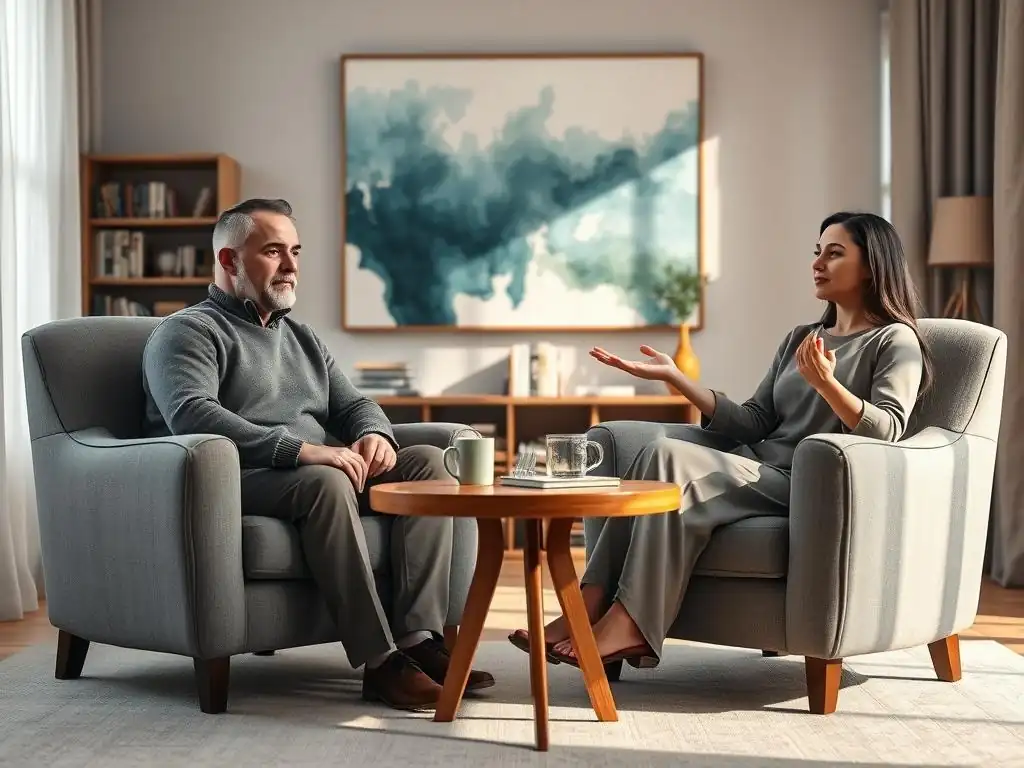
Welcome to Mind Care Guide, a safe space dedicated to nurturing your mental well-being. Are you finding it difficult to truly connect with those you love? Perhaps words feel like barriers instead of bridges? You're not alone. This article explores how therapy can improve communication difficulties, offering a path towards deeper understanding and more fulfilling relationships. Curious to learn how you can begin to find your voice, together?
- Finding Your Voice Together: Therapy for Communication Struggles
- Understanding Communication Difficulties in Relationships
- Why Choose Therapy to Improve Communication Difficulties?
- Types of Therapy to Improve Communication Difficulties
- What to Expect in Therapy for Communication Problems
- Techniques Used in Therapy to Improve Communication
- Choosing the Right Therapist for Communication Issues
- Overcoming Challenges in Therapy for Communication Difficulties
- Benefits of Improved Communication Through Therapy
- Finding Resources and Support for Communication Challenges
- Investing in Your Relationship: The Value of Therapy for Communication
-
Frequently Asked Questions
- How can therapy specifically help with communication difficulties in relationships?
- What types of therapy are most effective for improving communication?
- How long does it typically take to see improvements in communication through therapy?
- What are some common signs that communication therapy might be beneficial for me?
- What resources are available if I can't afford traditional therapy for communication difficulties?
- Final Reflection: The Unfolding Power of Shared Voice
- Unleash Your Shared Voice: Next Steps to Better Communication
Finding Your Voice Together: Therapy for Communication Struggles
Mind Care Guide: Your Path to Better Communication in Relationships
Embarking on a journey to improve communication within your relationships is a powerful step towards greater connection and understanding. Communication, the bedrock of any relationship, can often become a source of significant stress and conflict when it breaks down. At Mind Care Guide, we understand the intricate challenges individuals, couples, and families face when navigating difficult conversations or feeling unheard. Our resources aim to shed light on how professional guidance, particularly therapy, can serve as a vital tool in overcoming these hurdles and fostering healthier interactions.
Seeking therapy improve communication difficulties is not a sign of failure, but rather a proactive and courageous decision to invest in the health and longevity of your connections. It provides a structured and supportive environment where you can explore the roots of communication breakdowns, learn effective strategies, and practice new ways of relating.
Whether you're struggling with expressing your needs, active listening, managing conflict constructively, or feeling disconnected, therapeutic interventions offer tailored approaches to help you rebuild trust and rapport. This guide will explore how therapy improve communication difficulties across various relationship dynamics, offering insights into the process and potential benefits.
Understanding Communication Difficulties in Relationships
The Impact of Poor Communication on Mental Well-being
Poor communication within relationships can have profound and far-reaching effects on an individual's mental and emotional well-being. Constant misunderstandings, unresolved conflicts, and feelings of being invalidated or ignored can lead to chronic stress, anxiety, and depression. For instance, studies have shown that individuals in high-conflict relationships with poor communication patterns report significantly higher levels of emotional distress compared to those in relationships characterized by open and effective dialogue. This persistent negativity can erode self-esteem, foster feelings of loneliness even when physically present with others, and contribute to a sense of hopelessness about the relationship's future.
Moreover, the psychological toll extends beyond immediate emotional discomfort. Long-term exposure to dysfunctional communication can manifest physically, contributing to issues like sleep disturbances, chronic fatigue, and even weakened immune responses. The constant vigilance required when anticipating negative interactions or suppressing one's true feelings creates a state of heightened physiological arousal.
Research indicates that couples experiencing severe communication problems often exhibit higher levels of stress hormones like cortisol. Therapy improve communication difficulties by addressing these underlying stressors and providing individuals with tools to navigate interactions in a way that promotes safety and emotional regulation, thereby mitigating the negative impact on mental health.
Identifying Common Communication Roadblocks
Recognizing the patterns that impede effective communication is the first step toward positive change. Common roadblocks often include a lack of active listening, where one person is focused on formulating their response rather than truly hearing what the other is saying. Defensiveness is another major barrier, where individuals react to perceived criticism by justifying themselves or counter-attacking, rather than attempting to understand the other's perspective. The inability to express needs or feelings clearly and assertively is also prevalent, often leading to frustration and resentment on both sides.
Other significant obstacles involve making assumptions rather than seeking clarification, using blaming language ("You always..." or "You never..."), and withdrawing from conversations entirely, often referred to as stonewalling. For example, a common scenario might involve one partner feeling neglected and expressing it with accusatory language, like "You never help around the house!"
The other partner, feeling attacked, becomes defensive and lists all the times they did help, completely missing the underlying feeling of being overwhelmed and needing support. Identifying these specific patterns within your own interactions is crucial, as they often become ingrained habits that therapy improve communication difficulties by bringing them into conscious awareness and offering alternatives.
Passive-Aggressive Behavior, Criticism, and Avoidance
Three particularly damaging communication patterns frequently seen in troubled relationships are passive-aggression, criticism, and avoidance. Passive-aggressive behavior involves expressing negative feelings indirectly rather than openly addressing them, such as using sarcasm, procrastination, or subtle sabotage. This leaves the recipient confused and frustrated, unable to address the real issue. Criticism, especially when global and focused on character rather than specific behavior ("You are so lazy" vs. "I feel overwhelmed when the dishes aren't done"), attacks the person and triggers defensiveness, shutting down productive dialogue.
Avoidance, or withdrawing from conflict and difficult conversations, prevents issues from being resolved and leads to emotional distance. While it might seem like a way to keep the peace, it allows resentment to build and communicates to the other person that their feelings or concerns are not important enough to be addressed. For instance, a couple might have a recurring disagreement about finances.
Instead of discussing it openly, one partner might simply avoid the topic altogether, leading to secret spending or increasing debt, while the other feels anxious and shut out. Therapy improve communication difficulties by helping individuals understand the roots of these behaviors – often fear of conflict or rejection – and teaching healthier, more direct ways to express needs and navigate disagreements.
Why Choose Therapy to Improve Communication Difficulties?
The Benefits of Professional Guidance for Relationship Communication
Choosing professional guidance through therapy offers a structured and objective environment specifically designed to address complex relationship dynamics and communication patterns. Unlike informal advice from friends or family, a trained therapist possesses specialized knowledge and techniques to identify the root causes of communication breakdowns. They can observe interaction patterns that individuals within the relationship may be unaware of and provide insights from a neutral perspective. This professional distance allows for a clearer diagnosis of issues like power imbalances, unresolved past traumas impacting present interactions, or ingrained dysfunctional habits.
Furthermore, therapy provides a safe space free from judgment where individuals or couples can openly express their feelings and fears without immediate negative repercussions. Therapists are skilled at de-escalating conflict, mediating discussions, and ensuring that each person feels heard and understood. This facilitated dialogue is often impossible to achieve without external support, especially when emotions are running high. For example, a therapist might use specific techniques to slow down a heated argument, helping partners articulate their underlying needs instead of just expressing anger. This structured approach is a core benefit of therapy improve communication difficulties effectively.
How Therapy Can Address Underlying Communication Issues
Communication problems are often symptoms of deeper, unresolved issues within individuals or the relationship system. These can include attachment wounds from childhood, differing expectations about roles and responsibilities, past betrayals, or unaddressed emotional baggage. Therapy delves beneath the surface-level arguments to uncover these underlying factors that fuel poor communication. For instance, a pattern of constant criticism might stem from deep-seated insecurity in the person delivering the criticism, or a history of feeling unheard themselves.
Therapeutic modalities are designed to address these roots. Cognitive Behavioral Therapy (CBT) can help individuals identify and challenge negative thought patterns that lead to destructive communication. Emotionally Focused Therapy (EFT) focuses on understanding and restructuring the emotional bonds and attachment needs between partners, helping them express vulnerable feelings rather than resorting to defensive tactics. By addressing these foundational issues, therapy improve communication difficulties not just by teaching new skills, but by changing the emotional landscape from which communication arises. This deeper work leads to more sustainable and authentic improvements in how people connect.
Cognitive Restructuring, Communication Skills Training, and Conflict Resolution
Therapy to improve communication difficulties typically incorporates a blend of techniques, including cognitive restructuring, direct communication skills training, and conflict resolution strategies. Cognitive restructuring helps individuals identify and modify irrational or negative thought patterns that impact their interactions, such as assuming the worst intentions from their partner. For example, changing the thought "They are doing this just to annoy me" to "I wonder why they did that; perhaps they are stressed." This shift in thinking can dramatically alter one's reaction during a conversation.
Simultaneously, therapists provide explicit training in essential communication skills. This includes teaching active listening techniques, such as paraphrasing what the other person said to confirm understanding ("So, if I understand correctly, you're saying you felt hurt when I forgot..."). They also train individuals in using "I" statements to express feelings and needs without blame ("I feel lonely when you work late" vs. "You always abandon me").
Finally, conflict resolution techniques are taught, focusing on how to address disagreements constructively, negotiate solutions, and manage intense emotions during arguments. A therapist might guide a couple through a specific conflict scenario in session, providing real-time coaching on how to apply these new skills, making therapy improve communication difficulties through practical application.
Types of Therapy to Improve Communication Difficulties

Couples Therapy for Communication Enhancement
Couples therapy is perhaps the most direct and common form of therapy sought specifically to improve communication difficulties between romantic partners. In this setting, a therapist works with both individuals together to identify negative interaction cycles and learn healthier ways of relating. The therapist acts as a neutral facilitator, ensuring that both partners have an opportunity to speak and be heard. They help couples understand their dynamic, often pointing out patterns like the "pursuer-withdrawer" cycle where one partner seeks connection by pursuing while the other retreats, leading to increased distance.
Techniques used in couples therapy often include identifying core issues, improving emotional expression, and teaching specific communication tools. For instance, a therapist might use the Gottman Method to help couples replace the "Four Horsemen" (criticism, contempt, defensiveness, stonewalling) with positive communication behaviors. They might assign homework exercises, such as dedicated time each week for a structured check-in conversation. The goal is not just to resolve current conflicts, but to build a foundation of open, empathetic communication that can sustain the relationship through future challenges, making couples therapy a highly effective way to therapy improve communication difficulties in partnership.
Individual Therapy for Better Communication Skills
While couples therapy focuses on the dynamic between partners, individual therapy can also be incredibly beneficial for improving communication skills, especially when personal issues are contributing to relationship problems. Individual therapy allows a person to explore their own communication style, identify personal barriers like fear of intimacy, low self-esteem, or past trauma, and develop healthier ways of expressing themselves. For example, someone who grew up in a household where conflict was avoided might learn in individual therapy how to assert their needs respectfully rather than suppressing them or becoming passive-aggressive.
Individual therapy provides a safe space to practice new behaviors and gain confidence before applying them in relationships. A therapist might use role-playing exercises to help a client prepare for a difficult conversation. They can also help the individual understand how their personal history and beliefs influence their reactions and communication habits. By addressing these internal factors, individual therapy complements relationship-focused approaches and helps therapy improve communication difficulties from the inside out, empowering the individual to become a more effective communicator in all areas of their life.
Family Therapy: Addressing Communication Dynamics Within the Family System
Family therapy takes a systemic approach, viewing communication problems not just as issues between two people, but as products of the entire family system's dynamics. This type of therapy involves multiple family members – parents, children, siblings – to understand how each person's behavior impacts the others and contributes to communication patterns. For example, a family therapist might observe how parents communicate with each other and how that models communication for their children, or how a child's challenging behavior might be a form of communication about unmet needs within the family structure.
The goal of family therapy is to improve overall family functioning by enhancing communication clarity, understanding boundaries, and resolving conflicts constructively among all members. Techniques can include structural family therapy, which examines and challenges dysfunctional family hierarchies and boundaries, or strategic family therapy, which focuses on solving specific problems by interrupting negative interaction patterns. By working with the whole system, family therapy addresses the complex web of relationships and communication styles, making it an effective form of therapy improve communication difficulties that affect multiple family members and their interactions.
What to Expect in Therapy for Communication Problems
The Initial Assessment: Understanding Your Communication Style
The first few sessions in therapy for communication problems typically involve an initial assessment phase. This is where the therapist gathers information to understand the specific nature of the communication difficulties, the history of the relationship(s) involved, and the individual communication styles of each person. The therapist might ask about specific recurring arguments, how conflicts are currently handled, feelings of being heard or unheard, and what each person hopes to achieve through therapy. They may also inquire about family backgrounds and previous relationship experiences, as these often shape current communication habits.
This assessment might involve individual sessions with each person (if it's couples or family therapy) in addition to joint sessions. The therapist is observing not just what is said, but how it is said – body language, tone of voice, patterns of interruption or withdrawal. They are looking for the specific negative cycles that are causing distress.
Based on this comprehensive understanding, the therapist will then work collaboratively with you (or you and your partner/family) to establish goals for therapy. This diagnostic phase is crucial for tailoring the therapeutic approach to your unique situation, laying the groundwork for how therapy improve communication difficulties effectively.
Developing Communication Strategies and Techniques
Once the initial assessment is complete and goals are set, therapy shifts towards actively developing and practicing new communication strategies and techniques. This is a hands-on process where the therapist teaches specific skills designed to replace old, unhelpful habits. This might involve learning how to express emotions clearly using "I" statements, practicing active listening by summarizing what the other person said, or learning techniques for managing anger or frustration during disagreements.
The therapist will often explain the theory behind these techniques and provide practical examples. They might then guide you through exercises in session, sometimes role-playing scenarios or processing a recent difficult conversation using the new tools. Homework assignments are common, encouraging you to practice these skills between sessions in real-life interactions.
For example, a therapist might ask a couple to schedule a 15-minute "state of the union" conversation each week, focusing on sharing positive observations and one area for improvement, using their newly learned skills. This active skill-building is a core component of how therapy improve communication difficulties through practical application.
Practicing Active Listening and Empathetic Communication
Two cornerstone skills emphasized in therapy to improve communication difficulties are active listening and empathetic communication. Active listening involves fully concentrating, understanding, responding, and remembering what is being said. It's more than just hearing the words; it's paying attention to the speaker's non-verbal cues and reflecting back what you've heard to ensure understanding. Techniques taught include making eye contact, nodding, using minimal encouragers ("Go on," "I see"), and summarizing or paraphrasing ("So, you're feeling overwhelmed because...").
Empathetic communication builds on active listening by incorporating an understanding and validation of the other person's feelings and perspective, even if you don't agree with it. This involves putting yourself in their shoes and communicating that you grasp their emotional experience. Phrases like "It sounds like you are feeling really frustrated right now," or "I can understand why that would make you feel sad" are examples.
Therapy provides a safe space to practice these skills, which can feel awkward or unnatural at first, especially during emotionally charged discussions. By practicing in session, individuals gain confidence in applying active listening and empathy, making these fundamental to how therapy improve communication difficulties and deepen connection.
Practicing "I" Statements and Active Listening Techniques
A specific focus in many communication therapies is the consistent practice of "I" statements and active listening techniques. "I" statements are a way to express your feelings, needs, or thoughts about a situation without sounding accusatory or blaming. The basic format is "I feel [emotion] when [specific behavior/situation] because [reason], and I need/wish [desired outcome]."
For instance, instead of "You make me so angry when you leave your clothes everywhere! ", an "I" statement would be, "I feel frustrated when I see clothes left on the floor because it makes the room feel cluttered, and I need help keeping our space tidy."
Active listening techniques, as mentioned, involve demonstrating that you are engaged and understanding. This often includes the "reflecting" or "mirroring" technique, where you repeat back what you heard in your own words. For example, "So, just to make sure I understand, you're saying that when I came home late last night without calling, you felt worried and disrespected?"
This not only confirms understanding but also shows the speaker they are being heard. Therapists often use structured exercises, like having partners talk to each other for a set time with the rule that the listener must paraphrase before responding, to reinforce these skills. Consistent practice of "I" statements and active listening in therapy helps integrate them into natural conversation, proving how therapy improve communication difficulties through simple, powerful techniques.
Techniques Used in Therapy to Improve Communication
Cognitive Behavioral Therapy (CBT) for Communication
Cognitive Behavioral Therapy (CBT) is a widely used therapeutic approach that can be highly effective in addressing communication problems. The core principle of CBT is that our thoughts, feelings, and behaviors are interconnected, and by changing negative thought patterns (cognitions), we can change our emotional responses and behaviors, including how we communicate. In the context of communication, CBT helps individuals identify distorted or unhelpful thoughts that lead to poor interactions. For example, someone might have the thought "It's pointless to express my needs; no one cares," leading them to withdraw from conversations.
A CBT therapist helps clients challenge the validity of such thoughts and replace them with more realistic and helpful ones, such as "My feelings are valid, and I deserve to express them respectfully." They also teach behavioral techniques, like assertiveness training, to help clients practice communicating their needs directly and respectfully. Through identifying negative cognitive distortions like mind-reading ("They think I'm stupid") or catastrophizing ("If I bring this up, it will ruin everything"), CBT empowers individuals to approach conversations with a clearer, more positive mindset, demonstrating how therapy improve communication difficulties by targeting the internal monologue.
Emotionally Focused Therapy (EFT) for Relationship Communication
Emotionally Focused Therapy (EFT) is a powerful approach, particularly for couples, that focuses on understanding and restructuring the emotional bonds between partners. Developed by Dr. Sue Johnson and Les Greenberg, EFT views relationship distress, including communication problems, as a result of insecure attachment and unmet emotional needs. It identifies negative interaction cycles (often related to pursuit and withdrawal) that partners get stuck in, which are driven by underlying fears and needs, such as the fear of abandonment or the need for closeness.
EFT helps partners express their deeper emotions and needs in a way that fosters empathy and responsiveness from their partner. The therapist guides the couple through three stages: de-escalation of negative cycles, restructuring interaction patterns to create new, positive emotional experiences, and consolidation of these new patterns. For instance, a therapist might help a withdrawing partner express their fear of criticism, allowing the pursuing partner to respond with reassurance rather than frustration.
By accessing and sharing these vulnerable emotions, couples can create a more secure attachment bond, fundamentally changing the way they communicate. This focus on the emotional core is why EFT is so effective when therapy improve communication difficulties rooted in disconnection.
Gottman Method for Improving Communication in Couples
The Gottman Method, developed by Drs. John and Julie Gottman, is another evidence-based approach specifically designed for couples therapy, with a strong emphasis on improving communication and conflict resolution. Based on extensive research observing thousands of couples, the Gottman Method identifies specific behaviors that predict relationship success or failure. It focuses on building a "Sound Relationship House," which includes components like building love maps (knowing each other's inner world), sharing fondness and admiration, turning towards bids for connection, and managing conflict constructively.
A key aspect of the Gottman Method is teaching couples how to manage conflict in a healthy way, distinguishing between solvable problems and perpetual problems (which are often rooted in personality differences). It provides concrete tools, such as the "softened startup" for raising issues gently, using repair attempts during arguments to prevent escalation, and practicing the "stress-reducing conversation."
The method also focuses on building friendship and intimacy outside of conflict. By providing a structured framework and practical techniques grounded in research, the Gottman Method offers a clear path for how therapy improve communication difficulties and build stronger, more stable relationships.
CBT Focuses on Thoughts, EFT on Emotional Bonds, and Gottman on Specific Communication Patterns
While all three approaches aim to therapy improve communication difficulties, they do so through different primary lenses. Cognitive Behavioral Therapy (CBT) primarily focuses on identifying and changing negative thought patterns that influence communication behaviors. It's often effective for individuals struggling with issues like assertiveness, anger management, or overcoming communication-related anxieties.
Emotionally Focused Therapy (EFT) centers on the emotional connection and attachment needs within a relationship. It helps individuals and couples identify and express their deeper feelings and fears that drive negative interaction cycles. EFT is particularly powerful for couples feeling disconnected or stuck in repetitive arguments rooted in unmet emotional needs.
The Gottman Method focuses on specific, observable communication behaviors and patterns within couples. It provides research-backed tools and strategies for building friendship, managing conflict constructively, and creating shared meaning. It offers a practical, skill-based approach to replacing damaging communication habits with healthy ones. Often, a therapist may integrate elements from these different approaches, tailoring their methods to the specific needs and challenges presented, to best therapy improve communication difficulties for their clients.
Choosing the Right Therapist for Communication Issues
Finding a Therapist Experienced in Relationship Counseling
When seeking therapy improve communication difficulties, it is crucial to find a therapist with specific experience and training in relationship counseling, whether you are seeking individual, couples, or family therapy. Therapists specialize in different areas, and someone whose primary focus is individual trauma therapy, for example, may not have the specific skills and knowledge needed to navigate complex interpersonal communication dynamics. Look for therapists who list couples therapy, marriage counseling, family therapy, or communication skills as areas of expertise.
You can often find information about a therapist's specializations on their website or professional profiles on directories. Don't hesitate to ask about their experience during an initial consultation. Inquire about how long they have been practicing relationship counseling and the types of communication issues they commonly work with. A therapist experienced in this area will be familiar with common relationship dynamics, evidence-based communication techniques, and ethical considerations unique to working with multiple parties. Their expertise is a critical factor in the success of using therapy improve communication difficulties.
Assessing Therapist Credentials and Expertise
Beyond general experience, it's important to assess a therapist's credentials and specific training in relevant therapeutic modalities. Look for licensed mental health professionals such as Licensed Marriage and Family Therapists (LMFTs), Licensed Clinical Social Workers (LCSWs), Licensed Professional Counselors (LPCs), or Psychologists (Ph.D. or Psy.D.). These licenses ensure that the therapist has met rigorous educational and supervised practice requirements.
Additionally, consider if they have received specialized training or certifications in specific evidence-based approaches known to therapy improve communication difficulties, such as the Gottman Method, Emotionally Focused Therapy (EFT), or specific models of family therapy. For instance, a therapist certified in the Gottman Method has undergone extensive training and consultation in applying its principles.
While not every therapist needs specific certifications, asking about their theoretical orientation and the models they use can give you insight into their approach and whether it aligns with your needs. A therapist who can clearly articulate their methods for helping clients therapy improve communication difficulties is a good sign.
The Importance of Building a Strong Therapeutic Relationship
Regardless of the therapist's experience or theoretical orientation, the quality of the therapeutic relationship, often called the "therapeutic alliance," is one of the strongest predictors of positive outcomes in therapy. This refers to the bond of trust, respect, and collaboration between you (and your partner/family) and the therapist. You should feel comfortable with the therapist, believe they understand your situation, and trust in their ability to help.
During the initial sessions, pay attention to how you feel in the therapist's presence. Do you feel heard? Do you feel judged? Does the therapist seem empathetic and engaged? A good therapeutic alliance is built on feeling safe enough to be vulnerable and openly discuss sensitive issues. If the connection doesn't feel right after a few sessions, it's okay to explore other options. Finding a therapist with whom you can build a strong rapport is just as important as their credentials when seeking therapy improve communication difficulties effectively.
"What is your experience with couples facing similar communication challenges?"
A direct and helpful question to ask a potential therapist during an initial consultation is: "What is your experience with couples [or individuals/families, depending on your situation] facing similar communication challenges?" This open-ended question encourages the therapist to speak specifically about their relevant work. It allows them to share examples (while maintaining client confidentiality) of the types of issues they've helped clients address and the approaches they typically use.
Listen for how they describe their process and whether it resonates with what you are looking for. For example, they might say, "I've worked with many couples struggling with conflict escalation. We often focus on identifying triggers, practicing de-escalation techniques, and teaching active listening. I use a blend of EFT and Gottman principles." Their answer can provide valuable insight into their expertise and whether their style seems like a good fit for helping you therapy improve communication difficulties. It's an opportunity to gauge their confidence and clarity in addressing the specific problems you're facing.
Overcoming Challenges in Therapy for Communication Difficulties

Addressing Resistance to Change
One of the most common challenges encountered in therapy to improve communication difficulties is resistance to change. This resistance can manifest in various ways, such as canceling appointments, being late, dismissing therapeutic techniques as unhelpful, or blaming the other person entirely for the problems.
Resistance often stems from fear – fear of the unknown, fear of vulnerability, fear of failure, or fear that changing communication patterns might disrupt the existing (albeit dysfunctional) balance in the relationship. It can also arise from a lack of belief that change is possible or a reluctance to take personal responsibility for one's part in the communication dynamic.
A skilled therapist is trained to recognize and address resistance empathetically. They will not force change but will explore the underlying reasons for the resistance with the client(s). This might involve discussing fears, past negative experiences with change, or identifying secondary gains from the current behavior (e.g., avoiding conflict by withdrawing). Therapists use various techniques, such as motivational interviewing, to help clients connect with their own reasons for wanting change and build intrinsic motivation. Overcoming this resistance is a crucial step, as therapy improve communication difficulties only when individuals are truly open to trying new approaches.
Maintaining Commitment to Therapy
Therapy for communication issues is rarely a quick fix; it requires consistent effort and commitment from everyone involved. Maintaining this commitment, especially when progress feels slow or when challenging topics are being discussed, can be difficult. Life stressors, busy schedules, and the emotional intensity of exploring relationship issues can all make it tempting to disengage or drop out of therapy prematurely. It's important to view therapy as an investment in the long-term health of your relationships and your well-being.
Strategies for maintaining commitment include setting realistic expectations about the timeline for change, celebrating small victories along the way, and openly discussing any doubts or frustrations with the therapist. Scheduling sessions consistently, even when things feel better or worse, helps maintain momentum. Couples or families can also support each other in staying committed by reminding each other of their shared goals for better communication. Recognizing that setbacks are a normal part of the process and recommitting after difficult sessions is key to allowing therapy improve communication difficulties over time.
Practicing Communication Skills Outside of Therapy Sessions
Therapy sessions provide a safe space to learn and practice new communication skills, but the real work happens outside the therapy room, in daily interactions. A significant challenge is consistently applying these new techniques when faced with real-life stressors, triggers, and emotional intensity. It's easy to revert to old habits when feeling stressed, angry, or hurt. Failing to practice between sessions significantly slows down progress and can lead to frustration.
Therapists often assign homework exercises specifically designed to encourage practice in real-world situations. This might involve having a structured conversation about a low-stakes topic using "I" statements, practicing active listening during a casual chat, or intentionally making bids for connection. Discussing successes and challenges with practicing these skills in the following therapy session is vital.
The therapist can provide feedback, troubleshoot difficulties, and help refine the application of techniques. Consistent, intentional practice outside of the session is essential for the new communication skills to become natural and automatic, demonstrating how the full benefit of therapy improve communication difficulties is realized through application.
Set Realistic Goals, Celebrate Small Victories, and Maintain Open Communication with Your Therapist
Successfully navigating the challenges of therapy for communication involves several key strategies. First, set realistic goals. Significant shifts in long-standing communication patterns take time and effort. Don't expect overnight miracles. Understand that progress may be gradual, with ups and downs along the way. Discuss with your therapist what constitutes realistic progress for your specific situation.
Second, actively celebrate small victories. Acknowledge and appreciate moments when you successfully use a new skill, when a difficult conversation goes slightly better than usual, or when you feel a small shift in understanding or connection. These small successes provide motivation and reinforce the value of the therapeutic process.
Finally, maintain open and honest communication with your therapist about how therapy is progressing, any challenges you're facing with the techniques, or any doubts you have. Your therapist is your guide and can adjust the approach or offer additional support based on your feedback. Being transparent about your experience in therapy helps ensure the process remains relevant and effective for your needs, maximizing the potential for therapy improve communication difficulties and lead to lasting change.
Benefits of Improved Communication Through Therapy
Stronger Relationships and Increased Intimacy
One of the most significant benefits of improved communication through therapy is the strengthening of relationships and an increase in emotional and physical intimacy. When communication is clear, open, and empathetic, partners and family members feel more connected, understood, and valued. Resolving misunderstandings quickly prevents resentment from building, creating a more positive emotional climate.
Improved communication skills allow for deeper sharing of thoughts, feelings, and experiences, which is the foundation of emotional intimacy. For couples, this often translates to greater feelings of closeness, trust, and mutual support. Physical intimacy can also improve as emotional barriers are reduced and partners feel safer and more connected. In families, better communication fosters stronger bonds between parents and children, and among siblings, leading to a more cohesive and supportive family unit. This enhanced connection is a primary outcome when therapy improve communication difficulties.
Reduced Conflict and Enhanced Problem-Solving Skills
Therapy teaches individuals and couples how to navigate disagreements more constructively, leading to a significant reduction in the frequency and intensity of conflict. Instead of engaging in blaming, yelling, or withdrawing, individuals learn to express their needs assertively, listen actively, and work collaboratively towards solutions. This shifts the dynamic from a win-lose battle to a win-win partnership approach to challenges.
Enhanced problem-solving skills are a direct result of better communication. When people can clearly articulate the problem, listen to different perspectives, and brainstorm solutions together without resorting to personal attacks, they are far more likely to find mutually acceptable resolutions. This is true for everyday issues like household chores or finances, as well as larger life decisions. The ability to effectively manage conflict and solve problems together builds resilience in relationships and is a key indicator of success when therapy improve communication difficulties.
Improved Emotional Well-being and Mental Health
As mentioned earlier, poor communication can severely impact mental well-being. Conversely, improving communication through therapy can lead to significant improvements in emotional health. Feeling heard, understood, and connected reduces feelings of loneliness, anxiety, and depression. The ability to express oneself authentically and resolve conflicts constructively reduces stress and increases feelings of self-efficacy and control.
In relationships where communication has improved, there is often a decrease in criticism and negativity, replaced by increased validation and support. This positive shift in interaction patterns provides an emotional buffer against life's stressors. Individuals feel more secure and less reactive, leading to greater emotional stability. The ripple effect of better communication extends beyond the relationship itself, often positively impacting an individual's mood, self-esteem, and overall outlook on life. This positive impact on mental health is a powerful benefit when therapy improve communication difficulties.
Increased Understanding, Emotional Connection, and Reduced Stress
Ultimately, the benefits of therapy for communication difficulties converge to create a deeper understanding between individuals, enhance emotional connection, and significantly reduce relationship-related stress. Understanding increases as people learn to listen empathetically and see situations from another's perspective, bridging gaps created by assumptions and misunderstandings.
Emotional connection deepens as individuals feel safe to express vulnerability and receive validation and support in return. Sharing one's inner world and feeling truly seen by another person builds trust and intimacy. This enhanced connection acts as a protective factor against life's challenges. The chronic stress associated with walking on eggshells, anticipating conflict, or feeling perpetually misunderstood is replaced by a sense of ease and security in the relationship. This reduction in stress, combined with increased understanding and connection, highlights the transformative power of therapy improve communication difficulties and foster healthier, more fulfilling relationships.
Finding Resources and Support for Communication Challenges
Online Resources for Relationship Communication
Beyond formal therapy, a wealth of online resources exists to support individuals and couples working on communication. Websites and blogs from reputable mental health organizations and relationship experts offer articles, tips, and exercises on various communication topics, such as active listening, conflict resolution, and expressing needs. Many therapists and counseling centers also provide free resources or webinars on their sites.
While online resources should not replace professional therapy for significant or long-standing issues, they can be valuable supplementary tools. They offer accessible information and practical strategies that can be practiced independently or used as conversation starters with a partner. Examples include resources from Psychology Today, the American Association for Marriage and Family Therapy (AAMFT), and various individual therapist websites specializing in relationship issues. These resources can provide initial guidance and support for those seeking to therapy improve communication difficulties or supplement their ongoing work.
Support Groups for Couples and Families
Support groups offer another avenue for finding help and connection when facing communication challenges. These groups, often facilitated by mental health professionals or trained peer leaders, provide a space for individuals, couples, or families to share their experiences, learn from others, and receive encouragement. Hearing from others who are navigating similar difficulties can reduce feelings of isolation and provide new perspectives.
Support groups may focus on specific issues, such as parenting communication, navigating divorce collaboratively, or improving communication in blended families. While not a substitute for therapy, groups can offer a sense of community and practical coping strategies learned from shared experiences. Organizations like NAMI (National Alliance on Mental Illness) sometimes offer family support groups that touch upon communication dynamics, and local community centers or mental health clinics may host relationship or communication focused groups. Participating in a support group can complement the work done in therapy improve communication difficulties by providing ongoing peer support.
The Gottman Institute, Prepare-Enrich, and Local Mental Health Organizations
Several prominent organizations offer valuable resources and programs specifically designed to therapy improve communication difficulties and strengthen relationships. The Gottman Institute provides workshops, books, articles, and therapist training based on their extensive research. Their resources offer practical tools for couples to build stronger friendships, manage conflict, and enhance intimacy.
Prepare-Enrich is a leading relationship assessment and skill-building program used by counselors and clergy. It helps premarital and married couples identify their strengths and growth areas in various aspects, including communication, and provides tailored exercises. Local mental health organizations and community counseling centers are also excellent resources. They often provide affordable therapy services, including couples and family counseling, and can connect you with licensed therapists in your area who specialize in relationship communication. Reaching out to these organizations is a concrete step towards accessing professional help when seeking therapy improve communication difficulties.
Investing in Your Relationship: The Value of Therapy for Communication
Long-Term Benefits of Prioritizing Communication Health
Viewing therapy for communication difficulties as an investment rather than just an expense highlights its long-term value. Prioritizing communication health within your relationships yields benefits that extend far beyond resolving immediate conflicts. It builds a foundation of trust, mutual respect, and resilience that can help navigate future challenges, transitions, and life stressors together effectively.
Relationships with strong communication are better equipped to handle everything from minor disagreements about daily routines to major life events like job loss, illness, or parenting teenagers. The skills learned in therapy become tools for life, enabling ongoing connection and understanding. Investing in therapy improve communication difficulties is an investment in the enduring quality and stability of your most important connections, paying dividends in happiness and security for years to come.
Building a Foundation for a Strong and Lasting Relationship
Effective communication is not merely a skill; it is the bedrock upon which strong, lasting relationships are built. It allows for the sharing of dreams, fears, joys, and sorrows, fostering deep emotional intimacy. It provides the means to resolve conflicts respectfully, preventing resentment from accumulating and eroding the bond. Learning to communicate effectively in therapy helps lay this crucial foundation.
Think of communication skills as the essential building materials and techniques for constructing a durable relationship house. Without them, the structure is vulnerable to collapse under pressure. Therapy provides the architectural plan and the skilled guidance to use these materials correctly. By focusing on improving communication through therapy, individuals and couples are actively constructing a more stable, secure, and fulfilling partnership capable of withstanding the inevitable storms of life. It's an active process of co-creating a resilient bond.
Open Communication is Key to a Healthy and Fulfilling Partnership
Open, honest, and empathetic communication is not just a desirable trait in a relationship; it is absolutely essential for a healthy and fulfilling partnership. It allows for genuine connection, facilitates mutual support, and provides the means to navigate challenges collaboratively. When communication breaks down, relationships suffer, impacting the well-being of everyone involved.
Seeking therapy improve communication difficulties is a powerful step towards restoring and enhancing this vital aspect of your relationships. Whether through individual, couples, or family therapy, professional guidance offers the tools, insights, and support needed to break negative cycles, learn new skills, and build a stronger foundation for connection. Investing the time and effort in therapy is an investment in a future filled with greater understanding, reduced conflict, increased intimacy, and ultimately, more fulfilling relationships. The journey to better communication is a journey worth taking, and therapy can light the way.
Frequently Asked Questions
How can therapy specifically help with communication difficulties in relationships?
Therapy provides a safe and structured environment to identify communication patterns and develop healthier strategies. It helps individuals understand their own needs and learn to express them effectively.
What types of therapy are most effective for improving communication?
While the best approach varies, common therapies include couples therapy, cognitive behavioral therapy (CBT), and dialectical behavior therapy (DBT). These therapies focus on skill-building and addressing underlying emotional issues.
How long does it typically take to see improvements in communication through therapy?
The timeframe varies depending on the severity of the issues and individual commitment, but many people report noticing positive changes within a few months of consistent therapy sessions.
What are some common signs that communication therapy might be beneficial for me?
If you experience frequent arguments, difficulty expressing your needs, or feel unheard in your relationships, therapy can provide valuable tools and insights to improve communication.
What resources are available if I can't afford traditional therapy for communication difficulties?
Many organizations offer sliding-scale therapy options or free support groups that can provide guidance and skills training. Additionally, some therapists offer online consultations at a reduced rate.
The ability to communicate effectively isn't just a skill; it's the bedrock of healthy relationships and personal fulfillment. In a world increasingly reliant on digital interactions, the nuanced art of genuine connection is more vital than ever. This article explored how therapy can be a powerful tool to navigate communication difficulties, fostering understanding and strengthening bonds.
The journey of finding one's voice, particularly within the context of relationships, is a deeply personal and often challenging one. It's a process of self-discovery, vulnerability, and the courage to express authentically. The impact of improved communication ripples outwards, affecting not only our intimate relationships but also our professional lives and our overall sense of well-being. The single biggest problem in communication is the illusion that it has taken place.
- George Bernard Shaw. This quote highlights the crucial need for active listening and genuine understanding, both of which are central themes explored within the therapeutic process.
Now, consider your own communication style. Are there areas where you feel you could improve? What steps can you take, perhaps with the support of a therapist or trusted confidant, to foster clearer, more empathetic communication in your life? This isn't just about fixing "problems"; it's about cultivating deeper connections, building stronger relationships, and ultimately, living a more fulfilling life. Embrace the journey of finding your voice, together.
Thanks for taking the time to explore the power of couples therapy in improving communication! You've now gained valuable insights into strengthening your connection through understanding and empathy. Ready to put this knowledge into action?
- Schedule a consultation: Take the first step towards a more fulfilling relationship by reaching out to a therapist. This is the most important action you can take to start improving communication.
- Explore resources together: Discuss the article's key takeaways and research additional resources that resonate with your unique needs. This collaborative approach can strengthen your bond further.
- Share your thoughts: Leave a comment below and share your experiences, challenges, or even your victories on your communication journey!
What’s one small step you can take today to foster better understanding and communication with your partner?