
Play as Practice: How Unstructured Play Builds Essential Resilience Skills

Welcome to Mind Care Guide, a sanctuary for your mental well-being.
Are you curious about how something as simple as play can profoundly impact your resilience? In our featured article, "Play as Practice: How Unstructured Play Builds Essential Resilience Skills," we delve into the surprising ways that unstructured play builds resilience, especially within families. Discover how embracing spontaneity and freedom can nurture essential coping mechanisms and foster stronger, healthier relationships. Intrigued? Let's explore the power of play together...
The Power of Play: Cultivating Resilience Through Unstructured Activities
- Understanding the Role of Unstructured Play in Building Resilience
- How Unstructured Play Fosters Resilience: Key Advantages
- Resilience Skills Developed Through Unstructured Play
-
Encouraging Unstructured Play: A Practical Guide for Caregivers
- Creating a Stimulating Environment: Space and Accessible Resources
- Resisting Intervention: Allowing Children to Lead Their Play
- Providing Open-Ended Materials: Fostering Imaginative Exploration
- Prioritizing Free Play: Scheduling Dedicated Play Time
- The Importance of Outdoor Play for Developing Resilience
- Addressing Concerns About Unstructured Play
- Unstructured Play Across Developmental Stages: Adapting to Age-Specific Needs
- Long-Term Impact of Unstructured Play on Well-Being
- Resources for Supporting Children's Play and Mental Health
- Conclusion: Fostering Resilience Through the Power of Unstructured Play
-
Frequently Asked Questions
- What exactly is unstructured play, and why is it important?
- How does unstructured play specifically build resilience?
- What are some examples of unstructured play activities?
- At what age is unstructured play most beneficial for building resilience?
- How can parents encourage more unstructured play in their children's lives?
- Final Reflection: The Enduring Power of Play in a Pressured World
- Unleash Your Inner Child: Cultivate Resilience Through Play!
Understanding the Role of Unstructured Play in Building Resilience
Defining Unstructured Play: Free Play and its Cognitive Benefits
Unstructured play, often referred to as free play, is activity that is self-directed and freely chosen by the child. It is characterized by the absence of adult-imposed rules, goals, or supervision, allowing children the freedom to explore, create, and interact with their environment and peers on their own terms.
Unlike structured activities like organized sports or academic lessons, unstructured play is spontaneous and process-oriented rather than outcome-oriented. This autonomy is crucial; research suggests that children today spend significantly less time in unstructured outdoor play compared to past generations, with estimates indicating a decline of over 25% in the last few decades in some regions, replaced often by screen time or scheduled activities.
This form of play is not merely leisure; it is a fundamental avenue for cognitive development. When children engage in free play, they are constantly problem-solving, experimenting with cause and effect, and developing critical thinking skills. For example, building a fort requires spatial reasoning and planning, while inventing a game with friends demands negotiation and understanding rules. These seemingly simple actions engage complex cognitive processes, laying the groundwork for academic learning and intellectual flexibility. The freedom to make choices and navigate challenges without immediate adult correction helps children develop intrinsic motivation and cognitive resilience, essential components of overall well-being.
The Connection Between Unstructured Play and Holistic Child Development
Unstructured play is a cornerstone of holistic child development, impacting physical, emotional, social, and cognitive domains simultaneously. Physically, it promotes gross and fine motor skills through running, climbing, manipulating objects, and engaging in active movement. Emotionally, it provides a safe space for children to process feelings, experiment with different roles, and develop emotional literacy. Socially, it teaches crucial skills like cooperation, conflict resolution, negotiation, and empathy as children interact with peers and navigate group dynamics independently.
Beyond these areas, unstructured play builds resilience by allowing children to face small challenges and setbacks in a low-stakes environment. A child who falls off a swing and gets back up learns perseverance. A child whose elaborate sandcastle is washed away by a wave learns to adapt and try again. These experiences, repeated over time, build an internal locus of control and a belief in one's ability to handle adversity. This is why unstructured play builds resilience so effectively; it is experiential learning in its purest form, preparing children for the unpredictable challenges of life.
How Unstructured Play Fosters Resilience: Key Advantages
Enhancing Problem-Solving Abilities Through Spontaneous Exploration
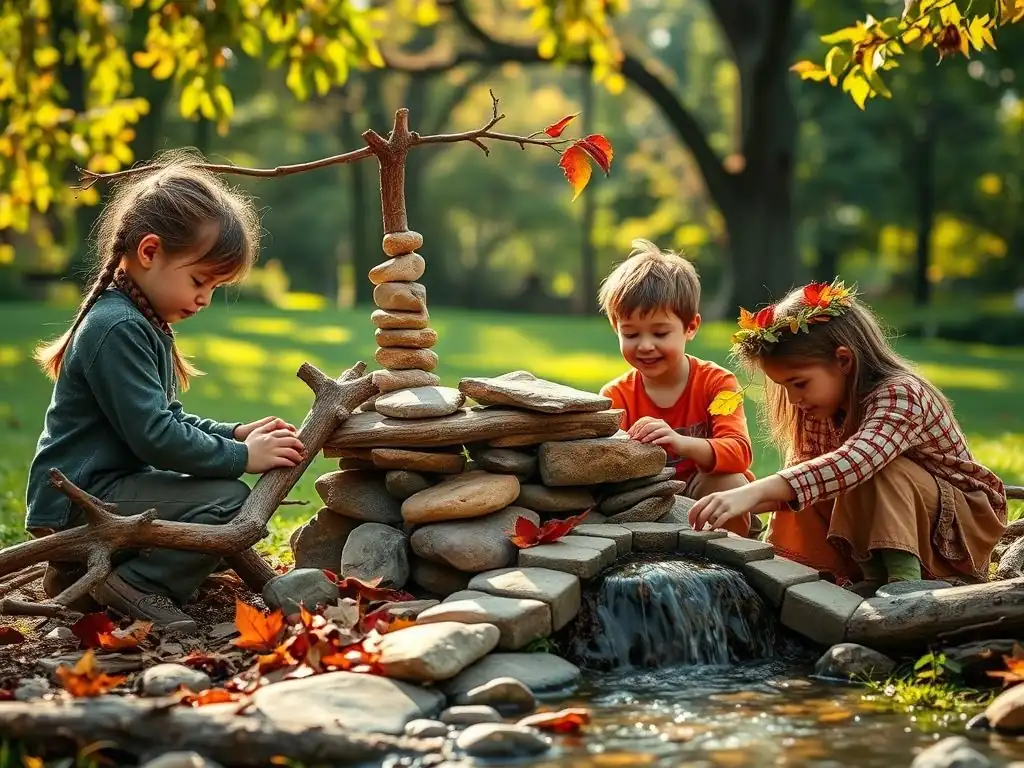
Spontaneous exploration inherent in unstructured play is a powerful catalyst for developing problem-solving skills. When children are left to their own devices in a stimulating environment, they encounter numerous small obstacles and puzzles. Consider a group of children trying to build a dam in a creek; they must figure out which materials work best, how to divert the water flow, and how to collaborate to achieve their goal. There is no manual or adult telling them the steps; they must observe, hypothesize, test, and refine their approach through trial and error.
This iterative process of problem-solving in play mirrors the challenges faced in adulthood. Children learn to identify a problem, brainstorm potential solutions, implement a strategy, and evaluate its effectiveness. This is vastly different from structured learning where solutions are often provided. By engaging in this self-directed problem-solving repeatedly, children develop confidence in their ability to tackle novel situations, a key aspect of resilience. A study involving preschoolers showed that those with more opportunities for free play demonstrated greater flexibility in approaching cognitive tasks compared to those with predominantly structured schedules.
Nurturing Creativity and Innovation Through Open-Ended Activities
Unstructured play is the fertile ground where creativity and innovation flourish. Without predefined rules or outcomes, children are free to imagine, invent, and transform ordinary objects into extraordinary tools or scenarios. A cardboard box can become a spaceship, a fort, or a house; sticks can be swords, wands, or building materials. This imaginative flexibility is a direct result of engaging with open-ended materials and possibilities. This kind of thinking is not limited to artistic pursuits; it is essential for innovative problem-solving in any field.
The ability to think creatively and come up with novel ideas is intrinsically linked to resilience. Resilient individuals are often those who can find alternative solutions when faced with roadblocks, who can adapt their thinking to new circumstances, and who are not afraid to experiment. Unstructured play provides countless opportunities to practice this divergent thinking. For instance, children inventing a new game must devise rules, roles, and objectives, requiring significant creative and collaborative effort. This process of generating original ideas and bringing them to life, even in a simple play scenario, builds a sense of agency and creative confidence.
Peer interaction during unstructured play is a critical laboratory for developing social skills and emotional intelligence. When children play freely together, they must navigate complex social dynamics without adult arbitration. They learn to share, take turns, negotiate roles in imaginative play, resolve disagreements, and understand social cues. These interactions teach empathy as children witness and respond to the emotions of their playmates. Consider a scenario where two children want the same toy; they must find a way to compromise or share, practicing essential negotiation skills.
These social challenges in play, though sometimes leading to conflict, are invaluable learning opportunities. Children learn how their actions affect others, how to express their own needs and feelings effectively, and how to manage frustration or disappointment when things don't go their way. This emotional regulation and social competence are vital components of resilience. The ability to build positive relationships, communicate effectively, and manage one's emotions when interacting with others allows individuals to navigate social challenges and seek support when needed, strengthening their overall coping capacity.
Promoting Independence and Self-Assurance Through Self-Governed Play
One of the most significant benefits of unstructured play is the fostering of independence and self-assurance. When children are given the freedom to direct their own play, they make decisions, take calculated risks, and experience the consequences of their choices firsthand. Whether it's deciding to climb a slightly higher branch on a tree or choosing which materials to use for a project, they are exercising autonomy. This sense of control over their activities is empowering and builds a strong belief in their own capabilities.
This self-governance directly contributes to self-efficacy, the belief in one's ability to succeed in specific situations or accomplish a task. As children successfully navigate challenges during play—whether physical, social, or cognitive—their confidence grows. They learn to trust their instincts and abilities, reducing reliance on external validation. This internal strength is a cornerstone of resilience; individuals who are self-assured are better equipped to face adversity, persevere through difficulties, and bounce back from setbacks because they believe in their capacity to overcome challenges. Unstructured play builds resilience by providing a consistent environment for children to practice and internalize this self-belief.
Resilience Skills Developed Through Unstructured Play
Unstructured play inherently cultivates adaptability and flexibility. The unpredictable nature of free play means that plans can change rapidly, materials might be used in unexpected ways, and social dynamics shift. Children must constantly adjust their expectations and strategies. Imagine a group playing tag; the boundaries might change, new rules could be introduced mid-game, or a new player might join. Children must be flexible enough to incorporate these changes and adapt their play accordingly.
This continuous practice in navigating change prepares children for the uncertainties of life. They learn that things don't always go as planned and that being able to adjust is key to success and enjoyment. This mental flexibility is a core component of resilience, allowing individuals to pivot when faced with unexpected challenges rather than becoming rigid or overwhelmed. By repeatedly adapting in the low-stakes environment of play, children build the cognitive and emotional agility needed to handle larger transitions and uncertainties in their lives.
Emotional Regulation: Managing Emotions in Self-Directed Activities
Managing emotions is a skill honed significantly during unstructured play. In the absence of immediate adult intervention, children must learn to handle their feelings, whether it's frustration when a tower collapses, disappointment when a friend doesn't want to play their game, or excitement from a shared success. They experience a range of emotions and, through interaction with peers and the play environment, learn socially acceptable ways to express and manage them. A child who learns to calm down after a disagreement with a playmate and rejoin the game is practicing crucial emotional regulation.
This ability to understand and manage one's emotions is fundamental to resilience. Individuals who can regulate their feelings are better equipped to handle stress, cope with setbacks, and maintain positive relationships. Unstructured play provides a natural, experiential context for developing this skill. Children learn through trial and error how to soothe themselves, how to communicate their feelings effectively, and how to recover from emotional upsets, building a foundation for emotional well-being and robust resilience.
Perseverance and Determination: Overcoming Obstacles in Play
Perseverance and determination are resilience skills directly forged in the crucible of unstructured play. When children pursue their own play agendas, they inevitably encounter obstacles. Building a complex structure, mastering a physical challenge like climbing a tree, or achieving a shared goal in imaginative play often requires sustained effort and the ability to keep trying despite failures. Consider a child trying to perfect a jump on a swing; they might fall or fail many times before succeeding.
These experiences teach children the value of effort and persistence. They learn that overcoming challenges often requires repeated attempts and that failure is not an end but a part of the process. This intrinsic motivation to keep trying, driven by their own play goals, builds determination. This trait is crucial for resilience, enabling individuals to push through difficulties, stay committed to their goals, and bounce back from setbacks with renewed effort. Unstructured play builds resilience by providing countless opportunities for children to practice and internalize the power of perseverance.
Self-Efficacy: Building Confidence Through Play-Based Challenges
Self-efficacy, the belief in one's capacity to execute behaviors necessary to produce specific performance attainments, is significantly boosted by unstructured play. When children successfully navigate the challenges they encounter during free play, they build confidence in their abilities. Successfully building a complex Lego structure, resolving a conflict with a friend, or mastering a new physical skill through play reinforces a sense of competence and agency. These small victories, achieved through self-directed effort, accumulate over time.
Each successful attempt to solve a problem, create something new, or overcome a physical or social hurdle in play strengthens a child's belief in their own capabilities. This growing self-efficacy is a powerful predictor of resilience. Individuals with high self-efficacy are more likely to approach difficult tasks as challenges to be mastered rather than threats to be avoided. They are more resilient in the face of adversity, recovering quickly from setbacks and maintaining a strong commitment to their goals, directly illustrating how unstructured play builds resilience from the inside out.
Encouraging Unstructured Play: A Practical Guide for Caregivers
Creating a Stimulating Environment: Space and Accessible Resources
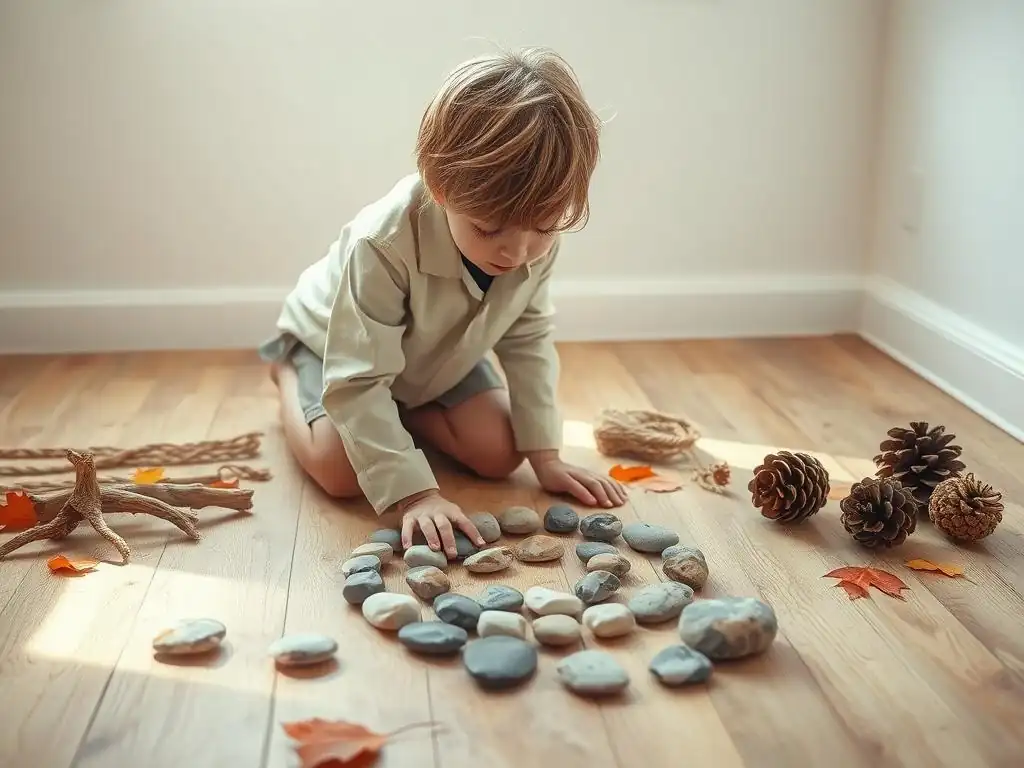
To encourage unstructured play, caregivers can focus on creating a stimulating environment both indoors and outdoors. This doesn't require expensive toys but rather accessible space and open-ended resources. A safe backyard, a nearby park, or even a designated area within the home can serve as a play space. Providing a variety of simple, versatile materials like cardboard boxes, fabric scraps, blocks, natural items (stones, leaves, sticks), art supplies, and items for dramatic play (old clothes, kitchen utensils) can spark imagination.
The key is accessibility and variety, not quantity. A few well-chosen items that can be used in multiple ways are more conducive to creative, unstructured play than a room full of single-purpose toys. Ensuring these materials are easily accessible allows children to initiate play independently whenever the impulse strikes. This prepared environment signals that play is valued and provides the raw materials unstructured play builds resilience upon.
Resisting Intervention: Allowing Children to Lead Their Play
One of the most challenging yet crucial aspects for caregivers is resisting the urge to constantly intervene or direct play. Unstructured play is, by definition, child-led. While it's important to ensure safety, stepping back allows children the space to experiment, make mistakes, negotiate conflicts, and solve problems on their own. Constant adult direction or immediate solutions to every challenge can stifle creativity and prevent children from developing crucial problem-solving and resilience skills.
Observing play from a distance, rather than participating or directing, allows caregivers to appreciate the complexity of children's interactions and thinking. Intervene only when safety is genuinely at risk or when a child explicitly asks for help after trying to solve a problem themselves. Trusting children's innate capacity for play and problem-solving is key to fostering their independence and building the robust resilience that unstructured play builds resilience upon.
Providing Open-Ended Materials: Fostering Imaginative Exploration
As mentioned, providing open-ended materials is fundamental to fostering imaginative exploration during unstructured play. These are materials that don't have a single prescribed use and can be transformed through a child's imagination. Examples include large building blocks, magnetic tiles, art supplies like paper, crayons, paint, clay, natural materials like water, sand, stones, and loose parts like buttons, beads, or cardboard tubes.
These materials encourage divergent thinking – the ability to generate multiple solutions or ideas. A stick can be a magic wand, a sword, a building support, or a tool for drawing in the dirt. This kind of imaginative flexibility is directly linked to creative problem-solving and adaptability, skills vital for resilience. By offering materials that invite interpretation and transformation, caregivers provide the fuel for the imaginative play that unstructured play builds resilience through.
Prioritizing Free Play: Scheduling Dedicated Play Time
In today's busy world, children's schedules are often packed with structured activities. Prioritizing and scheduling dedicated time for unstructured play is essential. This means carving out blocks of time where children have the freedom to choose what they want to do, without planned lessons or adult-led agendas. This could be an hour after school, weekend afternoons, or simply ensuring significant chunks of time are left unscheduled.
Treating free play as important as any other scheduled activity reinforces its value. Even short bursts of unstructured time can be beneficial, but longer periods allow children to delve deeper into their play, develop more complex narratives or projects, and fully experience the benefits of self-directed activity. Making unstructured play a regular, non-negotiable part of a child's routine ensures they receive the consistent practice in creativity, problem-solving, and emotional regulation that unstructured play builds resilience with.
The Importance of Outdoor Play for Developing Resilience
Outdoor unstructured play offers unique benefits for developing resilience that indoor play often cannot replicate. The natural environment provides a constantly changing, stimulating, and unpredictable play space. Children climbing trees, navigating uneven terrain, building with natural materials, or exploring a creek encounter physical challenges that build strength, coordination, and risk assessment skills. They also experience sensory input and a connection with nature that can be calming and restorative.
Outdoor play often involves greater physical freedom and allows for louder, messier, and more expansive play than indoors. It provides opportunities for encountering variables like weather or natural obstacles, requiring adaptability. A child who learns to navigate a rocky path or build a shelter from sticks and leaves is developing confidence in their physical capabilities and problem-solving skills in a real-world context. The freedom and inherent challenges of the outdoors are powerful contributors to the resilience that unstructured play builds resilience through.
Addressing Concerns About Unstructured Play
Safety Considerations: Balancing Freedom and Risk Mitigation
A primary concern for caregivers regarding unstructured play is safety. Balancing the need for freedom and exploration with necessary risk mitigation is key. This doesn't mean eliminating all risk, as navigating manageable risks is part of how children learn and build resilience. Instead, it involves creating a safe enough environment and teaching children how to assess and manage risks themselves.
This might involve supervising from a distance, ensuring play areas are free of obvious hazards, teaching children basic safety rules (like looking before crossing the street, or knowing which plants are safe to touch), and equipping them with skills to handle challenging situations (like how to climb down safely). The goal is to empower children to make safe choices within reasonable boundaries, rather than eliminating all possibility of bumps and scrapes. Learning to navigate physical and social risks in play is essential for developing the confidence and judgment that unstructured play builds resilience upon.
Digital Media vs. Play: Striking a Healthy Equilibrium
In the digital age, balancing screen time with unstructured play is a significant challenge. While digital tools can offer educational or entertainment value, excessive screen time often displaces the active, creative, and social engagement characteristic of unstructured play. Research indicates that screen time has increased dramatically, with many children spending several hours a day on screens, significantly reducing time available for free play.
Caregivers can strive for a healthy equilibrium by setting clear limits on screen time and actively encouraging and facilitating opportunities for unstructured play. This might involve designating screen-free times or zones, offering engaging alternatives, and modeling a balanced approach to technology use. Recognizing that the rich, multi-sensory, and interactive experiences of unstructured play are irreplaceable for certain developmental milestones is crucial for ensuring that unstructured play builds resilience effectively.
Trusting the Process: Overcoming Parental Hesitation
Overcoming parental hesitation is often necessary to fully embrace unstructured play. It can feel counterintuitive to step back and allow children to struggle, make mistakes, or even experience boredom. There might be pressure to fill every moment with enriching, structured activities. However, trusting the process of unstructured play means recognizing that children are inherently capable explorers and learners.
It requires faith that children will figure things out, learn from their experiences, and benefit immensely from the freedom and autonomy of self-directed activity. Understanding the profound impact that unstructured play builds resilience with can help alleviate these hesitations. By observing children's creativity, problem-solving, and joy during free play, caregivers can gain confidence in the value of this essential developmental activity.
Unstructured Play Across Developmental Stages: Adapting to Age-Specific Needs
Unstructured Play for Infants and Toddlers: Exploration and Sensory Discovery
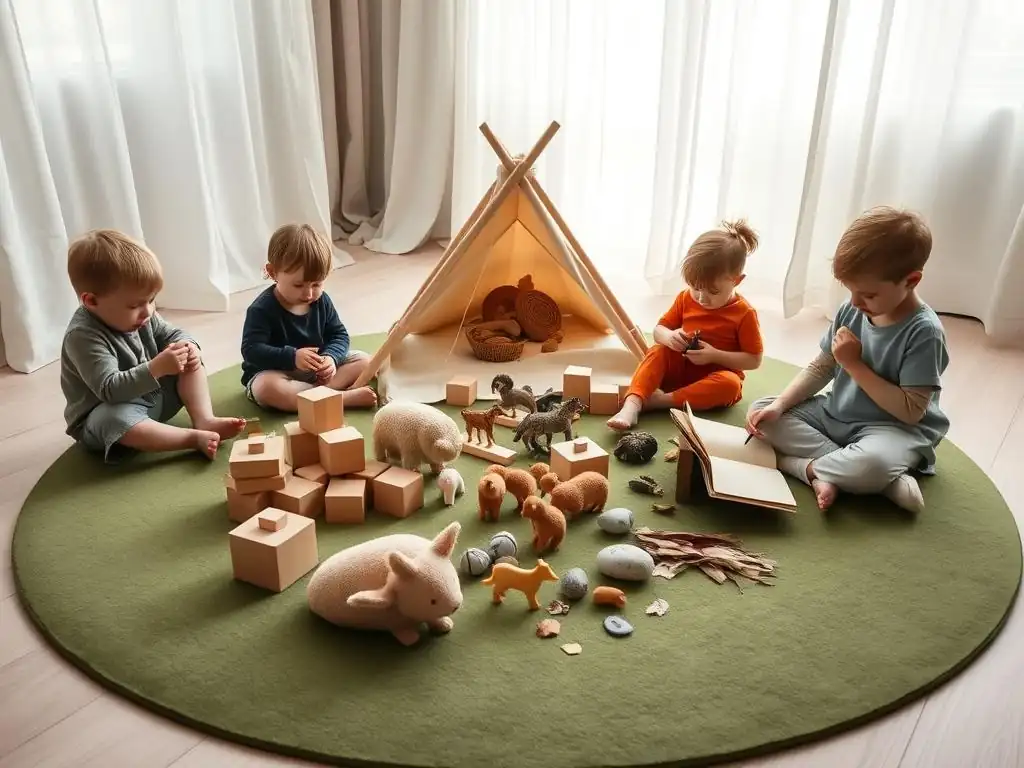
For infants and toddlers, unstructured play is primarily focused on sensory exploration and discovering the physical world. This involves interacting with different textures, shapes, sounds, and movements. Simple activities like reaching for toys, exploring objects with their mouths and hands, crawling, cruising, and eventually walking are all forms of unstructured play at this stage. It's about free movement and interaction with a safe environment.
Providing safe, stimulating materials like soft blocks, texture balls, stacking rings, and opportunities for tummy time and free movement on the floor are key. Caregiver presence is important for safety and reassurance, but the play itself should be child-led exploration. This foundational sensory and physical exploration builds body awareness, curiosity, and early problem-solving skills, laying the very first building blocks for the resilience that unstructured play builds resilience upon throughout life.
Preschoolers are masters of imaginative play and this stage sees a significant development in social skills through unstructured interaction. Role-playing becomes central, with children creating elaborate scenarios, taking on different characters, and negotiating roles and storylines with peers. Building with blocks, creating art, and engaging in active outdoor play are also vital.
Providing props for dramatic play (costumes, play kitchen items, tools), building materials, art supplies, and ample time for peer interaction is crucial. Conflicts will arise, offering invaluable opportunities to learn negotiation, compromise, and empathy. This complex social and imaginative play is a powerhouse for developing emotional intelligence, problem-solving, and social competence, clearly demonstrating how unstructured play builds resilience through rich interpersonal experiences.
Unstructured Play for School-Aged Children: Collaboration and Complex Problem-Solving
For school-aged children, unstructured play often involves more complex rules, collaboration, and problem-solving, whether through inventing games, building intricate structures, or engaging in imaginative adventures. Play can become more structured by the children themselves, but it remains self-directed and flexible. Friendships become increasingly important, and play is a primary way children navigate peer relationships.
Providing access to resources like building kits, craft supplies, sports equipment, and opportunities for outdoor play with friends supports this stage. Caregivers can facilitate playdates and provide space, stepping back to allow children to manage their own activities and conflicts. This stage of unstructured play builds resilience through mastering more complex social dynamics, engaging in collaborative problem-solving, and developing a stronger sense of independence and competence.
Long-Term Impact of Unstructured Play on Well-Being
Establishing a Foundation for Lifelong Resilience Through Play
The skills developed through unstructured play in childhood – adaptability, emotional regulation, perseverance, self-efficacy, creativity, and social competence – form a robust foundation for lifelong resilience. These are not just childhood skills; they are essential capacities for navigating the complexities of adolescence and adulthood. An adult who faced challenges and learned to adapt in play is better equipped to handle career setbacks or personal difficulties.
The freedom and autonomy experienced in unstructured play also foster an intrinsic motivation and a sense of agency that carry into adulthood. Individuals who had ample opportunities for free play are often more comfortable with ambiguity, more creative in their problem-solving, and more confident in their ability to handle new situations. This demonstrates the enduring power of how unstructured play builds resilience that lasts a lifetime.
Reducing Stress and Promoting Emotional Well-being Through Play
Unstructured play serves as a natural stress reducer for children. It provides an outlet for energy, a way to process emotions, and a break from the demands of structured routines. Engaging in activities of their own choosing brings joy and a sense of freedom, contributing positively to a child's emotional well-being. This stress reduction capacity is vital for developing resilience, as chronic stress can undermine a child's ability to cope with future challenges.
Furthermore, the positive emotions experienced during play – joy, excitement, camaraderie, satisfaction from achievement – help build a positive emotional reservoir. Children who have regular opportunities for free play are often better able to regulate their moods and maintain a more optimistic outlook. This emotional health is intricately linked to resilience, highlighting another way unstructured play builds resilience by supporting overall well-being.
Cultivating a Positive Outlook and a Sense of Self-Worth
Through the successes and challenges encountered in unstructured play, children cultivate a positive outlook and a strong sense of self-worth. Successfully navigating a physical challenge, resolving a conflict with a friend, or bringing an imaginative project to life provides concrete evidence of their capabilities. These experiences reinforce a belief in themselves and their ability to impact their environment and relationships.
The freedom to explore their interests and pursue their own play goals also allows children to discover their strengths and passions, contributing to a positive self-identity. This internal confidence and positive self-regard are crucial components of resilience. When individuals believe in their worth and capabilities, they are better equipped to face adversity, maintain hope, and persevere through difficulties. Unstructured play builds resilience by nurturing this essential inner strength and positive perspective.
Resources for Supporting Children's Play and Mental Health
Books and Websites on Unstructured Play and Child Development
Numerous valuable resources exist for caregivers interested in learning more about the importance of unstructured play and child development. Authors like Dr. Peter Gray have written extensively on the topic, exploring the evolutionary significance of free play and its decline in modern society. Organizations dedicated to child development and mental health often provide articles, guides, and research summaries emphasizing the role of play.
Websites from reputable child psychology and parenting organizations frequently offer practical tips for encouraging free play at different ages and integrating it into family life. Exploring these resources can provide caregivers with deeper insights into the 'why' behind prioritizing unstructured play and practical strategies for implementing it, reinforcing the understanding that unstructured play builds resilience effectively.
Local Playgrounds, Parks, and Community Programs for Families
Accessing local playgrounds, parks, and community programs is an excellent way to support children's unstructured play. Public parks offer safe, open spaces for running, climbing, and exploring nature. Playgrounds provide equipment that encourages physical challenges and social interaction. Community centers often have open gym times or unstructured drop-in play sessions.
These local resources provide not only space and opportunities for physical activity but also environments where children can interact with a wider peer group, further developing their social skills and adaptability. Utilizing these free or low-cost resources makes it easier for families to prioritize the unstructured play that unstructured play builds resilience through.
Conclusion: Fostering Resilience Through the Power of Unstructured Play
Frequently Asked Questions
What exactly is unstructured play, and why is it important?
Unstructured play refers to any type of play that is self-directed and free from adult-imposed rules or goals. It's important because it allows children to explore their creativity and develop problem-solving skills.
How does unstructured play specifically build resilience?
Unstructured play allows children to learn from mistakes without the fear of failure. This helps them develop coping mechanisms and build the confidence to face challenges.
What are some examples of unstructured play activities?
Examples include playing in a sandbox, building forts, imaginative role-playing, and simply exploring nature without a specific agenda. The key is that the child leads the activity.
At what age is unstructured play most beneficial for building resilience?
While beneficial at all ages, unstructured play is particularly crucial during early childhood when children are developing fundamental social, emotional, and cognitive skills. It helps lay the foundation for future resilience.
How can parents encourage more unstructured play in their children's lives?
Parents can provide a safe and stimulating environment, offer a variety of open-ended materials, and resist the urge to constantly direct or intervene in their children's play. Step back and let them lead.
Final Reflection: The Enduring Power of Play in a Pressured World
The decline of unstructured play is not merely a nostalgic lament; it's a significant contributor to the rising rates of anxiety and stress among children and adults. We've explored how seemingly simple, child-led play fosters crucial resilience skills – problem-solving, adaptability, emotional regulation, and risk assessment – skills desperately needed to navigate the complexities of modern life. This isn't just about fun; it's about equipping individuals with the tools to thrive.
The impact of unstructured play extends far beyond the sandbox or the backyard. It shapes our personalities, our approaches to challenges, and our capacity for empathy. It's a foundational element of healthy development, often overlooked in our increasingly structured and screen-dominated world. As Stuart Brown, founder of the National Institute for Play, eloquently stated: Play is not a luxury. Play is a necessity.
His words resonate deeply, highlighting the critical role play plays in fostering not only individual well-being but also a more compassionate and resilient society.
Consider the ways unstructured play has shaped your own life. What games did you invent? What challenges did you overcome? What did you learn about yourself and the world around you through the freedom of self-directed play? I urge you to reflect on these experiences and consider how you can incorporate more unstructured time, not just for children, but for yourself as well. Rediscover the joy of play, embrace the unexpected, and cultivate the resilience that comes from navigating the world on your own terms. The benefits are immeasurable.
Unleash Your Inner Child: Cultivate Resilience Through Play!
Thanks for diving into the world of play and its incredible power to build resilience! You've learned how even unstructured playtime can significantly boost your coping mechanisms and overall well-being. Now it's time to put this knowledge into action.
- Prioritize 15 minutes of unstructured play today: Whether it's doodling, dancing, or simply daydreaming, make time for an activity that brings you joy and allows your mind to wander. This is your key takeaway – make it happen!
- Share your favorite playful activity: Tell us in the comments below – what brings you a sense of playful escape? Let's inspire each other!
- Challenge a friend to join you: Find a playful activity you can do together. The shared joy strengthens the bond and the resilience-building effects.
What playful adventure will you embark on today to boost your resilience?