
Teaching Kids Conflict Resolution Skills: A Family Guide for All Ages

Welcome to Mind Care Guide, a space dedicated to nurturing your mental well-being.
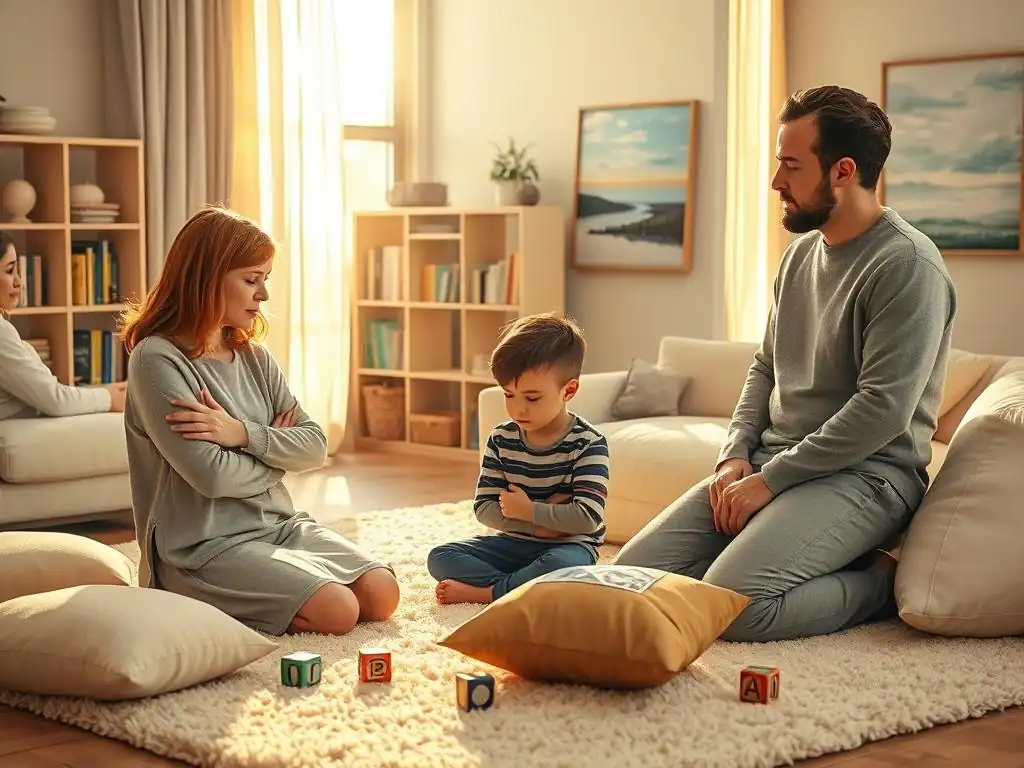
Feeling overwhelmed by family disagreements? You're not alone. Navigating conflict with children can be challenging, but it's also a powerful opportunity for growth. This week, we're diving deep into Kids Conflict Resolution Family Guide, offering practical strategies and empathetic advice to help your family build stronger, more understanding relationships. Curious how to turn arguments into learning experiences? Let's explore together...
Teaching Kids Conflict Resolution Skills: A Family Guide for All Ages
- Understanding Conflict Resolution for Children and Families
- Key Conflict Resolution Skills to Teach Your Children
- Practical Strategies for Teaching Conflict Resolution at Home
- Age-Specific Conflict Resolution Techniques
- Dealing with Common Family Conflicts
- Resources and Support for Families
- Long-Term Benefits of Teaching Kids Conflict Resolution Skills
- Building a Harmonious Family Environment Through Conflict Resolution
-
Frequently Asked Questions
- How can I introduce the concept of conflict resolution to very young children?
- What are some effective strategies for resolving conflicts between siblings?
- How can I teach my children to manage their anger and frustration during a conflict?
- What role does communication play in successful conflict resolution within a family?
- How can I ensure that conflict resolution skills are consistently applied in our family life?
- Final Reflection: Cultivating Peacemakers in Every Home
- Unlock Your Family's Harmony: Put Conflict Resolution into Action!
Understanding Conflict Resolution for Children and Families
Why Conflict Resolution Skills are Essential for Kids
Learning conflict resolution skills for kids is not just about stopping arguments; it's a fundamental part of their emotional and social development. These skills equip children with the ability to navigate disagreements constructively, whether with siblings, friends, or later in life with colleagues or partners. Without these tools, children might resort to yelling, hitting, withdrawing, or other unproductive behaviors when faced with conflict. Mastering conflict resolution helps them understand different perspectives, express their needs appropriately, and find solutions that work for everyone involved, fostering healthier relationships throughout their lives.
Furthermore, integrating conflict resolution for families into daily life helps children build resilience and confidence. When kids learn how to handle disagreements effectively, they feel more capable and less overwhelmed by challenging social situations. Studies often show that children who possess strong conflict resolution abilities tend to have better academic performance, fewer behavioral issues in school, and a higher sense of self-worth compared to their peers who struggle with managing conflict. This highlights the profound impact these skills have beyond just immediate arguments, contributing significantly to a child's overall well-being and future success.
The Impact of Family Conflict on Children's Mental Well-being
Frequent or intense family conflict can significantly impact a child's mental health. Exposure to unresolved disputes, shouting matches, or passive-aggressive behaviors at home creates a stressful environment that can lead to anxiety, depression, and behavioral problems in children. Young children might exhibit increased clinginess, sleep disturbances, or aggression, while older children and teenagers could show signs of withdrawal, academic difficulties, or risk-taking behaviors. This underscores the importance of establishing healthy conflict resolution for families as a protective factor for children's psychological health.
Conversely, families who practice healthy kids conflict resolution techniques provide a stable and secure base for their children. When children witness parents or caregivers respectfully discussing disagreements, listening to each other, and working towards solutions, they learn that conflict is a normal part of relationships and can be managed without causing lasting harm. This positive modeling reduces stress within the home and teaches children valuable coping mechanisms, significantly lowering their risk of developing mental health issues associated with chronic exposure to unresolved conflict.
Age-Appropriate Conflict Resolution: A Developmental Perspective
Teaching kids conflict resolution must be tailored to their age and developmental stage. What works for a toddler learning to share is vastly different from the strategies needed for a teenager navigating complex social dynamics. For very young children, the focus is on simple concepts like identifying feelings and basic sharing. As children grow, they can grasp more complex ideas such as perspective-taking, negotiation, and understanding the impact of their words and actions on others. This gradual approach ensures that the skills taught are understandable and applicable to their current level of cognitive and emotional maturity.
A comprehensive kids conflict resolution family guide acknowledges these developmental differences. For example, while a 7-year-old might be ready to learn structured problem-solving steps (like identifying the problem, brainstorming solutions, and choosing one), a 15-year-old can engage in more nuanced discussions about underlying needs and long-term relational impacts. Adapting techniques ensures that children are not overwhelmed and can successfully integrate these skills into their daily interactions, making the learning process effective and sustainable throughout their childhood and adolescence.
Key Conflict Resolution Skills to Teach Your Children
Active Listening: The Foundation of Understanding
Active listening is perhaps the most critical skill in any kids conflict resolution family guide. It involves fully concentrating on, understanding, responding to, and remembering what is being said. For children, this means teaching them to make eye contact (if culturally appropriate and comfortable), nod, and summarize or repeat what the other person said before formulating their own response. This shows respect and ensures they truly understand the other person's perspective, which is vital for resolving disagreements constructively rather than just reacting impulsively.
Practicing active listening helps children move beyond just waiting for their turn to speak. It teaches them patience and validates the feelings of the other person involved in the conflict. For instance, in a dispute over a toy, a child practicing active listening might say, "So, you're upset because I took the truck before you were finished playing with it?" This simple act can de-escalate tension and open the door for finding a solution that addresses the other child's concerns. Incorporating active listening into daily family conversations, not just during conflicts, reinforces its importance.
Empathy: Stepping into Another's Shoes
Empathy, the ability to understand and share the feelings of another, is a cornerstone of effective conflict resolution for families. When children can understand how another person might feel in a situation, they are less likely to act aggressively or dismissively. Teaching empathy involves helping children identify emotions in themselves and others and encouraging them to consider the situation from the other person's point of view. Simple questions like "How do you think your sister felt when you took her drawing?" can start building this crucial capacity from a young age.
Developing empathy allows children to connect on a deeper level during conflicts, moving from a focus on winning or being right to understanding and compassion. For example, a child who understands their sibling is frustrated because they've had a bad day might react with more patience during a disagreement than if they didn't consider that context. Nurturing empathy is a continuous process, involving discussions about feelings, reading books that explore different characters' emotions, and pointing out empathetic behaviors in real-life situations.
Communication Skills: Expressing Needs and Feelings Respectfully
Effective communication is central to any kids conflict resolution family guide. This involves teaching children how to express their own needs, feelings, and boundaries clearly and respectfully, without resorting to blaming, yelling, or insults. Using "I" statements (e.g., "I feel frustrated when my toys are broken" instead of "You always break my toys") is a powerful technique that helps children take ownership of their feelings and communicate them non-confrontationally.
Furthermore, children need to learn how to speak calmly, even when they are upset. Practicing taking deep breaths before responding, using a moderate tone of voice, and choosing words carefully are all part of respectful communication. For instance, instead of shouting "Give that back, you meanie! ", a child could be guided to say, "I am feeling angry because I was playing with that, and I would like it back now." This teaches them that expressing strong emotions is okay, but it must be done constructively to facilitate resolution.
Problem-Solving: Finding Mutually Beneficial Solutions
Problem-solving is the active process of identifying a conflict and working collaboratively to find solutions that meet the needs of everyone involved. This moves beyond simple compromise, where each person gives up something, to finding creative options where everyone feels heard and satisfied to some degree. A structured approach to problem-solving is a key component of teaching kids conflict resolution. This might involve steps like: 1) Identify the problem, 2) Brainstorm possible solutions, 3) Evaluate the solutions, 4) Choose a solution, and 5) Implement and evaluate the solution.
Teaching children this process empowers them to take ownership of resolving their disputes. For example, if two children want to play with the same game, instead of simply taking turns (compromise), they might brainstorm solutions like playing a different game together, splitting the game pieces to play separately but side-by-side, or setting a timer for equal turns (problem-solving). Guiding them through these steps helps them develop critical thinking and collaboration skills, essential for navigating disagreements effectively throughout life.
Emotional Regulation: Managing Frustration and Anger
Managing strong emotions like frustration and anger is a prerequisite for effective kids conflict resolution. When children are overwhelmed by intense feelings, their ability to think clearly, listen actively, or problem-solve is significantly impaired. Teaching emotional regulation involves helping children recognize their feelings, understand that it's okay to feel angry or frustrated, and learn healthy ways to cope with these emotions without lashing out or shutting down.
Strategies for emotional regulation can include teaching children calming techniques such as deep breathing exercises, counting to ten, taking a break in a quiet space, or engaging in physical activity. It also involves helping them identify the physical signs of anger or frustration in their bodies so they can intervene before they lose control. By learning to manage their own emotional responses, children can approach conflicts with a clearer mind, making it possible to apply the other conflict resolution skills they are learning.
Practical Strategies for Teaching Conflict Resolution at Home
Modeling Healthy Conflict Resolution: Lead by Example
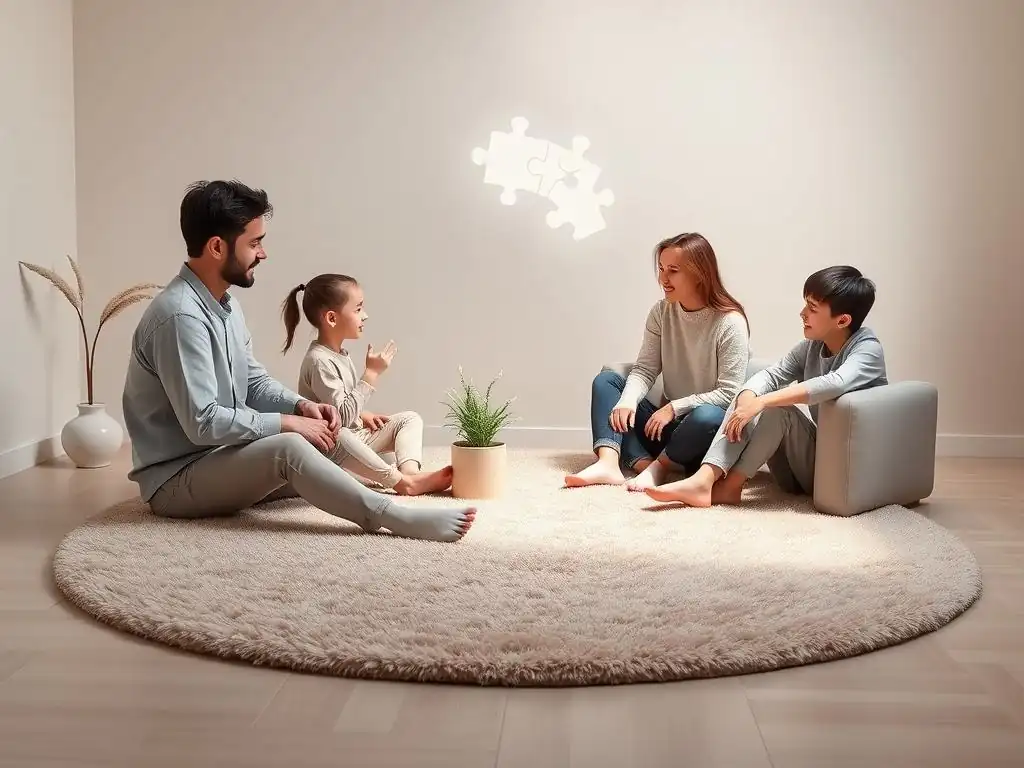
Children learn best by observing the adults around them. Therefore, the most powerful strategy in any kids conflict resolution family guide is for parents and caregivers to model healthy ways of handling disagreements. This means letting children see you and your partner or other family members discuss conflicts calmly, listen to each other's viewpoints, express feelings respectfully using "I" statements, and work together to find solutions. It's not about never disagreeing, but about how you disagree.
When parents demonstrate these skills, they show children that conflict is a normal part of relationships and can be navigated constructively. For example, if parents have a disagreement about household chores, they might discuss it in earshot of the children (appropriately, without yelling or blaming), saying things like, "I feel overwhelmed with the amount of cleaning I'm doing, and I need us to find a better way to share the work." This provides a real-life example of expressing needs and collaborating on a solution, a far more impactful lesson than simply telling kids how to behave.
Creating a Safe Space for Open Communication
A home environment where children feel safe to express their thoughts and feelings without fear of judgment, ridicule, or punishment is crucial for teaching conflict resolution for families. This involves actively listening to children when they speak, validating their emotions ("It sounds like you're feeling really angry about that"), and ensuring that discussions about conflict are handled with respect and empathy. Children need to know that their perspective matters, even if you don't agree with it.
Establishing a routine for family discussions or check-ins can also foster this safe space. This could be during dinner, a weekly family meeting, or bedtime chats. These times allow for open dialogue about the day's events, including any small conflicts that arose, and provide opportunities to practice communication and listening skills in a low-pressure setting. A safe space encourages honesty and vulnerability, making it easier to address and resolve conflicts when they inevitably arise.
Using Role-Playing to Practice Conflict Resolution Scenarios
Role-playing is an effective and often fun way to teach kids conflict resolution skills in a low-stakes environment. You can act out common conflict scenarios that occur in your family or that your children might face at school or with friends. For example, you could role-play a dispute over sharing a toy, disagreeing about game rules, or handling a friend who is being unkind. Take turns playing different roles, including playing the child and the other person involved in the conflict.
During role-playing, guide your children through applying the skills you've discussed, such as using "I" statements, active listening, and brainstorming solutions. You can pause the role-play to discuss what's happening, offer suggestions, and practice different responses. This hands-on approach allows children to rehearse difficult conversations and behaviors, building their confidence and competence in handling real-life conflicts. It transforms abstract concepts into practical skills they can use.
Establishing Family Rules for Fair Fighting
Just as there are rules in games, establishing clear family rules for how conflicts will be handled provides a framework for fair fighting, a key element of conflict resolution for families. These rules should be developed together as a family and posted in a visible place as a reminder. Examples of rules might include: No hitting, kicking, or physical aggression; No name-calling or insults; Listen when the other person is talking; Take turns speaking; Stay on the topic of the conflict; Take a break if anyone needs one.
Having these rules in place provides children (and adults) with clear boundaries during disagreements. When a rule is broken, you can calmly point it out and refer back to the agreed-upon guidelines. This teaches children that even when emotions are high, there are still expectations for respectful behavior. It shifts the focus from winning the argument to finding a resolution while maintaining respect for each other, reinforcing the principles of constructive kids conflict resolution.
Teaching Children to Identify and Express Their Feelings
A fundamental step in kids conflict resolution is helping children understand their own emotional landscape. Children need to be able to recognize and name the feelings they are experiencing during a conflict (e.g., angry, sad, frustrated, scared, disappointed). This emotional literacy is the basis for expressing those feelings appropriately and understanding the feelings of others. Use feeling charts, books about emotions, and daily conversations to build their emotional vocabulary.
Encourage children to express their feelings verbally rather than through actions like yelling or hitting. You can prompt them by asking, "How did that make you feel?" or "What emotion are you feeling right now?" Once they can identify their feeling, help them practice expressing it respectfully using "I" statements, as mentioned earlier. This empowers them to communicate their internal state, making it possible for others to understand their perspective and work towards a solution. For example, a child might learn to say, "I felt left out when you guys played without me."
Age-Specific Conflict Resolution Techniques
Conflict Resolution for Toddlers and Preschoolers (Ages 2-5)
Focus on Simple Communication and Redirection
For toddlers and preschoolers, kids conflict resolution focuses on the most basic skills: identifying simple emotions and learning very rudimentary communication. Their cognitive abilities are limited, so complex negotiation is out. Instead, the focus is on helping them understand that their actions affect others and guiding them towards simple solutions. When a conflict arises, like grabbing a toy, an adult can gently intervene, name the emotions involved ("You look angry that he took your truck"), and state simple facts ("He was playing with it").
Redirection is a primary tool at this age. If two toddlers are fighting over a single toy, offering a similar, equally appealing toy can often resolve the conflict instantly. This isn't avoiding the issue entirely, but rather acknowledging their developmental stage and providing an alternative that meets their immediate need without requiring complex social negotiation. The goal is to prevent escalation and introduce the idea that there are other options besides fighting over one item. Approximately 80% of toddler conflicts can be resolved through simple redirection or distraction, according to early childhood educators.
Teaching Sharing and Taking Turns
Introducing the concepts of sharing and taking turns is a foundational element of kids conflict resolution for this age group. While true sharing (voluntarily giving something up) is difficult for young children due to their egocentric nature, they can grasp the concept of taking turns with consistent practice and adult guidance. Using timers can be helpful ("You can play with the car for three minutes, then it's your brother's turn").
Adults must facilitate this process actively. Don't expect young children to figure out sharing on their own. Narrate the process ("It's Liam's turn now, then Maya gets a turn") and praise them when they successfully take turns, even for short periods. While disputes over toys are incredibly common at this age, happening multiple times an hour in group settings, consistent practice with taking turns gradually builds their understanding that they will get access to desired items, reducing the perceived need to fight over them immediately.
Conflict Resolution for Elementary School Children (Ages 6-12)
Encouraging Perspective-Taking and Empathy
Elementary school children are developmentally ready to begin understanding perspectives other than their own, a crucial step in kids conflict resolution. They can start to grasp that others have different thoughts, feelings, and motivations. Encourage them to think about how the other person in a conflict might be feeling or thinking. Questions like, "Why do you think Sarah was upset when you said that?" or "How would you feel if that happened to you?" help build this capacity.
Reading stories and discussing the characters' feelings and motivations is an excellent way to foster perspective-taking and empathy at this age. Approximately 7-9 years old is when most children develop a more robust "theory of mind," enabling them to better understand that others have different beliefs and intentions. Building on this cognitive leap allows for more sophisticated conflict resolution discussions, moving beyond just actions to understanding the why behind them.
Introducing Problem-Solving Steps
This is the age where children can begin to learn and apply structured problem-solving steps within a kids conflict resolution family guide. They can typically understand a sequence of actions and work through them with guidance. Introduce the steps: 1) What is the problem? (Define it together), 2) What are some possible solutions? (Brainstorm, no judging ideas yet), 3) What would happen if we tried each solution? (Evaluate consequences), 4) Which solution should we try? (Choose one), 5) How did it work? (Review).
Practice these steps using everyday conflicts, like deciding what game to play or figuring out who gets to use a shared item. Initially, you will need to guide them through each step. Over time, they will internalize the process and be able to use it independently. For instance, two siblings fighting over TV channel control could brainstorm solutions like watching separate shows on different devices, finding a show they both like, or creating a schedule for who gets to choose. This structured approach gives them a concrete method for tackling disagreements.
Conflict Resolution for Teenagers (Ages 13-18)
Facilitating Open Dialogue and Negotiation
Conflict resolution for families with teenagers often involves more complex issues and requires a shift towards open dialogue and negotiation. Teenagers are developing their independence and critical thinking skills, and they need to feel heard and respected in discussions. Instead of imposing solutions, facilitate conversations where the teenager feels comfortable expressing their viewpoint, even if it's challenging. Practice active listening yourself and encourage them to do the same.
Negotiation becomes a key skill at this age. This involves finding a middle ground or a solution that partially satisfies both parties' needs. For example, a conflict over curfew might be resolved through negotiation: the teenager wants to stay out until midnight, the parent wants 10 pm, and they might negotiate 11 pm on certain nights, tied perhaps to responsibilities being met. This process teaches teens valuable skills they will use in future relationships and work environments. Studies suggest that allowing teens input into family rules increases compliance by up to 40%.
Helping Teens Understand the Consequences of Their Actions
Teenagers are increasingly capable of understanding the long-term consequences of their actions, both positive and negative, which is important in kids conflict resolution. When discussing conflicts, help them connect their behavior during the dispute to the outcome. For example, if yelling escalated a fight with a sibling, discuss how a calmer approach might have led to a different result. If a respectful negotiation led to a favorable compromise, point out how their communication skills contributed to that positive outcome.
Discussing the impact of conflict on relationships is also crucial. Help them see how unresolved arguments or hurtful words can damage trust and connection within the family and with peers. Use real-life examples (without dwelling on past mistakes negatively) or hypothetical scenarios to illustrate how different approaches to conflict yield different relational outcomes. Understanding these consequences motivates teens to apply their conflict resolution skills more consistently.
Dealing with Common Family Conflicts
Sibling Rivalry: Strategies for Minimizing Conflict
Sibling rivalry is one of the most frequent sources of conflict in families, occurring multiple times a day in households with multiple children. While some degree of sibling conflict is normal and even provides opportunities to practice kids conflict resolution, excessive or aggressive rivalry can be detrimental. Strategies for minimizing sibling conflict include avoiding comparison between children, ensuring each child feels individually valued, and creating opportunities for positive sibling interaction.
When conflicts do arise, avoid the urge to immediately jump in and play the role of judge. Instead, act as a facilitator, guiding the children to use their conflict resolution skills. Help them identify the problem, express their feelings to each other respectfully, and brainstorm solutions together. If they are unable to resolve it on their own, you can help them negotiate a compromise or suggest a solution, but the goal is to empower them to handle it themselves over time. Establishing clear rules about physical aggression is non-negotiable and must be enforced consistently.
Parent-child disagreements are inevitable as children grow and assert their independence. These can often turn into power struggles if not handled effectively using principles from a kids conflict resolution family guide. Power struggles occur when neither party is willing to back down, often leading to escalating arguments and resentment. Recognizing a power struggle is the first step; often, the issue isn't the topic itself (e.g., bedtime, homework) but the need for control.
Strategies for navigating parent-child power struggles include choosing your battles wisely (not every disagreement requires a stand-off), offering limited choices to give the child a sense of control within acceptable boundaries ("Would you like to clean your room now or after this show? "), and calmly disengaging from the argument if it becomes circular or disrespectful ("I'm not going to argue about this. We can talk when we are both calm"). Focus on finding solutions collaboratively when possible, using problem-solving steps, and reinforcing that rules exist for reasons (safety, health, respect) rather than just parental authority.
Conflicts Over Screen Time and Technology
Conflicts over screen time and technology are increasingly common in modern families. Disputes can arise over how much time is spent on devices, what content is accessed, and when devices should be used (e.g., at the dinner table). Addressing these conflicts requires clear family rules around technology use, established collaboratively if possible, and consistent boundaries. This is a prime area for applying kids conflict resolution skills like negotiation and problem-solving.
Instead of simply dictating rules, involve children (especially older ones) in discussions about healthy technology use. Talk about the benefits and drawbacks of screens, the importance of balance with other activities (like physical play, homework, and social interaction), and the reasons behind the rules. Use problem-solving to address specific conflicts, such as "How can we make sure homework gets done before gaming?"
or "What is a fair amount of screen time on a weekend?" This collaborative approach fosters understanding and buy-in, reducing the likelihood of conflict compared to unilateral decisions. Families who set clear screen time expectations report approximately 50% fewer arguments about technology use.
Disagreements about chores and responsibilities are a staple in family life. Children may resist doing chores, argue about fairness, or perform tasks inadequately, leading to parental frustration and conflict. A kids conflict resolution family guide approach to chores involves more than just assigning tasks; it's about teaching responsibility and contributing to the family unit. Involve children in creating a chore list, assigning tasks age-appropriately, and establishing clear expectations for when and how chores should be completed.
When conflicts arise, use problem-solving techniques. If a child feels their chores are unfair, listen to their perspective and discuss potential adjustments or trades. If chores aren't being done, explore the reasons why (e.g., they don't know how, they feel overwhelmed, they forgot) and work together to find solutions (e.g., create a checklist, break down the task, set reminders). Frame chores not as punishment, but as contributing members of the family team. This shifts the dynamic from a battleground to a collaborative effort, reducing conflict and fostering a sense of shared responsibility.
Resources and Support for Families
Books and Articles on Conflict Resolution for Children
Many excellent resources are available to supplement a kids conflict resolution family guide. Books aimed at children can help them understand emotions and simple conflict scenarios through engaging stories. Examples might include books about sharing, dealing with anger, or making friends. For parents, numerous books and articles offer detailed strategies and insights into child development and effective conflict resolution techniques tailored to different age groups.
These resources can provide scripts for difficult conversations, ideas for role-playing scenarios, and deeper dives into the psychological principles behind conflict and resolution. While specific titles aren't listed here, searching for terms like "children's books on feelings," "parenting guide conflict resolution," or "sibling rivalry help" can yield a wealth of helpful materials. Reading these together as a family or for personal development can significantly enhance your approach to managing disagreements.
Family Therapy: When to Seek Professional Help
While this kids conflict resolution family guide offers many practical strategies, there are times when family conflicts become too intense, frequent, or damaging to manage on your own. This is when seeking professional help, such as family therapy, is highly recommended. Signs that professional help may be needed include constant yelling or fighting, physical aggression between family members, emotional abuse, children exhibiting significant behavioral problems or signs of distress related to conflict, or a general feeling of being stuck and unable to resolve issues despite trying various approaches.
A family therapist can provide a neutral space for communication, identify underlying issues contributing to conflict, teach advanced communication and conflict resolution skills, and help the family heal from past hurts. They are trained to work with family systems and can offer tailored strategies that address your family's specific dynamics. Don't view seeking therapy as a failure, but rather as a proactive step towards building a healthier, more harmonious family life.
Online Resources for Parents and Educators
The internet offers a vast array of resources for parents and educators seeking to teach kids conflict resolution. Many reputable parenting websites, educational organizations, and mental health platforms provide free articles, videos, worksheets, and activity ideas. These resources can offer quick tips, in-depth guides, and printable tools like feeling charts or problem-solving worksheets.
When using online resources, prioritize those from trusted sources such as established children's hospitals, educational institutions, or mental health organizations. While specific websites cannot be listed here, a search for "conflict resolution activities for kids," "teaching empathy to children," or "family communication tips" will reveal many valuable options. These online tools can complement the strategies outlined in this kids conflict resolution family guide and provide ongoing support and fresh ideas.
Long-Term Benefits of Teaching Kids Conflict Resolution Skills
Improved Relationships with Family and Peers
One of the most significant long-term benefits of teaching kids conflict resolution is the improvement in their relationships. Children who can resolve disagreements respectfully are more likely to build and maintain positive connections with siblings, parents, and friends. They experience less friction, more understanding, and stronger bonds because they possess the tools to navigate inevitable relational challenges constructively.
As they grow, these skills translate into healthier romantic relationships, more effective collaborations with colleagues, and the ability to maintain friendships through ups and downs. Families who prioritize conflict resolution for families often report feeling closer and more connected, as they've built trust through successfully working through difficulties together. This relational competence is a cornerstone of a fulfilling social life.
Enhanced Self-Esteem and Confidence
Successfully navigating conflicts builds a child's self-esteem and confidence. When children learn they have the capacity to handle disagreements without resorting to aggression or withdrawal, they feel more competent and capable. Each time they successfully use their kids conflict resolution skills to find a solution or express their needs, it reinforces a positive self-image.
This enhanced confidence extends beyond conflict situations. Children who feel capable in their social interactions are often more willing to try new things, participate in group activities, and assert themselves positively in various settings. This sense of self-efficacy, built partly through mastering conflict resolution, is a vital protective factor for mental well-being throughout life.
Increased Academic Success
While seemingly unrelated, there is a strong link between a child's social-emotional skills, including conflict resolution, and their academic success. Children who can manage their emotions, communicate effectively, and work collaboratively are better equipped to handle the social dynamics of the classroom, participate in group projects, and communicate effectively with teachers.
Furthermore, reduced stress from unresolved conflicts at home or with peers frees up cognitive resources for learning. A child preoccupied with navigating difficult relationships or managing intense emotions may struggle to focus on schoolwork. By equipping them with kids conflict resolution skills, families help create an environment where children are emotionally available to learn and thrive academically. Research indicates that social-emotional learning programs, which include conflict resolution, can improve academic performance by an average of 11 percentile points.
Development of Essential Life Skills for Adulthood
The skills taught in a kids conflict resolution family guide are not just for childhood; they are essential life skills that form the foundation for successful adulthood. The ability to communicate effectively, listen actively, empathize with others, problem-solve collaboratively, and manage one's emotions are crucial in virtually every aspect of adult life, from career success to personal relationships and civic engagement.
Investing time and effort in teaching conflict resolution for families is an investment in a child's future. It prepares them to handle challenges independently, build strong relationships, contribute positively to their communities, and navigate the complexities of the adult world with resilience and competence. These skills are arguably as important as, if not more important than, academic knowledge alone.
Building a Harmonious Family Environment Through Conflict Resolution
Frequently Asked Questions
How can I introduce the concept of conflict resolution to very young children?
Start with simple language and role-playing. Focus on teaching them to identify their feelings and use "I feel" statements.
What are some effective strategies for resolving conflicts between siblings?
Encourage active listening and taking turns speaking. Help them brainstorm mutually agreeable solutions, rather than assigning blame.
How can I teach my children to manage their anger and frustration during a conflict?
Teach them calming techniques like deep breathing or counting. Model healthy emotional expression yourself, showing them it's okay to feel upset.
What role does communication play in successful conflict resolution within a family?
Open and honest communication is crucial. Create a safe space for sharing feelings and actively listening to each other's perspectives.
How can I ensure that conflict resolution skills are consistently applied in our family life?
Establish clear family rules and expectations. Regularly practice conflict resolution techniques through family discussions and role-playing scenarios.
Final Reflection: Cultivating Peacemakers in Every Home
The ability to resolve conflict peacefully is not just a life skill; it's a cornerstone of a thriving society. In a world increasingly fractured by disagreement, equipping our children with effective conflict resolution strategies is more crucial than ever. This guide has explored practical techniques, from active listening to compromise, applicable to families with children of all ages, demonstrating that fostering peaceful communication is achievable within the familiar walls of home.
The impact of teaching children conflict resolution extends far beyond the family dinner table. It shapes their interactions with peers, teachers, and eventually, colleagues and partners. Learning to navigate disagreements respectfully builds empathy, strengthens relationships, and fosters a sense of personal agency. As Mahatma Gandhi wisely said, The best way to find yourself is to lose yourself in the service of others.
Teaching our children conflict resolution is a service, not only to them, but to the world they will inherit. It's about cultivating a generation of peacemakers, capable of building bridges instead of walls.
Now, consider your own family dynamics. Reflect on the ways you currently handle disagreements. Are there areas where you could implement the strategies discussed in this guide? Perhaps you could dedicate family time to practicing active listening, or create a family agreement outlining respectful communication guidelines. The journey to peaceful conflict resolution begins with a single step, a single conversation, a single commitment to fostering understanding and empathy within your family. Start today, and watch as your home transforms into a haven of peace and mutual respect.
Unlock Your Family's Harmony: Put Conflict Resolution into Action!
Thanks for taking the time to learn about empowering your kids (and yourselves!) with conflict resolution skills. You've now got the tools to foster a more peaceful and understanding family environment. Ready to put this knowledge into practice?
- Prioritize one small conflict this week: Choose a recent disagreement and try using the strategies outlined in the article to find a resolution together. Even a small win builds confidence!
- Share this article with other parents or caregivers: Let's build a community of families dedicated to peaceful communication.
- Consider starting a family “peace meeting” once a week: A dedicated time for open discussion and collaborative problem-solving can strengthen family bonds.
So, what small step will you take today to create a more harmonious home?