
Art, Literature, and Legal Records: Depictions of Mental Illness in Medieval Culture


Welcome to Mind Care Guide.
Ever wondered how mental health was understood centuries ago? Step back in time with us as we delve into the fascinating, and often misunderstood, world of Medieval mental illness representations. Explore how art, literature, and legal records painted a picture of mental well-being, or the lack thereof, in a bygone era. Prepare to be surprised, enlightened, and perhaps even see echoes of the past in our present understanding. Intrigued? Let's begin...
Art, Literature, and Legal Records: Depictions of Mental Illness in Medieval Culture
- Introduction: Exploring Medieval Mental Illness Representations
- Mental Illness in Medieval Art: Visual Representations
- Literature as a Mirror: Medieval Literary Depictions of Mental Disorders
- Legal Records: Insights into Medieval Attitudes Towards Mental Incapacity
- Comparing Depictions Across Different Media: Art, Literature, and Law
- The Accuracy and Limitations of Medieval Mental Illness Representations
- Conclusion: The Legacy of Medieval Mental Illness Representations
-
Frequently Asked Questions
- How did art and literature in the Medieval period portray individuals experiencing mental illness?
- What role did legal records play in understanding how Medieval society viewed mental illness?
- Were there any positive or sympathetic depictions of mental illness in Medieval culture?
- How accurate are modern interpretations of Medieval mental illness representations?
- What resources are available today to learn more about Medieval attitudes towards mental illness?
- Final Reflection: Echoes of the Past, Reflections for the Present
- Unearth the Untold Stories: Exploring Medieval Perspectives on Mental Illness
Introduction: Exploring Medieval Mental Illness Representations
Understanding Medieval Perceptions of Mental Health
In the medieval era, understanding of the human mind and its afflictions was profoundly different from modern psychological and medical models. Mental health conditions were often viewed through a complex lens shaped by religious dogma, folklore, humoral theory (the belief that the body's humors—blood, phlegm, yellow bile, black bile—needed balance), and astrological influences.
Terms like "madness," "lunacy," "melancholy," or "frenzy" were used, but they often encompassed a wide range of behaviors and states that we might today classify differently. These medieval mental illness representations were rarely seen as purely biological or psychological disorders in the modern sense; they were frequently intertwined with spiritual states, moral failings, or external forces like demonic possession or divine punishment.
The prevailing beliefs meant that the causes and potential treatments for mental distress were sought in areas beyond what we consider medicine today. Exorcism, prayer, pilgrimages, and penance were common approaches, alongside rudimentary physical treatments derived from humoral theory, such as bloodletting or herbal remedies aimed at rebalancing the humors. The societal response to individuals exhibiting signs of medieval mental illness representations varied widely, from compassion and care within families or religious communities to fear, ostracization, or confinement, depending on the perceived nature of the affliction and the individual's social status.
The Significance of Studying Medieval Depictions
Examining medieval mental illness representations across various cultural artifacts—art, literature, and legal records—provides invaluable insights into the historical construction of mental health concepts. It allows us to trace the evolution of societal attitudes, diagnostic frameworks (however rudimentary), and treatment approaches over centuries. By studying these historical depictions, we can better understand the deep roots of certain stigmas and stereotypes associated with mental illness that have persisted into later periods and, in some cases, resonate even today. It highlights how cultural, religious, and legal systems have historically interacted with experiences of mental distress.
Furthermore, analyzing these diverse sources offers a multi-faceted view that no single type of record can provide alone. Art offers symbolic and visual interpretations, literature explores subjective experiences and narrative outcomes, and legal records reveal practical concerns, social roles, and the application of formal rules regarding individuals deemed mentally incapacitated.
Piecing together these different perspectives on medieval mental illness representations helps create a richer, more nuanced understanding of the historical landscape of mental health, demonstrating that while terminology and understanding have changed drastically, the human experience of mental suffering and societal responses to it have a long and complex history.
Mental Illness in Medieval Art: Visual Representations
Common Symbols and Allegories Used to Represent Mental Distress
Medieval artists employed a range of visual symbols and allegories to convey states of mental distress or perceived madness, often drawing heavily on religious and moral frameworks. One frequent motif was the depiction of individuals exhibiting chaotic or irrational behavior, sometimes shown in disheveled states or engaged in nonsensical actions. Animals were also used allegorically; for instance, the ape could symbolize folly or irrationality, sometimes associated with mental unbalance. The wheel of fortune, a common medieval image, could represent the unpredictable nature of life, including sudden descents into madness or despair.
Another significant set of symbols derived from the humoral theory. Melancholy, often associated with depression or deep sadness, was linked to an excess of black bile and could be depicted through specific postures (head bowed, hand on chin), dark clothing, or association with solitary or contemplative settings.
Frenzy or mania might be shown through wild gestures, distorted facial expressions, or violent actions. These symbolic medieval mental illness representations provided viewers with visual cues to interpret the internal state of the depicted figures, often within a moral or theological context that emphasized either the dangers of certain states of mind or the suffering they caused.
Analysis of Specific Artworks Depicting Mental Illness: The Temptation of St. Anthony
Hieronymus Bosch's various depictions of The Temptation of St. Anthony are prime examples of how art could portray mental and spiritual turmoil. While not solely focused on what we would term mental illness today, these works vividly illustrate the internal struggles, hallucinations, and bizarre visions that could be interpreted as forms of mental distress or spiritual attacks in the medieval and early Renaissance mindset. The tormented saint is surrounded by grotesque, surreal creatures and nightmarish landscapes, representing the overwhelming psychological and spiritual pressures he faced in isolation.
These chaotic and disturbing scenes can be seen as visual metaphors for extreme anxiety, hallucination, or delirium. The bizarre nature of the temptations, ranging from monstrous figures to seductive visions, reflects a world where the boundaries between internal psychological states, external reality, and the supernatural were fluid. Bosch's detailed and often disturbing medieval mental illness representations, though rooted in theological narratives of demonic temptation, offer a powerful artistic exploration of a mind under extreme duress, resonating with later understandings of psychological breakdown and the subjective experience of altered states.
The Role of Religious Imagery in Portraying Mental Afflictions
Religious imagery played a central role in medieval mental illness representations, often framing mental afflictions within narratives of sin, salvation, divine punishment, or demonic influence. Individuals experiencing severe mental distress might be depicted as possessed by demons, requiring exorcism or divine intervention for healing. This perspective was particularly common for conditions involving erratic behavior, violence, or perceived blasphemy. Scenes of Christ healing the possessed, as described in the Gospels, provided a visual precedent and hope for recovery through faith.
Conversely, certain forms of intense religious fervor or asceticism could sometimes blur lines with what might be seen as mental or physical extremes. The visions and ecstatic states of saints, while celebrated as divine connection, might in some contexts share visual similarities with depictions of delirium or hallucination. The suffering of martyrs, including psychological torment, was also a frequent subject. This intertwining of spirituality and mental states meant that medieval mental illness representations in religious art often carried a moral or theological message, emphasizing the soul's vulnerability to evil or the potential for divine grace to overcome suffering.
Literature as a Mirror: Medieval Literary Depictions of Mental Disorders
Analyzing Characters with Mental Health Conditions in Medieval Literature
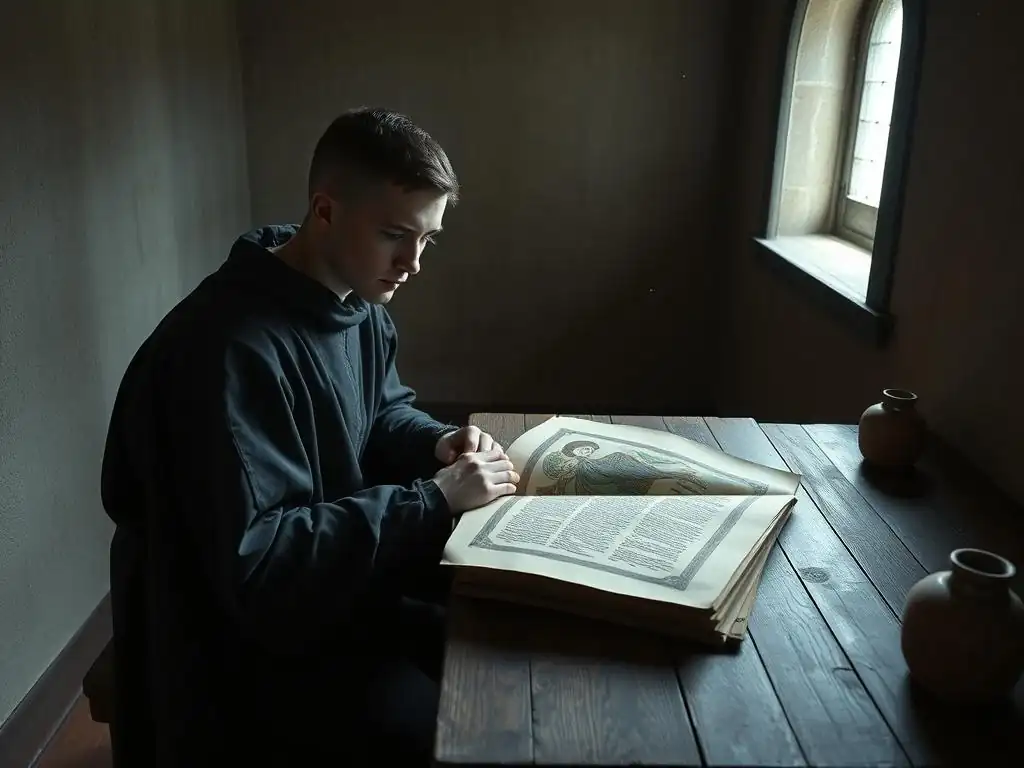
Medieval literature offers a rich tapestry of characters whose experiences touch upon what we might now understand as mental health conditions. While the terminology and frameworks were different, authors explored states akin to depression (melancholy), grief, lovesickness (sometimes depicted with physical and mental symptoms bordering on illness), madness, and psychological torment. These characters often serve narrative functions, highlighting the fragility of the human mind, the consequences of intense emotions, or the impact of external stressors like loss, betrayal, or supernatural encounters.
For instance, characters suffering from overwhelming grief might exhibit symptoms of deep despair, withdrawal, and physical decay, mirroring aspects of severe depression. Lovesickness, a common theme, was often portrayed as an affliction that could consume the mind, leading to irrational behavior, sleeplessness, and physical wasting. Analyzing these literary medieval mental illness representations requires careful interpretation, separating cultural conventions and narrative devices from attempts to describe genuine psychological states as understood at the time.
Common Themes and Tropes in Literary Representations of Mental Instability
Several themes and tropes frequently appear in medieval literary depictions of mental instability. One common trope is madness as a consequence of intense emotion, particularly love (as mentioned) or grief. Characters might literally lose their minds after a tragic event or unrequited passion. Another theme is the link between madness and folly, where irrational behavior is portrayed as a deviation from wisdom or moral rectitude. The figure of the "fool" or "madman" could sometimes serve as a vehicle for social commentary, speaking uncomfortable truths from a position outside conventional sanity.
Supernatural causes were also a significant trope, with madness attributed to curses, demonic influence, or fairy enchantments. This reflects the broader medieval worldview where the spiritual and physical realms were closely connected. Finally, the theme of the "mad hero" exists, where a character's descent into madness, often temporary, serves as a trial or transformation, sometimes leading to unexpected strength or insight, showcasing varied medieval mental illness representations that weren't always solely negative.
The Romance of Tristan and Isolde and its Portrayal of Mental Illness
The various versions of the Romance of Tristan and Isolde provide a compelling example of how medieval literature depicted states akin to mental distress, particularly within the context of overwhelming emotion. The protagonists are bound by a magical love potion, which induces a passion so intense and uncontrollable that it drives them to defy social norms, betray oaths, and endure immense suffering. While the potion is a supernatural element, the effects it has on Tristan and Isolde are described in terms that resonate with psychological turmoil.
Their love leads to periods of intense despair, anxiety, and what might be interpreted as obsessive or irrational behavior. Tristan, in particular, experiences moments of profound melancholy and desperation when separated from Isolde. In some versions, he even feigns madness to be near her, highlighting the societal perception of madness as a state that breaks conventional bounds, while also using it as a narrative device to explore themes of disguise and identity. These medieval mental illness representations are intertwined with the themes of fate, passion, and the destructive power of uncontrollable desire.
Sir Gawain and the Green Knight and the Stigma Surrounding Mental Health
Sir Gawain and the Green Knight, a masterpiece of Middle English literature, offers a more subtle, yet significant, exploration of psychological pressure and its impact. While Gawain doesn't descend into overt "madness," the poem delves deeply into his internal state as he faces an impossible challenge and the fear of death.
His journey involves significant anxiety, moral testing, and the psychological burden of upholding chivalric ideals under extreme stress. His eventual failure (the slight flinch and acceptance of the girdle) is not a sign of madness, but it reveals the immense psychological pressure he is under and his very human fear.
The poem touches upon the stigma associated with failure and fear, which can be related to the broader societal judgment sometimes applied to those perceived as mentally weak or unstable. Gawain's shame and distress after confronting the Green Knight are profound, illustrating the psychological toll of perceived inadequacy. The poem, therefore, contributes to medieval mental illness representations by exploring the internal struggles and the psychological weight of societal expectations and personal failings, even if it doesn't depict outright insanity. It shows that medieval authors were interested in the complexities of the mind under pressure.
Legal Records: Insights into Medieval Attitudes Towards Mental Incapacity
Legal Definitions and Classifications of "Madness" in Medieval Law
Medieval legal systems, particularly in England, developed specific classifications for individuals deemed mentally incapacitated, primarily for the purpose of managing their property and affairs. Terms like "lunatic" (often applied to those with periods of lucidity and periods of incapacity, possibly linked to lunar cycles, though this connection is debated) and "idiot" (referring to individuals considered mentally deficient from birth or a very young age) were commonly used. These classifications were practical legal labels rather than medical diagnoses in the modern sense.
The Statute De Praerogativa Regis (Prerogative of the King), likely from the late 13th century, is a key document in English law that codified procedures regarding the property of "idiots" and "lunatics." It stipulated that the King had rights over the lands of "idiots" for their lifetime, while for "lunatics," the King would manage their lands and goods during their periods of incapacity, returning the profits and the estate upon their recovery.
These legal medieval mental illness representations were focused on civil capacity and property rights, reflecting the state's interest in maintaining order and preventing the loss of feudal services or property value.
Case Studies from Medieval Court Records: Treatment and Confinement
Medieval court records, such as those from manorial courts, town courts, and the King's courts (like Chancery or King's Bench), occasionally document cases involving individuals deemed mentally incapacitated. These records rarely provide detailed descriptions of symptoms but focus on the legal consequences of their state. For example, a court record might note that a man was unable to manage his land quia lunaticus (because he was a lunatic), leading to the appointment of a guardian for his property. Specific case details are often sparse, focusing on the outcome rather than the individual's experience.
Confinement, when it occurred, was not typically in dedicated asylums (which developed much later) but might involve being kept within the family home, supervised by a guardian, or in exceptional circumstances, placed in a religious house or even a common prison if their behavior was deemed dangerous or disruptive.
Records from institutions like the Hospital of St. Mary of Bethlehem (Bedlam) in London, which began admitting individuals deemed "mad" in the late 14th century, offer glimpses into the institutional care or custody provided, though detailed patient records from the medieval period are scarce, making specific medieval mental illness representations in legal contexts often brief and focused on administrative outcomes.
Guardianship and Property Rights of Individuals with Mental Illness
A primary concern in medieval law regarding individuals with mental illness was the management of their property and the appointment of guardians. When someone was declared a "lunatic" or "idiot" through a legal process (often initiated by family members or feudal lords), the court would typically appoint a guardian or committee to oversee their lands and assets. This was intended to prevent the individual from squandering their estate and to ensure that feudal obligations were met or that the family's inheritance was preserved.
The rights of the individual themselves were often secondary to the protection of property and the interests of heirs or overlords. While guardians were legally bound to manage the estate for the benefit of the incapacitated person and their heirs, abuses did occur. Records sometimes show disputes over guardianship or complaints about mismanagement of assets. These legal medieval mental illness representations underscore the vulnerability of individuals deemed mentally incapacitated in medieval society, where their legal identity and rights were often subsumed by the need to protect their material wealth and social standing.
Comparing Depictions Across Different Media: Art, Literature, and Law
Contrasting Artistic and Literary Representations with Legal Realities
Comparing medieval mental illness representations across art, literature, and legal records reveals fascinating contrasts. Art and literature often provide more subjective and symbolic portrayals, exploring the internal experience of distress, its emotional impact, and its connection to broader themes like morality, spirituality, or fate. Literature, in particular, allows for character development and narrative arcs that can depict the onset, duration, and sometimes recovery from states akin to mental illness, offering insights into how these conditions were perceived to affect identity and relationships.
Legal records, conversely, offer a starkly practical and external view. They are concerned primarily with the legal and economic consequences of mental incapacity – the ability to manage property, enter contracts, or give testimony. The rich symbolism of art or the emotional depth of literature is absent; instead, we find formal classifications and administrative procedures. Legal medieval mental illness representations are thus less about the experience of the individual and more about their functional capacity within the existing social and legal framework.
Social and religious beliefs profoundly shaped medieval mental illness representations across all media. In art and literature, the strong influence of Christianity meant that mental suffering was often interpreted through a theological lens – as a trial from God, a consequence of sin, or an attack by demonic forces. This led to depictions emphasizing prayer, exorcism, or pilgrimage as remedies, and sometimes portrayed individuals with mental illness as objects of pity or spiritual concern. The humoral theory also influenced literary and artistic descriptions, linking specific emotional or mental states to physical imbalances.
In the legal sphere, while the focus was pragmatic, underlying social norms regarding family responsibility and property inheritance were paramount. Religious institutions, such as monasteries or hospitals, sometimes played a role in caring for the mentally ill, reflecting Christian charity, though their capacity was limited. The legal system's classification into "idiot" and "lunatic" also reflects a social ordering based on perceived permanence and origin of the incapacity. Across all media, medieval mental illness representations were inseparable from the prevailing cultural, spiritual, and social structures of the time.
How Medieval Narratives Shaped Public Perception of Mental Health
The narratives presented in medieval art, literature, and legal records significantly shaped public perception of mental health, contributing to both understanding and stigma. Literary tales of madness, while sometimes empathetic, could also reinforce fears or portray affected individuals as figures of ridicule or danger. Artistic depictions, particularly those linking mental states to demonic possession or moral failing, could fuel superstition and fear.
Legal records, by classifying individuals and focusing on their inability to manage their affairs, contributed to a view of mental illness as a state of legal and social incapacitation, impacting how these individuals were treated within their communities and families. Together, these medieval mental illness representations created a complex public image – at times evoking pity and attempts at care, at other times fear, exclusion, and legal constraints. The lack of a unified, medical understanding meant that diverse and often conflicting narratives coexisted, leaving a legacy of varied historical attitudes towards mental well-being.
The Accuracy and Limitations of Medieval Mental Illness Representations
Challenges in Interpreting Historical Accounts of Mental Disorders
Interpreting medieval mental illness representations from a modern perspective presents significant challenges. The terminology used (e.g., "madness," "melancholy," "lunacy") does not neatly map onto modern diagnostic categories like schizophrenia, depression, or bipolar disorder. A single medieval term might encompass a range of conditions, and different terms might be used inconsistently across sources or regions. Furthermore, descriptions of behavior in historical texts are often filtered through the author's or observer's cultural and religious biases, making it difficult to discern objective symptoms.
Medieval accounts rarely provide the detailed clinical information necessary for a retrospective diagnosis. A description of someone seeing visions might be interpreted as a sign of holiness, demonic possession, or a psychotic episode, depending on the context and the interpreter's viewpoint. Therefore, when studying medieval mental illness representations, it is crucial to focus on understanding the medieval interpretation of these states rather than attempting definitive modern diagnoses, acknowledging the inherent limitations in applying contemporary frameworks to historical data.
Distinguishing Between Mental Illness, Religious Ecstasy, and Demonic Possession
A major challenge in interpreting medieval records is distinguishing between states that modern medicine might classify as mental illness, and phenomena that were understood in the medieval period as religious ecstasy, divine inspiration, or demonic possession. Behaviors like speaking in tongues, having visions, experiencing altered states of consciousness, or exhibiting unusual physical strength could be attributed to any of these causes.
Religious narratives celebrated the visions and ecstatic states of saints as signs of divine favor, while similar behaviors in others might be feared as evidence of demonic influence or condemned as heresy. Only careful analysis of the context, the reported symptoms, and the societal response can offer clues.
For example, accounts of demonic possession often included physical manifestations like convulsions, speaking in voices not their own, or exhibiting knowledge they shouldn't possess, distinct from descriptions of profound sadness (melancholy) or chronic cognitive impairment ("idiocy"). Understanding these medieval frameworks is key to interpreting medieval mental illness representations accurately within their historical context.
The Evolution of Medical Understanding and its Impact on Depictions
The medieval period saw some developments in medical understanding, primarily building upon ancient Greek and Roman humoral theory, but a distinct medical model of mental illness as a disease of the brain or nervous system was largely absent. Physicians like those associated with the Salerno School or later figures like Bernard of Gordon (author of Lilium Medicinae, which discussed melancholy) did attempt to explain mental states within a medical framework, often linked to imbalances of the humors or physical ailments.
However, this medical understanding coexisted with, and was often overshadowed by, religious and folkloric explanations. While medical texts might describe symptoms of melancholy or mania and suggest physical treatments (herbal remedies, diet, bloodletting), these medical medieval mental illness representations did not typically negate the possibility of spiritual causes or influences. It was only much later, towards the early modern period and beyond, that medical models began to gain prominence, gradually shifting the focus from spiritual or moral failings towards biological or psychological explanations, fundamentally altering how mental illness was perceived and depicted.
Conclusion: The Legacy of Medieval Mental Illness Representations
Lessons Learned from Studying Historical Perspectives on Mental Health
Studying medieval mental illness representations teaches us that perceptions of mental health are deeply embedded in their cultural, religious, and social contexts. It highlights the fluidity of definitions of "madness" and "sanity" across time and the significant impact of prevailing belief systems on how mental suffering is understood and responded to. We learn that historical approaches, while lacking modern scientific basis, were complex and multifaceted, involving elements of care, control, spiritual interpretation, and legal regulation.
One crucial lesson is the enduring power of stigma. The association of mental illness with moral failing, demonic influence, or social incapacitation in the medieval period contributed to negative perceptions that have lingered for centuries. Understanding the historical roots of these stigmas, as seen in medieval depictions, can help inform current efforts to combat them and promote a more compassionate and informed approach to mental health in contemporary society.
The Enduring Influence of Medieval Narratives on Modern Perceptions
While modern understanding of mental health is based on scientific research, some echoes of medieval mental illness representations can still be felt today, particularly in popular culture and lingering societal attitudes. The dramatic, often fearful, portrayals of madness as something alien or dangerous, found in some medieval literature and art, can resonate with sensationalized or stigmatizing depictions in modern media. The historical link between mental distress and concepts like "possession" or "moral weakness" has contributed to a reluctance in some quarters to view mental illness as a legitimate health condition.
Furthermore, the historical lack of distinction between mental health states and other conditions, or between internal experience and external behavior, highlights the importance of clear communication and accurate representation in contemporary discourse. By recognizing the historical baggage carried by certain terms and narratives, we can be more mindful in how we discuss and depict mental health today, working to counter the legacy of misunderstanding and fear perpetuated by some historical medieval mental illness representations.
Further Research and Resources on Medieval Mental Health
For those interested in delving deeper into medieval mental illness representations, a wealth of academic research exists across the fields of history, literature, art history, and medical history. Scholarly books and articles explore specific texts, artworks, or legal records in detail, offering critical analysis of medieval perceptions and practices. Primary sources, such as medieval medical treatises, court rolls, literary manuscripts, and illuminated manuscripts, provide direct (though challenging) access to the evidence.
Institutions with significant medieval collections, such as major libraries and museums, can be valuable resources for researchers. Academic databases and specialized historical journals offer access to the latest scholarship on the history of mental health in the medieval period. Exploring these resources allows for a more comprehensive understanding of the complex and varied ways in which mental illness was perceived, represented, and dealt with in medieval society, building upon the overview provided by examining medieval mental illness representations in art, literature, and legal records.
Frequently Asked Questions
How did art and literature in the Medieval period portray individuals experiencing mental illness?
Medieval art and literature often depicted mental illness through symbolic representations like demonic possession or divine punishment. These portrayals lacked nuanced understanding and often stigmatized individuals, perpetuating fear and misunderstanding.
What role did legal records play in understanding how Medieval society viewed mental illness?
Legal records reveal that Medieval society primarily viewed mental illness through a lens of incapacity and guardianship. Individuals deemed "lunatic" or "non compos mentis" could have their property and affairs managed by others, highlighting lack of autonomy.
Were there any positive or sympathetic depictions of mental illness in Medieval culture?
While rare, some Medieval texts and art suggest instances of compassionate care within religious communities. These depictions, however, remain overshadowed by the more common portrayals of stigma and fear.
How accurate are modern interpretations of Medieval mental illness representations?
Modern interpretations require careful consideration of the historical context and potential biases. It's crucial to avoid imposing modern diagnostic categories onto Medieval experiences without acknowledging the differences in cultural understanding.
What resources are available today to learn more about Medieval attitudes towards mental illness?
Mind Care Guide and similar websites offer resources, including articles and links to scholarly research, exploring the historical context of mental health. Academic databases and university libraries also hold valuable primary and secondary sources.
Final Reflection: Echoes of the Past, Reflections for the Present
The medieval depictions of mental illness, far from being relics of a distant past, offer a chillingly relevant mirror to our own struggles with understanding and treating mental health. The ways in which societal anxieties and prejudices manifested in the artistic and legal records of the era continue to resonate in contemporary discussions surrounding stigma, diagnosis, and treatment. We see echoes of the past in the persistent challenges of providing adequate care and fostering empathy for those experiencing mental distress.
The enduring power of these historical representations lies in their ability to expose the cyclical nature of societal attitudes towards mental illness. The fear, misunderstanding, and often brutal treatment documented in medieval art, literature, and legal texts underscore the importance of ongoing education and advocacy. The past is never dead. It's not even past.
– William Faulkner. This quote perfectly encapsulates the enduring relevance of these historical portrayals; they serve as a stark reminder of the progress we have made, and the distance we still need to travel in achieving true understanding and compassion.
Consider the stories you’ve encountered within these pages. Reflect on the parallels you see between the medieval responses to mental illness and our own. What can we learn from the mistakes of the past? How can we use this knowledge to build a more empathetic and supportive future for those struggling with mental health challenges? Let the echoes of the past inspire you to become a champion for change, a voice for those who are often silenced, and a beacon of hope in the ongoing fight against stigma.
Unearth the Untold Stories: Exploring Medieval Perspectives on Mental Illness
Thanks for delving into the fascinating world of medieval depictions of mental illness! We hope you gained a new appreciation for the complexities of understanding mental health across different eras. Now, it's time to take what you've learned a step further:
- Share your thoughts: What resonated most with you from the article's exploration of medieval art, literature, and legal records? Did any specific portrayal challenge your preconceptions? Leave a comment below – we'd love to hear your perspectives!
- Explore further: Search for primary sources online (like digitized manuscripts) to find more visual or textual depictions of mental illness from the medieval period. This will provide a deeper, more personal connection to the subject.
- Challenge your perspective: Consider how our modern understanding of mental illness differs from, and builds upon, the approaches of the past. Think critically about the ethical implications of historical interpretations.
What other unexpected connections can you draw between our modern understanding of mental health and the perspectives of medieval society?