
The Shift from Custody to Care: Mental Health in the Enlightenment Era


Welcome to Mind Care Guide, your companion on the journey to mental well-being. Have you ever wondered how our understanding of mental health evolved? In our latest piece, " The Shift from Custody to Care: Mental Health in the Enlightenment Era," we delve into the fascinating mental health history of that transformative period. Discover how perceptions began to shift, and what seeds of change were sown that continue to influence our approaches today. Curious to learn more about this pivotal moment in history and its impact on modern mental healthcare? Let's begin exploring.
The Shift from Custody to Care: Mental Health in the Enlightenment Era
- Introduction: Understanding Mental Health History in the Enlightenment
- The Enlightenment's Impact on Perceptions of Mental Illness
- Key Figures and Their Contributions to Mental Health Reform
- The Emergence of New Institutions and Treatment Approaches
- Challenges and Limitations of Enlightenment Era Mental Health Practices
- The Legacy of the Enlightenment on Modern Mental Health Care
- Conclusion: Reflecting on the Transformation of Mental Health During the Enlightenment Era
-
Frequently Asked Questions
- What were the prevailing attitudes toward mental illness before the Enlightenment Era, and how did the Enlightenment impact these views?
- How did the Enlightenment Era contribute to the development of asylums, and what were the conditions like in these early institutions?
- What were some of the key philosophical ideas of the Enlightenment that influenced the understanding and treatment of mental illness?
- What is "moral treatment" and how did it differ from previous approaches to mental health care during the Enlightenment?
- What lasting legacies did the Enlightenment Era leave on our modern understanding and approach to mental health care?
- Final Reflection: Reframing Madness: A Legacy of the Enlightenment
- Uncover Your Ancestor's Mental Health Journey
Introduction: Understanding Mental Health History in the Enlightenment
The Enlightenment era, spanning roughly the 17th and 18th centuries, marked a seismic shift in Western thought. Characterized by a focus on reason, individualism, and scientific inquiry, this period fundamentally challenged long-held beliefs about the natural world, society, and the human mind. Understanding mental health history enlightenment era requires examining how these new intellectual currents intersected with prevailing attitudes towards mental illness, moving slowly but significantly away from purely punitive or superstitious approaches towards a more nuanced, albeit still flawed, understanding.
This era laid crucial groundwork for future reforms, initiating a transition from viewing individuals with mental illness primarily as social outcasts or morally deficient beings to recognizing them as potentially treatable individuals. While the transition was far from complete and often uneven, the seeds of modern mental health care were undeniably sown during this transformative period.
Setting the Stage: Mental Health Before the Enlightenment
Before the Enlightenment, perceptions of mental illness were often deeply intertwined with religious dogma and folklore. Mental disturbances were frequently attributed to supernatural causes, such as demonic possession, divine punishment, or witchcraft. This understanding led to treatments that were often harsh, punitive, and focused on expelling evil spirits or punishing the afflicted individual. Custodial care, where it existed, was often provided in poorhouses, jails, or private homes, characterized by neglect, isolation, and a lack of therapeutic intent.
Institutionalization, when it occurred, was primarily for the purpose of containing and segregating individuals deemed dangerous or disruptive to society. Conditions in these early holding places were generally abysmal, lacking sanitation, proper food, and any form of compassionate interaction. The focus was on restraint and control, reflecting a societal fear and misunderstanding of mental suffering.
The Dawn of Change: Enlightenment Ideals and Mental Wellbeing
The Enlightenment's emphasis on reason and empirical observation began to challenge these traditional, often superstitious, views. Philosophers like John Locke, with his theories on the tabula rasa (blank slate) and the influence of environment on the mind, suggested that mental states were shaped by experience rather than purely innate or supernatural forces. This opened the door to the idea that mental distress might have earthly causes and potentially be influenced or treated through environmental or psychological means.
Physicians and thinkers, inspired by the scientific revolution, started to look for biological or physical explanations for mental illness, moving away from purely theological interpretations. While early theories were often speculative and based on limited understanding of anatomy and physiology, they represented a crucial step towards medicalizing mental conditions. This intellectual shift provided the philosophical bedrock upon which future reformers would build their arguments for more humane and rational approaches to mental health in the Enlightenment.
The Enlightenment's Impact on Perceptions of Mental Illness
The Enlightenment didn't instantly erase centuries of stigma and misunderstanding surrounding mental illness, but it did introduce powerful new lenses through which to view it. The emphasis on human reason and the potential for progress encouraged a re-evaluation of those who seemed to lack control over their own minds. This intellectual environment fostered debates about the nature of "madness" and whether it represented a complete absence of reason or merely a distortion of it.
This period saw the slow emergence of a more clinical perspective. While public asylums were still largely custodial and often brutal, the intellectual discourse among leading thinkers began to differentiate between various forms of mental distress and consider the possibility of intervention beyond mere restraint. It was a period of questioning, where the old certainties about demonic influence began to crumble under the weight of new scientific and philosophical inquiries.
From Demonic Possession to Medical Condition: Shifting Explanations
One of the most significant shifts in mental health history enlightenment era was the gradual move from supernatural explanations to medical ones. While belief in demonic influence persisted in some circles, particularly among the general populace, educated physicians and thinkers increasingly sought naturalistic causes for mental disorders. Theories often focused on imbalances in bodily fluids (humors), problems with the brain or nervous system, or the effects of physical illness.
For example, physicians might attribute melancholy to an excess of black bile, or mania to problems with blood flow to the brain. Though these early medical theories were often inaccurate by modern standards, they represented a fundamental change in approach: mental illness was being framed as an illness of the body or mind, subject to natural laws, rather than a manifestation of evil. This intellectual reclassification was essential for advocating for medical treatment rather than exorcism or punishment.
The Rise of Reason and the "Madness" Debate
The Enlightenment celebrated human reason as the highest faculty. This posed a particular challenge when considering individuals with mental illness, whose behavior often seemed irrational or unpredictable. Debates arose among philosophers and physicians about the nature of "madness" – was it a total loss of reason, or a state where reason was merely impaired or misguided? Thinkers like Michel Foucault later explored how the definition of "madness" became a way for the rational society to define itself by exclusion during this period.
This debate had practical implications. If madness was a distortion of reason rather than its complete absence, perhaps it could be reasoned with, influenced, or even corrected. This line of thinking contributed to the development of early psychological approaches and the concept of "moral treatment," which sought to engage the patient's remaining capacity for reason and self-control.
Key Figures and Their Contributions to Mental Health Reform
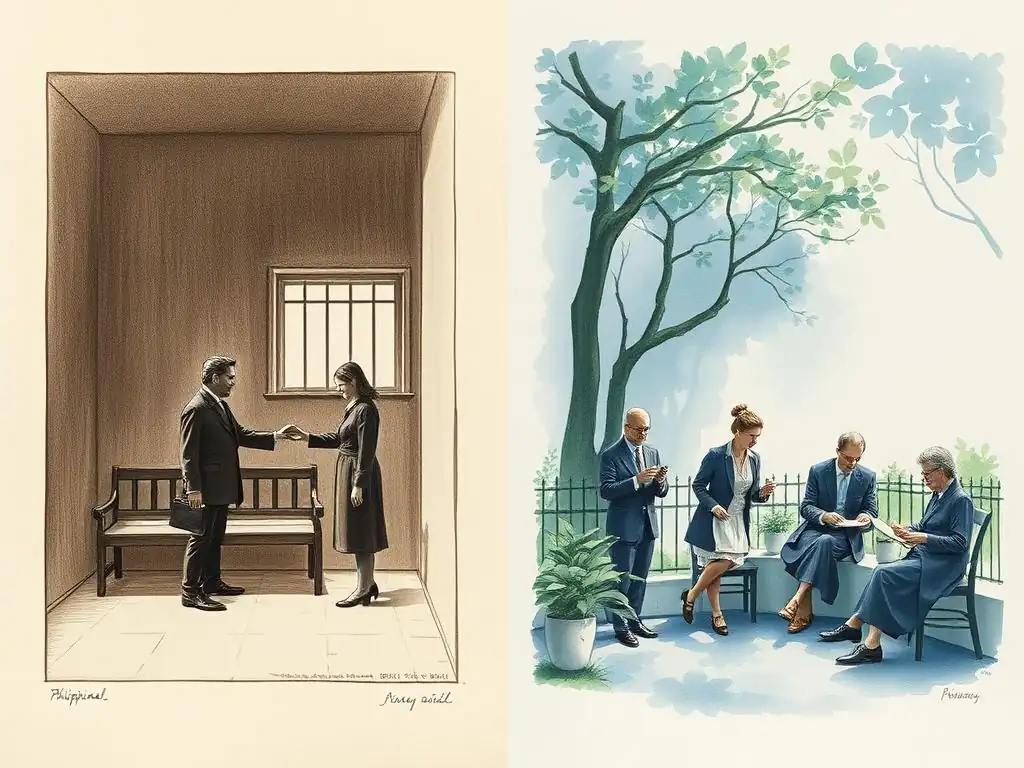
The intellectual climate of the Enlightenment, with its emphasis on humanity and reason, provided fertile ground for individuals who championed reform in the treatment of the mentally ill. These figures, primarily physicians, began to challenge the prevailing harsh conditions in asylums and advocate for more humane approaches. Their work, though often met with resistance, laid the foundation for future advancements in compassionate care during the history of mental illness during the Enlightenment.
These reformers were not just theorists; they were often practitioners who implemented their ideas in the institutions they oversaw. Their efforts, even in isolated pockets, demonstrated that alternative approaches were possible and could yield better outcomes than mere custodial restraint.
Philippe Pinel: Championing Humane Treatment
Philippe Pinel (1745-1826), a French physician, is perhaps the most celebrated figure associated with the reform of mental health care during the Enlightenment. Appointed chief physician at the Bicêtre asylum in Paris in 1793, and later at the Salpêtrière, Pinel famously ordered the chains removed from patients, a symbolic and practical act of liberation. He advocated for classifying patients, keeping detailed case histories, and providing a more therapeutic environment.
Pinel's approach, often referred to as "moral treatment" in France, emphasized kindness, dignity, fresh air, exercise, and occupational therapy. He believed that mental illness was often curable and that humane treatment was essential for recovery. While the actual removal of chains might have been initiated slightly before his arrival by his superintendent, Jean-Baptiste Pussin, Pinel widely publicized and systematically implemented these reforms, documenting their positive effects on patients' behavior and well-being. His work at Bicêtre, a notoriously brutal institution, provided compelling evidence that compassion was more effective than cruelty.
Vincenzo Chiarugi: Challenging Traditional Views of Insanity
In Italy, Vincenzo Chiarugi (1759-1820) was another significant figure challenging traditional views and practices. As director of the Bonifacio Hospital in Florence, starting in 1788, Chiarugi predated Pinel's famous reforms. He authored "On Insanity and Its Classification, Treatment, and Hospital Care" (1793-1794), one of the first systematic texts on the management of mental illness grounded in Enlightenment principles.
Chiarugi's regulations for Bonifacio Hospital emphasized treating patients with respect, prohibiting physical punishment, and providing decent living conditions, including clean clothes and nourishing food. He saw mental illness as a disease requiring medical attention, not a moral failing. His rules stated that patients were to be treated with humanity and respect, a radical departure from the norms of the time. While less widely known than Pinel outside of Italy, Chiarugi's work represents an independent development of humane treatment principles within the Enlightenment era mental health landscape.
The Influence of Philosophers and Physicians on Mental Health Practices
Beyond the asylum reformers, Enlightenment philosophers and physicians collectively influenced the intellectual climate. Philosophers like Locke and later, the French Encyclopedists, promoted empiricism and rationality, encouraging a view of humans as complex beings whose minds could be studied and understood. Physicians, embracing the scientific method, began detailed observations of patients, leading to early attempts at classification of mental disorders.
Figures like William Cullen (1710-1790), a Scottish physician, attempted to classify diseases, including nervous disorders, based on observable symptoms. His work, though flawed, contributed to the medicalization of mental illness. The collaboration and correspondence among these thinkers, facilitated by the burgeoning scientific societies and publications of the era, helped disseminate new ideas and challenge the old guard, slowly paving the way for a more scientific and humane approach to mental health in the Enlightenment.
The Emergence of New Institutions and Treatment Approaches
The intellectual shifts of the Enlightenment, coupled with the efforts of reformers, led to changes in how and where individuals with mental illness were cared for. While the majority of institutions remained largely custodial, the period saw the emergence of some facilities that attempted to implement more enlightened principles. These institutions, though few and often imperfect, represented a significant departure from the jails and poorhouses that previously housed the mentally ill.
The focus began to shift, at least theoretically, towards providing a more controlled environment that could potentially aid recovery, rather than simply containing perceived threats to social order. This era saw the first glimmerings of specialized institutions, even if their primary function remained segregation.
Early Asylums: A Move Towards Segregation and Observation
Prior to the Enlightenment, individuals with severe mental illness were often housed indiscriminately with criminals, the poor, or the infirm in various types of institutions. The Enlightenment saw the gradual development of dedicated "asylums" or "hospitals" specifically for the mentally ill. Examples include the Bicêtre and Salpêtrière in Paris, and St. Luke's Hospital for Lunatics in London (rebuilt in 1751). While these institutions often became overcrowded and retained harsh practices, their existence marked a recognition that mental illness required a different kind of facility.
These early asylums, despite their flaws, allowed for a degree of observation and classification that was not possible in scattered custodial settings. Physicians and attendants, for the first time, had concentrated populations of patients they could study, leading to early attempts at understanding patterns of behavior and the course of illness. This concentration of individuals, while often leading to neglect, also created the potential for focused care and research, laying groundwork for the future mental health history enlightenment era.
The Development of Moral Treatment: Principles and Practices
The concept of "moral treatment" (or traitement moral in French) was a key innovation of the late Enlightenment and early 19th century. It was not about morality in the sense of judgment, but rather about the psychological and emotional well-being of the patient through structured engagement. Key principles included:
- Treating patients with kindness and respect.
- Providing a calm and ordered environment.
- Engaging patients in purposeful activities (work, recreation).
- Encouraging self-control and rational behavior.
- Minimizing the use of physical restraints.
- Maintaining clear boundaries and consistent routines.
This approach was a direct challenge to the prevailing use of chains, isolation, and physical punishment. It viewed mental illness as a disorder of the mind that could be influenced by psychological means and environmental factors. While not a medical cure in the modern sense, it represented a profound shift towards recognizing the humanity and potential for recovery in individuals with mental illness.
York Retreat: A Case Study in Enlightenment Era Care
A prominent example of the implementation of moral treatment is the York Retreat in England, founded in 1796 by William Tuke, a Quaker merchant, and his son Henry Tuke. Disturbed by the conditions at the York Asylum, the Tukes established a small, rural facility based on Quaker principles of compassion and respect for the individual.
The York Retreat housed only about 30 patients initially and operated on the principles of moral treatment. Patients lived in a family-like atmosphere, engaged in work and leisure activities, and were treated with kindness. Physical restraint was rarely used. The success of the York Retreat, documented by Samuel Tuke (William's grandson) in Description of the Retreat (1813), provided a compelling model for humane care and significantly influenced asylum reform efforts in Britain and America, becoming a landmark in the mental health history enlightenment era.
Challenges and Limitations of Enlightenment Era Mental Health Practices

Despite the significant intellectual and practical advancements spurred by the Enlightenment, the era's approach to mental health was far from perfect. Deep-seated societal prejudices, economic constraints, and the nascent state of medical knowledge presented considerable obstacles to widespread, effective care. The transition from custody to care was slow, uneven, and often limited to specific institutions or individuals.
Many of the old problems persisted, and new challenges emerged as more people were institutionalized. Understanding the history of mental illness during the Enlightenment requires acknowledging both the progress made and the substantial limitations that remained.
The Persisting Stigma Surrounding Mental Illness
Even as intellectual elites debated the nature of reason and madness, the general public's perception of mental illness remained largely negative. Stigma was deeply ingrained, fueled by fear, misunderstanding, and the enduring association of mental disturbance with moral failing or danger. This stigma contributed to the isolation of individuals with mental illness and made it difficult for families to seek help.
Public asylums, even those attempting reforms, were often viewed with suspicion or fear, and commitment was frequently seen as a last resort, a source of shame for the family. This pervasive social stigma limited the reach and effectiveness of early reform efforts and continued to be a major barrier to humane and integrated care for centuries after the Enlightenment concluded.
Uneven Implementation of Moral Treatment Across Institutions
While figures like Pinel and Tuke demonstrated the effectiveness of moral treatment, its implementation was far from universal. Most large public asylums continued to operate primarily as custodial institutions due to overcrowding, underfunding, lack of trained staff, and resistance from traditionalists. The ideals of moral treatment required smaller patient-to-staff ratios, dedicated resources, and a fundamental shift in attitude that many institutions were unable or unwilling to adopt.
Even in institutions that adopted the principles, the quality of care could vary significantly depending on the leadership and resources available. The widespread adoption of humane treatment practices would require decades, if not centuries, beyond the Enlightenment, highlighting that the era's reforms were often pioneering exceptions rather than the established rule across the entire mental health history enlightenment era.
The Limits of Medical Knowledge and Treatment Options
A significant limitation of the Enlightenment era was the rudimentary state of medical knowledge regarding the brain and mental disorders. While physicians sought naturalistic explanations, their understanding of anatomy, physiology, and neurochemistry was extremely limited. Theories about humoral imbalances or nerve function were speculative and lacked empirical support.
Consequently, treatment options were often limited and sometimes harmful. Bleeding, purging, induced vomiting, and various physical restraints were still common practices, sometimes used even within institutions attempting moral treatment, though ideally minimized. There were no effective pharmacological treatments as we understand them today. This lack of scientific understanding meant that even well-intentioned reformers were limited in their ability to truly cure or alleviate the underlying causes of many mental illnesses.
The Legacy of the Enlightenment on Modern Mental Health Care
The Enlightenment era, despite its limitations, undeniably left a profound and lasting legacy on the field of mental health. The shift in perspective, the pioneering work of reformers, and the emergence of dedicated institutions, however flawed, planted the seeds for the development of modern psychiatric care. The intellectual currents of the period initiated a conversation about the nature of mental illness and the rights of those afflicted that continues to shape policy and practice today.
Reflecting on mental health history enlightenment era reveals how foundational ideas about human dignity, the potential for reason, and the importance of environmental factors began to challenge centuries of punitive approaches and laid the groundwork for a more therapeutic model.
Seeds of Change: Lasting Impacts on Attitudes and Approaches
The most significant lasting impact of the Enlightenment was the fundamental shift in how mental illness was conceptualized among progressive thinkers. The move away from supernatural explanations towards viewing it as a condition potentially amenable to medical or psychological intervention was revolutionary. This medicalization, while having its own complex history, was a necessary step towards developing scientific treatments and advocating for care within the healthcare system.
Furthermore, the principles of moral treatment – emphasizing kindness, respect, purposeful activity, and a therapeutic environment – remain cornerstones of humane psychiatric care today. While the term itself is less commonly used, the core tenets are embedded in modern therapeutic communities, patient-centered care models, and the emphasis on recovery-oriented practices. The idea that the environment and interpersonal interactions significantly impact mental well-being is a direct inheritance from this era.
From Enlightenment Ideals to Contemporary Mental Health Systems
The ideals born in the Enlightenment, particularly the concept of treating individuals with mental illness as fellow human beings worthy of dignity and care, have slowly but steadily influenced the development of contemporary mental health systems. The early, often flawed, asylums were the precursors to modern psychiatric hospitals, and the debates initiated by Pinel and Tuke continue in discussions about institutional versus community-based care.
- Patient Rights: The Enlightenment's emphasis on individual rights and reason contributed to the slow emergence of the concept of patient rights within mental health care.
- Scientific Inquiry: The period's commitment to science fostered the empirical study of mental illness, leading eventually to advancements in neurology, psychology, and pharmacology.
- Therapeutic Environment: The focus on the asylum environment as potentially therapeutic laid the groundwork for considering the impact of living conditions and social interaction on mental health recovery.
While modern mental health care is vastly different and more scientifically advanced, the ethical imperative to treat individuals with compassion and respect, and the recognition that the mind is subject to natural laws and environmental influences, are direct descendants of the intellectual and reform movements of the Enlightenment era mental health.
Conclusion: Reflecting on the Transformation of Mental Health During the Enlightenment Era
The Enlightenment period represents a critical turning point in the mental health history enlightenment era. It was an era of transition, where ancient fears and superstitions began to yield, however slowly and imperfectly, to the light of reason, science, and a burgeoning sense of humanism. The shift from viewing individuals with mental illness primarily as objects of fear or punishment to seeing them as potentially treatable human beings marked a fundamental change in perspective.
This transformation was not immediate or universal. It was driven by the vision and tireless efforts of reformers who dared to challenge the status quo and advocate for more humane practices. Their work, often conducted in the face of significant resistance, provided crucial models for future care.
The Significance of the Shift from Custody to Care
The most profound significance of the Enlightenment on mental health was the initiation of the shift from mere custody to the concept of care. Before this era, institutions for the mentally ill were primarily places of segregation and restraint. The Enlightenment introduced the radical idea that the environment, treatment, and interaction could influence the course of mental illness and potentially lead to recovery.
This shift, embodied by the principles of moral treatment and the reforms of figures like Pinel and Chiarugi, fundamentally altered the purpose of mental health institutions, at least in theory. It moved the focus from simply protecting society from the mentally ill to providing a structured environment designed to help the mentally ill recover and reintegrate into society, marking a pivotal moment in the mental health history enlightenment era.
Future Directions: Building on the Foundations of the Enlightenment
The legacy of the Enlightenment continues to inform modern mental health care. The ongoing efforts to destigmatize mental illness, advocate for patient rights, develop evidence-based treatments, and provide compassionate care are all built upon the foundations laid during this transformative period. The Enlightenment reminds us that progress in mental health is not just about scientific discovery, but also about evolving societal attitudes and a commitment to human dignity.
As we continue to refine our understanding and treatment of mental illness, we draw upon the initial steps taken during the Enlightenment – the courage to question prevailing norms, the belief in the power of reason and humane treatment, and the commitment to seeing the individual behind the illness. The mental health history enlightenment era serves as a powerful reminder of how intellectual and social changes can profoundly impact the lives of vulnerable populations and guide future efforts towards more just and effective care systems worldwide.
Frequently Asked Questions
What were the prevailing attitudes toward mental illness before the Enlightenment Era, and how did the Enlightenment impact these views?
Before the Enlightenment, mental illness was often attributed to supernatural causes or moral failings. The Enlightenment introduced a more rational and scientific approach, emphasizing observation and reason, leading to initial attempts at more humane treatment.
How did the Enlightenment Era contribute to the development of asylums, and what were the conditions like in these early institutions?
The Enlightenment led to the establishment of asylums intended as places of reform and treatment. However, these early asylums often suffered from overcrowding and poor conditions, and treatments were frequently ineffective and sometimes cruel.
What were some of the key philosophical ideas of the Enlightenment that influenced the understanding and treatment of mental illness?
Enlightenment thinkers emphasized reason, individualism, and human rights. This influenced a shift away from purely punitive approaches towards a focus on understanding the individual's experience and promoting moral treatment.
What is "moral treatment" and how did it differ from previous approaches to mental health care during the Enlightenment?
"Moral treatment" emphasized kindness, respect, and structured routines to rehabilitate patients. This contrasted sharply with previous methods that relied on restraint, punishment, and neglect, aiming to restore patients' reason and self-control.
What lasting legacies did the Enlightenment Era leave on our modern understanding and approach to mental health care?
The Enlightenment laid the groundwork for modern psychiatry by promoting observation and scientific inquiry. It also initiated a shift towards more humane and person-centered approaches, although the full realization of these ideals is still ongoing.
Final Reflection: Reframing Madness: A Legacy of the Enlightenment
The Enlightenment's shift from custodial care to a nascent focus on mental health care, though imperfect, remains a crucial turning point in how we understand and treat mental illness today. While the era's advancements were often limited by the prevailing scientific understanding and societal biases, they laid the groundwork for the ongoing evolution of mental healthcare practices. The legacy of this period continues to shape our modern approaches to mental well-being, reminding us of the long and complex journey towards humane and effective treatment.
The Enlightenment's emphasis on reason and human dignity, while not always consistently applied to those deemed "mad," profoundly impacted the subsequent development of mental health institutions and therapeutic approaches. The seeds of reform, sown in this era, eventually blossomed into the more sophisticated, albeit still imperfect, systems we have today. The history of madness is not a history of progress, but a history of changing perceptions.
This quote highlights the ongoing nature of our understanding and the need for continued critical reflection on our approaches to mental health.
Consider the implications of this historical shift. How does understanding the past inform our present-day struggles with mental health stigma and access to care? You, the reader, are now equipped with a deeper understanding of the historical context shaping our current realities. Let this knowledge inspire you to advocate for improved mental healthcare access, challenge persistent stigmas, and continue the ongoing conversation about creating a more compassionate and effective system for supporting mental well-being for all.
Uncover Your Ancestor's Mental Health Journey
Thanks for exploring the fascinating shift in understanding mental health during the Enlightenment! You've gained valuable insights into a pivotal period in history. Now, let's put this knowledge into action.
- Dive deeper: Research your own family history for evidence of mental health challenges and treatments used in your lineage. This could unearth surprising stories and family connections.
- Share your thoughts: Discuss this article's findings with friends or family – spark a conversation about how perspectives on mental health have evolved.
- Contribute your knowledge: Leave a comment below sharing any insights you have from your own research or family stories related to this era. Do you have any surprising connections?
What hidden stories might your family history reveal about the evolution of mental health care?