
Beyond Reason: How Ancient Cultures Defined and Dealt with Madness

Welcome to Mind Care Guide.
Ever wondered how our ancestors understood the complexities of the human mind when faced with mental distress? Imagine a world without modern medicine, where whispers and superstitions intertwined with genuine attempts to heal. In our latest article, " Beyond Reason: How Ancient Cultures Defined and Dealt with Madness," we delve into the fascinating, and often surprising, approaches to ancient culture madness treatment. Prepare to have your perceptions challenged and your understanding of mental well-being expanded. Are you ready to explore the origins of our understanding of mental health?
Beyond Reason: How Ancient Cultures Defined and Dealt with Madness
- Introduction: Exploring Ancient Perspectives on Mental Illness
- Ancient Egypt: Mental Well-being and Spiritual Intervention
- Ancient Greece: The Dawn of Philosophical and Medical Approaches to Mental Health
- Ancient Rome: Mental Health as a Social and Political Concern
- Ancient China: Harmony, Balance, and Traditional Chinese Medicine (TCM)
- Ancient India: Ayurveda, Yoga, and Spiritual Practices for Mental Wellness
- Cross-Cultural Comparisons: Common Threads and Divergent Approaches to Treating Mental Illness
- Conclusion: Reflecting on Ancient Wisdom and Modern Challenges in Mental Health Care
-
Frequently Asked Questions
- How did ancient cultures generally view mental illness?
- What were some common treatment methods for "madness" in ancient societies?
- How did the ancient Greeks and Romans approach mental illness compared to other cultures?
- Did any ancient cultures show compassion or understanding towards those with mental illness?
- How can understanding ancient approaches to madness inform modern mental health care?
- Final Reflection: Echoes of the Past, Whispers of the Present
- Unveil Your Understanding of Ancient Perspectives on Madness
Introduction: Exploring Ancient Perspectives on Mental Illness
The Enduring Mystery of Madness Across Civilizations
Across millennia and continents, the human experience of profound mental distress – often labeled "madness" or "insanity" – has been a source of both fear and fascination. Unlike physical ailments that often present with observable, tangible symptoms, conditions affecting the mind have historically been shrouded in mystery, leading societies to seek explanations beyond the purely biological.
This deep-seated enigma prompted ancient peoples to develop diverse frameworks for understanding and attempting to influence states of altered consciousness or behavior, ranging from attributing them to divine intervention or demonic possession to early, rudimentary medical theories. Exploring these varied ancient culture madness treatment approaches reveals not only the historical roots of mental health concepts but also the universal human struggle to comprehend the complexities of the mind.
The ways in which ancient cultures perceived and responded to mental illness were deeply intertwined with their religious beliefs, philosophical systems, and social structures. What one society saw as a spiritual affliction requiring religious ritual, another might view as a physical imbalance needing herbal remedies, or even as a form of divine inspiration.
These differing perspectives shaped how individuals experiencing mental distress were treated, whether with reverence, fear, ostracism, or attempts at healing. Understanding this historical context is crucial for appreciating the long and complex journey of mental health care and how ancient culture madness treatment practices laid foundational, albeit often misunderstood, groundwork for later developments.
Defining "Madness" in Ancient Times: A Cultural Lens
Defining "madness" in ancient contexts is challenging because it was not a fixed clinical concept like modern psychiatric diagnoses. Instead, it was a broad term encompassing a wide range of behaviors and experiences that deviated significantly from social norms or perceived rational thought. These could include hallucinations, delusions, severe mood swings, incoherent speech, or unpredictable and violent actions. The interpretation of these symptoms was heavily influenced by the cultural framework; for instance, ecstatic states might be seen as divine possession in one culture, while pathological in another.
The cultural lens through which "madness" was viewed also determined the proposed causes and, consequently, the ancient culture madness treatment methods employed. If the cause was believed to be supernatural, treatment involved religious rituals, exorcisms, or appeasing deities. If attributed to physical imbalances, treatments focused on diet, herbs, or physical therapies. This fluid and culturally dependent definition meant that there was no single, universal approach to mental distress, but rather a spectrum of understandings and interventions tailored to specific societal beliefs and available knowledge.
Ancient Egypt: Mental Well-being and Spiritual Intervention
Understanding Mental Disturbances in Ancient Egyptian Society
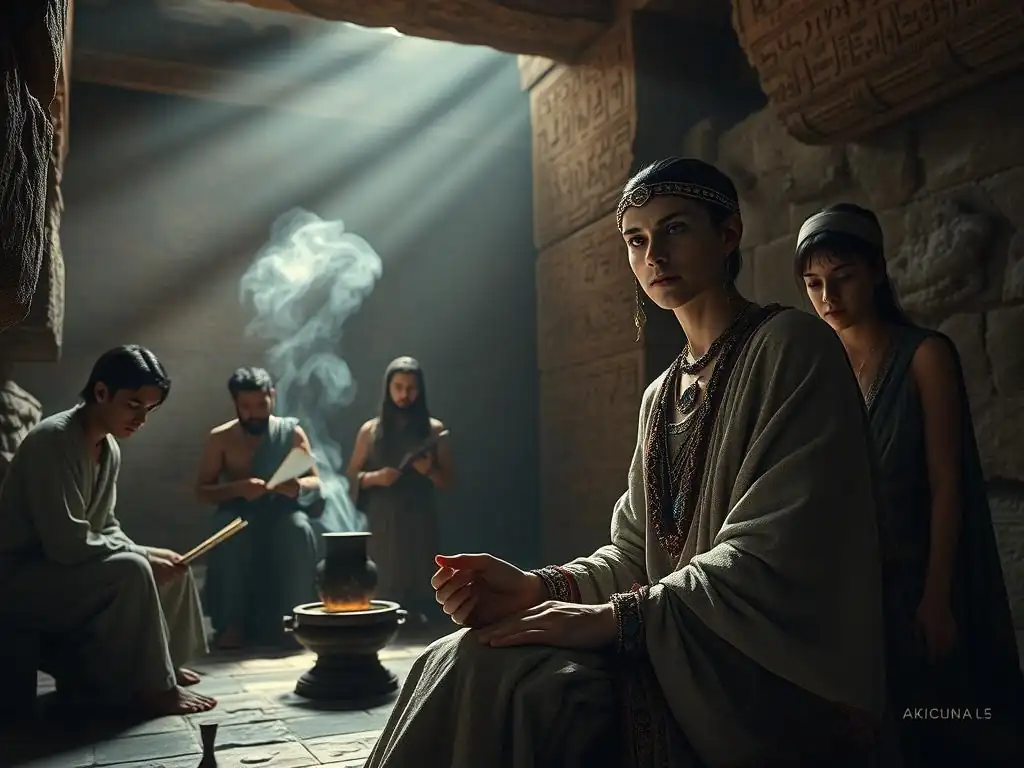
In ancient Egypt, mental disturbances were often viewed through a combined lens of physical ailment and spiritual affliction. While they recognized that the body could be sick, they also believed strongly in the influence of gods, demons, and angry spirits on human health, including the mind. Symptoms that we might now classify as mental illness could be attributed to curses, divine punishment, or the intrusion of malevolent entities. This perspective meant that the boundary between physical medicine and religious or magical practices was often blurred when addressing conditions affecting the mind.
Egyptian physicians, known as swnw, and priests worked in concert to address illness, including mental distress. Temples served not only as places of worship but also as centers for healing, sometimes housing individuals suffering from various ailments, possibly including those with mental health issues. The focus was often on restoring harmony, whether it was harmony within the body, harmony with the divine world, or harmony within society, suggesting a holistic view that encompassed more than just physical symptoms.
Egyptian Healing Practices: Prayers, Incantations, and Herbal Remedies
Ancient Egyptian healing practices for mental disturbances involved a combination of spiritual and physical interventions. Priests would perform rituals, recite incantations, and offer prayers to specific deities, such as Sekhmet (goddess of healing and destruction) or Thoth (god of wisdom and magic), to appease angry spirits or seek divine aid. These spiritual approaches were considered vital for addressing the perceived supernatural causes of affliction.
Simultaneously, Egyptian physicians utilized a range of herbal remedies and physical treatments. While specific texts detailing mental health treatments are rare compared to those for physical ailments, surviving papyri mention treatments for headaches, anxiety, and what might be interpreted as depression. These treatments often involved administering potions made from herbs, applying poultices, or using aromatherapy with calming scents. The goal was often to restore balance within the body, complementing the spiritual efforts to restore balance with the external, unseen forces. This dual approach exemplifies the multifaceted nature of ancient culture madness treatment in Egypt.
The Ebers Papyrus: Descriptions of Mental Disturbances and Treatments
The Ebers Papyrus, dating back to approximately 1550 BCE, is one of the most important medical texts from ancient Egypt and provides some insight into their understanding and treatment of various ailments, including conditions that might be related to mental health. While it doesn't use modern terminology, it describes symptoms such as anxiety, restlessness, and what is referred to as "a mind that wanders" or "forgetfulness," which could encompass states of confusion or cognitive decline.
One notable passage describes a treatment for a condition characterized by anxiety and heart palpitations, recommending a mixture of herbs like cumin, coriander, and goose grease to be ingested. While primarily focused on physical symptoms, this reflects the Egyptian belief that mental distress was often linked to bodily functions, particularly the heart, which they considered the seat of both emotion and intellect. The Ebers Papyrus, alongside other medical papyri like the Edwin Smith Papyrus (more focused on surgery), offers glimpses into the pragmatic as well as the spiritual methods employed in ancient culture madness treatment within the Nile Valley.
Ancient Greece: The Dawn of Philosophical and Medical Approaches to Mental Health

From Divine Wrath to Natural Causes: The Greek Shift in Understanding Mental Illness
Ancient Greek thought marked a significant transition in the understanding of mental illness, moving gradually from purely supernatural explanations towards more naturalistic ones. Early beliefs, prominent in Homeric epics, often attributed madness ( mania) to the wrath of gods, such as Dionysus or the Furies, or possession by demonic spirits. Individuals experiencing fits or delusions might be seen as either cursed or, paradoxically, divinely inspired, like the Oracle of Delphi.
However, beginning around the 6th and 5th centuries BCE, philosophers and early physicians began to propose alternative explanations. Thinkers like the Pre-Socratics started seeking rational causes for natural phenomena, paving the way for medical theories that linked illness, including mental distress, to imbalances within the body. This intellectual shift was crucial, laying the foundation for a more clinical approach to understanding and attempting ancient culture madness treatment, separating it, at least partially, from the exclusive domain of priests and divine intervention.
Hippocrates and the Humoral Theory: Balancing the Body and Mind
Hippocrates of Kos (c. 460–370 BCE), often called the "father of Western medicine," was pivotal in advancing the idea that illnesses, including mental disturbances, had natural, not supernatural, causes. His school of thought developed the humoral theory, which proposed that the body contained four basic fluids or "humors": blood, yellow bile, black bile, and phlegm. Health was believed to depend on the proper balance of these humors, and an imbalance could lead to illness.
According to the humoral theory, specific mental conditions were linked to excesses or deficiencies of certain humors. For example, melancholia (depression) was associated with an excess of black bile, while mania was linked to an excess of yellow bile. Consequently, Hippocratic ancient culture madness treatment focused on restoring humoral balance through diet, exercise, purgatives (like laxatives or emetics), bloodletting, and lifestyle changes. This systematic approach, based on observation and logical reasoning, represented a major step towards a medical model of mental illness, influencing Western medicine for centuries.
Asclepius Sanctuaries: Holistic Healing and Dream Interpretation
Despite the rise of naturalistic medical theories, religious healing practices remained important in ancient Greece. Sanctuaries dedicated to Asclepius, the god of medicine, were popular centers for healing, offering a more holistic approach that combined religious ritual with therapeutic practices. Patients would travel to these sanctuaries, such as the famous one at Epidaurus, seeking cures for various ailments, including those affecting the mind.
Healing rituals at Asclepius sanctuaries often involved purification rites, sacrifices, and importantly, incubation – sleeping within the sacred temple precincts hoping to receive a divine dream ( oneiros) from Asclepius or his daughters (like Hygieia or Panacea) that would reveal the cause of their illness or the path to recovery. Priests or trained interpreters would help patients understand these dreams.
The healing process also incorporated elements like soothing music, baths, exercise, and a calming environment, suggesting an awareness of the impact of psychological factors and environment on well-being, even if understood through a religious framework. This blending of spiritual, psychological, and physical elements characterized some ancient culture madness treatment approaches.
Plato's Views on Mental Disorder and the Soul
The philosopher Plato (c. 428–348 BCE) also contributed significantly to the discussion of the mind and its disorders, although from a philosophical rather than purely medical perspective. In works like the Phaedrus, he discussed different types of mania, distinguishing between pathological madness and a divinely inspired frenzy, such as poetic, prophetic, or erotic passion, which he saw as potentially beneficial or even necessary for certain forms of creativity and insight.
Plato's tripartite theory of the soul – comprising reason (λογιστικόν), spirit (θυμοειδές), and appetite (ἐπιθυμητικόν) – provided a framework for understanding internal conflict and psychological imbalance. He believed that mental harmony depended on reason governing the spirit and appetites. Disorders could arise from the appetites or spirit overpowering reason, or from disruptions to the soul's connection with the eternal Forms. While not proposing specific treatments like physicians, Plato's emphasis on the importance of reason, education, and achieving inner harmony influenced later philosophical and even psychological thought regarding the nature of mental well-being and distress.
Roman society inherited many Greek ideas about medicine and philosophy, but their approach to mental illness was also shaped by their strong emphasis on social order, duty ( pietas), and practical matters. While some Roman thinkers adopted the humoral theory, popular attitudes often remained superstitious, viewing madness as potentially caused by displeased gods, curses, or demonic forces. Stigma was common, and individuals exhibiting severe mental disturbances could face social exclusion or confinement.
Roman law and social norms reflected a pragmatic, often harsh, view of individuals deemed mentally incompetent. The term furiosus was used in legal contexts to describe someone driven by frenzy or lacking rational control, making them incapable of managing their affairs or being held fully accountable for their actions. This legal definition highlights that mental state had significant social and political implications in Rome, impacting an individual's rights and status within the family and wider community.
Galen's Contributions: Building on Greek Medical Knowledge
Galen of Pergamon (129–c. 210 CE), a Greek physician who practiced in Rome, was the most influential medical authority of the Roman era and synthesized much of the existing Greek medical knowledge, including the humoral theory. He expanded upon Hippocrates' ideas, conducting detailed anatomical studies (though often based on animals) and developing complex theories about the body's systems, including the brain and nervous system.
Galen wrote extensively on various ailments, including those affecting the mind. He discussed conditions like melancholy, mania, and hysteria, attributing them to imbalances of humors, blockages in the body's systems, or even external factors like head injuries or emotional stress.
His ancient culture madness treatment recommendations often involved dietary regulation, exercise, baths, herbal remedies, and sometimes even psychological approaches like talking therapies, particularly for conditions like melancholy, which he linked to the brain. Galen's voluminous writings dominated medical thought for over a thousand years, solidifying the humoral model as the primary framework for understanding and treating illness, including mental disorders, throughout the Roman Empire and beyond.
Roman law had specific provisions regarding individuals deemed furiosus (mad) or mente captus (mentally impaired). These laws were less concerned with therapeutic intervention and more with protecting the individual's property and ensuring social order. A furiosus was considered legally incapable of making contracts, writing a will, or participating in legal proceedings. Their actions were often not considered legally binding, as they were presumed to lack intent or understanding.
The primary response within the legal framework was the appointment of a guardian ( curator) to manage the individual's property and affairs. This was often a family member. While this provided a form of protection for the individual's assets, it also effectively removed their legal autonomy.
There were no state-sponsored institutions for the mentally ill in the modern sense; care, when provided, was primarily the responsibility of the family. Severe cases that posed a danger might be confined, but this was usually done privately by families or local authorities rather than in dedicated facilities focused on ancient culture madness treatment.
Guardianship and Property Rights of Individuals Deemed "Furiosus"
The legal status of the furiosus in Roman law centered heavily on their inability to manage their own affairs, particularly property. The Twelve Tables, Rome's earliest legal code (c. 450 BCE), already contained provisions for the guardianship of the mentally ill. If an individual was declared furiosus, their closest male relatives (agnates) were designated as their guardians ( curatores), tasked with administering their estate.
This system of guardianship was primarily designed to prevent the family's wealth from being squandered by someone deemed irrational. The curator had broad powers over the furiosus's property but was also expected to provide for their basic needs. This legal framework highlights the Roman emphasis on the family as the primary social and economic unit and the state's role in preserving property rights, even for those considered incapable of exercising them themselves. While providing a form of legal protection for assets, it offered little in the way of medical or therapeutic ancient culture madness treatment.
Ancient China: Harmony, Balance, and Traditional Chinese Medicine (TCM)
The Concept of "Shen" (Spirit) and its Importance in Mental Health
In ancient China, understanding mental health was deeply rooted in philosophical and medical concepts emphasizing harmony and balance, particularly within the framework of Traditional Chinese Medicine (TCM). A central concept related to mental well-being is Shen (神), often translated as "Spirit" or "Mind-Spirit." Shen is considered one of the body's vital substances (alongside Qi, Blood, Jing, and Body Fluids) and is associated with consciousness, thought, memory, emotions, and personality. It is said to reside primarily in the Heart organ system according to TCM theory.
A disturbance or imbalance of Shen is believed to be a primary cause of mental and emotional disorders in TCM. Symptoms such as insomnia, anxiety, palpitations, poor memory, disorientation, or even severe mental confusion and erratic behavior are often attributed to a disordered Shen. Therefore, restoring the balance and stability of Shen is a fundamental goal in ancient culture madness treatment within the TCM system, involving addressing the underlying imbalances affecting the Heart and other related organ systems.
Traditional Chinese Medicine (TCM) Approaches: Acupuncture, Herbal Remedies, and Qi Gong
Traditional Chinese Medicine offers a comprehensive system of ancient culture madness treatment based on restoring the flow of Qi (vital energy), balancing Yin and Yang, and harmonizing the organ systems. For mental health issues, TCM practitioners employ a variety of techniques. Acupuncture involves inserting fine needles into specific points on the body's meridians to regulate Qi flow and influence the function of internal organs, including those associated with Shen. For example, points on the Heart meridian or points known to calm the spirit are frequently used for anxiety or insomnia.
Herbal medicine is another cornerstone of TCM treatment for mental conditions. Complex formulas are prescribed based on the individual's specific pattern of imbalance, aiming to nourish blood, soothe the liver, clear heat, or calm the spirit. Qi Gong, a mind-body practice involving gentle movements, breathing techniques, and meditation, is also recommended to cultivate and balance Qi and Shen, promoting relaxation and mental clarity. These practices underscore the TCM belief that mental and physical health are inseparable and require a holistic approach.
The Role of Family and Community in Supporting Mental Well-being
In traditional Chinese society, the family and community played a vital role in the care and support of individuals experiencing mental health challenges. Filial piety and collective responsibility were strong cultural values, meaning that the care of family members, including those with illnesses, was primarily the responsibility of the family unit. There were no state-run asylums or widespread institutional care in the Western sense for most of ancient Chinese history.
Individuals with mental health issues were typically cared for within the family home. While this provided a level of support and integration, it also meant that the burden of care fell heavily on relatives. The community might offer informal support, but understanding and tolerance varied. Severe cases could sometimes lead to ostracism or confinement within the home. The emphasis on family and social harmony meant that disturbances to an individual's mental state were also seen as potentially disruptive to the family and social order, influencing how they were managed.
The Use of "An Shen Bu Xin Wan" (Calm the Spirit Nourish the Heart Pill)
A classic example of a traditional Chinese herbal formula used for mental and emotional distress is An Shen Bu Xin Wan, which translates to "Calm the Spirit Nourish the Heart Pill." This formula is typically used in TCM to address patterns characterized by Yin deficiency and Blood deficiency affecting the Heart, leading to symptoms such as insomnia, palpitations, anxiety, dizziness, and irritability.
The ingredients in An Shen Bu Xin Wan often include herbs like Suan Zao Ren (酸枣仁 - Ziziphus jujuba seed) to nourish the Heart and calm the spirit, Sheng Di Huang (生地黄 - Rehmannia root) to nourish Yin, and Dang Gui (当归 - Angelica sinensis) to nourish Blood. This formula exemplifies the TCM principle of addressing mental symptoms by treating underlying physical imbalances, particularly those related to the Heart and the nourishment of Shen. Its continued use today highlights the enduring legacy of these ancient Chinese approaches to ancient culture madness treatment.
Ancient India: Ayurveda, Yoga, and Spiritual Practices for Mental Wellness
Ayurvedic Principles: Balancing Doshas for Mental Equilibrium
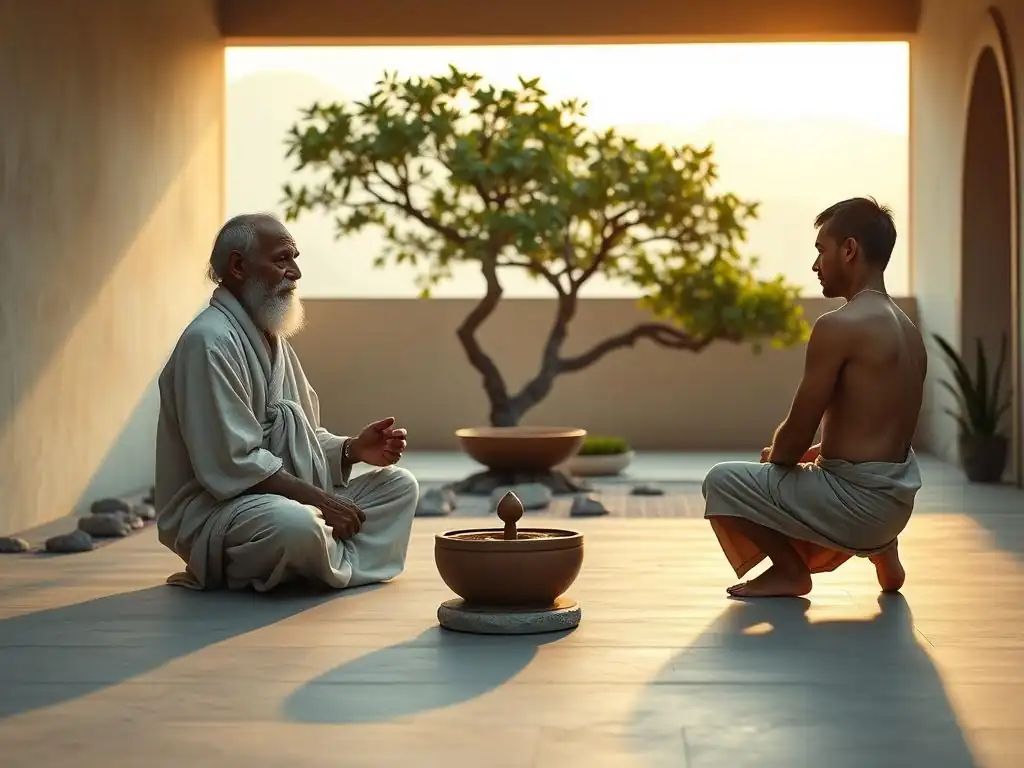
In ancient India, the primary system for understanding health and illness, including mental well-being, was Ayurveda, a holistic medical system that originated thousands of years ago. Ayurveda views the individual as an integrated whole, where mind, body, and spirit are interconnected. Health is seen as a state of balance among the three fundamental energies or doshas: Vata (associated with air and space), Pitta (fire and water), and Kapha (earth and water). Each person has a unique constitution ( prakriti) based on the combination of these doshas.
Mental equilibrium, known as sattva, is considered the ideal state. Mental imbalances or disorders ( manovikara) are believed to result from disturbances in the doshas, particularly Vata (associated with the nervous system and movement, including thoughts) and Pitta (associated with metabolism and transformation, including emotions like anger). Excessive stress, improper diet, environmental factors, or unresolved emotions can aggravate doshas, leading to symptoms like anxiety (aggravated Vata), irritability (aggravated Pitta), or lethargy and depression (aggravated Kapha). Ayurvedic ancient culture madness treatment aims to restore dosha balance through personalized diet, lifestyle changes, herbal medicines, and detoxification therapies.
The Power of Yoga and Meditation in Managing Mental Distress
Yoga and meditation, practices deeply rooted in ancient Indian spiritual traditions, are integral components of Ayurvedic and general wellness approaches, including the management of mental distress. Yoga, encompassing physical postures ( asanas), breathing techniques ( pranayama), and meditation ( dhyana), is believed to help calm the nervous system, reduce stress, and improve mental clarity. Different asanas are recommended to balance specific doshas or energy centers ( chakras) associated with emotional states.
Meditation practices, focusing on mindfulness, concentration, or contemplation, are central to calming the turbulent mind ( chitta vritti). Techniques described in texts like the Yoga Sutras of Patanjali aim to quiet the fluctuations of consciousness, leading to a state of peace and self-awareness. These practices were not just seen as therapeutic but as pathways to higher consciousness and spiritual liberation. Their inclusion in ancient Indian approaches highlights a unique focus on self-discipline and inner work as key components of ancient culture madness treatment and overall mental well-being.
Spiritual and Philosophical Perspectives on the Nature of the Mind
Ancient Indian philosophy, particularly schools like Vedanta and Samkhya, explored the nature of consciousness, the mind ( manas), intellect ( buddhi), and ego ( ahamkara). Mental suffering was often viewed as a consequence of ignorance ( avidya), attachment ( raga), aversion ( dvesha), and egoism, leading to a distorted perception of reality. The goal of spiritual practices was to transcend these limitations and realize the true, peaceful nature of the Self ( Atman).
Texts like the Bhagavad Gita discuss the importance of controlling the mind and senses, recognizing that an uncontrolled mind can be one's greatest enemy, leading to anxiety, sorrow, and confusion. Spiritual teachers and gurus offered guidance on ethical living ( dharma), selfless action ( karma yoga), devotion ( bhakti yoga), and knowledge ( jnana yoga) as paths to purify the mind and attain inner peace.
These philosophical underpinnings provided a framework for understanding the root causes of mental distress that went beyond mere physical or humoral imbalances, offering a path towards psychological and spiritual liberation as a form of ancient culture madness treatment.
The Role of Chanting and Meditation in Reducing Anxiety
Specific practices like chanting ( mantra japa) and various forms of meditation ( dhyana) were widely used in ancient India to alleviate mental and emotional distress, particularly anxiety and restlessness (often associated with aggravated Vata). Chanting sacred sounds or phrases was believed to create calming vibrations, focus the mind, and connect the individual to spiritual energy. Different mantras were used for different purposes, including promoting peace, courage, or clarity.
Meditation techniques, such as focusing on the breath ( pranayama leading to dhyana), contemplating a specific object or idea, or practicing mindfulness, were taught to quiet the incessant chatter of the mind. By training the mind to remain present or focused, these practices helped reduce worry about the past or future, which are often sources of anxiety. The regular practice of chanting and meditation was considered a powerful tool for cultivating inner stillness and resilience, forming a significant part of the ancient culture madness treatment toolkit focused on the mind and spirit.
Cross-Cultural Comparisons: Common Threads and Divergent Approaches to Treating Mental Illness
Similarities in Beliefs: Supernatural Influences and Spiritual Explanations
Despite vast geographical distances and cultural differences, ancient civilizations shared some striking similarities in their beliefs about the causes of mental illness. A common thread across Egypt, Greece, Rome, China, and India was the notion that supernatural forces could influence mental states. Whether attributed to angry gods (Greece, Rome), malevolent spirits (Egypt, China), curses, or divine punishment, the idea that forces beyond ordinary human control could disrupt the mind was prevalent.
This shared belief led to the widespread use of spiritual and religious interventions as part of ancient culture madness treatment. Practices such as prayers, incantations, exorcism-like rituals (to expel spirits), appeasing deities through sacrifices, and seeking divine dreams or omens were common responses to mental distress perceived as having a supernatural origin. This highlights a universal human tendency to look for explanations and remedies in the unseen world when faced with phenomena that defy simple physical understanding.
Differences in Treatment Methods: From Herbal Remedies to Ritualistic Practices
While supernatural beliefs provided common ground for explaining causes, the specific methods of ancient culture madness treatment varied significantly between cultures, reflecting their unique medical systems, available resources, and philosophical orientations. Greek and Roman medicine, influenced by Hippocrates and Galen, leaned towards naturalistic explanations like humoral imbalance and employed physical treatments such as diet, exercise, baths, purgatives, and herbal remedies aimed at restoring bodily balance.
In contrast, Egyptian treatment combined herbal remedies with a strong emphasis on magical spells and religious rituals performed by priests. Ancient Chinese medicine focused on balancing Qi and organ systems through acupuncture, complex herbal formulas like An Shen Bu Xin Wan, and practices like Qi Gong. Ancient Indian Ayurveda used diet, herbs, detoxification, and emphasized mind-body practices like Yoga and meditation, alongside spiritual guidance. These diverse approaches demonstrate how cultural context shaped the practical application of ancient culture madness treatment, ranging from physically invasive methods to subtle energy work and profound spiritual practices.
The Enduring Legacy: How Ancient Concepts Shaped Modern Mental Health Understanding
The concepts and practices developed in ancient cultures, despite their limitations by modern scientific standards, have left an enduring legacy on how we understand and approach mental health. The Greek shift towards naturalistic explanation laid the groundwork for the medical model that dominates psychiatry today, focusing on biological and psychological factors. The humoral theory, though incorrect, was an early attempt at a systematic, body-based explanation for mental states.
From ancient Egypt's holistic view of mind-body connection to China's emphasis on energy flow and balance (Qi) and India's focus on the mind's nature through Yoga and meditation, ancient traditions offered insights into the complexity of mental well-being that resonate with modern concepts of holistic health, mindfulness, and the mind-body connection. While ancient culture madness treatment often lacked empirical validation and could be intertwined with harmful superstitions, these historical perspectives provide valuable context for appreciating the evolution of mental health care and the persistent human effort to alleviate suffering.
Conclusion: Reflecting on Ancient Wisdom and Modern Challenges in Mental Health Care
Lessons Learned from Ancient Approaches to Mental Well-being
Examining ancient culture madness treatment practices reveals several valuable lessons that remain relevant today. Firstly, many ancient cultures recognized the interconnectedness of mind, body, and spirit, advocating for holistic approaches that addressed lifestyle, environment, and internal state alongside physical symptoms. This contrasts with periods in modern history where mental illness was often viewed in isolation or purely as a brain disease. The emphasis on balance, harmony, and the influence of external factors (social, environmental, spiritual) on mental health is a perspective regaining prominence in contemporary integrative medicine and psychology.
Secondly, the role of community and family support, while sometimes involving stigma or confinement, was a primary mode of care in many ancient societies. This highlights the fundamental human need for connection and support in times of distress, a lesson pertinent in modern societies struggling with social isolation. While ancient methods often lacked scientific basis and could be ineffective or harmful, their underlying intention to restore the individual to a state of balance and function within their context offers a historical perspective on the enduring goals of mental health care.
The Importance of Cultural Sensitivity in Mental Health Treatment Today
The vast diversity in ancient culture madness treatment approaches underscores the profound influence of culture on the perception, explanation, and management of mental illness. What is considered "normal" or "abnormal" behavior, how symptoms are expressed, whom individuals turn to for help, and what types of interventions are deemed acceptable or effective are all deeply shaped by cultural beliefs and practices.
For modern mental health care, this historical perspective highlights the critical importance of cultural sensitivity and humility. Effective treatment must consider the individual's cultural background, beliefs about illness, and existing support systems. Acknowledging that historical and cultural factors have always influenced the experience of mental distress is crucial for developing inclusive, equitable, and effective mental health services that respect diverse perspectives on well-being and healing. Understanding ancient culture madness treatment helps us appreciate the varied human responses to mental suffering across time and place.
The Ongoing Quest to Understand and Alleviate Madness Throughout History
From attributing mental distress to divine displeasure in ancient Egypt and Greece, to seeking humoral balance in Rome, harmonizing Shen in China, and cultivating inner peace through Yoga in India, the history of ancient culture madness treatment is a testament to humanity's persistent quest to understand and alleviate suffering of the mind. These early efforts, though often based on limited scientific understanding, represent foundational attempts to categorize symptoms, theorize causes, and develop interventions.
While modern neuroscience, pharmacology, and psychotherapy offer vastly different tools and explanations, the core challenges remain: reducing stigma, providing compassionate care, finding effective treatments, and integrating individuals experiencing mental health challenges into society. Reflecting on how ancient cultures grappled with these issues offers valuable context, reminding us that the journey towards comprehensive and compassionate mental health care is a long and evolving one, built upon millennia of human experience and diverse attempts to navigate the complex landscape of the mind beyond reason.
Frequently Asked Questions
How did ancient cultures generally view mental illness?
Ancient cultures often attributed mental illness to supernatural forces like curses, demonic possession, or the wrath of gods. Treatment often involved spiritual interventions and rituals aimed at appeasing these forces. The understanding of biological causes was limited.
What were some common treatment methods for "madness" in ancient societies?
Common methods included exorcism, religious rituals, trepanation (drilling holes in the skull), and herbal remedies. Some cultures also used isolation and confinement as a means of managing individuals with mental illness. The efficacy of these treatments varied greatly.
How did the ancient Greeks and Romans approach mental illness compared to other cultures?
While still acknowledging spiritual elements, the Greeks and Romans began to explore natural explanations for mental illness. They utilized diet, exercise, and therapeutic baths, along with philosophical discussions, as part of their treatments. Hippocrates is a notable figure in this shift.
Did any ancient cultures show compassion or understanding towards those with mental illness?
Yes, while stigma existed, some ancient cultures demonstrated empathy. Certain communities offered shelter and care within temples or dedicated spaces. The level of compassion, however, fluctuated based on cultural beliefs and the severity of the symptoms.
How can understanding ancient approaches to madness inform modern mental health care?
Studying ancient practices highlights the evolution of our understanding of mental illness. We can learn from both the limitations and potential benefits of holistic approaches that consider the mind-body connection. It also underscores the importance of reducing stigma and promoting compassionate care.
Final Reflection: Echoes of the Past, Whispers of the Present
The ways ancient cultures understood and treated madness offer a stark contrast to modern approaches, yet their enduring legacy continues to shape our perceptions of mental illness. The seemingly disparate methods employed across diverse societies—from trepanation to shamanistic rituals—reveal a fundamental human struggle to comprehend and alleviate suffering stemming from the mind. This struggle, far from being relegated to the past, remains profoundly relevant in our own time.
The enduring power of ancient beliefs about madness is evident in the persistence of stigma and misunderstanding surrounding mental health today. While our scientific understanding has advanced significantly, the emotional and social challenges faced by individuals experiencing mental distress often mirror the isolation and fear experienced in ancient societies. The madman is not simply a person who is ill; he is a person who is ill and who is also different, who is set apart from the rest of society.
This quote highlights the persistent societal challenge of integrating those experiencing mental illness into the community, a challenge that transcends time and culture.
Consider the echoes of ancient practices in contemporary approaches. While we no longer use trepanation, the search for effective treatments, the desire to alleviate suffering, and the fundamental human need to understand the inexplicable remain constant.
You, the reader, are invited to reflect on this: How can we learn from the past to build a more compassionate and understanding future for those struggling with mental illness? Let the wisdom – and the limitations – of ancient approaches inspire you to advocate for better mental health care, to challenge stigma, and to foster a society that embraces diversity of mind and experience.
Unveil Your Understanding of Ancient Perspectives on Madness
Thanks for exploring the fascinating world of how ancient cultures viewed and treated madness! We hope you gained a deeper appreciation for the complexities of mental health across history. Now, let's turn that newfound knowledge into action:
- Delve deeper: Research a specific ancient culture's approach to mental illness. Choose one that particularly resonated with you and uncover its unique methods of diagnosis, treatment, and societal integration. This could involve exploring academic journals, historical texts, or even visiting museums with relevant artifacts.
- Share your insights: Discuss your findings with friends, family, or online communities. Spark a conversation about the evolution of mental health understanding. What similarities or differences do you see between ancient practices and modern approaches?
- Consider the parallels: Reflect on how societal attitudes towards mental health have changed (or haven't changed) and what lessons we can learn from the past.
What unexpected connection between ancient and modern perspectives on mental health surprised you the most?