
5Minute Mental TuneUps: Quick SelfCare Fixes That Work

Welcome to Mind Care Guide, where your journey to mental well-being begins! In a world that often feels overwhelming, it's essential to equip ourselves with effective tools for self-care. Our latest article, "5-Minute Mental Tune-Ups: Quick Self-Care Fixes That Work," unveils powerful strategies for achieving immediate boosts in your mental health. Whether you’re looking for a quick pick-me-up during a busy day or seeking to enhance your overall well-being, these quick self-care mental boosts are here to support you. Dive in and discover how just a few moments can transform your mindset and enrich your life!
5-Minute Mental Tune-Ups: Quick Self-Care Fixes That Work
- Introduction: The Power of Quick Mental Boosts for Self-Care
- 5 Effective 5-Minute Mental Tune-Ups for Instant Self-Care
- Integrating Quick Self-Care into Your Daily Routine
- Overcoming Barriers to Quick Self-Care
- Conclusion: Embrace the Power of Quick Mental Boosts for a Healthier Mind
-
Frequently Asked Questions
- What are some examples of "Quick selfcare mental boosts" mentioned in the article?
- How can these "Quick selfcare mental boosts" benefit me?
- How often should I incorporate these "Quick selfcare mental boosts" into my daily routine?
- Are these "Quick selfcare mental boosts" a replacement for professional mental health support?
- Where can I find more resources and information related to mental well-being, similar to what's offered in the article?
- Final Reflection: The Ripple Effect of Tiny Self-Care Acts
- Unleash Your Inner Calm: Start Your Self-Care Journey Now!
Introduction: The Power of Quick Mental Boosts for Self-Care
Why Prioritize Short Self-Care Practices?
In the relentless pace of modern life, finding extended periods for self-care can feel like an impossible luxury. Yet, neglecting our mental well-being, even for short stretches, can lead to increased stress, burnout, and diminished overall health. Prioritizing short self-care practices isn't about replacing longer, deeper sessions, but about creating consistent moments of respite and rejuvenation that are easily integrated into busy schedules. These quick selfcare mental boosts act as vital check-ins, preventing stress from accumulating and providing immediate relief when feeling overwhelmed.
The cumulative effect of these brief interventions is significant. Just five minutes dedicated to a calming activity can interrupt negative thought patterns, lower physiological stress markers like heart rate and cortisol levels (studies often show a reduction in these markers even after short relaxation periods), and restore a sense of control. This makes quick self-care practices not just convenient, but essential tools for maintaining resilience and emotional balance in the face of daily demands. They are accessible, require minimal preparation, and offer a high return on investment for your mental health.
The Importance of Mental Tune-Ups in a Busy Life
Our minds, much like complex machinery, require regular maintenance to function optimally. In a busy life filled with deadlines, responsibilities, and constant stimulation, the cognitive load can become immense, leading to fatigue, irritability, and reduced focus. Mental tune-ups, especially those achievable in just five minutes, serve as critical circuit breakers, allowing the brain a brief pause to reset and recharge. This isn't merely about relaxation; it's about proactive mental hygiene that prevents overload and enhances cognitive function.
Think of it like a quick software update for your brain. Spending a few minutes on a targeted practice can improve attention span, boost creativity, and enhance problem-solving abilities. For example, a short burst of mindfulness can help shift perspective on a challenging task, or a quick gratitude exercise can reframe a frustrating morning. These brief mental boosts are particularly crucial during transitional moments of the day – before a stressful meeting, during a lunch break, or even while commuting – providing moments of calm and clarity that sustain productivity and emotional stability throughout the day.
5 Effective 5-Minute Mental Tune-Ups for Instant Self-Care
1. Mindful Breathing Exercises for Quick Stress Relief
Mindful breathing is perhaps one of the most accessible and effective methods for achieving quick selfcare mental boosts. Focusing on your breath anchors you to the present moment, interrupting the cycle of anxious thoughts about the past or future. Just a few minutes of conscious, deep breathing can activate the body's parasympathetic nervous system, often referred to as the "rest and digest" system, which counteracts the stress response initiated by the sympathetic nervous system ("fight or flight"). This physiological shift can lead to an almost immediate sense of calm and reduced tension.
Research consistently demonstrates the power of breathwork. For instance, controlled breathing techniques have been shown to reduce heart rate variability, a key indicator of stress, and lower blood pressure. Even a short practice, like focusing on extending your exhale slightly longer than your inhale for five minutes, can signal to your brain that you are safe and can relax. This simple act requires no special equipment or location, making it an ideal go-to strategy whenever you feel stress levels rising, offering a rapid and effective way to achieve a mental tune-up.
How to Practice Box Breathing in 5 Minutes
Box breathing, also known as square breathing, is a simple yet powerful technique perfect for a 5-minute mental tune-up. It involves inhaling, holding the breath, exhaling, and holding the breath again, all for equal counts, typically four seconds each. To practice: find a comfortable seated position or stand tall. Gently close your eyes or soften your gaze. Inhale slowly through your nose for a count of four.
Hold your breath for a count of four. Exhale slowly through your mouth for a count of four. Hold your breath again for a count of four. Repeat this cycle for five minutes.
This rhythmic pattern provides a focal point for your mind, distracting it from stressors while regulating your breath. The equal counts help to balance the nervous system. Practicing this just once or twice can significantly reduce feelings of panic or anxiety. Over five minutes, you can complete approximately 15 cycles, creating a substantial period of focused, calming breathwork that provides a significant quick selfcare mental boost. It's a portable tool you can use anywhere – before a presentation, during a difficult conversation, or whenever you need a moment of calm.
Benefits of Deep Breathing for Mental Clarity
Beyond immediate stress reduction, engaging in deep breathing exercises offers notable benefits for mental clarity. When stressed, our breathing often becomes shallow and rapid, which can limit oxygen flow to the brain and exacerbate feelings of fogginess or difficulty concentrating. Deep, controlled breathing, conversely, promotes better oxygen exchange, which can enhance cognitive function and improve focus. This increased oxygenation helps quiet the mental chatter and allows for clearer thinking and decision-making.
Regular short bouts of deep breathing can also improve emotional regulation. By consciously controlling your breath, you gain a sense of agency over your physiological state, which can translate into feeling more in control of your emotional responses. This practice trains the mind to be less reactive and more grounded. Even a 5-minute session can help you feel more centered and present, making it easier to tackle tasks with a clearer mind and reduced mental clutter, proving its value as a quick selfcare mental boost.
2. Gratitude Journaling: A Quick Path to Positive Thinking
Cultivating gratitude is a powerful practice scientifically linked to improved mental well-being. The simple act of acknowledging things you are thankful for, even small ones, shifts your focus away from negativity and towards the positive aspects of your life. This redirection of attention can interrupt rumination on problems and promote a more optimistic outlook. While extensive journaling is beneficial, even a 5-minute burst of gratitude journaling can significantly impact your mood and perspective, offering a potent quick selfcare mental boost.
Research from positive psychology indicates that regularly practicing gratitude can lead to increased happiness, reduced depression and anxiety symptoms, and even improved physical health. Participants in studies who kept gratitude journals often report feeling more optimistic and satisfied with their lives after just a few weeks. The beauty of a 5-minute practice is its attainability; it removes the barrier of needing significant time, making it a sustainable habit that consistently reinforces positive thought patterns throughout your day.
Simple Gratitude Prompts for a 5-Minute Journal Entry
To make a 5-minute gratitude journaling session effective, having a few simple prompts can quickly guide your thoughts. You don't need a fancy journal; a simple notebook or even a note on your phone will suffice. Start by dating your entry. Then, choose one or two prompts and jot down a few sentences or bullet points. Examples of prompts include:
- Three small things that went well today.
- One person you are grateful for and why.
- Something beautiful you saw or experienced today.
- One skill or ability you appreciate about yourself.
- Something simple you often take for granted (like clean water or a warm bed).
Spending just 60 seconds on each prompt can fill your 5 minutes with positive reflection. The key is to focus on the feeling of gratitude as you write, not just listing items. This brief but focused reflection helps solidify the positive emotion and retrain your brain to notice the good things in your life, making it an efficient and effective quick selfcare mental boost.
The Link Between Gratitude and Improved Mental Well-being
The connection between expressing gratitude and enhanced mental well-being is well-documented. When you focus on what you appreciate, it activates areas in the brain associated with reward and pleasure. This shift in focus reduces activity in areas linked to stress and negative emotions. Furthermore, gratitude often involves recognizing the contributions of others in your life, which strengthens social bonds – a crucial factor in mental health.
Practicing gratitude regularly, even in 5-minute bursts, helps build resilience. By consciously appreciating the good, you develop a buffer against adversity. When faced with challenges, a foundation of gratitude can help you maintain perspective and recognize that even amidst difficulty, there are still things to be thankful for. This shift from a deficit mindset to an abundance mindset is incredibly powerful for combating feelings of lack, dissatisfaction, and stress, solidifying gratitude as a powerful quick selfcare mental boost.
3. Sensory Grounding Techniques for Anxiety Relief
When anxiety hits, it often pulls your mind into overwhelming thoughts or future worries, disconnecting you from the present. Sensory grounding techniques are designed to rapidly bring you back to the here and now by engaging your five senses. This deliberate focus on external stimuli interrupts the anxious thought spiral and anchors you firmly in reality. These techniques are particularly effective for quick selfcare mental boosts because they can be performed discreetly and require no external tools, making them accessible in almost any situation.
The physiological effect of grounding is notable. By directing attention outwards to sensory input, you reduce the internal focus on anxious thoughts and bodily sensations associated with panic. This can help slow a racing heart, calm rapid breathing, and reduce feelings of dissociation. Techniques like focusing on the feeling of your feet on the ground or the sounds around you provide immediate, tangible anchors that counteract the feeling of being swept away by anxiety. Even a few minutes dedicated to these practices can significantly lower distress levels.
Engaging Your Senses for Immediate Calm
The core principle of sensory grounding is to deliberately notice what your senses are experiencing in the current moment. This simple act pulls your attention away from internal distress. You can focus on one sense at a time or cycle through them. For instance, take a moment to truly see the details of an object nearby, feel the texture of your clothing or a surface, hear the distinct sounds in your environment (separating them, e.g., traffic noise vs. ventilation fan), smell any faint scents around you, and taste the lingering flavor in your mouth or sip some water mindfully.
Spending even a minute or two on each sense, or cycling through them rapidly, provides a powerful distraction from anxiety-provoking thoughts. This practice trains your brain to focus on external reality rather than internal worry. It's a practical skill that becomes more effective with practice, offering a reliable pathway to immediate calm. Incorporating sensory checks throughout your day can serve as preventative quick selfcare mental boosts, keeping anxiety at bay before it escalates.
5-Minute Sensory Grounding Exercise: 5-4-3-2-1 Technique
The 5-4-3-2-1 technique is a popular and effective sensory grounding exercise perfect for a 5-minute mental tune-up when anxiety strikes. It systematically guides you through engaging each sense to anchor you in the present. To perform it: Start by taking a few deep breaths to center yourself. Then, look around and name 5 things you can see. Notice details like color, shape, or texture. Next, name 4 things you can feel. This could be the chair beneath you, your clothes, the temperature of the air, or a smooth object you touch.
Continue by naming 3 things you can hear. Listen carefully, distinguishing different sounds. Then, name 2 things you can smell. You might need to move slightly or sniff the air. Finally, name 1 thing you can taste. This could be residual taste from food or drink, or perhaps the inside of your mouth. This structured approach ensures you engage multiple senses, effectively interrupting anxious thought loops and providing a rapid return to the present moment, making it an invaluable quick selfcare mental boost tool.
4. Mini-Meditation: Finding Inner Peace in Just 5 Minutes
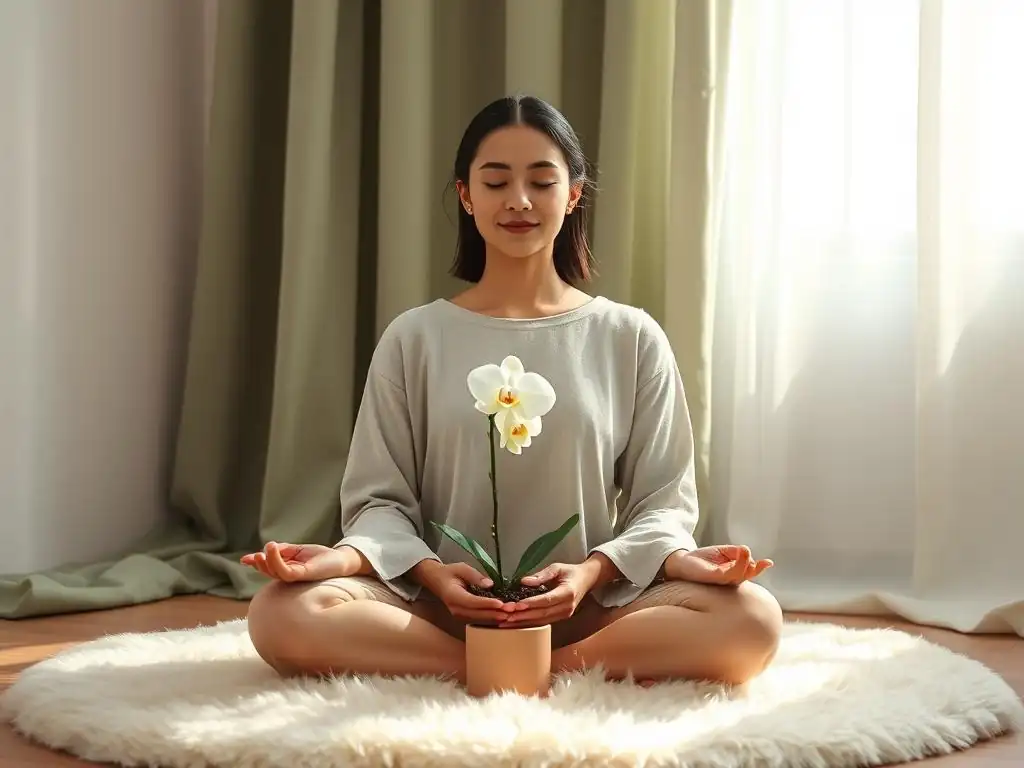
Meditation is widely recognized for its profound benefits on mental health, including reducing stress, improving focus, and fostering emotional regulation. While longer meditation sessions are powerful, even a 5-minute mini-meditation can offer significant quick selfcare mental boosts. The goal isn't to empty your mind, but to gently focus your attention – often on your breath, bodily sensations, or a simple mantra – and notice thoughts and feelings without judgment as they arise. This brief practice creates a mental pause that can refresh your perspective and calm your nervous system.
Regular short meditation practices have been shown to increase grey matter density in areas of the brain associated with learning, memory, and emotional regulation after just a few weeks. Even a single 5-minute session can lower heart rate and blood pressure, promoting a state of relaxation. It's a skill that improves with consistency; the more you practice taking these short mental breaks, the easier it becomes to find a sense of inner peace amidst daily chaos.
Guided Meditation Apps and Resources for Beginners
For those new to meditation or finding it difficult to focus independently, guided meditation apps and online resources offer excellent support for 5-minute sessions. Apps like Calm, Headspace, and Insight Timer provide libraries of short guided meditations specifically designed for quick breaks, often lasting just 3-5 minutes. These guides walk you through the process, making it easier to stay focused and reap the benefits quickly. Many platforms offer free basic content, making them accessible starting points.
Beyond apps, many websites and YouTube channels offer short guided meditations suitable for a quick mental tune-up. Searching for "5-minute guided meditation for stress" or "quick calming meditation" can yield numerous options. These resources provide structure and vocal guidance, which can be particularly helpful during times of high stress when focusing feels challenging. Utilizing these tools makes incorporating mini-meditation into your routine straightforward and effective.
Creating a Quiet Space for a Quick Meditation Session
While you can technically meditate anywhere, creating a designated 'quiet space' for your 5-minute session, even if temporary, can enhance the experience. This doesn't require a dedicated room. It could be a quiet corner of your office, a bench in a park, or even just sitting in your car during a break. The key is to minimize distractions as much as possible for those five minutes. Turn off notifications on your phone or put it on silent mode. Let others know you need a few moments of quiet, if possible.
Even in a noisy environment, you can create a mental quiet space by focusing your attention inward, perhaps using noise-canceling headphones. The intention is to signal to your brain that this is a time for pause and introspection. Consistency in using a particular spot, even if just for a few minutes daily, can train your mind to enter a more relaxed state more quickly upon arriving there. This simple act of carving out a brief sanctuary significantly boosts the effectiveness of your quick selfcare mental boost.
5. Positive Affirmations: Boost Your Self-Esteem Quickly
Positive affirmations are short, positive statements designed to challenge and overcome self-sabotaging and negative thoughts. Repeating affirmations, even for just five minutes, can help reprogram your subconscious mind, build self-esteem, and cultivate a more positive self-image. This practice is a powerful quick selfcare mental boost because it directly targets negative self-talk, which is often at the root of anxiety, low mood, and lack of confidence.
While affirmations alone may not solve deep-seated issues, consistent use can significantly impact your daily mindset. Psychologists suggest that repeating positive statements can activate the brain's reward centers and help create new neural pathways, gradually shifting your default thought patterns towards self-acceptance and confidence. Spending a few minutes each day focusing on positive truths about yourself provides a powerful counter-narrative to internal criticism and external negativity, offering a rapid and effective mental tune-up.
Crafting Powerful Affirmations for Mental Strength
Effective affirmations are personal, positive, present-tense, and specific. For a 5-minute practice, focus on a few key affirmations that resonate deeply with your current needs. Instead of saying "I wish I were confident," use "I am confident and capable." If you struggle with self-acceptance, try "I deeply and completely accept myself." If you're feeling overwhelmed, an affirmation like "I am calm and in control" can be helpful. Write them down first if that helps solidify them.
Keep your affirmations concise and easy to remember. Choose statements that feel believable to you, even if only slightly. The goal is to reinforce positive beliefs, not to state things that feel completely untrue, which can backfire. Having a list of 3-5 powerful affirmations ready allows you to quickly choose one or two to focus on during your 5-minute session, maximizing the impact of this quick selfcare mental boost.
Repeating Affirmations for 5 Minutes: A Simple Technique
Once you have your chosen affirmations, the practice is simple: repeat them, either silently to yourself or aloud, for five minutes. Find a quiet moment where you won't be interrupted. You can sit comfortably, stand tall, or even walk slowly while repeating. Focus on the meaning of the words and try to feel the truth of the statement as you say it. If your mind wanders, gently bring it back to the affirmation.
You can repeat a single affirmation multiple times or cycle through a few different ones. Some people find it helpful to look in a mirror while repeating them, connecting with themselves on a deeper level. The repetition helps to embed the positive message into your subconscious. This consistent, brief practice acts as a powerful quick selfcare mental boost, gradually building mental resilience and fostering a more positive internal dialogue throughout your day.
Integrating Quick Self-Care into Your Daily Routine
Scheduling 5-Minute Mental Tune-Ups Throughout the Day
Integrating 5-minute mental tune-ups effectively requires intentionality. The most effective way is to schedule them, just like any other important appointment. Look at your daily schedule and identify natural transition points or potential stress points where a brief mental boost would be beneficial. This could be upon waking, before starting work, during your commute, before a meeting, during a lunch break, after a challenging task, or before bed.
Instead of waiting until you feel overwhelmed, proactively block out these 5-minute slots. For example, set a recurring reminder on your phone for 10:30 AM for "Quick Breathwork" or 3:00 PM for "Gratitude Pause." Knowing exactly when and where you'll fit in your quick selfcare mental boosts makes it much more likely that you'll actually do them. This structured approach ensures that these vital moments of self-care don't get squeezed out by other demands.
Combining Different Techniques for Maximum Impact
While focusing on one technique for five minutes is effective, you can also combine different quick self-care practices within the 5-minute window for a multi-faceted mental tune-up. For instance, you could start with 2 minutes of focused breathing to calm your system, followed by 2 minutes of repeating positive affirmations, and finish with 1 minute of listing things you're grateful for. This blend can address different aspects of your mental state simultaneously.
Experiment with combinations that work best for you and the specific challenges you face at a given moment. If you're feeling anxious and down, a mix of grounding and gratitude might be most helpful. If you're struggling with confidence before a task, affirmations and a brief power pose (a physical stance of confidence) could be effective. Mixing and matching these quick selfcare mental boosts prevents monotony and allows you to tailor your 5-minute break to your immediate needs, enhancing their overall impact.
Overcoming Barriers to Quick Self-Care

Common Excuses and How to Counter Them
The most common barrier to incorporating quick self-care, even just for five minutes, is the belief that "I don't have time." This excuse often stems from feeling overwhelmed or from the misconception that self-care must be a long, elaborate process. Counter this by reminding yourself that everyone has five minutes. Frame it not as a luxury, but as essential maintenance that will save you time and energy in the long run by improving focus and reducing stress-induced errors or burnout.
Another common excuse is "It won't make a difference" or "I'm not good at it." This is often rooted in perfectionism or past negative experiences. Counter this by lowering your expectations; the goal of a quick mental tune-up is progress, not perfection. Even a slightly calmer state or a marginally more positive thought is a success. Start small, perhaps with just two minutes, and build up. Remind yourself that consistency, even in short bursts, is more impactful than infrequent long sessions.
Making Self-Care a Non-Negotiable Part of Your Day
To truly embed quick self-care into your life, you must elevate its importance to a non-negotiable status. Treat your 5-minute mental tune-ups with the same seriousness as a work deadline or a doctor's appointment. Understand that neglecting these moments has real consequences for your mental and physical health, productivity, and relationships. When faced with the choice between squeezing in one more task or taking your scheduled 5-minute break, choose the break.
Communicate your need for these brief moments to others in your household or workplace if necessary. Explain that this isn't downtime, but essential maintenance. Track your quick selfcare mental boosts for a week to see how often you manage to fit them in and how you feel afterward. Seeing the tangible benefit can reinforce the habit. By consistently prioritizing these short periods, you send a powerful message to yourself that your well-being is paramount, making them an integral and protected part of your daily rhythm.
Conclusion: Embrace the Power of Quick Mental Boosts for a Healthier Mind
The Long-Term Benefits of Consistent Self-Care Practices
While each 5-minute mental tune-up provides immediate relief and a quick selfcare mental boost, the most profound benefits emerge from consistency over time. Regularly incorporating these brief practices builds mental resilience, making you better equipped to handle stress and challenges. Over weeks and months, consistent breathwork can lower your baseline stress levels, regular gratitude can rewire your brain for optimism, and daily affirmations can significantly improve self-esteem.
Think of it like compound interest for your mental health. Each small deposit of self-care, even just five minutes, adds up. This leads to cumulative effects such as improved mood stability, enhanced focus and productivity, better sleep quality, stronger relationships, and a greater overall sense of life satisfaction. These quick self-care practices aren't just temporary fixes; they are foundational habits that contribute to a healthier, more balanced, and more fulfilling life in the long run.
Resources for Continued Mental Well-being
Embarking on a journey of quick self-care is a fantastic step towards better mental health, but it's often part of a larger picture. Many resources exist to support your continued well-being. Books on mindfulness, positive psychology, and stress management can deepen your understanding and practice. Online communities and forums offer connection and shared experiences.
If you find that anxiety, stress, or low mood persist despite consistent self-care efforts, remember that seeking professional support is a sign of strength. Therapists, counselors, and mental health professionals can provide personalized strategies and support for navigating more significant challenges. Utilizing a combination of these quick selfcare mental boosts and seeking help when needed creates a robust and comprehensive approach to nurturing your mental health.
Frequently Asked Questions
What are some examples of "Quick selfcare mental boosts" mentioned in the article?
The article provides examples like practicing mindfulness meditation for a few minutes, engaging in short bursts of physical activity, or listening to uplifting music. These are all designed to provide immediate relief.
How can these "Quick selfcare mental boosts" benefit me?
These boosts can help reduce stress and anxiety, improve your overall mood, and provide a sense of calmness and control during challenging times. They are designed to be accessible and effective.
How often should I incorporate these "Quick selfcare mental boosts" into my daily routine?
Ideally, you should incorporate them as frequently as you need them. Many find success with implementing them daily, or even multiple times a day when feeling overwhelmed.
Are these "Quick selfcare mental boosts" a replacement for professional mental health support?
No, these boosts are not a replacement. They are intended as supplemental tools and should not be used instead of professional therapy or medication. If you're struggling, seek professional help.
Websites like Mind Care Guide offer comprehensive guides, support, and resources for various mental health challenges. Look for evidence-based information from reputable sources.
Final Reflection: The Ripple Effect of Tiny Self-Care Acts
The pursuit of mental well-being shouldn't feel like scaling a mountain; even the smallest acts of self-care can create a significant ripple effect, profoundly impacting our daily lives and overall happiness. This article explored five simple, five-minute mental tune-ups, proving that significant change doesn't require monumental effort. These small, manageable practices are readily accessible to everyone, regardless of their schedule or circumstances.
The impact of consistent self-care, even in these micro-doses, is undeniable. It's a quiet revolution, a personal rebellion against the relentless demands of modern life. I've personally witnessed the transformative power of these simple practices, moving from feeling overwhelmed and stressed to finding pockets of calm and clarity throughout my day. Self-care is not selfish. You cannot serve from an empty vessel.
This quote perfectly encapsulates the importance of prioritizing our own well-being, not as a luxury, but as a necessity for living a fulfilling and meaningful life.
Now, I invite you to consider which of these five-minute mental tune-ups resonates most with you. Try incorporating one, or even all, into your daily routine. Observe how these small acts of self-compassion shift your perspective, reduce stress, and enhance your overall sense of well-being. Remember, the journey to a healthier, happier you begins with a single, mindful breath – and a commitment to prioritizing your mental health, one five-minute session at a time.
Unleash Your Inner Calm: Start Your Self-Care Journey Now!
Thanks for taking the time to explore these quick self-care fixes! We hope you found some practical tips to boost your well-being. Ready to integrate these into your daily life?
- Prioritize ONE: Choose just one of the 5-minute techniques from the article and commit to trying it today. Notice how you feel afterward.
- Share your experience! Tell us (or a friend!) which technique resonated most and why. Let's build a supportive community!
- Explore further: Consider dedicating even just 10 minutes tomorrow to another method – small steps make a big difference.
What simple self-care practice will you integrate into your routine first?