
Busy Mind, Calm Body: Quick Tai Chi Practices for Stressful Days

Welcome to Mind Care Guide, your sanctuary for cultivating inner peace.
Feeling overwhelmed? You're not alone. In today's fast-paced world, stress can feel like an unwelcome companion. But what if you could gently guide your body and mind back to a place of calm? Our article, Busy Mind, Calm Body: Quick Tai Chi Practices for Stressful Days, explores the power of Tai chi stress relief. Discover how these ancient movements can unlock profound benefits for your mental well-being, even with just a few minutes each day. Intrigued? Let's begin your journey to a more centered you.
Busy Mind, Calm Body: Quick Tai Chi Practices for Stressful Days
- Tai Chi for Stress Relief: Your Quick Guide to Inner Peace
- Quick Tai Chi Exercises for Immediate Stress Reduction
- Integrating Tai Chi into Your Daily Routine for Stress Prevention
- Advanced Tai Chi Techniques for Deep Stress Release
- Benefits of Regular Tai Chi Practice on Mental Health
- Creating a Personalized Tai Chi Practice for Stress Management
- Conclusion: Embracing Tai Chi for Long-Term Stress Relief and Mental Wellness
-
Frequently Asked Questions
- What is Tai Chi and how can it help with stress relief?
- How often should I practice Tai Chi for noticeable stress reduction?
- Do I need special equipment or a particular level of fitness to start Tai Chi?
- Can I learn Tai Chi online, or do I need to find a class?
- What are some other benefits of Tai Chi besides stress relief?
- Final Reflection: Finding Stillness in the Storm of Modern Life
- Unlock Your Inner Calm: Simple Steps to a Stress-Free You
Tai Chi for Stress Relief: Your Quick Guide to Inner Peace
Understanding the Connection: Mind and Body in Stress Reduction
Stress manifests not only in our thoughts but profoundly in our physical bodies. When confronted with stressors, the body activates the "fight or flight" response, flooding the system with hormones like cortisol and adrenaline. This physiological reaction, while evolutionarily useful, can lead to chronic tension, elevated heart rate, digestive issues, and compromised immune function when constantly triggered by modern-day pressures. The intricate link means that addressing physical tension can directly alleviate mental anxiety, and calming the mind can relax the body. This is the fundamental principle behind using movement-based therapies like Tai Chi for stress relief.
The constant barrage of information and demands in our busy lives often leaves the mind racing and the body tense. This disconnect between a hyperactive mind and a rigid body perpetuates the stress cycle. Techniques that encourage mindful movement, like Tai Chi, help bridge this gap by focusing attention on physical sensations and breath, pulling awareness away from stressful thoughts. This reintegration of mind and body is crucial for breaking down chronic stress patterns and fostering a state of greater calm and resilience.
Why Choose Tai Chi for Stress Management?
Tai Chi, an ancient Chinese martial art, is renowned for its slow, deliberate movements and emphasis on deep breathing and mental focus. Unlike high-impact exercises that might further stimulate the nervous system, Tai Chi promotes relaxation and balance. It's a low-impact practice suitable for people of all ages and fitness levels, making it accessible to a wide audience seeking effective methods for stress management. The gentle flow of movements, coordinated with breath, helps to calm the sympathetic nervous system and activate the parasympathetic system, which is responsible for rest and digestion.
Scientific studies consistently support the use of Tai Chi for stress relief. Research published in journals like Psychosomatic Medicine and Complementary Therapies in Medicine has indicated that regular Tai Chi practice can lead to significant reductions in perceived stress levels, anxiety, and depression symptoms. For instance, a meta-analysis of studies on Tai Chi and psychological well-being found improvements across various mental health indicators, including stress reduction. The combination of physical activity, mindfulness, and controlled breathing inherent in Tai Chi makes it a powerful tool for mitigating the physiological and psychological effects of stress.
Quick Tai Chi Exercises for Immediate Stress Reduction
The "Wave Hands Like Clouds" Technique for Anxiety Relief
"Wave Hands Like Clouds" is a fundamental Tai Chi movement, often described as the core of many forms. It involves slow, continuous, circular arm movements coordinated with shifting weight from one foot to the other. The hands move gently as if guiding or parting clouds. This seemingly simple exercise is incredibly effective for anxiety relief because it requires focused, yet relaxed, attention on the smooth, flowing motion. The rhythmic breathing that accompanies the movement further calms the nervous system, interrupting the racing thoughts often associated with anxiety.
To practice "Wave Hands Like Clouds" quickly, find a comfortable standing position with feet shoulder-width apart. Begin shifting your weight slowly to one foot while the opposite hand rises in front of your body, palm facing inwards, as if holding a ball. The other hand lowers.
As you shift your weight back, the hands gently rotate and switch positions, mirroring the movement on the other side. Maintain a soft gaze and focus on the feeling of fluidity and balance. Even performing this single movement for just 2-3 minutes can provide immediate Tai chi stress relief by grounding you in the present moment and releasing physical tension.
Gentle Tai Chi Breathing Exercises for Calming the Nervous System
Deep, abdominal breathing is a cornerstone of Tai Chi practice and a powerful tool for calming the nervous system. Stress often leads to shallow, chest breathing, which exacerbates feelings of anxiety and panic. Tai Chi breathing emphasizes slow, deep inhalations that fill the abdomen, followed by long, relaxed exhalations. This type of breathing stimulates the vagus nerve, which helps slow heart rate and lower blood pressure, directly counteracting the physiological stress response.
A simple Tai Chi breathing exercise involves standing or sitting comfortably with a straight spine. Place one hand on your abdomen just below the navel. Inhale slowly through your nose, feeling your abdomen expand like a balloon. Exhale even more slowly through your mouth, gently drawing your abdomen back in. Focus solely on the sensation of the breath entering and leaving your body. Practice this for 1-5 minutes whenever you feel overwhelmed. This focused, gentle breathing is a core element of Tai chi stress relief, providing a quick pathway to a calmer state.
Tai Chi Walking Meditation: Finding Stillness in Motion
Tai Chi walking meditation integrates mindful movement with the grounding practice of walking. It's not about reaching a destination quickly, but about being fully present with each step. This technique is particularly useful for those who find seated meditation challenging, offering a dynamic way to calm a busy mind and achieve Tai chi stress relief while engaging the body. The slow, deliberate pace encourages awareness of balance, posture, and the physical sensation of walking.
To practice Tai Chi walking meditation, find a quiet space where you can walk back and forth slowly, or walk outdoors at a gentle pace. Begin by standing still for a moment, focusing on your breath. Then, shift your weight slowly to one foot, lift the other foot just slightly, and place it down heel first, then rolling onto the sole. As you shift your weight fully onto the front foot, the back foot becomes light and prepares to step.
Coordinate this slow, conscious stepping with your breath – perhaps inhaling as you shift weight and exhaling as you step. Focus on the rhythm and sensation of walking, letting go of thoughts about the past or future. Even a 5-minute Tai Chi walk can significantly reduce mental clutter and promote a sense of peace.
Integrating Tai Chi into Your Daily Routine for Stress Prevention
Morning Tai Chi: Starting Your Day with Calm and Focus
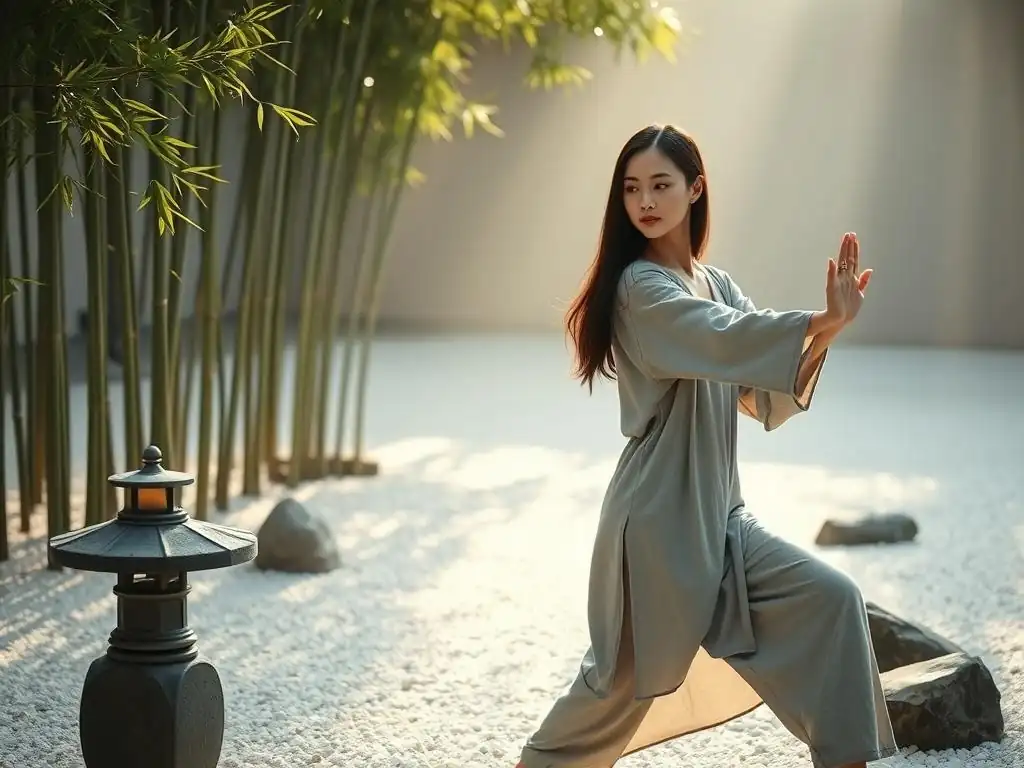
Beginning your day with Tai Chi sets a positive tone and builds resilience against daily stressors. A short morning practice helps to gently wake up the body, improve circulation, and clear the mind before the demands of the day begin. Even 10-15 minutes of simple movements or breathing exercises can make a significant difference in how you approach challenges. This proactive approach to stress management helps to prevent stress from accumulating throughout the day.
A morning routine could include a few repetitions of "Wave Hands Like Clouds," gentle neck and shoulder rolls, and focused abdominal breathing while standing. The key is consistency – making Tai Chi a regular part of your morning ritual, much like brushing your teeth. This consistent engagement with Tai chi stress relief techniques primes your mind and body for the day ahead, fostering a sense of calm focus that can help you navigate busy schedules and unexpected pressures more effectively.
Tai Chi at Work: Desk-Friendly Exercises for Stressful Workdays
Finding moments for Tai Chi stress relief during the workday can be crucial for managing pressure and preventing burnout. While performing full forms at your desk might be impractical, many Tai Chi principles and movements can be adapted. Simple exercises can help release tension built up from prolonged sitting and mental concentration.
Consider incorporating:
- Seated Breathing: Practice deep abdominal breathing for a few minutes.
- Gentle Twists: While seated, gently twist your torso side to side, coordinating with your breath.
- Shoulder Rolls: Release tension by slowly rolling your shoulders forward and backward.
- Wrist and Finger Exercises: Improve circulation and release tension in hands often used for typing.
Even a 2-minute break for one of these simple practices can interrupt the stress cycle, improve focus, and provide a moment of calm amidst a hectic workday. These small interventions offer significant Tai chi stress relief benefits without requiring much time or space.
Evening Tai Chi: Winding Down for a Restful Night
Practicing Tai Chi in the evening helps to release the physical and mental tensions accumulated throughout the day, preparing the body and mind for restful sleep. Stress and anxiety are common culprits for insomnia and poor sleep quality. Gentle, flowing movements and calming breathing can signal to the body that it's time to relax and transition into rest mode.
An evening practice could involve slow, deliberate movements like "Parting the Wild Horse's Mane" or the "Single Whip" form if you are familiar with them, or simply repeating "Wave Hands Like Clouds" and focusing on deep, calming breaths. The goal is to move slowly and mindfully, allowing the cares of the day to dissipate.
Engaging in Tai chi stress relief before bed promotes physical relaxation and mental tranquility, making it easier to fall asleep and enjoy deeper, more restorative sleep. Studies, such as those on older adults with moderate sleep disturbances, have shown that regular Tai Chi practice can significantly improve sleep quality and duration, sometimes comparable to moderate-intensity exercise or cognitive behavioral therapy.
Advanced Tai Chi Techniques for Deep Stress Release
Exploring Tai Chi Forms for Enhanced Mental Well-being
Tai Chi forms are sequences of movements performed in a specific order, ranging from short forms of 10-24 movements to longer forms containing over 100 movements. Learning and practicing these forms offers a deeper level of engagement with Tai Chi principles, leading to more profound stress release and enhanced mental well-being. The process of learning a form requires significant concentration and memory, providing a meditative challenge that quiets extraneous thoughts. The continuous, flowing nature of the movements cultivates a state of moving meditation.
As practitioners advance, they develop greater body awareness, improved balance, and a deeper connection to their internal energy (Qi). This enhanced self-awareness is crucial for recognizing and addressing stress patterns before they become overwhelming. Practicing forms regularly strengthens the mind-body connection, fostering a sense of groundedness and inner peace. While a full form practice takes more time than quick exercises, dedicating time to learning and performing forms can lead to sustained Tai chi stress relief and overall psychological resilience.
The Role of Mindfulness in Tai Chi Practice
Mindfulness is the conscious effort to bring one's attention to the present moment without judgment. It is an integral component of effective Tai Chi practice and a key factor in its ability to relieve stress. While performing movements, practitioners are encouraged to focus on their breath, bodily sensations, balance, and the flow of energy. This intense focus on the present moment pulls the mind away from worrying about the future or dwelling on the past, which are common sources of stress and anxiety.
The slow, deliberate pace of Tai Chi movements naturally cultivates mindfulness. There's no rush to get to the next posture; the emphasis is on the journey of the movement itself. This practice trains the mind to stay focused and calm, skills that are transferable to managing stressful situations off the mat. By consistently practicing mindfulness within Tai Chi, individuals can develop a greater capacity to observe their thoughts and feelings without being overwhelmed by them, thereby enhancing their ability to achieve Tai chi stress relief in daily life.
Single Whip Form: Cultivating Focus and Groundedness
The "Single Whip" is a powerful and iconic posture found in many Tai Chi forms. It typically involves extending one arm like a whip while the other hand forms a hook shape. This posture requires balance, stability, and focused intention. Practicing the Single Whip can be particularly effective for cultivating groundedness and mental focus, qualities that help counteract the scattered feeling often associated with stress.
Performing the Single Whip involves shifting weight, turning the waist, and coordinating arm movements. The stability required on the supporting leg helps root the practitioner, while the extended arm and focused gaze encourage clarity and intention. Repeating this posture or practicing it within a form requires concentration on alignment, balance, and breath, offering a potent exercise for mental discipline and physical stability. The grounded strength developed through postures like the Single Whip contributes significantly to a practitioner's ability to manage stress and feel more centered amidst challenges, demonstrating another facet of Tai chi stress relief.
Benefits of Regular Tai Chi Practice on Mental Health
Tai Chi and Reduced Anxiety: Scientific Evidence
Numerous studies have investigated the impact of Tai Chi on anxiety levels. Research indicates that regular participation in Tai Chi can significantly reduce symptoms of anxiety, sometimes comparable to the effects of conventional exercise or psychotherapy. For example, a study published in the American Journal of Psychiatry found that Tai Chi was effective in reducing symptoms in adults with generalized anxiety disorder. Participants reported decreased worry, tension, and fatigue after several weeks of practice.
The mechanisms behind this reduction are thought to include the calming effect of slow, rhythmic movement and deep breathing on the nervous system, the mindfulness component that helps detach from anxious thoughts, and the social interaction that can occur in group classes. The low-impact nature of Tai Chi makes it a sustainable practice for many, offering a long-term strategy for managing chronic anxiety. This body of evidence strongly supports the use of Tai chi stress relief techniques as a complementary approach for individuals struggling with anxiety.
Tai Chi and Improved Mood: A Natural Antidepressant
Beyond reducing anxiety, Tai Chi has been shown to have positive effects on mood, acting as a natural antidepressant for many practitioners. Regular Tai Chi practice can lead to decreased feelings of sadness, hopelessness, and irritability, while increasing feelings of well-being and vitality. The combination of physical activity and mindful engagement is believed to play a key role in this mood elevation.
Physical activity, even gentle movement like Tai Chi, can release endorphins, the body's natural mood boosters. Furthermore, the sense of accomplishment from learning and performing movements, the increased body awareness, and the connection fostered through mindfulness can all contribute to a more positive self-image and outlook. Studies have shown that Tai Chi interventions can lead to significant improvements in mood scores among diverse populations, including those with chronic conditions. This highlights Tai Chi's potential as an accessible and gentle method for improving emotional well-being and achieving Tai chi stress relief.
Tai Chi and Enhanced Sleep Quality: Releasing Tension for Better Rest
Stress and tension are major contributors to sleep disturbances, making it difficult to fall asleep or stay asleep. Tai Chi's ability to reduce physical and mental tension directly translates into improved sleep quality for many practitioners. By calming the nervous system and promoting relaxation, Tai Chi prepares the body and mind for rest.
Research has demonstrated that regular Tai Chi practice can lead to significant improvements in various sleep parameters, including sleep onset latency (how long it takes to fall asleep), sleep duration, and sleep efficiency. For instance, studies on older adults and individuals with chronic pain have shown notable improvements in sleep after participating in Tai Chi programs for several weeks.
The practice helps to quiet the racing thoughts that often keep people awake and releases the physical stiffness and discomfort that can interfere with sleep. Incorporating Tai chi stress relief practices into an evening routine is a gentle yet effective way to pave the path towards more restful and restorative sleep.
Creating a Personalized Tai Chi Practice for Stress Management
Identifying Your Stress Triggers and Tailoring Your Tai Chi Routine
To effectively use Tai Chi for stress relief, it's helpful to understand what triggers your stress. Is it work deadlines, social interactions, financial worries, or physical discomfort? By identifying specific triggers, you can tailor your Tai Chi practice to address them. For example, if your stress manifests as physical tension in the shoulders and neck from sitting at a desk, incorporating movements that gently release tension in these areas, combined with focused breathing, would be particularly beneficial.
Keeping a simple stress journal for a week or two can help you pinpoint patterns and triggers. Once you have a clearer picture, you can select or emphasize Tai Chi exercises that counteract your specific stress responses. If anxiety leads to shallow breathing and a racing heart, prioritizing deep abdominal breathing exercises and slow, grounding movements like Tai Chi walking can be highly effective. The beauty of Tai Chi is its adaptability, allowing you to create a personalized approach to Tai chi stress relief that meets your unique needs.
Choosing a Tai Chi Style: Yang, Chen, Wu, or Sun
There are several major styles of Tai Chi, each with its own characteristics, although all share core principles of relaxation, movement, and mindfulness. The most widely practiced style globally is the Yang style, known for its slow, expansive, and graceful movements, making it excellent for beginners and general health and Tai chi stress relief. The Chen style is older and incorporates faster, more dynamic movements and bursts of power (fa jin), which might appeal to those seeking a more physically challenging practice.
The Wu and Sun styles are also popular. The Wu style features smaller, more subtle movements, often performed in a slightly forward-leaning posture, emphasizing internal energy flow. The Sun style incorporates Qigong elements and unique stepping patterns, making it relatively easier on the knees and joints. Choosing a style often comes down to personal preference, physical condition, and the availability of instruction. Exploring different styles through introductory classes or online resources can help you find the best fit for your personal journey towards Tai chi stress relief and well-being.
Finding a Qualified Tai Chi Instructor or Online Resources
While it is possible to learn some basic Tai Chi movements and breathing exercises from books or videos, learning from a qualified instructor is highly recommended, especially when starting. An instructor can provide personalized feedback on posture, alignment, and technique, ensuring you perform movements safely and effectively. They can also guide you in understanding the underlying principles of Tai Chi and how to apply them for maximum Tai chi stress relief.
Look for instructors certified by reputable Tai Chi organizations or with extensive experience. Many community centers, martial arts studios, and health clubs offer Tai Chi classes. If in-person classes aren't feasible, numerous high-quality online resources, including video courses and live online classes, are available. When using online resources, seek out those led by experienced practitioners with clear instructions and demonstrations. Consistent practice, whether with an instructor or through reliable online resources, is key to unlocking the full benefits of Tai Chi for stress management.
Conclusion: Embracing Tai Chi for Long-Term Stress Relief and Mental Wellness
Tai Chi offers a powerful, gentle, and accessible path to managing stress and enhancing overall mental well-being. By integrating slow, mindful movement with deep breathing and focused attention, it addresses both the physical and mental aspects of stress. From quick, desk-friendly exercises to the practice of full forms, Tai Chi provides a versatile toolkit for finding calm amidst life's challenges.
Regular engagement with Tai chi stress relief practices has been shown to reduce anxiety, improve mood, and enhance sleep quality, supported by growing scientific evidence. By understanding the mind-body connection, identifying personal stress triggers, and exploring the various styles and techniques available, individuals can create a personalized Tai Chi routine that fosters resilience and promotes lasting inner peace. Embracing Tai Chi is not just about learning movements; it's about cultivating a state of mindful presence that can transform your relationship with stress and lead to a more balanced and harmonious life.
Frequently Asked Questions
What is Tai Chi and how can it help with stress relief?
Tai Chi is a mind-body practice involving slow, flowing movements, meditation, and breathing exercises. These elements combine to promote relaxation and reduce stress by calming the nervous system and focusing the mind.
How often should I practice Tai Chi for noticeable stress reduction?
Even short, 10-15 minute sessions of Tai Chi can offer immediate stress relief. Regular practice, 2-3 times per week, can lead to more significant and lasting improvements in mental well-being.
Do I need special equipment or a particular level of fitness to start Tai Chi?
No, no special equipment is needed and Tai Chi is suitable for all fitness levels. The movements are gentle and adaptable, making it accessible to people of all ages and abilities.
Can I learn Tai Chi online, or do I need to find a class?
Yes, you can learn Tai Chi online through videos and virtual classes. However, learning from a certified instructor can provide personalized guidance and ensure proper form, which is crucial for maximizing benefits.
What are some other benefits of Tai Chi besides stress relief?
Besides stress relief, Tai Chi offers various benefits, including improved balance, increased muscle strength and flexibility, and enhanced cardiovascular health. It can also promote a greater sense of mindfulness and body awareness.
Final Reflection: Finding Stillness in the Storm of Modern Life
The relentless pace of modern life leaves many of us feeling overwhelmed and stressed, but the ancient practice of Tai Chi offers a powerful antidote. This accessible and adaptable art isn't just about graceful movements; it's a pathway to cultivating inner peace and resilience, equipping us to navigate the daily challenges with greater calm and clarity. The simple yet profound techniques explored in this article provide a tangible tool for managing stress, improving focus, and enhancing overall well-being.
The impact of Tai Chi extends far beyond the physical; it's a journey of self-discovery and mindful movement that resonates deeply with our modern need for balance. It's a gentle rebellion against the constant demands on our time and attention, a quiet revolution in how we approach stress. As Bruce Lee wisely observed, Be like water making its way through cracks. Do not be assertive, but adjust to the object, and you shall find a way around or through it.
This philosophy perfectly encapsulates the adaptability and fluidity of Tai Chi, mirroring its ability to help us navigate life's obstacles with grace and resilience.
Now, consider how you can integrate even a few minutes of Tai Chi into your daily routine. Don't wait for a crisis to emerge before seeking inner peace; cultivate it proactively. Start with the simplest movements, breathe deeply, and allow yourself to experience the calming power of mindful movement. Embrace the stillness within, and discover the transformative potential of this ancient practice to enrich your life, one mindful breath at a time.
Unlock Your Inner Calm: Simple Steps to a Stress-Free You
Thanks for taking the time to explore simple Tai Chi practices for managing stress! We hope you found valuable techniques to incorporate into your daily routine. Now it's time to put your newfound knowledge into action.
- Begin your personal Tai Chi journey today: Start with the Sun Salutation sequence we detailed, focusing on just 5 minutes of mindful movement. Even a short practice can make a difference!
- Share the calm: Introduce a friend or family member to the benefits of Tai Chi. Discuss your experiences and encourage them to try the exercises with you.
- Explore deeper: Consider dedicating 15 minutes daily to a longer Tai Chi routine. Research other sequences online and discover what resonates with you most.
Ready to feel the difference? What small step will you take today to cultivate more inner peace?