
Calm Your Anxiety Naturally: The Yoga Approach

Welcome to Mind Care Guide, a space dedicated to nurturing your mental well-being.
Feeling overwhelmed by anxiety? You're not alone. We understand the challenges you face, and we're here to help you discover paths towards inner peace. This week, we delve into a powerful, time-tested practice: Yoga for anxiety relief. Could gentle movement and mindful breathing be the key to unlocking a calmer, more centered you? Let's explore the potential together...
Manage Anxiety Naturally: The Yoga Path
- Understanding Anxiety and Yoga's Potential
- Yoga Poses for Anxiety Relief: Asanas for Mental Calm
- Breathing Techniques (Pranayama) for Anxiety Relief
- Meditation and Mindfulness in Yoga for Anxiety
- Creating a Yoga Routine for Anxiety Relief: A Practical Guide
- Benefits of Yoga for Anxiety: Beyond the Mat
- Integrating Yoga with Other Anxiety Management Strategies
- Precautions and Considerations for Yoga and Anxiety
- Conclusion: Embracing Yoga for a Calmer, More Balanced Life
-
Frequently Asked Questions
- How does yoga specifically help with anxiety relief?
- What are some beginner-friendly yoga poses for anxiety?
- How often should I practice yoga to experience anxiety relief?
- Can yoga replace traditional treatments for anxiety, such as therapy or medication?
- Are there any risks associated with using yoga for anxiety relief?
- Final Reflection: Finding Inner Peace Through the Yoga Path
- Unwind and Find Your Inner Peace: Take the Next Step
Understanding Anxiety and Yoga's Potential
Defining Anxiety and its Impact on Well-being
Anxiety is a common mental health challenge characterized by feelings of worry, nervousness, or unease. While it's a normal human emotion in response to stress, chronic or excessive anxiety can significantly disrupt daily life and overall well-being. It's estimated that anxiety disorders affect roughly 18% of the adult population in the United States each year, making them among the most prevalent mental health conditions. The impact extends far beyond the emotional realm, manifesting physically through symptoms like increased heart rate, muscle tension, fatigue, and difficulty sleeping.
The pervasive nature of anxiety means it can interfere with relationships, work performance, and even physical health over time. High levels of stress hormones, like cortisol, released during prolonged periods of anxiety, can suppress the immune system and contribute to various physical ailments. Understanding anxiety means recognizing it not just as a 'feeling' but as a complex interplay of physiological, psychological, and behavioral factors that require a holistic approach to management and relief. Finding effective strategies for yoga for anxiety relief is therefore crucial for many individuals seeking a path towards greater calm.
The Yoga-Anxiety Connection: A Mind-Body Approach
The connection between yoga and reduced anxiety lies in its inherent mind-body approach. Yoga practice integrates physical postures (asanas), breath control (pranayama), and meditation, all of which have a documented impact on the nervous system. Unlike therapies that might focus solely on cognitive restructuring or physical activities that primarily address the body, yoga simultaneously engages multiple pathways to calm. This multifaceted approach helps to interrupt the anxiety cycle, which often involves racing thoughts, shallow breathing, and physical tension.
Scientific research has increasingly supported the use of yoga for anxiety relief. Studies have shown that regular yoga practice can lead to a reduction in cortisol levels, the body's primary stress hormone. For instance, some research indicates participants engaging in consistent yoga may see a 10-15% decrease in baseline cortisol over several weeks.
Furthermore, yoga techniques, particularly breathwork, can stimulate the vagus nerve, which is a key component of the parasympathetic nervous system – the body's 'rest and digest' system. Activating this system counteracts the 'fight or flight' response triggered by anxiety, promoting a state of calm and relaxation throughout the body and mind.
Yoga as a Holistic Strategy for Anxiety Management
Yoga serves as a powerful holistic strategy for managing anxiety because it addresses the condition on multiple levels: physical, mental, and energetic. On the physical level, holding and moving through poses helps release chronic muscle tension that often accompanies anxiety, particularly in the shoulders, neck, and back. The focus required to maintain poses also draws attention away from anxious thoughts, anchoring the mind in the present moment. This present-moment awareness is a core principle of mindfulness, a state cultivated through yoga that is highly effective in reducing rumination and worry, common features of anxiety.
Beyond the physical and mental, yoga's emphasis on breath control (pranayama) directly impacts the autonomic nervous system, providing a tool to regulate physiological responses to stress in real-time. Learning to deepen and control the breath can immediately lower heart rate and blood pressure, offering immediate relief from acute anxiety symptoms. Moreover, the meditative aspects of yoga encourage self-compassion and acceptance, shifting the individual's relationship with their anxious feelings from one of struggle to one of mindful observation. This comprehensive engagement makes yoga for anxiety relief a uniquely integrated and effective practice.
Yoga Poses for Anxiety Relief: Asanas for Mental Calm
Beginner-Friendly Yoga Poses for Anxiety
Starting a yoga practice for anxiety relief doesn't require complex poses or extensive experience. Many foundational postures are incredibly grounding and calming, making them ideal for beginners. These poses focus on gentle stretches, mindful breathing, and connecting with the physical body to alleviate mental unease. Incorporating just a few of these basic asanas into a regular routine can make a significant difference in managing anxious feelings and promoting a sense of peace.
These accessible poses help build confidence and familiarity with the practice, laying a solid foundation for deeper exploration of yoga for anxiety relief. They emphasize introspection and relaxation rather than physical challenge, ensuring that the practice itself doesn't become a source of stress. Practicing these simple postures consistently allows the body and mind to learn how to relax and release tension, providing tangible tools for navigating moments of heightened anxiety.
Child's Pose (Balasana): Grounding and Relaxation
Child's Pose is a deeply restful and grounding posture that encourages surrender and introspection. To practice, kneel on the floor, bring your big toes to touch, and widen your knees to the edges of your mat (or keep them together, depending on comfort). Fold forward from your hips, resting your torso between or on your thighs. Extend your arms forward or bring them back alongside your body, resting your forehead on the mat. This pose provides gentle stretching for the back and hips while allowing the body to feel supported and safe.
Holding Balasana for several minutes encourages deep, calming breaths and allows the nervous system to settle. The gentle pressure on the forehead can also have a soothing effect. This pose is particularly effective when feeling overwhelmed or anxious, offering a sense of retreat and security. It provides an immediate opportunity to disconnect from external stressors and turn attention inward, focusing purely on the breath and the sensation of the body being held by the earth.
Corpse Pose (Savasana): Deep Relaxation and Stress Reduction
Savasana, or Corpse Pose, is arguably the most important pose for anxiety relief, despite its apparent simplicity. Lying flat on your back, with arms relaxed by your sides (palms up or down) and legs extended, allows the body to enter a state of profound rest. The goal is complete physical and mental relaxation, allowing the effects of the preceding practice (or simply the act of lying still) to integrate and settle. This pose actively counters the body's stress response.
Research indicates that regular practice of Savasana can lead to reductions in heart rate, blood pressure, and muscle tension – all physiological markers associated with anxiety. Spending 5-10 minutes in Savasana at the end of a yoga session, or even just taking a few minutes to lie down and consciously relax, gives the nervous system permission to switch from sympathetic (fight or flight) to parasympathetic (rest and digest) dominance. This deep rest is crucial for stress reduction and fostering a sense of calm.
Legs-Up-the-Wall Pose (Viparita Karani): Calming the Nervous System
Legs-Up-the-Wall Pose is a gentle inversion that can be incredibly calming for the nervous system. To practice, sit with one hip against a wall, then swing your legs up the wall as you lie back, adjusting your hips so they are either against the wall or a few inches away, depending on comfort. Rest your arms out to the sides or on your belly. This pose helps reverse the effects of gravity on the legs, promoting circulation and reducing swelling, which can be particularly soothing after a long day or when feeling restless.
Beyond the physical benefits, the mild inversion in Viparita Karani helps quiet the mind. It can lower heart rate and respiration, encouraging a state of relaxation. Holding this pose for 5-15 minutes allows the body to fully release tension and encourages a shift towards a more relaxed state. It's a passive pose that requires minimal effort, making it accessible even when energy levels are low due to anxiety or fatigue.
Intermediate Yoga Poses for Anxiety Management
As you become more comfortable with beginner poses, incorporating some intermediate postures can deepen your yoga practice for anxiety relief. These poses may require a bit more strength, balance, or flexibility but offer unique benefits for releasing tension, balancing energy, and fostering a sense of empowerment and stability. They challenge the body in new ways, which can also help redirect focus away from anxious thought patterns.
Intermediate poses often involve standing postures, gentle twists, or mild backbends, all of which can help release stored tension in the body and promote a sense of openness. Approaching these poses with patience and mindfulness is key; the goal is not perfection but mindful movement and breath. Exploring these poses can enhance the effectiveness of using yoga for anxiety relief by offering more varied ways to engage the body and mind.
Standing Forward Bend (Uttanasana): Releasing Tension and Promoting Calm
Standing Forward Bend is an excellent pose for releasing tension in the hamstrings, calves, and lower back, areas that often hold stress. From a standing position, hinge at your hips, allowing your torso to fold over your legs. You can keep a generous bend in your knees, especially if your hamstrings are tight. Let your head and neck relax completely. You can hold opposite elbows or let your hands rest on the floor, blocks, or your shins.
The inversion aspect of Uttanasana, even a mild one, can help calm the nervous system and reduce feelings of fatigue or stress. Hanging forward allows gravity to gently decompress the spine and encourages blood flow to the head, which can have a soothing effect. Releasing the head and neck tension is particularly beneficial for anxiety relief, as stress often manifests physically in these areas. Focusing on exhaling as you deepen the fold can also help release built-up tension.
Triangle Pose (Trikonasana): Balancing Energy and Reducing Stress
Triangle Pose is a standing pose that helps to open the chest and shoulders, areas that can feel constricted by anxiety. From a wide stance, turn your front foot out 90 degrees and your back foot slightly in. Extend your arms parallel to the floor. Shift your front hip back as you reach forward with your front hand, then hinge down, bringing your front hand to your shin, ankle, or the floor (or a block) and extending your back arm towards the sky. Look up at your top hand or straight ahead.
Trikonasana promotes balance, both physically and energetically. The expansive nature of the pose helps create a sense of openness and freedom, counteracting the feeling of being closed off or restricted that anxiety can induce. It stretches the sides of the body and opens the chest, allowing for deeper breathing. The focus required for balance also helps to quiet a busy mind, making it a valuable pose in a practice of yoga for anxiety relief.
Bridge Pose (Setu Bandhasana): Energizing and Uplifting Mood
Bridge Pose is a gentle backbend that can be both energizing and calming, helping to lift mood and release tension in the chest and hips. Lie on your back with knees bent and feet flat on the floor, hip-width apart, close to your hips. On an inhale, press into your feet and lift your hips off the floor towards the ceiling. You can interlace your fingers beneath your back and tuck your shoulders under, or keep arms alongside your body.
Setu Bandhasana opens the chest and shoulders, counteracting the slumped posture often associated with stress and anxiety. This opening can facilitate deeper breathing, which in turn calms the nervous system. Backbends are often considered uplifting poses, helping to combat feelings of lethargy or sadness that can accompany anxiety. Holding this pose can help release tension in the hips, an area known to store emotional stress.
Breathing Techniques (Pranayama) for Anxiety Relief
The Role of Breathwork in Yoga for Anxiety
Breathwork, or Pranayama, is a fundamental component of yoga and arguably the most direct tool for influencing the nervous system and managing anxiety. The breath is intimately linked to our emotional state; when we are anxious, our breath tends to become shallow, rapid, and held high in the chest. Conversely, slow, deep, and controlled breathing signals safety to the brain, activating the parasympathetic nervous system and promoting relaxation. Integrating breathwork into yoga for anxiety relief provides an immediate, accessible way to regulate internal states.
Specific pranayama techniques can help shift the body from a state of stress to one of calm. By consciously manipulating the breath – its length, depth, and rhythm – we can directly impact heart rate variability, blood pressure, and the release of stress hormones. Research on breath control techniques has shown positive effects on reducing anxiety symptoms, improving mood, and enhancing overall stress resilience. Learning to control the breath offers a powerful self-regulation tool that can be used anytime, anywhere, to mitigate anxious feelings.
Diaphragmatic Breathing (Belly Breathing) for Calming the Nerves
Diaphragmatic breathing, often called belly breathing, is a simple yet powerful technique for calming the nervous system. Instead of breathing shallowly into the chest, this technique focuses on drawing air deep into the lungs, allowing the diaphragm to contract and the belly to expand. To practice, find a comfortable seated or lying position. Place one hand on your chest and the other on your belly. Inhale slowly and deeply through your nose, feeling your belly rise significantly while your chest remains relatively still. Exhale slowly through your mouth or nose, feeling your belly fall.
Practicing diaphragmatic breathing stimulates the vagus nerve, which helps to slow down the heart rate and activate the parasympathetic nervous system. This simple act of breathing deeply into the lower lungs sends a signal to the brain that the body is safe and can relax. Regular practice can lower baseline anxiety levels and provide a quick method for finding calm during moments of acute stress or panic. Even a few minutes of focused belly breathing can help interrupt the physiological cascade of anxiety.
Alternate Nostril Breathing (Nadi Shodhana) for Balancing Energy
Alternate Nostril Breathing, or Nadi Shodhana, is a balancing pranayama technique believed to harmonize the left and right hemispheres of the brain and balance the body's energetic channels. It involves breathing through one nostril at a time, alternating sides. To practice, sit comfortably with a straight spine. Close your right nostril with your right thumb and inhale slowly through your left nostril.
Close your left nostril with your ring finger, release the thumb from the right nostril, and exhale through the right. Inhale through the right, close the right nostril, release the ring finger from the left, and exhale through the left. Continue this pattern.
Nadi Shodhana is particularly effective for reducing agitation and promoting mental clarity, making it excellent for yoga for anxiety relief. By regulating the flow of breath through each nostril, it is thought to calm the nervous system and promote a state of equanimity. Studies have indicated that Nadi Shodhana can help reduce physiological stress markers and improve subjective feelings of calm. Practicing this technique for 5-10 minutes can help soothe a restless mind and bring a sense of balance.
Bee Breath (Brahmari Pranayama) for Reducing Agitation
Bee Breath, or Brahmari Pranayama, is a simple and soothing breathing technique that uses sound to calm the mind and reduce agitation. It involves inhaling deeply and then exhaling slowly while making a humming sound like a bee. To practice, sit comfortably. Close your ears with your thumbs and place your fingers over your eyes or forehead. Inhale deeply through your nose. As you exhale, keep your mouth closed and make a steady, low-pitched humming sound in your throat. Feel the gentle vibration throughout your head and chest.
The humming sound produced during Brahmari Pranayama has a powerful calming effect on the nervous system. The vibration can help release tension in the face, jaw, and throat, areas where stress is often held. Research suggests that the humming sound may stimulate the production of nitric oxide, which can help lower blood pressure and promote relaxation. This technique is excellent for quieting a busy or anxious mind and can be used whenever you feel overwhelmed or agitated.
Meditation and Mindfulness in Yoga for Anxiety
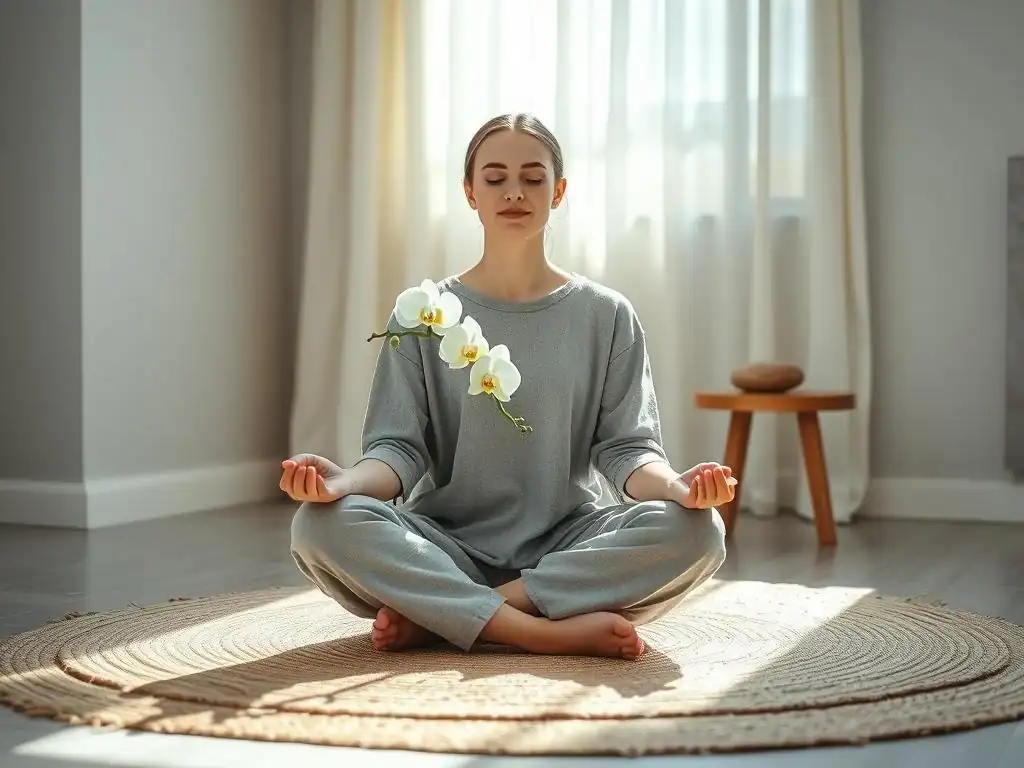
Cultivating Mindfulness Through Yoga Practice
Mindfulness, the practice of paying attention to the present moment without judgment, is an integral part of yoga and a powerful tool for anxiety relief. While physical postures and breathwork can bring you into the present, the meditative aspect of yoga explicitly cultivates this awareness. By focusing on the sensations in the body, the rhythm of the breath, or the movement from one pose to the next, yoga trains the mind to stay anchored in the 'now' rather than getting lost in worries about the future or regrets about the past.
Regular yoga practice encourages a shift from reacting automatically to anxious thoughts to observing them with a degree of detachment. This ability to witness thoughts without getting swept away by them is a cornerstone of mindfulness and significantly reduces the power that anxiety holds. Studies show that mindfulness-based interventions, including yoga, can reduce activity in the amygdala, the brain's fear center, leading to a decreased reactivity to stressful stimuli. Over time, cultivating mindfulness through yoga builds a greater capacity to tolerate uncomfortable feelings and respond to challenges with more presence and less reactivity.
Guided Meditation for Anxiety Reduction
Guided meditation is an accessible way to integrate deeper mindfulness and relaxation into your yoga practice for anxiety relief. In guided meditation, an instructor or recording leads you through a process of relaxation, breath awareness, or visualization. This can be particularly helpful for individuals whose minds tend to wander or who find it difficult to sit in silence with their thoughts. The voice of the guide provides an anchor, helping to keep the focus on the present moment and gently redirecting the mind when it drifts.
Many guided meditations specifically target anxiety, using techniques like progressive muscle relaxation, visualization of calming scenes, or affirmations of peace and safety. Listening to a guided meditation for even 10-15 minutes can significantly reduce feelings of stress and overwhelm. Research on guided meditation has shown its effectiveness in reducing self-reported anxiety levels and improving emotional regulation skills. Incorporating guided meditation at the beginning or end of a yoga session enhances the overall calming effect.
Body Scan Meditation for Stress Relief
Body scan meditation is a mindfulness technique commonly used for stress and anxiety relief, often integrated into restorative yoga practices or standalone meditations. It involves systematically bringing attention to different parts of the body, noticing any sensations (or lack thereof) without judgment. Starting from the toes and slowly moving up to the crown of the head, this practice encourages awareness of physical sensations, which can be a powerful way to ground yourself when feeling anxious or disconnected.
The body scan helps to interrupt the cycle of anxious rumination by shifting focus from thoughts to physical sensations. It increases interoceptive awareness – the ability to notice internal bodily states – which can help individuals recognize the early signs of anxiety manifesting physically. By simply observing tension without trying to fix it, the body often begins to relax naturally. Studies on body scan meditation have demonstrated its effectiveness in reducing perceived stress and improving symptoms associated with anxiety disorders.
Creating a Yoga Routine for Anxiety Relief: A Practical Guide
Assessing Your Anxiety Levels and Setting Realistic Goals
Before starting a yoga routine for anxiety relief, take a moment to honestly assess your current anxiety levels and how they impact your life. Are your symptoms mild and occasional, or severe and constant? What specific aspects of your life does anxiety affect most? Understanding your starting point helps in setting realistic and achievable goals for your practice. Goals might include reducing the frequency of panic attacks, improving sleep quality, feeling less muscle tension, or simply finding a few moments of peace each day.
Setting realistic goals is crucial for maintaining motivation and avoiding discouragement. Don't aim to eliminate anxiety entirely from the outset, but rather focus on incremental improvements. Perhaps a goal is to practice for 20 minutes three times a week, or to use a specific breathing technique whenever you feel overwhelmed. Keep a simple journal to track your practice and note any shifts in your anxiety levels or overall mood. Celebrating small successes along the way reinforces the positive impact of yoga for anxiety relief.
Choosing a Suitable Yoga Style (Hatha, Restorative, Yin)
The world of yoga offers various styles, and some are better suited for anxiety relief than others, especially when starting out.
- Hatha Yoga: A gentle, foundational style that involves holding poses for several breaths. It provides a good balance of physical movement and stillness, making it suitable for beginners.
- Restorative Yoga: Focuses on deep relaxation using props like bolsters, blankets, and blocks to support the body in passive stretches. Poses are held for longer durations (5-20 minutes), allowing the nervous system to fully relax. This style is exceptionally effective for reducing stress and anxiety.
- Yin Yoga: Involves holding passive stretches for longer periods (3-5 minutes or more), primarily targeting the deep connective tissues (fascia, ligaments, joints). While sometimes physically intense, the prolonged holds cultivate patience and present-moment awareness, which can be powerful for working through discomfort, including emotional tension.
Styles like Vinyasa or Ashtanga, which are more dynamic and physically demanding, might be less ideal for beginners specifically seeking anxiety relief, as they can sometimes feel overwhelming. However, some individuals find the vigorous movement helpful for releasing energy. Consider trying a few different styles to see what resonates best with your needs and temperament.
Structuring Your Yoga Session for Optimal Anxiety Reduction
A well-structured yoga session for anxiety relief typically includes a combination of elements:
- Centering/Arrival (5-10 minutes): Start by sitting or lying down quietly, focusing on your breath. This helps transition from daily activities to the practice.
- Gentle Warm-up (5-10 minutes): Simple movements like neck rolls, shoulder shrugs, cat-cow pose to loosen the body.
- Asana Practice (15-30 minutes): Move through chosen poses, emphasizing mindful movement synchronized with breath. Include grounding poses (like Child's Pose), heart openers (like Bridge), and perhaps gentle inversions (like Legs-Up-the-Wall).
- Pranayama (5-10 minutes): Dedicate time specifically to breathing techniques like Diaphragmatic Breathing or Alternate Nostril Breathing.
- Savasana (5-10 minutes): Essential for integrating the practice and allowing deep relaxation.
- Optional: Meditation (5-10 minutes): Add a short guided or silent meditation.
A session could be as short as 20 minutes, focusing on centering, a few poses, breathwork, and Savasana. The key is consistency and tailoring the structure to fit your time and energy levels on any given day.
Tips for Consistency and Motivation
Maintaining a consistent yoga practice for anxiety relief can be challenging, but a few strategies can help:
- Schedule it: Treat your yoga time like any other important appointment. Put it in your calendar.
- Start small: Even 10-15 minutes of focused practice is beneficial. Don't feel you need an hour every time.
- Create a dedicated space: Find a quiet corner in your home where you can practice without distractions.
- Use resources: Follow online classes, use yoga apps, or attend local classes if comfortable. Many resources specifically cater to yoga for anxiety relief.
- Practice with a friend: Accountability can be a powerful motivator.
- Be kind to yourself: Some days will be easier than others. If you miss a session, don't dwell on it; just return to your practice when you can.
- Focus on how you feel: Pay attention to the subtle shifts in your mood and body after practice. This positive reinforcement can fuel motivation.
[ ] Schedule practice times
[ ] Find a quiet space
[ ] Choose suitable online resources or local classes
[ ] Track practice and mood in a journal
[ ] Be patient and kind on challenging days
Consistency, even in short bursts, is more effective than infrequent long sessions when using yoga for anxiety relief.
Benefits of Yoga for Anxiety: Beyond the Mat
Physical Benefits: Reducing Muscle Tension and Improving Sleep
One of the most immediate benefits of yoga for anxiety relief is the reduction of physical tension. Anxiety often manifests as chronic muscle tightness, particularly in the neck, shoulders, jaw, and back. Yoga poses, through stretching and mindful holding, help to release this stored tension. For example, gentle forward folds and twists can release tightness in the spine and hips, while poses like Supported Bridge or Fish Pose can open the chest and shoulders. This physical release directly contributes to a feeling of ease and relaxation throughout the body.
Furthermore, yoga has a significant positive impact on sleep quality, which is often poor in individuals with anxiety. Studies have shown that regular yoga practice can improve various sleep parameters, including reducing the time it takes to fall asleep (sleep onset latency) and increasing total sleep time. The calming effects on the nervous system, reduction in physical discomfort, and promotion of mental quietude cultivated through yoga all contribute to a more restful night's sleep. Improved sleep, in turn, helps regulate mood and increases resilience to stress, creating a positive feedback loop for managing anxiety.
Mental Benefits: Enhancing Mood and Promoting Emotional Regulation
The mental benefits of yoga for anxiety relief are profound and far-reaching. By integrating movement, breath, and mindfulness, yoga helps to interrupt the cycle of anxious rumination and worry. The focus required for poses and breathwork anchors the mind in the present, providing a respite from dwelling on future uncertainties or past events. This present-moment awareness, cultivated through consistent practice, significantly reduces the mental chatter that often fuels anxiety.
Yoga also enhances mood by potentially influencing neurotransmitter levels. While more research is needed, some studies suggest that yoga may increase levels of gamma-aminobutyric acid (GABA), a neurotransmitter that helps regulate nerve activity and is often low in individuals with anxiety disorders. Beyond neurochemical effects, the practice itself provides a sense of accomplishment, self-efficacy, and connection to one's body, all of which can boost self-esteem and reduce feelings of helplessness often associated with anxiety. Moreover, yoga improves emotional regulation by increasing awareness of internal states without immediate reaction, allowing for a more thoughtful response to challenging emotions.
Long-Term Effects: Building Resilience and Coping Mechanisms
Consistent yoga practice for anxiety relief yields significant long-term effects, building resilience and developing effective coping mechanisms. Over time, the nervous system becomes less reactive to stressors, and the body learns to return to a state of calm more quickly after experiencing anxiety. This is partly due to the strengthening of the parasympathetic nervous system response through regular breathwork and relaxation.
Beyond physiological changes, the discipline and self-awareness fostered by yoga equip individuals with practical tools to navigate future challenges. Learning to observe thoughts without judgment, to use breath to calm the body, and to recognize physical signs of stress provides a toolkit for managing anxiety as it arises in daily life. This built-in capacity for self-regulation reduces reliance on less healthy coping strategies and empowers individuals to face stressors with greater confidence and equanimity. The cumulative effect of using yoga for anxiety relief is a stronger, more resilient mind and body.
Integrating Yoga with Other Anxiety Management Strategies
Yoga Alongside Therapy and Counseling
Yoga is a powerful complementary practice to traditional therapy and counseling for anxiety. While therapy modalities like Cognitive Behavioral Therapy (CBT) or Exposure Therapy help individuals understand the roots of their anxiety and develop cognitive strategies, yoga provides a somatic and experiential approach. It helps process emotions held in the body, teaches practical self-regulation techniques, and builds a greater tolerance for uncomfortable physical sensations that can arise during therapeutic work (like exposure therapy).
Many therapists now recommend mindfulness-based practices, including yoga, as an adjunct to treatment. The present-moment awareness cultivated in yoga enhances the effectiveness of therapeutic techniques by helping individuals stay grounded and less reactive during sessions. Combining the cognitive insights gained in therapy with the bodily wisdom and calming tools learned through yoga creates a comprehensive approach to managing anxiety, addressing both the mind and the body for more sustainable relief.
Lifestyle Adjustments to Support Anxiety Relief (Diet, Sleep, Exercise)
Integrating yoga for anxiety relief is most effective when supported by other positive lifestyle adjustments. Diet plays a crucial role; reducing caffeine, sugar, and processed foods while increasing intake of whole foods, lean proteins, and healthy fats can help stabilize blood sugar and mood, reducing anxiety triggers. Staying hydrated is also important for nervous system function.
Prioritizing sleep, as mentioned earlier, is vital. Aim for 7-9 hours of quality sleep per night. Establishing a consistent sleep schedule and creating a relaxing bedtime routine (perhaps including gentle yoga or breathwork) can make a big difference. Regular aerobic exercise, in addition to yoga, is also a well-documented anxiety reducer. Physical activity releases endorphins, natural mood boosters, and helps reduce muscle tension. Combining yoga with other forms of exercise provides a balanced approach to physical and mental well-being, enhancing the overall benefits for anxiety management.
When to Seek Professional Help for Anxiety
While yoga and lifestyle adjustments can significantly help manage anxiety, it's crucial to recognize when professional help is needed. Yoga is a complementary tool, not a substitute for medical or psychological treatment, especially for severe or debilitating anxiety.
Seek professional help if:
- Your anxiety is overwhelming and interferes significantly with your daily life (work, relationships, self-care).
- You experience panic attacks frequently.
- You have persistent physical symptoms you are concerned about.
- You are using unhealthy coping mechanisms (e.g., excessive alcohol or substance use) to manage anxiety.
- You have thoughts of self-harm.
A healthcare professional or mental health therapist can provide a proper diagnosis, discuss treatment options (including therapy and medication if necessary), and help you develop a comprehensive plan that may include yoga as a supportive practice. Don't hesitate to reach out; seeking help is a sign of strength.
Precautions and Considerations for Yoga and Anxiety
Consulting a Healthcare Professional Before Starting Yoga
Before embarking on a new yoga practice, especially if you have pre-existing health conditions, injuries, or severe anxiety, it is advisable to consult with a healthcare professional. This ensures that yoga is a safe and appropriate activity for your specific health status. Your doctor can offer guidance based on your medical history and provide clearance if necessary.
Discussing your anxiety with a healthcare provider can also open the door to other potential treatment avenues that can work in conjunction with your yoga practice. They can help rule out any underlying physical conditions that might be contributing to your symptoms and offer a well-rounded approach to your well-being. While yoga for anxiety relief is generally safe, personalized medical advice is always the best starting point.
Modifying Poses for Injuries or Physical Limitations
Yoga is meant to be a practice of self-care and should never cause pain. If you have injuries, chronic conditions (like arthritis or back pain), or physical limitations, it is essential to modify poses to suit your body's needs. Many poses have variations that make them more accessible or less intense. Using props like blocks, blankets, straps, or chairs can provide support, reduce strain, and help you find comfort in a pose.
Inform your yoga instructor about any limitations or injuries you have before class begins. A qualified instructor can offer modifications and guidance to ensure your practice is safe and beneficial. Learning to listen to your body and modify poses is a key aspect of a mindful practice, particularly when using yoga for anxiety relief, as pushing too hard can increase stress rather than reduce it. There is no shame in modifying; it demonstrates self-awareness and self-compassion.
Listening to Your Body and Avoiding Overexertion
A fundamental principle of yoga practice, especially when addressing anxiety, is ahimsa, or non-harming, which includes non-harming towards oneself. This means listening intently to your body's signals and respecting its limits on any given day. Anxiety can sometimes manifest as restlessness or a desire to push hard, but overexertion in yoga can lead to injury or increased stress hormones, counteracting the goal of anxiety relief.
Pay attention to sensations in your body during practice. Distinguish between a healthy stretch and pain. If a pose feels uncomfortable or triggers anxiety, gently ease out of it or modify it. It's okay to rest in Child's Pose or Savasana whenever needed. The aim is to cultivate a sense of ease and presence, not to achieve advanced postures. Honoring your body's needs day by day is a crucial part of a sustainable and effective yoga practice for managing anxiety.
Conclusion: Embracing Yoga for a Calmer, More Balanced Life
Embracing yoga for anxiety relief offers a powerful, holistic path towards a calmer and more balanced life. By integrating physical postures, conscious breathing, and mindfulness, yoga addresses anxiety on multiple levels – soothing the nervous system, releasing physical tension, quieting the restless mind, and fostering emotional resilience. From simple, grounding poses like Child's Pose and Savasana to calming breath techniques like Diaphragmatic Breathing and Nadi Shodhana, the practice provides tangible tools that can be used both on and off the mat.
Consistency is key; even short, regular sessions can yield significant benefits over time, reducing the frequency and intensity of anxious feelings and improving overall well-being. While yoga is a valuable self-help tool, it complements rather than replaces professional care for severe anxiety. By integrating yoga with other healthy lifestyle choices and seeking professional support when needed, individuals can build a comprehensive strategy for managing anxiety. Stepping onto the yoga mat is an act of self-compassion, a commitment to nurturing your mental and physical health, and a step towards finding greater peace amidst life's challenges.
Frequently Asked Questions
How does yoga specifically help with anxiety relief?
Yoga combines physical postures (asanas), breathing techniques (pranayama), and meditation to reduce the physical and mental symptoms of anxiety. These practices help regulate the nervous system and promote relaxation.
What are some beginner-friendly yoga poses for anxiety?
Some excellent poses for beginners include Child's Pose, Corpse Pose (Savasana), and Mountain Pose. These are relatively easy to perform and promote calmness and grounding.
How often should I practice yoga to experience anxiety relief?
Aim for at least three times per week for 30-60 minutes per session. Consistency is key to experiencing the long-term benefits of yoga on your anxiety levels.
Can yoga replace traditional treatments for anxiety, such as therapy or medication?
Yoga can be a valuable complementary tool, but it's not a replacement for professional treatment. It's best used in conjunction with therapy or medication, as advised by a mental health professional.
Are there any risks associated with using yoga for anxiety relief?
While generally safe, it's important to listen to your body and avoid pushing yourself too hard. People with pre-existing physical conditions should consult a doctor before starting a new yoga practice.
Final Reflection: Finding Inner Peace Through the Yoga Path
The pervasive anxiety of modern life demands accessible and effective coping mechanisms, and the ancient practice of yoga offers a powerful, natural antidote. This exploration of yoga's ability to alleviate anxiety highlights not just the physical postures, but the holistic integration of breathwork, mindfulness, and self-compassion that truly unlocks its therapeutic potential. The techniques discussed are not merely exercises; they are pathways to a calmer, more resilient you.
The impact of yoga on our increasingly stressed society is undeniable. It's more than just a fitness trend; it's a cultural shift towards prioritizing mental and emotional well-being. Yoga is not about touching your toes; it's about what you learn on the way down.
– Jigar Gor. This quote perfectly encapsulates the journey of self-discovery and acceptance that yoga facilitates, a journey crucial for navigating the anxieties of daily life. The practice encourages a deeper understanding of our inner landscape, allowing us to respond to stress with greater awareness and less reactivity.
Now, consider your own relationship with anxiety. What small steps can you take today to incorporate the principles of yoga – mindful breathing, gentle movement, and self-compassion – into your daily routine? Even five minutes of conscious breathing can make a difference. Embrace the journey, be patient with yourself, and remember that the path to inner peace is a practice, not a destination. Start small, build consistency, and discover the transformative power of yoga for yourself.
Unwind and Find Your Inner Peace: Take the Next Step
Thank you for taking the time to explore the power of yoga for anxiety relief! We hope you found practical techniques and insights to help you on your journey to a calmer you. Now it's time to put your newfound knowledge into action.
- Begin your personalized yoga practice: Start with just 10 minutes today. Focus on the breathing techniques discussed and find a pose that feels comfortable and grounding.
- Share your experience: Let others know how yoga has helped you manage your anxiety. Share this article or your personal insights with friends or family. A supportive community can be incredibly powerful.
- Explore a local yoga studio: Find a class near you and experience the supportive energy of a guided practice. This could be the perfect next step in deepening your practice and discovering new techniques.
What small step will you take today to nurture your inner peace and reduce anxiety naturally?