
The Eight Brocades (Ba Duan Jin): Qigong for Stress and Anxiety Relief

Welcome to Mind Care Guide, your sanctuary for cultivating inner peace.
Feeling overwhelmed by stress and anxiety? You're not alone. But what if there was a gentle, ancient practice that could ease your mind and body? Our exploration of Qigong stress anxiety relief begins with the Eight Brocades (Ba Duan Jin), a series of movements designed to harmonize your energy and restore balance. Intrigued? Let's delve deeper and discover how this holistic approach can transform your well-being.
The Eight Brocades (Ba Duan Jin): Qigong for Stress and Anxiety Relief
- Introduction to Ba Duan Jin Qigong for Mental Wellness
-
The Eight Brocades: A Breakdown of the Exercises
- Exercise 1: Two Hands Hold up the Heavens to Regulate the Internal Organs
- Exercise 2: Drawing the Bow to Shoot the Vulture
- Exercise 3: Separating Heaven and Earth
- Exercise 4: Wise Owl Gazes Backwards
- Exercise 5: Swaying the Head and Waving the Tail to Remove Heart Fire
- Exercise 6: Sliding the Hands Down the Legs to Strengthen the Kidneys
- Exercise 7: Clenching Fists and Glaring with Anger to Boost Vital Energy
- Exercise 8: Bouncing on the Back to Cure All Diseases
- Ba Duan Jin: A Practical Guide for Beginners
- Integrating Ba Duan Jin into Your Daily Routine for Anxiety Relief
- The Science Behind Ba Duan Jin's Stress-Reducing Effects
- Precautions and Considerations When Practicing Ba Duan Jin
- Conclusion: Embracing Ba Duan Jin for Enhanced Mental Well-being
-
Frequently Asked Questions
- What is Ba Duan Jin and how does it relate to Qigong stress anxiety relief?
- How can Ba Duan Jin specifically help with Qigong stress anxiety relief?
- How often should I practice Ba Duan Jin to experience Qigong stress anxiety relief benefits?
- Are there any risks or contraindications associated with practicing Ba Duan Jin for Qigong stress anxiety relief?
- Where can I find resources to learn Ba Duan Jin for Qigong stress anxiety relief?
- Final Reflection: Unfolding the Power Within: Qigong for a Calmer You
- Unlock Your Inner Calm: Start Your Qigong Journey Today!
Introduction to Ba Duan Jin Qigong for Mental Wellness
Understanding Qigong and Its Benefits for Anxiety Management
Qigong, an ancient Chinese mind-body practice, involves gentle movements, controlled breathing, and meditation. Its roots stretch back thousands of years, developed as a way to cultivate Qi (vital energy) and promote overall health. Unlike more strenuous forms of exercise, Qigong emphasizes slow, deliberate movements and deep relaxation, making it particularly accessible and beneficial for managing mental health challenges like anxiety. Regular practice can help regulate the nervous system, shifting from the 'fight or flight' sympathetic response to the 'rest and digest' parasympathetic state, which is crucial for reducing chronic stress and anxiety levels.
Numerous studies have explored the efficacy of Qigong for stress and anxiety relief. For example, research published in journals focusing on complementary therapies has indicated that consistent Qigong practice can lead to significant reductions in self-reported anxiety scores and improvements in mood states. While specific percentage reductions can vary widely depending on the study population and duration, the trend consistently points towards a positive impact on psychological well-being. This makes Qigong stress anxiety relief a promising avenue for those seeking non-pharmacological approaches to mental wellness.
Ba Duan Jin: An Ancient Practice for Modern Stress Relief
Among the many forms of Qigong, Ba Duan Jin, or the Eight Brocades, is one of the most widely practiced and accessible sets. Developed centuries ago, likely during the Song Dynasty, this sequence consists of eight distinct movements, each designed to target specific organs, meridians, and areas of the body.
The term "Brocades" refers to fine silk, suggesting something precious and valuable, highlighting the esteemed nature of this practice for health cultivation. Ba Duan Jin is renowned for its simplicity, effectiveness, and relative ease of learning, making it an excellent entry point for beginners interested in Qigong for stress and anxiety relief.
In today's fast-paced world, stress and anxiety are pervasive issues. The structured yet gentle nature of Ba Duan Jin provides a powerful antidote. By focusing on slow movement and breath, practitioners are encouraged to become present, diverting attention from anxious thoughts and worries.
The physical movements work to release tension held in the body, while the coordinated breathing helps calm the mind. This combination of physical and mental engagement fosters a sense of grounding and tranquility, directly addressing the physical and psychological manifestations of stress and anxiety. The Eight Brocades thus offer a time-tested method for navigating the pressures of modern life.
The Eight Brocades: A Breakdown of the Exercises
Exercise 1: Two Hands Hold up the Heavens to Regulate the Internal Organs
How this movement calms the mind and alleviates anxiety
This exercise involves standing with feet shoulder-width apart, slowly raising the hands overhead, palms facing up, as if pushing the sky away, while inhaling deeply. The movement is gentle and expansive, stretching the spine and opening the chest. As the hands descend with the exhale, the body relaxes. This vertical stretching action helps to lengthen the torso and create space within the body, which can feel incredibly liberating, especially when anxiety causes feelings of tightness or constriction in the chest and abdomen.
The coordinated breath with the upward and downward movement promotes diaphragmatic breathing, which is known to activate the parasympathetic nervous system. This shift towards the 'rest and digest' state directly counteracts the physiological symptoms of anxiety, such as rapid heart rate and shallow breathing. The focus required to synchronize breath and movement also serves as a form of moving meditation, drawing attention away from anxious thoughts and fostering a sense of calm presence. The overall effect is one of energetic opening and regulation, promoting a feeling of internal balance that supports Qigong stress anxiety relief.
Exercise 2: Drawing the Bow to Shoot the Vulture
Strengthening the body and focusing the mind for stress reduction
This powerful posture involves stepping out to the side into a horse stance, forming a "bow" with the arms by extending one hand outwards like aiming an arrow while pulling the other hand back towards the chest. This movement builds strength in the legs, arms, and core, which can be empowering when stress and anxiety lead to feelings of weakness or vulnerability. The physical effort involved provides a healthy release for pent-up energy and tension often associated with anxiety.
Beyond the physical benefits, this exercise demands intense focus and concentration to maintain balance and form. This mental engagement acts as a powerful distraction from intrusive anxious thoughts. The act of "aiming" also provides a visual metaphor for directing one's energy and attention deliberately, helping to cultivate mental clarity and purpose. By engaging both the body and mind in a focused, strengthening activity, this movement contributes significantly to building resilience and reducing the grip of stress and anxiety.
Exercise 3: Separating Heaven and Earth
Promoting balance and emotional stability through mindful movement
This exercise involves raising one hand towards the sky while pressing the other hand down towards the earth, then switching sides. The movement creates a vertical stretch through the body, extending in opposite directions. This action helps to balance the upper and lower body energy and promotes a sense of grounding while simultaneously uplifting. Physically, it stretches the sides of the torso and helps release tension held in the shoulders and back, common sites for stress accumulation.
Metaphorically and energetically, separating heaven and earth represents balancing opposing forces – the physical and the spiritual, the calm and the agitated. The slow, deliberate transition between sides encourages mindfulness and body awareness. This focus on internal sensation and balance helps to quiet the internal dialogue often fueled by anxiety. By fostering a sense of physical and energetic equilibrium, this movement supports emotional regulation and stability, contributing to effective Qigong stress anxiety relief.
Exercise 4: Wise Owl Gazes Backwards
Relieving neck tension and promoting mental clarity
This simple yet effective movement involves gently turning the head to look over one shoulder, then returning to the center, and repeating on the other side. This exercise specifically targets the neck and upper back, areas where many people hold significant tension due to stress, poor posture, or prolonged screen time. Releasing this physical tension can have a direct positive impact on mental state, as physical discomfort often exacerbates feelings of irritability and anxiety.
The "gazing backwards" element encourages a gentle stretch and release in the cervical spine. From a traditional perspective, this movement is said to stimulate energy flow to the head, promoting mental clarity and sharpening the senses. The slow, controlled nature of the turn requires focus, drawing attention away from racing thoughts. By alleviating physical restrictions and potentially enhancing circulation to the brain, this exercise supports a clearer, calmer mind, aiding in the process of Qigong stress anxiety relief.
Exercise 5: Swaying the Head and Waving the Tail to Remove Heart Fire
Reducing stress and promoting emotional regulation
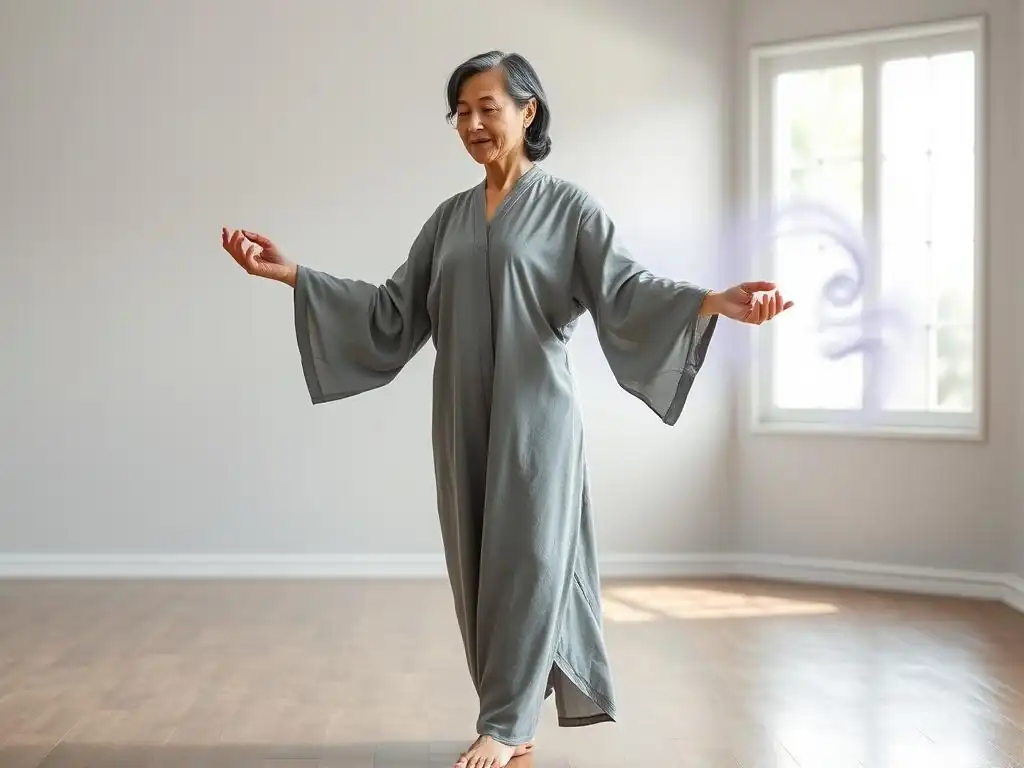
This exercise is performed in a horse stance and involves swaying the torso in a circular motion, often combined with looking back towards the heel (the "tail"). The movement is fluid and grounding, engaging the hips and lower back while loosening the upper body. It is traditionally associated with clearing "Heart Fire" in Traditional Chinese Medicine, which relates to agitation, insomnia, and emotional distress – common symptoms of anxiety.
The rhythmic swaying and hip movement help to release tension stored deep within the core and lower body. This physical release can be profoundly cathartic, helping to discharge pent-up emotional energy. The focus on the gentle, repetitive motion and coordinating it with breath creates a meditative state, calming the nervous system. By addressing both physical tension and energetic imbalances associated with emotional turmoil, this exercise is a powerful tool for promoting emotional regulation and supporting Qigong stress anxiety relief.
Exercise 6: Sliding the Hands Down the Legs to Strengthen the Kidneys
Grounding energy and reducing anxiety through kidney meridian activation
This movement involves bending forward from the waist, sliding the hands down the back of the legs towards the feet, and then slowly returning to standing. This forward bend stretches the hamstrings and lower back while massaging the area of the kidneys. In Traditional Chinese Medicine, the Kidneys are associated with fundamental energy (Jing), willpower, and the emotion of fear. When kidney energy is weak or unbalanced, it can manifest as chronic fear, anxiety, and fatigue.
The physical action of bending forward and reaching towards the earth is inherently grounding, helping to bring scattered energy downwards and inward. The gentle massage or pressure applied around the kidney area is believed to stimulate the Kidney meridian, helping to replenish and balance this vital energy system. By strengthening the Kidneys and grounding energy, this exercise can help alleviate feelings of insecurity, fear, and chronic anxiety, promoting a sense of stability and inner strength essential for Qigong stress anxiety relief.
Exercise 7: Clenching Fists and Glaring with Anger to Boost Vital Energy
Releasing pent-up emotions and building resilience
This more dynamic exercise involves standing in a horse stance, clenching the fists, and pushing them outwards while exhaling forcefully and widening the eyes in a "glare." While the name mentions anger, the purpose is not to cultivate anger, but to safely express and release intense emotions and stagnant energy. This movement is often felt as invigorating and empowering, providing a contrast to the gentler movements in the set.
The physical exertion and forceful exhalation help to release muscular tension and stagnant energy that can accumulate from suppressed emotions like frustration, irritability, or fear. The act of "glaring" and clenching fists provides a controlled way to express energy that might otherwise contribute to internal agitation or anxiety. By providing a safe channel for releasing energetic blockages and building a sense of inner power, this exercise contributes to emotional resilience and helps clear the path for effective Qigong stress anxiety relief.
Exercise 8: Bouncing on the Back to Cure All Diseases
Stimulating circulation and promoting overall well-being
The final exercise typically involves standing with feet together or slightly apart and gently bouncing up and down on the balls of the feet, allowing the body to vibrate loosely. This simple rhythmic movement stimulates circulation throughout the entire body, helping to move Qi and blood. It is often performed for a minute or longer, allowing the body to relax and integrate the benefits of the preceding exercises.
The gentle bouncing action helps to release residual tension in the muscles and joints. It promotes lymphatic drainage and improves blood flow, which can have a positive impact on overall vitality and mood. From a traditional perspective, this vibration helps to "shake out" stagnant energy and promote harmonious flow in all the meridians, contributing to general health and well-being. This sense of energetic coherence and physical relaxation is deeply calming and serves as a powerful closing to the set, reinforcing the benefits of Qigong stress anxiety relief.
Ba Duan Jin: A Practical Guide for Beginners
Preparing for Your Qigong Practice
Embarking on a Ba Duan Jin practice for Qigong stress anxiety relief is a step towards cultivating inner peace. Preparation is simple but important. First, choose a time when you can practice consistently, ideally daily, even if only for 10-15 minutes. Many find the morning or evening beneficial. Wear comfortable, loose clothing that doesn't restrict movement. Bare feet are preferred for better grounding, but soft, flat shoes are also acceptable.
Finding a quiet space is crucial for minimizing distractions and allowing you to focus inwardly. This space doesn't need to be large – just enough room to extend your arms comfortably. Before beginning the movements, take a moment to stand quietly, close your eyes if comfortable, and set your intention for the practice. This could be simply to relax, to release tension, or to cultivate calm. Taking a few deep breaths can help center you and prepare your mind and body for the practice ahead.
Step-by-Step Instructions with Visual Aids
(Note: As per instructions, visual aids are not included. The description relies on detailed text.)
Learning Ba Duan Jin involves understanding the sequence and flow of the eight movements. While detailed instructions for each movement were outlined above, a beginner's approach focuses on learning the basic posture and breath coordination for each.
- Step 1: Two Hands Hold up the Heavens: Stand tall, feet shoulder-width. Inhale, slowly raise hands palms up overhead, stretching. Exhale, lower hands slowly to sides. Repeat several times.
- Step 2: Drawing the Bow: Step wide into a horse stance. Form a "bow" with arms, extending one hand, pulling the other back. Inhale while settling, exhale while "shooting" (extending). Repeat on the other side.
- Step 3: Separating Heaven and Earth: Stand tall, feet shoulder-width. Inhale, raise one hand up, press other down. Exhale as you hold. Inhale back to center. Repeat on the other side.
- Step 4: Wise Owl Gazes Backwards: Stand tall, feet shoulder-width. Gently exhale as you turn your head to look over one shoulder. Inhale as you return to center. Repeat on the other side.
- Step 5: Swaying the Head and Waving the Tail: Horse stance. Gently sway torso in a circle, looking towards the opposite heel. Coordinate with breath (e.g., exhale on the sway). Reverse direction.
- Step 6: Sliding Hands Down Legs: Stand tall, feet shoulder-width. Exhale as you bend forward, sliding hands down the back of legs. Inhale slowly as you return to standing.
- Step 7: Clenching Fists and Glaring: Horse stance. On an exhale, clench fists, push out, and widen eyes. Inhale as you relax back. Repeat several times.
- Step 8: Bouncing on the Back: Stand tall, feet together or slightly apart. Gently bounce up and down on the balls of the feet, allowing the body to relax. Continue for 1-2 minutes.
Remember to move slowly and smoothly, coordinating each movement with your breath. Don't strive for perfection initially; focus on feeling the movement and relaxing into it.
Breathing Techniques for Enhanced Stress Reduction during Ba Duan Jin
Breath is a fundamental component of Qigong and plays a crucial role in its effectiveness for Qigong stress anxiety relief. In Ba Duan Jin, the breath is generally slow, deep, and coordinated with the movements. The goal is to breathe naturally and comfortably, ideally using diaphragmatic breathing, where the abdomen expands on the inhale and contracts on the exhale.
For beginners, simply focusing on breathing smoothly and deeply is sufficient. As you become more familiar with the movements, you can refine your breath coordination. Generally, expansive movements (like reaching up or opening the chest) are coordinated with inhalation, while contracting or grounding movements (like bending forward or settling into a stance) are coordinated with exhalation. This synchronized breath-movement pattern enhances the flow of Qi, deepens relaxation, and amplifies the calming effects on the nervous system, making the practice more potent for managing stress and anxiety.
Integrating Ba Duan Jin into Your Daily Routine for Anxiety Relief
Establishing a Consistent Practice Schedule
Consistency is key to unlocking the full benefits of Ba Duan Jin for Qigong stress anxiety relief. Aim to practice daily, even if only for a short duration. A 15-20 minute session is often sufficient to experience noticeable effects. Find a time that fits naturally into your day – perhaps first thing in the morning to set a calm tone, during a lunch break to reset, or in the evening to unwind before sleep.
Treat your Qigong practice like any other important appointment; put it on your calendar. Starting with a smaller, achievable goal, such as practicing three times a week for 15 minutes, can help build momentum. As you experience the positive changes in your stress and anxiety levels, you'll likely feel more motivated to increase the frequency or duration. Remember that even short, consistent sessions are more beneficial than infrequent, long ones.
Combining Ba Duan Jin with Other Mental Wellness Strategies
Ba Duan Jin is a powerful standalone practice, but its effectiveness for Qigong stress anxiety relief can be enhanced when integrated into a broader mental wellness strategy. Consider combining your daily Qigong with other practices known to support mental health.
- Mindfulness Meditation: A few minutes of seated meditation before or after your Qigong can deepen the sense of calm and presence.
- Journaling: Reflecting on your thoughts and feelings after practice can provide valuable insights into your emotional state.
- Healthy Nutrition: A balanced diet supports overall physical and mental health, complementing the energetic balance cultivated through Qigong.
- Adequate Sleep: Prioritizing sleep allows the body and mind to repair and consolidate the benefits of practices like Ba Duan Jin.
- Connecting with Nature: Practicing Qigong outdoors or simply spending time in nature can amplify the grounding and calming effects.
By combining Ba Duan Jin with these and other healthy habits, you create a holistic approach to managing stress and anxiety, fostering resilience and overall well-being.
Monitoring Your Progress and Adjusting Your Practice as Needed
As you incorporate Ba Duan Jin into your routine for Qigong stress anxiety relief, it can be helpful to observe and monitor your progress. Pay attention to how you feel before, during, and after your practice. Do you notice a reduction in muscle tension? Is your breathing smoother? Are your anxious thoughts less intrusive? Keeping a simple journal can help track these subtle shifts over time.
It's also important to listen to your body and adjust your practice as needed. If you are feeling particularly fatigued or unwell, it's okay to shorten your session or perform the movements more gently. If you find certain movements more challenging or beneficial, you can spend a little extra time on them. Qigong is a personal journey, and adapting the practice to your current needs ensures it remains supportive and sustainable for long-term stress and anxiety management.
The Science Behind Ba Duan Jin's Stress-Reducing Effects
How Qigong Impacts the Nervous System
The calming effects of Qigong on stress and anxiety are significantly linked to its impact on the autonomic nervous system (ANS). The ANS regulates involuntary bodily functions like heart rate, breathing, and digestion, and comprises two main branches: the sympathetic nervous system (responsible for the 'fight or flight' response) and the parasympathetic nervous system (responsible for the 'rest and digest' response). Chronic stress and anxiety often involve an overactivation of the sympathetic system.
Qigong practices like Ba Duan Jin, with their slow, deliberate movements and emphasis on deep, controlled breathing, help to stimulate the vagus nerve, a key component of the parasympathetic nervous system. Activation of the vagus nerve slows heart rate, lowers blood pressure, and promotes a state of relaxation.
Studies using heart rate variability (HRV) – a measure of the variation in time between heartbeats, which reflects ANS activity – have shown that Qigong can increase HRV, indicating improved parasympathetic tone and greater resilience to stress. For instance, some studies report increases in HRV metrics like RMSSD by approximately 10-25% after a period of regular Qigong practice in stressed individuals, suggesting a tangible shift towards a calmer physiological state.
The Role of Meridian Stimulation in Anxiety Relief
Traditional Chinese Medicine (TCM) views health and disease through the lens of Qi (vital energy) flowing through meridians, a network of pathways in the body. Stress and anxiety are often seen as resulting from blockages or imbalances in this energy flow, particularly affecting meridans associated with organs like the Heart (mind, emotions) and Liver (stress, frustration). Ba Duan Jin movements are specifically designed to stimulate these meridians and promote harmonious Qi circulation.
For example, Exercise 1 (Holding up the Heavens) is said to benefit the Triple Burner meridian, regulating fluid and energy distribution. Exercise 5 (Swaying Head and Waving Tail) is associated with clearing Heart Fire.
While the concept of meridians is not directly measurable by conventional Western medicine, the physical actions of stretching, twisting, and gentle pressure in Qigong movements can correspond to stimulating nerve endings, increasing local circulation, and releasing myofascial tension along these traditional pathways. This physical manipulation, combined with focused intention and breath, is believed to help unblock stagnant energy, reduce physical manifestations of stress, and restore a sense of balance, contributing to Qigong stress anxiety relief.
Research and Studies Supporting the Benefits of Ba Duan Jin for Mental Health
A growing body of scientific research supports the benefits of Ba Duan Jin for mental health, particularly in reducing stress and anxiety. Systematic reviews and meta-analyses have pooled data from multiple studies to provide a clearer picture of its efficacy.
For example, a meta-analysis published in 2019 reviewed 11 studies and concluded that Ba Duan Jin practice significantly reduced symptoms of anxiety and depression across various populations, including healthy individuals and those with chronic conditions. Another study involving college students found that regular Ba Duan Jin practice over several weeks led to a statistically significant reduction in perceived stress levels and an improvement in mood scores compared to a control group.
While exact figures vary between studies, the consistent finding is that Ba Duan Jin is associated with measurable improvements in psychological well-being. This research provides empirical support for the traditional claims of Qigong stress anxiety relief and encourages its use as a complementary therapy.
Precautions and Considerations When Practicing Ba Duan Jin
Consulting with a Healthcare Professional
While Ba Duan Jin is generally considered safe and gentle, it is always advisable to consult with a healthcare professional before starting any new exercise program, especially if you have pre-existing health conditions. This is particularly important if you have conditions that might be affected by physical movement or changes in blood pressure, such as heart problems, severe osteoporosis, vertigo, or recent surgeries.
Your doctor can provide personalized advice based on your individual health status and help determine if Ba Duan Jin is an appropriate practice for you. They can also advise on any specific precautions you should take or modifications that might be necessary. While Qigong stress anxiety relief is a primary benefit, ensuring physical safety is paramount, and professional medical guidance is a responsible first step.
Modifications for Individuals with Physical Limitations
One of the strengths of Ba Duan Jin is its adaptability. The movements can often be modified to accommodate individuals with various physical limitations, making Qigong stress anxiety relief accessible to a wider audience. For example, if standing for extended periods is difficult, many of the exercises can be performed while seated on a chair or stool.
Movements that involve deep bending, like Sliding Hands Down Legs, can be modified to a partial bend or performed with support. Similarly, if maintaining a horse stance is challenging, a narrower stance or even standing with feet together can be used. Individuals with limited arm or shoulder mobility can reduce the range of motion for movements like Holding up the Heavens or Drawing the Bow.
The key is to move within a comfortable range, without pain or strain, focusing on the breath and intention rather than perfect form. An experienced Qigong instructor can often provide specific modifications tailored to individual needs.
Avoiding Common Mistakes and Ensuring Proper Form
While Ba Duan Jin is relatively simple, paying attention to a few key points can enhance its effectiveness for Qigong stress anxiety relief and prevent discomfort. A common mistake is rushing through the movements; remember, Qigong emphasizes slowness and deliberation. Another error is holding tension in the body, particularly the shoulders, neck, and jaw; consciously relax these areas throughout the practice.
Proper posture is important – keeping the back relatively straight, shoulders relaxed, and head gently suspended as if pulled by a string from the crown helps maintain good energy flow. Breathing should be natural and deep, not forced. Avoid holding your breath. While striving for perfect form isn't necessary for beginners, understanding the basic principles of each movement and practicing with mindful awareness will deepen the benefits and support your journey towards Qigong stress anxiety relief. Learning from a qualified instructor, even for a few sessions, can be invaluable for understanding proper alignment and energy flow.
Conclusion: Embracing Ba Duan Jin for Enhanced Mental Well-being
The Long-Term Benefits of Regular Qigong Practice for Stress and Anxiety
Committing to regular Ba Duan Jin practice offers profound long-term benefits for managing stress and anxiety. Over time, the consistent engagement of mind and body through gentle movement and breath cultivates a deeper state of calm and resilience. The physiological changes, such as improved heart rate variability and reduced stress hormone levels, become more sustained, leading to a more balanced nervous system day-to-day.
Beyond the immediate relief felt during a session, regular practice helps rewire the brain's response to stress. By repeatedly choosing mindful movement and relaxation over reactivity, individuals build new neural pathways that favor calmness and presence. This leads to a decreased frequency and intensity of anxious episodes, improved sleep quality, enhanced emotional regulation, and a greater sense of inner peace. The journey of Qigong stress anxiety relief through Ba Duan Jin is not just about managing symptoms, but about cultivating a fundamental shift towards greater mental and emotional well-being.
Resources for Further Learning and Support
For those interested in deepening their understanding and practice of Ba Duan Jin for Qigong stress anxiety relief, numerous resources are available. Many books and online videos provide detailed instructions on the movements and the underlying principles of Qigong.
- Look for resources from reputable Qigong masters or organizations.
- Consider joining a local Qigong class or workshop to learn from a qualified instructor and practice in a supportive community environment.
- Explore online courses or platforms that offer guided Ba Duan Jin sessions.
- Seek out resources that explain the Traditional Chinese Medicine principles behind the exercises, as this can enhance your understanding of their intended benefits.
While self-practice is valuable, learning directly from an experienced teacher can provide personalized guidance on form, breath, and energy sensation, significantly enhancing your practice and its benefits for managing stress and anxiety.
Taking the Next Step Towards a Calmer, More Balanced Life
If you are seeking effective, gentle methods for managing stress and anxiety, exploring Ba Duan Jin Qigong is a worthwhile step. This ancient practice offers a holistic path to calming the mind, releasing physical tension, and cultivating vital energy. The Eight Brocades provide a structured yet flexible sequence that is accessible to most people, regardless of age or fitness level.
By incorporating Ba Duan Jin into your daily routine, even for a short time each day, you are actively choosing to prioritize your mental and physical well-being. The journey towards Qigong stress anxiety relief is ongoing, but with consistent practice and mindful intention, you can build resilience, foster inner peace, and move towards a calmer, more balanced, and fulfilling life. Begin today by finding a quiet space and taking your first gentle breath.
Frequently Asked Questions
What is Ba Duan Jin and how does it relate to Qigong stress anxiety relief?
Ba Duan Jin, also known as the Eight Brocades, is a traditional Qigong exercise practiced for centuries. It involves a series of flowing movements designed to improve physical and mental well-being, contributing to Qigong stress anxiety relief.
How can Ba Duan Jin specifically help with Qigong stress anxiety relief?
Ba Duan Jin promotes relaxation, regulates the nervous system, and improves blood circulation. This helps to reduce stress hormones like cortisol, leading to Qigong stress anxiety relief.
How often should I practice Ba Duan Jin to experience Qigong stress anxiety relief benefits?
Ideally, practicing Ba Duan Jin daily for 15-20 minutes can yield noticeable results. Even shorter, consistent sessions can contribute to Qigong stress anxiety relief over time.
Are there any risks or contraindications associated with practicing Ba Duan Jin for Qigong stress anxiety relief?
While generally safe, it's wise to consult a healthcare professional before starting, especially if you have pre-existing medical conditions. Listen to your body and avoid pushing yourself too hard during Qigong stress anxiety relief practice.
Where can I find resources to learn Ba Duan Jin for Qigong stress anxiety relief?
"Mind Care Guide" offers detailed instructions and resources on Ba Duan Jin. You can also find qualified instructors or online videos demonstrating the movements for Qigong stress anxiety relief.
Final Reflection: Unfolding the Power Within: Qigong for a Calmer You
The ancient wisdom of the Eight Brocades (Ba Duan Jin) offers a potent antidote to the pervasive stress and anxiety of modern life. In a world increasingly characterized by relentless demands and constant connectivity, finding accessible and effective methods for self-care is paramount. This exploration of Ba Duan Jin has highlighted not only its physical benefits, but also its profound capacity to cultivate inner peace and resilience. The simple yet powerful movements, when practiced consistently, can transform our relationship with stress, offering a pathway to a more balanced and harmonious existence.
The enduring relevance of Qigong practices like Ba Duan Jin lies in their ability to address the root causes of stress, rather than simply masking the symptoms. They offer a holistic approach, nurturing both the body and mind. This resonates deeply with me, as I've personally experienced the transformative power of mindful movement and breathwork in navigating challenging periods. The body benefits from movement, and the mind benefits from stillness.
This simple truth, often overlooked in our fast-paced world, underscores the profound wisdom embedded within Qigong practices. The ability to cultivate both physical strength and mental clarity is a gift we can all cultivate.
Now, I invite you to consider how you might integrate the principles of Ba Duan Jin into your own life. Begin with just a few minutes each day, focusing on the breath and the gentle movements. Observe the subtle shifts in your body and mind. Don't be discouraged by initial challenges; consistency is key. Embrace the journey of self-discovery and self-care that awaits you. The path to a calmer, more resilient you begins with a single breath, a single movement, a single step towards embracing the ancient wisdom of the Eight Brocades.
Unlock Your Inner Calm: Start Your Qigong Journey Today!
Thank you for taking the time to explore the power of the Eight Brocades! We hope you've discovered a new path towards stress relief and inner peace. Now, it's time to put this knowledge into practice.
- Begin your Eight Brocades practice today: Start with just 5 minutes a day and gradually increase the duration as you feel comfortable. Even a short practice can make a significant difference.
- Share your experience: Tell us (or a friend!) about your first practice session. What did you notice? What surprised you?
- Explore other Mind Care Guide resources: Discover more Qigong exercises and mindfulness techniques on our site to deepen your practice.
Ready to embark on your journey towards a calmer, more balanced you? What's your first step towards incorporating the Eight Brocades into your daily life?