
Processing Difficult Emotions: Using Qigong for Healthy Emotional Expression


Welcome to Mind Care Guide, a space dedicated to nurturing your mental well-being. Feeling overwhelmed by difficult emotions? You're not alone. This month, we delve into the power of ancient practices to help you regain control. Discover how Qigong for emotional regulation can unlock a pathway to healthier emotional expression and inner peace. Intrigued? Let's explore how this gentle art can transform your relationship with your feelings…
Processing Difficult Emotions: Using Qigong for Healthy Emotional Expression
- Introduction to Qigong and Emotional Well-being
- The Science Behind Qigong for Emotional Regulation
- Identifying Difficult Emotions and Their Physical Manifestations
- Qigong Exercises for Releasing and Processing Difficult Emotions
- Creating a Personalized Qigong Practice for Emotional Regulation
- Tips for Maintaining a Consistent Qigong Practice
- Enhancing Emotional Resilience Through Qigong and Lifestyle Changes
- Advanced Qigong Techniques for Deep Emotional Transformation
- Conclusion: Embracing Qigong for a Healthier Emotional Life
-
Frequently Asked Questions
- How does Qigong help with emotional regulation?
- What specific Qigong exercises are best for processing difficult emotions?
- How long does it take to experience benefits from Qigong for emotional regulation?
- Is Qigong a replacement for traditional mental health treatment?
- Are there any risks associated with practicing Qigong for emotional regulation?
- Final Reflection: Cultivating Emotional Freedom Through Qigong
- Unleash Your Inner Calm: Take Charge of Your Emotions Today
Introduction to Qigong and Emotional Well-being
Understanding the Connection Between Qigong, Energy Flow, and Emotions
Qigong, an ancient Chinese mind-body practice, translates roughly to "cultivating energy." At its core, Qigong involves gentle movements, controlled breathing, and focused intention to harmonize the body's vital energy, known as Qi (pronounced "chee"). According to Traditional Chinese Medicine (TCM) principles, Qi flows through specific pathways in the body called meridians.
When this energy flows smoothly and freely, physical and emotional well-being are enhanced. Conversely, stagnation or blockage in the Qi flow is believed to contribute to various ailments, including difficult emotions. Qigong practices are designed to clear these blockages and restore balanced energy circulation, directly influencing how we experience and process feelings.
The concept underpinning Qigong for emotional regulation is the belief that emotions are not merely abstract psychological states but are intimately connected to the physical body and its energy system. Different emotions are associated with specific organs and meridians in TCM. For example, anger is linked to the liver meridian, while sadness is often associated with the lungs.
By performing specific Qigong exercises, individuals can target these energy pathways, helping to release pent-up emotional energy and promote a sense of calm and balance. This holistic approach views the emotional landscape as an integral part of the overall health of the individual, addressable through conscious energy work.
How Qigong Differs from Other Emotional Regulation Techniques
While many emotional regulation techniques focus primarily on cognitive restructuring or talk therapy, Qigong offers a unique somatic approach that integrates physical movement and breathwork. Unlike purely meditative practices that emphasize stillness, Qigong actively engages the body through slow, deliberate movements. This combination allows individuals to process emotions not just mentally but also physically, releasing tension stored within muscles and tissues. For instance, techniques like deep diaphragmatic breathing used in Qigong are known to activate the parasympathetic nervous system, promoting relaxation, a direct physical counterpoint to the physiological stress response often associated with difficult emotions.
Furthermore, Qigong for emotional regulation distinguishes itself by its emphasis on energy cultivation and circulation. Techniques like progressive muscle relaxation focus on releasing tension, while Qigong aims to transform and circulate stagnant emotional energy. This perspective suggests that rather than just letting go of an emotion, one can work with its energy to promote healing and vitality. Compared to vigorous exercise, which can sometimes exacerbate certain emotional states (like anxiety), Qigong's gentle nature makes it accessible and beneficial for individuals experiencing intense or overwhelming feelings, providing a safe way to engage with the body's emotional landscape.
The Science Behind Qigong for Emotional Regulation
Qigong's Impact on the Nervous System and Stress Response
Scientific studies exploring the physiological effects of Qigong have shown promising results regarding its impact on the nervous system and stress response. Regular practice has been observed to influence the autonomic nervous system, shifting it away from the sympathetic "fight or flight" state towards the parasympathetic "rest and digest" state.
This shift is crucial for reducing chronic stress and its associated physical and emotional symptoms. Research has indicated that Qigong can help lower levels of stress hormones such as cortisol; one study involving participants with moderate stress levels reported a significant reduction in salivary cortisol after a period of consistent Qigong practice, sometimes seeing levels decrease by approximately 25% compared to control groups.
Moreover, Qigong practice has been linked to improvements in heart rate variability (HRV), a key indicator of the body's ability to adapt to stress. Higher HRV is associated with better emotional regulation and resilience. By regulating breathing and promoting relaxation, Qigong helps to optimize cardiac autonomic balance, leading to increased HRV. This physiological change contributes directly to the effectiveness of Qigong for emotional regulation, enabling individuals to respond to stressors with greater calm and flexibility rather than becoming overwhelmed by strong emotional reactions. The mind-body connection fostered by Qigong thus provides a tangible biological basis for its emotional benefits.
The Role of Meridians and Energy Channels in Emotional Balance
While the concept of meridians and Qi flow originates from TCM and is not directly observable through conventional Western medical imaging, modern research explores potential correlations between these pathways and the body's nervous and circulatory systems. From a TCM perspective, each major meridian is associated with specific organs and, importantly, specific emotions. For instance, fear is linked to the Kidney meridian, worry to the Spleen, and grief to the Lung. When emotional energy becomes blocked or imbalanced within these channels, it can manifest as physical discomfort or intensify the associated emotion.
Qigong for emotional regulation works by using targeted movements, stretches, and acupressure-like effects along these meridian pathways. The slow, deliberate nature of Qigong movements is thought to gently stimulate the flow of Qi, helping to disperse stagnation and restore balance.
For example, movements focusing on the chest area are believed to benefit the Lung and Heart meridians, potentially easing feelings of grief or anxiety. While Western science continues to investigate the precise mechanisms, the subjective experience of practitioners often includes reduced physical tension and a greater sense of emotional ease after clearing perceived energy blockages, aligning with the TCM model.
Research Supporting Qigong's Effectiveness in Managing Difficult Emotions
A growing body of research supports the use of Qigong as a complementary therapy for managing various emotional challenges. Multiple studies have investigated its impact on conditions like anxiety, depression, and stress-related disorders.
For example, a meta-analysis reviewing several studies on Qigong and depression found that participants practicing Qigong reported significant reductions in depressive symptoms, with effect sizes comparable to or even greater than some conventional exercise programs. Similarly, research focusing on anxiety has demonstrated that regular Qigong practice can lead to measurable decreases in anxiety scores, sometimes showing a reduction of 20-40% in self-reported anxiety levels among participants over several weeks.
Furthermore, Qigong for emotional regulation has shown promise in improving mood and increasing positive affect. Studies have indicated that consistent practice can enhance feelings of calmness, well-being, and emotional resilience. While more large-scale, rigorously controlled trials are always beneficial, the existing evidence provides a solid foundation suggesting that Qigong is an effective, low-impact method for individuals seeking to better understand, process, and regulate their emotional states, offering a pathway towards greater emotional health and stability.
Identifying Difficult Emotions and Their Physical Manifestations
Recognizing Common Emotional Challenges: Anxiety, Fear, Anger, and Sadness
Difficult emotions are a natural part of the human experience, yet they can become overwhelming if not acknowledged and processed healthily. Common challenges include anxiety, often characterized by excessive worry, nervousness, and a sense of impending doom; fear, a response to perceived threat that can range from mild apprehension to panic; anger, a strong feeling of displeasure or hostility; and sadness, a feeling of sorrow or unhappiness, particularly associated with loss or disappointment.
Recognizing these emotions when they arise is the first step towards effective emotional regulation. It involves paying attention to internal signals without judgment, simply noting the presence of the emotion.
Each of these emotions can manifest along a spectrum, from mild irritation or unease to intense rage or despair. For instance, anxiety might present as a slight feeling of restlessness or escalate into a full-blown panic attack. Anger might be a fleeting annoyance or a simmering resentment. Becoming familiar with your own personal emotional landscape, including the intensity and triggers for these feelings, is crucial for applying techniques like Qigong for emotional regulation. This self-awareness allows you to identify which emotions are most challenging for you and tailor your practice accordingly.
Understanding How Emotions are Stored in the Body
One of the core tenets of mind-body practices like Qigong is that emotions are not solely confined to the mind but are deeply intertwined with the physical body. Difficult emotions, especially when suppressed or unresolved, can manifest as physical tension, discomfort, or even chronic pain. For example, anxiety often leads to tightness in the chest, shallow breathing, or a knot in the stomach.
Anger can result in clenched jaws, tense shoulders, or digestive issues. Sadness might be felt as a heaviness in the chest or lethargy throughout the body. This somatic experience of emotion highlights why a purely cognitive approach to emotional regulation can sometimes be insufficient.
The body acts as a repository for our emotional history. Past traumas or ongoing stress can create patterns of muscular tension that persist long after the initial emotional trigger has passed. Qigong for emotional regulation specifically addresses this by using gentle movements and breathwork to release these physical blockages. By becoming more attuned to the body's subtle signals – the tightness, the warmth, the vibration – individuals can gain deeper insight into their emotional state and facilitate the release of stored emotional energy, promoting not only emotional processing but also physical relief.
Self-Assessment: Identifying Your Emotional Triggers and Patterns
Self-assessment is a vital component of effective emotional regulation. It involves observing your reactions to different situations and identifying the specific events, people, or thoughts that tend to trigger difficult emotions. This process requires honesty and a willingness to look inward without self-criticism. Keeping a simple journal can be helpful; note down instances where you felt a strong negative emotion, what happened just before, how the emotion felt in your body, and how you reacted. Over time, this can reveal recurring patterns and underlying sensitivities.
- Task List:
- [ ] Notice when you feel a strong emotion (e.g., frustration, worry).
- [ ] Identify the situation or thought that preceded it.
- [ ] Pay attention to physical sensations associated with the emotion (e.g., tight throat, tense back).
- [ ] Note your immediate reaction or impulse.
- [ ] Reflect on potential recurring patterns.
Understanding your triggers and patterns provides a roadmap for using Qigong for emotional regulation proactively. If you know certain situations predictably cause anxiety, you can use specific Qigong techniques before entering those situations or immediately afterward to process the feelings. Recognizing patterns also helps you see difficult emotions not as random occurrences but as responses that can be understood and managed with consistent practice and self-compassion.
Qigong Exercises for Releasing and Processing Difficult Emotions
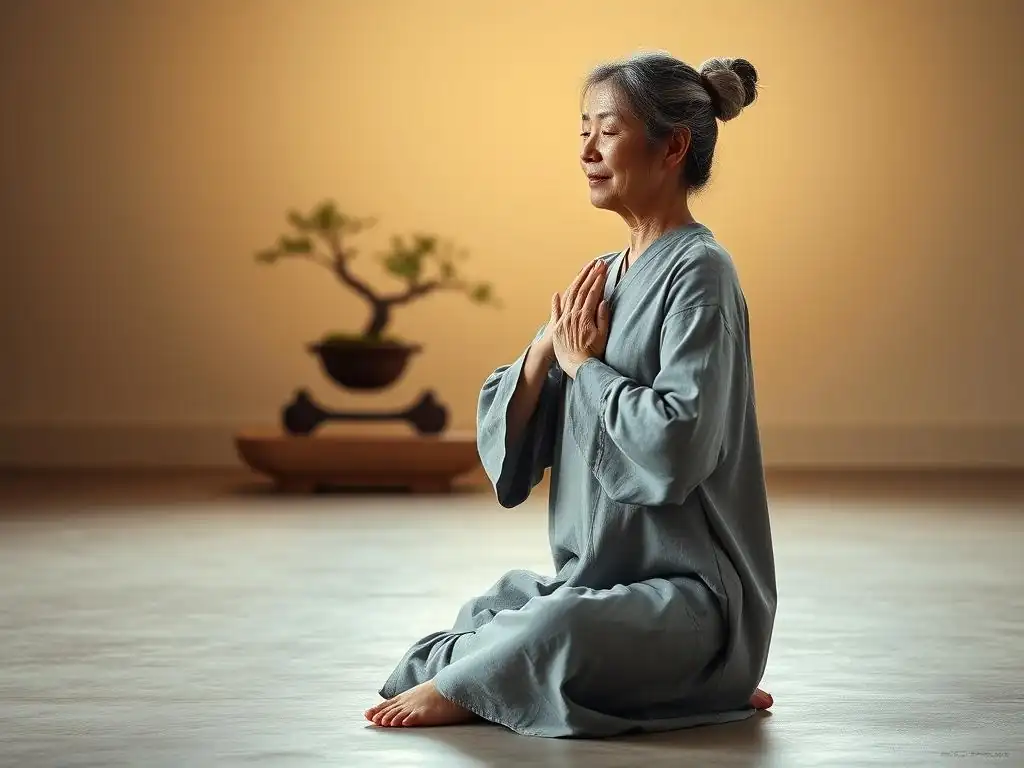
Specific Qigong Movements for Calming Anxiety and Fear
Anxiety and fear often manifest as restlessness, shallow breathing, and tension, particularly in the upper body. Qigong for emotional regulation offers gentle yet powerful techniques to counter these physical and emotional states. Movements aimed at calming anxiety often focus on rooting and grounding, helping to bring the practitioner's awareness back to the present moment and connect with the earth's stability. Examples include standing postures like "Holding the Ball" or gentle swaying motions that promote a sense of centeredness. These movements, combined with deep, slow abdominal breathing, help to activate the parasympathetic nervous system, reducing the physiological symptoms of anxiety.
Beyond grounding, specific movements target the chest and lung areas to open up the breath and release constriction often associated with fear and worry. Gentle arm movements that expand and contract the chest, such as "Opening and Closing the Chest," can help to release pent-up energy and encourage deeper, more relaxed breathing. The slow, continuous flow of these movements provides a meditative quality, calming the racing mind and allowing anxious energy to dissipate naturally. Consistency in practicing these specific forms is key to building resilience against future anxious episodes.
Breathing Techniques for Emotional Grounding
Breathing is fundamental to Qigong and serves as a direct tool for emotional regulation. For calming anxiety and fear, emphasis is placed on deep, slow, and even breathing, often into the lower abdomen (Dan Tian). This type of breathing, known as abdominal or diaphragmatic breathing, stimulates the vagus nerve, which plays a significant role in the body's stress response and emotional state. By consciously slowing down the breath, practitioners can immediately signal to the nervous system that it is safe to relax, counteracting the rapid, shallow breathing characteristic of anxiety.
A common technique is "Six Healing Sounds" breathing, where specific sounds are exhaled to cleanse and balance different organs and their associated emotions. For fear, the Kidney sound (Chui) is often used, exhaled slowly while visualizing tension or fear leaving the body. Another basic yet powerful technique is simply focusing on the length of the exhale, making it slightly longer than the inhale. This simple practice promotes relaxation and helps to ground scattered energy, providing an immediate sense of calm and presence, essential for managing overwhelming feelings.
Movement Sequences for Releasing Tension in the Body
Anxiety and fear cause the body to tense up, preparing for action (fight or flight). Qigong sequences designed for these emotions incorporate movements that gently release this chronic muscular tension. Movements that involve slow stretching and unwinding, particularly through the spine and shoulders, can help to release the physical grip of fear. Sequences like the Eight Brocades (Ba Duan Jin) include movements such as "Holding Up the Heavens" and "Drawing the Bow," which stretch the torso and open the chest, counteracting the hunched, protective posture often adopted when feeling anxious.
The repetitive, flowing nature of Qigong movements allows the practitioner to enter a meditative state, moving energy through the body and releasing stagnation. Movements focusing on the lower body and legs help to ground the energy downwards, away from the head where anxious thoughts often reside. By consciously moving through areas of tightness, individuals can physically shake off or breathe through stored tension, facilitating the emotional release that Qigong for emotional regulation aims to achieve. The physical act of moving also provides a healthy outlet for nervous energy.
Qigong Practices for Transforming Anger and Frustration
Anger and frustration are often associated with stagnant energy, particularly linked to the Liver meridian in TCM. When Liver Qi is blocked, it can erupt as irritability, resentment, or explosive anger, or manifest as physical symptoms like headaches or digestive upset. Qigong practices for transforming anger focus on promoting the smooth, free flow of Qi, especially in the sides of the body and the rib cage area, which correspond to the Liver meridian. Movements involving gentle twisting and stretching of the torso are particularly effective.
Specific forms like "Parting the Wild Horse's Mane" from Tai Chi (a closely related practice) or simpler Qigong movements that involve expansive arm movements can help to release constricted energy associated with anger. The key is to perform these movements with a sense of allowing and release, rather than force. By consciously engaging the body in fluid motion, practitioners can help to dissipate the intense, upward-surging energy of anger, transforming it into a more manageable flow. Consistent practice provides a healthy, non-destructive way to process these powerful emotions.
Sound Healing and Vocalizations for Emotional Release
Sound is a powerful tool in Qigong for releasing stagnant emotional energy. The Six Healing Sounds practice includes specific sounds associated with different organs and emotions. For anger and frustration, the Liver sound (Xu, pronounced "shooo") is exhaled slowly and deliberately. This vocalization is performed with specific movements and visualizations, aiming to cleanse and balance the energy of the liver. The act of making the sound itself provides a physical vibration that is thought to help break up stagnation and release tension.
Beyond the specific healing sounds, simple vocalizations like sighs, hums, or even gentle groans can be used intuitively during Qigong practice to help release emotional buildup. Allowing sound to accompany movement and breath provides an additional avenue for expression and release, particularly for emotions like anger that can feel trapped or suppressed. This technique adds an expressive layer to Qigong for emotional regulation, acknowledging that sometimes emotions need an outward physical and auditory release to be fully processed.
Gentle Stretching and Twisting for Liver Qi Stagnation
Movements that gently stretch and twist the torso are specifically recommended in Qigong to address Liver Qi stagnation, which is often linked to anger and frustration. These movements target the sides of the body, where the Liver meridian runs. Examples include standing twists where the upper body rotates gently while the lower body remains stable, or seated stretches that open the rib cage. These actions help to release tension in the muscles surrounding the liver and gallbladder, promoting the smooth flow of Qi.
Movements like "Turning the Waist and Pushing the Palm" from the Eight Brocades or simple side stretches performed with conscious breath can be highly effective. The key is to move slowly and mindfully, feeling the stretch and release in the body. By consistently practicing these types of movements, individuals can proactively address the physical patterns associated with anger, making Qigong for emotional regulation a valuable tool for maintaining emotional equilibrium and preventing the buildup of frustration.
Qigong for Processing Grief and Sadness
Grief and sadness are often associated with the Lung meridian in TCM, which governs respiration and is linked to the emotion of sorrow. When grief is unprocessed, it can constrict the chest, making breathing difficult and leading to feelings of heaviness, lethargy, and even depression. Qigong practices for processing grief focus on opening the chest, strengthening the lungs, and cultivating a sense of connection and compassion, both for oneself and others.
Movements that expand the chest and encourage deep, full breaths are particularly beneficial. Examples include arm movements that open outwards and upwards, like "Lifting the Sky" or "Opening the Heart." These movements physically counteract the collapsed posture often associated with sadness and create space in the body for breath and emotional energy to move. By gently stimulating the Lung meridian, these practices can help to release the grip of sorrow and facilitate the natural process of grieving and healing.
Heart-Opening Exercises for Compassion and Self-Love
While grief is linked to the Lungs, the Heart meridian is associated with joy, love, and connection. Opening the Heart energy through Qigong can help to counter the isolation and pain of grief and sadness, fostering a sense of self-compassion and connection to the world. Movements that gently open the chest and shoulders, such as drawing the arms back or performing expansive circular motions with the arms, are considered heart-opening.
These exercises are performed with the intention of cultivating warmth, acceptance, and love within oneself. They help to release the protective armor that people often build around their hearts when experiencing pain. By integrating heart-opening movements into Qigong for emotional regulation, particularly when dealing with sadness or loss, individuals can create a space for healing, allowing vulnerability while simultaneously building inner strength and the capacity for self-nurturing.
Visualization Techniques for Emotional Acceptance
Visualization is a powerful complementary tool used in Qigong to enhance emotional processing. When dealing with grief or sadness, visualization can help to cultivate acceptance and facilitate the release of sorrow. One common visualization involves breathing in light and healing energy while exhaling heaviness, darkness, or the color associated with sadness (often white or gray for the Lungs in TCM). Visualizing the breath cleansing the lungs and heart can be profoundly therapeutic.
Another technique involves visualizing the emotion itself as a cloud or mist that is gently exhaled and dispersed by the wind, or as a river flowing away. For grief, visualizing connecting with loved ones (living or passed) through the heart center can also be comforting. These visualizations, combined with slow, mindful movement and breath, help to shift perspective, promoting acceptance of the emotional experience without getting stuck in it. They support the body's natural ability to process and integrate difficult feelings.
Creating a Personalized Qigong Practice for Emotional Regulation
Choosing the Right Qigong Forms for Your Specific Needs
Creating a personalized Qigong for emotional regulation practice begins with understanding your own emotional landscape and identifying which emotions are most challenging for you. Based on this self-assessment (as discussed in Section 3.3), you can select Qigong forms or specific movements that are traditionally associated with balancing the relevant organ systems and emotions in TCM. For example, if you struggle primarily with anxiety, focus on grounding and chest-opening forms. If anger is your main challenge, prioritize movements that stretch and twist the torso.
It's not necessary to learn complex sequences initially. Starting with a few simple movements or a short form (like the Eight Brocades or Five Animal Frolics, choosing animals relevant to your emotional needs) can be highly effective. Many resources provide guidance on which movements target specific areas or emotions. The key is to choose practices that resonate with you and address your specific emotional patterns, making the practice feel relevant and accessible. Don't be afraid to experiment with different forms until you find what feels right for your body and emotional state.
Integrating Mindfulness and Meditation into Your Qigong Practice
Mindfulness and meditation are natural companions to Qigong and significantly enhance its effectiveness for emotional regulation. Mindfulness involves bringing non-judgmental awareness to the present moment – noticing thoughts, feelings, and physical sensations as they arise without getting carried away by them. Integrating this into Qigong means paying close attention to the subtle sensations in your body as you move, the flow of your breath, and the feelings that surface. This heightened awareness allows you to recognize difficult emotions as they emerge and process them in real-time during your practice.
Meditation, whether seated or incorporated into the movement (moving meditation), helps to cultivate stillness and inner peace. After a Qigong sequence, spending a few minutes in quiet seated meditation can help to integrate the energetic shifts that have occurred. Focusing on the breath or a simple visualization allows the mind to settle and reinforces the calming effects of the physical movements. This combined approach creates a powerful synergy, addressing emotional regulation on both the physical and mental levels, making your Qigong for emotional regulation practice more profound.
Setting Realistic Goals and Expectations for Emotional Healing
Emotional healing through Qigong is a journey, not a quick fix. Setting realistic goals and expectations is crucial for maintaining motivation and avoiding frustration. Understand that while Qigong can provide significant relief and improved coping mechanisms, it may not instantly erase difficult emotions. Emotions are complex, and processing them takes time and consistent effort. A realistic goal might be to practice for 15-20 minutes daily or several times a week, focusing on consistency rather than perfection.
Expect that some days will feel easier than others, and that difficult emotions may still arise. The goal of Qigong for emotional regulation is not to suppress emotions but to develop the capacity to experience them without being overwhelmed, to understand their messages, and to facilitate their healthy release. Celebrate small victories, such as feeling slightly calmer after practice or noticing a moment of mindful presence during a challenging situation. Be patient and compassionate with yourself throughout the process of emotional healing.
Tips for Maintaining a Consistent Qigong Practice
Creating a Dedicated Space and Time for Qigong
Consistency is paramount when using Qigong for emotional regulation. To make practice a regular habit, try to create a dedicated space and time for it. The space doesn't need to be large or elaborate; a quiet corner in a room is sufficient. What matters is that it feels calm and relatively free from distractions. Clearing this space physically can also symbolize clearing mental and emotional clutter.
Choosing a consistent time each day or week helps to build a routine. This could be first thing in the morning to set a calm tone for the day, during a midday break to release tension, or in the evening to wind down. Even practicing for 10-15 minutes at the same time each day can be more beneficial than longer, sporadic sessions. Treat this time as a non-negotiable appointment for your emotional well-being.
Overcoming Common Challenges and Obstacles
Maintaining a consistent Qigong practice can present challenges, such as lack of time, feeling too tired or unmotivated, or doubting the effectiveness of the practice. It's important to anticipate these obstacles and develop strategies to overcome them. If time is an issue, break your practice into shorter segments throughout the day (e.g., 5 minutes in the morning, 5 at lunch, 5 in the evening). If you lack motivation, remind yourself of the intention behind your practice – to cultivate emotional balance and well-being. Sometimes, simply starting with one movement can help build momentum.
Another common obstacle is the expectation of immediate dramatic results. Remember that Qigong for emotional regulation works gradually by building resilience and subtle shifts in energy and awareness. If you feel discouraged, revisit your self-assessment notes to see if you can identify small improvements in how you handle difficult situations or how you feel in your body. Be flexible and adaptable; if you miss a day, don't view it as a failure, just pick up where you left off the next day.
Seeking Guidance from a Qualified Qigong Instructor
While there are many resources available for learning Qigong independently, seeking guidance from a qualified instructor can significantly deepen your practice and understanding, especially when using Qigong for emotional regulation. An experienced instructor can provide personalized feedback on your posture, alignment, and energy flow, ensuring you are performing movements correctly and safely. They can also offer insights into specific movements or forms that are most appropriate for your individual emotional needs and challenges.
An instructor can also guide you in understanding the subtle energetic aspects of Qigong and how they relate to emotional processing, offering support and encouragement along your journey. Learning in a class or workshop setting can also provide a sense of community, which can be supportive for emotional well-being. While self-practice is valuable, the nuances of energy cultivation and release are often best learned through direct transmission from a knowledgeable teacher.
Enhancing Emotional Resilience Through Qigong and Lifestyle Changes
The Importance of Diet and Nutrition for Emotional Balance
Emotional well-being is profoundly influenced by physical health, and diet and nutrition play a significant role. A diet rich in whole foods, including fruits, vegetables, lean proteins, and healthy fats, provides the body and brain with the nutrients needed for optimal functioning, including neurotransmitter production which impacts mood. Conversely, diets high in processed foods, sugar, and unhealthy fats can contribute to inflammation and blood sugar imbalances, potentially exacerbating mood swings, anxiety, and depression.
From a TCM perspective, different foods are believed to affect the balance of Qi in specific organs associated with emotions. For example, excessive consumption of cold or damp foods might impact the Spleen, linked to worry. Incorporating nourishing foods that support the organs relevant to your emotional challenges can complement your Qigong for emotional regulation practice. Staying hydrated is also crucial for maintaining energy flow and overall vitality.
The Role of Sleep and Rest in Emotional Regulation
Adequate sleep and rest are foundational to emotional resilience. Chronic sleep deprivation can impair the brain's ability to regulate emotions, leading to increased irritability, stress, anxiety, and difficulty coping with challenging situations. During sleep, the brain processes information and consolidates memories, including emotional experiences. Restorative sleep allows the nervous system to recover and reset, which is essential for maintaining emotional stability.
Aiming for 7-9 hours of quality sleep per night is a crucial lifestyle factor supporting Qigong for emotional regulation. Establishing a regular sleep schedule and creating a relaxing bedtime routine can improve sleep quality. Qigong itself can be a helpful tool for promoting better sleep; gentle evening practices can calm the mind and body, preparing you for rest. Prioritizing rest alongside your Qigong practice creates a powerful synergy for enhancing your capacity to handle difficult emotions.
Humans are social beings, and positive relationships and social support are vital buffers against stress and difficult emotions. Feeling connected to others provides a sense of belonging, reduces feelings of isolation, and offers opportunities for emotional expression and validation. Sharing your experiences with trusted friends, family, or a support group can lighten the emotional burden and provide new perspectives.
Engaging in social activities and nurturing supportive connections complements the internal work done through Qigong for emotional regulation. While Qigong helps you process emotions internally, social support provides an external network that reinforces emotional well-being. Balancing solitary practice with meaningful social interaction creates a holistic approach to emotional health, building resilience from both within and without.
Advanced Qigong Techniques for Deep Emotional Transformation
Exploring Inner Alchemy and Emotional Integration
Inner Alchemy (Neidan) is a more advanced aspect of Qigong practice that focuses on transforming the body's vital energies (Jing, Qi, Shen) to cultivate spiritual awareness and integrated well-being. In the context of emotional transformation, Inner Alchemy involves working with emotional energy at a deeper level, not just releasing it, but refining and integrating it. This might involve specific meditations or visualizations aimed at circulating emotional energy through the body's internal pathways, transforming dense emotional states into lighter, more refined energy.
Practices might include cultivating the "Inner Smile" meditation, directing warmth and acceptance towards internal organs and emotional centers, helping to dissolve blockages and foster self-love. This level of practice requires patience, dedication, and often guidance from an experienced teacher. It moves beyond simply using Qigong for emotional regulation as a coping mechanism to using it as a path for profound personal growth and the integration of all aspects of the self, including the emotional body.
Working with the Five Elements to Balance Emotions
The Five Elements theory (Wood, Fire, Earth, Metal, Water) is a cornerstone of TCM and Qigong. Each element is associated with specific organs, seasons, colors, sounds, and emotions. Understanding these associations provides a framework for deeper emotional balancing.
- Wood: Liver/Gallbladder, anger/frustration, spring
- Fire: Heart/Small Intestine, joy/anxiety, summer
- Earth: Spleen/Stomach, worry/pensiveness, late summer
- Metal: Lung/Large Intestine, grief/sadness, autumn
- Water: Kidney/Bladder, fear/shock, winter
Advanced Qigong practices leverage this framework by using specific movements, sounds, and visualizations corresponding to each element to balance the associated emotions. For example, if someone experiences excessive worry (Earth element), practices targeting the Spleen/Stomach might be emphasized. This approach allows for a highly nuanced and targeted application of Qigong for emotional regulation, addressing imbalances at their energetic root according to TCM principles.
Utilizing Dan Tian Breathing and Microcosmic Orbit Meditation
Dan Tian breathing and Microcosmic Orbit meditation are advanced internal practices that significantly enhance energy cultivation and circulation, leading to profound emotional stability and transformation. Dan Tian breathing focuses on cultivating energy in the lower abdomen (the lower Dan Tian), considered the body's energetic center. Deep, relaxed breathing into this area builds a strong foundation of vital energy, which is essential for processing and transforming difficult emotions.
The Microcosmic Orbit meditation involves circulating this cultivated energy along a specific pathway that runs up the back (Du meridian) and down the front of the body (Ren meridian). This circulation helps to harmonize the body's energy, clear blockages, and integrate the energies of various organ systems and emotional centers. Regular practice of these advanced techniques can lead to increased awareness, emotional resilience, and a deeper sense of inner peace, representing a powerful application of Qigong for emotional regulation at an advanced level.
Conclusion: Embracing Qigong for a Healthier Emotional Life
The Long-Term Benefits of Qigong for Emotional Well-being
Embracing Qigong for emotional regulation offers a pathway to significant long-term benefits for emotional well-being. Consistent practice helps to build emotional resilience, enabling individuals to navigate life's inevitable challenges with greater ease and grace. Over time, practitioners often report reduced levels of stress, anxiety, and depression, alongside an increased capacity for joy, compassion, and self-acceptance. Qigong cultivates a deeper connection with the body, fostering self-awareness and the ability to recognize and process emotions before they become overwhelming.
Beyond managing difficult feelings, Qigong promotes a sense of inner peace and vitality. By harmonizing the body's energy, it supports overall physical health, which in turn positively impacts emotional states. The gentle, non-strenuous nature of Qigong makes it a sustainable practice for people of all ages and physical conditions, offering a lifelong tool for maintaining emotional balance and cultivating a healthier, more fulfilling emotional life. It's an investment in your well-being that yields compounding returns over time.
Resources for Further Learning and Practice
For those interested in exploring Qigong for emotional regulation further, numerous resources are available. Consider seeking out qualified Qigong instructors in your local area or exploring online courses and workshops specifically focused on Qigong for stress reduction, emotional healing, or mental health. Many books and DVDs also offer guidance on basic and intermediate Qigong forms and principles.
Look for resources that explain the connection between specific movements, breathing techniques, and emotional states, perhaps drawing upon the principles of Traditional Chinese Medicine. Joining a practice group or finding a practice partner can also provide support and motivation. Remember that finding the right teacher or resource is an important step in developing a safe and effective practice tailored to your journey towards greater emotional balance through Qigong.
Frequently Asked Questions
How does Qigong help with emotional regulation?
Qigong uses gentle movements, breathwork, and mindfulness to improve the flow of Qi (energy) in the body. This improved flow can help to release emotional blockages and promote a sense of calm and balance, naturally regulating emotions.
What specific Qigong exercises are best for processing difficult emotions?
While many Qigong exercises can be beneficial, practices like "Inner Smile" meditation, "Six Healing Sounds", and "Self-Massage" are often recommended. These focus on specific organs and emotions, promoting release and healing.
How long does it take to experience benefits from Qigong for emotional regulation?
The timeframe varies, but many people experience initial benefits like increased calmness and reduced stress after just a few sessions. Consistent practice over weeks or months leads to more significant and lasting emotional regulation.
Is Qigong a replacement for traditional mental health treatment?
No, Qigong should be considered a complementary therapy, not a replacement. It can be a valuable tool alongside therapy, medication, or other treatments recommended by a mental health professional.
Are there any risks associated with practicing Qigong for emotional regulation?
Qigong is generally safe, but it's essential to learn from a qualified instructor, especially if you have pre-existing health conditions. Listen to your body and avoid pushing yourself too hard, particularly when processing intense emotions.
Final Reflection: Cultivating Emotional Freedom Through Qigong
The ancient practice of Qigong offers a powerful, yet often overlooked, pathway to emotional well-being in our increasingly stressful modern world. Its ability to harmonize the body and mind provides a tangible antidote to the pervasive anxieties and emotional imbalances many of us experience daily. This is not simply a historical curiosity; it's a vital tool for navigating the complexities of the 21st century.
Qigong's impact extends far beyond the individual; its gentle yet profound influence ripples outwards, touching the fabric of our relationships and communities. By fostering self-awareness and emotional regulation, we cultivate a greater capacity for empathy and compassion. As the renowned philosopher Lao Tzu wisely stated, Knowing others is intelligence; knowing yourself is true wisdom. Mastering others is strength; mastering yourself is true power.
This quote perfectly encapsulates the transformative potential of Qigong, highlighting its ability to unlock inner strength and wisdom through self-mastery, ultimately leading to healthier and more fulfilling interactions with the world around us.
Now, consider your own emotional landscape. Where do you feel tension or blockage? I invite you to explore the gentle movements and mindful breathing techniques of Qigong as a pathway to unlock your own emotional freedom. Begin with even just five minutes a day, focusing on the flow of energy within your body. Observe your breath, notice your sensations, and allow yourself to release what no longer serves you. The journey towards emotional well-being is a personal one, but Qigong offers a supportive and empowering framework to guide you on your path.
Unleash Your Inner Calm: Take Charge of Your Emotions Today
Thanks for taking the time to explore the power of Qigong for emotional well-being! We hope you found valuable insights into processing difficult emotions in a healthy and sustainable way. Now it's time to put this knowledge into practice.
Here are a few ways to start your journey towards greater emotional balance:
- Begin your Qigong practice today. Even 5 minutes of gentle movement and breathwork can make a significant difference. Find a quiet space, and let your body guide you.
- Share your experience! Tell us (or a friend!) about your practice. What did you notice? How did you feel?
- Explore different Qigong styles. Discover which resonates best with your body and energy flow. The journey of self-discovery is ongoing!
Ready to embark on this path to emotional freedom? What small step will you take today to nurture your emotional well-being?