
Qigong vs. Meditation: Finding the Right Mind Practice for You

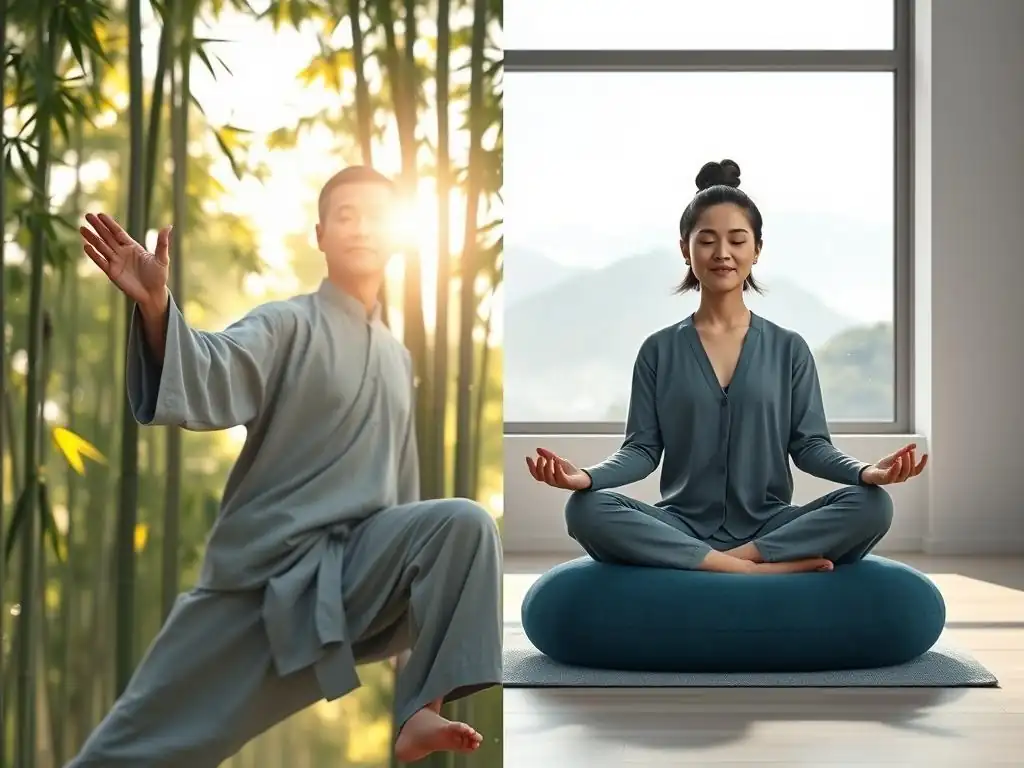
Welcome to Mind Care Guide, a space dedicated to nurturing your mental well-being. Feeling overwhelmed and searching for inner peace? You're not alone. Discover the profound connection between ancient practices and modern mental health as we delve into Qigong meditation benefits mental health. Curious to know if Qigong or traditional meditation is the right path for your journey to a calmer mind? Let's explore together...
Qigong vs. Meditation: Finding the Right Mind-Body Practice for You
- Understanding Qigong and Meditation for Mental Well-being
- Key Differences Between Qigong and Meditation
- Qigong and Meditation Benefits Mental Health: Exploring the Advantages
- Qigong and Meditation Techniques: A Practical Guide
- Choosing the Right Practice for Your Mental Health Needs
- Integrating Qigong and Meditation for Holistic Mental Wellness
- Qigong and Meditation: Addressing Specific Mental Health Challenges
- Safety Considerations and Precautions for Qigong and Meditation
- Qigong and Meditation: Long-Term Mental Health Benefits
- Conclusion: Empowering Your Mental Health Journey with Qigong and Meditation
-
Frequently Asked Questions
- What is the primary difference between Qigong and meditation in their approach to mental well-being?
- How can Qigong meditation specifically benefit mental health, according to Mind Care Guide?
- Is Qigong meditation a suitable practice for individuals with limited mobility?
- How does Qigong compare to other forms of meditation in terms of its impact on stress reduction?
- Where can I find reliable resources and guidance on practicing Qigong meditation for mental well-being, as recommended by Mind Care Guide?
- Final Reflection: Unveiling the Power Within: Qigong, Meditation, and Your Mental Wellbeing
- Unlock Your Inner Peace: Take the Next Step
Understanding Qigong and Meditation for Mental Well-being
Defining Qigong: Harmonizing Body, Breath, and Mind
Qigong, an ancient Chinese mind-body practice, translates roughly to "cultivating life energy." It involves gentle movements, coordinated breathing, and focused intention. Unlike strenuous exercise, Qigong emphasizes slow, fluid motions designed to promote the circulation of Qi (vital energy) throughout the body. This practice is rooted in traditional Chinese medicine principles, viewing health as a state of balanced energy flow. The movements are often repetitive and meditative, encouraging participants to become deeply aware of their physical sensations and internal state.
The core purpose of Qigong is to integrate the physical, mental, and spiritual aspects of being. By coordinating movement with breath and mind, practitioners aim to reduce tension, improve flexibility, and calm the nervous system. Regular Qigong practice is believed to alleviate blockages in energy pathways, contributing to improved physical health and a greater sense of emotional balance and mental clarity. This holistic approach is a significant aspect of how Qigong meditation benefits mental health, offering a pathway to internal harmony.
Defining Meditation: Cultivating Awareness and Equanimity
Meditation is a practice focused on training attention and awareness to achieve a mentally clear and emotionally calm and stable state. While forms vary widely, from focused attention on the breath to open monitoring of thoughts and sensations, the common thread is the cultivation of present moment awareness without judgment. Many meditation techniques involve sitting quietly, although walking meditation and other active forms also exist. The emphasis is often on observing internal experiences—thoughts, feelings, and bodily sensations—as they arise, without getting carried away by them.
The goal of meditation is typically not to empty the mind, but rather to develop a different relationship with thoughts and emotions. By regularly engaging in meditation, individuals can learn to recognize thought patterns, reduce reactivity to stressful stimuli, and foster a sense of inner peace. This practice has been extensively studied for its profound impact on mental well-being, helping to reduce rumination, improve emotional regulation, and enhance self-awareness, all key components of robust mental health.
Key Differences Between Qigong and Meditation
Qigong: Dynamic Movement and Energy Flow
Qigong is fundamentally a dynamic practice. While it shares the meditative aspect of focused attention and breath awareness, it actively engages the body through a series of flowing movements, postures, and stretches. These movements are designed to be gentle and accessible, suitable for people of varying physical abilities. The emphasis on physical form and deliberate motion distinguishes it from many seated meditation practices. The intention behind the movement is to guide and circulate Qi, promoting vitality and physical health alongside mental benefits.
The dynamic nature of Qigong means that it is often perceived as more accessible for those who find sitting still challenging. The combination of movement and mindfulness helps release physical tension stored in the body, which is often linked to emotional stress. This active engagement can make it easier for some individuals to enter a meditative state, as the body's movement provides an anchor for the mind, preventing excessive wandering and fostering a sense of embodied presence.
Meditation: Stillness and Focused Attention
In contrast to Qigong's movement, many common forms of meditation, such as Vipassana or mindfulness meditation, primarily involve stillness. Practitioners typically sit in a comfortable position, focusing their attention on a single point, such as the breath, a mantra, or bodily sensations. The challenge lies in maintaining this focus despite distractions from thoughts or external stimuli, and gently bringing the mind back when it wanders. This cultivation of sustained attention is a core skill developed through consistent meditation.
This stillness allows for deep introspection and the observation of the internal landscape without the added dimension of physical coordination. The focus is intensely inward, on the subtle shifts of mind and body. While seemingly simple, the practice of sitting with oneself and observing thoughts without judgment can be profoundly transformative, leading to insights into one's own mental patterns and fostering greater emotional resilience and equanimity in the face of life's challenges.
Qigong vs. Meditation: A Comparative Overview
| Feature | Qigong | Meditation |
|---|---|---|
| Primary Focus | Movement, Breath, Energy Flow, Body-Mind Harmony | Stillness, Breath, Attention, Awareness |
| Physicality | Dynamic, gentle movements and postures | Primarily seated or still (though variations exist) |
| Goal | Cultivate Qi, harmonize body/mind/spirit | Cultivate awareness, equanimity, mental clarity |
| Accessibility | Often easier for those who dislike stillness | May require comfort with prolonged stillness |
| Experience | Embodied, flowing, energizing | Introspective, calming, observational |
Both practices involve breathwork and mindfulness, but their methodologies differ significantly. Qigong uses movement as a vehicle for mindfulness and energy cultivation, while meditation typically uses stillness and focused attention to train the mind directly. One could consider Qigong a moving meditation, integrating physical health and energetic balance more explicitly into the practice. This comparative overview helps highlight the distinct paths each practice offers towards enhancing mental health.
Qigong and Meditation Benefits Mental Health: Exploring the Advantages
The Mental Health Benefits of Qigong Practice
Regular Qigong practice offers a rich array of mental health benefits. The gentle, flowing movements combined with deep breathing help to activate the parasympathetic nervous system, promoting relaxation and reducing the physiological markers of stress. Studies, though sometimes preliminary, suggest that Qigong can lead to significant reductions in cortisol levels, the body's primary stress hormone. This physical calming directly translates into reduced feelings of anxiety and tension, contributing positively to overall mental well-being.
Furthermore, the embodied nature of Qigong helps practitioners develop greater body awareness. This heightened connection between mind and body can be particularly beneficial for individuals struggling with dissociation or feeling disconnected from their emotions. By focusing on physical sensations during movement, individuals can learn to identify and process emotions held within the body, fostering emotional regulation and resilience. The meditative aspect inherent in Qigong movement also helps to quiet the mental chatter, similar to seated meditation, which is a key part of how Qigong meditation benefits mental health.
The Mental Health Benefits of Meditation Practice
Meditation has perhaps the most extensive research backing for its mental health benefits. Consistent meditation practice, even for short periods daily (e.g., 10-20 minutes), has been shown to alter brain structure and function in ways that support mental well-being. For instance, studies using fMRI have indicated increases in gray matter density in areas associated with learning, memory, and emotion regulation, such as the hippocampus and prefrontal cortex, alongside decreases in the amygdala, the brain's fear center.
The core benefit of meditation lies in its ability to cultivate mindfulness and non-reactivity. By observing thoughts and feelings without judgment, practitioners learn that they are not their thoughts, but rather the observer of their thoughts. This cognitive defusion can significantly reduce the impact of negative self-talk and anxious rumination. Meditation also enhances emotional intelligence, improving the ability to recognize and understand one's own emotions and those of others, leading to healthier relationships and a more stable emotional landscape.
Qigong for Stress Reduction and Emotional Regulation
Qigong is particularly effective for stress reduction due to its blend of physical movement, deep breathing, and focused intention. The slow, deliberate movements act as a moving meditation, anchoring the mind in the present moment and diverting attention away from stressors. The coordinated breathwork, often slow and deep abdominal breathing, directly calms the nervous system, reducing the fight-or-flight response. This combination helps to release physical tension that often accompanies stress, such as tightness in the shoulders or jaw.
Beyond immediate stress relief, Qigong supports emotional regulation by promoting a sense of inner balance and energy flow. The practice encourages acceptance of one's current physical and emotional state while simultaneously working to gently shift energy blockages that may contribute to emotional stagnation or volatility. By fostering a greater sense of harmony between mind and body, Qigong helps individuals feel more grounded and capable of navigating challenging emotions with greater ease.
Meditation is a cornerstone practice for stress reduction and emotional regulation, primarily through its cultivation of mindful awareness. By regularly practicing meditation, individuals become more adept at recognizing the early signs of stress or emotional reactivity. This increased awareness provides a crucial pause between stimulus and response, allowing for a more conscious and less reactive choice in how to respond to difficult situations or feelings.
Techniques like body scan meditation help individuals become aware of where stress is held physically, enabling them to consciously release tension. Mindfulness meditation teaches practitioners to observe difficult emotions, such as anger or sadness, without getting overwhelmed by them. By practicing non-judgmental observation, the intensity of these emotions can lessen over time, and individuals develop greater capacity to tolerate discomfort and bounce back from setbacks, significantly improving emotional resilience.
Qigong and Meditation Techniques: A Practical Guide

Basic Qigong Techniques for Beginners
Getting started with Qigong can be quite simple. A foundational technique is "The Eight Brocades" (Ba Duan Jin), a series of eight distinct movements designed to harmonize the body's energy. One common movement is "Holding Up the Sky," where you stand with feet shoulder-width apart, inhaling as you raise your hands overhead, palms facing up, and exhaling as you lower them. This simple motion stretches the body, coordinates breath, and helps cultivate a sense of spaciousness.
Another basic technique is "Waving Hands Like Clouds," a flowing movement involving shifting weight from one foot to the other while moving the hands in circular patterns in front of the body. This promotes balance, coordination, and a sense of fluid energy flow. Beginners are encouraged to focus on relaxation, deep breathing, and gentle, continuous movement rather than striving for perfect form. Practicing just a few minutes daily can begin to unlock the Qigong meditation benefits for mental health.
Basic Meditation Techniques for Beginners
One of the most accessible forms of meditation for beginners is mindfulness of breath. Find a comfortable seated position, either on a cushion on the floor or in a chair, with your spine relatively straight. Gently close your eyes or soften your gaze. Bring your attention to the sensation of your breath entering and leaving your body, perhaps at your nostrils or the rise and fall of your abdomen.
When your mind inevitably wanders (which it will! ), simply notice where it went without judgment, and gently guide your attention back to the breath. This simple act of returning the attention is the core practice. Start with just 5-10 minutes a day. Another beginner technique is a brief body scan, where you systematically bring awareness to different parts of your body, noticing any sensations without trying to change them. Both practices cultivate present moment awareness, a vital skill for managing stress and improving focus.
Integrating Breathwork in Qigong and Meditation
Breathwork is a central pillar in both Qigong and meditation practices, serving as a bridge between the mind and body. In Qigong, breath is coordinated with movement; inhaling during expansive movements and exhaling during contracting ones helps to regulate energy flow and deepen relaxation. The breath is typically slow, deep, and abdominal, promoting a sense of calm and grounding. Learning to breathe fully and consciously during Qigong movements enhances their therapeutic effects.
In meditation, the breath is often used as the primary anchor for attention. Focusing on the natural rhythm of the breath helps to quiet the incessant stream of thoughts and bring the mind into the present moment. Deep, conscious breathing techniques, such as 4-7-8 breathing (inhale for 4, hold for 7, exhale for 8), can also be incorporated into meditation to quickly induce a state of relaxation and calm the nervous system, demonstrating how integrated breathwork is essential for the Qigong meditation benefits mental health offers.
Choosing the Right Practice for Your Mental Health Needs
Factors to Consider: Lifestyle, Physical Condition, and Goals
Choosing between Qigong and meditation, or deciding to practice both, depends heavily on individual factors. Consider your lifestyle: Do you have a demanding job that leaves you feeling physically stiff or mentally drained? Qigong's movement might be beneficial. Are you someone who spends a lot of time in your head, perhaps prone to worry or rumination? Meditation's focus on stilling the mind could be more helpful initially.
Your physical condition is also crucial. While Qigong is generally gentle, some forms involve standing for periods or specific movements that might be challenging with certain injuries or conditions. Seated meditation may be more accessible if mobility is limited. Finally, consider your goals.
If you seek increased physical vitality, improved balance, and a sense of embodied energy alongside mental calm, Qigong might be a stronger fit. If your primary goal is to develop focused attention, emotional non-reactivity, and deep introspection, meditation might be the preferred path. Remember that the ultimate aim is to find a practice that supports your mental health journey.
Qigong for Increased Vitality and Embodied Awareness
For individuals feeling sluggish, disconnected from their bodies, or experiencing low energy, Qigong can be particularly beneficial. The gentle movements and focus on energy flow help to stimulate circulation and release stagnant energy, often leading to a noticeable increase in vitality and a sense of being more "alive" in one's body. Unlike vigorous exercise that can sometimes be depleting, Qigong aims to cultivate and conserve energy.
The emphasis on coordinating mind, breath, and body in Qigong naturally fosters embodied awareness. Practitioners become more attuned to subtle physical sensations, posture, and how emotions manifest physically. This heightened awareness can help identify stress patterns early and encourages a healthier relationship with the physical self, which is a vital component of holistic mental wellness and demonstrates a key aspect of how Qigong meditation benefits mental health.
Meditation for Enhanced Focus and Emotional Stability
If your primary mental health challenges revolve around difficulty concentrating, racing thoughts, or emotional volatility, meditation, particularly mindfulness meditation, can be highly effective. By consistently practicing bringing your attention back to the present moment, you strengthen the 'muscle' of focus and learn to observe distracting thoughts without getting caught up in them. This improved ability to direct and sustain attention is invaluable in both personal and professional life.
Meditation also excels at cultivating emotional stability. By observing emotions without judgment, you create space between yourself and your feelings. This allows you to experience emotions fully without being overwhelmed by them or acting impulsively based on them. Over time, this practice builds resilience, enabling you to navigate the ups and downs of life with greater equanimity and less reactivity.
Integrating Qigong and Meditation for Holistic Mental Wellness
Combining Practices for Synergistic Effects
For many people, the most profound benefits come from integrating both Qigong and meditation into their routine. These practices are not mutually exclusive; in fact, they can be highly complementary. Qigong can prepare the body and mind for deeper meditation by releasing physical tension and calming the nervous system through movement. Conversely, a regular meditation practice can enhance the mindfulness and focused intention brought to Qigong movements.
Combining dynamic movement with still contemplation can offer a more comprehensive approach to mental wellness. Qigong addresses the physical and energetic dimensions, promoting vitality and body awareness, while meditation cultivates mental clarity, emotional regulation, and inner peace. Together, they create a powerful synergy, supporting a holistic balance of mind, body, and spirit that maximizes the Qigong meditation benefits for mental health.
Sample Qigong and Meditation Routine for Reducing Anxiety
Here is a sample routine that combines Qigong and meditation, specifically tailored for reducing anxiety:
- Morning (15-20 minutes):
- Begin with 5-10 minutes of gentle Qigong movements, such as "Starting Form" or "Waving Hands Like Clouds," focusing on slow, deep breaths and releasing physical tension.
- Transition to 5-10 minutes of seated mindfulness meditation, focusing on the breath or bodily sensations. If anxiety arises, simply notice it without judgment and return attention to the anchor.
- Evening (10-15 minutes):
- Practice 5-10 minutes of calming Qigong movements, like "Lowering the Hands" or gentle stretching, to unwind from the day.
- Finish with 5 minutes of loving-kindness meditation, extending feelings of warmth and compassion towards yourself and others.
This structure allows you to leverage the grounding and energy-balancing effects of Qigong before settling into the stillness and focused awareness of meditation, providing a well-rounded approach to managing anxiety through Qigong meditation benefits mental health.
Qigong and Meditation: Addressing Specific Mental Health Challenges
Qigong for Improving Mood and Energy Levels
Qigong's focus on energy cultivation makes it particularly useful for combating low mood and fatigue, common symptoms of conditions like depression. The gentle movement helps to circulate blood and energy, which can alleviate feelings of stagnation and lethargy. Practices like "Raising the Hands" are specifically thought to lift energy and spirits. The physical activity, even light, releases endorphins, natural mood boosters.
Moreover, the meditative aspect of Qigong helps to interrupt negative thought loops that contribute to low mood. By focusing on the present moment and the physical sensations of movement, practitioners can gain distance from ruminative thinking. Regular practice instills a sense of agency and accomplishment, further supporting improved mood and a more positive outlook, highlighting how Qigong meditation benefits mental health in tangible ways.
Meditation for Cultivating Emotional Resilience
Meditation is a powerful tool for building emotional resilience – the ability to adapt and bounce back from adversity. By practicing observing difficult emotions without being swept away by them, individuals develop a greater capacity to tolerate distress. Techniques like mindful acceptance teach practitioners to acknowledge unpleasant feelings rather than suppressing or reacting against them, which can reduce their intensity over time.
This non-reactive awareness allows for a more considered response to challenging situations, reducing impulsive behavior driven by intense emotion. Over time, consistent meditation practice strengthens the prefrontal cortex, the part of the brain responsible for executive functions like planning and decision-making, further enhancing the ability to manage stress and emotional challenges effectively.
Qigong and Meditation for Improved Sleep Quality
Both Qigong and meditation can significantly contribute to improved sleep quality, which is often compromised in individuals experiencing mental health challenges like anxiety or depression. Qigong's ability to release physical tension and calm the nervous system makes it an excellent practice for unwinding before bed. Gentle, slow movements can prepare the body for rest by reducing physical restlessness.
Meditation helps quiet the "racing mind" that often prevents sleep. Practices like body scan or simple breath awareness before bed can help detach from worries and bring the mind into a state conducive to sleep. By reducing overall stress and anxiety levels throughout the day, consistent practice of either or both Qigong and meditation creates a more relaxed state that supports falling asleep faster and experiencing more restful sleep.
Safety Considerations and Precautions for Qigong and Meditation
Consulting with a Healthcare Professional Before Starting
While generally safe, it is always advisable to consult with a healthcare professional before starting any new mind-body practice, especially if you have pre-existing physical or mental health conditions. Discussing your intentions with your doctor or therapist ensures that the practice is appropriate for your specific needs and health status. They can offer guidance or suggest modifications based on your medical history.
This step is particularly important if you have physical injuries, chronic pain, or are managing severe mental health conditions. A healthcare provider can help you understand how Qigong or meditation might interact with other treatments you are receiving and ensure you approach the practice safely and effectively.
Finding Qualified Instructors for Qigong
Qigong involves specific movements and principles that are best learned from a qualified instructor. While many resources are available online, learning directly from an experienced teacher can help ensure proper form, prevent injury, and deepen your understanding of the practice's energetic aspects. A good instructor can provide personalized guidance and corrections.
Look for instructors certified by reputable organizations or with extensive experience. Ask about their training background and teaching philosophy. Learning Qigong from a knowledgeable source is crucial for gaining the full physical and mental health benefits and practicing safely.
Creating a Safe and Comfortable Practice Environment
Whether practicing Qigong or meditation, creating a safe and comfortable environment is essential for consistency and effectiveness. Choose a quiet space where you are unlikely to be interrupted. For Qigong, ensure you have enough room to move freely without bumping into furniture. Wear comfortable clothing that allows for ease of movement.
For meditation, find a comfortable seat or lying position. Ensure the temperature is pleasant and any distractions (like phones) are minimized. Having a dedicated space, even a small corner, can help signal to your mind and body that it's time to practice, fostering a sense of calm and focus. A safe environment allows you to fully immerse yourself in the practice and maximize the Qigong meditation benefits for mental health.
Qigong and Meditation: Long-Term Mental Health Benefits
Sustaining a Consistent Practice for Optimal Results
The most significant mental health benefits from Qigong and meditation emerge through consistent, regular practice. While even a single session can offer temporary relief from stress, the transformative effects on brain function, emotional regulation, and overall well-being accumulate over time. Aim for daily practice, even if it's just for 10-15 minutes.
Think of it like building a muscle; short, consistent workouts are more effective than infrequent, long ones. Establishing a routine helps integrate the practice into your life and makes it a sustainable tool for managing mental health challenges. Over months and years, this consistency lays the foundation for lasting peace and resilience.
Monitoring Your Progress and Adjusting Your Approach
As you continue your Qigong or meditation journey, it's helpful to periodically reflect on your progress. Notice how you feel before and after practice. Are you experiencing less stress? Is your mood improving? Are you reacting differently to challenging situations? Keeping a simple journal can be a helpful way to track changes.
Be open to adjusting your approach. Perhaps you find seated meditation difficult some days and Qigong feels more accessible. Or maybe you need to explore different techniques within each practice. The path to mental wellness is not linear, and flexibility in your practice ensures it continues to meet your evolving needs. This iterative process is key to unlocking the full Qigong meditation benefits for mental health.
Qigong and Meditation as Complementary Therapies for Mental Health
Qigong and meditation are increasingly recognized as valuable complementary therapies alongside conventional mental health treatments like therapy and medication. They provide individuals with practical tools to manage symptoms, build coping skills, and enhance overall well-being in their daily lives. They empower individuals by giving them active roles in their healing process.
Integrating these practices can enhance the effectiveness of other treatments, helping individuals feel more grounded, less reactive, and better equipped to engage with therapeutic work. Many therapists and healthcare providers now recommend mindfulness-based practices like meditation and gentle movement therapies like Qigong as part of a comprehensive mental health care plan.
Conclusion: Empowering Your Mental Health Journey with Qigong and Meditation
Frequently Asked Questions
What is the primary difference between Qigong and meditation in their approach to mental well-being?
Qigong incorporates physical movement and breathing techniques alongside mental focus, whereas traditional meditation often emphasizes stillness and focused awareness of the mind. Qigong aims to cultivate qi (energy), while meditation cultivates mindfulness.
How can Qigong meditation specifically benefit mental health, according to Mind Care Guide?
Mind Care Guide suggests Qigong meditation can benefit mental health by reducing stress and anxiety, improving emotional regulation, and promoting a sense of calm and inner peace.
Is Qigong meditation a suitable practice for individuals with limited mobility?
While some Qigong forms involve complex movements, many practices can be adapted or performed seated, making them accessible for individuals with limited mobility. Consult a qualified instructor.
How does Qigong compare to other forms of meditation in terms of its impact on stress reduction?
Qigong's combination of movement, breathwork, and mental focus may offer a more holistic approach to stress reduction compared to purely sedentary meditation practices for some individuals.
Where can I find reliable resources and guidance on practicing Qigong meditation for mental well-being, as recommended by Mind Care Guide?
Mind Care Guide offers resources, including articles, guides, and potentially links to qualified instructors, to help individuals learn and practice Qigong meditation safely and effectively for improved mental health.
Final Reflection: Unveiling the Power Within: Qigong, Meditation, and Your Mental Wellbeing
The exploration of Qigong and meditation for mental health isn't just a trend; it's a vital pathway to cultivating inner peace and resilience in a world increasingly demanding of our emotional and mental resources. The benefits, as we've explored, extend far beyond stress reduction, touching upon improved focus, emotional regulation, and a deeper connection to the self. This isn't merely about finding a new hobby; it's about actively investing in your mental and physical wellbeing.
The journey into these practices has profoundly impacted my own understanding of self-care and the power of mindful movement and stillness. The subtle shifts in my energy levels, my ability to manage stress, and the increased clarity in my thinking have been remarkable. As Thich Nhat Hanh so eloquently stated, Peace is every step. Every breath, every step is to be done in peace.
This sentiment perfectly encapsulates the core essence of both Qigong and meditation – the cultivation of peace not as a distant goal, but as a present reality woven into the fabric of daily life.
Now, consider your own journey. Which practice resonates most deeply with your needs and personality? Perhaps it's the dynamic flow of Qigong, or the quiet contemplation of meditation, or even a harmonious blend of both. The most important step is to begin. Take that first breath, that first movement, and embark on a path towards a healthier, more balanced, and ultimately more fulfilling you. The journey inward is a journey worth taking, and the rewards are immeasurable.
Unlock Your Inner Peace: Take the Next Step
Thanks for exploring the world of mindful practices with us! We hope you gained a clearer understanding of the unique benefits of both Qigong and meditation. Now, it's time to put this knowledge into action.
- Dive deeper into the practice that resonates most with you. Whether it's the flowing movements of Qigong or the stillness of meditation, dedicate just 10 minutes a day to experience its transformative effects.
- Share your experience! Tell us which practice you've chosen and why—your insights can inspire others on their journey to inner peace.
- Explore local classes or online resources: Find a supportive community to guide your practice and enhance your journey.
Which practice feels like the perfect fit for your lifestyle and aspirations, and why? Let's discuss in the comments below!