
Mastering SelfTalk: How Athletes Can Control Their Inner Dialogue for Success


Welcome to Mind Care Guide, a sanctuary for your mental well-being.
Ever felt like your inner voice is sabotaging your performance? This article, "Mastering Self-Talk: How Athletes Can Control Their Inner Dialogue for Success," delves into the powerful connection between positive self-talk and athlete performance. Discover how cultivating a supportive inner monologue can unlock your full potential and conquer the mental hurdles that stand in your way. Intrigued? Let's explore how to harness the power of your mind.
Mastering Self-Talk for Athletic Success
- Introduction: The Impact of Inner Dialogue on Performance
- Understanding Self-Talk
- Identifying Self-Talk Patterns
- Strategies for Cultivating Positive Self-Talk
- Practical Techniques for Performance Enhancement
- Overcoming Challenges and Maintaining Positivity
- Integrating Positive Self-Talk into Training
- Long-Term Benefits of Positive Self-Talk
- Conclusion: Mastering Self-Talk
-
Frequently Asked Questions
- How does positive self-talk specifically benefit an athlete's performance?
- What are some examples of negative self-talk an athlete might experience, and how can they be identified?
- What are some proven techniques athletes can use to transform negative self-talk into positive self-talk?
- How can coaches and trainers support athletes in developing and maintaining positive self-talk habits?
- Is there any evidence that positive self-talk can improve athletic performance in situations of high stress or pressure?
- Final Reflection: The Unsung Power of Inner Dialogue
- Unleash Your Inner Champion: Take Control of Your Game!
Introduction: The Impact of Inner Dialogue on Performance
The Mind-Body Connection in Athletic Excellence
Athletic performance is not solely determined by physical prowess; the mind plays an equally critical role. The intricate connection between an athlete's mental state and their physical capabilities is a well-established principle in sports psychology. When an athlete's mind is focused, confident, and resilient, their body is more likely to perform at its peak. Conversely, negative thoughts, anxiety, or self-doubt can create physical tension, impair decision-making, and hinder execution, regardless of physical conditioning.
This profound link means that training the mind is just as vital as training the body. Athletes who cultivate mental skills, such as managing stress, maintaining focus, and controlling their internal dialogue, often gain a significant edge over equally or even more physically talented competitors. This highlights why mastering techniques like positive self-talk is crucial for optimizing athlete performance and achieving consistent success.
The Importance of Positive Self-Talk for Mental Wellness
Beyond its direct impact on performance, positive self-talk is a cornerstone of overall mental wellness for athletes. The demanding nature of competitive sports, with its inherent pressures, setbacks, and public scrutiny, can take a toll on an athlete's psychological health. Developing a habit of constructive inner dialogue provides a protective buffer against these stressors.
Regularly engaging in positive self-talk helps athletes build resilience, manage emotions effectively, and maintain a healthy perspective, even in the face of adversity. It fosters a sense of control and agency, empowering them to navigate challenges with greater confidence and emotional stability. This focus on positive self-talk enhances not just athletic ability but also contributes significantly to an athlete's long-term well-being and enjoyment of their sport.
Understanding Self-Talk
Defining Self-Talk
Self-talk refers to the continuous stream of thoughts that run through our minds – the internal monologue we engage in constantly. For athletes, this internal dialogue can occur before, during, and after training or competition. It includes conscious thoughts, automatic reactions, and even subconscious beliefs about one's abilities, performance, and the situation at hand.
Essentially, self-talk is how athletes speak to themselves. It can manifest as words, phrases, or even non-verbal thoughts and images. This internal communication significantly influences an athlete's emotions, confidence levels, motivation, and ultimately, their actions and performance outcomes. Understanding and managing this inner voice is key to harnessing its power for positive self-talk athlete performance.
Categories of Self-Talk: Positive, Negative, and Neutral
Self-talk can broadly be categorized into three types:
- Positive Self-Talk: This is constructive, encouraging, and supportive. It focuses on strengths, capabilities, effort, and learning from mistakes. Examples include "You got this," "Stay focused," "Keep pushing," or "I can handle this." Positive self-talk builds confidence, reduces anxiety, and enhances motivation.
- Negative Self-Talk: This is critical, discouraging, and debilitating. It focuses on weaknesses, past failures, perceived inadequacies, and worst-case scenarios. Examples include "I'm not good enough," "I always mess this up," "I'm going to fail," or "This is too hard." Negative self-talk erodes confidence, increases stress, and inhibits performance.
- Neutral Self-Talk: This is descriptive or instructional without significant emotional charge. It focuses on the process or task at hand. Examples include "Bend your knees," "Watch the ball," "Maintain your pace," or "Follow through." While not explicitly positive, neutral or instructional self-talk can be highly effective for focusing attention and executing specific actions, contributing indirectly to better athlete performance.
Recognizing which type of self-talk dominates an athlete's inner dialogue is the first step toward making intentional changes to improve positive self-talk athlete performance.
The Detrimental Effects of Negative Self-Talk
Negative self-talk can be incredibly damaging to an athlete's mental state and physical execution. It acts like a constant internal critic, chipping away at confidence and instilling doubt. This can lead to a self-fulfilling prophecy where the athlete anticipates failure, becomes anxious, and consequently performs poorly, confirming their negative beliefs.
The effects extend beyond confidence. Negative self-talk can increase muscle tension, impair reaction time, disrupt focus, and lead to poor decision-making under pressure. For instance, a swimmer thinking "I'm too slow" might tense up and lose their rhythm. A basketball player missing a shot and thinking "I always choke" is more likely to feel paralyzed by fear on the next attempt. Over time, persistent negative self-talk can contribute to burnout, decreased enjoyment of the sport, and even mental health challenges like anxiety and depression, severely hindering potential positive self-talk athlete performance.
Identifying Self-Talk Patterns
Recognizing Common Negative Thought Patterns
Becoming aware of negative self-talk is the essential first step in changing it. Athletes often fall into predictable negative thought patterns. One common pattern is catastrophizing, where a minor mistake is blown out of proportion into a disaster ("I missed that shot, now we're definitely going to lose the whole game"). Another is all-or-nothing thinking, seeing performance as either perfect or a complete failure ("I didn't hit my personal best, so this entire competition was a waste").
Other patterns include personalization, taking blame for things outside their control ("The team lost because of me"), and fortune-telling, predicting negative outcomes without evidence ("I know I'm going to fail this lift"). Filtering is another pattern, where an athlete focuses solely on the negative aspects of a performance while ignoring any positives. Identifying which of these patterns are most frequent in an athlete's inner dialogue is crucial for targeted intervention and fostering positive self-talk athlete performance.
Techniques for Monitoring Self-Talk
To identify these patterns, athletes need to actively monitor their thoughts. A simple yet effective technique is using a thought journal. Athletes can dedicate a small notebook or a digital document to jot down thoughts they notice during training, competition, or even in daily life, especially in situations that trigger stress or poor performance. They can note the situation, the thought that occurred, the emotion felt, and the subsequent action or performance outcome.
Another technique is retrospective analysis. After a practice session or game, an athlete can reflect on their mental state and try to recall the thoughts that ran through their mind, particularly during challenging moments or moments of success. Asking questions like "What was I telling myself when I felt nervous?"
or "What was my inner voice saying after I made that mistake?" can reveal recurring patterns. Using a simple rating system (e.g., + for positive, - for negative, N for neutral) can also help quantify the balance of self-talk over time and highlight areas needing development in positive self-talk athlete performance.
Analyzing Triggers and Underlying Beliefs
Once self-talk patterns are identified, the next step is to understand why they occur. This involves analyzing the triggers that provoke negative self-talk and the underlying beliefs that fuel these thoughts. Triggers can be specific situations, such as facing a tough opponent, making a mistake, feeling fatigued, or performing in front of a large crowd.
Underlying beliefs are deeper, often unconscious convictions about oneself, others, or the world. For an athlete, this might be a belief like "I'm only valuable when I win," "Mistakes are unacceptable," or "I'm not naturally talented." These core beliefs act as the root system for recurring negative self-talk. Exploring these triggers and beliefs, perhaps with the guidance of a sports psychologist or mental performance consultant, is vital for addressing the source of negative patterns and building a foundation for sustainable positive self-talk athlete performance.
Strategies for Cultivating Positive Self-Talk

Reframing Negative Thoughts
One of the most powerful strategies for cultivating positive self-talk is learning to reframe negative thoughts. Reframing involves consciously challenging a negative thought and replacing it with a more realistic, balanced, or positive one. It's not about ignoring reality but about shifting perspective. For example, instead of thinking, "I'm exhausted, I can't finish this workout," an athlete can reframe it to, "I'm feeling tired, but I can focus on maintaining good form for the next few reps," or "This is tough, but I've pushed through fatigue before."
The process involves identifying the negative thought, questioning its validity or helpfulness, and then constructing an alternative, more constructive thought. This requires practice and intentional effort. By actively choosing to reframe, athletes train their brains to default to more positive and empowering interpretations of events, significantly boosting their capacity for positive self-talk athlete performance.
Using Affirmations
Affirmations are positive statements about oneself or desired outcomes, repeated regularly to reinforce positive beliefs. They are powerful tools for building confidence and shaping positive self-talk. Affirmations should be personal, positive, present tense, and specific. Instead of a vague "I am good," an athlete might use "I am strong and resilient," "I trust my training," or "I execute under pressure."
Repeating affirmations daily, perhaps during warm-ups, cool-downs, or moments of quiet reflection, helps to embed these positive messages into the subconscious mind. Over time, these affirmations can counteract deeply ingrained negative beliefs and automatically influence self-talk during challenging situations, thereby enhancing positive self-talk athlete performance. Consistency is key for affirmations to be effective.
Visualization Techniques
Visualization, or mental imagery, is another potent tool that complements positive self-talk. Athletes can mentally rehearse successful performances, vividly imagining themselves executing skills flawlessly, overcoming obstacles, and achieving their goals. During visualization, it's important to incorporate positive self-talk within the imagined scenario.
For instance, while visualizing a perfect dive, a swimmer might mentally say, "Smooth entry," "Powerful kick," or "Stay long." This combines the mental rehearsal of the physical action with the reinforcing power of positive internal dialogue. Visualization helps to build mental blueprints for success and makes positive self-talk feel more natural and integrated into the performance experience, directly contributing to improved positive self-talk athlete performance.
Goal Setting and Self-Talk Alignment
Aligning self-talk with specific goals provides focus and purpose. When athletes set clear, achievable goals (both outcome and process goals), they can tailor their positive self-talk to support these objectives. For example, if a runner's goal is to maintain a specific pace during a race, their self-talk might include phrases like "Hold this pace," "Relax your shoulders," or "Focus on your breathing."
This alignment ensures that the inner dialogue is not just generally positive but also functionally relevant to the task at hand. By connecting self-talk to tangible goals, athletes make their internal dialogue a proactive tool for performance rather than just a reactive response to events. This strategic use of positive self-talk is fundamental for achieving athlete performance targets.
Practical Techniques for Performance Enhancement
Implementing "Stop-Thought" Techniques
A quick and effective way to interrupt a cycle of negative self-talk is using "stop-thought" techniques. When an athlete catches themselves engaging in negative internal dialogue, they can mentally (or even physically, like snapping a finger) say "STOP!" This abrupt command breaks the thought pattern and creates a mental pause.
Following the "STOP!" command, the athlete then consciously replaces the negative thought with a pre-prepared positive or instructional statement. For instance, if the thought is "I'm going to miss this penalty kick," the athlete stops the thought and immediately replaces it with "Focus on the target," or "Trust your technique." This technique requires practice to become automatic but is invaluable for quickly regaining control of one's mental state and maintaining positive self-talk athlete performance.
Developing Situation-Specific Self-Talk Scripts
Effective self-talk isn't always generic. Developing specific self-talk scripts for different situations an athlete commonly faces can be highly beneficial. These scripts are pre-planned phrases or sentences designed for particular challenges or moments within a sport.
For example, a gymnast might have a script for feeling nervous before a routine ("Breathe deep, stick the landing, you are prepared"), one for recovering from a wobble ("Shake it off, stay focused on the next element"), and one for finishing strong ("Finish with power, hold the pose"). These scripts should be rehearsed during practice so they are readily available under pressure. Having these tailored responses helps athletes navigate specific performance demands with confidence and reinforces positive self-talk athlete performance in critical moments.
Using Motivational Self-Talk
Motivational self-talk is aimed at increasing effort, persistence, and confidence. It's the inner cheerleading that helps athletes push through fatigue, overcome challenges, and maintain belief in their abilities. Examples include "Keep fighting," "Just one more rep," "You're stronger than you think," or "Believe in yourself."
This type of self-talk is particularly useful during endurance events, challenging training sessions, or when facing setbacks. It provides the emotional fuel needed to persevere when the physical body wants to quit. Incorporating motivational phrases into training and competition routines is a direct way to leverage positive self-talk for enhanced athlete performance, especially in pushing limits.
Employing Instructional Self-Talk
Instructional self-talk focuses on guiding behavior and cueing specific actions or techniques. It helps athletes maintain focus on the process and execute skills correctly. This is often more effective for tasks requiring precision or strategy, while motivational self-talk might be better for tasks requiring strength or endurance.
Examples include a golfer thinking "Smooth swing, keep your head down," a basketball player thinking "Bend your knees, follow through," or a sprinter thinking "Pump your arms, drive forward." Instructional self-talk keeps the athlete present and focused on the mechanics of their performance, preventing the mind from wandering to outcomes or potential errors. This detailed focus facilitated by instructional self-talk is vital for refining technique and ensuring consistent positive self-talk athlete performance.
Overcoming Challenges and Maintaining Positivity
Using Self-Talk for Resilience After Setbacks
Setbacks are an inevitable part of an athlete's journey, whether it's a loss, an injury, or a poor performance. How an athlete responds mentally to these challenges significantly impacts their ability to recover and improve. Positive self-talk is a critical tool for building resilience. Instead of dwelling on the failure ("I'm a failure," "I'll never recover"), resilient self-talk focuses on learning and moving forward.
Phrases like "What can I learn from this?" "This is a temporary setback," "I will come back stronger," or "Focus on the next opportunity" help athletes process negative experiences constructively. This type of self-talk reframes setbacks as opportunities for growth rather than definitive judgments of worth. Cultivating this resilient inner voice is essential for long-term positive self-talk athlete performance and well-being.
Managing Pressure and Anxiety with Self-Talk
Competition often brings immense pressure and anxiety. Self-talk can be a powerful ally in managing these feelings. Techniques like deep breathing combined with calming self-talk ("Breathe in calm, breathe out tension," "Relax, you are prepared") can help regulate the physiological response to stress.
Instructional self-talk can also help by shifting focus from the outcome (which causes anxiety) to the process ("Focus on the next play," "One step at a time"). Motivational self-talk can reinforce confidence ("You've trained for this," "Trust your abilities"). By using specific self-talk strategies tailored to moments of high pressure, athletes can regain control of their mental state and perform effectively despite feeling nervous, demonstrating the direct link between positive self-talk and athlete performance under duress.
Embracing Realistic Optimism
Positive self-talk should not be about pretending everything is perfect or ignoring challenges. Instead, it's about embracing realistic optimism. This means acknowledging difficulties and potential risks while maintaining a belief in one's ability to cope, adapt, and perform well. It's about focusing on what can be controlled – effort, attitude, and process – rather than worrying about uncontrollable outcomes.
Realistic optimism through self-talk involves statements like "This will be a tough match, but I am ready to compete," or "I made a mistake, but I can learn from it and do better next time." This balanced perspective prevents naive positivity that can be shattered by reality, while still harnessing the power of a positive mindset for consistent positive self-talk athlete performance.
Integrating Positive Self-Talk into Training
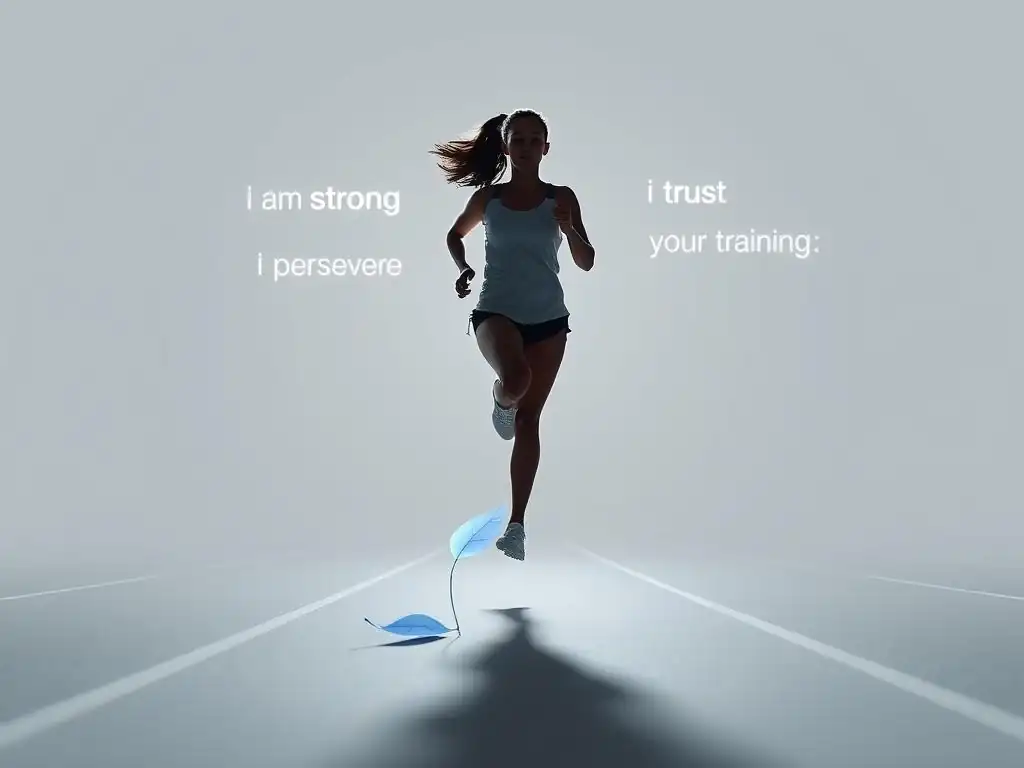
Incorporating Self-Talk into Daily Practice
The most effective way to make positive self-talk automatic is to practice it consistently, not just during competitions. Athletes should consciously integrate self-talk into their daily training routines. This could involve using motivational self-talk during difficult drills ("Push through," "Strong finish"), instructional self-talk while refining technique ("Elbow high," "Rotate your hips"), or positive affirmations during warm-ups or cool-downs ("I am focused," "I am improving").
Treating self-talk practice like any other physical training component helps build the habit. The more athletes practice positive internal dialogue in low-pressure training environments, the more likely it is to naturally emerge and support them during the high-pressure demands of competition, solidifying the connection between positive self-talk and athlete performance.
Using Self-Talk During Competitions
Competition is where positive self-talk is truly tested and can have the most immediate impact. Athletes need to be prepared to actively manage their inner dialogue in real-time. This involves recognizing triggers for negative thoughts (e.g., a bad call, a missed opportunity) and quickly deploying pre-rehearsed positive or instructional scripts.
During breaks, transitions, or moments of intense pressure, athletes can use planned self-talk phrases to regain composure, refocus attention, or boost confidence. For example, a tennis player might say "Next point," after losing one, or a basketball player might repeat "Visualize success," before a free throw. The ability to effectively use self-talk during the heat of competition is a hallmark of mentally tough athletes and directly influences positive self-talk athlete performance outcomes.
Seeking Support from Coaches and Mental Performance Consultants
Athletes don't have to master self-talk alone. Coaches play a vital role by fostering a positive training environment and providing constructive feedback that encourages positive internal dialogue. They can also help athletes identify negative patterns they might not recognize themselves.
Mental performance consultants or sports psychologists are experts in teaching athletes specific self-talk techniques, helping them identify underlying negative beliefs, and developing personalized strategies. Working with a professional can provide athletes with tailored tools, accountability, and support in developing and consistently applying positive self-talk for optimal athlete performance and mental well-being.
Long-Term Benefits of Positive Self-Talk
Improved Confidence and Self-Esteem
Consistently practicing positive self-talk fundamentally alters an athlete's perception of themselves and their abilities. By focusing on strengths, effort, and progress rather than dwelling on flaws and failures, athletes build a stronger, more resilient sense of self-worth. This inner belief translates into greater confidence in their skills and ability to face challenges.
Over time, this improved confidence is not just performance-dependent; it builds genuine self-esteem that extends beyond the athletic arena. Athletes who master positive self-talk are more likely to believe in themselves, take healthy risks, and recover quickly from setbacks, fostering a positive cycle that continually reinforces positive self-talk athlete performance and personal growth.
Enhanced Focus and Concentration
Negative self-talk is a significant distraction. Thoughts about past mistakes, future outcomes, or personal inadequacies pull an athlete's attention away from the task at hand. Positive or instructional self-talk, conversely, helps anchor the athlete's focus.
By using specific phrases to cue actions or remind themselves to stay present ("Focus on the ball," "One play at a time"), athletes can shut out distractions and maintain concentration, especially in high-pressure situations. This enhanced ability to focus, directly supported by effective self-talk, is critical for executing complex skills and making smart decisions, leading to improved positive self-talk athlete performance.
Increased Resilience and Mental Toughness
Mental toughness is the ability to persevere, remain focused, and perform consistently in the face of adversity. Positive self-talk is a core component of mental toughness. It provides the internal narrative that allows athletes to push through pain, overcome fatigue, bounce back from errors, and handle pressure.
Athletes who have cultivated positive self-talk are better equipped to view challenges as surmountable, setbacks as temporary, and difficult situations as opportunities to demonstrate strength. Their inner dialogue supports grit and determination, enabling them to perform at their best even when circumstances are difficult. This makes positive self-talk indispensable for developing true mental toughness and consistent athlete performance.
Reduced Anxiety and Stress
Negative self-talk is a major driver of anxiety and stress in athletes. The constant internal criticism and anticipation of failure create a state of hyper-arousal and worry. By replacing negative thoughts with positive, realistic, and instructional ones, athletes can significantly reduce this internal source of stress.
Calming self-talk, reframing anxious thoughts, and focusing on controllable aspects of performance all contribute to a calmer, more centered mental state. While some level of pre-competition nerves is normal, mastering positive self-talk helps prevent anxiety from becoming debilitating, allowing athletes to approach challenges with greater composure and execute skills more freely, directly benefiting positive self-talk athlete performance and overall well-being.
Conclusion: Mastering Self-Talk
Key Takeaways: The Power of Inner Dialogue
Mastering self-talk is not merely a supplementary skill for athletes; it is a fundamental aspect of peak performance and mental well-being. The continuous conversation athletes have with themselves profoundly influences their confidence, focus, resilience, and ability to handle pressure. Recognizing negative patterns is the first step, followed by the intentional practice of replacing them with positive, instructional, and motivational alternatives.
Techniques like reframing, affirmations, visualization, and situation-specific scripts provide concrete ways to cultivate a supportive inner voice. Integrating these practices into daily training and competition routines builds the habit, making positive self-talk a natural response. The benefits are far-reaching, leading to improved confidence, enhanced focus, greater resilience, and reduced stress, all contributing significantly to positive self-talk athlete performance and a healthier relationship with their sport.
Resources for Further Learning and Support
Athletes interested in deepening their understanding and application of positive self-talk have numerous resources available. Books by renowned sports psychologists often dedicate significant sections to self-talk strategies and mental skills training. Websites and online courses specializing in sports psychology and mental performance offer structured programs and exercises.
For personalized guidance, working with a certified sports psychologist or mental performance consultant is highly recommended. These professionals can provide tailored assessments, help identify specific self-talk challenges, and teach advanced techniques. Engaging with these resources can accelerate an athlete's progress in mastering their inner dialogue and unlocking their full potential for positive self-talk athlete performance and enduring success.
Frequently Asked Questions
How does positive self-talk specifically benefit an athlete's performance?
Positive self-talk can improve confidence and focus, allowing athletes to approach challenges with a more optimistic mindset. This can translate to better execution and resilience under pressure.
What are some examples of negative self-talk an athlete might experience, and how can they be identified?
Negative self-talk often involves self-doubt, criticism, and catastrophizing. Athletes can identify it by paying attention to their inner dialogue and noticing recurring negative thoughts and feelings.
What are some proven techniques athletes can use to transform negative self-talk into positive self-talk?
Techniques include cognitive restructuring (challenging negative thoughts), using affirmations, and employing visualization to imagine successful outcomes. Replacing negative thoughts with positive and realistic ones is crucial.
How can coaches and trainers support athletes in developing and maintaining positive self-talk habits?
Coaches can encourage positive reinforcement, provide constructive feedback, and model optimistic attitudes. They can also help athletes identify and challenge negative thought patterns.
Is there any evidence that positive self-talk can improve athletic performance in situations of high stress or pressure?
Yes, research suggests that positive self-talk can help athletes manage anxiety and maintain focus in high-pressure situations. This can lead to improved performance under stress and increased resilience.
Final Reflection: The Unsung Power of Inner Dialogue
Mastering self-talk isn't just a mental trick; it's the cornerstone of peak athletic performance. The ability to control your inner dialogue directly impacts your physical capabilities, resilience, and overall success on the field, court, or track. Ignoring this powerful internal force is akin to leaving a crucial piece of equipment at home before a crucial competition.
The impact of positive self-talk extends far beyond the immediate performance boost. It cultivates a growth mindset, fostering resilience in the face of setbacks and encouraging continuous improvement. The difference between ordinary and extraordinary is that little extra.
This "little extra" often comes from the unwavering belief in oneself, a belief carefully nurtured through consistent positive self-talk. This internal dialogue shapes not only athletic achievements but also personal identity and self-esteem, impacting an athlete's life long after their competitive career concludes.
Now, consider your own inner voice. What narrative is it currently telling you? Is it filled with self-doubt and negativity, or is it a supportive and encouraging ally? Take a moment to reflect on the power you hold to shape that narrative. You have the ability to rewrite your inner script, to replace limiting beliefs with empowering affirmations, and to unlock a level of performance you never thought possible. Begin today, cultivate your inner champion, and watch your potential soar.
Unleash Your Inner Champion: Take Control of Your Game!
Thanks for taking the time to explore the power of self-talk! You've now armed yourself with valuable insights to boost your athletic performance. Ready to put these strategies into action?
- Implement a daily positive self-affirmation practice: Start small—just 5 minutes a day focusing on your strengths and goals. This is the key to transforming your inner dialogue.
- Share your favorite self-talk techniques with a training partner: Discuss your experiences and hold each other accountable. Working together amplifies results.
- Try journaling your inner voice: Identify negative patterns and actively replace them with empowering phrases. This unexpected step can reveal powerful insights.
Ready to witness the positive impact of a more positive inner voice? What's the first self-affirmation you'll use today?