
The Science of Concentration: Focus Techniques for Athletes Under Pressure


Welcome to Mind Care Guide, your sanctuary for navigating the complexities of mental well-being.
Feeling overwhelmed by the pressure to perform? You're not alone. This guide delves into the science of concentration, exploring proven techniques for boosting focus under pressure, especially beneficial for athletes but applicable to anyone facing high-stakes situations. Discover how to unlock your mental resilience and find clarity amidst the chaos. Intrigued? Let's dive in and discover the key to a sharper, more focused you.
The Science of Concentration: Focus Techniques for Athletes Under Pressure
- Introduction: Maintaining Focus for Peak Athletic Performance
- The Neuroscience of Focus: How the Brain Handles Pressure
- Proven Techniques for Boosting Focus Under Pressure
- Cognitive Restructuring: Challenging Negative Thoughts and Limiting Beliefs
- Practical Exercises to Enhance Concentration Skills
- Managing Distractions: Staying Present in High-Pressure Situations
- The Importance of Sleep and Nutrition for Optimal Focus
- Long-Term Strategies for Sustained Focus and Mental Resilience
- Conclusion: Mastering Focus for a Competitive Edge
-
Frequently Asked Questions
- What specific mental techniques can athletes use to boost focus under pressure during competition?
- How does pressure negatively impact an athlete's ability to concentrate, and what physiological responses contribute to this?
- Are there specific breathing exercises recommended for athletes to regain focus when feeling overwhelmed by pressure?
- How does mental imagery or visualization contribute to an athlete's ability to maintain focus and perform under pressure?
- What role does self-awareness play in an athlete's ability to recognize and manage distractions affecting their focus under pressure?
- Final Reflection: Mastering the Inner Game Under Pressure
- Unleash Your Inner Champion: Master Focus Today!
Introduction: Maintaining Focus for Peak Athletic Performance
The Crucial Role of Concentration in Sports Success
Concentration is not merely a desirable trait in sports; it is a fundamental pillar of peak performance. Athletes operating at the highest levels understand that the ability to maintain unwavering attention, especially when the stakes are highest, directly translates to executing skills effectively, making smart decisions, and ultimately, achieving victory.
Whether it's a golfer facing a critical putt on the 18th green, a basketball player shooting free throws in the final seconds, or a swimmer maintaining technique through the last lap, the capacity to filter out distractions and stay locked onto the task is paramount. This mental skill is often the differentiator between good athletes and great ones.
Studies in sports psychology consistently highlight the link between concentration and performance outcomes. For example, research on elite tennis players has shown that errors often increase significantly during moments of decreased focus, particularly during transition points or after missed opportunities. Similarly, penalty kick success rates in soccer can be heavily influenced by the kicker's and goalkeeper's ability to concentrate amidst intense crowd noise and pressure.
Developing robust concentration skills allows athletes to remain present, execute their game plan, and adapt to dynamic situations, thereby maximizing their potential under any circumstances. It's the mental glue that holds physical prowess and strategic planning together.
Understanding Pressure and Its Impact on Athlete Focus
Pressure in sports is a complex phenomenon, often described as the perceived demand to perform effectively under circumstances where the outcome is important. This could stem from internal expectations, external factors like crowd presence or media scrutiny, or the importance of the competition itself (e.g., a championship game). When pressure mounts, it triggers a physiological and psychological response in athletes that can significantly disrupt focus. This "choking under pressure" is a well-documented phenomenon where performance deteriorates despite high skill levels, often due to attentional shifts or overthinking.
The impact of pressure on focus can manifest in several ways. Athletes might experience a narrowing of attention, sometimes called "tunnel vision," causing them to miss crucial cues from teammates or opponents. Alternatively, attention might broaden excessively, leading to distraction by irrelevant stimuli like crowd noise or internal worries. This disruption in attentional control makes it harder to stay focused on the immediate task at hand, leading to errors, poor decision-making, and reduced efficiency. Understanding these effects is the first step towards developing effective strategies for boosting focus under pressure.
The Neuroscience of Focus: How the Brain Handles Pressure
The Prefrontal Cortex and Attentional Control
The prefrontal cortex (PFC), located at the front of the brain, is the primary region responsible for executive functions, including working memory, decision-making, and crucially, attentional control. It acts like the brain's central command, helping us to focus on relevant information while ignoring distractions. In athletes, a well-functioning PFC is essential for maintaining concentration during complex plays, remembering game strategies, and adapting to rapidly changing environments. It allows an athlete to consciously direct their attention towards what matters most in a given moment.
Under pressure, however, the activity in the PFC can be affected. High stress levels can sometimes impair the PFC's ability to regulate attention effectively. This can lead to the attentional disruptions mentioned earlier, such as getting stuck on negative thoughts or being overwhelmed by sensory input. Training the brain to maintain PFC function under stress is a key aspect of boosting focus under pressure. Techniques that strengthen this area, such as mindfulness or specific attention training exercises, can help athletes maintain cognitive control even when the demands are high.
The Stress Response: Cortisol and Its Effects on Concentration
When an athlete perceives a situation as stressful or high-pressure, the body initiates the "fight or flight" response. This involves the release of stress hormones, including adrenaline and cortisol, from the adrenal glands. While a short burst of these hormones can enhance performance by increasing alertness and energy, prolonged or excessive release, particularly of cortisol, can have detrimental effects on cognitive function, including concentration. High levels of cortisol can impair the function of the hippocampus, which is involved in memory formation and retrieval, and also interfere with the prefrontal cortex.
Elevated cortisol levels have been linked to reduced working memory capacity, difficulty shifting attention, and increased susceptibility to distraction. For an athlete, this might mean forgetting a play call, losing track of the score, or being easily sidetracked by a minor error. Managing the stress response is therefore critical for maintaining optimal concentration. Strategies aimed at regulating physiological arousal and reducing the perceived threat of pressure situations can help keep cortisol levels in check, thereby supporting better cognitive function and boosting focus under pressure.
Neuroplasticity: Training Your Brain for Enhanced Focus
Neuroplasticity is the brain's remarkable ability to reorganize itself throughout life by forming new neural connections. This means that the brain is not a static organ; its structure and function can change based on experience and training. This principle is highly relevant to athletes seeking to improve their concentration skills. Just as physical training strengthens muscles and improves cardiovascular function, mental training exercises can strengthen the neural circuits involved in attention and focus.
By consistently practicing focus techniques, athletes can literally rewire their brains to become more adept at maintaining concentration under challenging circumstances. For instance, regular mindfulness meditation has been shown in studies to increase gray matter density in areas of the brain associated with attention and self-awareness, such as the prefrontal cortex and the anterior cingulate cortex. This demonstrates that focus is a trainable skill, not just an innate ability. Embracing the concept of neuroplasticity empowers athletes to view mental training as a vital component of their overall preparation for boosting focus under pressure.
Proven Techniques for Boosting Focus Under Pressure
Mindfulness Meditation for Athletes: Cultivating Present Moment Awareness
Mindfulness meditation is a powerful technique that involves paying attention to the present moment without judgment. For athletes, this means focusing on their breath, bodily sensations, or the immediate environment of the competition (e.g., the feel of the ball, the sound of their skates on ice) rather than getting caught up in worries about the outcome, past mistakes, or future consequences. Regular practice helps athletes develop greater self-awareness and the ability to redirect their attention back to the task at hand when their mind wanders.
Research has shown that mindfulness training can improve attentional control, reduce anxiety, and enhance emotional regulation in athletes. A study involving collegiate athletes found that those who participated in an 8-week mindfulness program reported lower levels of stress and improved performance compared to a control group. By teaching athletes to observe their thoughts and feelings without being consumed by them, mindfulness provides a mental anchor, helping them stay grounded and focused amidst the chaos and pressure of competition. It's a foundational practice for boosting focus under pressure.
Visualization and Mental Imagery: Sharpening Focus and Confidence
Visualization, also known as mental imagery, involves creating vivid mental pictures of performing successfully. Athletes can rehearse entire sequences of actions, visualize overcoming challenges, or picture themselves executing specific skills perfectly. This technique engages many of the same brain areas that are active during actual physical performance, effectively allowing athletes to practice mentally. It helps to build confidence, prepare for different scenarios, and reinforce positive neural pathways associated with successful execution.
For boosting focus under pressure, visualization is particularly effective because it allows athletes to mentally simulate high-pressure situations and practice maintaining composure and focus within those simulations. For example, a basketball player might visualize themselves successfully making a game-winning free throw, including the feel of the ball, the sound of the crowd, and the sensation of the ball going through the net. This mental rehearsal helps to desensitize the athlete to the pressure and builds a mental blueprint for success, making it easier to stay focused when the real situation arises.
Pre-Performance Routines: Establishing Focused Rituals
Pre-performance routines are a sequence of thoughts and actions that an athlete consistently performs before a competition or specific skill execution (like a free throw, a serve, or a golf swing). These routines serve several critical functions. They help athletes transition from a state of general readiness to a focused, task-specific mindset. They provide a sense of control and familiarity in potentially chaotic environments. Furthermore, they help regulate arousal levels and minimize the impact of distractions.
A well-designed pre-performance routine is highly personal and should be practiced repeatedly, not just before competition but also during training. For instance, a baseball pitcher might have a routine involving taking a few deep breaths, adjusting their cap, and visualizing the pitch before stepping onto the mound. This structured sequence helps narrow attention onto the task and block out external noise or internal worries. Consistent use of these routines builds a mental anchor, making it easier for athletes to trigger a focused state and thereby boosting focus under pressure.
Goal Setting Strategies: Maintaining Motivation and Direction
Effective goal setting is a cornerstone of athletic development, providing direction, motivation, and a framework for progress. However, the type of goals set is crucial, especially when it comes to managing pressure and maintaining focus. Outcome goals (like winning a championship) are important for long-term vision but can be outside an athlete's direct control and can increase anxiety under pressure. Process goals, on the other hand, focus on the actions and behaviors the athlete needs to perform (e.g., "maintain proper technique on every stride," "focus on my breathing between points").
Setting clear, specific process goals helps athletes direct their attention to the immediate task rather than getting fixated on the uncertain outcome. During a high-pressure moment, focusing on a process goal – like executing a specific part of their pre-performance routine or concentrating on a technical cue – provides a concrete anchor for attention. This shifts the focus from the anxiety-inducing result to the controllable actions required to perform well, significantly aiding in boosting focus under pressure and maintaining motivation even when faced with setbacks.
Cognitive Restructuring: Challenging Negative Thoughts and Limiting Beliefs
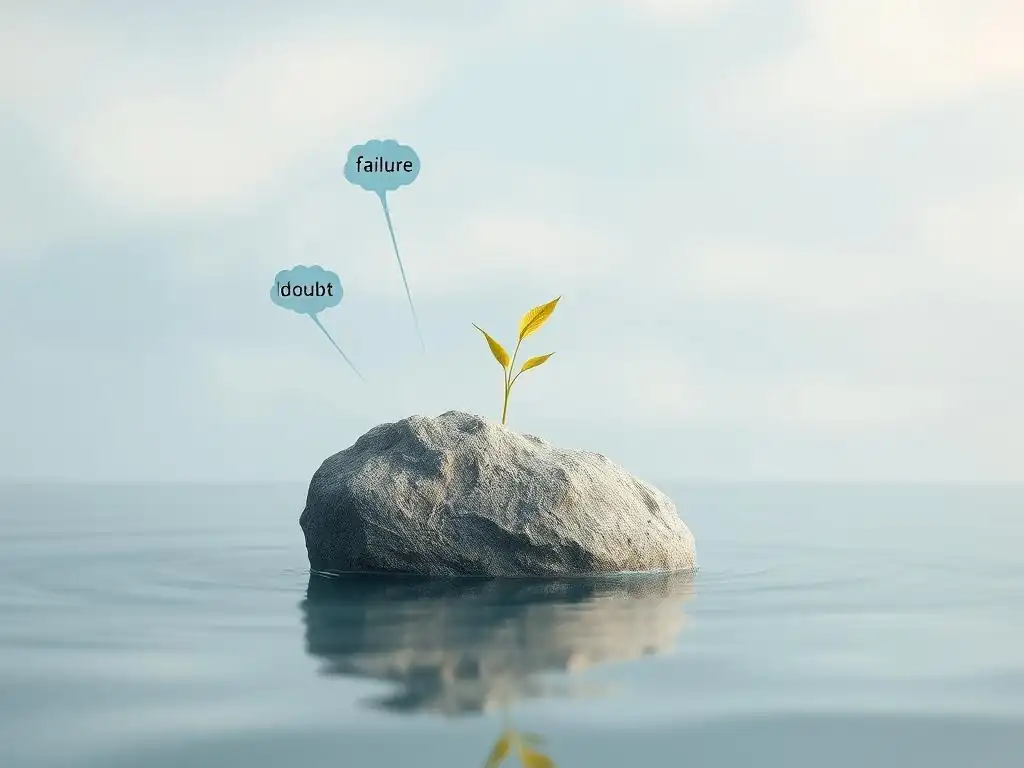
Identifying and Reframing Negative Self-Talk
Negative self-talk – the internal dialogue filled with critical, pessimistic, or self-defeating thoughts – is a major impediment to concentration, especially under pressure. Phrases like "I always mess this up," "I'm not good enough," or "What if I fail?" can consume an athlete's attention, divert focus from the task, and trigger anxiety. Identifying these automatic negative thoughts is the first step in cognitive restructuring. Athletes can learn to recognize these thoughts as they arise, perhaps by keeping a thought journal or simply becoming more mindful of their internal dialogue during training and competition.
Once identified, the next step is reframing or challenging these negative thoughts. This involves consciously replacing negative self-talk with more realistic, positive, or constructive alternatives. For example, instead of "I always mess this up," an athlete could reframe it as "I've practiced this many times, focus on executing the technique."
Or, "What if I fail?" could become "Focus on this moment, do my best, and learn from the outcome." This active process of challenging and replacing negative thoughts helps athletes regain control of their internal state and redirect their attention towards performance-enhancing cues, which is vital for boosting focus under pressure.
Building Self-Efficacy and Confidence Under Pressure
Self-efficacy, the belief in one's ability to succeed in specific situations or accomplish a task, is closely intertwined with confidence and plays a crucial role in maintaining focus under pressure. When athletes have high self-efficacy, they are more likely to approach challenging situations with determination and persistence, viewing obstacles as surmountable rather than overwhelming. This belief helps them stay focused on solutions and execution rather than getting derailed by doubt or fear of failure.
Building self-efficacy involves several strategies: experiencing success through consistent practice and achieving process goals, observing others succeed (vicarious experience), receiving positive feedback and encouragement (verbal persuasion), and interpreting physiological and emotional states (like nervousness) as indicators of readiness rather than anxiety. By intentionally working on these areas, athletes can build a robust belief in their capabilities. This strong foundation of self-efficacy provides mental resilience, enabling them to maintain composure, trust their skills, and effectively manage their attention when the pressure is on, thereby significantly boosting focus under pressure.
Practical Exercises to Enhance Concentration Skills
Attention Training Techniques for Athletes
Beyond general mindfulness, specific attention training exercises can directly target and improve an athlete's ability to control where their focus is directed. One common technique is the "dot drill," where an athlete focuses intently on a small dot on a wall for increasing periods, noticing when their mind wanders and gently bringing it back.
This simple exercise builds the 'muscle' of sustained attention. Another technique involves listening to a specific sound in a noisy environment, like trying to follow one conversation at a crowded party, which trains selective attention – the ability to focus on one stimulus while ignoring others.
More advanced techniques might involve using biofeedback or neurofeedback, where athletes receive real-time information about their physiological or brain states (like heart rate variability or brainwave activity) and learn to consciously regulate them to achieve a state conducive to focus. For instance, athletes might learn to lower their heart rate variability before a crucial play. Regularly practicing these types of exercises helps athletes develop finer control over their attentional processes, making it easier to direct and maintain focus precisely where it's needed during high-pressure moments, contributing directly to boosting focus under pressure.
Focus Drills: Improving Concentration Span and Attention to Detail
Integrating specific focus drills into regular training sessions is another effective way to enhance concentration. These drills are designed to challenge an athlete's ability to maintain attention over time and notice subtle details. For example, in a team sport practice, a drill might require players to execute a complex sequence of passes or movements while simultaneously having to remember a series of numbers called out by the coach. This forces players to divide and manage their attention between the physical task and a cognitive one.
For individual athletes, a runner might practice noticing specific environmental details during a training run, like the color of every third car or the types of trees they pass. A swimmer might focus on the feel of the water on their hands during each stroke for a specific duration. These drills, when practiced consistently, help extend an athlete's concentration span and sharpen their attention to the subtle cues that are crucial for optimal performance. By making focus a conscious part of practice, athletes build the mental stamina required for boosting focus under pressure in competition.
Sport-Specific Focus Exercises: Baseball, Basketball, and Soccer Examples
Tailoring focus exercises to the specific demands of a sport makes them particularly effective.
- Baseball: A pitcher might practice "pitch visualization" while sitting in the dugout, mentally going through their pre-pitch routine and visualizing successful pitches against different batters. A hitter might practice focusing solely on the seams of the ball as it approaches the plate during batting practice, tuning out everything else.
- Basketball: Players can practice "situational awareness" drills where they have to quickly identify open teammates or defensive positions under time pressure. Free throw practice can incorporate visualization and breathing exercises, focusing solely on the process of the shot while imagining a game-like atmosphere.
- Soccer: Midfielders might practice "scanning" drills, where they are required to quickly and accurately identify the position of all teammates and opponents within a few seconds during a chaotic scrimmage. Penalty kick takers can use a routine focusing on a single spot in the goal, ignoring the goalkeeper and crowd noise.
These sport-specific applications ensure that athletes are training their focus in contexts directly relevant to their competitive environment. By embedding focus training within the skills they already practice, athletes can more effectively transfer these mental skills to high-pressure game situations, significantly boosting focus under pressure when it matters most.
Managing Distractions: Staying Present in High-Pressure Situations
Internal Distractions: Managing Anxiety and Self-Doubt
Internal distractions are thoughts, feelings, and physiological sensations that pull an athlete's attention away from the task at hand. These often include worries about performance, fear of failure, past mistakes, future consequences, and physical sensations like nervousness or fatigue. Managing these internal distractions is crucial for maintaining focus under pressure. One effective strategy is acceptance – acknowledging the presence of the thought or feeling without judgment and without getting consumed by it. For example, an athlete might think, "Okay, I'm feeling nervous, that's normal. Now, back to focusing on my breathing."
Cognitive restructuring, discussed earlier, is also key here, helping athletes challenge and reframe negative self-talk that fuels anxiety and self-doubt. Breathing techniques, such as deep diaphragmatic breathing, can help regulate the physiological stress response, calming the nervous system and making it easier to regain mental clarity. Developing a strong sense of self-compassion also helps; instead of dwelling on mistakes, athletes can acknowledge them, learn from them, and refocus on the next opportunity. Effectively managing these internal battles is fundamental for boosting focus under pressure.
External Distractions: Blocking Out Crowd Noise and Opponent Tactics
External distractions come from the environment – loud crowds, opponent taunts, weather conditions, scoreboard updates, or unexpected events. While athletes cannot control these factors, they can control their response to them and their ability to filter them out. Training in simulated distracting environments can be highly beneficial. For instance, practicing free throws with loud crowd noise playing, or hitting golf balls while someone talks nearby, helps athletes habituate to these stimuli and learn to ignore them.
Developing strong selective attention skills is vital here. Athletes can use cue words or phrases that immediately bring their attention back to the task ("Focus," "Present," "See the ball"). They can also practice narrowing their attentional focus to only the most relevant cues (e.g., a tennis player focusing only on the ball and their opponent's body language, filtering out the crowd). Pre-performance routines also help create a mental "bubble" that external distractions have difficulty penetrating. Mastering the ability to filter out external noise is a key component of boosting focus under pressure.
Creating a Mental Shield: Strategies for Filtering Out Unwanted Stimuli
Creating a "mental shield" is an overarching concept that encompasses several strategies aimed at protecting an athlete's focus from both internal and external distractions. It involves developing a robust mental filter that allows relevant information in while keeping irrelevant or disruptive stimuli out. This isn't about ignoring everything but about consciously choosing what to attend to. Visualization can be used to create this shield mentally, picturing oneself surrounded by a protective barrier that deflects distractions.
Another strategy is the use of "anchors" – specific physical sensations (like the feel of one's feet on the ground), objects (like a piece of equipment), or cue words that athletes can consciously focus on to ground themselves in the present moment and block out noise. For instance, a swimmer might focus on the sensation of the water against their skin, or a runner on the rhythm of their breathing.
By consistently practicing these anchoring techniques, athletes build their capacity to quickly re-center their attention and maintain their mental shield, making it significantly easier to stay focused and perform optimally when boosting focus under pressure.
The Importance of Sleep and Nutrition for Optimal Focus

Sleep Hygiene for Athletes: Maximizing Rest and Recovery
Sleep is not merely rest; it is a critical period for physical recovery and cognitive function. For athletes, sufficient, high-quality sleep is essential for muscle repair, hormone regulation, and perhaps most importantly for this discussion, optimal brain function, including concentration and decision-making. Chronic sleep deprivation, even mild, can impair cognitive performance, reduce reaction time, increase susceptibility to distraction, and negatively impact mood, all of which undermine an athlete's ability to focus under pressure.
Establishing good sleep hygiene is paramount. This includes maintaining a consistent sleep schedule, ensuring the bedroom is dark, quiet, and cool, avoiding screens and caffeine before bed, and creating a relaxing pre-sleep routine. Elite athletes often aim for 7-9 hours of sleep per night, with some requiring more, particularly during periods of intense training. Prioritizing sleep is a non-negotiable element in an athlete's regimen for maintaining peak cognitive performance and effectively boosting focus under pressure.
Nutrition and Brain Health: Fueling Focus and Cognitive Function
Just as the body needs fuel for physical exertion, the brain requires specific nutrients for optimal cognitive function, including attention, memory, and processing speed. A balanced diet rich in complex carbohydrates, lean proteins, healthy fats, vitamins, and minerals provides the necessary building blocks and energy sources for brain health. Dehydration and nutrient deficiencies can quickly lead to fatigue, irritability, and difficulty concentrating – all detrimental to an athlete's ability to perform under pressure.
Specific nutrients play particularly important roles in brain function. For example, omega-3 fatty acids are critical components of brain cell membranes and are associated with improved cognitive function. B vitamins are essential for energy metabolism and neurotransmitter production. Antioxidants help protect brain cells from damage. Ensuring consistent hydration is also fundamental, as even mild dehydration can impair concentration and mood. Fueling the brain properly through nutrition is a foundational strategy for supporting cognitive resilience and boosting focus under pressure.
Dietary Recommendations for Enhanced Concentration: Omega-3 Fatty Acids, Antioxidants, and Hydration
To specifically support focus and cognitive function, athletes should consider incorporating certain dietary elements.
- Omega-3 Fatty Acids: Found in fatty fish (salmon, mackerel), flaxseeds, chia seeds, and walnuts. Aim for regular consumption to support brain structure and function.
- Antioxidants: Abundant in fruits (especially berries), vegetables (leafy greens, broccoli), nuts, and seeds. These combat oxidative stress in the brain.
- Hydration: Drink water consistently throughout the day, not just during exercise. The general recommendation is around 8-10 glasses per day, but athletes need significantly more depending on training intensity and climate.
- Complex Carbohydrates: Provide a steady release of glucose, the brain's primary energy source. Examples include whole grains, legumes, and vegetables.
- Lean Protein: Supports neurotransmitter production. Found in poultry, fish, beans, and tofu.
Avoiding excessive sugar and processed foods, which can cause energy crashes and impair concentration, is also important. By making conscious dietary choices focused on brain health, athletes can provide their cognitive system with the best possible support for maintaining sharp focus and enhancing their capacity for boosting focus under pressure.
Long-Term Strategies for Sustained Focus and Mental Resilience
Developing a Growth Mindset: Embracing Challenges and Learning from Setbacks
A growth mindset, the belief that abilities can be developed through dedication and hard work, is a powerful long-term strategy for sustained focus and mental resilience. Athletes with a growth mindset view challenges, setbacks, and failures not as proof of inadequacy, but as opportunities to learn and improve. This perspective fosters persistence and a willingness to put in the consistent effort required for both physical and mental training, including focus techniques.
When faced with high-pressure situations, athletes with a growth mindset are less likely to be paralyzed by fear of failure. Instead, they see it as a chance to test their skills and learn, which reduces performance anxiety and makes it easier to stay focused on the process. Embracing challenges helps build mental toughness – the ability to perform effectively under pressure. By cultivating this mindset, athletes create a psychological foundation that supports the long-term development and application of skills for boosting focus under pressure.
Seeking Professional Support: Sport Psychologists and Mental Performance Coaches
While many techniques can be practiced independently, seeking guidance from qualified professionals like sport psychologists or mental performance coaches can significantly accelerate an athlete's development of focus and mental resilience. These experts are trained to assess an athlete's specific mental strengths and weaknesses, identify underlying issues contributing to performance anxiety or concentration problems, and develop tailored mental training programs.
A sport psychologist can help athletes work through complex psychological barriers, such as past trauma, intense performance anxiety, or issues with self-worth that might be impacting their focus. A mental performance coach often focuses more directly on skill acquisition, teaching specific techniques for attention control, visualization, and managing pressure. Working with a professional provides personalized strategies, objective feedback, and accountability, ensuring that athletes are not just applying techniques but truly integrating them into their overall approach to training and competition for sustained boosting focus under pressure.
Building a Personalized Mental Training Program: Assessment, Planning, and Implementation
Just as physical training programs are personalized based on an athlete's sport, position, and individual needs, so too should mental training. Building a personalized mental training program involves several key steps:
- Assessment: Identifying specific areas for improvement related to focus, pressure management, and mental resilience. This might involve self-reflection, feedback from coaches, and potentially assessment tools used by mental performance professionals.
- Planning: Based on the assessment, selecting the most relevant techniques (e.g., mindfulness, visualization, specific focus drills, cognitive restructuring) and setting realistic goals for practicing them. This plan should outline what techniques will be used, how often, and when (e.g., daily meditation, visualization before practice, specific focus drills during warm-ups).
- Implementation and Review: Consistently integrating the chosen techniques into daily routines and training schedules. Regularly reviewing progress, noting what works well and what needs adjustment, and being prepared to modify the plan as needed.
A structured, personalized approach ensures that mental training is not an afterthought but a consistent, integrated part of an athlete's preparation. This systematic practice is crucial for developing the deep-seated mental skills necessary for sustained high performance and effectively boosting focus under pressure over the long term.
Conclusion: Mastering Focus for a Competitive Edge
The Power of Consistent Practice and Mental Toughness
Mastering focus under pressure is an ongoing journey, not a destination. The techniques and strategies discussed require consistent, deliberate practice, just like any physical skill. An athlete doesn't become strong by lifting weights once, nor do they develop unwavering focus by trying mindfulness a single time. It's the cumulative effect of regular mental training that builds true mental toughness – the resilience and focus required to perform at one's best when it matters most.
Integrating mental training into daily routines, whether it's a few minutes of mindfulness, a short visualization session, or specific focus drills during warm-ups, reinforces the neural pathways associated with concentration and pressure management. This consistent effort builds a mental reserve that athletes can draw upon when faced with the inevitable distractions and anxieties of high-stakes competition. The power lies in the repetition, making focus a habit rather than a sporadic effort.
Achieving Peak Performance Through Focused Concentration: A Holistic Approach
Ultimately, achieving peak performance requires a holistic approach that integrates physical, technical, tactical, and mental preparation. Focused concentration is the thread that runs through all these elements, enabling an athlete to execute skills precisely, apply strategy effectively, and adapt to changing circumstances, all while managing the internal and external demands of competition. Boosting focus under pressure is not just one technique; it's the result of a comprehensive strategy that includes understanding the neuroscience of attention, practicing proven mental skills, managing distractions, prioritizing physical well-being, developing a resilient mindset, and seeking professional support when needed.
By committing to this comprehensive approach to mental training, athletes can significantly enhance their ability to maintain sharp focus, manage the pressures of competition, and consistently perform at their highest potential. The science is clear: the brain is trainable, and focus is a skill that can be developed and strengthened. For athletes seeking a competitive edge, investing time and effort in boosting focus under pressure is one of the most impactful strategies they can employ.
Frequently Asked Questions
What specific mental techniques can athletes use to boost focus under pressure during competition?
Athletes can utilize techniques like mindfulness meditation to center themselves, visualization to mentally rehearse success, and positive self-talk to combat negative thoughts. These help maintain concentration and composure.
How does pressure negatively impact an athlete's ability to concentrate, and what physiological responses contribute to this?
Pressure can trigger the fight-or-flight response, leading to increased heart rate, anxiety, and muscle tension. These physiological changes impair cognitive function and make it difficult to focus on the task at hand.
Are there specific breathing exercises recommended for athletes to regain focus when feeling overwhelmed by pressure?
Yes, diaphragmatic breathing, also known as belly breathing, is highly effective. It helps to activate the parasympathetic nervous system, promoting relaxation and restoring a sense of calm focus.
How does mental imagery or visualization contribute to an athlete's ability to maintain focus and perform under pressure?
Visualizing successful performance helps build confidence and reduces anxiety. It allows the athlete to mentally rehearse the desired outcome, making it more likely to occur in reality.
What role does self-awareness play in an athlete's ability to recognize and manage distractions affecting their focus under pressure?
Self-awareness allows athletes to identify their triggers for distraction and anxiety. This enables them to implement coping mechanisms proactively and maintain focus on their performance goals.
Final Reflection: Mastering the Inner Game Under Pressure
The ability to focus under pressure isn't just a competitive advantage; it's a life skill. In a world increasingly demanding immediate attention and rapid responses, the techniques explored in this article – from mindfulness practices to strategic breathing exercises – are more relevant than ever. The science of concentration isn't just for elite athletes; it's a powerful tool for anyone striving for peak performance in any field.
The exploration of focus techniques has profoundly impacted my understanding of not only athletic performance but also the broader human experience. The constant barrage of distractions in modern life makes the ability to consciously direct attention a precious commodity. The key is not to prioritize what's on your schedule, but to schedule your priorities.
– Stephen Covey. This quote perfectly encapsulates the core message: intentional focus, cultivated through consistent practice, allows us to achieve our goals amidst the chaos. The journey towards mastering concentration is a continuous process of self-discovery and refinement.
Now, consider your own life. Where do you struggle most with focus? What are the pressures you face daily that demand your attention? I invite you to take one of the techniques discussed – perhaps mindful breathing or a pre-performance routine – and integrate it into your daily life. Experiment, adapt, and discover the power of focused intention. The journey to mastering your inner game begins with a single, conscious breath. Embrace the challenge, and unlock your potential.
Unleash Your Inner Champion: Master Focus Today!
Thanks for diving deep into the science of concentration! We hope you gained valuable insights into how to enhance your focus under pressure. Now it's time to put those techniques into action. Ready to elevate your game?
- Implement one new focus technique this week: Start small! Choose the technique that resonated most with you and dedicate time to practicing it consistently. Even 15 minutes a day can make a difference.
- Share your focus journey: Connect with other athletes on social media and share your experiences! What challenges are you facing, and which strategies are working best for you?
- Explore additional resources: Search Mind Care Guide for articles on mindfulness and stress management to build a holistic approach to peak performance.
What specific focus challenge will you tackle first, and how will you measure your progress?