
Advanced Body Awareness: Listening to the Wisdom of Your Physical Self


Welcome to Mind Care Guide, a safe space for nurturing your mental well-being.
Have you ever felt trapped within your own anxiety, disconnected from your body's subtle cues? Our journey begins with a powerful exploration of body awareness techniques for anxiety, a path towards reclaiming your inner peace. Discover how tuning into your physical sensations can unlock profound insights and pave the way for lasting relief. Ready to listen to the wisdom of your physical self?
- Advanced Body Awareness: Listening to the Wisdom of Your Physical Self - Mind Care Guide
- Deepening Your Body Awareness Practice
- Advanced Body Awareness Techniques for Anxiety Management
- Integrating Body Awareness into Daily Life
- Overcoming Challenges in Developing Body Awareness
- The Long-Term Benefits of Enhanced Body Awareness
-
Frequently Asked Questions
- What are body awareness techniques, and how do they relate to anxiety?
- How can body awareness help me manage my anxiety symptoms?
- What are some examples of advanced body awareness techniques I can use?
- How often should I practice body awareness techniques to see a reduction in anxiety?
- Are there any risks associated with practicing body awareness techniques for anxiety?
- Final Reflection: Embracing the Stillness Within
- Unlock Your Body's Wisdom: Start Feeling More Alive Today!
Advanced Body Awareness: Listening to the Wisdom of Your Physical Self - Mind Care Guide
Defining Body Awareness: Beyond Basic Sensations
Body awareness is far more than simply noticing the feeling of your clothes on your skin or the ground beneath your feet. It is a deep, nuanced understanding of the internal and external signals your body constantly sends. This includes proprioception (awareness of your body's position and movement in space), kinesthesia (awareness of your body's movement), and crucially, interoception (awareness of your internal bodily states like heartbeat, breathing, digestion, and muscle tension). Developing this awareness means paying deliberate, often non-judgmental, attention to these subtle physical cues.
This internal sensing system provides a rich stream of information about your current state, both physical and emotional. For example, a slight clenching in your jaw might signal underlying stress, or a flutter in your stomach could indicate nervousness or excitement. Unlike simply feeling hungry or tired, advanced body awareness involves recognizing patterns, understanding the qualities of sensations (e.g., is the tension sharp or dull? Is the flutter rapid or slow? ), and connecting these physical feelings to your thoughts, emotions, and external circumstances. It's about becoming a skilled interpreter of your body's language.
The Connection Between Body Awareness and Mental Health
The mind and body are inextricably linked, with physical sensations often serving as direct indicators of mental and emotional states. Research consistently shows that individuals with higher levels of body awareness tend to have better emotional regulation. They are often more adept at identifying emotions as they arise by noticing the associated physical changes, such as a tightening chest accompanying sadness or a racing heart with fear. This early identification allows for a more conscious response rather than an automatic, potentially reactive one.
Furthermore, a lack of body awareness can contribute to mental health challenges. For instance, someone with poor interoception might struggle to recognize the physical symptoms of anxiety until they escalate into a full-blown panic attack. Conversely, cultivating this awareness can be a powerful tool for managing conditions like anxiety and depression. By learning to tune into subtle bodily shifts, individuals can catch early warning signs, understand their triggers better, and apply coping strategies proactively. Many effective body awareness techniques for anxiety specifically target these physical manifestations of distress.
Body Awareness Techniques for Anxiety Reduction
Various practices focus on enhancing physical awareness to alleviate anxiety symptoms. Simple techniques might involve mindful breathing exercises, where attention is placed solely on the physical sensation of air entering and leaving the lungs. More involved methods include progressive muscle relaxation, guiding attention through the body to notice and release tension systematically. These practices help shift focus away from anxious thoughts and ground the individual in the present physical reality.
Regular engagement with body awareness techniques for anxiety has been shown to reduce the intensity and frequency of anxious episodes. For example, a study might show that participants practicing daily body scans report a significant decrease in self-reported anxiety levels over a period of weeks compared to a control group. While specific percentages can vary widely depending on the study design and population, the general trend in research supports the efficacy of using physical awareness practices as a component of anxiety management, often complementing traditional therapeutic approaches.
Deepening Your Body Awareness Practice

Moving Beyond Surface-Level Sensations
Developing advanced body awareness requires moving past the obvious and tuning into the subtle, often overlooked sensations within the body. Initially, you might only notice significant discomfort like pain or intense tension. Deeper practice involves cultivating sensitivity to finer nuances: the subtle vibration in your fingertips, the warmth spreading through your chest, the slight shift in posture, or the gentle gurgling of digestion. It's about refining your internal 'listening' skills.
This deeper exploration often involves sustained, focused attention on specific body areas or internal processes. For instance, instead of just noticing your breath, you might focus on the exact point where the air feels coolest entering your nostrils, or the subtle expansion and contraction of your ribs. This level of detail helps build a richer internal map of your physical state and can reveal connections between subtle physical shifts and emotional experiences that were previously unnoticed.
Cultivating a Non-Judgmental Awareness of Your Body
A crucial aspect of deepening body awareness is approaching your physical sensations with curiosity and without judgment. It's easy to label sensations as "good" or "bad," "comfortable" or "uncomfortable." However, judgment can create resistance and hinder your ability to fully perceive what is happening. Instead, the practice involves observing sensations as pure data – noticing their quality, intensity, location, and how they change over time, without getting caught up in liking or disliking them.
This non-judgmental stance is particularly important when using body awareness techniques for anxiety. Anxious physical symptoms like a racing heart or sweaty palms can feel unpleasant and trigger further anxiety about the symptoms. By observing these sensations with a neutral, accepting attitude, you can interrupt this cycle. For example, instead of thinking "My heart is racing, this is awful, I must be having a panic attack," you might observe "My heart is beating rapidly. I notice warmth in my chest. The sensation feels like a rapid pulsing." This shift in perspective disarms the fear associated with the physical feeling.
Recognizing and Interpreting Physical Signals of Stress
The body provides constant feedback about stress levels, often before the mind fully registers it. Learning to recognize these early physical signals is a vital component of advanced body awareness for managing anxiety. Common signs include muscle tension (especially in the neck, shoulders, and jaw), shallow or rapid breathing, digestive upset, headaches, fatigue, or a general sense of restlessness or unease. These signals are not random but are part of the body's physiological stress response.
Interpreting these signals involves understanding what they might signify in the context of your daily life. For example, noticing persistent tension in your shoulders might indicate chronic low-grade stress related to work deadlines. A sudden clench in your gut before a meeting could signal performance anxiety. By associating these physical cues with potential stressors or emotional states, you gain valuable insight into your patterns and triggers. This awareness empowers you to take action – whether through relaxation exercises, changing your environment, or addressing the root cause of the stress – before symptoms escalate.
Advanced Body Awareness Techniques for Anxiety Management
Somatic Experiencing for Anxiety Relief: An Introduction
Somatic Experiencing (SE) is a therapeutic approach developed by Dr. Peter Levine that focuses on resolving trauma and stress stored in the body. Unlike talk therapy alone, SE works directly with the physiological responses associated with overwhelming experiences. The core principle is that trauma, including chronic stress and anxiety, can dysregulate the nervous system, leading to physical symptoms and emotional distress. SE aims to help the body complete the natural stress response cycle that may have been interrupted or frozen.
SE is considered an advanced body awareness technique for anxiety because it goes beyond simple relaxation. It involves gently guiding individuals to notice subtle bodily sensations (called "felt sense") associated with difficult experiences or anxious states, allowing the body's innate capacity for self-regulation to restore balance. A trained SE practitioner helps the individual track these sensations without becoming overwhelmed, facilitating a gradual release of stored energy and tension.
Understanding Somatic Experiencing Principles
A key principle of Somatic Experiencing is pendulation, the natural oscillation between states of activation and settling in the nervous system. When faced with a threat, the body activates (fight/flight/freeze). In SE, practitioners help clients gently pendulate between sensations related to the anxiety or trauma and sensations of safety, ease, or resource. This titrated approach prevents re-traumatization and allows the nervous system to process difficult states in manageable doses.
Another principle is titration, approaching difficult sensations or memories in small, digestible increments. Instead of diving headfirst into overwhelming feelings, SE encourages noticing just a small piece of the sensation or memory at a time. This might involve focusing on a specific part of the body where tension is held for a brief moment, then shifting attention to a neutral or pleasant sensation. This careful pacing builds resilience and capacity to tolerate difficult physical and emotional states, which is crucial for using body awareness techniques for anxiety that can sometimes bring up uncomfortable feelings.
Somatic Experiencing Exercises for Beginners
While full Somatic Experiencing therapy is conducted with a trained practitioner, some basic principles can be applied as beginner body awareness techniques for anxiety management. One simple exercise is tracking sensations. Find a quiet place, sit comfortably, and bring your attention inward. Notice any physical sensations present – warmth, coolness, tingling, pressure, tension, ease.
Simply observe them without trying to change them. Notice where they are located and their quality. If you notice an uncomfortable sensation related to anxiety, gently broaden your awareness to include other parts of your body that feel neutral or even pleasant (e.g., the support of the chair, the feeling of your feet on the floor).
Another introductory practice is resourcing. Think of a place, memory, person, or image that brings you a sense of safety, calm, or strength. Tune into the physical sensations associated with this resource. Does thinking about it bring warmth, relaxation, a sense of groundedness? Spend time dwelling on these pleasant physical feelings. When you notice anxious sensations arising, you can gently bring your attention back to your resource sensation to help regulate your nervous system.
Focusing: Tapping into Your Body's Inner Wisdom
Focusing, developed by Eugene Gendlin, is a process of accessing what he called the "felt sense" – a subtle, holistic bodily sense of a particular issue or situation. It's more than just an emotion; it's a complex physical feeling that contains implicit knowledge about how you are in relation to something. Focusing is a powerful body awareness technique for anxiety because it allows you to move beyond circular thinking and access deeper insights held within the body.
The philosophy behind Focusing is that the body knows more than the mind often realizes. The felt sense is the body's way of communicating this implicit knowing. By learning to gently attend to this felt sense, you can unlock new understanding, find fresh perspectives on problems, and discover steps forward that weren't accessible through purely cognitive means. It's a practice of listening to the body's subtle signals as a form of guidance and wisdom.
The Philosophy of Focusing
Gendlin proposed that a "felt sense" is not a simple feeling like happy or sad, but a murky, pre-verbal bodily awareness related to a complex situation or problem. Imagine trying to describe a difficult relationship or a complex work challenge; you might get a certain feeling in your chest or stomach that encapsulates the whole thing, even before you can articulate it in words. This is the felt sense. Focusing is the process of gently attending to this felt sense and allowing words, images, or insights to emerge from it.
A core tenet is that the felt sense is always "right" in the sense that it accurately reflects your current internal state regarding an issue, even if that state is confused or contradictory. The goal is not to change the felt sense immediately, but to patiently be with it and describe it. This process of non-judgmental attention and description often leads to a "felt shift" – a subtle release of tension, a change in the quality of the felt sense, and often, a new insight or sense of resolution.
Step-by-Step Focusing Exercise for Anxiety
Here is a simplified version of a Focusing exercise, which can be used as a body awareness technique for anxiety:
- Clearing a Space: Sit quietly and comfortably. Bring your attention to your body. Ask yourself, "What is between me and feeling completely okay right now?" Don't answer with your mind, but scan your body for sensations related to issues or concerns. Acknowledge each one briefly (e.g., "Ah, there's that tightness in my stomach about the presentation") and set it gently aside for now, as if placing it nearby.
- Finding the Felt Sense: Now, bring your attention to the anxiety itself, or a specific situation that triggers it. Don't think about it, but notice how your body feels when you hold that situation lightly in your awareness. Where do you feel it most strongly? What is the quality of that feeling? Is it heavy, light, fluttery, dense, shaky? Don't label it as "anxiety," just describe the physical sensations. This is the felt sense.
- Getting a Handle: Find a word, phrase, or image that captures the quality of this felt sense. It doesn't have to be logical. It could be a word like "sticky," "buzzing," "a knot," or an image like "a grey cloud." See if the word/image resonates with the felt sense in your body. Does it feel like a good fit? Adjust the word until it clicks.
- Resonating: Go back and forth between the handle (word/image) and the felt sense. Silently repeat the handle and notice if it accurately reflects the bodily feeling. Pay attention to any subtle shifts or nuances in the sensation.
- Asking: Gently ask the felt sense, "What is the core of this? What does this feeling need me to know?" Or, "What about this situation makes the felt sense feel this way?" Listen patiently for a subtle response from your body – a new word, image, memory, or a slight physical shift.
- Receiving: Welcome whatever comes, without judgment or analysis. Even if it seems small or illogical, acknowledge it. See if this new insight brings about a "felt shift" – a sense of easing, release, or a subtle change in the felt sense itself.
- Concluding: Thank your body for the information. If there was a shift, notice how the felt sense has changed. If not, that's okay; the process itself is valuable. Note down any insights gained.
Interoception and Anxiety: Cultivating Internal Awareness
Interoception is the sense of the physiological condition of the body. It's our ability to perceive signals originating from within the body, such as hunger, thirst, body temperature, heart rate, respiration, and the need to use the restroom. While often unconscious, interoceptive signals provide crucial information about our internal state and contribute significantly to our sense of self and emotional experience.
Research strongly links interoceptive awareness to emotional regulation and mental health. Individuals with poor interoceptive accuracy or awareness often struggle to identify and understand their emotions, as emotions are often accompanied by distinct physiological changes. Conversely, heightened interoceptive awareness allows for earlier detection of internal shifts associated with emotions like anxiety, enabling individuals to respond more effectively. Cultivating interoceptive awareness is therefore a fundamental body awareness technique for anxiety management.
What is Interoception?
Interoception is mediated by specific neural pathways that transmit signals from internal organs and tissues to the brain, particularly areas like the insula. Unlike external senses (sight, hearing), interoceptive signals are often diffuse and less localized. For example, the feeling of hunger isn't pinpointed like seeing a specific object; it's a general sense of emptiness or gurgling in the abdominal region.
Individual differences in interoceptive sensitivity and accuracy exist. Some people are naturally more attuned to their internal signals, while others may be largely unaware of them until they become very intense (e.g., only noticing thirst when severely dehydrated). Trauma, chronic stress, and certain mental health conditions can also impact interoceptive processing, sometimes leading to either reduced sensitivity (numbness) or hypersensitivity (feeling overwhelmed by internal signals).
Interoceptive Exercises to Regulate Anxiety
Improving interoceptive awareness can be a powerful way to use body awareness techniques for anxiety regulation. Simple exercises involve deliberately tuning into specific internal signals:
- Heart Rate Awareness: Find your pulse (wrist or neck) and count your heartbeats for 30 seconds. Then, without taking your pulse, estimate how many times your heart beat in the last minute. Check your pulse again to see how accurate your estimate was. Regularly practicing this helps you become more attuned to your heart rate without needing to manually check it.
- Breath Counting/Sensing: Close your eyes and focus solely on the sensation of your breath. Count each inhale and exhale up to 10, then start again. Notice the temperature of the air, the expansion of your chest or belly, the subtle pause between breaths. Don't try to change your breath, just observe it.
- Body Scan Focus: During a standard body scan meditation, pay particular attention to internal sensations like digestion, the feeling of blood pulsing through veins, or subtle muscle twitches deep within the body, rather than just surface sensations like pressure or temperature.
- Hunger/Fullness Check-in: Before eating, pause and check in with your body. What does hunger feel like right now? What specific sensations are present? While eating, periodically pause and notice the sensations of chewing, swallowing, and the feeling of food entering your stomach. Stop when you notice the first subtle signs of fullness, rather than waiting until you feel stuffed.
These exercises, practiced consistently, can improve your ability to recognize the early physical signs of anxiety (like a racing heart or shallow breath) and differentiate them from other states, allowing you to respond more effectively.
Integrating Body Awareness into Daily Life
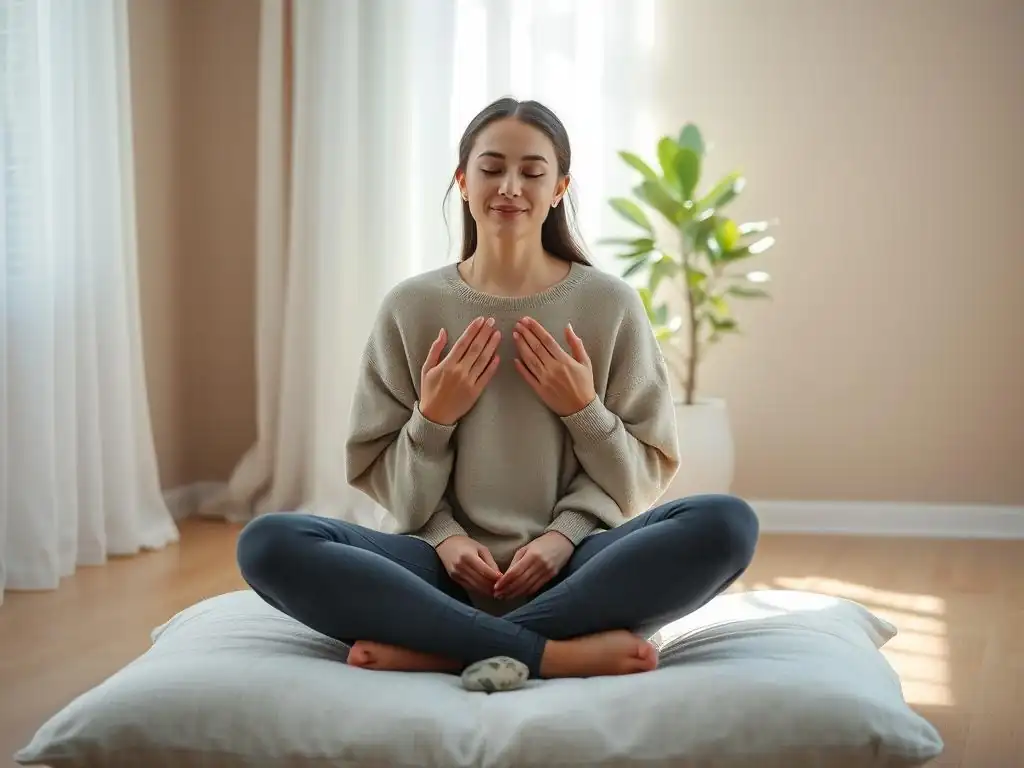
Mindful Movement Practices: Yoga, Tai Chi, and Qi Gong
Mindful movement practices are excellent ways to integrate body awareness into your daily routine. Disciplines like Yoga, Tai Chi, and Qi Gong explicitly link movement with breath and internal sensation. They encourage practitioners to pay close attention to the physical experience of each posture or movement, noticing muscle engagement, balance, flexibility, and the flow of energy. This focus on the present physical experience naturally cultivates body awareness.
Regular participation in these practices has been shown to have significant benefits for mental well-being, including reducing symptoms of anxiety and depression. For instance, studies have indicated that consistent yoga practice can lead to a measurable reduction in cortisol levels, the body's primary stress hormone. While specific figures vary, a common finding is that participants report decreased subjective feelings of anxiety and tension, often correlated with improved interoceptive awareness and a greater sense of being grounded in their bodies.
Body Scan Meditations for Enhanced Awareness
Body scan meditation is a foundational body awareness technique for anxiety relief and general stress reduction. It involves systematically bringing your attention to different parts of your body, from your toes to the crown of your head, noticing any sensations present without judgment. This practice helps to train your attention, grounding it in the physical reality of the present moment rather than allowing it to be carried away by anxious thoughts about the past or future.
A typical body scan might last anywhere from 10 to 45 minutes. During the practice, you are encouraged to simply observe whatever sensations arise – warmth, coolness, tingling, pressure, absence of sensation – treating each discovery with curiosity. Regular body scans build your capacity to notice subtle physical cues, including the early signs of stress or anxiety, before they become overwhelming. Many individuals report feeling more relaxed and centered after a body scan, attributing it to the practice of releasing physical tension and calming the nervous system.
Using Body Awareness to Identify and Manage Anxiety Triggers
Enhanced body awareness provides a powerful tool for identifying and managing personal anxiety triggers. Often, our bodies react to a trigger before our conscious mind fully processes it. By paying attention to subtle physical shifts – a sudden tightness in the chest, a knot in the stomach, a change in breathing pattern – you can learn to recognize when you are entering an anxious state.
For example, you might notice that every time you receive an email from a particular person, you feel a specific clenching sensation in your jaw. Over time, you learn to associate that jaw clench with the trigger (the email).
This early recognition allows you to intervene sooner. Instead of waiting until you feel overwhelmed, you can pause, acknowledge the physical sensation, and apply a coping strategy immediately, such as taking a few deep breaths, stepping away from the computer, or using another body awareness technique for anxiety that works for you, like a quick body scan focusing on releasing tension in the jaw and shoulders.
Overcoming Challenges in Developing Body Awareness
Addressing Dissociation and Numbness
One significant challenge in developing body awareness, particularly for individuals with a history of trauma or chronic stress, is dissociation or physical numbness. Dissociation is a disconnection between your mind and body, often developed as a coping mechanism to endure overwhelming experiences. This can manifest as feeling detached from your physical sensations or experiencing a general sense of numbness in parts of your body.
Working with dissociation requires a gentle, patient approach, often best undertaken with the guidance of a therapist experienced in trauma-informed care. The goal is not to force intense sensation but to gradually build a sense of safety and presence in the body. Starting with very brief check-ins, focusing on neutral or pleasant sensations (like the feeling of your feet on the floor), and using grounding techniques can help individuals slowly and safely reconnect with their physical selves without becoming overwhelmed.
Managing Overwhelm and Sensory Sensitivity
Conversely, some individuals, particularly those with heightened sensory sensitivity or certain anxiety disorders, may feel overwhelmed by internal or external sensations. Tuning into the body can sometimes amplify feelings of discomfort, pain, or anxiety, making body awareness practices feel counterproductive or even frightening.
In such cases, it's crucial to approach body awareness gradually and with caution. Starting with very short durations (even just 30 seconds or a minute), focusing on neutral areas (like hands or feet), and having a plan for grounding yourself if you feel overwhelmed are important strategies. Techniques that involve gentle movement (like mindful walking) can sometimes be easier than stillness. It's also helpful to remember that you can always shift your attention away from an intense sensation if needed. The goal is building capacity, not enduring discomfort.
Seeking Professional Guidance: When to Consult a Therapist
While body awareness techniques for anxiety can be incredibly beneficial, they are not a substitute for professional mental health care, especially for severe anxiety, panic disorder, trauma-related conditions, or persistent dissociation. A therapist can provide personalized guidance, help you navigate difficult sensations or emotions that arise during practice, and address underlying issues contributing to your symptoms.
Therapies like Somatic Experiencing, Trauma-Sensitive Yoga, or Sensorimotor Psychotherapy explicitly integrate body awareness into their approach and are designed to help individuals process trauma and regulate their nervous systems safely. If you find yourself struggling to engage with your body, experiencing significant distress during body awareness practices, or if your anxiety is significantly impacting your daily life, consulting a qualified mental health professional is a crucial step towards healing and developing a healthier relationship with your body and mind.
The Long-Term Benefits of Enhanced Body Awareness
Increased Emotional Regulation
One of the most significant long-term benefits of developing enhanced body awareness is improved emotional regulation. By becoming more attuned to the subtle physical cues that accompany emotions, you can identify feelings as they arise, often at their earliest stages. This early detection provides a window of opportunity to choose how to respond rather than being swept away by intense emotions.
For example, recognizing the specific pattern of tension and heat that signals frustration allows you to pause before reacting impulsively. You can then apply coping strategies learned through body awareness techniques for anxiety and other challenging emotions, such as deep breathing, gentle stretching, or grounding yourself by focusing on the physical sensation of your feet on the floor. Over time, this consistent practice builds resilience and a greater sense of control over your emotional responses.
Improved Stress Resilience
Regular engagement with body awareness techniques for anxiety and general stress reduction significantly enhances your overall stress resilience. By learning to recognize the early physical signs of stress – the tightening muscles, the shallow breath, the churning stomach – you can intervene proactively. This might involve taking micro-breaks to stretch, practicing mindful breathing, or engaging in a brief body scan to release tension throughout the day, preventing stress from accumulating to overwhelming levels.
Furthermore, practices like mindful movement and body scan meditations help to regulate the nervous system, shifting it out of chronic fight-or-flight mode towards a more balanced state. This physiological regulation makes you less reactive to stressors when they arise and helps your body return to a state of calm more quickly after a stressful event. Many individuals report feeling less overwhelmed by daily pressures and better equipped to handle challenges after consistently practicing body awareness.
A Deeper Connection to Self and the Present Moment
Beyond managing difficult states like anxiety, advanced body awareness fosters a profounder connection to yourself and the present moment. By regularly tuning into your physical self, you develop a more intimate understanding of your needs, limits, and inner state. This can lead to making healthier choices, setting better boundaries, and living more authentically in alignment with your physical and emotional needs.
Moreover, body awareness inherently anchors you in the present. While the mind often drifts to the past or future, the body is always in the here and now. Focusing on physical sensations grounds you, pulling your attention away from anxious rumination or stressful anticipation and into the immediate, tangible reality of your physical existence. This increased presence cultivates a sense of peace, acceptance, and a deeper appreciation for the simple experience of being alive in your body.
Frequently Asked Questions
What are body awareness techniques, and how do they relate to anxiety?
Body awareness techniques involve paying close attention to physical sensations in your body. These techniques can help reduce anxiety by increasing your understanding of how anxiety manifests physically and enabling you to respond more effectively.
How can body awareness help me manage my anxiety symptoms?
By focusing on your body, you can become more attuned to early signs of anxiety, like muscle tension or a racing heart. This allows you to implement coping strategies, such as deep breathing or progressive muscle relaxation, before anxiety escalates.
What are some examples of advanced body awareness techniques I can use?
Advanced techniques include practices like yoga, tai chi, and mindful movement, which emphasize the connection between mind and body. These methods encourage present moment awareness and can help regulate the nervous system.
How often should I practice body awareness techniques to see a reduction in anxiety?
Consistency is key; even 10-15 minutes daily can make a significant difference. Regular practice helps you develop a stronger connection to your body and improves your ability to recognize and manage anxiety triggers.
Are there any risks associated with practicing body awareness techniques for anxiety?
While generally safe, individuals with a history of trauma may experience emotional discomfort. It's advisable to start slowly and consider working with a qualified therapist who can provide guidance and support.
Final Reflection: Embracing the Stillness Within
The ability to cultivate advanced body awareness is not merely a trendy wellness practice; it's a powerful antidote to the pervasive anxieties of modern life. In a world saturated with constant stimulation and demands, tuning into the subtle whispers of our physical selves offers a vital pathway to calm, clarity, and resilience. The techniques explored in this article – from mindful movement to somatic experiencing – provide tangible tools for navigating the turbulent waters of stress and anxiety.
The journey towards deeper body awareness is a deeply personal one, a continuous unfolding of self-discovery. It's a process that has profoundly impacted my own life, teaching me to listen to the signals my body sends before they escalate into overwhelming anxiety. This journey has reinforced the importance of self-compassion and acceptance, allowing me to meet my challenges with greater equanimity. The body keeps the score,
as Bessel van der Kolk so eloquently puts it, and learning to read that score is a crucial step towards healing and wholeness.
Now, I invite you to consider how you can integrate these practices into your daily life. Begin with small, mindful moments – a few deep breaths, a gentle stretch, a moment of quiet observation of your physical sensations. Don't strive for perfection; simply cultivate a consistent practice of listening to your body. By nurturing this connection, you will not only alleviate anxiety but also unlock a deeper understanding of yourself and your inherent capacity for strength and resilience. The wisdom of your physical self awaits; are you ready to listen?
Unlock Your Body's Wisdom: Start Feeling More Alive Today!
Thanks for taking the time to explore the fascinating world of advanced body awareness! You've now gained valuable insights into how to truly listen to your physical self. Ready to put this knowledge into practice?
- Prioritize mindful movement: Even 5 minutes of focused stretching or gentle yoga can make a significant difference. Notice the sensations in your body and let your breath guide you. This is your primary step toward deeper connection.
- Share your discoveries: Let your friends and family know what you’ve learned. A simple conversation can inspire others to connect with their bodies too.
- Try a body scan meditation: Dedicate 10 minutes to a guided body scan meditation (plenty are available online). It's a surprisingly powerful way to cultivate greater awareness.
Ready to deepen your connection with your body and unlock the wisdom it holds? What small step will you take today to prioritize your physical well-being?