
Equanimity Cultivation: Finding Inner Stillness Amidst Life's Chaos


Welcome to Mind Care Guide.
Do you ever feel like you're constantly battling the chaos of everyday life, longing for a moment of true calm? You're not alone. We understand the relentless pressure. This week, we delve into the art of cultivating inner peace amidst stress. Discover practical strategies and mindful techniques to navigate life's challenges with greater equanimity and find the stillness you've been searching for. Ready to begin your journey towards a more peaceful you?
Cultivating Equanimity: Finding Inner Stillness
- Understanding Equanimity
- Benefits of Equanimity for Mental Health
- Practical Techniques for Developing Equanimity
- Applying Equanimity in Daily Life
- Addressing Challenges to Equanimity
- Long-Term Benefits of Equanimity
- Integrating Equanimity with Other Mindfulness Practices
- Resources for Further Learning
-
Frequently Asked Questions
- How does cultivating equanimity contribute to mental well-being?
- What practical steps can I take to begin cultivating inner peace amidst stress?
- What role does self-compassion play in achieving equanimity?
- Can equanimity help with specific mental health challenges like anxiety or depression?
- How long does it typically take to develop a sense of equanimity and inner peace?
- Final Reflection: The Enduring Power of Inner Stillness
- Unlock Your Inner Calm: Start Cultivating Equanimity Today
Understanding Equanimity
Defining Equanimity: Mental Calmness and Composure
Equanimity, often described as a state of mental calmness, composure, and evenness of temper, particularly in a difficult situation, is a cornerstone of many contemplative traditions. It is not indifference or apathy, but rather an inner stability that allows one to navigate the ups and downs of life without being overwhelmed by emotional reactivity. This state involves acknowledging reality as it is, without excessive clinging to pleasant experiences or aversion to unpleasant ones. Developing this capacity for balanced awareness is key to cultivating inner peace amidst stress.
This balanced perspective is like standing at the center of a seesaw – you can observe both sides rising and falling without being thrown off balance. It involves a deep sense of non-reactivity, allowing thoughts and emotions to arise and pass without getting entangled in them. For instance, a study published in the Journal of Positive Psychology in 2018 highlighted that individuals reporting higher levels of equanimity demonstrated greater emotional stability and less rumination compared to those with lower levels, suggesting a direct link between this quality and psychological resilience.
Equanimity's Role in Managing Stress and Promoting Well-being
Equanimity plays a vital role in managing stress by altering our relationship with stressors. Instead of automatically reacting with fight, flight, or freeze responses, an equanimous mind can observe stressful situations and internal reactions with a degree of detachment. This allows for a more considered response rather than a knee-jerk reaction. By fostering this mental composure, individuals can reduce the intensity and duration of their stress responses, contributing significantly to overall mental and physical well-being.
Furthermore, cultivating inner peace amidst stress through equanimity helps to dismantle the cycle of worry and anxiety. When faced with a challenging situation, an equanimous person can acknowledge the difficulty without being consumed by catastrophic thinking. They can process the event, feel the associated emotions, but ground themselves in the present moment rather than spiraling into future fears. Research from mindfulness studies, often incorporating equanimity training, consistently shows reductions in perceived stress levels and improvements in markers of well-being, such as increased life satisfaction and decreased symptoms of depression.
Equanimity vs. Apathy: Recognizing the Nuances
It is crucial to distinguish equanimity from apathy or indifference. Apathy is a lack of interest, enthusiasm, or concern, often stemming from emotional disconnection or weariness. It involves a withdrawal from experience. Equanimity, conversely, is a state of engaged, balanced presence. It involves fully feeling and acknowledging emotions and experiences – both joyful and painful – but doing so without being swept away by them. It's about caring deeply while maintaining inner stability.
Consider the example of witnessing suffering. An apathetic person might turn away or feel nothing. An equanimous person feels compassion and concern but maintains their inner balance, allowing them to respond skillfully and effectively without becoming emotionally overwhelmed or paralyzed by despair. They remain open and engaged with reality, whereas apathy is characterized by a closing down. This distinction is vital for understanding that equanimity is an active, compassionate state, not a passive or uncaring one, making it a powerful tool for cultivating inner peace amidst stress while remaining engaged with the world.
Benefits of Equanimity for Mental Health
Reducing Anxiety and Promoting Emotional Stability
Equanimity is a powerful antidote to anxiety. Anxiety often stems from a fear of future events or an inability to tolerate uncertainty and discomfort in the present. By training the mind to observe thoughts and feelings without judgment and to remain balanced amidst changing circumstances, equanimity directly addresses the root causes of anxiety. This practice helps to loosen the grip of anxious thought patterns, allowing for a greater sense of ease and presence.
Studies have shown that regular practice aimed at fostering equanimity can lead to significant reductions in reported anxiety levels. For example, participants in mindfulness-based stress reduction (MBSR) programs, which incorporate elements of equanimity training, often report a decrease in generalized anxiety symptoms by as much as 30-40% over an 8-week period, according to pooled data from various research reviews. This increased capacity for non-reactivity to internal states translates into greater emotional stability, enabling individuals to navigate life's inherent unpredictability with more grace and less distress.
Enhancing Emotional Regulation and Self-Control
Developing equanimity significantly enhances emotional regulation. Rather than suppressing or being consumed by emotions, an equanimous mind can acknowledge emotions like anger, sadness, or frustration as transient states. This allows for a pause between the feeling and the reaction, creating space for a more deliberate and skillful response. This improved self-control is not about suppressing emotions but about choosing how to respond to them from a place of awareness, not reactivity.
This enhanced ability to regulate emotions has practical benefits in daily life, from managing interpersonal conflicts more constructively to making better decisions under pressure. For instance, research using fMRI scans has indicated that experienced meditators, who tend to exhibit higher levels of equanimity, show reduced activity in the amygdala (the brain's fear center) and increased connectivity in prefrontal cortex regions associated with emotional regulation. This neurological evidence supports the subjective experience of greater emotional balance and self-control achieved through cultivating inner peace amidst stress via equanimity practices.
Building Resilience to Cope with Challenges
Resilience is the capacity to recover quickly from difficulties. Equanimity is a fundamental building block for resilience because it teaches us how to weather storms without being destroyed by them. By maintaining inner balance when faced with adversity, setbacks, or pain, an equanimous person is better equipped to adapt, learn, and move forward. They can acknowledge the difficulty of a situation without collapsing into despair or being consumed by negative emotions.
Consider the experience of job loss. Someone lacking equanimity might be overwhelmed by fear, anger, and self-pity, making it hard to take proactive steps. Someone with cultivated equanimity can acknowledge the disappointment and financial stress but maintain a clearer perspective, allowing them to assess options, update their resume, and network effectively. This capacity to remain present and balanced, even in the face of significant challenges, is a powerful demonstration of resilience fostered by cultivating inner peace amidst stress through equanimity.
Practical Techniques for Developing Equanimity

Mindfulness Meditation: Observing Thoughts Without Judgment
Mindfulness meditation is perhaps the most direct path to developing equanimity. The core practice involves paying attention to the present moment without judgment. This includes observing physical sensations, sounds, thoughts, and emotions as they arise and pass. By simply noticing these phenomena without getting caught up in them – without labeling them as "good" or "bad," "wanted" or "unwanted" – we train the mind to be less reactive.
This practice of non-judgmental observation is the essence of equanimity in meditation. As you sit, thoughts about the past or future will arise, difficult emotions may surface, or pleasant sensations might appear. The practice is not to eliminate these, but to see them clearly for what they are – temporary mental events or physical states. By repeatedly returning your attention to your chosen anchor (like the breath) after noticing distractions, you strengthen the 'muscle' of equanimity, learning to let experiences flow without resistance or clinging, thereby cultivating inner peace amidst stress.
Body Scan Meditation: Cultivating Awareness and Acceptance
The body scan meditation is a specific mindfulness technique particularly effective for developing equanimity towards physical sensations. It involves systematically bringing your attention to different parts of the body, noticing any sensations present – warmth, coolness, tingling, pressure, pain, ease – without trying to change them. The instruction is simply to observe with curiosity and acceptance.
This practice helps us become more aware of the constant flux of sensations in the body and learn to be with discomfort or pleasantness without reacting. For example, if you notice tightness in your shoulders, the practice is to observe the sensation itself (its intensity, location, quality) without immediately tensing up further or wishing it away. This cultivates a gentle, accepting awareness that extends beyond the physical realm, training the mind to meet all experiences with greater equanimity and acceptance, which is fundamental for cultivating inner peace amidst stress.
Vipassana Meditation: Developing Insight and Detachment
Vipassana, meaning "to see things as they really are," is a form of meditation that deeply cultivates equanimity through insight into the impermanent nature of reality. The practice involves sustained, non-judgmental observation of the arising and passing of physical sensations and mental phenomena. By witnessing the constant flux of experience, the meditator develops a profound understanding that everything is temporary – pleasant feelings don't last forever, nor do unpleasant ones.
This insight into impermanence directly undermines the roots of suffering, which often arise from clinging to what is pleasant and resisting what is unpleasant. As one sees that sensations, thoughts, and emotions are constantly changing, the tendency to strongly react to them diminishes. This leads to a natural development of detachment – not in a cold, uncaring way, but as a freedom from being controlled by fleeting experiences. This deep seeing is central to cultivating inner peace amidst stress by changing our fundamental relationship with our internal and external world.
Cognitive Restructuring: Reframing Negative Thoughts
Cognitive restructuring, a core technique in Cognitive Behavioral Therapy (CBT), involves identifying and challenging unhelpful or irrational thought patterns. While not a traditional contemplative practice, it complements equanimity by helping individuals gain distance from their thoughts and see them more objectively. Instead of automatically believing negative thoughts (e.g., "I'm failing"), one learns to question their validity and consider alternative, more balanced perspectives.
This process helps to weaken the emotional impact of negative thoughts. By reframing a thought like "This is a disaster" into "This is a difficult situation, but I can handle it," you reduce the associated anxiety and maintain a more stable emotional state. This active process of questioning and re-evaluating thoughts supports the passive observation cultivated in meditation, helping to dismantle the mental structures that fuel reactivity and making it easier to maintain equanimity when faced with challenging cognitions, thus aiding in cultivating inner peace amidst stress.
Acceptance and Commitment Therapy (ACT): Embracing Acceptance and Values
Acceptance and Commitment Therapy (ACT) is a behavioral therapy that explicitly incorporates principles akin to equanimity, particularly through its emphasis on acceptance. ACT teaches individuals to accept difficult thoughts and feelings rather than fighting against them. It posits that struggling against internal experiences often causes more suffering than the experiences themselves. Instead of trying to eliminate discomfort, ACT encourages acknowledging it with openness and allowing it to be present.
Simultaneously, ACT focuses on identifying one's core values and committing to taking action aligned with those values, regardless of internal discomfort. This involves cultivating inner peace amidst stress by decoupling well-being from the absence of difficulty. For example, someone with social anxiety might value connection. ACT would help them accept the feeling of anxiety while still choosing to attend a social gathering because it aligns with their value of connection. This acceptance of internal states, coupled with value-driven action, mirrors the balanced engagement with reality that equanimity fosters.
Loving-Kindness Meditation (Metta): Fostering Compassion and Equanimity
Loving-kindness meditation, or Metta, is traditionally practiced alongside equanimity in Buddhist traditions. While Metta focuses on cultivating feelings of warmth, care, and compassion towards oneself and others, the practice often culminates in extending loving-kindness towards those one finds difficult, and eventually towards all beings without distinction. This extension to all, including those who cause suffering, naturally leads to the development of equanimity.
The highest form of Metta involves wishing well-being for all beings equally, regardless of their actions or relationship to the practitioner. This requires a profound sense of balance and non-discrimination, recognizing the shared humanity and capacity for suffering in everyone. By actively cultivating a kind and balanced perspective towards all experiences and individuals, Loving-Kindness meditation directly supports the development of an open, non-reactive heart and mind, essential for cultivating inner peace amidst stress in interpersonal contexts.
Applying Equanimity in Daily Life
Managing Workplace Stress with Equanimity
Workplaces are often fertile ground for stress, presenting daily challenges from tight deadlines and demanding colleagues to unforeseen problems. Applying equanimity in this environment means meeting these situations with a balanced mind rather than immediate frustration or panic. Instead of reacting with intense anger when a project hits a snag, an equanimous approach would involve acknowledging the difficulty, perhaps feeling a moment of frustration, but then stepping back to assess the situation calmly and determine the best course of action.
This might involve pausing before responding to a critical email, taking a few deep breaths during a tense meeting, or simply observing the feeling of pressure without letting it consume you. For instance, a project manager practicing equanimity might accept that delays are sometimes unavoidable in complex projects, allowing them to communicate more effectively with their team and stakeholders rather than becoming overly reactive or blaming. This ability to remain composed significantly contributes to cultivating inner peace amidst stress within the professional sphere.
Family relationships, while often sources of love and support, can also be challenging, marked by long-standing patterns, disagreements, and emotional intensity. Applying equanimity here means interacting with family members and navigating conflicts from a place of inner stability. It involves recognizing that you cannot control others' behavior or opinions, but you can control your reaction to them.
When a difficult conversation arises, equanimity allows you to listen without immediately becoming defensive, to express yourself calmly even if others are agitated, and to accept that you may not always agree or resolve every issue. For example, during a family argument, instead of getting drawn into shouting, someone practicing equanimity might observe the rising tension in their body and mind, take a breath, and choose to respond with measured words or even to step away temporarily if needed. This balanced approach fosters healthier interactions and helps in cultivating inner peace amidst stress within personal relationships.
Maintaining Perspective in the Pursuit of Goals
The pursuit of goals, whether personal or professional, is often filled with successes and failures, praise and criticism. Equanimity helps maintain perspective throughout this journey. When things go well, it prevents excessive elation or attachment to the outcome, recognizing that circumstances can change. When setbacks occur, it prevents crippling disappointment or self-doubt, seeing the failure as a temporary event or a learning opportunity rather than a reflection of inherent worth.
This balanced view is crucial for long-term motivation and well-being. An entrepreneur launching a new product, for example, might receive positive initial feedback (success) followed by unexpected technical issues (setback). Equanimity allows them to appreciate the success without becoming complacent and to address the technical issues without despair, viewing both as parts of the process. This even-mindedness is vital for cultivating inner peace amidst stress inherent in striving and change.
Addressing Challenges to Equanimity
Identifying Common Obstacles to Inner Peace
Cultivating inner peace amidst stress through equanimity is not without its challenges. One of the most common obstacles is the mind's natural tendency towards reactivity – our ingrained habit of clinging to pleasure and pushing away pain. This manifests as resistance to difficult emotions, impatience with unpleasant situations, and an inability to tolerate uncertainty. Another significant obstacle is judgment, both of ourselves and others, which creates mental noise and disturbance.
Our conditioning also plays a large role; we've often been taught to achieve happiness by controlling our external circumstances or suppressing undesirable internal states. This creates a fundamental conflict with the practice of accepting reality as it is. Furthermore, external pressures, such as societal expectations, constant demands on our time, and exposure to negativity, can make it difficult to maintain a state of inner balance. Recognizing these common patterns – reactivity, judgment, conditioning, and external pressure – is the first step in overcoming them on the path to greater equanimity.
Managing Intense Emotions: Anger, Fear, and Sadness
Intense emotions like anger, fear, and sadness are significant tests of equanimity. When these emotions arise, our natural inclination is often to either suppress them or become completely consumed by them. Equanimity offers a middle path: acknowledging the emotion fully without being swept away. This involves recognizing the physical sensations associated with the emotion, naming the emotion without judgment, and allowing it to be present without necessarily acting on it impulsively.
For example, if intense anger arises after a perceived injustice, an equanimous approach involves noticing the heat in the body, the tightness in the jaw, the thought "This is unfair," and acknowledging, "Ah, this is anger." The practice is then to stay with these sensations and thoughts without fueling them further or immediately lashing out.
This doesn't mean the emotion disappears instantly, but its power to control your behavior diminishes. Over time, this practice helps to develop a capacity to meet even the most challenging emotional states with more balance and less reactivity, crucial for cultivating inner peace amidst stress.
Overcoming Self-Criticism and Negative Thoughts
Self-criticism and pervasive negative thoughts are powerful internal obstacles to equanimity. They create inner turmoil and undermine our sense of worth, making it hard to feel peaceful regardless of external circumstances. Overcoming these requires applying the principles of non-judgment and acceptance to our internal dialogue. Instead of believing critical thoughts or identifying with them (e.g., "I am a failure"), we practice observing them as just thoughts, mental events that arise and pass.
This can be challenging, as self-critical thoughts often feel deeply ingrained and true. Techniques like cognitive restructuring (as mentioned earlier) can help challenge the content of the thoughts, while mindfulness helps change our relationship with them. By noticing the thought "You messed up again" without believing it or judging ourselves for having it, we create distance. We can then gently redirect attention or offer self-compassion. This persistent practice of observing and accepting our internal critic without letting it dictate our state is essential for cultivating inner peace amidst stress and achieving a more stable inner landscape.
Long-Term Benefits of Equanimity
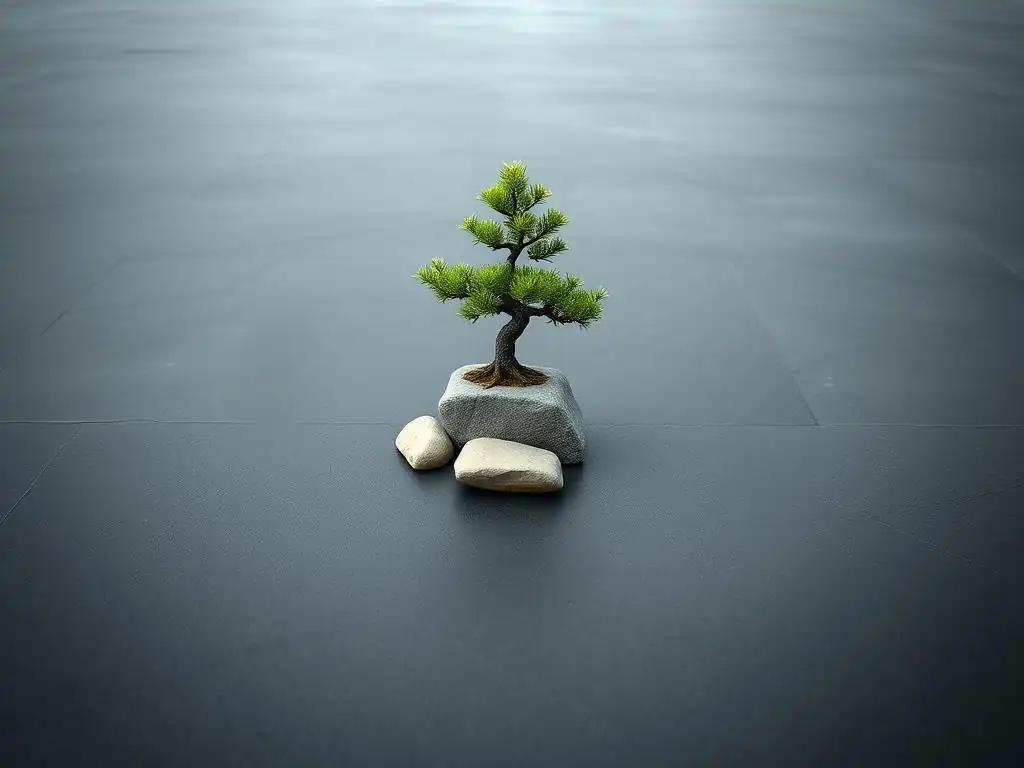
Enhanced Emotional Stability and Resilience
The consistent practice of equanimity leads to a profound and lasting enhancement of emotional stability. Over time, the peaks of elation become less exaggerated, and the valleys of despair become less deep. This isn't about flattening emotions but about developing a wider window of tolerance for both pleasant and unpleasant feelings. You still experience joy and sadness, but you are less likely to be thrown off balance by them.
This increased stability directly contributes to greater resilience. When faced with significant life stressors – a health crisis, a relationship breakdown, a major financial challenge – the equanimous mind is better equipped to process the event without collapsing into overwhelm. You can acknowledge the pain and difficulty while maintaining the capacity to think clearly, seek support, and take constructive action. This long-term ability to bounce back and adapt is a hallmark of a life lived with greater equanimity, making it a powerful tool for cultivating inner peace amidst stress that endures.
Increased Inner Peace and Contentment
Perhaps the most cherished long-term benefit of equanimity is a deep and abiding sense of inner peace and contentment. This peace doesn't depend on external circumstances being perfect; it arises from within, from the acceptance of reality as it is. When you're not constantly fighting against what is, or desperately clinging to what you wish would stay, a natural state of peace emerges.
This isn't a passive state of resignation, but an active, engaged peace that allows you to appreciate the present moment more fully. It's the contentment that comes from realizing that happiness isn't found in controlling life's events, but in how you relate to them. By cultivating inner peace amidst stress through equanimity, you build a stable foundation of well-being that is less susceptible to the fluctuations of the external world, leading to a more sustained and profound sense of contentment.
Improved Relationships and Overall Well-being
Equanimity has a transformative effect on relationships. When you can meet others, especially during disagreements or challenges, with a balanced and non-reactive mind, communication improves significantly. You are better able to listen without defensiveness, express yourself calmly, and navigate conflicts constructively. This reduces interpersonal stress and fosters deeper, more authentic connections.
Furthermore, by reducing internal reactivity and fostering acceptance, equanimity frees up mental and emotional energy. This energy can then be directed towards engaging more fully with life, pursuing meaningful activities, and nurturing positive connections. The cumulative effect of enhanced emotional stability, inner peace, better relationships, and reduced stress contributes significantly to overall psychological and physical well-being, demonstrating that cultivating inner peace amidst stress is not just a personal endeavor but one that positively impacts every aspect of life.
Integrating Equanimity with Other Mindfulness Practices
Combining Equanimity and Gratitude for Enhanced Well-being
Integrating equanimity with gratitude creates a powerful synergy for enhancing well-being. While equanimity helps us accept the difficult aspects of life without resistance, gratitude helps us appreciate the positive aspects without clinging. Practicing gratitude involves intentionally focusing on and appreciating the good things in life, no matter how small. This cultivates positive emotions and shifts perspective towards abundance.
When combined, gratitude prevents equanimity from becoming cold or detached, ensuring we remain open to joy and appreciation. Equanimity, in turn, prevents gratitude from becoming conditional – we can still feel grateful even when faced with challenges because we accept that difficulty is part of life. This balanced perspective, appreciating the good while accepting the bad, is a robust approach to cultivating inner peace amidst stress and fostering a richer, more fulfilled life.
Cultivating Self-Compassion Alongside Equanimity
Self-compassion is a vital complement to equanimity, particularly when navigating internal difficulties like self-criticism, shame, or failure. While equanimity helps us observe difficult internal states without getting lost in them, self-compassion involves meeting those states with kindness, understanding, and a recognition of our shared humanity. It's treating ourselves with the same care we would offer a friend who is struggling.
Equanimity provides the stable ground from which self-compassion can arise; you need to be able to tolerate the presence of pain or inadequacy to offer kindness towards it. Self-compassion prevents equanimity from becoming harsh or dismissive of our own suffering. Together, they create a balanced internal environment where we can face our imperfections and difficulties with both clear awareness and gentle acceptance, which is fundamental for cultivating inner peace amidst stress and building a healthy relationship with ourselves.
Maintaining a Consistent Equanimity Practice
Like any skill, equanimity requires consistent practice to develop and maintain. It's not a switch that can be flipped, but a capacity that is built over time through repeated effort. Integrating moments of mindful observation, non-judgment, and acceptance into daily life is key. This could be through formal meditation sessions, or informal practices like noticing your reaction to traffic, observing a difficult conversation without immediate judgment, or simply pausing to accept a moment of discomfort.
Consistency is more important than duration. Even short, regular moments of practice throughout the day are more effective than infrequent long sessions. Reflecting on challenging situations afterwards and considering how equanimity could have been applied can also reinforce the learning. Making equanimity a conscious intention in daily interactions and personal reflection is crucial for cultivating inner peace amidst stress as a sustainable way of being, rather than just an occasional state.
Resources for Further Learning
Recommended Readings on Equanimity
Exploring the concept of equanimity through books can provide deeper understanding and practical guidance. Many foundational texts on mindfulness and Buddhist psychology delve into this principle.
- Mindfulness in Plain English by Henepola Gunaratana offers simple, accessible explanations of mindfulness and related concepts, including equanimity.
- Radical Acceptance by Tara Brach provides a powerful framework for embracing life as it is, which is closely related to equanimity.
- Seeking the Heart of Wisdom by Joseph Goldstein and Jack Kornfield is a classic text that explores equanimity in depth within the context of Vipassana meditation.
These resources offer different perspectives and exercises to support your journey in cultivating inner peace amidst stress through the lens of equanimity.
Online Guided Meditations and Courses
Numerous online platforms offer guided meditations and structured courses specifically focused on developing equanimity and related mindfulness skills.
- Apps like Insight Timer and Calm provide access to thousands of guided meditations, many of which are specifically labeled for equanimity or non-reactivity.
- Online courses from organizations like the Center for Mindfulness at UMass Medical School or platforms like Coursera and edX often include modules on equanimity as part of broader mindfulness or stress reduction programs.
- Websites of meditation centers and teachers frequently offer free guided practices or paid courses that guide you step-by-step in developing this capacity.
These digital resources offer flexible ways to incorporate guided practice into your routine, aiding in cultivating inner peace amidst stress.
Finding a Community or Mentor for Support
Practicing equanimity can be challenging, and having support can be invaluable. Connecting with others on a similar path or seeking guidance from an experienced teacher can provide encouragement, insights, and accountability.
- Local meditation centers or mindfulness groups often offer classes, retreats, and sangha (community) gatherings where you can practice and discuss your experiences.
- Online communities and forums dedicated to mindfulness and meditation can provide a space to share challenges and receive support from peers.
- Working with a qualified mindfulness teacher or therapist who incorporates these principles can offer personalized guidance tailored to your specific obstacles and goals in cultivating inner peace amidst stress.
Engaging with a community or mentor provides valuable external support as you deepen your internal practice of equanimity.
Frequently Asked Questions
How does cultivating equanimity contribute to mental well-being?
Equanimity helps you maintain emotional balance and reduce reactivity to stressors, leading to improved mental well-being and increased resilience.
What practical steps can I take to begin cultivating inner peace amidst stress?
Begin with practices like mindfulness meditation and deep breathing exercises. These techniques help you become more aware of your thoughts and emotions without judgment, fostering inner calmness.
What role does self-compassion play in achieving equanimity?
Self-compassion allows you to treat yourself with kindness and understanding, especially during difficult times. This reduces self-criticism and fosters a more peaceful inner state.
Can equanimity help with specific mental health challenges like anxiety or depression?
Yes, equanimity can be a valuable tool for managing anxiety and depression by helping you accept uncomfortable feelings without getting overwhelmed and reducing negative rumination.
How long does it typically take to develop a sense of equanimity and inner peace?
The timeline varies for everyone, but consistent practice of techniques like meditation and mindfulness can lead to noticeable improvements in emotional regulation and inner peace over time.
Final Reflection: The Enduring Power of Inner Stillness
The pursuit of equanimity is not a luxury, but a necessity in our increasingly frenetic world. The constant barrage of information, demands, and anxieties threatens to overwhelm us, leaving many feeling perpetually stressed and disconnected from their inner selves. This article has explored various techniques for cultivating inner peace, highlighting the profound impact these practices can have on our mental, emotional, and physical well-being.
The journey towards inner stillness is a deeply personal one, a continuous process of self-discovery and refinement. It's a journey I've embarked on myself, and I've found that the benefits extend far beyond stress reduction. It fosters resilience, enhances creativity, and deepens our capacity for empathy and compassion. As the Dalai Lama wisely said, Peace is not merely the absence of war, but the presence of justice, compassion, and the active pursuit of harmony.
This pursuit of inner peace, therefore, is not just about personal well-being; it's about contributing to a more peaceful and harmonious world.
Now, I invite you to reflect on your own relationship with stress and inner peace. Consider which techniques resonated most with you from this article, and commit to incorporating even one practice into your daily life. Start small, perhaps with just five minutes of mindful breathing each day. Observe the subtle shifts in your perspective, your emotional responses, and your overall sense of well-being. The path to inner stillness is a journey of continuous growth and discovery; embrace the process, and allow the quiet strength of equanimity to guide you towards a more peaceful and fulfilling life.
Unlock Your Inner Calm: Start Cultivating Equanimity Today
Thanks for taking the time to explore the path to equanimity with us! We hope you found valuable insights into finding inner stillness amidst life's challenges. Ready to take the next step?
- Embrace a mindful moment: Begin by dedicating just five minutes to a simple breathing exercise or meditation. Notice the subtle shifts in your body and mind. This is your foundation for greater peace.
- Share your journey: Let's build a supportive community! Share your experiences and reflections on cultivating equanimity in the comments below. What small step are you taking today?
- Explore a new perspective: Look for a new book, podcast, or even a short online course on mindfulness techniques—something that resonates with your learning style to deepen your practice.
What small, tangible action will you commit to today to cultivate more equanimity in your life?