
The Ancient Origins of Vipassana: A Path to SelfDiscovery

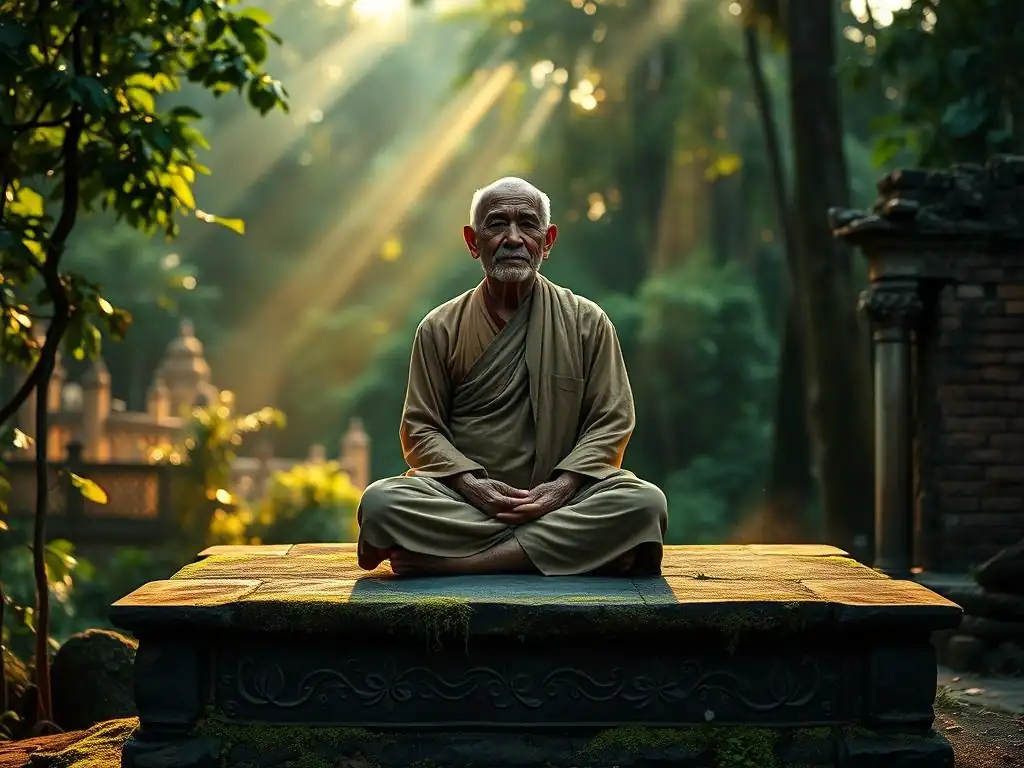
Welcome to Mind Care Guide.
Are you feeling overwhelmed, searching for a path to inner peace? We understand. Discover how the ancient practice of Vipassana meditation benefits mental health in profound ways. This isn't just another meditation technique; it's a journey of self-discovery. Curious to learn how this practice can transform your well-being? Let's explore the powerful origins of Vipassana and how it can reshape your perspective.
The Ancient Origins of Vipassana: A Path to Self-Discovery
- Vipassana Meditation: Unveiling its Ancient Roots for Mental Well-being
- Tracing the Historical Development of Vipassana Meditation
- Vipassana's Core Principles and Techniques: A Foundation for Mental Clarity
- Vipassana Meditation Benefits Mental Health: Exploring the Science-Backed Advantages
- Vipassana vs. Other Meditation Techniques: Understanding the Distinctions
- Practicing Vipassana Today: A Guide for Beginners
- The Enduring Legacy of Vipassana: A Timeless Path to Self-Discovery and Mental Wellness
- Vipassana Meditation for Enhanced Mental Well-being: A Summary of Benefits
-
Frequently Asked Questions
- What is Vipassana meditation and how does it relate to mental well-being?
- What are the key Vipassana meditation benefits mental health according to Mind Care Guide?
- How does Vipassana meditation differ from other types of meditation practices?
- Can anyone practice Vipassana meditation, and are there any precautions?
- How long does it typically take to experience the Vipassana meditation benefits mental health?
- Final Reflection: Unearthing the Timeless Wisdom of Vipassana
- Unlock Your Inner Wisdom: Start Your Vipassana Journey Today
Vipassana Meditation: Unveiling its Ancient Roots for Mental Well-being
Vipassana meditation, often translated as "insight" meditation, is one of the oldest forms of Buddhist meditation. Its core practice involves observing reality as it is, without judgment, to gain deep insight into the true nature of existence. This profound practice, rooted in ancient wisdom, offers a powerful path towards self-discovery and significantly contributes to mental well-being by fostering clarity, emotional regulation, and a deeper understanding of the mind. Understanding its historical context is key to appreciating its enduring relevance.
The practice aims to purify the mind by systematically observing the body and mind, noticing sensations, thoughts, and emotions as they arise and pass away. This process gradually dissolves mental impurities like craving, aversion, and delusion, which are seen as the root causes of suffering. By cultivating this non-reactive awareness, individuals can experience a reduction in mental distress and develop a more balanced and peaceful state of mind, highlighting how Vipassana meditation benefits mental health.
Tracing the Historical Development of Vipassana Meditation
The Buddha's Enlightenment and the Birth of Vipassana
Vipassana meditation finds its origins directly in the teachings of Siddhartha Gautama, the historical Buddha, who lived in ancient India around the 5th century BCE. According to tradition, it was through the practice of Vipassana, combined with intense concentration (Samatha), that he achieved enlightenment under the Bodhi tree. This pivotal moment marked the birth of Buddhism and the formal articulation of the path to liberation, centered on understanding the Four Noble Truths and following the Eightfold Path, where right mindfulness and right concentration are integral.
Following his enlightenment, the Buddha spent the next 45 years teaching the Dharma, the path to liberation. His primary method for training disciples involved practices that cultivated both concentration ( samatha) and insight ( vipassana). The Satipatthana Sutta (Discourse on the Foundations of Mindfulness) is considered the fundamental text describing the practice of Vipassana, outlining the systematic observation of the body, feelings, mind, and mental objects. This discourse provided a practical framework for disciples to directly experience the impermanent, suffering, and non-self nature of reality, forming the bedrock of Vipassana meditation's benefits for mental health by addressing the roots of distress.
Vipassana's Journey Through Ancient India
After the Buddha's passing, his teachings, including the practice of Vipassana, were preserved and transmitted orally by his disciples. These teachings were later compiled into the Pali Canon, the sacred scriptures of Theravada Buddhism. During the centuries that followed, Vipassana remained a central practice within the early Buddhist sangha (community of monks and nuns), although the emphasis and specific methods of practice evolved and diversified among different schools and lineages that emerged across the Indian subcontinent.
As Buddhism spread throughout India, different monastic centers became renowned for their scholarship and meditation practices. While Samatha (concentration) practices often took prominence in certain periods or schools, the core principles of Vipassana remained embedded in the monastic tradition as the means to gain liberating insight. However, over time, the widespread practice of Vipassana among laypeople reportedly diminished in India, with the focus often shifting more towards devotional practices or philosophical study in some regions before Buddhism's eventual decline in its land of origin.
The Preservation of Vipassana in Theravada Buddhism
While Vipassana practice waned in India, it was meticulously preserved and continued to flourish in countries where Theravada Buddhism became dominant, particularly Sri Lanka, Myanmar (Burma), Thailand, Cambodia, and Laos. In these traditions, the lineage of teachers and the study of the Pali Canon ensured that the theoretical understanding and practical application of Vipassana were maintained, primarily within monastic communities. Sri Lanka, in particular, played a crucial role in committing the Pali Canon to writing around the 1st century BCE, safeguarding the foundational texts describing Vipassana.
In Myanmar, a strong tradition of Vipassana practice persisted, particularly in monastic centers. In the late 19th and 20th centuries, there was a significant resurgence of Vipassana practice, particularly the development of methods accessible to laypeople. Masters like Ledi Sayadaw and Mahasi Sayadaw developed systematic techniques for practicing Vipassana intensively, which became highly influential. These developments were crucial in bringing Vipassana out of solely monastic contexts and making it available to a wider audience, setting the stage for its eventual spread to the West and its recognition for how Vipassana meditation benefits mental health globally.
Vipassana's Core Principles and Techniques: A Foundation for Mental Clarity
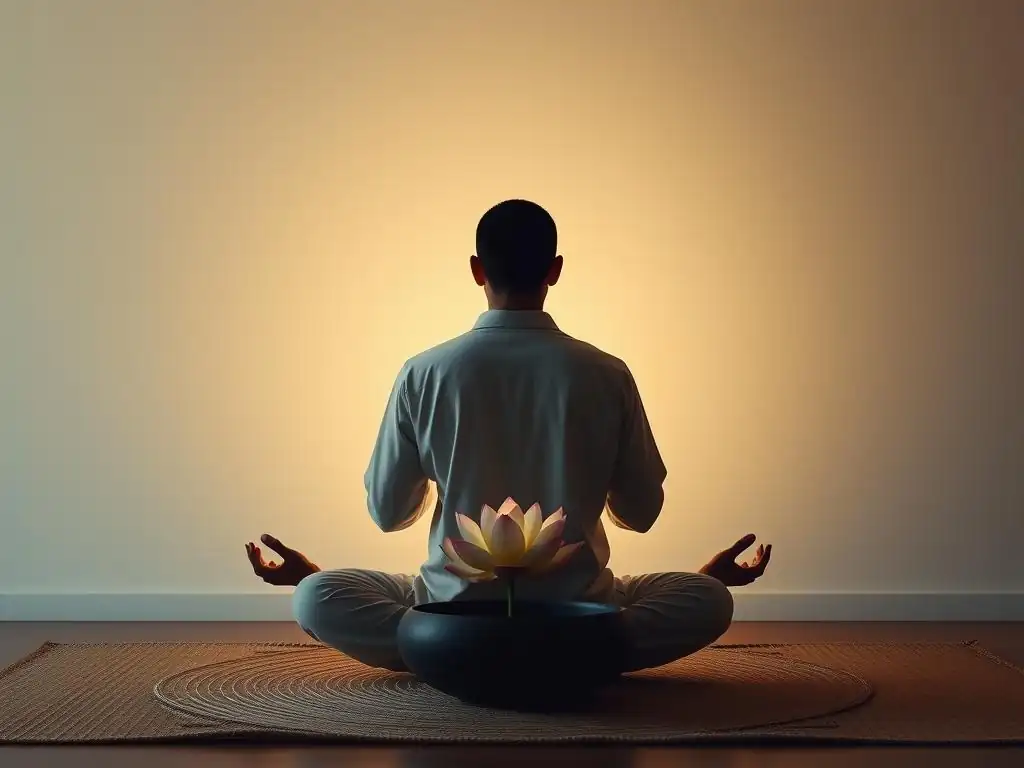
Anapanasati: Mindfulness of Breathing
Anapanasati, or mindfulness of breathing, is a foundational practice in Vipassana meditation. It involves bringing one's full, non-judgmental attention to the sensation of the breath as it enters and leaves the body, typically at the nostrils or the abdomen. The simplicity of this object of meditation makes it an accessible starting point for calming the mind and developing concentration ( samatha), which acts as a necessary basis for insight ( vipassana). The practice is not about controlling the breath but observing it exactly as it is, moment by moment.
By focusing on the breath, the practitioner learns to anchor their attention in the present moment. When the mind inevitably wanders to thoughts, memories, or future worries, the practice involves gently acknowledging the distraction without judgment and returning the attention to the breath. This repeated act of returning trains the mind to be less reactive and more focused, laying the groundwork for observing other physical and mental phenomena with the same non-reactive awareness. This initial step significantly contributes to reducing mental chatter and fostering a sense of calm, which are preliminary ways Vipassana meditation benefits mental health.
The Three Marks of Existence: Impermanence, Suffering, and Non-Self
A central aim of Vipassana is to directly experience the "Three Marks of Existence" (Tilakkhana): impermanence ( anicca), suffering ( dukkha), and non-self ( anatta). Through observing the constant arising and passing away of all phenomena – physical sensations, thoughts, emotions – the practitioner gains insight into impermanence. For example, a strong sensation of pain arises, lingers, and eventually fades, demonstrating its impermanent nature. This experiential understanding challenges the mind's tendency to grasp onto pleasant experiences or push away unpleasant ones.
Recognizing impermanence leads to an understanding of suffering. The mind's resistance to change, its craving for permanence in an inherently impermanent world, is seen as the root of dissatisfaction and suffering ( dukkha). By observing this process in action – noticing how attachment to a pleasant feeling or aversion to an unpleasant one creates mental unease – the practitioner directly experiences the truth of suffering as taught by the Buddha. This insight is crucial for developing a more realistic and less reactive relationship with life's inevitable challenges, directly impacting how Vipassana meditation benefits mental health by reducing reactivity to difficult experiences.
Cultivating Equanimity: Observing Sensations Without Judgment
Equanimity ( upekkha) is a vital attitude cultivated throughout Vipassana practice. It involves observing all experiences – pleasant, unpleasant, or neutral – with balance and non-reactivity. Instead of reacting with craving to pleasure or aversion to pain, the practitioner trains the mind to simply observe the sensations and mental states as they are, recognizing their impermanent nature without getting caught up in liking or disliking. This non-judgmental observation is key to breaking the cycle of craving and aversion that perpetuates suffering.
During meditation, as various physical sensations or emotional states arise, the instruction is to note them (e.g., "pain," "itching," "sadness") and simply observe their characteristics – intensity, location, duration – without wishing them to be different. Over time, this practice weakens the habitual patterns of reaction. For instance, a person prone to anxiety might learn to observe the physical sensations of anxiety (rapid heartbeat, tension) without immediately spiraling into fearful thoughts. This ability to observe difficult experiences with equanimity is a powerful way Vipassana meditation benefits mental health, leading to greater resilience and emotional stability.
Vipassana Meditation Benefits Mental Health: Exploring the Science-Backed Advantages
Reducing Stress and Anxiety with Vipassana Practice
Numerous studies have explored how Vipassana meditation benefits mental health, particularly in reducing stress and anxiety. The practice teaches individuals to observe stressful thoughts and anxious feelings without identifying with them or reacting habitually. By repeatedly returning attention to the present moment, practitioners interrupt the cycle of rumination that often fuels anxiety. A meta-analysis published in JAMA Internal Medicine in 2014, for example, reviewed 47 trials and found that mindfulness meditation programs, which often include Vipassana elements, showed moderate evidence of improving anxiety and depression symptoms over several months.
Further research has utilized neuroimaging to understand the mechanisms. Studies have indicated that regular meditation practice can lead to changes in brain structure and function, particularly in areas associated with stress regulation, such as the amygdala (the brain's fear center) and the prefrontal cortex (involved in executive functions and emotional regulation).
For instance, a study published in Psychiatry Research: Neuroimaging in 2011 found that participation in an eight-week mindfulness program was associated with a decrease in gray matter density in the amygdala and an increase in areas related to learning and memory, self-awareness, and compassion. These findings provide a biological basis for how Vipassana meditation benefits mental health by altering the brain's response to stress.
Vipassana and Improved Emotional Regulation
Vipassana practice cultivates emotional regulation by fostering a non-reactive awareness of feelings. Instead of being overwhelmed by strong emotions, practitioners learn to observe them as transient phenomena. This involves recognizing the physical sensations associated with emotions and noting the mental labels without getting swept away by the emotional narrative. For example, when anger arises, the practice is to observe the heat in the body, the tension, and the thoughts without acting on the anger or suppressing it.
This observational capacity allows for a greater pause between experiencing an emotion and reacting to it, providing a crucial window for choosing a more skillful response. Research supports this, showing that meditators exhibit less emotional reactivity. A study published in Emotion in 2012 found that experienced meditators showed reduced amygdala activation when viewing emotionally arousing images compared to non-meditators, suggesting a dampened automatic emotional response. By training the mind to observe emotions with equanimity, Vipassana meditation benefits mental health by reducing the intensity and duration of distressing emotional states and promoting a more balanced emotional life.
Enhancing Self-Awareness and Insight Through Vipassana
A fundamental outcome of Vipassana meditation is enhanced self-awareness and insight into one's own mental and physical processes. By systematically observing sensations, thoughts, and emotions, individuals gain a clearer understanding of their habitual patterns, triggers, and conditioned responses. This process reveals the intricate workings of the mind – how thoughts lead to emotions, how emotions manifest physically, and how craving and aversion drive behavior.
This heightened self-awareness is not merely intellectual; it is experiential. The direct observation of impermanence, suffering, and non-self within one's own experience leads to profound insights into the nature of reality and the self. For example, observing the constant flux of thoughts can dismantle the illusion of a solid, unchanging self.
This insight can lead to a reduction in ego-driven concerns and a greater sense of interconnectedness. This deeper understanding of oneself and reality is a key way Vipassana meditation benefits mental health, fostering a sense of freedom, clarity, and peace that arises from seeing things as they truly are.
Vipassana vs. Other Meditation Techniques: Understanding the Distinctions
Vipassana and Samatha Meditation: A Comparative Analysis
In traditional Buddhist teachings, Vipassana ( insight) and Samatha ( calm abiding or concentration) are often presented as two wings of the same path to liberation, working in tandem. Samatha aims to train the mind to focus single-pointed attention on a chosen object, such as the breath, a mantra, or a visual image, thereby calming the mind and developing deep concentration. The primary goal is mental stillness and tranquility, which can lead to states of profound absorption ( jhana).
Vipassana, on the other hand, uses the collected and steady mind cultivated by Samatha to investigate the nature of reality. While Samatha focuses on stabilizing attention on one object, Vipassana involves observing the changing nature of all phenomena that arise in awareness – sensations, feelings, thoughts, etc. The goal is not just tranquility but insight into impermanence, suffering, and non-self.
Although some modern Vipassana methods teach access concentration sufficient for insight without necessarily achieving deep Samatha states, traditionally, Samatha was seen as a prerequisite or a supportive practice for Vipassana, providing the mental stability needed for clear, sustained observation. Both practices contribute to mental well-being, but Vipassana specifically targets the roots of suffering through wisdom.
Mindfulness Meditation and Vipassana: Exploring the Overlap and Differences
Mindfulness meditation as widely taught in secular contexts today, particularly in programs like MBSR (Mindfulness-Based Stress Reduction), has significant overlap with Vipassana, and indeed, it largely derives from Vipassana principles. Both emphasize paying attention to the present moment with non-judgmental awareness. Practices like the body scan, mindful eating, and mindful movement, common in secular mindfulness, are rooted in the Vipassana practice of observing the body and senses.
However, traditional Vipassana often has a more specific and ambitious goal: the attainment of liberating insight into the Three Marks of Existence to dissolve the roots of suffering and achieve spiritual liberation. While secular mindfulness aims to reduce stress, improve focus, and enhance emotional regulation for better mental health in a general sense, Vipassana is explicitly part of a path towards enlightenment within the Buddhist framework.
The intensity and duration of practice can also differ; traditional Vipassana often involves intensive retreats (e.g., 10-day or longer), whereas secular mindfulness is often taught in shorter, more accessible formats. Nonetheless, the core practice of non-judgmental present-moment awareness is shared, and secular mindfulness clearly demonstrates many of the mental health advantages associated with Vipassana meditation.
Transcendental Meditation vs. Vipassana: Key Differences in Approach
Transcendental Meditation (TM) and Vipassana differ significantly in their approach and goals. TM is a mantra-based meditation technique where practitioners silently repeat a specific mantra for 15-20 minutes twice a day. The technique is designed to allow the mind to settle inward to a state of deep rest and expanded awareness, transcending ordinary thought processes. The focus is on effortless technique and achieving a state of restful alertness, often associated with deep relaxation and stress reduction.
Vipassana, in contrast, is an observational practice that involves actively paying attention to physical sensations and mental phenomena as they arise and pass away, without the use of a mantra. The goal is not to transcend thoughts but to observe them and other experiences with non-judgmental awareness to gain insight into their nature.
While TM aims for a state of restful transcendence, Vipassana aims for clarity and insight into the reality of impermanence, suffering, and non-self through direct observation. Their mechanisms for achieving benefits also differ; TM focuses on deep rest, while Vipassana focuses on cultivating awareness and wisdom, both contributing to mental well-being but via different paths.
Practicing Vipassana Today: A Guide for Beginners
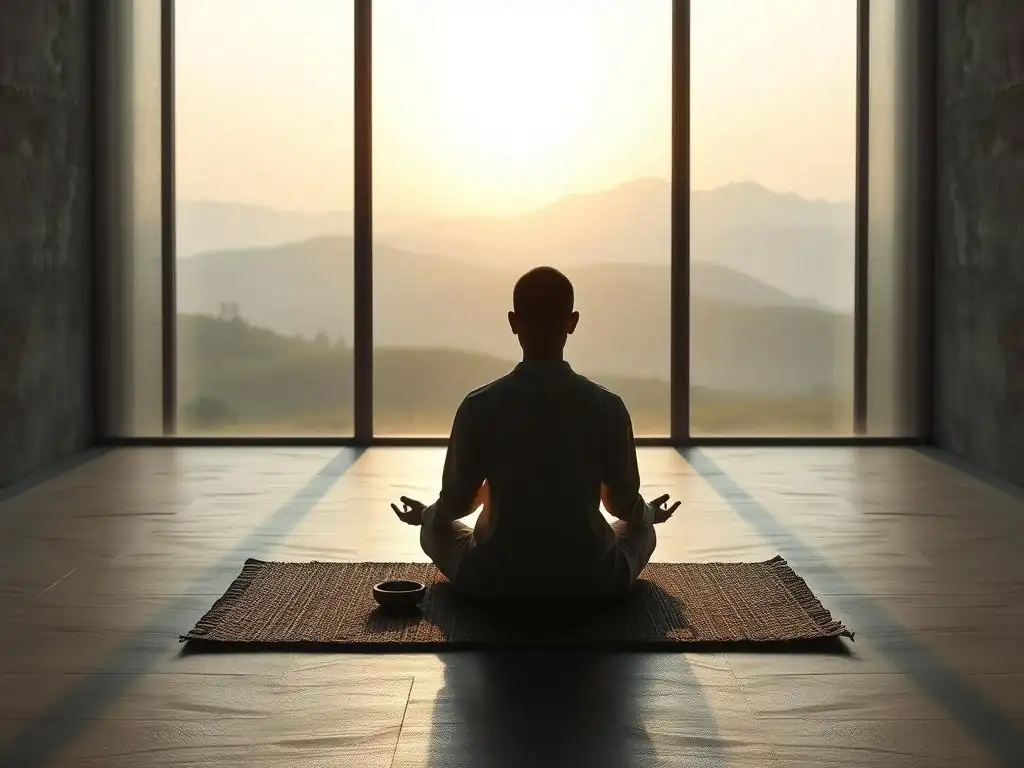
Finding a Qualified Vipassana Teacher or Retreat
For anyone interested in experiencing how Vipassana meditation benefits mental health, finding a qualified teacher is highly recommended, especially for beginners. Vipassana is a subtle practice that requires guidance to navigate challenges and understand the nuances. Authentic teaching lineages, such as those stemming from Sayagyi U Ba Khin or Mahasi Sayadaw, offer structured courses and retreats. These retreats, often held in dedicated centers, provide an immersive environment free from daily distractions, allowing practitioners to focus solely on the practice under the guidance of experienced teachers.
Many organizations offer free or donation-based residential retreats following specific traditions. For example, the network of centers founded by S.N. Goenka offers 10-day residential courses worldwide based on the tradition of Sayagyi U Ba Khin, taught free of charge.
These retreats typically involve strict adherence to a moral code (sila) and intensive meditation practice, often involving 10+ hours of sitting and walking meditation per day. While potentially challenging, the immersive nature of a retreat is considered highly effective for establishing a strong foundation in Vipassana practice. Alternatively, local meditation centers or online resources may offer introductory courses or guided sessions, though the depth achieved in a residential retreat is often unparalleled for beginners.
Establishing a Daily Vipassana Meditation Practice
While retreats provide an intensive start, establishing a consistent daily practice is crucial for integrating the benefits of Vipassana into everyday life. Even short periods of daily meditation, such as 15-30 minutes, can yield significant results over time. The key is regularity. Finding a quiet space and setting a consistent time each day helps build the habit.
A typical daily practice session might involve sitting comfortably, closing the eyes, and bringing attention to the breath (Anapanasati) for a period to calm the mind. Following this, the practitioner might expand their awareness to observe physical sensations throughout the body, scanning systematically or noting prominent sensations as they arise (Vipassana).
The practice involves observing these sensations and any arising thoughts or feelings with equanimity, noting their impermanent nature, and gently returning attention to the primary object of observation (breath or body sensations) when the mind wanders. Consistency in this daily effort reinforces the mental muscles of awareness and equanimity, contributing to the long-term positive effects of Vipassana meditation benefits mental health.
Overcoming Common Challenges in Vipassana Meditation
Practicing Vipassana is not always easy, and beginners (and experienced meditators) often encounter challenges. Common difficulties include restlessness, sleepiness, physical pain, distracting thoughts, and strong emotions like boredom, frustration, or doubt. It's important to view these not as obstacles but as opportunities for practice – moments to apply the principles of non-judgmental observation and equanimity.
- Restlessness/Distraction: Acknowledge the wandering mind gently, note "thinking," and return to the breath or sensations. Patience is key.
- Sleepiness: Open eyes slightly, adjust posture, or focus more sharply on the sensation of the breath.
- Pain: Observe the sensations of pain with curiosity, noting their intensity, location, and changing nature without aversion. Often, pain experienced in meditation is due to posture and can be observed rather than reacted to.
- Strong Emotions: Allow the emotion to be present, observe the physical sensations associated with it, and note the mental label ("anger," "sadness") without getting caught in the story or wishing it away.
Perseverance and returning to the guidance of a qualified teacher are vital. Understanding that challenges are a normal part of the process and applying the principles of observation and equanimity are essential for deepening the practice and realizing how Vipassana meditation benefits mental health through working with difficulties directly.
The Enduring Legacy of Vipassana: A Timeless Path to Self-Discovery and Mental Wellness
Vipassana's Influence on Modern Mindfulness Practices
The ancient practice of Vipassana has had a profound and undeniable influence on the development of modern secular mindfulness practices. Pioneers like Jon Kabat-Zinn, who developed MBSR, drew heavily upon Vipassana techniques and principles, adapting them for a secular audience in clinical and health-related settings. The core MBSR practices, such as the body scan, sitting meditation with awareness of breath and body sensations, and mindful movement, are direct descendants of Vipassana exercises described in the Satipatthana Sutta and taught in traditional lineages.
This adaptation has made key aspects of Vipassana accessible to millions worldwide who may not identify with Buddhism but seek tools for managing stress, improving focus, and enhancing emotional well-being. While secular mindfulness often omits the explicit goal of spiritual liberation or the theoretical framework of the Three Marks of Existence, it retains the core technique of present-moment, non-judgmental awareness. This widespread adoption is a testament to the effectiveness of Vipassana's fundamental approach and highlights the universal applicability of how Vipassana meditation benefits mental health, regardless of context.
Vipassana as a Tool for Personal Growth and Transformation
Beyond its documented benefits for specific mental health conditions, Vipassana is fundamentally a path of personal growth and transformation. By diligently practicing, individuals develop not only mental clarity and emotional stability but also a deeper understanding of themselves and their relationship to the world. The process of observing one's own mind and body with equanimity fosters self-acceptance and reduces self-criticism.
As practitioners gain insight into the impermanent and non-self nature of phenomena, they often experience a reduction in attachment to outcomes, opinions, and even their own identity constructs. This can lead to greater freedom, resilience, and compassion towards oneself and others. Anecdotal reports from long-term practitioners frequently describe profound shifts in perspective, reduced reactivity to life's challenges, and a greater capacity for joy and peace. This transformative potential underscores the holistic way Vipassana meditation benefits mental health, addressing not just symptoms but fostering fundamental changes in one's relationship with experience.
Vipassana in Secular Contexts: Applications in Healthcare and Education
The effectiveness of Vipassana-based practices in promoting mental well-being has led to their integration into various secular settings, most notably in healthcare and education. Mindfulness-Based Cognitive Therapy (MBCT), an intervention developed for preventing relapse in depression, incorporates elements of Vipassana to help individuals become aware of negative thought patterns without getting caught up in them. MBSR programs are widely offered in hospitals and clinics to help patients manage chronic pain, stress, and anxiety.
In educational settings, mindfulness programs derived from Vipassana are being implemented in schools and universities to help students improve focus, reduce stress, and enhance emotional regulation. Corporations are also increasingly offering mindfulness training to employees to boost productivity, reduce burnout, and improve overall well-being. These applications demonstrate the recognition of the practical, tangible benefits of Vipassana-derived techniques for improving mental health and cognitive function in diverse populations, showcasing the broad reach of how Vipassana meditation benefits mental health in the modern world.
Vipassana Meditation for Enhanced Mental Well-being: A Summary of Benefits
Vipassana meditation, with its ancient roots in the Buddha's teachings, offers a powerful and proven path to enhanced mental well-being. Through the systematic practice of observing reality as it is, cultivating mindfulness of breath and body, and gaining insight into the nature of impermanence, suffering, and non-self, practitioners develop a range of mental health advantages.
Key benefits include:
- Reduced stress and anxiety levels, supported by neurobiological findings showing changes in brain regions related to fear and stress response.
- Improved emotional regulation, enabling individuals to observe emotions without being overwhelmed or reacting habitually.
- Enhanced self-awareness and profound insight into one's own mind and the nature of reality, leading to greater clarity and reduced identification with ego-driven constructs.
- Cultivation of equanimity, fostering a balanced and non-reactive relationship with all experiences, pleasant or unpleasant.
- Increased resilience and a greater capacity to navigate life's challenges with wisdom and grace.
The enduring legacy of Vipassana is evident in its influence on modern mindfulness and its adoption in secular contexts like healthcare and education. While rooted in a spiritual tradition, the practical techniques of Vipassana meditation benefits mental health universally, offering a timeless path towards inner peace, self-discovery, and a more fulfilling life.
Frequently Asked Questions
What is Vipassana meditation and how does it relate to mental well-being?
Vipassana meditation is an ancient Indian technique focusing on observing reality as it is. It's linked to mental well-being because it promotes self-awareness and helps to manage stress.
What are the key Vipassana meditation benefits mental health according to Mind Care Guide?
Mind Care Guide highlights that Vipassana can improve emotional regulation, reduce anxiety, and foster a deeper understanding of oneself. It provides tools for managing mental health challenges.
How does Vipassana meditation differ from other types of meditation practices?
Vipassana emphasizes direct observation of sensations without judgment. Other meditation types might focus on mantras or visualizations, while Vipassana aims for experiential insight.
Can anyone practice Vipassana meditation, and are there any precautions?
Yes, generally anyone can practice, but it's wise to start with guidance. Individuals with pre-existing mental health conditions should consult with a healthcare professional first.
How long does it typically take to experience the Vipassana meditation benefits mental health?
The timeline varies, but some may notice initial benefits like increased calmness relatively quickly. Deeper, more lasting changes often require sustained and regular practice.
Final Reflection: Unearthing the Timeless Wisdom of Vipassana
The ancient practice of Vipassana meditation, far from being a relic of the past, offers a potent antidote to the anxieties and stresses of modern life. Its ability to cultivate present moment awareness and emotional regulation provides a powerful pathway to improved mental well-being, a need increasingly recognized in our fast-paced, technology-driven world. The benefits, as explored throughout this article, are not merely theoretical; they are deeply rooted in a tradition that has stood the test of time.
The journey of self-discovery through Vipassana is not a destination, but a continuous unfolding. It's a process of peeling back layers of conditioned responses and ingrained patterns, revealing a deeper, more authentic self. This resonates deeply with my own experience, where the practice has provided a much-needed anchor amidst the chaos of daily life. The mind is everything. What you think you become.
– Buddha. This simple yet profound statement encapsulates the transformative power of Vipassana, highlighting how our conscious cultivation of mental states directly impacts our overall well-being. The ongoing influence of this practice on our collective consciousness is undeniable, as more and more individuals seek solace and strength in its timeless wisdom.
Now, consider your own life. What aspects of your mental health could benefit from the focused attention and self-compassion fostered by Vipassana? I invite you to explore this ancient path, not as a passive reader, but as an active participant in your own journey of self-discovery. Even a few minutes of daily practice can yield profound and lasting results, leading to a more peaceful, resilient, and ultimately, happier you. Begin your exploration today; the journey inward is a journey worth taking.
Unlock Your Inner Wisdom: Start Your Vipassana Journey Today
Thanks for exploring the ancient and powerful practice of Vipassana with us! We hope you gained a deeper understanding of its transformative potential. Now it's time to take the next step on your path to self-discovery.
- Begin your Vipassana practice: Even 10 minutes a day can make a profound difference. Find a quiet space, focus on your breath, and observe your thoughts and sensations without judgment. This is the core of the practice.
- Share your experience: Tell us about your initial meditation. What surprised you? What challenges did you face? Your insights can inspire others.
- Explore further: Research local Vipassana centers or online resources for guided meditations and deeper learning. This practice is a journey, and there's always more to uncover.
Ready to embark on this incredible journey of self-discovery? What small step will you take today to cultivate inner peace and wisdom?