
What Exactly is Mindfulness? A Beginner's Guide


Welcome!
Feeling overwhelmed? You're not alone. At Mind Care Guide, we understand the everyday struggles that impact your mental well-being. Are you curious about mindfulness, but unsure where to start, especially when anxiety feels like a constant companion? Our article, "What Exactly is Mindfulness? A Beginner's Guide," demystifies this powerful practice and offers practical tips for beginners. Discover how simple techniques can help you navigate anxiety and find a sense of calm amidst the chaos. Intrigued? Keep reading to unlock the transformative power of mindfulness.
What Exactly is Mindfulness? A Beginner's Guide
- Mindfulness for Beginners: An Introduction to Stress Reduction
- Demystifying Mindfulness: What It Is and What It Isn't
- The Benefits of Mindfulness: Reducing Stress and Improving Well-being
- How to Practice Mindfulness: Simple Techniques for Beginners
- Integrating Mindfulness Into Daily Life: Practical Tips for Sustained Practice
- Mindfulness Resources for Beginners: Apps, Books, and Online Communities
-
Frequently Asked Questions
- What exactly is mindfulness and how does it relate to anxiety relief, especially for beginners?
- How can beginners incorporate mindfulness into their daily routine for anxiety management?
- Are there specific types of mindfulness practices particularly effective for reducing anxiety in beginners?
- What are some common challenges beginners face when practicing mindfulness for anxiety, and how can they overcome them?
- Where can beginners find reliable resources and support to learn and practice mindfulness for anxiety management?
- Final Reflection: Cultivating Inner Peace in a Frantic World
- Unlock Your Inner Calm: Start Your Mindfulness Journey Today!
Mindfulness for Beginners: An Introduction to Stress Reduction
Understanding Mindfulness: A Path to Present Moment Awareness
Mindfulness is often described as the practice of intentionally bringing one's attention to the present moment without judgment. It's about cultivating a deep awareness of your thoughts, feelings, bodily sensations, and the surrounding environment as they occur, moment by moment. For many beginners, this concept can seem simple yet profound, offering a stark contrast to the mind's usual tendency to dwell on the past or worry about the future.
It's not about clearing your mind entirely, but rather about learning to observe what is happening right now with curiosity and acceptance. This awareness is a foundational skill, particularly valuable for those exploring mindfulness for beginners anxiety, as it helps to identify and gently work with anxious thought patterns.
The roots of mindfulness practice extend back over 2,500 years to ancient contemplative traditions, but its integration into modern Western psychology and healthcare is more recent, largely popularized by figures like Jon Kabat-Zinn. Research over the past few decades has provided compelling evidence for the benefits of this practice.
For instance, studies using fMRI scans have shown that regular mindfulness practice can lead to observable changes in brain structure and function, including increased gray matter density in areas associated with learning, memory, emotion regulation, and empathy, such as the hippocampus and prefrontal cortex. Simultaneously, there's often a decrease in activity in the amygdala, the brain's fear center, which is highly relevant for managing stress and anxiety.
These findings underscore that mindfulness is not just a philosophical concept but a practice with tangible effects on our mental and emotional landscape, making it a powerful tool for anyone, especially those starting their journey in mindfulness for beginners anxiety.
Demystifying Mindfulness: What It Is and What It Isn't
Defining Mindfulness: Paying Attention Intentionally and Non-Judgmentally
At its core, mindfulness is about paying attention in a particular way: on purpose, in the present moment, and non-judgmentally. This definition, widely attributed to Jon Kabat-Zinn, highlights the three key components. "On purpose" means it's an active choice to direct your attention.
"In the present moment" emphasizes the focus on what is happening right now, rather than getting lost in thoughts about the past or future. "Non-judgmentally" is perhaps the most challenging aspect for many; it involves observing your experiences – whether pleasant, unpleasant, or neutral – without labeling them as good or bad, right or wrong. This non-judgmental stance is crucial, especially when practicing mindfulness for beginners anxiety, as it allows individuals to observe anxious thoughts and feelings without getting swept away by them or criticizing themselves for having them.
Consider the simple act of washing dishes mindfully. Instead of letting your mind wander to the day's stresses or tomorrow's tasks, you intentionally bring your attention to the present experience: the warmth of the water, the feel of the soap bubbles, the texture of the plate, the sounds of the water. You notice these sensations without thinking, "This is boring" or "I wish I were doing something else."
This deliberate, non-evaluative focus is what distinguishes mindfulness from ordinary, automatic thinking. It's a deliberate training of attention, helping to anchor you in the reality of the present, which can be a powerful antidote to the worry and rumination that often fuel anxiety for beginners exploring mindfulness.
The Core Principles of Mindfulness Practice: Acceptance, Non-Judgment, Patience
Beyond the basic definition, several core principles underpin effective mindfulness practice. Acceptance is key – it means acknowledging and allowing your experiences to be as they are, without trying to change or resist them. This doesn't mean resignation or condoning harmful behavior, but rather seeing reality clearly in the present moment. Non-judgment, as mentioned, is vital for observing thoughts and feelings without attaching labels or criticism.
This is particularly helpful when navigating challenging emotions like anxiety; instead of judging yourself for feeling anxious, you simply notice the feeling is present. Patience is also fundamental; cultivating mindfulness is a gradual process, not a quick fix. Progress comes with consistent effort over time, and there will inevitably be moments of distraction and difficulty.
Other important principles include beginner's mind (approaching each moment with curiosity as if for the first time), trust (trusting your own experience and intuition), non-striving (not trying to achieve a specific outcome but simply being present), letting go (releasing the tendency to cling to pleasant experiences or push away unpleasant ones), and gratitude (cultivating appreciation for the present moment). These principles work together to create a foundation for a compassionate and effective practice.
For someone using mindfulness for beginners anxiety, embracing these principles helps to soften the internal struggle against anxious feelings and thoughts, fostering a gentler relationship with oneself and one's experiences.
Common Misconceptions About Mindfulness: It's Not About Emptying Your Mind
One of the most common misconceptions about mindfulness is that it requires you to empty your mind of all thoughts. This is simply not true. The human mind thinks; it's what it does. Trying to force your mind to be blank is often frustrating and counterproductive.
Mindfulness is not about stopping thoughts but about changing your relationship with them. Instead of getting caught up in thought streams, identifying with them, or letting them dictate your mood or actions, mindfulness teaches you to observe thoughts as transient mental events, like clouds drifting across the sky. You notice them, perhaps label them ("Ah, thinking about work"), and then gently bring your attention back to your chosen anchor, such as the breath.
Another misconception is that mindfulness is a form of relaxation or a guaranteed way to feel good. While relaxation and positive feelings are often beneficial side effects of consistent practice, they are not the primary goal. Mindfulness is about cultivating awareness of whatever is happening in the present moment, whether it's pleasant, unpleasant, or neutral.
This includes acknowledging discomfort, sadness, or yes, anxiety. For beginners using mindfulness specifically for anxiety, understanding that the goal is not to eliminate anxiety but to learn how to be with it in a less reactive way is a crucial shift in perspective. It's about building resilience and the capacity to navigate difficulties with greater ease and clarity, not about escaping them.
The Benefits of Mindfulness: Reducing Stress and Improving Well-being
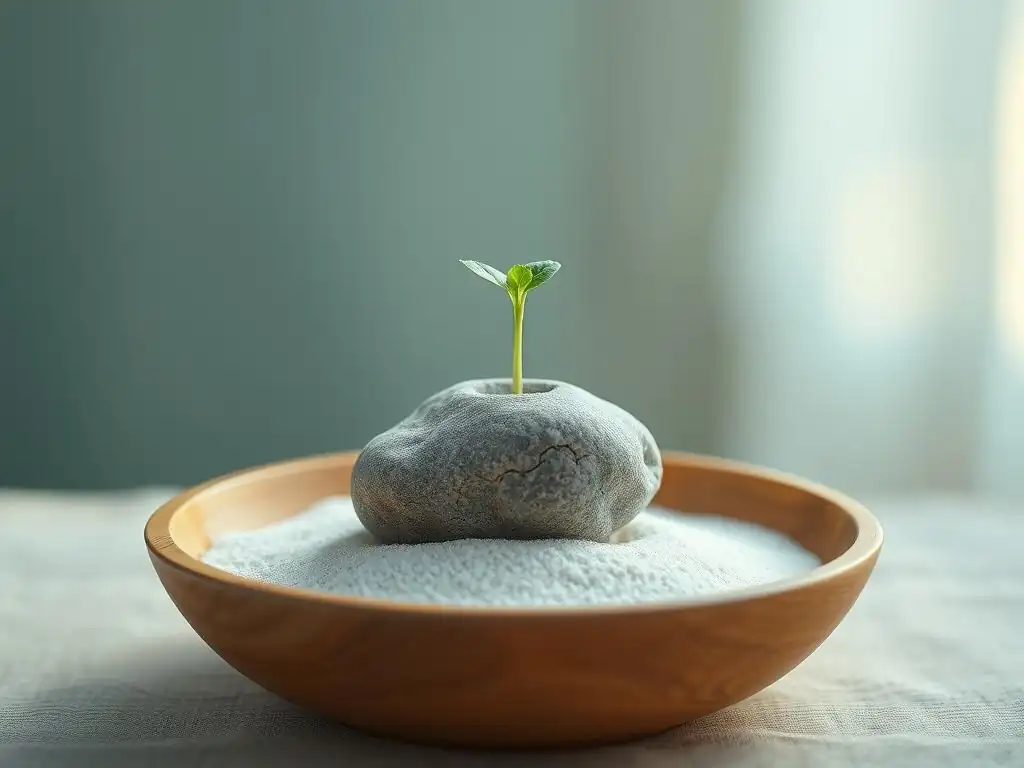
Mindfulness and Stress Reduction: Regulating the Nervous System
A primary benefit reported by practitioners and validated by extensive research is the significant reduction in stress levels. Mindfulness practice helps to activate the parasympathetic nervous system, often called the "rest and digest" system, which counteracts the "fight or flight" response triggered by chronic stress and anxiety. By regularly engaging in mindful techniques, individuals can learn to interrupt the automatic stress response cycle.
For example, research published in journals like Health Psychology has shown that participation in mindfulness-based stress reduction (MBSR) programs can lead to decreased levels of cortisol, a key stress hormone, in participants compared to control groups. Many participants in MBSR programs report a reduction in perceived stress levels, often citing improvements of 20-40% or more after just an 8-week course.
Moreover, mindfulness teaches individuals to become more aware of the early signs of stress and anxiety in their bodies and minds. This heightened awareness allows for a more proactive response rather than being blindsided by overwhelming feelings.
By observing the physical sensations associated with stress – perhaps tension in the shoulders, tightness in the chest, or a racing heart – without judgment, individuals can learn to respond with conscious choices, such as taking a few mindful breaths or gently stretching, rather than reacting with habitual patterns like worrying or avoiding. This capacity to self-regulate the nervous system is immensely valuable, particularly for those seeking mindfulness for beginners anxiety, providing practical tools to navigate moments of heightened stress.
Enhanced Focus and Concentration Through Mindfulness: Training Attention
Mindfulness is fundamentally a practice of training attention. Just as lifting weights strengthens muscles, regularly practicing mindfulness exercises strengthens the neural pathways associated with focus and concentration. In our modern world, filled with constant distractions from screens, notifications, and multitasking demands, the ability to sustain attention is increasingly challenging. Mindfulness meditation, even for short periods daily, provides a dedicated opportunity to practice focusing on a single anchor, like the breath, and gently redirecting the mind when it inevitably wanders.
Studies have demonstrated that mindfulness training can improve performance on tasks requiring sustained attention and working memory. For instance, some research has shown that individuals who have undergone mindfulness training exhibit better attentional control and are less susceptible to distractions compared to non-practitioners.
This enhanced focus isn't just useful for productivity; it also allows you to be more fully present in conversations, appreciate experiences more deeply, and notice the subtle nuances of your internal and external world. For someone practicing mindfulness for beginners anxiety, improved focus can help in grounding oneself in the present moment, making it harder for the mind to get caught in anxious rumination loops about hypothetical future events.
Mindfulness for Emotional Regulation: Cultivating Calmness
Mindfulness provides powerful tools for better understanding and managing emotions, including difficult ones like fear, sadness, anger, and anxiety. Instead of being overwhelmed by strong emotions or trying to suppress them, mindfulness teaches you to observe emotions as temporary states, much like thoughts. You learn to notice where you feel the emotion in your body, its intensity, and how it shifts and changes over time, without necessarily acting on it or being consumed by it. This practice creates a space between the emotion and your reaction, allowing for a more considered response.
Through mindful awareness, individuals can develop greater emotional resilience. For example, someone practicing mindfulness for beginners anxiety can learn to recognize the physical sensations of anxiety (e.g., butterflies in the stomach, rapid heartbeat) and the associated thoughts ("What if something bad happens?") and observe them with a degree of distance.
This non-reactive observation can prevent the anxiety from escalating into panic. Research supports this, indicating that mindfulness practice can decrease emotional reactivity and increase the ability to recover more quickly from emotionally challenging experiences. By cultivating this capacity to observe emotions without being hijacked by them, individuals can foster a greater sense of inner calmness and stability.
How to Practice Mindfulness: Simple Techniques for Beginners
Mindfulness Meditation: A Step-by-Step Guide
Mindfulness meditation is a formal practice where you dedicate a specific amount of time to sit quietly and focus your attention. Here’s a simple guide for beginners:
- Find a comfortable posture: Sit on a cushion on the floor or on a chair with your back straight but not rigid. Your hands can rest comfortably in your lap or on your thighs.
- Close your eyes gently or soften your gaze: If keeping your eyes open, gaze softly at a point on the floor a few feet in front of you.
- Choose an anchor: Your primary anchor is usually the breath. Notice the physical sensations of breathing – the rise and fall of your abdomen or chest, the air entering and leaving your nostrils.
- Focus on your anchor: Simply pay attention to the sensations of one breath, then the next.
- Notice when your mind wanders: And it will wander. This is not a failure; it's just the mind doing what it does. You might get lost in thoughts, feelings, or external sounds.
- Gently redirect your attention: As soon as you notice your mind has wandered, without judgment or self-criticism, gently guide your attention back to your anchor (the breath).
- Repeat: Continue this process for your chosen duration, perhaps starting with 5-10 minutes. Each time you notice your mind has wandered and you bring it back, you are strengthening your "attention muscle."
This simple practice, even done for just a few minutes daily, can be a powerful starting point for anyone interested in mindfulness for beginners anxiety, providing a direct way to practice present moment awareness.
Body Scan Meditation: Noticing Sensations From Head to Toe
The body scan meditation is another excellent formal practice for beginners, particularly useful for grounding and increasing awareness of physical sensations. It involves systematically bringing your attention to different parts of your body, noticing any sensations present without trying to change them.
Begin by lying down on your back in a comfortable position, or you can do this sitting. Close your eyes. Bring your awareness to your breath for a few moments to settle in. Then, gently bring your attention to your toes.
Notice any sensations there – tingling, warmth, coolness, pressure, absence of sensation. Simply observe. After a minute or two, gently move your attention up to your feet, then your ankles, calves, knees, and so on, slowly moving up through your entire body: thighs, hips, pelvis, lower back, abdomen, upper back, chest, fingers, hands, wrists, forearms, elbows, upper arms, shoulders, neck, throat, face, and finally the top of your head.
Linger on each area, just noticing. If your mind wanders, gently guide it back to the body part you intended to focus on. This practice helps to cultivate a deeper connection with your physical self and can be very effective for reducing physical tension often associated with stress and anxiety, offering a practical tool for mindfulness for beginners anxiety.
Mindful Breathing Exercises: Focusing on the Inhale and Exhale
Mindful breathing is perhaps the simplest and most accessible mindfulness technique, often used as a quick way to anchor yourself in the present moment, especially when feeling overwhelmed or anxious. It doesn't require a specific posture or setting, though finding a quiet spot helps initially.
The practice involves simply paying attention to the sensation of your breath. You don't need to change your breathing pattern – just breathe naturally. Notice the feeling of the air entering your nostrils or mouth on the inhale, the slight pause, the feeling of the air leaving on the exhale, and the pause before the next inhale. You might notice the rise and fall of your abdomen or chest.
When your mind gets distracted (which it will), gently bring your attention back to the breath. Even taking just three mindful breaths can help interrupt a stress response and bring you back to the present. This technique is foundational for mindfulness for beginners anxiety, providing an immediate way to ground oneself during moments of panic or worry.
Mindful Walking: Paying Attention to Each Step

Mindfulness doesn't have to be limited to sitting meditation. Mindful walking is a great way to practice awareness while engaging in physical activity. You can do this indoors or outdoors.
Begin by standing for a moment, feeling your feet on the ground. When you start walking, bring your attention to the sensations in your feet and legs. Notice the lifting of one foot, the movement through the air, the placing of the foot back down, the shifting of weight.
You can also pay attention to the rhythm of your steps, the swing of your arms, or the feeling of the air on your skin. If your mind wanders to your destination or other thoughts, gently bring your attention back to the physical sensations of walking. This practice helps integrate mindfulness into everyday activities and can be a refreshing way to step away from anxious thoughts, making it another valuable tool for mindfulness for beginners anxiety.
Mindful Eating: Engaging All Senses While Eating
Eating is something we do multiple times a day, making it a perfect opportunity to practice mindfulness. Mindful eating involves paying full attention to the experience of eating, engaging all your senses.
Before you begin, take a moment to look at your food. Notice its colors, shapes, and textures. Bring it towards your nose and smell its aroma. As you take a bite, notice the sensations in your hand or on your fork.
Place the food in your mouth and notice the initial taste, the texture, the temperature. Chew slowly, paying attention to how the texture and taste change as you chew. Notice the impulse to swallow and the sensation of the food going down.
Between bites, you might pause and notice your level of hunger or fullness. Mindful eating can enhance your enjoyment of food, improve digestion, and help you become more aware of your body's hunger and fullness cues. It's a simple yet profound way to bring present moment awareness to a daily activity, helping to slow down and focus, which can be beneficial for anyone, including those exploring mindfulness for beginners anxiety.
Integrating Mindfulness Into Daily Life: Practical Tips for Sustained Practice
Mindfulness at Work: Reducing Stress and Enhancing Productivity
Integrating mindfulness into the workday can significantly reduce stress and improve focus and productivity. Start small by incorporating mindful moments. For example, take a few mindful breaths before starting a difficult task or entering a meeting. Use transitions between tasks as opportunities for brief awareness – notice the feeling of your feet on the floor as you walk from one area to another, or the sensation of your hands on the keyboard.
During your work, try to bring mindful attention to the task at hand. If you're writing an email, focus on the words you're choosing. If you're analyzing data, pay attention to the details on the screen.
When your mind inevitably gets distracted by worries or to-do lists, gently guide it back to the present task. Taking short, mindful breaks throughout the day – maybe just 60 seconds to focus on your breath or look out a window – can help reset your attention and prevent burnout. Research suggests that even brief mindfulness interventions in the workplace can lead to reported reductions in stress and improvements in job satisfaction and performance, offering practical applications of mindfulness for beginners anxiety in a professional setting.
Mindfulness in Relationships: Fostering Connection and Empathy
Mindfulness can profoundly impact our interactions with others by helping us be more fully present and attentive. When you're talking with a loved one, friend, or colleague, practice mindful listening. This means giving your full attention to the other person, listening not just to their words but also noticing their tone of voice, body language, and the emotions they might be expressing. Try to suspend judgment and truly hear what they are communicating without immediately formulating your response.
Bringing mindfulness to relationships also involves being aware of your own reactions during interactions. Notice feelings like impatience, defensiveness, or anger as they arise, and choose how to respond rather than reacting habitually.
Practicing empathy – consciously trying to understand and share the feelings of another – is closely related to mindfulness and can be cultivated through practice. By being more present and less reactive, you create space for deeper connection and understanding, which can be especially helpful in navigating the social aspects that can sometimes trigger or be affected by anxiety, providing a valuable dimension of mindfulness for beginners anxiety in interpersonal contexts.
Cultivating Gratitude: A Mindfulness Practice for Enhanced Well-being
Gratitude is often considered a mindfulness practice in itself. It involves intentionally noticing and appreciating the good things in your life, no matter how small. This shifts your focus away from worries, complaints, or what's lacking, towards acknowledging abundance and positivity in the present moment.
A simple way to cultivate gratitude is to take a few moments each day to identify three things you are grateful for. These could be anything from the warmth of your coffee, a friendly smile, the beauty of nature, or simply the fact that you have shelter. You can write these down in a journal or simply reflect on them silently.
Studies have shown that regularly practicing gratitude can increase feelings of happiness, improve sleep quality, and even strengthen relationships. For beginners exploring mindfulness for anxiety, focusing on gratitude can help interrupt negative thought cycles and cultivate a more positive outlook, providing a counterpoint to worry.
Overcoming Challenges in Mindfulness Practice: Working with Difficult Emotions
It's important to acknowledge that practicing mindfulness isn't always easy, especially when working with difficult emotions like anxiety. Beginners may find their minds are very busy, or they might feel more anxious when they first sit down to meditate as they become aware of previously unnoticed internal states. This is a normal part of the process. The key is to approach these challenges with the same principles of mindfulness: patience, non-judgment, and acceptance.
When difficult emotions arise, instead of trying to push them away, try to turn towards them with curiosity. Where do you feel the anxiety in your body? What thoughts are associated with it? Can you simply allow the feeling to be there for a moment, without needing to fix it or make it go away?
Remember that emotions are temporary; they rise and fall. Practicing mindfulness helps build your capacity to tolerate discomfort and understand that you are not your emotions. By gently working with difficult emotions in practice, you build resilience that extends into daily life, making mindfulness for beginners anxiety a journey of learning to navigate inner challenges with greater skill and compassion.
Mindfulness Resources for Beginners: Apps, Books, and Online Communities
Recommended Mindfulness Apps for Guided Meditations
For many beginners, guided meditations are incredibly helpful as they provide instruction and structure. Numerous apps offer guided sessions ranging from a few minutes to longer practices. Popular options include Headspace, known for its playful approach and themed courses; Calm, which offers meditations, sleep stories, and music; and Insight Timer, which provides a vast library of free guided meditations from various teachers, as well as timers for unguided practice.
These apps often include specific programs tailored for stress reduction, sleep, focus, and managing anxiety, making them valuable tools for those specifically seeking mindfulness for beginners anxiety. They allow you to easily fit short practices into a busy schedule and provide gentle guidance as you learn the techniques. While not a substitute for potentially needing professional support for severe anxiety, these apps offer accessible entry points into consistent practice.
Essential Mindfulness Books for Beginners
Reading can provide a deeper understanding of the philosophy and practice of mindfulness. Several books are considered foundational texts for beginners. "Wherever You Go, There You Are" by Jon Kabat-Zinn is a classic, offering short, accessible chapters on various aspects of mindfulness. "Mindfulness in Plain English" by Henepola Gunaratana provides a straightforward, practical guide to meditation.
Other helpful books might focus specifically on applying mindfulness to challenges, such as "Mindfulness: An Eight-Week Plan for Finding Peace in a Frantic World" by Mark Williams and Danny Penman, which is based on Mindfulness-Based Cognitive Therapy (MBCT). These resources offer insights, practical exercises, and inspiration to support your journey, helping you to understand the context and benefits of mindfulness for beginners anxiety in greater detail.
Finding a Mindfulness Community: Connecting with Like-Minded Individuals
Practicing mindfulness doesn't have to be a solitary endeavor. Connecting with others who are also exploring mindfulness can provide support, motivation, and shared learning. Online communities exist on platforms like Reddit or specific mindfulness forums where beginners can ask questions, share experiences, and find encouragement.
Many meditation apps also have community features or online groups associated with them. Sharing your journey, including the challenges of practicing mindfulness for beginners anxiety, with others who understand can make the path feel less daunting and reinforce your commitment to regular practice.
Local Mindfulness Classes and Workshops
For a more structured learning experience and face-to-face interaction, look for local mindfulness classes or workshops. Many cities have meditation centers, community centers, or therapy practices that offer introductory mindfulness courses, such as MBSR (Mindfulness-Based Stress Reduction) or MBCT (Mindfulness-Based Cognitive Therapy).
These courses, often taught by certified instructors, provide in-depth guidance on various techniques, explore the principles of mindfulness, and offer a supportive group environment. Participating in a local class can provide valuable direct instruction, answer specific questions you might have about your practice or about using mindfulness for beginners anxiety, and help establish a consistent routine under expert guidance.
Frequently Asked Questions
What exactly is mindfulness and how does it relate to anxiety relief, especially for beginners?
Mindfulness is a mental state achieved by focusing on the present moment. For beginners, it's a powerful tool to manage anxiety by reducing overthinking and increasing self-awareness.
How can beginners incorporate mindfulness into their daily routine for anxiety management?
Start with short, guided meditations or simple breathing exercises lasting just a few minutes. Gradually increase the duration and frequency as you become more comfortable integrating mindfulness techniques into your daily life to reduce anxiety levels.
Are there specific types of mindfulness practices particularly effective for reducing anxiety in beginners?
Yes, practices like body scan meditations and mindful breathing are often recommended for beginners. These techniques help ground you in the present moment, reducing anxious thoughts and promoting relaxation.
What are some common challenges beginners face when practicing mindfulness for anxiety, and how can they overcome them?
Common challenges include a wandering mind and impatience. Overcome this by gently redirecting your attention back to the present moment without judgment and remembering that consistency is key for long-term anxiety relief.
Where can beginners find reliable resources and support to learn and practice mindfulness for anxiety management?
"Mind Care Guide" provides information, support, and resources specifically tailored for mental well-being. Look for guided meditations, articles, and potentially online communities focused on mindfulness for anxiety.
Final Reflection: Cultivating Inner Peace in a Frantic World
The pursuit of mindfulness, particularly for those grappling with anxiety, is not a fleeting trend; it's a vital tool for navigating the complexities of modern life. In a world saturated with constant stimulation and demands, the ability to find stillness and presence within oneself is more crucial than ever. This beginner's guide has explored the core principles of mindfulness, offering practical techniques to cultivate a more peaceful and centered existence. The journey towards mindfulness is a personal one, but the rewards – reduced anxiety, increased self-awareness, and a greater sense of well-being – are universally beneficial.
The impact of mindfulness on our collective cultural landscape is undeniable. We are increasingly recognizing the limitations of a solely productivity-driven society and seeking alternative paths to well-being. The growing popularity of mindfulness practices reflects a deeper societal shift towards prioritizing mental health and emotional intelligence. The mind is everything. What you think you become.
– Buddha. This ancient wisdom resonates deeply today, reminding us of the power we hold to shape our experiences through conscious awareness and intentional focus. The integration of mindfulness into various aspects of life, from education and healthcare to the workplace, underscores its transformative potential.
Now, consider your own life. Where can you incorporate even small moments of mindfulness into your daily routine? Perhaps it's a few deep breaths before a stressful meeting, a mindful walk in nature, or simply paying attention to the sensations of your body as you eat. Don't underestimate the power of these small acts; they are the building blocks of a more mindful and less anxious life. Embrace the journey, be patient with yourself, and discover the profound peace that awaits you within. Start today. Your well-being is worth it.
Unlock Your Inner Calm: Start Your Mindfulness Journey Today!
Thanks for taking the time to explore the world of mindfulness with us! We hope this guide gave you a clearer understanding of its power and potential. Now it's time to put that knowledge into practice.
Here are a few ways to get started:
- Begin a daily mindfulness practice: Even five minutes of focused breathing can make a significant difference. Try setting a timer and simply observing your breath, noticing any sensations without judgment. This is your primary step towards cultivating inner peace.
- Share your experience: Tell a friend or family member about your newfound mindfulness practice. Talking about it can deepen your understanding and provide support.
- Explore guided meditations: Many free resources are available online or through apps. Find a voice you connect with and experiment with different styles to discover what resonates best with you.
Ready to discover the transformative effects of mindfulness on your life? What small step will you take today to integrate this practice into your daily routine?