
Your First Body Scan: An Easy Guide to This Mindfulness Technique


Welcome to Mind Care Guide, a space dedicated to nurturing your mental well-being. Feeling overwhelmed? Curious about finding inner peace but unsure where to start? This week, we're diving deep into mindfulness with our easy body scan meditation guide, a simple yet powerful technique to reconnect with yourself and find calm amidst the chaos. Discover how this practice can help you reduce stress and improve your overall well-being - your journey to mindful living begins here.
Your First Body Scan: An Easy Guide to This Mindfulness Technique
- Introduction to Body Scan Meditation for Beginners
- Preparing for Your First Body Scan Meditation Session
- Step-by-Step Guide to Performing a Body Scan Meditation
- Tips for a Successful Body Scan Meditation Experience
- Common Challenges and How to Overcome Them in Body Scan Meditation
- Integrating Body Scan Meditation into Your Daily Life
- Advanced Body Scan Techniques and Variations
- Resources for Learning More About Body Scan Meditation
- Conclusion: Embracing the Power of Body Scan Meditation for Enhanced Well-being
-
Frequently Asked Questions
- What is a body scan meditation and what are its benefits?
- How long should a body scan meditation typically last?
- Do I need any special equipment or a specific environment to practice body scan meditation?
- What if I experience discomfort or distracting thoughts during the body scan?
- Can anyone practice body scan meditation, even if they have pre-existing health conditions?
- Final Reflection: Embracing Stillness in a Restless World
- Unlock Your Inner Calm: Start Your Body Scan Journey Today!
Introduction to Body Scan Meditation for Beginners
What is Body Scan Meditation and Why Practice It?
Body scan meditation is a foundational mindfulness practice that involves systematically bringing your attention to different parts of your body, noticing any sensations without judgment. It's not about relaxing or changing sensations, but simply observing what is present in the moment. This technique helps cultivate present moment awareness, grounding you in your physical experience and creating a bridge between your mind and body. For many, it serves as an accessible entry point into the world of mindfulness and meditation, offering an easy body scan meditation guide to begin their journey.
Practicing body scan meditation offers numerous benefits, from reducing stress to improving body awareness. It can help you become more attuned to physical cues your body sends, such as tension held in the shoulders or jaw, which are often unconscious responses to stress. By consciously observing these sensations, you gain insight into your physical and emotional states, enabling you to respond more skillfully rather than react automatically. This simple yet profound practice can be done almost anywhere, making it a versatile tool for enhancing daily well-being.
Understanding the Benefits of Body Scan Meditation for Mental Well-being
The practice of body scan meditation has been shown to have a significant positive impact on mental health. By training your attention to focus on physical sensations, you learn to gently observe thoughts and emotions as they arise without getting carried away by them.
This detachment can be particularly helpful for individuals dealing with anxiety or rumination. For instance, a study involving participants with generalized anxiety disorder found that regular mindfulness practice, including body scan, led to a noticeable reduction in worry and anxious thoughts, with some reporting a decrease in symptom severity by over 20% after just eight weeks.
Furthermore, body scan meditation can improve sleep quality and reduce symptoms of depression. By calming the nervous system and fostering a sense of presence, it can make it easier to fall asleep and stay asleep.
Many people struggling with insomnia report a significant improvement in sleep onset latency (the time it takes to fall asleep) after incorporating body scan into their nightly routine. Similarly, individuals experiencing low mood or depression often find that the increased self-awareness cultivated through body scanning helps them recognize negative thought patterns and develop a more compassionate relationship with themselves, contributing to a gradual lifting of depressive symptoms over time.
Preparing for Your First Body Scan Meditation Session
Creating a Comfortable and Relaxing Environment for Body Scan Practice
Finding a suitable space is key to making your first body scan meditation session an enjoyable experience. Look for a quiet spot where you are unlikely to be disturbed for the duration of your practice. This could be a bedroom, a quiet corner of your living room, or even an outdoor space if the weather permits. While complete silence isn't necessary, minimizing external noise helps your mind settle. Some people find it helpful to dim the lights or use a blanket for warmth and comfort.
Ensure your body is comfortable. You can lie down on a mat, rug, or bed, or sit upright in a chair with your feet flat on the floor. The goal is to find a position where you can remain relatively still without discomfort. Wearing loose, comfortable clothing will also help you feel more at ease and less restricted as you move your attention through your body. Taking a moment to adjust your position and ensure you feel supported before you begin can make a significant difference in your ability to relax into the practice.
Setting Realistic Expectations for Your Initial Body Scan Experience
Approaching your first body scan with realistic expectations is crucial for a positive experience. It's perfectly normal for your mind to wander during meditation, especially when you're just starting out with this easy body scan meditation guide. The practice isn't about achieving a state of complete emptiness or profound relaxation immediately, but rather about gently noticing where your attention goes and bringing it back to the body when it drifts. Don't judge yourself if you find it difficult to focus or if you don't feel immediate results.
Think of your first body scan as an exploration, a chance to get acquainted with your inner landscape. Some people might experience strong physical sensations, while others might feel very little. Both are perfectly fine. The intention is simply to observe whatever arises with curiosity and acceptance. Setting a small goal, such as simply completing the session or noticing sensations in just one or two body parts, can make the practice feel more manageable and less daunting than aiming for a perfect, focused meditation.
Duration and Frequency: How Long and How Often to Practice Body Scan Meditation?
For beginners, starting with shorter durations for your body scan meditation is often recommended. Many guided practices designed as an easy body scan meditation guide are 10-20 minutes long, which is a good timeframe to begin with. You can even start with just 5-10 minutes if that feels more accessible. The key is consistency rather than length. As you become more comfortable, you can gradually increase the duration if you wish.
Aiming to practice body scan meditation regularly, perhaps several times a week, is more beneficial than infrequent long sessions. Consistency helps build the habit and allows you to experience the cumulative effects of mindfulness. Some people find practicing daily, even for a short period, to be most effective. Experiment to see what works best for your schedule and energy levels, remembering that even a short, mindful check-in with your body is valuable.
Step-by-Step Guide to Performing a Body Scan Meditation
Step 1: Finding a Comfortable Position for Body Scan
Begin by finding a comfortable position. You can lie down on your back on a mat, bed, or floor, allowing your arms to rest by your sides with palms facing up or down. Alternatively, you can sit upright in a chair, ensuring your back is straight but relaxed, with your feet flat on the floor and hands resting comfortably in your lap or on your thighs.
Close your eyes gently if you feel comfortable doing so, or soften your gaze downwards. Take a moment to make any small adjustments needed to feel completely supported and at ease in your chosen posture.
Once you are settled, bring your attention to your body as a whole. Notice the points of contact where your body meets the surface supporting it – perhaps your back against the floor or chair, your feet on the ground, or your hands resting on your legs. Feel the weight of your body and allow yourself to sink a little deeper into this support. This initial step helps ground you in the present moment and prepares you to begin the systematic scan.
Step 2: Bringing Awareness to Your Breath Before Starting the Body Scan
Before you begin the body scan itself, take a few moments to connect with your breath. You don't need to change your breathing in any way, just simply notice it. Feel the natural rhythm of your inhale and exhale. Where do you feel the breath most prominently? Perhaps in the rise and fall of your abdomen, the expansion and contraction of your chest, or the sensation of air moving in and out of your nostrils.
Allow your breath to be an anchor, a way to bring your awareness into the present moment. If your mind is busy with thoughts, gently acknowledge them and then guide your attention back to the simple sensation of breathing. Spend 3-5 minutes just observing the breath, allowing yourself to settle and become more present before moving on to the systematic scan of your body. This step helps quiet the mind and prepares you for the detailed exploration that follows.
Step 3: Systematically Scanning Your Body: A Guided Approach
Now, you will begin to systematically move your attention through different parts of your body, pausing to notice any sensations present in each area. Imagine your awareness as a gentle spotlight, shining on one region at a time. There's no need to search for sensations or try to make anything happen; just observe whatever is there with an attitude of curiosity and acceptance.
Start by focusing your attention on your toes and feet. Spend a minute or two bringing your awareness to this area, noticing any feelings like warmth, coolness, tingling, pressure, or absence of sensation. Then, gently move your attention up through your ankles, lower legs, knees, and thighs, pausing in each region.
Continue this upward journey, bringing your attention to your pelvis, lower back, abdomen, and chest, then moving to your fingers, hands, wrists, forearms, elbows, and upper arms. Finally, scan your shoulders, neck, face (jaw, mouth, nose, eyes, forehead), and the top of your head. This systematic approach ensures you cover your entire body, giving each part equal attention during this easy body scan meditation guide.
Focusing on Your Toes and Feet in Body Scan
Begin by bringing your full attention down to your toes. Notice the sensations in each toe individually, or just the collective sensation in all of them. Are they touching each other? Do you feel any pressure or tingling? Then, expand your awareness to include the soles of your feet, the tops of your feet, and your heels. Pay attention to any contact with the floor or surface you are on.
Spend a few moments just being present with the sensations in your feet. You might notice warmth or coolness, pressure, or a sense of weight. If your mind wanders, which it likely will, simply notice that it has wandered and gently guide your attention back to your feet. There's no right or wrong way to feel; the practice is simply about observing what is present without judgment.
Moving Up to Your Legs and Pelvis During Body Scan
From your feet, gently guide your awareness up into your ankles. Notice any sensations there, then slowly move your attention up through your lower legs – your calves and shins. Observe the sensations in your knees, front and back, and then continue upwards through your thighs, noticing the muscles and bones. Feel the contact of your legs with the surface supporting them.
Next, bring your awareness to your pelvis and hips. This area often holds tension. Notice any sensations of pressure, tightness, or release. Feel the weight of your pelvis grounding you. As you move through each part of your legs and pelvis, maintain that attitude of gentle curiosity, simply observing whatever is there without trying to change it.
Noticing Sensations in Your Torso and Back in Body Scan
Now, shift your attention to your torso. Begin with your lower back, an area where many people hold tension. Notice any sensations here – perhaps tightness, warmth, or discomfort. Gently move your awareness up your spine to your upper back and shoulder blades.
Then, bring your attention to your abdomen. Notice the gentle movement of your belly with the breath. Are there any sensations of digestion, warmth, or emptiness? Expand your awareness to include your chest. Feel the subtle movements of your rib cage as you breathe. Notice your heart area. Again, simply observe whatever you find with kindness.
Bringing Awareness to Your Arms, Hands, and Fingers in Body Scan
From your torso, extend your awareness out to your arms. Start with your fingers and hands. Notice the sensations in your palms, the back of your hands, and each finger individually. Are they warm, cool, tingling? Feel the contact of your hands if they are resting on your lap or by your sides.
Gently move your attention up through your wrists, forearms, elbows, and upper arms. Notice the muscles and bones, any sensations of pressure, warmth, or coolness. Feel the weight of your arms. Continue to maintain a non-judgmental awareness as you explore these parts of your body during your body scan practice.
Exploring Sensations in Your Neck, Face, and Head in Body Scan
Finally, bring your attention to your neck and shoulders. This is another area where tension is commonly held. Notice any tightness or stiffness, or perhaps a sense of release. Gently move your awareness up into your face. Notice the sensations in your jaw – is it clenched or relaxed? Your mouth, tongue, lips, nose, cheeks, eyes, and forehead. Soften the muscles in your face if you notice tension, but without trying to force relaxation.
Conclude the systematic scan by bringing your awareness to the top of your head and scalp. Notice any sensations there. Then, allow your awareness to expand to encompass your entire body as a whole, feeling the presence of your body resting and breathing.
Step 4: Observing Thoughts and Emotions During the Body Scan
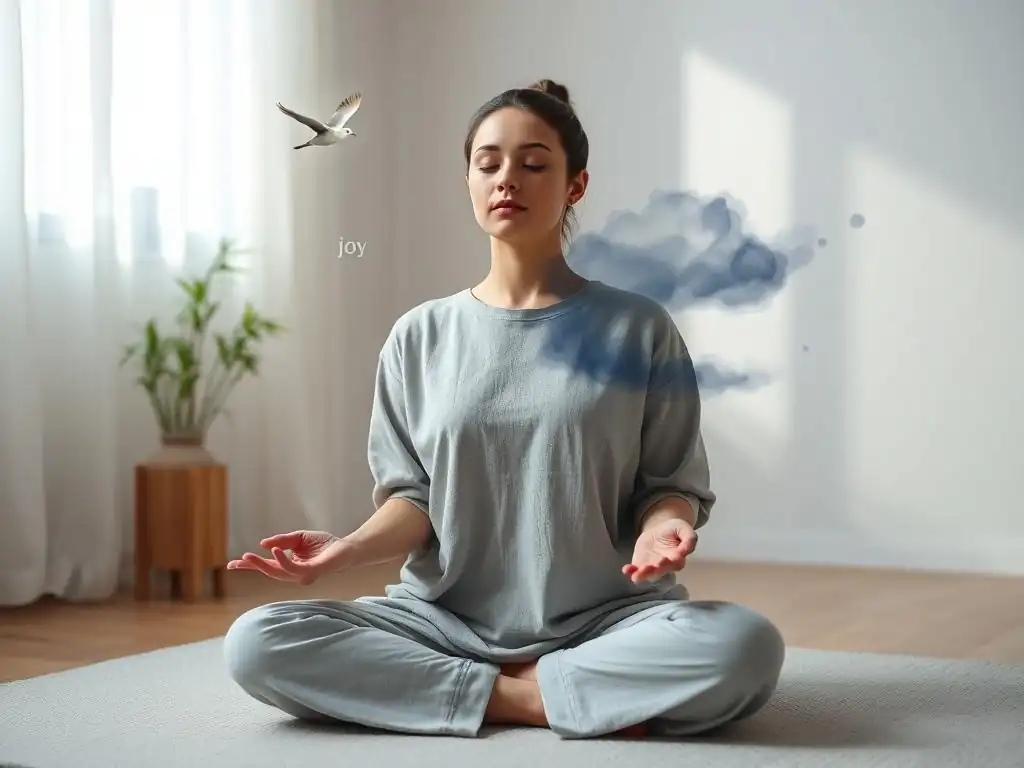
As you move your attention through your body, you will inevitably notice thoughts and emotions arising. This is a natural part of the process and not a sign that you are doing it wrong. When you become aware that your mind has wandered into thinking, planning, remembering, or feeling a particular emotion, simply acknowledge it gently.
There's no need to engage with the thought or emotion, analyze it, or judge yourself for having it. Just notice, "Ah, thinking," or "Noticing sadness," and then, without self-criticism, gently redirect your attention back to the specific part of the body you were scanning or to the body as a whole. Each time you notice your mind has wandered and bring it back, you are strengthening your capacity for awareness and focus – the core skills developed through this easy body scan meditation guide.
Step 5: Concluding Your Body Scan Meditation Session
When you are ready to conclude your body scan meditation, take a moment to notice your body as a whole once more. Feel the presence of your body resting. Notice how you feel physically and mentally after the practice. There's no expectation that you should feel a certain way, just notice what is present in this moment.
Gently begin to bring some movement back into your body. Wiggle your fingers and toes. Perhaps take a gentle stretch. When you feel ready, slowly open your eyes. Take a few moments to orient yourself to your surroundings before getting up. Acknowledging the end of the practice mindfully helps transition back into your daily activities with greater presence.
Tips for a Successful Body Scan Meditation Experience
Staying Focused: Dealing with Distractions During Body Scan
It is completely normal for your mind to get distracted during body scan meditation. Thoughts, sounds, physical discomfort, or emotions can all pull your attention away. The key is not to eliminate distractions, but to learn how to work with them. When you notice your mind has wandered, gently acknowledge where it went without judgment. For example, you might mentally note, "Thinking about dinner," or "Hearing a car outside."
Once you've noticed the distraction, gently but firmly guide your attention back to the part of the body you were scanning. This act of noticing and returning is the essence of the practice. Think of it as exercising a muscle; the more you practice bringing your attention back, the stronger your ability to focus becomes over time. Be patient and kind to yourself throughout this process.
Embracing Imperfection: It's Okay to Lose Focus During Body Scan
Perfection is not the goal of body scan meditation. There will be sessions where your mind feels incredibly busy, or you might even fall asleep. These experiences are normal and part of the learning process. Don't view them as failures. If you lose focus, simply notice that your mind has drifted and gently bring your attention back to the body. This is the practice.
Approaching your body scan with self-compassion is vital. Instead of getting frustrated, acknowledge the difficulty with kindness. Remind yourself that you are showing up and making an effort, and that is enough. Each time you practice, regardless of how "focused" you felt, you are cultivating awareness and building resilience. This easy body scan meditation guide is about exploration, not perfection.
Adjusting the Body Scan Technique to Suit Your Needs
The body scan meditation technique is flexible and can be adapted to suit your individual needs and circumstances. If you find it difficult to lie still for a long period, practicing while sitting in a chair is a perfectly valid alternative. If a full body scan feels too long or challenging, you can choose to focus on just one or two regions of the body, such as the feet and hands, or the torso, for a shorter period.
You can also adjust the pace at which you move your attention through the body. Some people prefer to linger longer in each area, while others prefer a quicker scan. Experiment to find what feels most comfortable and beneficial for you. The core principle remains the same: bringing non-judgmental awareness to physical sensations. Don't hesitate to modify this easy body scan meditation guide to make it your own practice.
Common Challenges and How to Overcome Them in Body Scan Meditation
Difficulty Focusing During Body Scan: Practical Solutions
Difficulty focusing is perhaps the most common challenge in body scan meditation, especially for beginners using an easy body scan meditation guide. Our minds are naturally prone to wandering. One practical solution is to shorten the duration of your practice. Starting with just 5-10 minutes can feel much more manageable than aiming for 30 minutes. As your capacity for focus grows, you can gradually increase the time.
Another helpful strategy is to use the breath as an anchor whenever you notice your mind has wandered. Before returning to the specific body part, take a few conscious breaths, feeling the inhale and exhale, to help ground you in the present moment. Additionally, practicing regularly, even for short periods, helps strengthen the "muscle" of attention. Be patient with yourself; consistent effort is more important than achieving perfect focus in any single session.
Experiencing Uncomfortable Sensations During Body Scan: What to Do
Sometimes, during a body scan, you might encounter uncomfortable physical sensations, such as pain, itching, or restlessness. Your initial reaction might be to tense up, distract yourself, or try to make the sensation go away. In mindfulness practice, the invitation is to approach these sensations with curiosity rather than aversion.
If you encounter discomfort, first acknowledge it. Notice where it is located and what qualities it has (e.g., sharp, dull, throbbing, tingling). Breathe with the sensation, allowing yourself to be present with it without judgment. You can try breathing into the area, imagining your breath flowing to and around the sensation. If the discomfort is too intense, you have the option to gently shift your position or move your attention to a different part of the body, or even open your eyes and end the practice if needed. The goal is to explore sensations, not to endure unnecessary pain.
Falling Asleep During Body Scan: Prevention Strategies
Falling asleep during body scan meditation, especially when lying down, is a common experience, particularly if you are tired or practicing at bedtime. While it's okay if it happens occasionally, consistently falling asleep means you're not cultivating awareness. To prevent this, consider practicing in a seated position rather than lying down. Sitting upright in a chair tends to keep you more alert.
Another strategy is to adjust the time of day you practice. If you're consistently drowsy in the evening, try practicing in the morning or afternoon when you feel more awake. Engaging more actively with the sensations as you scan can also help maintain alertness. If you find yourself drifting off, gently bring your attention back to the physical sensations, perhaps focusing on areas known for more vibrant sensations like the hands or feet to re-engage your awareness.
Integrating Body Scan Meditation into Your Daily Life

Incorporating Body Scan into Your Morning or Evening Routine
Integrating body scan meditation into your daily routine can significantly enhance its benefits. Many people find it helpful to practice first thing in the morning, even before getting out of bed. This sets a mindful tone for the day, grounding you in your body and the present moment before the demands of the day begin. A 10-15 minute morning body scan can help you check in with how you're feeling physically and emotionally and approach your day with greater awareness.
Alternatively, practicing body scan in the evening, perhaps before going to sleep, can be a powerful way to release the tensions of the day and prepare your body and mind for rest. A body scan at night can help you become aware of any residual stress held in the body and gently let it go, promoting relaxation and potentially improving sleep quality. Experiment with both morning and evening practice to see which fits best into your lifestyle and provides the most benefit.
Using Body Scan for Stress Relief and Relaxation Throughout the Day
Body scan meditation isn't just for dedicated practice sessions; it can also be used informally throughout your day as a tool for stress relief and relaxation. When you notice yourself feeling tense, overwhelmed, or stressed, take a moment to pause and do a mini body scan. This doesn't need to be a full head-to-toe scan; it could be as simple as taking three conscious breaths and then quickly bringing your attention to your shoulders, jaw, or hands – areas where you typically hold tension.
This brief check-in can interrupt the stress response and bring you back into the present moment. For example, before a challenging meeting, you might take 60 seconds to notice the sensations in your feet on the floor to feel more grounded. After a stressful interaction, a quick scan of your chest and abdomen can help you acknowledge and release held tension. Using this easy body scan meditation guide technique in short bursts throughout the day helps build resilience and manage stress in real-time.
Combining Body Scan with Other Mindfulness Practices
Body scan meditation can be effectively combined with other mindfulness practices to deepen your overall experience. For instance, you might begin your meditation session with a short period of mindful breathing to settle your mind, followed by the systematic body scan.
After completing the body scan, you could transition into a loving-kindness meditation, extending feelings of warmth and compassion first to yourself and then to others. Some people also find it beneficial to journal after a body scan, writing down any insights or sensations they noticed. Combining practices can create a more comprehensive approach to cultivating mindfulness and emotional well-being, building upon the foundation provided by an easy body scan meditation guide.
Advanced Body Scan Techniques and Variations
Exploring Different Body Scan Meditation Scripts
Once you are comfortable with a basic easy body scan meditation guide, you can explore different scripts and approaches to the body scan. Some guided meditations might focus more on releasing tension in each area, while others might emphasize simply noticing sensation without any agenda. There are scripts specifically designed for different purposes, such as promoting sleep or managing chronic pain.
Listening to various teachers and styles can also expose you to different pacing and language, helping you find what resonates most deeply with you. Some scripts might encourage visualizing breath flowing to different body parts, while others keep the focus purely on physical sensation. Exploring variations keeps the practice fresh and allows you to tailor it to your specific needs or interests at different times.
Body Scan for Pain Management: A Specialized Approach
Body scan meditation has shown promise as a complementary tool for managing chronic pain. While it doesn't eliminate pain, it can change your relationship with it. A specialized body scan for pain management often involves approaching the painful area with gentle curiosity and acceptance, rather than resistance. Instead of trying to push the pain away, you are invited to notice its qualities – its intensity, location, temperature, and how it might change from moment to moment.
By practicing non-judgmental awareness of pain, individuals can often reduce the emotional distress associated with it (such as fear, frustration, or anger), which can in turn reduce the overall suffering experienced. Studies, like those conducted at mindfulness-based pain clinics, have shown that participants practicing body scan for pain management report reduced pain intensity and improved ability to cope with pain compared to baseline measures, sometimes reporting a 20-30% reduction in perceived pain severity.
Deepening Your Practice: Moving Beyond the Basic Body Scan
As you gain experience with the basic easy body scan meditation guide, you might find your practice naturally deepens. This could involve noticing more subtle sensations in the body or finding it easier to remain present with discomfort. You might also begin to notice the connection between physical sensations and emotional states more clearly.
To deepen your practice intentionally, you could try extending the duration of your body scan, perhaps to 45 or 60 minutes. You could also practice without a guided recording, relying solely on your internal guidance. Another way to deepen is to bring a specific intention to your scan, such as cultivating self-compassion or exploring areas of tension with particular kindness. Consistent, dedicated practice over time naturally leads to greater depth of awareness and insight.
Resources for Learning More About Body Scan Meditation
Recommended Books and Articles on Body Scan Meditation
For those seeking to learn more about the theory and practice of body scan meditation, numerous valuable resources are available. Books by pioneers in the field, such as Jon Kabat-Zinn's "Full Catastrophe Living," which introduced the Mindfulness-Based Stress Reduction (MBSR) program including the body scan, offer comprehensive explanations and guidance. Other authors like Mark Williams and Danny Penman in "Mindfulness: An Eight-Week Plan for Finding Peace in a Frantic World" also provide accessible introductions and scripts.
Online articles from reputable mindfulness centers and mental health websites can also provide helpful tips, variations, and scientific background on the benefits of body scan. Looking for resources that specifically present an easy body scan meditation guide for beginners can help ensure the information is accessible and practical for getting started. Exploring different perspectives can enrich your understanding and practice.
Guided Body Scan Meditation Audio and Video Resources
One of the most popular ways to begin and continue practicing body scan meditation is by using guided audio or video recordings. These resources provide verbal instructions, guiding you through the process of bringing awareness to each part of the body. Many free and paid options are available online, from mindfulness apps to websites and streaming platforms.
Look for guides led by experienced teachers whose voice and pacing you find calming and easy to follow. Some recordings might be shorter (5-10 minutes), perfect for quick check-ins, while others might be longer (20-45 minutes) for more in-depth practice sessions. Using a guided recording, especially when starting with an easy body scan meditation guide, can help keep you on track and make the practice feel less daunting.
Finding a Qualified Mindfulness Teacher for Body Scan Guidance
While self-guided practice using recordings and written resources is a great way to start, working with a qualified mindfulness teacher can provide invaluable support and deepen your understanding. A teacher can offer personalized guidance, help you navigate challenges that arise during practice, and provide a deeper context for the principles of mindfulness underlying the body scan.
Many teachers offer individual sessions, group classes, or structured programs like MBSR or MBCT (Mindfulness-Based Cognitive Therapy) which include body scan as a core component. Participating in a live or online class allows you to ask questions, share experiences (if comfortable), and learn from others. Finding a teacher certified by a recognized mindfulness training program can ensure they have the necessary expertise to guide you effectively.
Conclusion: Embracing the Power of Body Scan Meditation for Enhanced Well-being
Body scan meditation, as presented in this easy body scan meditation guide, is a simple yet powerful practice that can significantly contribute to your mental and physical well-being. By systematically bringing non-judgmental awareness to the sensations in your body, you cultivate presence, reduce stress, improve self-awareness, and develop a healthier relationship with physical and emotional experiences.
Starting your body scan journey requires patience and self-compassion. It's about noticing, returning, and accepting whatever arises, rather than achieving a specific state. With consistent practice, even for short periods, you can begin to unlock the profound benefits of this mindfulness technique, finding greater calm, clarity, and connection within yourself. Embrace the opportunity to explore your inner landscape and discover the grounding presence of your own body.
Frequently Asked Questions
What is a body scan meditation and what are its benefits?
A body scan meditation is a mindfulness technique where you systematically bring awareness to different parts of your body. It helps to reduce stress and anxiety by improving body awareness and promoting relaxation.
How long should a body scan meditation typically last?
The duration of a body scan can vary, but a good starting point is around 10-20 minutes. As you become more experienced, you can gradually increase the duration to suit your needs.
Do I need any special equipment or a specific environment to practice body scan meditation?
No, you don't need any special equipment. Find a quiet and comfortable place where you can lie down or sit without distractions. A relaxed posture is key.
What if I experience discomfort or distracting thoughts during the body scan?
It's normal to experience discomfort or distracting thoughts. Acknowledge them without judgment and gently redirect your attention back to the sensations in your body. Focus on your breath if needed.
Can anyone practice body scan meditation, even if they have pre-existing health conditions?
Generally, yes, but it's always best to consult with a healthcare professional or mental health expert if you have pre-existing health conditions or concerns. They can advise on whether it's suitable for your individual needs.
Final Reflection: Embracing Stillness in a Restless World
The simple act of noticing your body, breath by breath, is a revolutionary act in our increasingly frenetic world. In a society obsessed with productivity and constant stimulation, the ability to find stillness and connect with the present moment is not a luxury, but a necessity for our mental and physical well-being. The body scan meditation, as explored in this guide, offers a readily accessible pathway to this crucial inner peace.
The profound impact of even a few minutes of mindful body awareness is something I've personally witnessed, both in my own life and through the experiences of others. It's a gentle yet powerful tool for managing stress, improving self-awareness, and fostering a deeper connection with oneself. The body keeps the score,
as Bessel van der Kolk so eloquently puts it, reminding us that our physical sensations hold the key to understanding our emotional landscape. By learning to listen to our bodies, we unlock a wealth of information and begin to cultivate a more compassionate relationship with ourselves.
Now, I invite you to take what you've learned here and integrate it into your daily life. Try a body scan before bed, during a stressful moment at work, or simply whenever you feel the need to ground yourself. Remember, there's no right or wrong way to practice; the most important thing is to begin. Let the gentle awareness of your body become your anchor in the storm, your pathway to a calmer, more centered you. Embrace the stillness, and discover the transformative power within.
Unlock Your Inner Calm: Start Your Body Scan Journey Today!
Thanks for taking the time to explore the world of body scans with us! We hope you've gained a clearer understanding of this powerful mindfulness technique and its benefits. Now it's time to put your newfound knowledge into practice.
Here are a few ways to continue your journey:
- Try a guided body scan meditation today. Even 5 minutes can make a significant difference in your awareness and relaxation. Find a quiet space, settle in, and let the journey begin!
- Share your experience! Let us know in the comments what resonated with you – did you notice any surprising sensations? Helping others discover this practice is a powerful way to deepen your own understanding.
- Explore different body scan variations. Search for "guided body scan meditation" online – you'll find many amazing resources to expand your practice and discover what works best for you.
Ready to experience the transformative power of mindful body awareness? What’s your first step to integrating this practice into your daily routine?