
Your First Mindful Walk: A StepbyStep Tutorial for Beginners.

Welcome to Mind Care Guide.
Feeling overwhelmed or simply seeking a moment of peace? You're not alone. We understand the everyday challenges to your mental well-being, and we're here to guide you. Let's explore a simple yet powerful practice: mindful walking. Ever wondered how a simple stroll could dramatically reduce stress and improve focus? Our guide, " Your First Mindful Walk: A Step-by-Step Tutorial for Beginners," will show you exactly how to get started. Discover the transformative power of each step and unlock a calmer, more centered you. Read on to begin your journey to inner peace, one mindful step at a time...
Mindful Walking: A Beginner's Guide to Presence and Well-being
Mindful walking offers a simple yet profound way to integrate mindfulness into your daily life. It's a practice that combines the physical act of walking with the mental discipline of bringing your awareness to the present moment. This guide is specifically designed as a step-by-step tutorial for anyone new to this calming and centering activity, making mindful walking for beginners accessible and straightforward.
- Understanding Mindful Walking
- Preparing for a Mindful Walk
- Practicing Mindful Walking: A Step-by-Step Guide
- Addressing Challenges
- Enhancing Your Practice
- Conclusion: Cultivating Presence Through Mindful Walking
- Frequently Asked Questions
- Final Reflection: Finding Stillness in the Everyday
- Unveil the Calm: Start Your Mindful Walking Journey Today!
Understanding Mindful Walking
Mindful walking is more than just going for a stroll; it's an active form of meditation where movement becomes the anchor for your attention. Instead of letting your mind wander through your to-do list or past events, you consciously engage with the sensations of walking and your surroundings. This practice allows you to step out of autopilot and into a state of heightened awareness.
What is Mindful Walking?
Mindful walking is a meditative practice where you intentionally focus on the experience of walking itself. This means paying attention to the physical sensations in your body, the rhythm of your steps, and the environment around you, all without judgment. It's about being fully present with each step, rather than using the walk as a means to an end or simply getting from one place to another.
The core principle is to bring gentle, sustained attention to the sensory input of walking. This might involve noticing the feeling of your feet touching the ground, the swing of your arms, the temperature of the air on your skin, or the sounds around you. For beginners, this focused attention might initially feel unusual, but with practice, it becomes a natural way to engage with the world and your inner experience.
Benefits of Mindful Walking
Engaging in mindful walking for beginners can unlock a range of benefits for both mental and physical well-being. This practice helps cultivate a deeper connection with yourself and the world around you, offering a refreshing pause in a busy day. The integration of movement and awareness provides unique advantages compared to seated meditation alone.
Studies and anecdotal evidence consistently highlight the positive impacts of mindful movement. Participants often report feeling more centered, less reactive to stressors, and more appreciative of simple sensory experiences. It's a practical tool that can be easily incorporated into various lifestyles, requiring no special equipment or location, making it ideal for those just starting their mindfulness journey.
Stress Reduction and Emotional Regulation
One of the most significant benefits of mindful walking is its proven ability to reduce stress and improve emotional regulation. By focusing on the present moment, you interrupt the cycle of worry and rumination that often fuels anxiety. The physical act of walking also releases endorphins, which are natural mood boosters, further contributing to a sense of calm and well-being.
Regular practice can lead to a measurable decrease in stress hormones like cortisol. While the exact percentage varies among individuals and studies, some research suggests mindfulness practices can reduce cortisol levels by 10-15% or more over time. This reduction in physiological stress response helps you navigate challenging emotions with greater ease and resilience, fostering a more stable emotional state throughout your day.
Improved Focus and Cognitive Function
Mindful walking helps train your attention span, which is a key component of cognitive function. By repeatedly bringing your focus back to the present moment – whether it's your breath, your steps, or the sounds around you – you strengthen your ability to concentrate and resist distractions. This enhanced focus isn't confined to your walk; it can translate into improved productivity and clarity in other areas of your life.
Research on mindfulness in general indicates improvements in areas like working memory and executive function. While specific studies on mindful walking's impact on cognitive function might show varied results, the underlying mechanism of attention training is well-established. Many beginners practicing mindful walking report feeling sharper, more alert, and better able to manage tasks requiring sustained mental effort.
Enhanced Body Awareness and Connection to Nature
Paying close attention to the physical sensations of walking naturally increases your body awareness. You become more attuned to how your body feels, its posture, and its movements. This can help identify areas of tension you might be holding onto without realizing it. When practiced outdoors, mindful walking also deepens your connection to the natural world, fostering a sense of peace and belonging.
Observing the subtle details of your surroundings – the texture of a leaf, the pattern of sunlight, the scent of damp earth after rain – engages your senses in a way that is often overlooked in daily life. This sensory engagement, combined with awareness of your body moving through space, creates a rich, grounding experience. For beginners, this renewed sensory connection can be one of the most surprising and enjoyable aspects of mindful walking.
Preparing for a Mindful Walk
Getting ready for your first mindful walk doesn't require much, but a little preparation can make the experience more comfortable and effective. Thinking about where you'll walk and setting a simple intention can help set the stage for a positive practice. Remember, the goal is ease and presence, not perfection.
Taking a few moments before you start to prepare yourself mentally and physically can significantly enhance the quality of your mindful walking experience. It's about creating a supportive environment for your practice, both internally and externally. This preparation phase is just as important as the walking itself for mindful walking for beginners.
Choosing a Suitable Location
The location you choose for your mindful walk can influence your ability to focus and relax. While you can practice mindful walking anywhere, including indoors, selecting a place that feels safe and relatively free from major distractions is helpful, especially when you are starting out.
Consider places like a local park, a quiet residential street, a garden, or even a less-trafficked trail. The key is to find somewhere where you feel comfortable moving at a pace that allows you to pay attention without worrying about obstacles or interruptions.
Selecting a Quiet and Safe Environment
For your initial mindful walking experiences, prioritize a location that minimizes external noise and potential hazards. A quiet environment reduces the likelihood of being pulled out of your present-moment awareness by sudden sounds or busy activity. Safety is also paramount; choose well-lit paths if walking in the evening, and be aware of your surroundings, even as you focus inward.
A park bench or a quiet corner can also serve as a starting or ending point for a few moments of stillness before or after your walk. The less you have to worry about traffic, crowds, or uneven terrain, the easier it will be to direct your attention to the nuances of the walking experience itself. Aim for a place where you can walk comfortably for at least 10-20 minutes without feeling rushed or anxious.
Setting Your Intention
Setting an intention before you begin your mindful walk provides a gentle anchor for your practice. It helps clarify why you are undertaking this activity and what you hope to cultivate during your walk. Your intention doesn't need to be grand or complex; a simple phrase or feeling is sufficient.
Examples of intentions could be: "To be present with each step," "To notice the sensations in my body," "To walk with kindness towards myself," or "To simply walk." Holding this intention lightly in your mind as you begin can help guide your awareness throughout the walk.
Cultivating Presence and Non-Judgment
A core intention for mindful walking for beginners is often simply to cultivate presence. This means making a conscious effort to bring your awareness back to the current moment whenever your mind wanders. Another vital intention is non-judgment. As you notice thoughts, feelings, or sensations arise, the practice is to observe them without labeling them as good or bad, right or wrong.
Approaching your walk with an intention of non-judgment allows you to accept your experience as it is, fostering self-compassion. If your mind is busy or you feel distracted, simply notice that without criticizing yourself. Gently acknowledge the distraction and guide your attention back to your chosen anchor, perhaps your breath or the feeling of your feet. This gentle redirection is the practice itself.
What to Wear
The goal is comfort. Your clothing and footwear should allow you to move freely and feel at ease throughout your mindful walk, without causing distraction or discomfort.
Comfortable Clothing and Footwear
Choose clothing that is loose or stretchy enough that it doesn't restrict your movement or feel tight. Layers can be helpful depending on the weather. The most important consideration is your footwear. Select shoes that are comfortable, provide adequate support, and are suitable for the terrain you'll be walking on.
Avoid anything that pinches, rubs, or requires constant adjustment. The less you have to think about what you're wearing or how your feet feel due to uncomfortable shoes, the easier it will be to keep your attention focused on the mindful aspects of the walk.
Practicing Mindful Walking: A Step-by-Step Guide

Ready to take your first mindful steps? This step-by-step guide breaks down the practice into simple actions, making mindful walking for beginners easy to follow. Remember to approach each step with curiosity and a gentle attitude towards yourself.
Step 1: Focusing on Your Breath
Begin by standing still for a moment. Close your eyes if you feel comfortable, or soften your gaze. Take a few deeper breaths, then allow your breath to return to its natural rhythm. Simply notice the sensation of the air entering and leaving your body. You might feel it in your nostrils, throat, or chest.
As you begin to walk slowly, maintain a gentle awareness of your breath. Notice how your breathing changes slightly with the movement. There's no need to control your breath, just observe it as you move. This initial focus helps ground you before engaging with other sensations.
Conscious Breathing Techniques
While you don't need complex techniques, briefly bringing conscious awareness to your breath is the starting point. You might take three deliberate breaths before you start moving – perhaps inhaling deeply through your nose, holding for a moment, and exhaling slowly through your mouth. This signals to your body and mind that you are transitioning into a more present state.
Once walking, simply notice the inhale and the exhale. You can mentally note "in" on the inhale and "out" on the exhale. If your mind wanders, which it will, gently guide your attention back to the feeling of your breath flowing in and out. This conscious return to the breath is a fundamental practice in mindfulness.
Step 2: Grounding Through Your Feet
As you begin to walk, shift your attention to your feet and legs. Feel the sensation of your feet inside your shoes. Notice the contact your feet make with the ground. Pay attention to the lifting of one foot, its movement through the air, and the placement of your heel, sole, and toes as it meets the ground again.
Focus on the sequence of sensations in your feet and legs with each step. This grounding sensation provides a strong anchor for your awareness during the walk. It connects you directly to the physical experience of moving through space and can be particularly helpful if your mind feels scattered.
Feeling Each Step and Connection to the Earth
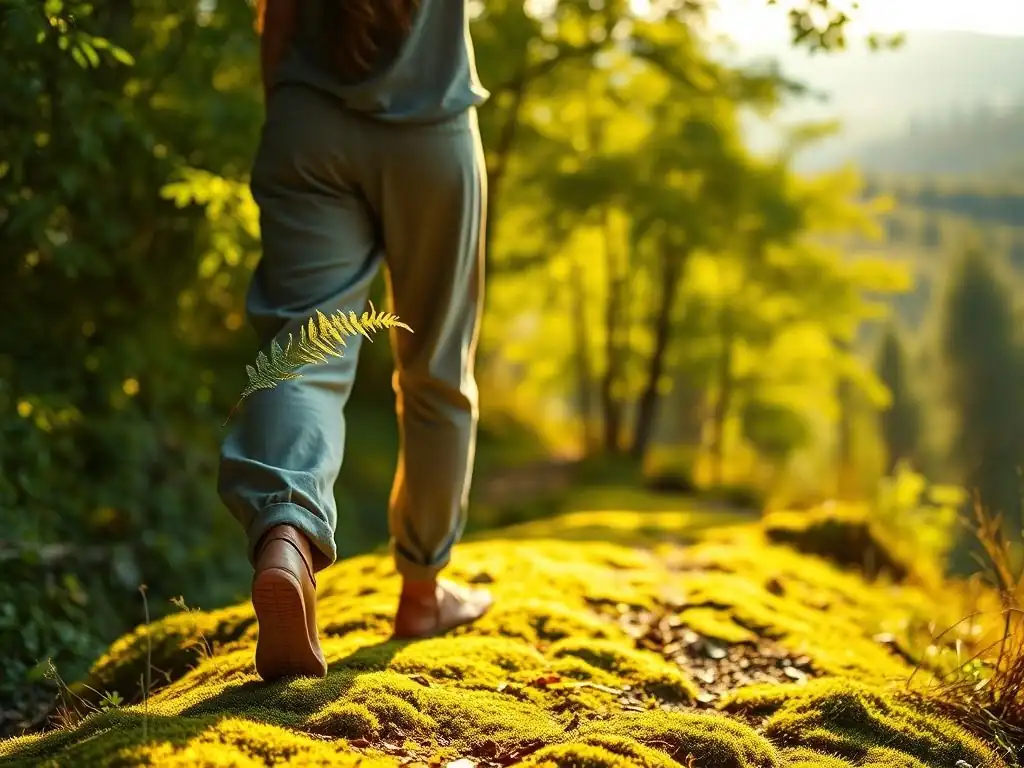
Become intimately aware of the subtle movements and pressures in your feet. Feel the pressure shift from heel to toe as you step forward. Notice the texture of the ground through your soles – is it hard pavement, soft grass, or crunchy gravel? This conscious awareness of each footfall grounds you firmly in the present moment.
Imagine a connection between your feet and the earth with every step. This can enhance the feeling of stability and presence. For beginners, focusing solely on the feet for a few minutes at a time can be a very effective way to anchor the practice and prevent the mind from drifting too far into thoughts about the past or future.
Step 3: Noticing Body Movement
Expand your awareness beyond your feet to include the rest of your body as you walk. Notice the swing of your arms, the movement in your hips and legs, and the position of your shoulders and head. How does your posture feel? Is there any tension you're holding onto?
Observe your gait – the rhythm and pattern of your steps. Are you walking quickly or slowly? Is your stride long or short? Simply notice these aspects of your movement without trying to change them, unless you feel discomfort. This comprehensive body awareness helps integrate the physical experience with your mental attention.
Observing Posture and Gait
Take a moment to check in with your posture. Is your back relatively straight? Are your shoulders relaxed or hunched? Noticing your posture can provide clues about your physical and mental state. A relaxed posture often correlates with a more relaxed mind.
Similarly, observe your gait. Some people walk quickly when stressed, others might shuffle. Simply noticing your natural pace and rhythm without judgment is the practice. You might experiment with slowing down your pace slightly to make it easier to focus on the sensations of each step, which is often recommended for mindful walking for beginners.
Step 4: Engaging Your Senses
Once you feel somewhat grounded in your body and breath, gently open your awareness to your other senses. What do you see around you? Notice colors, shapes, and textures without getting lost in identifying objects or thinking about them. What sounds do you hear – birds, traffic, wind?
What do you smell? The scent of flowers, damp earth, or city air? What do you feel on your skin – the temperature of the air, a breeze, the sun's warmth? Engaging your senses connects you more fully with the environment you are moving through, bringing the outside world into your present-moment awareness.
Paying Attention to Sensory Input
Actively invite your senses to participate in the walk. For example, pause briefly and intentionally listen to the soundscape around you for 30 seconds. What is the furthest sound you can hear? What is the closest? Do the same for sight, smell, and touch (like the feel of the air).
This deliberate sensory engagement enriches the mindful walking experience. It pulls you away from internal dialogue and into the vibrant reality of the present moment. For beginners, starting with just one sense, like sound or sight, can be less overwhelming than trying to attend to everything at once.
Step 5: Redirecting Your Attention
Inevitably, your mind will wander. You'll start thinking about what's for dinner, a conversation from earlier, or a task you need to complete. This is perfectly normal; it's what minds do. The practice of mindfulness isn't about stopping thoughts, but about noticing when your mind has wandered and gently bringing your attention back.
As soon as you realize your mind has drifted, acknowledge it without self-criticism. Simply say to yourself, "Thinking," or "Mind wandered." Then, gently guide your attention back to your chosen anchor – your breath, your feet, or the sensory input of the walk. This act of returning is the core exercise of building your mindfulness muscle.
Gently Returning to the Present Moment
Think of your attention like a puppy on a leash. It will naturally want to run off and explore. Your job isn't to punish the puppy or tie it down rigidly, but to gently coax it back to your side. Each time you notice your mind has wandered and you gently bring it back to the present moment (your steps, your breath, etc. ), you are strengthening your capacity for presence.
This process of noticing and returning is the heart of mindful walking for beginners. It teaches patience, self-compassion, and the ability to choose where you place your attention. Don't get discouraged if your mind wanders frequently; that's part of the learning process. Celebrate each time you notice and return.
Addressing Challenges
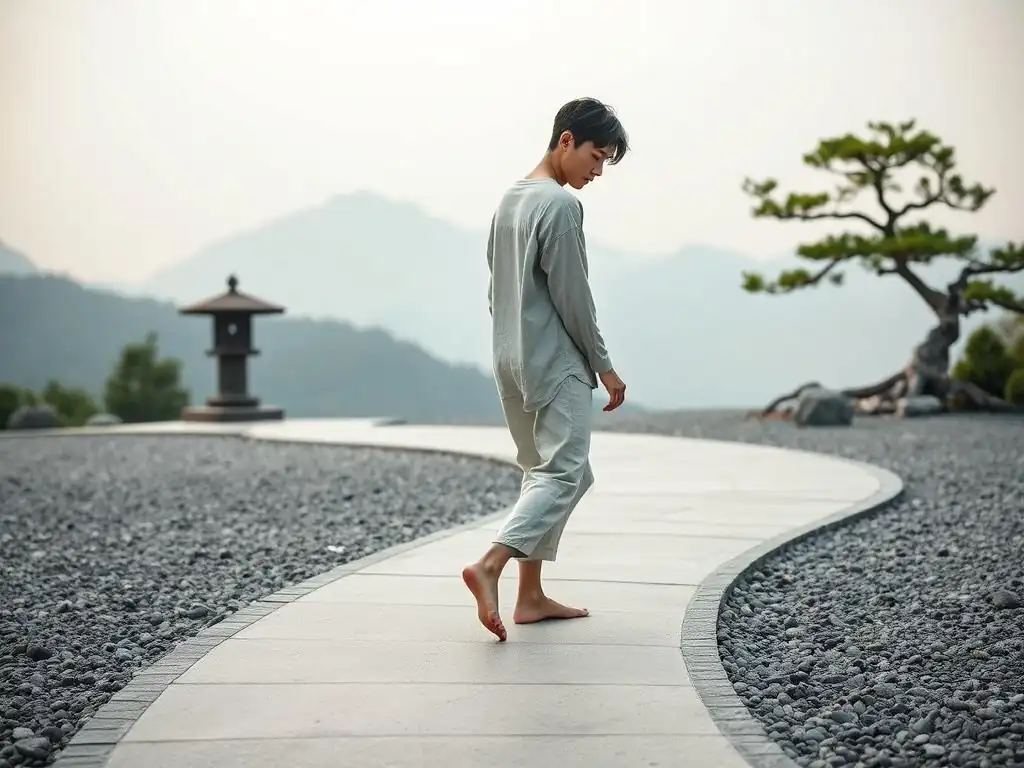
As with any new practice, you might encounter challenges when you first start mindful walking. It's important to approach these with patience and understanding, seeing them as opportunities to deepen your practice rather than obstacles.
Managing Distractions
Distractions are a natural part of life and of mindful walking. They can come from the external environment (a loud car, someone talking) or from your internal world (a persistent thought, a strong emotion). When a distraction arises, the key is how you relate to it.
Instead of fighting against the distraction or getting frustrated, try simply noticing it. Acknowledge its presence – "Ah, there's a loud sound," or "Okay, I'm thinking about work." Then, gently guide your attention back to your chosen anchor for the walk. The goal is not to eliminate distractions, but to develop the ability to notice them and choose where to place your attention.
Handling Physical Sensations
During your walk, you might notice physical sensations like fatigue, discomfort, or even pain. Just as with thoughts and external sounds, try to approach these sensations with curiosity and non-judgment. Where exactly do you feel the sensation? What is its quality – is it dull, sharp, throbbing?
If the sensation is minor, you can try breathing into it or simply observing it as another changing experience. If it's significant discomfort or pain, listen to your body. Adjust your pace, change your posture, or shorten your walk if necessary. Mindful walking is about being present with your experience, which includes recognizing and responding wisely to your body's signals.
Working with Thoughts and Emotions
Your mind will generate thoughts and emotions throughout your walk. You might feel happy, sad, anxious, or calm. Thoughts about the past or future will arise. The practice is to notice these mental events without getting carried away by them or judging them.
Imagine thoughts and emotions as clouds passing through the sky of your mind. You can see them, acknowledge them, but you don't have to jump on them and ride them away. Simply observe their presence and then gently return your attention to the physical experience of walking. Over time, you may find you have a little more space between yourself and your thoughts and feelings.
Enhancing Your Practice
Once you feel comfortable with the basic steps of mindful walking for beginners, there are ways to deepen and enrich your practice. These suggestions can help keep the experience fresh and integrate mindfulness more fully into your life.
Varying Pace and Terrain
Experiment with walking at different paces. You might try a very slow, deliberate walk where you can intensely focus on the micro-sensations of each step. Or, you could walk at a more moderate pace, balancing awareness of your steps with engagement of your senses and surroundings.
Changing the terrain can also offer new sensory experiences. Walking on grass feels different than pavement or dirt. Trying a gentle incline or decline can bring awareness to different muscle groups. Varying these elements can help prevent the practice from feeling monotonous and offer new opportunities for present-moment focus.
Integrating into Daily Life
Mindful walking doesn't have to be a dedicated hour-long session. You can integrate moments of mindful walking into your everyday routine. Try walking mindfully for just five minutes on your commute, walking consciously from your car into the grocery store, or even walking from one room to another in your home.
These short, intentional bursts of mindful walking can help you punctuate your day with moments of presence. They can be especially useful during transitions, helping you shift from one activity to another with greater awareness and less stress. Look for opportunities to bring attention to your walking throughout the day.
Combining with Other Practices
Mindful walking can complement other mindfulness or well-being practices. You might combine it with seated meditation, journaling, or yoga. For example, starting your day with a short seated meditation followed by a mindful walk can create a powerful routine for setting a calm and focused tone.
Alternatively, you could use a mindful walk as a way to process thoughts or feelings that arose during another practice. The gentle rhythm of walking can sometimes make it easier to observe thoughts and emotions without getting stuck in them. Experiment to see how mindful walking fits best alongside your other habits.
Conclusion: Cultivating Presence Through Mindful Walking
Mindful walking is a simple yet powerful practice that offers a pathway to greater presence, reduced stress, and enhanced well-being. By intentionally bringing your awareness to the physical act of walking and the sensory experience of your surroundings, you create space away from the constant stream of thoughts and worries that often occupy the mind.
Starting with mindful walking for beginners involves patience and practice. There will be times when your mind wanders, and moments when you feel distracted or uncomfortable. These are not failures, but opportunities to practice gently noticing and returning to the present moment, strengthening your mindfulness muscle with each step.
Continuing Your Journey
As you continue to practice mindful walking, you may find that the benefits extend beyond the walk itself, influencing how you approach other activities and interactions in your daily life. The ability to stay present, manage distractions, and relate to your internal experience with non-judgment are skills that are transferable to countless situations.
Commit to practicing regularly, even if it's just for short periods. Consistency is more important than duration. Explore different locations, times of day, and incorporate the practice into your routine in ways that feel sustainable. Mindful walking is a journey, one step at a time, inviting you to walk through life with greater awareness, peace, and connection.
Frequently Asked Questions
What exactly is mindful walking?
Mindful walking is a meditative practice that involves paying close attention to the sensation of walking and your surroundings without judgment. It's about being present in the moment with each step.
How is mindful walking different from regular walking?
Regular walking is often done on autopilot, thinking about other things. Mindful walking, however, requires intentional focus on the physical sensations of walking and the immediate environment.
What are the benefits of practicing mindful walking?
Mindful walking can reduce stress and anxiety, improve focus and concentration, and enhance your overall sense of well-being. It also promotes a deeper connection with your body and the present moment.
How long should a beginner's mindful walk be?
Start with short walks, perhaps 10-15 minutes, and gradually increase the duration as you become more comfortable. The key is to prioritize consistent practice over long sessions in the beginning.
What if my mind wanders during a mindful walk?
It's perfectly normal for your mind to wander! Simply acknowledge the thought without judgment and gently redirect your attention back to the sensations of walking. This is part of the practice.
Final Reflection: Finding Stillness in the Everyday
The simple act of walking, when approached mindfully, becomes a powerful tool for navigating the complexities of modern life. In a world saturated with constant stimulation and relentless demands, the practice of mindful walking offers a much-needed antidote—a pathway to presence, peace, and a deeper connection with ourselves and the world around us. This quiet revolution, accessible to everyone, regardless of experience or physical ability, is transforming how we engage with our daily lives.
The impact of mindful walking extends far beyond the physical act of putting one foot in front of the other. It's a practice that cultivates self-awareness, reduces stress, and fosters a sense of groundedness. It's a gentle reminder to slow down, to truly see the world around us, and to appreciate the beauty in the mundane. As Thich Nhat Hanh so eloquently stated, Walk as if you are kissing the Earth with your feet.
This simple yet profound image encapsulates the essence of mindful walking: a conscious engagement with the present moment, expressed through the most fundamental of human actions.
Now, I invite you to take what you've learned and integrate it into your own life. Don't wait for a perfect moment or a designated time; begin today. Choose a path, even a short one, and embark on your own mindful walk. Notice the sensations in your feet, the rhythm of your breath, the sights and sounds around you. Let this practice become a daily ritual, a sanctuary where you can reconnect with yourself and find stillness amidst the chaos. The journey inward begins with a single, mindful step.
Unveil the Calm: Start Your Mindful Walking Journey Today!
Thank you for taking the time to explore the world of mindful walking with us! We hope this guide has equipped you with the tools to cultivate inner peace and connect with your surroundings in a new way. Now it's time to put your newfound knowledge into practice.
- Take your first mindful walk today! Even 10 minutes can make a difference. Choose a quiet space, focus on your breath and senses, and let go of distractions.
- Share your experience! Tell us about your walk in the comments below – what did you notice? What surprised you?
- Consider incorporating mindful walking into your daily routine. Even a short walk on your lunch break can offer a moment of tranquility.
What small step will you take today to bring more mindfulness into your life?