
Practical Body Scan Tips for Managing Stress in Daily Life


Welcome to Mind Care Guide, your sanctuary for cultivating inner peace and navigating the complexities of mental well-being. Feeling overwhelmed? We understand. Discover how a simple practice, the body scan, can become your powerful ally in managing stress. Curious about reclaiming control over your daily life? Let's explore together...
Practical Body Scan Tips for Managing Stress in Daily Life
- Introduction to Body Scan Meditation for Stress Reduction
-
Body Scan Stress Relief: A Step-by-Step Guide
- Preparing for Your Body Scan Meditation Session
- Step 1: Finding a Comfortable Position for Body Awareness
- Step 2: Focusing on Your Breath to Anchor Your Attention
- Step 3: Systematically Scanning Your Body for Sensations
- Step 4: Deepening Your Awareness and Relaxation
- Step 5: Gently Returning to the Present Moment
- Advanced Body Scan Techniques for Enhanced Stress Management
- Integrating Body Scan into Your Daily Routine for Lasting Stress Relief
- Benefits of Regular Body Scan Practice for Stress and Well-being
- Troubleshooting Common Challenges in Body Scan Meditation
- Body Scan Meditation vs. Other Stress Management Techniques
- Conclusion: Embracing Body Scan for a Stress-Free Life
-
Frequently Asked Questions
- What exactly is a body scan and how does it relate to stress relief?
- How often should I practice body scans for effective stress management?
- What are some common challenges people face when starting body scan practices, and how can they be overcome?
- Can body scans be used to address specific types of stress, like anxiety or physical tension?
- Are there any contraindications or situations where body scans might not be recommended for stress relief?
- Final Reflection: Unlocking Inner Calm Through the Body Scan
- Unlock Your Inner Calm: Start Practicing Body Scans Today!
Introduction to Body Scan Meditation for Stress Reduction
Understanding the Connection Between Body and Stress
Our bodies are intricate barometers of our internal state, particularly when it comes to stress. When faced with perceived threats, the body initiates the "fight or flight" response, releasing stress hormones like cortisol and adrenaline. This physiological cascade leads to tangible physical sensations: muscles tense up, heart rate increases, breathing becomes shallow, and digestion slows.
Over time, chronic stress can manifest as persistent physical symptoms such as headaches, back pain, digestive issues, and fatigue. For example, someone under deadline pressure might unconsciously clench their jaw or hunch their shoulders for hours, leading to discomfort and pain by the end of the day. Recognizing these bodily signals is the first step in managing the stress response.
This deep connection means that learning to tune into the body can provide crucial insights into our stress levels before they become overwhelming. Many people carry tension without even realizing it until they experience pain or stiffness. Acknowledging where stress lives in the body – perhaps a tight knot in the stomach before a difficult conversation, or a racing heart before a presentation – allows us to move from an abstract concept of "stress" to a concrete, physical experience.
This awareness is foundational because it empowers us to intervene; if you know your shoulders are tight, you can consciously relax them. Without this body-mind connection awareness, stress often operates on autopilot, leaving us feeling overwhelmed and disconnected from our own physical experience.
The Role of Body Scan in Promoting Relaxation and Mindfulness
The body scan meditation is a powerful technique within the mindfulness tradition specifically designed to cultivate this awareness of bodily sensations. It involves systematically bringing attention to different areas of the body, noticing physical feelings without judgment.
This practice helps to interrupt the cycle of stress by shifting focus away from anxious thoughts about the past or future and grounding attention firmly in the present moment, anchored by the physical sensations in the body. Regular practice of body scan stress relief can help train the nervous system to move out of a hyper-aroused state and into a more relaxed one, lowering physiological markers of stress.
By intentionally directing awareness through the body, the body scan encourages a passive observation of whatever is present – be it tension, warmth, tingling, or numbness. This non-judgmental approach is key; it teaches us to accept our physical experience as it is, rather than fighting against discomfort or clinging to pleasant sensations.
This acceptance reduces secondary stress that often arises from resisting or worrying about physical symptoms. Over time, this practice not only helps in immediate stress reduction but also builds resilience, enabling individuals to recognize the early signs of stress and respond mindfully before tension escalates, making body scan stress relief a valuable tool for daily well-being.
Body Scan Stress Relief: A Step-by-Step Guide
Preparing for Your Body Scan Meditation Session
Before starting a body scan for stress relief, dedicating a few moments to preparation can significantly enhance the experience. Find a quiet space where you are unlikely to be interrupted for the duration of the practice, whether it's 10 minutes or 30. This could be a bedroom, a quiet corner of an office, or even a parked car.
The goal is to minimize external distractions so you can fully focus inward. Consider turning off notifications on your phone and letting others in your household know you need some uninterrupted time. Setting this intention helps create a mental container for the practice and signals to your mind that it's time to shift gears from doing to being.
Equally important is preparing your physical environment and position. While a body scan can be done sitting or standing, lying down is often recommended, especially for beginners, as it can promote deeper relaxation. Choose a comfortable surface like a yoga mat, a blanket on the floor, or a bed.
Ensure you are warm enough and that your clothing is loose and comfortable, not constricting anywhere. Some people find using a small pillow under their head or knees adds comfort. The aim is to create a sense of ease so that physical discomfort doesn't become a major distraction during your exploration of body scan stress relief.
Step 1: Finding a Comfortable Position for Body Awareness
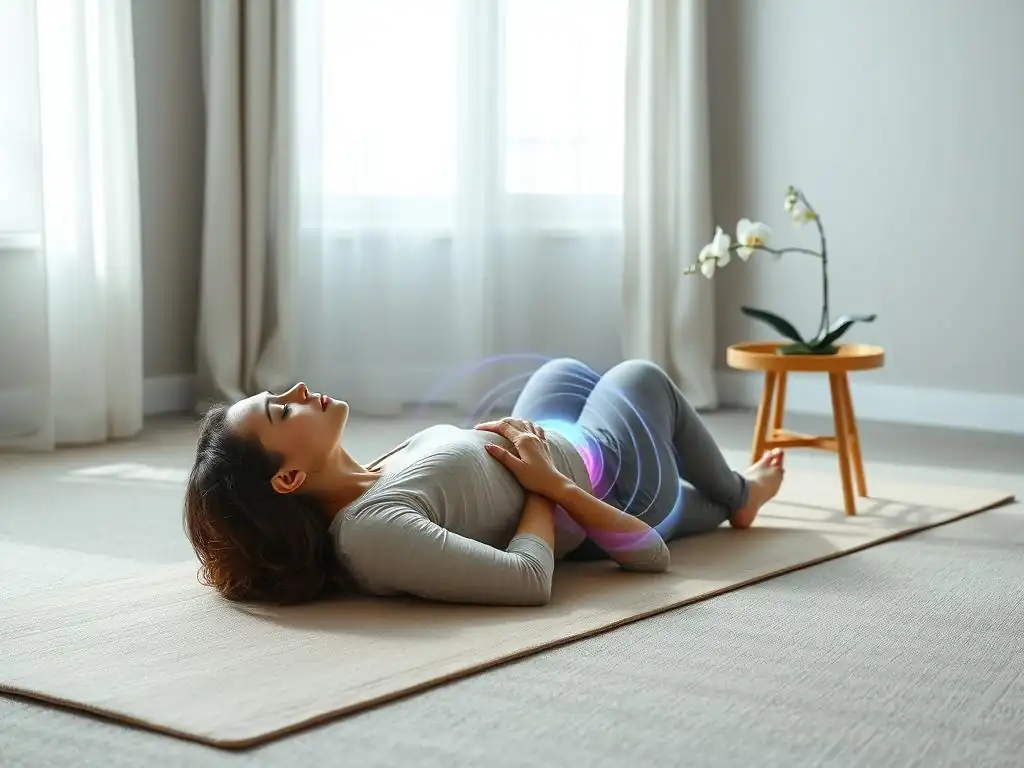
Choosing the right position is fundamental to a successful body scan, as it allows you to relax deeply and focus on internal sensations without being overly distracted by discomfort. Lying on your back is the most common starting point. You can lie flat with your legs extended and arms resting comfortably by your sides, palms up or down. If lying flat causes lower back strain, placing a pillow or rolled blanket under your knees can help maintain a gentle curve in the spine and reduce tension. The floor or a firm mattress works well, providing stable support.
Alternatively, if lying down isn't possible or comfortable, you can practice the body scan while sitting. Choose a chair that supports your back, or sit upright on a cushion on the floor. Ensure your feet are flat on the floor (if in a chair) or your legs are comfortably crossed.
Your hands can rest in your lap or on your thighs. The key is to maintain an upright but relaxed posture that you can hold comfortably for the duration of the practice. Avoid positions that require significant muscular effort to maintain, as this can become a source of distraction from the body scan stress relief process.
Step 2: Focusing on Your Breath to Anchor Your Attention
Before beginning the systematic scan, take a few moments to connect with your breath. This initial focus serves as an anchor, gently bringing your awareness into the present moment and away from the mental chatter that often accompanies stress. Notice the physical sensations of breathing: the rise and fall of your chest or abdomen, the air entering and leaving your nostrils or mouth, the subtle pauses between breaths. There is no need to try and change your breath in any way; simply observe it as it is, a natural and continuous process happening within you.
Allow your breath to deepen and lengthen naturally if it wishes, or simply observe its current rhythm. This initial focus helps to calm the nervous system and prepare your mind for the more detailed exploration of the body. If your mind wanders (which it inevitably will), simply notice the thought without judgment and gently guide your attention back to the sensation of breathing. This gentle redirection is a core skill cultivated in mindfulness practices like body scan stress relief, strengthening your ability to focus and be present.
Step 3: Systematically Scanning Your Body for Sensations
Once you feel somewhat settled by focusing on your breath, you can begin the systematic body scan. The typical approach is to start at one end of the body and slowly move your attention through each region, noticing any sensations present. There is no "right" way to feel; sensations can range from warmth, coolness, tingling, itching, throbbing, pressure, or even the absence of sensation.
Imagine your attention as a spotlight, slowly illuminating each area. Begin with the toes of one foot, noticing any sensations there. Then, consciously move your attention up through the sole of the foot, the ankle, the lower leg, the knee, and so on.
Continue this process, moving through the thighs, pelvis, lower back, abdomen, upper back, chest, shoulders, arms, hands, neck, and finally the head, including the face and scalp. Spend a few moments in each area, simply observing what is there.
If you encounter an area with intense sensation or discomfort, you might choose to linger there for a few extra breaths, directing a sense of gentle awareness towards it. This systematic approach ensures that you cover the entire body, bringing mindful awareness to areas that might typically be ignored or overlooked in the rush of daily life, contributing significantly to body scan stress relief.
Exploring Sensations: From Head to Toe
As you move your attention through each part of the body, actively explore the landscape of sensations present in that region. For example, when focusing on your hands, notice the feeling of the air on your skin, the pressure where they rest, any warmth or coolness, pulsing or stillness. Are the fingers relaxed or slightly clenched? Are there any subtle tingles? Allow yourself to be curious about these physical experiences. This exploration is not about identifying problems or diagnosing issues, but simply about noticing what is happening in your physical form right now.
This detailed exploration from head to toe helps to ground you firmly in your physical reality, pulling your awareness away from the often stressful narratives happening in the mind. By dedicating time to consciously feel your feet, your legs, your torso, and your head, you are actively training your attention to reside in the present moment. This deliberate act of feeling the physical body is a powerful counterpoint to the mental rumination that often fuels stress and anxiety, making the head-to-toe journey central to effective body scan stress relief.
Acknowledging and Accepting Sensations Without Judgment
A crucial element of the body scan practice is cultivating an attitude of acceptance towards whatever sensations arise. As you scan, you may encounter areas of tension, pain, or discomfort. The practice asks you to simply acknowledge these sensations are present, without immediately trying to fix them, judge them as "bad," or wish they were different. Similarly, if you notice pleasant sensations or areas of relaxation, simply acknowledge them without trying to hold onto them. The goal is to observe with a sense of gentle curiosity, like a scientist observing a phenomenon.
This non-judgmental awareness is perhaps the most challenging, yet most rewarding, aspect of body scan stress relief. It teaches us that we can experience difficult sensations without being overwhelmed by them. By practicing acceptance on the mat or cushion, we build our capacity to approach difficult emotions and thoughts off the mat with the same attitude. This reduces the secondary suffering that comes from resisting unpleasant experiences, fostering a sense of peace and resilience even in the face of physical or emotional discomfort.
Step 4: Deepening Your Awareness and Relaxation
After systematically scanning through the entire body, take a few moments to rest in the awareness of the body as a whole. Notice the overall feeling of your physical presence. Are there areas that feel more relaxed than when you started? Are there still areas of tension? Simply observe the current state of your body as a whole entity. You might visualize your breath flowing into areas that still feel tight or uncomfortable, not with the intention of fixing them, but simply bringing a sense of gentle awareness and ease to those regions.
This phase allows the effects of the scan to integrate. It's a time to simply be with your body in its current state, allowing any relaxation that has occurred to deepen. Some practitioners find it helpful to imagine the body becoming heavy and sinking into the surface supporting it, further promoting a sense of release. This period of resting in whole-body awareness solidifies the benefits of the systematic scan and prepares you for the transition back to external activity, enhancing the overall impact of body scan stress relief.
Step 5: Gently Returning to the Present Moment
As the body scan practice draws to a close, begin to gently widen your awareness back to your surroundings. Start by noticing the feeling of the surface beneath you. Become aware of the sounds in the room or outside. Wiggle your fingers and toes, bringing gentle movement back into your extremities. Take a deeper breath or two. There's no rush to jump up; allow yourself a slow and gradual transition back to full alertness.
When you feel ready, you can gently open your eyes if they were closed. Take a moment to stretch if it feels good. Notice how your body feels now compared to before the practice. Carry this sense of embodied awareness with you as you transition into the rest of your day. This gentle return helps bridge the gap between the focused internal awareness of the body scan and the demands of external life, allowing the benefits of body scan stress relief to extend beyond the practice session itself.
Advanced Body Scan Techniques for Enhanced Stress Management

Trauma-Sensitive Body Scan Modifications
For individuals who have experienced trauma, standard body scan practices can sometimes be overwhelming or triggering, as focusing intensely on bodily sensations may bring up difficult memories or emotions. Trauma-sensitive body scan approaches prioritize safety, choice, and gradual engagement. Instead of a rigid head-to-toe scan, practitioners might be invited to focus only on areas that feel neutral or safe, such as the hands or feet. The language used is often more invitational, suggesting "if it feels okay" or "if you are comfortable," rather than instructing participants to feel specific sensations.
These modifications also emphasize the importance of having resources available, such as keeping eyes slightly open, having a comforting object nearby, or knowing they can pause or stop the practice at any time. The focus shifts from deep exploration of all sensations to building a sense of felt safety and control within one's own body. A trauma-informed approach to body scan stress relief understands that the body holds trauma memories, and the practice must be introduced and guided with immense care, patience, and respect for the individual's capacity and history.
Body Scan for Chronic Pain Management
Body scan meditation is increasingly recognized as a valuable complementary tool for managing chronic pain. While it doesn't necessarily eliminate pain, it can fundamentally change the relationship one has with the pain. Instead of reacting with fear, resistance, or frustration, the body scan teaches individuals to observe the pain sensation itself with curiosity and acceptance. For example, a person with chronic lower back pain might learn to notice the specific quality of the sensation (throbbing, dull ache, sharp) and its intensity without becoming consumed by catastrophic thoughts about it.
By separating the pure physical sensation from the emotional and cognitive reactions, body scan stress relief helps reduce the suffering associated with pain, even if the pain level remains constant. Studies, including those within Mindfulness-Based Stress Reduction (MBSR) programs, have shown that participants with chronic pain who engage in regular body scan practice often report reduced pain interference in daily activities and improved mood, demonstrating the practice's capacity to enhance coping mechanisms and quality of life alongside medical treatment.
Using Guided Body Scan Meditations for Stress
Using guided body scan meditations is an excellent way to begin or deepen your practice, especially for body scan stress relief. A guided meditation provides verbal instructions, leading you through each part of the body and offering gentle reminders to return your attention when your mind wanders. This can be particularly helpful when you are feeling stressed or distracted, as the guide's voice provides a consistent anchor and structure to the practice. Guided meditations are available in various lengths, from short 5-minute scans perfect for a quick stress break to longer 30-45 minute sessions for deeper exploration.
These guided sessions often incorporate soothing voices and pacing, which can further enhance the relaxation response. They also free you from having to remember the sequence of body parts, allowing you to fully immerse yourself in the experience of feeling your body. Many people find that practicing with different guides or scripts helps them discover what resonates best with them, making guided body scan stress relief a flexible and accessible tool. Whether through apps, online platforms, or recorded sessions, finding a guide you connect with can significantly support your consistent practice.
Integrating Body Scan into Your Daily Routine for Lasting Stress Relief
Short Body Scan Exercises for Quick Stress Relief
You don't need 30 minutes to benefit from body scan stress relief. Even very short, focused body scan exercises can provide immediate relief during moments of heightened stress. A brief 2-3 minute scan can be done almost anywhere: sitting at your desk, standing in line, or during a commute. Simply close your eyes (if safe and possible) or soften your gaze, take a few conscious breaths, and quickly scan through the most common areas where you hold tension, such as your shoulders, neck, jaw, or hands. Notice any tightness and consciously invite a sense of release with an exhale.
These micro-practices are invaluable for punctuating a busy day with moments of mindful presence. They help you check in with your body's stress level before it becomes overwhelming and offer a quick reset. For instance, before a challenging meeting, take 60 seconds to feel your feet on the ground and notice the tension in your shoulders, consciously letting them drop slightly. This brief act of body scan stress relief can interrupt the stress response cycle and help you approach the situation with greater calm and clarity.
Body Scan Before Bed for Improved Sleep Quality
Practicing a body scan meditation before going to sleep can be a highly effective strategy for improving sleep quality, especially for those whose minds race with worries at night. The practice helps to quiet the mental chatter by shifting attention from anxious thoughts to the physical sensations of the body. Lying in bed, dedicate 10-20 minutes to a gentle body scan, allowing yourself to relax into the support of the mattress. As you move through your body, you may find tension releasing, preparing your physical and mental state for rest.
This specific application of body scan stress relief can help break the common cycle where stress about not sleeping prevents sleep itself. By focusing on the body, you detach from the thought loops that keep you awake. Many people report falling asleep more easily and experiencing more restful sleep when they incorporate a regular body scan into their bedtime routine. It provides a structured way to transition from the day's activities to a state conducive to sleep.
Body Scan During Work Breaks to Reduce Tension
Work environments are often significant sources of stress and physical tension. Integrating short body scan practices into your work breaks can help manage this. Instead of scrolling through social media, take 5-10 minutes to sit comfortably and do a brief body scan. Focus on areas commonly affected by prolonged sitting or repetitive tasks, such as the neck, shoulders, wrists, and lower back. Notice the physical sensations and gently release any tension you can.
Doing a body scan during a work break serves as a mental and physical palate cleanser. It helps you step away from work stressors, reconnect with your body, and return to your tasks feeling more grounded and less tense.
This regular practice of body scan stress relief throughout the workday can prevent tension from accumulating to painful levels and improve focus and productivity by reducing the background noise of physical discomfort. For example, setting a reminder to do a 5-minute scan every couple of hours can make a significant difference in your overall comfort and stress level by the end of the day.
Benefits of Regular Body Scan Practice for Stress and Well-being
Reduced Anxiety and Improved Mood
Consistent practice of body scan meditation has been shown to significantly impact mental well-being, particularly in reducing symptoms of anxiety and improving overall mood. By regularly shifting attention from anxious thoughts about potential future threats or past regrets to the concrete reality of present-moment bodily sensations, individuals train their minds to reside less in worry and more in the here and now.
This grounding effect helps to interrupt anxiety spirals. Research, including studies on participants in MBSR programs, often reports clinically significant reductions in anxiety scores (e.g., a reduction of 15-25% on standardized anxiety scales) after an 8-week course that includes body scan as a core practice.
Furthermore, by cultivating acceptance towards physical sensations and emotional states, the body scan fosters a less reactive relationship with difficult feelings. Instead of being overwhelmed by anxiety or sadness, practitioners learn to observe these states with a degree of detachment. This capacity to witness difficult experiences without being consumed by them builds emotional resilience and contributes to a more stable and positive mood over time. The regular engagement with the body in a non-judgmental way also promotes a sense of safety and presence, counteracting the feelings of disconnection often associated with anxiety and depression.
Enhanced Body Awareness and Self-Compassion
A primary outcome of regular body scan practice is a heightened awareness of one's own physical body. Many people live disconnected from their physical sensations until pain or illness demands attention. The body scan encourages a conscious and detailed exploration of the body, making individuals more attuned to subtle signals like the first signs of tension, fatigue, or hunger.
This increased interoceptive awareness is beneficial for managing health and stress, allowing for proactive self-care. For instance, someone who regularly practices body scan stress relief might notice the early signs of a stress headache brewing and take a break before it becomes debilitating.
Beyond simple awareness, the body scan cultivates self-compassion. The practice encourages approaching all sensations, pleasant or unpleasant, with kindness and acceptance, without judgment. This translates into a more compassionate attitude towards oneself in general. When faced with physical discomfort, emotional pain, or simply noticing perceived physical imperfections, the body scan trains us to respond with gentleness rather than harsh self-criticism. This nurturing approach to one's own physical and emotional experience is a cornerstone of well-being and significantly reduces the internal conflict that often fuels stress.
Increased Mindfulness and Present Moment Focus
At its core, the body scan is a foundational mindfulness practice. By directing and maintaining attention on the ever-changing landscape of bodily sensations, practitioners strengthen their capacity for mindfulness – the ability to pay attention, on purpose, to the present moment, without judgment.
In a world filled with distractions and demands, the ability to anchor oneself in the present is a powerful antidote to feeling scattered and overwhelmed. Regularly practicing body scan stress relief trains the "muscle" of attention, making it easier to focus during other activities and less likely to be pulled away by intrusive thoughts or external stimuli.
This increased present moment focus has wide-ranging benefits, from improved concentration at work to richer personal interactions. It helps individuals to fully engage with their current experience rather than constantly dwelling on the past or anticipating the future, both of which are major sources of stress.
The body scan provides a tangible, physical anchor for this present-moment awareness, making the abstract concept of mindfulness accessible and practical for everyday life. By repeatedly bringing attention back to the body, even when the mind wanders, individuals build resilience against the pull of distressing thoughts and cultivate a greater sense of peace and stability.
Troubleshooting Common Challenges in Body Scan Meditation
Difficulty Focusing: Tips for Staying Present
One of the most common challenges in body scan meditation is a wandering mind. It's important to understand that this is a natural function of the mind, not a sign of failure.
The practice isn't about stopping thoughts, but about noticing when the mind has wandered and gently bringing it back to the intended focus – the body sensation in the current area of scan. When you notice your mind has drifted into planning, worrying, or reminiscing, simply acknowledge the thought ("Ah, thinking about dinner") without judgment and gently redirect your attention back to your toes, ankle, or wherever you were in the scan.
If the mind is particularly busy, you can try using the breath as a more consistent anchor. For instance, before scanning a body part, take a conscious breath and then move your attention to that area. You can also mentally name the body part you are focusing on (e.g., "feet," "ankles," "calves") as you move through the scan to help keep your attention tethered to the physical process.
Remember, the practice is in the noticing and the gentle return, not in achieving a perfectly blank mind. Each time you notice wandering and return, you are strengthening your capacity for body scan stress relief.
Emotional Reactions During Body Scan: How to Handle Them
Sometimes, as you become more aware of your body during a body scan, you might notice emotions arising – perhaps sadness, anger, or fear. This can be unexpected and sometimes intense. It's helpful to approach these emotions with the same non-judgmental awareness you bring to physical sensations. Acknowledge the emotion is present ("I notice sadness here") without getting lost in the story behind it. You can direct your breath towards the area where you feel the emotion most strongly, not to make it go away, but simply to bring a sense of gentle presence to it.
If the emotion feels overwhelming, it is absolutely okay to pause the scan, open your eyes, or even stop the practice. You can try grounding yourself by focusing on the feeling of your feet on the floor or the support beneath you. It might be helpful to shorten your practice or use a guided meditation specifically designed for emotional regulation. Remember that body scan stress relief is meant to be supportive, and if it feels destabilizing, modifying the practice or seeking guidance from a mindfulness teacher or therapist is a wise step.
Physical Discomfort: Adjusting Your Practice
Physical discomfort can be a significant distraction during body scan meditation. If you experience pain or stiffness in your chosen position, it's important to make adjustments. This might mean shifting your posture slightly, adding a cushion for support under your knees or back, or changing from lying down to sitting. The goal is to find a position where you can be relatively still and comfortable for the duration of the practice, not to endure unnecessary pain.
If you encounter an area of discomfort during the scan itself, you have options. You can gently bring your awareness to the edges of the sensation rather than the most intense point. You can also direct a sense of soft breathing or gentle awareness towards the area, not trying to fix it, but simply acknowledging it with kindness.
If the discomfort is too distracting, you can choose to gently move your awareness to a different, more neutral body part and return to the challenging area later if you wish, or simply skip it for that session. The practice of body scan stress relief should be approached with self-kindness, not as an endurance test.
Body Scan Meditation vs. Other Stress Management Techniques
Comparing Body Scan to Progressive Muscle Relaxation
Both body scan meditation and progressive muscle relaxation (PMR) are techniques that involve focusing on the body to reduce stress, but they differ in their approach. PMR typically involves tensing and then releasing specific muscle groups sequentially throughout the body. The goal is to create a noticeable contrast between tension and relaxation, thereby deepening the experience of release in the muscles. For example, you might clench your fists tightly for a few seconds and then deliberately relax them, noticing the difference in sensation.
Body scan, on the other hand, does not involve actively tensing muscles. Instead, it cultivates a passive, non-judgmental awareness of whatever physical sensations are already present, whether they are tense, relaxed, painful, or neutral. The focus is on observing rather than changing the physical state through muscular action. While both can lead to physical relaxation and body awareness, PMR is more active in its manipulation of muscle states, while body scan is more about cultivating mindful observation and acceptance of the body as it is, making it a distinct tool for body scan stress relief.
Body Scan vs. Mindfulness Meditation: Key Differences
Body scan meditation is often considered a foundational practice within the broader category of mindfulness meditation. Mindfulness meditation typically involves focusing on a single object of attention, most commonly the breath, and returning to that anchor whenever the mind wanders. The focus is on cultivating present-moment awareness through sustained attention on one point.
Body scan meditation uses the entire body as the object of attention, moving systematically from one area to another. While it also cultivates present-moment awareness and non-judgmental observation, its specific emphasis is on detailed interoceptive awareness – the ability to feel and understand the internal state of the body. So, while mindfulness meditation can use various anchors (breath, sounds, thoughts), body scan specifically uses the physical body, making it a direct path to body scan stress relief by addressing the physical manifestations of stress.
Combining Body Scan with Other Relaxation Techniques (e.g., Yoga, Deep Breathing)
Body scan meditation can be effectively combined with other relaxation techniques to enhance overall stress management. For example, integrating a short body scan into a yoga practice can deepen the mind-body connection, allowing practitioners to become more aware of sensations within poses and transitions. A brief body scan before or after a yoga session can help ground the experience and integrate the physical and mental benefits.
Similarly, body scan pairs well with deep breathing exercises. You might start a body scan by taking several slow, deep breaths to calm the nervous system, and then continue the scan while maintaining a gentle awareness of the breath as it flows through the body. The systematic awareness cultivated in body scan stress relief can also enhance the effectiveness of techniques like progressive muscle relaxation by increasing your sensitivity to the sensations of tension and release. Combining these practices allows individuals to build a personalized and robust toolkit for managing stress.
Conclusion: Embracing Body Scan for a Stress-Free Life
The body scan meditation is a simple yet profound practice that offers a powerful pathway to managing stress in daily life. By systematically bringing non-judgmental awareness to the physical sensations within the body, individuals can cultivate a deeper understanding of how stress manifests physically, interrupt the stress response cycle, and foster a greater sense of calm and presence. From preparing your space to gently returning to the present moment, each step of the body scan process contributes to enhanced body awareness and reduced reactivity to stressors.
Regular practice of body scan stress relief yields numerous benefits, including reduced anxiety, improved mood, greater self-compassion, and increased overall mindfulness. While challenges like a wandering mind or physical discomfort may arise, they are simply opportunities to practice patience and gentle redirection.
By integrating short body scans into your daily routine – whether before bed, during work breaks, or whenever you feel overwhelmed – you build resilience and equip yourself with a practical tool for navigating the inevitable stresses of modern life. Embracing the body scan is an investment in your well-being, offering a tangible path towards a more centered and less stressed existence.
Frequently Asked Questions
What exactly is a body scan and how does it relate to stress relief?
A body scan is a mindfulness technique where you systematically bring awareness to different parts of your body. It promotes relaxation and helps reduce stress by increasing body awareness and interrupting negative thought patterns.
How often should I practice body scans for effective stress management?
Consistency is key. Aim for daily practice, even if it's just for a few minutes. Regular body scans can significantly reduce stress levels and improve overall well-being over time.
What are some common challenges people face when starting body scan practices, and how can they be overcome?
Difficulty focusing is a common challenge. Try starting with shorter sessions and focusing on your breath. Also, remember that thoughts will arise, and the goal isn't to eliminate them, but to gently redirect your attention back to your body.
Can body scans be used to address specific types of stress, like anxiety or physical tension?
Yes, body scans are beneficial for various types of stress. They can help reduce anxiety symptoms by promoting relaxation, and they can also alleviate physical tension by increasing awareness of and releasing tight muscles.
Are there any contraindications or situations where body scans might not be recommended for stress relief?
While generally safe, individuals with severe mental health conditions or a history of trauma should consult with a mental health professional before regularly practicing body scans. They may need modified techniques or additional support.
Final Reflection: Unlocking Inner Calm Through the Body Scan
The simple act of paying attention to your body is a revolutionary tool in the fight against modern-day stress. In a world saturated with demands and distractions, the body scan offers a powerful, accessible antidote, providing a tangible path to reclaiming inner peace and resilience. Its effectiveness lies not in complexity, but in its profound simplicity, making it a practical technique for anyone seeking stress relief.
The impact of the body scan extends far beyond the immediate feeling of relaxation. It cultivates a deeper awareness of our physical and emotional states, fostering a more mindful approach to life. This heightened self-awareness allows us to identify stress triggers earlier, respond more effectively, and ultimately, prevent stress from spiraling out of control. As Jon Kabat-Zinn eloquently stated, Mindfulness means paying attention in a particular way: on purpose, in the present moment, and non-judgmentally.
This perfectly encapsulates the essence of the body scan and its transformative potential.
Now, consider how you can integrate this practice into your daily routine. Start small, perhaps with just five minutes before bed or during your lunch break. Notice the subtle sensations in your body, without judgment. Let the practice become a refuge, a moment of self-compassion in the midst of a busy life. You deserve this space of calm, this opportunity to reconnect with yourself. Embrace the power of the body scan, and discover the profound peace it can bring to your life.
Unlock Your Inner Calm: Start Practicing Body Scans Today!
Thanks for taking the time to explore the power of body scans for stress management! We hope you found practical techniques to incorporate into your daily routine. Ready to experience the benefits firsthand?
- Prioritize your well-being: Dedicate just 5 minutes today to a guided body scan meditation. Even a short practice can make a significant difference.
- Share your experience: Tell a friend or family member about the benefits you discovered, encouraging them to try a body scan too.
- Explore further: Search online for free guided body scan meditations to find the style that best suits you.
What small step will you take today to cultivate more mindfulness and reduce stress in your life?