
The Role of Breathing in Vipassana Meditation Techniques

Welcome to Mind Care Guide, a space dedicated to nurturing your mental well-being.
Feeling overwhelmed? You're not alone. We understand the challenges life throws our way, and we're here to help you navigate them with mindfulness and compassion. Dive into our comprehensive guide and discover the profound impact of breathwork on your mental state. This week, we're exploring the remarkable connection between your breath and inner peace, specifically unlocking the deep breathing vipassana meditation benefits. Curious to learn how simple breathing techniques can transform your mental landscape? Let's begin.
The Role of Breathing in Vipassana Meditation Techniques
- Understanding Vipassana Meditation and its Core Principles
- Benefits of Breath Awareness in Vipassana Meditation
- The Breath as an Anchor: Observing Respiration in Vipassana
- Techniques for Utilizing Breath in Vipassana Meditation
- Overcoming Challenges in Breath-Focused Vipassana
- The Deeper Benefits of Breath Awareness in Vipassana
- The Science Behind Breath Awareness and Vipassana
- Integrating Breath Awareness into Daily Life
- Advanced Practices: Refining Breath Observation in Vipassana
- Conclusion: The Transformative Power of Breath in Vipassana
-
Frequently Asked Questions
- What is the role of breathing in Vipassana meditation?
- What are the key benefits of incorporating deep breathing techniques into Vipassana meditation?
- How does Vipassana meditation help with mental well-being, according to Mind Care Guide?
- Can anyone practice Vipassana meditation, even with no prior experience in mindfulness?
- What resources does Mind Care Guide offer to learn more about deep breathing Vipassana meditation benefits?
- Final Reflection: The Breath: Gateway to Insight and Transformation
- Breathe Deeper, See Clearer: Unlock Your Vipassana Practice
Understanding Vipassana Meditation and its Core Principles
Exploring the Foundations of Insight Meditation
Vipassana, often translated as "insight," is one of India's most ancient techniques of meditation. It was rediscovered by Gautama Buddha more than 2500 years ago and taught by him as a universal remedy for universal ills. The practice aims to purify the mind by observing reality as it is, moment by moment.
Unlike some other meditation forms that might focus on concentration on a single object to the exclusion of others, Vipassana emphasizes cultivating Panna, or wisdom, through direct experience of the impermanent nature of phenomena (anicca), suffering (dukkha), and non-self (anatta). This profound wisdom arises from sustained observation of the mind-body process.
The foundation of Vipassana lies in developing Sila (morality) and Samadhi (concentration). Morality involves abstaining from actions that cause harm to oneself and others, creating a peaceful environment for practice. Concentration is developed through techniques like breath awareness, which stills the mind and sharpens its focus.
With a moral foundation and a concentrated mind, the practitioner is equipped to embark on the path of insight, observing the ever-changing flow of physical and mental sensations without judgment or reaction. This non-reactive observation is key to breaking free from ingrained patterns of craving and aversion, which are seen as the root cause of suffering.
The Significance of Mindfulness in Vipassana Practice
Mindfulness, or Sati in Pali, is the cornerstone of Vipassana meditation. It refers to the ability to be fully present, aware of where we are and what we’re doing, without being overly reactive or overwhelmed by what’s going on around us. In Vipassana, mindfulness is cultivated primarily through systematic observation of bodily sensations and mental phenomena.
This involves paying bare attention to whatever arises in the present moment – be it a thought, an emotion, or a physical sensation – without clinging to it or pushing it away. It is a quality of impartial observation, seeing things as they are.
Developing robust mindfulness is crucial because it enables the practitioner to witness the impermanent nature of all experiences. By observing how sensations, thoughts, and emotions arise, linger, and pass away, the meditator directly perceives the truth of anicca. This direct perception, cultivated through sustained mindful awareness, gradually erodes the illusion of permanence and the attachment that leads to suffering. Mindfulness acts as a steady light, illuminating the inner landscape and revealing the true nature of reality, layer by layer.
Benefits of Breath Awareness in Vipassana Meditation
How Vipassana Cultivates Awareness Through Breath
In Vipassana, the breath is often the initial and primary object of attention, especially in the early stages of practice. Focusing on the breath serves as a foundational exercise to cultivate mindfulness and concentration ( Samadhi). The natural, involuntary process of breathing is always present, providing a continuous object for observation. By directing attention to the simple in-and-out flow of air, the meditator trains the mind to stay in the present moment, anchoring it to a tangible, ever-present phenomenon. This practice, known as Anapanasati (mindfulness of breathing), is a powerful tool for calming the restless mind.
As the practitioner becomes more adept at observing the breath, the awareness deepens. It moves from merely noting "in" and "out" to becoming sensitive to the subtle sensations associated with respiration – the feeling of air entering the nostrils, the expansion and contraction of the abdomen or chest, the slight pause between breaths.
This heightened sensitivity, cultivated through dedicated breath awareness, extends to other physical sensations throughout the body. The breath acts as a training ground, honing the skill of impartial observation that will later be applied to the full spectrum of bodily and mental phenomena, which is the essence of Vipassana insight practice.
The Connection Between Breath and Mental Clarity in Vipassana
The practice of focusing on the breath directly impacts mental clarity. The mind, when left untrained, tends to jump erratically between thoughts of the past and worries about the future. This constant mental chatter obscures clear perception and fuels anxiety. By gently but persistently bringing attention back to the breath whenever the mind wanders, the practitioner gradually weakens the habit of distraction and strengthens the capacity for sustained focus. This improved concentration is fundamental for Vipassana, as deep insight requires a stable and focused mind capable of penetrating observation.
Furthermore, the rhythm and quality of our breath are intimately connected to our emotional and mental state. Rapid, shallow breathing often accompanies anxiety or stress, while slow, deep breathing is associated with calm and relaxation. By observing the breath impartially, without trying to change it initially, the meditator gains insight into their current mental and emotional state.
As the mind calms through breath focus, the breath naturally becomes slower and smoother, further reinforcing a state of tranquility. This virtuous cycle enhances mental clarity, making the mind a sharper instrument for self-exploration and the development of wisdom. Many practitioners find that exploring the deep breathing Vipassana meditation benefits significantly improves their ability to navigate challenging emotions.
The Breath as an Anchor: Observing Respiration in Vipassana
Focusing on the Natural Rhythm of Breathing
In Vipassana, the breath is primarily observed as it is, naturally. The instruction is not to control or manipulate the breath, but simply to notice its presence. This involves directing attention to the area where the sensation of breath is most prominent, often the nostrils or the abdomen.
The meditator observes whether the breath is long or short, deep or shallow, rough or smooth, without judgment or desire for it to be different. This non-interfering observation is crucial; the goal is not to achieve a specific breathing pattern, but to use the breath as a constant, reliable object to anchor the mind in the present moment.
The natural rhythm of breathing serves as a continuous point of reference amidst the ever-changing flow of thoughts, emotions, and sensations. When the mind inevitably wanders, the breath is always there to gently guide attention back. This constant practice of returning to the breath strengthens the muscle of mindfulness and cultivates patience. It teaches the practitioner to accept the present reality, including the wandering mind, and to work with it without frustration. This steady focus on the natural breath lays the groundwork for deeper exploration of physical and mental phenomena.
Recognizing Sensations Associated with Breath Awareness
Beyond simply noting the inhale and exhale, breath awareness in Vipassana involves becoming sensitive to the subtle physical sensations produced by the respiratory process. This could include the feeling of air moving past the upper lip or inside the nostrils, the rising and falling of the chest or abdomen, a slight tension or release in the diaphragm, or even subtle vibrations associated with the breath. The practitioner is encouraged to explore these sensations with curiosity and precision, paying close attention to their characteristics – their intensity, location, and how they change from moment to moment.
This detailed observation of breath sensations is a direct application of the principle of observing anicca (impermanence) at a fundamental level. By noticing the constant flux of sensations related to breathing – how one sensation arises, stays for a brief moment, and then passes away, replaced by another – the meditator gains direct insight into the ephemeral nature of all physical phenomena. This practice sharpens the faculty of observation and develops the ability to perceive reality at a subtler level, preparing the mind for the comprehensive body scan that is a later stage of Vipassana practice.
Techniques for Utilizing Breath in Vipassana Meditation
Anapanasati: Mindfulness of Breathing in Detail
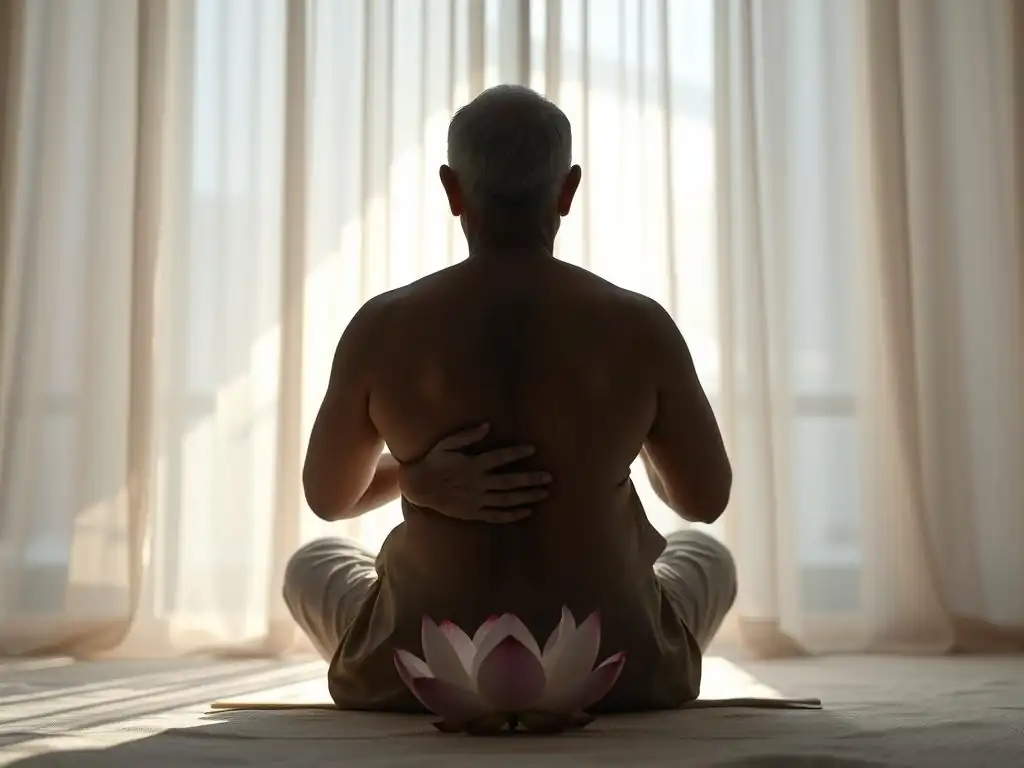
Anapanasati, or mindfulness of breathing, is a core practice within Vipassana. It is often the initial technique taught to new students to help them develop concentration ( Samadhi). The practice begins by sitting comfortably with the spine erect.
The attention is then gently directed to the breath as it enters and leaves the body. The focus is typically placed on the area where the sensation of the breath is most prominent, such as the tip of the nose or the rise and fall of the abdomen. The instruction is simply to observe the natural breath without controlling or altering it.
As concentration develops, the practice deepens. The meditator becomes more aware of the characteristics of the breath (long, short, etc.) and eventually becomes sensitive to the entire process of each breath, from beginning to end. The Anapanasati Sutta outlines sixteen steps of mindfulness of breathing, moving from basic observation to deeper levels of awareness involving the whole body, mental formations, and ultimately, insight into impermanence and cessation. This systematic approach uses the breath as a gateway to explore deeper aspects of reality and consciousness.
Breath Counting Technique
While the primary instruction in Vipassana is usually non-intervention with the breath, a simple breath counting technique can be introduced, particularly for beginners struggling with concentration. This method provides a structured way to keep the mind anchored. One common approach is to count the out-breaths, perhaps up to ten, and then start again from one. For example, inhale, exhale (count 1); inhale, exhale (count 2), and so on, up to ten. If the mind wanders and you lose count, you simply return to one without self-judgment.
Another variation involves counting both the inhale and exhale as one cycle, or counting the inhale and exhale separately. The specific method is less important than its purpose: to give the restless mind a simple task to focus on, thereby strengthening concentration. Once the mind achieves a degree of stability through counting, the practitioner can often drop the counting and return to simply observing the breath naturally. While not a universal Vipassana technique, counting can be a helpful preliminary step for training attention.
Noting the Rising and Falling of the Abdomen
Another common method for breath awareness, especially in traditions derived from Mahasi Sayadaw, is focusing on the physical sensations of the abdomen rising with the inhale and falling with the exhale. This technique provides a larger, often more easily discernible area of sensation than the subtle feelings at the nostrils. The practitioner sits comfortably and directs their attention to the movement of the abdominal wall. They mentally note "rising" with the inhale and "falling" with the exhale, or simply maintain awareness of the sensation itself.
This technique is effective because the movement of the abdomen is directly linked to the breath and is a clear physical manifestation of the respiratory process. It helps ground the awareness in the body and the present moment. As with focusing on the nostrils, the practitioner is encouraged to observe the sensations associated with the rising and falling – the stretching, the pressure, the movement – without trying to control the breath. This practice cultivates mindfulness of bodily sensations, a key element that is later expanded to the entire body in Vipassana.
Overcoming Challenges in Breath-Focused Vipassana
Dealing with Distractions and Wandering Thoughts
A universal challenge in breath-focused Vipassana is the wandering mind. Thoughts, memories, plans, and fantasies constantly arise, pulling attention away from the breath. The instruction is not to fight or suppress these thoughts, but to recognize when the mind has wandered and gently return attention to the breath. This process of recognizing distraction and returning to the object of meditation is the core training. It is estimated that a beginner's mind might wander hundreds, even thousands, of times during a single sitting. Each time the mind is brought back is a moment of mindfulness strengthened.
The key is to approach this challenge with patience and compassion. Instead of becoming frustrated with a busy mind, view each instance of noticing wandering as a success – a moment of awareness. A common technique is to briefly and gently "note" the distraction (e.g., "thinking," "planning," "remembering") before releasing it and returning to the breath. This simple act of noting helps to disengage from the content of the thought and reinforces the mindful perspective. With consistent practice, the periods of sustained focus on the breath gradually lengthen, and the transitions back from distraction become quicker and smoother.
Addressing Physical Discomfort During Meditation
Sitting still for extended periods, even 20-30 minutes, can lead to physical discomfort – aches, pains, itching, or restlessness. When focusing on the breath, these sensations can become prominent distractions. In Vipassana, the instruction is to observe these sensations mindfully, just as you would observe the breath. Instead of immediately reacting by shifting posture or scratching an itch, the practitioner is encouraged to direct their attention to the sensation itself. Observe its location, intensity, quality (e.g., throbbing, tingling, pressure), and how it changes moment by moment.
This practice of observing discomfort without immediate reaction is a powerful application of insight meditation. By observing the sensation impartially, one learns that even intense pain is often impermanent, arising and passing away or changing its characteristics. This direct experience weakens the habit of aversion to unpleasant sensations and cultivates equanimity ( Upekkha). While adjustments to posture are permitted if absolutely necessary to prevent injury or extreme suffering, the primary approach is mindful observation. This practice of non-reactive awareness towards physical discomfort builds resilience and deepens the understanding of anicca and dukkha.
Cultivating Patience and Perseverance in Breath Observation
Progress in breath-focused Vipassana is rarely linear. There will be sittings where the mind feels calm and focused, and others where it feels like a chaotic storm of distractions. Cultivating patience and perseverance is essential. It's important to approach the practice with realistic expectations and understand that training the mind takes time and consistent effort, much like building physical strength. Comparing one sitting to another, or one's progress to someone else's, is counterproductive. The focus is simply on the effort made in this moment.
Perseverance means committing to regular practice, even on days when you feel tired, restless, or discouraged. It means returning to the breath again and again, no matter how many times the mind wanders. This persistent, gentle effort strengthens the capacity for mindfulness and concentration over time. Recognizing that challenges like mind-wandering and discomfort are universal parts of the process, rather than personal failures, helps foster patience. Embracing the journey with kindness towards oneself is key to sustained practice and eventually experiencing the deep breathing Vipassana meditation benefits.
The Deeper Benefits of Breath Awareness in Vipassana
Reducing Stress and Anxiety Through Mindful Breathing
One of the most widely reported deep breathing Vipassana meditation benefits is its profound effect on stress and anxiety reduction. Focusing on the breath activates the body's parasympathetic nervous system, often referred to as the "rest and digest" system. This counteracts the "fight or flight" response triggered by stress.
Studies have shown that regular mindful breathing practice can lower levels of stress hormones like cortisol. For instance, research published in the Journal of Consulting and Clinical Psychology involving mindfulness-based stress reduction (MBSR), which includes breath awareness, has demonstrated significant reductions in anxiety and depression symptoms, sometimes by as much as 30-40% compared to control groups.
By anchoring attention to the present moment via the breath, the mind is less likely to ruminate on past worries or future anxieties, which are major drivers of stress. The simple act of observing the breath also provides a reliable tool to interrupt escalating stress responses in real-time. When feeling overwhelmed, returning attention to the steady rhythm of inhaling and exhaling can quickly calm the nervous system and restore a sense of equilibrium. This makes mindful breathing a powerful, accessible tool for managing daily stressors.
Enhancing Concentration and Focus
Consistent practice of focusing on the breath directly trains the capacity for concentration. Every time the mind wanders and is gently brought back to the breath, the neural pathways associated with attention and focus are strengthened. This is akin to exercising a muscle; the more you practice returning your attention, the better the mind becomes at sustaining focus. Research using fMRI scans has shown that regular meditation practitioners exhibit increased activity in areas of the brain associated with attention control, such as the prefrontal cortex.
This enhanced concentration extends beyond the meditation cushion into daily life. Tasks that require sustained attention, such as reading, working, or listening to others, become easier. The ability to stay present and focused improves productivity and reduces errors caused by distraction. While the ultimate goal in Vipassana is insight, the development of strong concentration through breath awareness is a vital prerequisite, sharpening the mind for the subtle observations required to penetrate the nature of reality.
Developing Self-Awareness and Emotional Regulation
Mindful observation of the breath cultivates a heightened sense of self-awareness. As attention becomes more refined, one becomes more attuned to the subtle interplay between breath, physical sensations, thoughts, and emotions. For example, you might notice how your breath becomes shallow when you feel angry, or how a feeling of sadness manifests as a tightness in the chest and altered breathing pattern. This direct observation provides valuable insight into your internal states and their physical correlates.
This increased self-awareness is the first step towards improved emotional regulation. By recognizing emotions as they arise, without immediately being swept away by them, the practitioner gains a degree of space and choice in how to respond. Instead of reacting habitually, one can observe the emotion, feel its physical sensations (often linked to breath), and choose a more skillful response. This ability to witness emotions with equanimity, cultivated through practices like breath awareness, is a core component of emotional intelligence and resilience. The deep breathing Vipassana meditation benefits include a greater capacity to navigate life's emotional landscape with wisdom.
The Science Behind Breath Awareness and Vipassana
Physiological Effects of Mindful Breathing on the Nervous System
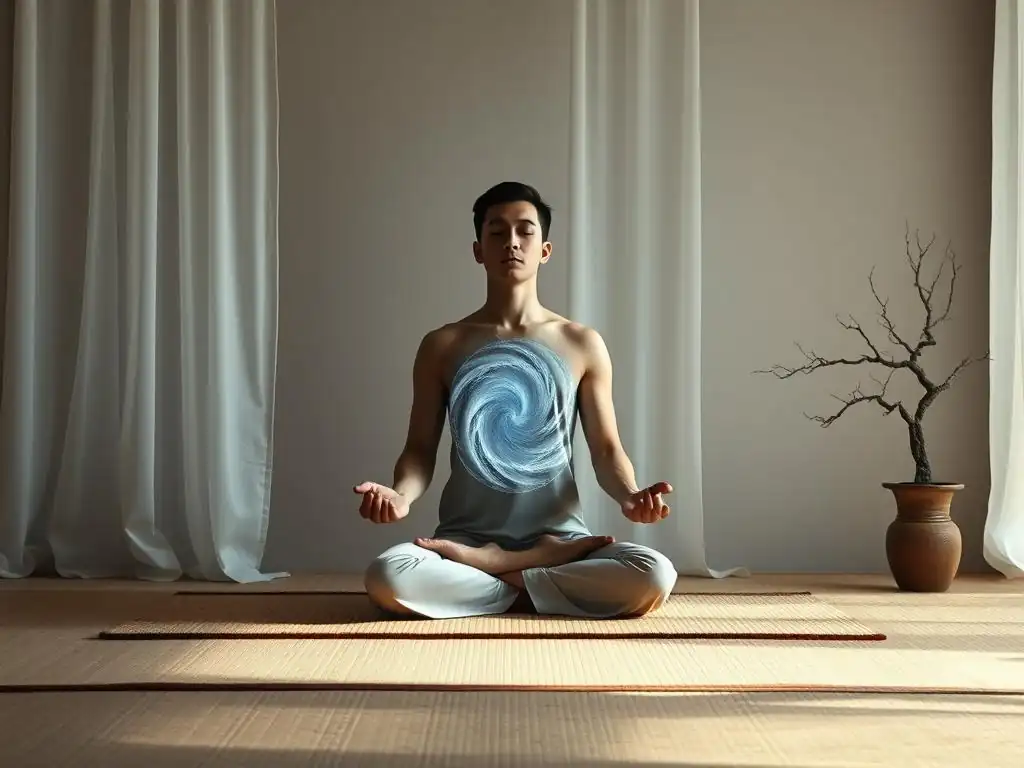
The scientific community has increasingly studied the physiological impacts of mindful breathing, a cornerstone of Vipassana. Focusing on slow, deliberate, or even just naturally observed breathing, tends to shift dominance from the sympathetic nervous system (responsible for the "fight or flight" response) to the parasympathetic nervous system ("rest and digest"). This shift is measurable through various physiological indicators.
For instance, studies often show a decrease in heart rate and blood pressure during and after mindful breathing exercises. Heart Rate Variability (HRV), a marker of nervous system flexibility and resilience, has been shown to increase with regular mindfulness practice, including breath focus.
Furthermore, mindful breathing impacts the brain. Research using neuroimaging techniques has shown that sustained attention on the breath can lead to increased grey matter density in areas associated with self-awareness, compassion, and introspection, such as the insula and cingulate cortex. Simultaneously, activity in the amygdala, the brain's fear center, may decrease. These changes indicate a physical restructuring of the brain that supports reduced reactivity to stress and increased emotional regulation. The deep breathing Vipassana meditation benefits are rooted in these observable physiological changes.
Research Supporting the Mental Health Benefits of Vipassana
Numerous studies have investigated the mental health benefits of Vipassana meditation. While often studied under broader categories like "mindfulness meditation," Vipassana-specific research also exists. A review of studies on Vipassana meditation found evidence supporting its effectiveness in reducing symptoms of anxiety, depression, and stress. For example, a study published in Psychosomatic Medicine on participants attending a 10-day Vipassana retreat showed significant reductions in perceived stress and negative emotion, along with increases in positive emotion, which were maintained months after the retreat.
Research also points to improvements in well-being, self-compassion, and cognitive function, such as improved attention and working memory, among Vipassana practitioners. While not all studies isolate the effect of breath awareness specifically within Vipassana, breath focus is such an integral part of the practice that its contribution to these observed benefits is considered significant. The evidence base continues to grow, supporting the traditional claims about the transformative power of this ancient practice for mental well-being.
Integrating Breath Awareness into Daily Life
Practicing Mindfulness of Breath Beyond Formal Meditation
The benefits of breath awareness are not confined to the formal meditation cushion. The skills developed during seated Vipassana practice can be consciously applied throughout the day. This involves bringing a moment of mindful attention to the breath during everyday activities. For example, you can pause for a few conscious breaths before starting a task, during a break, while waiting in line, or before responding to an email. This informal practice helps to maintain a connection to the present moment and can serve as a mini-reset button throughout the day.
Integrating breath awareness informally doesn't require closing your eyes or sitting in a specific posture. It's simply about occasionally checking in with the breath – noticing its rhythm, its depth, and the sensations it creates – while continuing with your activity. This consistent, gentle practice reinforces the habit of mindfulness and helps bridge the gap between formal meditation sessions and daily life. It makes the benefits of Vipassana, including improved calm and focus, more accessible moment by moment.
Utilizing Breath as a Tool for Emotional Regulation in Everyday Situations
The breath is a readily available tool for navigating challenging emotions in real-time. When faced with stress, anger, frustration, or anxiety, the natural tendency is often to react impulsively. However, by pausing and bringing attention to the breath, you create a small but significant space between the stimulus and your reaction. Simply observing the breath without judgment can help to ground you in the present moment and prevent you from being overwhelmed by intense feelings.
For instance, if you feel anger rising, you can notice the physical sensations associated with it – perhaps heat, tension, and a change in your breathing pattern (often becoming faster or shallower). By gently focusing on the sensations of the breath, even just for a few cycles, you can often prevent the emotional intensity from escalating. The breath acts as an anchor, helping you stay present and observe the emotion without being consumed by it. This practical application of breath awareness is a powerful skill for enhancing emotional resilience and navigating interpersonal challenges.
Advanced Practices: Refining Breath Observation in Vipassana
Exploring Subtle Sensations and Nuances of the Breath
As concentration and mindfulness deepen through consistent practice, the meditator becomes capable of observing increasingly subtle aspects of the breath. What initially might have felt like a simple in and out flow can be perceived with much greater detail and nuance. This involves becoming aware of the subtle texture of the air, the precise point of sensation at the nostrils, the tiny pauses between breaths, or the very subtle movements within the body associated with respiration.
This refinement of breath observation is not merely an exercise in concentration; it is a way to deepen insight into the nature of reality. By observing these subtle, fleeting sensations, the meditator gains a more profound experiential understanding of anicca (impermanence) at a very fine level. They witness how even the most seemingly continuous process, like breathing, is composed of countless discrete, rapidly changing moments. This detailed observation sharpens the mind's ability to perceive reality as it truly is – a constant flow of arising and passing away phenomena.
Using the Breath as a Gateway to Deeper Insights
While the breath serves as an anchor and a tool for concentration, in advanced Vipassana practice, it also becomes a gateway to observing the entire mind-body process. Once concentration is stable and the ability to observe sensations is developed, the awareness expands from the breath to encompass sensations throughout the entire body. The breath is often used as a starting point or a home base to which the meditator can return if awareness becomes scattered.
The insight gained from observing the breath – particularly the understanding of impermanence – is then applied to all other physical and mental phenomena that arise. By observing the breath as a dynamic, changing process, the meditator learns to see the entire body and all experiences with the same lens of impermanence, suffering, and non-self. The breath, therefore, is not just an object of meditation but a fundamental teacher, revealing universal truths that can be explored through direct experience across the entire spectrum of one's being. The deep breathing Vipassana meditation benefits extend into profound existential understanding.
Conclusion: The Transformative Power of Breath in Vipassana
Summarizing the Key Benefits of Breath Awareness in Vipassana Meditation
The practice of breath awareness is a foundational and integral component of Vipassana meditation, offering a multitude of benefits for both mental and physical well-being. It serves as the primary tool for developing concentration ( Samadhi), anchoring the restless mind in the present moment. Through diligent observation of the natural breath, practitioners cultivate mindfulness ( Sati), the ability to pay non-judgmental attention to present experience. This focus on breath directly contributes to significant reductions in stress and anxiety by calming the nervous system and interrupting cycles of worry.
Furthermore, consistent breath awareness enhances concentration and focus, skills that are invaluable in all aspects of life. It fosters increased self-awareness, providing insight into the connection between our breath, physical sensations, thoughts, and emotions, thereby improving emotional regulation. The deep breathing Vipassana meditation benefits are well-supported by scientific research showing positive physiological changes and mental health outcomes. From training the mind to handle distractions to providing a tool for navigating difficult emotions, the simple act of observing the breath is profoundly transformative.
Encouraging Continued Practice and Exploration
The path of Vipassana, with its central focus on breath awareness, is a journey of continuous discovery. The benefits described are realized not through a single session, but through consistent, dedicated practice over time. Challenges will inevitably arise – a restless mind, physical discomfort, moments of doubt – but these are normal parts of the process and opportunities for learning patience and perseverance.
Embracing the breath as a lifelong companion in meditation offers a stable point of return amidst the ever-changing landscape of life. Whether through formal seated meditation or informal moments of mindful breathing throughout the day, continued attention to this simple, vital process can lead to deeper levels of calm, clarity, and insight. Exploring the deep breathing Vipassana meditation benefits is an ongoing practice that steadily reveals the true nature of reality and fosters lasting peace and well-being.
Frequently Asked Questions
What is the role of breathing in Vipassana meditation?
Breathing serves as the primary anchor for attention in Vipassana. Observing the natural rhythm of breath helps to develop mindfulness and awareness of the present moment without judgment. It's a tool to stabilize the mind.
What are the key benefits of incorporating deep breathing techniques into Vipassana meditation?
Deep breathing enhances Vipassana by promoting relaxation, reducing stress and anxiety, and improving concentration. This deeper connection to the breath can lead to a more profound meditative experience.
How does Vipassana meditation help with mental well-being, according to Mind Care Guide?
Mind Care Guide emphasizes that Vipassana, particularly with focused breathing, cultivates self-awareness and emotional regulation. This, in turn, contributes to improved mental clarity, reduced reactivity, and overall well-being.
Can anyone practice Vipassana meditation, even with no prior experience in mindfulness?
Yes, Vipassana is accessible to beginners. The focus on observing the breath makes it a relatively simple entry point to mindfulness. Guided sessions, like those discussed on Mind Care Guide, can be particularly helpful for new practitioners.
What resources does Mind Care Guide offer to learn more about deep breathing Vipassana meditation benefits?
Mind Care Guide provides articles, guides, and potentially links to qualified instructors to help readers understand and practice Vipassana. They offer a comprehensive overview of mental well-being strategies, including meditation.
Final Reflection: The Breath: Gateway to Insight and Transformation
The conscious cultivation of breath, as explored throughout this article, isn't merely a technique; it's a fundamental key to unlocking the profound benefits of Vipassana meditation. The current interest in mindfulness and stress reduction techniques makes understanding the precise role of breath in this ancient practice more relevant than ever before. In a world saturated with distractions and anxieties, mastering the breath offers a powerful antidote, a direct path to inner peace and clarity.
The exploration of breath in Vipassana has profoundly shaped my own understanding of self-awareness and inner peace. It's a journey of continuous discovery, a process of peeling back layers of conditioned responses to reveal the underlying stillness within. The impact of this practice extends beyond the meditation cushion; it subtly informs how I approach daily life, fostering patience, compassion, and a deeper connection with myself and the world around me. The breath is the bridge between the body and the mind.
This simple yet profound statement encapsulates the transformative power of focusing on the breath, allowing us to bridge the gap between our physical sensations and our mental states.
Now, consider your own breath. Observe its rhythm, its subtle fluctuations. This simple act of awareness is the starting point. Don't just read about the benefits of deep breathing in Vipassana; experience them.
Dedicate even a few minutes each day to mindful breathing, allowing yourself to settle into the present moment. Explore the subtle sensations, the gentle rise and fall of your chest and abdomen. This is your personal journey, your path to a deeper understanding of yourself and the transformative power of mindful breathing within the framework of Vipassana meditation. Embrace the journey, and discover the profound peace that awaits.
Breathe Deeper, See Clearer: Unlock Your Vipassana Practice
Thanks for exploring the powerful role of breath in Vipassana meditation with Mind Care Guide! We hope you gained valuable insights into this transformative practice. Ready to deepen your understanding and experience?
- Prioritize your breath: Dedicate just 5 minutes today to focusing solely on your breath – notice the rise and fall of your chest or abdomen. This simple act can unlock profound calm.
- Explore a guided meditation: Search online for a guided Vipassana meditation focusing on breath awareness. Even a short session can make a difference.
- Share your experience: Tell us about your breath-focused meditation journey! What insights or challenges did you encounter?
Ready to transform your meditation practice by truly connecting with your breath?