
Posture and Awareness: Key Elements of Mindful Walking Practice.


Welcome to Mind Care Guide, your compassionate companion on the path to mental well-being.
Ever notice how your posture affects your mood? This seemingly simple connection holds a powerful key to unlocking deeper mindfulness. Dive into our latest article, " Posture and Awareness: Key Elements of Mindful Walking Practice," to discover how cultivating mindful walking posture awareness can transform your everyday stroll into a powerful meditation. Curious to learn how a simple shift in posture can profoundly impact your mental state? Let's explore together...
- Mindful Walking Posture: Cultivating Presence and Grounding
- Understanding the Importance of Posture in Mindful Walking
- Achieving Optimal Mindful Walking Posture
- Cultivating Awareness During Mindful Walking
- Practical Exercises for Improving Posture and Awareness
- Common Posture Mistakes in Mindful Walking and How to Avoid Them
- The Benefits of Mindful Walking with Correct Posture and Heightened Awareness
- Advanced Tips for Mindful Walking Posture and Awareness
- Troubleshooting Posture Issues During Mindful Walking
- Conclusion: Embrace Mindful Walking Posture for a Deeper Connection
-
Frequently Asked Questions
- ### What is the connection between posture and mindful walking?
- ### Why is awareness important during mindful walking practice?
- ### How does mindful walking posture awareness contribute to mental well-being?
- ### What are some common posture mistakes to avoid during mindful walking?
- ### Where can I find more resources and support for improving my mindful walking posture awareness?
- Final Reflection: Embodied Mindfulness Through Walking
- Unlock Your Inner Peace: Step into Mindful Walking
Mindful Walking Posture: Cultivating Presence and Grounding
Mindful walking is a practice that encourages us to slow down, pay attention, and connect with the present moment through the simple act of walking. While the focus is often on breath and sensory input, the physical foundation—our posture—plays a crucial role in deepening this connection. Developing mindful walking posture awareness is not just about physical alignment; it's about creating a stable, open vessel for experiencing the world around and within us. A conscious posture allows energy to flow more freely, reduces physical distractions, and enhances our ability to remain present and engaged.
Adopting a deliberate posture transforms walking from a habitual, often unconscious, activity into a powerful meditative practice. It involves bringing gentle awareness to how we hold our bodies, from the crown of the head down to the soles of the feet. This mindful attention to posture helps ground us, anchoring our awareness in the physical reality of each step. By cultivating this awareness, we build a stronger mind-body connection, which is fundamental to the benefits derived from mindful walking, such as stress reduction and improved focus.
Understanding the Importance of Posture in Mindful Walking
The Connection Between Body Posture and Mental State
Our physical posture has a profound and often underestimated impact on our psychological state. Think about the difference in feeling between slouching with shoulders rounded and standing tall with an open chest. Studies and anecdotal evidence consistently suggest that upright postures are associated with increased feelings of confidence, alertness, and positive mood. Conversely, slumped postures can contribute to feelings of fatigue, low mood, and even increased stress perception. This direct link means that how we hold our bodies during mindful walking directly influences the quality and depth of our meditative experience.
When we practice mindful walking posture awareness, we are actively working with this mind-body connection. Maintaining an erect yet relaxed posture sends signals to the brain that can promote feelings of calm and presence. For example, opening the chest slightly can facilitate deeper breathing, which in turn activates the parasympathetic nervous system, known for its role in rest and relaxation. This physical adjustment creates a more receptive mental state, making it easier to let go of distracting thoughts and fully immerse ourselves in the sensations of walking and the environment.
How Proper Posture Enhances Mindful Walking Benefits
Proper posture is not merely about looking aligned; it's about optimizing the body's mechanics to support ease and stability during movement. In the context of mindful walking, this ease reduces physical discomfort that could pull our attention away from the present moment.
When the body is aligned, joints and muscles are under less strain, allowing us to walk for longer periods with greater comfort. This physical stability provides a foundation for mental stability, making it easier to maintain focus on the breath, the sensations in the feet, or the sights and sounds around us without being constantly interrupted by aches or stiffness.
Furthermore, enhanced mindful walking posture awareness improves circulation and energy flow throughout the body. When the spine is aligned and the chest is open, breathing becomes more efficient, ensuring that the brain and muscles receive adequate oxygen. This contributes to increased alertness and vitality, counteracting the lethargy that can sometimes accompany a sedentary lifestyle or poor postural habits. By consciously attending to our posture, we not only make the physical act of walking more sustainable but also amplify the mental and emotional benefits of the practice, such as reduced rumination and enhanced emotional regulation.
Achieving Optimal Mindful Walking Posture
Head Alignment: Level Gaze and Relaxed Jaw
Achieving optimal mindful walking posture begins with the head. Imagine a string gently lifting you from the crown of your head towards the sky. This encourages the neck to lengthen and the head to rest naturally atop the spine, rather than jutting forward or tilting excessively. Your gaze should be level, looking a few feet ahead of you rather than directly down at your feet. This helps maintain neck alignment and allows you to be aware of your surroundings without being pulled out of your internal focus. It's a delicate balance between outward awareness and inward presence.
Simultaneously, bring awareness to your jaw. Many people unconsciously clench their jaw when concentrating or feeling tense. During mindful walking, consciously relax your jaw muscles. Let your lips part slightly if that feels natural, ensuring there's no tension held in the face or neck. This release of tension in the jaw and neck contributes significantly to overall relaxation throughout the body and prevents headaches or discomfort that can arise from clenching. Focusing on this small detail is a key aspect of mindful walking posture awareness.
Shoulder and Back Positioning: Open Chest and Relaxed Shoulders
Moving down, the position of your shoulders and back is critical for an open and relaxed posture. Avoid rounding your shoulders forward, which restricts breathing and can lead to upper back pain. Instead, gently draw your shoulder blades back and slightly down, as if trying to tuck them into your back pockets. This action naturally opens the chest, allowing for deeper, more effortless breaths – a cornerstone of mindfulness practice. However, the key is relaxation; avoid pulling your shoulders back so tightly that you create tension.
Think of your spine as naturally lengthening, maintaining its gentle curves rather than being rigidly straight. The goal is an upright posture that feels stable yet fluid. When practicing mindful walking posture awareness, periodically check in with your shoulders. Are they creeping up towards your ears? Gently release them down. Is your chest feeling collapsed? Imagine broadening across your collarbones. This conscious adjustment helps maintain an open and receptive posture throughout your walk.
Core Engagement: Gentle Support for Stability
While mindful walking posture emphasizes relaxation, a gentle engagement of the core muscles provides essential stability and support for the spine. This doesn't mean tensing your abdominal muscles as you would during an intense workout. Instead, it's a subtle drawing in of the lower belly towards the spine, as if bracing lightly for a gentle push. This gentle engagement helps prevent the lower back from arching excessively and supports overall upright alignment. It's about providing a stable base from which your limbs can move freely.
This gentle core support is particularly important for maintaining mindful walking posture over longer durations. Without it, the weight of the upper body can put strain on the lower back and hips. Practicing this gentle engagement improves balance and proprioception – your body's awareness of its position in space. Regularly checking in with your core engagement is a vital part of mindful walking posture awareness, ensuring you are supported from your center.
Foot Placement: Heel-to-Toe Roll and Grounding
The feet are our connection to the earth and are fundamental to mindful walking posture and grounding. As you walk, pay attention to the sequence of how your foot meets and leaves the ground. Ideally, you should land gently on your heel, roll through the sole of your foot, and push off from the ball of your foot and toes. This heel-to-toe roll is a natural and efficient way to walk, distributing impact and propelling you forward smoothly. Avoid striking the ground heavily or shuffling your feet.
Focusing on the sensations in your feet as they connect with the ground is a core element of mindful walking. This grounding sensation anchors you in the present moment. Notice the texture of the ground beneath your shoes, the pressure as your weight shifts, and the feeling as your foot lifts. This detailed attention to foot placement and sensation enhances your mindful walking posture awareness, connecting your physical alignment with the sensory experience of movement.
Cultivating Awareness During Mindful Walking
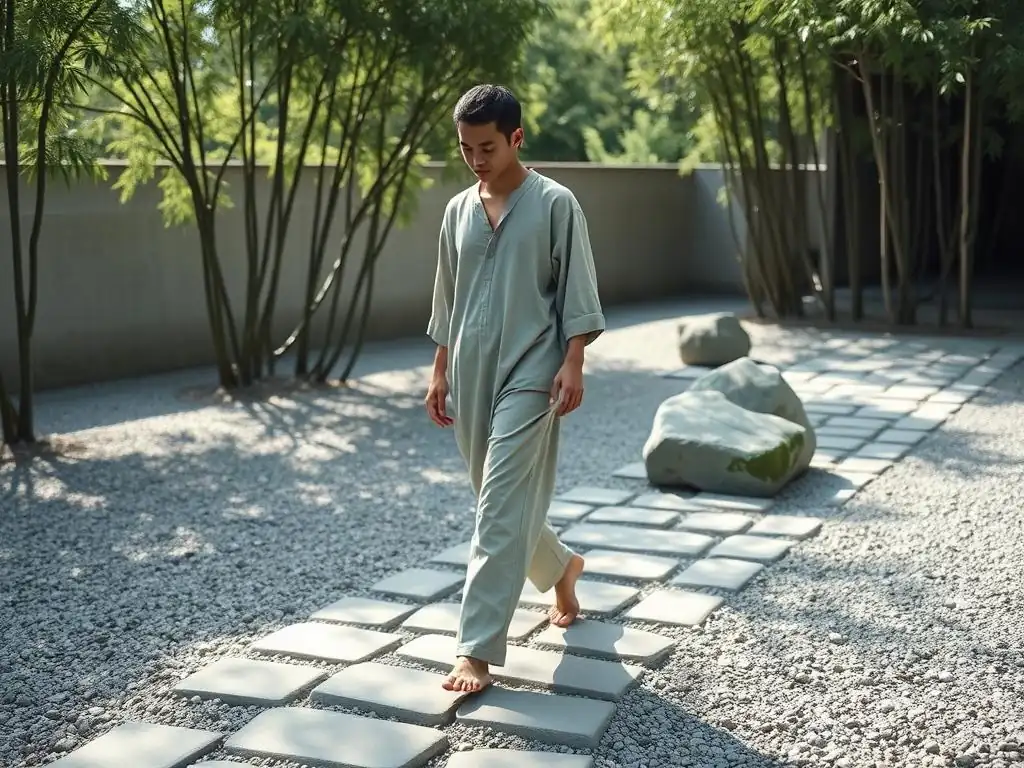
Body Scan Techniques: Noticing Tension and Alignment
Cultivating awareness during mindful walking often begins with a brief body scan. Before you start or even mid-walk, take a moment to bring your attention to different parts of your body, starting from the top of your head and moving down to your feet. Notice any areas of tension or discomfort without judgment. Are your shoulders tight? Is your jaw clenched? Is your lower back feeling strained? Simply observe what is present.
Following the observation, gently invite relaxation into areas of tension. For instance, if you notice tightness in your shoulders, consciously soften them and let them drop. This process isn't about achieving perfect alignment instantly, but about developing sensitivity to your body's signals. Regular body scans during your mindful walk enhance your mindful walking posture awareness, allowing you to make subtle adjustments that improve comfort and presence.
Noticing Sensations: Ground Contact and Body Movement
Beyond a static scan, awareness during mindful walking involves tuning into the dynamic sensations of movement. The most primary sensation for many is the contact of the feet with the ground. Feel the pressure, the temperature, the texture (even through your shoes). Notice the sequence of the heel striking, the weight transferring through the arch, and the push-off from the toes. This focused attention on the feet provides a powerful anchor to the present moment.
Expand your awareness to include other bodily sensations: the swing of your arms, the gentle rotation in your hips, the rise and fall of your chest with each breath, the feeling of air on your skin. Notice how your entire body is involved in the act of walking. This comprehensive sensory awareness deepens your connection to your physical self and enhances your mindful walking posture awareness by highlighting how different parts of your body are coordinating.
Identifying and Correcting Posture Imbalances in Real-Time
A key aspect of cultivating awareness is the ability to identify and gently correct posture imbalances as they arise during your walk. You might notice yourself starting to slouch after a few minutes, or your head drifting forward. Without self-criticism, simply acknowledge the imbalance and gently invite the body back into a more aligned position. This continuous process of noticing and adjusting is the practice itself.
For example, if you feel your shoulders tensing up, you might mentally repeat a phrase like soften shoulders and consciously release them. If you notice your gaze dropping too low, gently lift your head. This real-time correction strengthens your mindful walking posture awareness and trains your body to hold a more supportive alignment over time. It's a dynamic process of gentle guidance, not rigid enforcement.
Practical Exercises for Improving Posture and Awareness
Wall Test: A Self-Check for Spinal Alignment
A simple "Wall Test" can be a great way to check your basic spinal alignment. Stand with your back against a wall, with your heels about two to three inches away from the wall. Your buttocks, shoulder blades, and the back of your head should ideally touch the wall. There should be a small gap between your lower back and the wall, roughly the thickness of your hand, and a similar small gap behind your neck. If your head doesn't touch the wall, it might indicate a forward head posture.
Practicing this test periodically helps you become more aware of what neutral, aligned posture feels like. You can then try to replicate this feeling when you are walking. This exercise directly improves your mindful walking posture awareness by giving you a tangible reference point for good alignment. It highlights areas where you might habitually slouch or hold tension.
Walking with a Book: Enhancing Upright Posture
The classic exercise of walking with a book balanced on your head can effectively train you to maintain an upright head and neck position and improve overall balance. Start with a thin, light book and practice walking slowly in a safe space. The act of balancing the book naturally encourages you to lengthen your spine and keep your head level. If the book falls, it's a gentle reminder that your posture has shifted.
While you won't walk with a book during your actual mindful walk, practicing this exercise for a few minutes daily or weekly can dramatically improve your proprioception and awareness of your head and neck alignment. It helps solidify the feeling of that imaginary string lifting you from the crown, directly benefiting your mindful walking posture awareness during your regular practice.
Integrating Posture Awareness into Daily Activities
Improving mindful walking posture awareness isn't confined to your walking practice; it can be integrated into many daily activities. Pay attention to your posture while sitting at a desk, standing in line, or even washing dishes. Are you slouching? Is your head forward? Gently remind yourself to lengthen your spine, relax your shoulders, and engage your core slightly.
Setting reminders, like a chime on your phone every hour, to check your posture can be helpful initially. The more you practice mindful posture awareness throughout your day, the more natural and effortless it will become during your mindful walks. This consistent attention builds a stronger habit of good posture, making your dedicated mindful walking practice more effective and comfortable.
Common Posture Mistakes in Mindful Walking and How to Avoid Them
Slouching: Engaging Core and Lifting Chest
One of the most common posture mistakes is slouching, where the shoulders round forward, the chest collapses, and the head often juts forward. This not only looks less confident but also restricts breathing and puts strain on the spine. It's often a habit developed from prolonged sitting. During mindful walking, slouching pulls your energy downwards and makes it harder to feel uplifted and present.
To counteract slouching, actively engage your core gently and imagine lifting your chest slightly, not rigidly, but with a sense of openness. Think about lengthening your spine rather than just straightening it. Regularly check in with your shoulders and gently draw them back and down. This conscious effort to counter slouching significantly improves your mindful walking posture awareness and the overall experience.
Over-Tension: Releasing Unnecessary Muscle Engagement
On the other end of the spectrum is over-tension, where you hold your body too rigidly in an attempt to achieve "perfect" posture. This can manifest as locked knees, stiff shoulders, or a tightly clenched jaw. While some engagement is necessary for stability, excessive tension creates fatigue and discomfort, pulling your attention away from the meditative aspect of the walk.
Recognize that good mindful walking posture is about ease and support, not stiffness. Regularly scan your body for unnecessary tension and consciously invite those areas to relax. Allow a slight bend in your knees, let your shoulders soften, and relax your jaw. The goal is a dynamic, relaxed uprightness. Practicing this release of tension is a key component of mindful walking posture awareness.
Distractions: Returning Focus to Posture and Sensations
Distractions are perhaps the most pervasive obstacle to maintaining mindful walking posture awareness. The mind wanders to thoughts about the past or future, external stimuli grab our attention, and we lose awareness of how we are holding our bodies. This often leads to a gradual deterioration of posture back to habitual, less optimal patterns.
The practice here is simple, though not always easy: notice when your mind has wandered, acknowledge the distraction without judgment, and gently guide your attention back to your body and the sensations of walking and posture. This could be returning your focus to the feeling of your feet on the ground, checking your head alignment, or softening your shoulders. Each time you return your focus, you strengthen your mindful walking posture awareness and the overall presence of your walk.
The Benefits of Mindful Walking with Correct Posture and Heightened Awareness

Reduced Stress and Anxiety: Promoting Relaxation and Calm
Engaging in mindful walking with attention to posture and awareness can significantly reduce stress and anxiety levels. The combination of rhythmic physical movement, focused attention on the present moment, and relaxed yet upright posture activates the body's relaxation response. Walking itself is a natural stress reliever, and adding mindfulness amplifies this effect. By focusing on the physical sensations and letting go of racing thoughts, the mind quiets down.
Moreover, maintaining a relaxed, open posture facilitates deeper, more regular breathing, which directly signals the nervous system to calm down. This conscious engagement with posture, coupled with sensory awareness, provides a powerful antidote to the body's stress response (fight or flight). Many individuals report feeling noticeably calmer and less overwhelmed after incorporating mindful walking posture awareness into their routine, often experiencing a sustained sense of peace that extends beyond the walk itself.
Improved Body Awareness and Self-Perception: Enhancing Embodiment
Developing mindful walking posture awareness naturally leads to improved body awareness. By regularly checking in with how your body feels and holds itself, you become more attuned to its subtle signals – where you hold tension, where you feel balanced, where you need support. This heightened sensitivity extends beyond your walking practice, making you more conscious of your posture and physical habits throughout the day.
This increased body awareness fosters a stronger sense of embodiment – feeling truly present and connected within your physical self. Instead of feeling disconnected from your body, you inhabit it more fully. This can lead to a more positive self-perception and a greater appreciation for your body's capabilities. Understanding your body's alignment and needs through mindful walking posture awareness is a powerful step towards greater physical and mental well-being.
Enhanced Mental Clarity and Focus: Supporting Concentration
The practice of bringing your attention back to your posture and the sensations of walking, whenever your mind wanders, is essentially a form of concentration training. This repeated gentle redirection strengthens your ability to focus, not just during the walk but in other aspects of your life. A steady, supported posture also contributes to mental steadiness; physical fidgeting or discomfort from poor posture can be a significant distraction.
When the body is comfortably aligned and supported, the mind is freer to settle. The rhythmic nature of walking, combined with focused awareness on posture and sensation, creates a state conducive to mental clarity. Many people find that mindful walking with attention to mindful walking posture awareness helps them process thoughts, gain perspective, and improve their ability to concentrate on tasks later in the day. It's a mobile meditation that sharpens the mind while calming the spirit.
Advanced Tips for Mindful Walking Posture and Awareness
Adapting Posture to Uphill and Downhill Terrains
Walking on varied terrain requires subtle adjustments to maintain optimal mindful walking posture. When walking uphill, lean slightly forward from the ankles (not the waist) to keep your center of gravity balanced. Shorten your stride and focus on lifting your knees and pushing off with your toes. Maintain an upright torso and avoid hunching over. Your mindful walking posture awareness here involves feeling the increased effort in your legs and lungs while keeping the upper body relatively relaxed.
Walking downhill requires a different approach. Slightly bend your knees to absorb impact and lengthen your stride carefully. Avoid leaning back, which can strain your lower back; instead, maintain a neutral upright posture and let gravity assist, controlling your speed with your leg muscles. Pay extra attention to foot placement for stability. Noticing how your balance shifts and adjusting your core engagement and leg muscles is key to maintaining mindful walking posture awareness on slopes.
Coordinating Breath with Movement and Posture
Integrating breath awareness with movement and posture adds another layer of depth to mindful walking. As you refine your mindful walking posture, notice how your breath flows more freely with an open chest and relaxed shoulders. You can consciously coordinate your steps with your breath, perhaps inhaling for three steps and exhaling for three steps, or finding a rhythm that feels natural.
This coordination enhances the meditative quality of the walk. Paying attention to the interplay between your breath, your movement, and your posture deepens your presence. For example, you might notice that your breath becomes shallower when you start to slouch, prompting you to gently correct your posture. This interconnected awareness strengthens your mindful walking posture awareness and overall mind-body connection.
Using Visualizations: Imagining a String Lifting from the Crown
Visualizations can be powerful tools for reinforcing mindful walking posture awareness. A common and effective visualization is imagining a string attached to the crown of your head, gently lifting you upwards. This encourages spinal lengthening and helps you maintain an upright yet relaxed posture. It counteracts the tendency to collapse or slouch.
Another helpful visualization is imagining roots growing from the soles of your feet into the earth with each step, enhancing the feeling of grounding and stability. You might also visualize your shoulders softening like melting butter or your chest opening like a flower. Experiment with different visualizations to find what resonates with you and helps you maintain your mindful walking posture awareness effortlessly.
Troubleshooting Posture Issues During Mindful Walking
Addressing Lower Back Pain: Adjusting Stride and Core Engagement
Lower back pain is a common issue that can arise during walking, often exacerbated by poor posture, such as an overarched or rounded lower back. If you experience lower back pain during mindful walking, first check your posture. Are you engaging your core gently? Is your pelvis tucked slightly under, or is your lower back excessively curved? Adjusting your core engagement can help stabilize the lumbar spine.
Consider shortening your stride slightly, as overstriding can put extra pressure on the lower back. Ensure you are landing gently on your heel and rolling through your foot rather than striking hard. Pay attention to your breathing; shallow breathing can sometimes contribute to back tension. If the pain persists despite these adjustments to your mindful walking posture awareness, it may be beneficial to seek professional advice.
Consulting a Physical Therapist for Persistent Pain
If you experience persistent pain or discomfort during mindful walking that doesn't resolve with posture adjustments and awareness practices, it is highly recommended to consult a physical therapist or other healthcare professional. Persistent pain can indicate underlying musculoskeletal issues or imbalances that require targeted diagnosis and treatment.
A physical therapist can assess your gait, posture, and muscle function, identifying specific areas of weakness or tightness that may be contributing to your discomfort. They can provide personalized exercises and guidance to correct these issues, helping you improve your mindful walking posture and practice without pain. Addressing persistent pain professionally ensures you can continue to enjoy the many benefits of mindful walking safely and comfortably.
Conclusion: Embrace Mindful Walking Posture for a Deeper Connection
Mindful walking is a simple yet profound practice, and paying attention to mindful walking posture awareness elevates it from mere exercise to a truly embodied meditation. By consciously cultivating an upright, relaxed, and stable posture, you create the optimal physical conditions for presence, grounding, and ease. Understanding the link between your physical alignment and your mental state empowers you to use your body as a tool for mindfulness.
Embracing proper mindful walking posture awareness allows you to unlock deeper benefits: reduced stress, enhanced body awareness, and improved mental clarity. It's a continuous practice of gentle noticing and adjustment, not a rigid performance. As you walk, remember to periodically check in with your head, shoulders, core, and feet, bringing kind attention to how you hold yourself. By integrating posture and awareness, each step becomes an opportunity for connection – with your body, your breath, and the present moment.
Frequently Asked Questions
### What is the connection between posture and mindful walking?
Posture plays a crucial role in mindful walking as it directly impacts your physical comfort and body awareness. Proper posture allows for a deeper connection with the present moment and reduces distractions caused by discomfort.
### Why is awareness important during mindful walking practice?
Awareness is essential because it allows you to fully engage with the experience. It involves paying attention to your sensations, thoughts, and surroundings without judgment, fostering a sense of present moment presence.
### How does mindful walking posture awareness contribute to mental well-being?
It reduces stress and anxiety by grounding you in the present moment. Focusing on posture and movement can shift your attention away from racing thoughts and promote relaxation.
### What are some common posture mistakes to avoid during mindful walking?
Slouching, looking down at the ground, and tensing your shoulders are common mistakes. Maintaining an upright posture, with relaxed shoulders and a lifted gaze, is important for optimal body alignment.
### Where can I find more resources and support for improving my mindful walking posture awareness?
Mind Care Guide offers a wealth of information and resources on mindful walking and mental well-being. You can find articles, exercises, and support groups focused on posture awareness and mindfulness techniques.
Final Reflection: Embodied Mindfulness Through Walking
The mindful practice of walking, integrating correct posture and heightened awareness, is not merely a physical exercise; it's a potent pathway to cultivating present moment awareness and enhancing overall well-being in our increasingly frenetic world. This simple act, often overlooked in our daily rush, offers a profound opportunity to reconnect with our bodies and minds, fostering a sense of calm and grounding amidst the chaos.
The impact of mindful walking extends far beyond the physical. It's a practice that subtly yet powerfully shapes our relationship with ourselves and the world around us. By cultivating a conscious awareness of our posture and breath, we begin to notice the subtle nuances of our experience, fostering a deeper appreciation for the present moment. The present moment is filled with joy and happiness. If you are attentive, you will see it.
– Thich Nhat Hanh. This quote perfectly encapsulates the transformative potential of mindful walking – a simple act that unlocks a wealth of inner peace and joy when approached with intention.
Now, consider how you can integrate these principles into your own life. Perhaps start with just five minutes each day, focusing on your posture and the sensation of your feet connecting with the earth. Notice the rhythm of your breath, the sights and sounds around you, without judgment.
Let this practice become a daily anchor, a moment of mindful presence amidst the demands of your day. You might be surprised by the profound impact this simple act can have on your overall well-being. Embrace the journey of mindful walking; it's a path towards a more present, peaceful, and fulfilling life.
Here's a Call to Action (CTA) for an article on mindful walking, fitting the provided specifications:
Unlock Your Inner Peace: Step into Mindful Walking
Thanks for taking the time to explore the power of mindful walking! We hope you gained valuable insights into connecting with your body and environment through this practice. Now it's time to put your new knowledge into action.
- Embrace the mindful walk today: Find a quiet space, even just for 5 minutes, and try a mindful walking session. Pay attention to your breath, the feel of your feet on the ground, and the sensations around you.
- Share your experience: Tell us about your mindful walking journey! What sensations surprised you? What did you notice about your mental state afterward? Share your insights in the comments below.
- Discover deeper mindfulness resources: Explore our website for more articles and guidance on cultivating mindfulness in your daily life.
Ready to transform your daily walks into moments of peace and self-discovery? What small step will you take to integrate mindful walking into your routine?