
The Mindful Teacher: Reclaiming Your Passion and Presence in Education


Welcome to Mind Care Guide.
Are you an educator feeling overwhelmed, perhaps even a little burned out? At Mind Care Guide, we understand the unique pressures you face. But what if there was a way to reclaim your passion and presence in the classroom, not just for your students, but for yourself? Dive into our guide on mindful teaching for educators and discover practical strategies to cultivate inner peace and resilience, transforming your teaching experience and fostering a more supportive learning environment. Curious to know how mindfulness can revolutionize your classroom and well-being? Let's explore together.
The Mindful Teacher: Reclaiming Your Passion and Presence in Education
- Introduction: The Importance of Mindful Teaching for Educators
- What is Mindful Teaching? Defining Presence and Intention in the Classroom
- Why Mindful Teaching Matters: Addressing Teacher Burnout and Enhancing Well-being
- Practical Mindfulness Techniques for Teachers: Reclaiming Your Center
- Integrating Mindfulness into Your Teaching Practice: Strategies and Examples
- Overcoming Challenges to Mindful Teaching: Addressing Common Obstacles
- The Ripple Effect: Benefits of Mindful Teaching for Students
- Resources for Mindful Educators: Continuing Your Journey
- Conclusion: Embracing Mindfulness as a Path to Passion and Presence in Education
-
Frequently Asked Questions
- How can mindful teaching benefit educators?
- What are some practical strategies for incorporating mindfulness into the classroom?
- How can mindfulness help teachers manage classroom stress and challenging student behaviors?
- Where can educators find resources and training to learn more about mindful teaching practices?
- What are the potential long-term benefits of mindful teaching for both educators and students?
- Final Reflection: Cultivating Presence, Rekindling Passion
- Ignite Your Teaching Passion: Take the Next Step
Introduction: The Importance of Mindful Teaching for Educators
Understanding the Demands on Teachers and the Need for Mindfulness
Teaching is a profession often characterized by immense demands, placing significant pressure on individuals dedicated to educating the next generation. Educators navigate packed schedules, diverse student needs, administrative tasks, and the constant need to adapt to evolving curricula and technologies. Research consistently points to high rates of stress and burnout among teachers.
For instance, surveys often indicate that a significant percentage of teachers, sometimes upwards of 50%, report feeling stressed on a daily basis, and a notable portion consider leaving the profession within their first few years due to these pressures. This environment underscores a critical need for strategies that support teacher well-being, making mindful teaching for educators not just a beneficial practice but a necessary one for sustainability and effectiveness in the classroom.
The cumulative effect of these demands can erode a teacher's passion and presence. Long hours grading papers after school, managing challenging classroom behaviors, communicating with parents, and participating in professional development all contribute to a demanding workload.
Without effective coping mechanisms, this can lead to emotional exhaustion, depersonalization (a feeling of detachment), and a reduced sense of personal accomplishment – the core components of burnout. This reality highlights why exploring mindful teaching for educators is essential; it offers practical tools to navigate stress, maintain emotional balance, and reconnect with the intrinsic motivation that drew them to teaching in the first place.
The Benefits of Cultivating Mindfulness in Education
Cultivating mindfulness offers a powerful antidote to the stresses faced by educators, providing a pathway to enhanced personal and professional lives. Studies have shown that teachers who engage in mindfulness practices report reduced levels of stress, anxiety, and depression. For example, a meta-analysis of various studies found that mindfulness-based interventions led to significant improvements in teacher well-being, including increased self-compassion and reduced emotional exhaustion. These benefits extend beyond personal feelings, positively impacting their ability to manage the classroom and connect with students.
Furthermore, embracing mindful teaching for educators can lead to improved teaching effectiveness. When teachers are more present and less reactive, they can respond to classroom situations with greater patience and clarity. This enhanced emotional regulation allows them to build stronger relationships with students, manage discipline more effectively, and create a more positive and supportive learning environment. The ability to remain calm and focused amidst chaos is a hallmark of effective teaching, and mindfulness practices directly support the development of these critical skills.
What is Mindful Teaching? Defining Presence and Intention in the Classroom
Defining Mindful Teaching: Beyond Just Meditation
Mindful teaching for educators is much more than simply practicing meditation before class, although that can be a component. At its heart, mindful teaching is about bringing intentional awareness and presence to the act of teaching itself. It involves consciously paying attention to one's own thoughts, feelings, and physical sensations while interacting with students and navigating the complexities of the school day, without judgment. It's about being fully present in the moment, whether explaining a concept, listening to a student, or managing a classroom transition.
This practice extends to being aware of the classroom environment, the dynamics between students, and the subtle emotional climate. A mindful teacher notices not just what is being taught, but how it is being received, and how their own internal state is influencing the interaction. It's an ongoing process of cultivating non-reactive observation and bringing compassionate attention to oneself and others. This constant, gentle awareness transforms the teaching experience from a series of tasks to be completed into a dynamic, conscious engagement with the process of learning and growth.
Key Elements of Mindful Teaching: Awareness, Acceptance, and Action
Mindful teaching for educators rests on several foundational pillars, with awareness being paramount. This involves developing a heightened sense of what is happening internally (thoughts, emotions, bodily sensations) and externally (classroom events, student behaviors) in real-time. It's the ability to notice, for instance, the rising frustration when a lesson isn't going as planned or the subtle signs of a student struggling, without immediately reacting on autopilot. This observational capacity is the first step towards intentional response rather than knee-jerk reaction.
Following awareness is acceptance, which means acknowledging the present moment reality, whatever it may be, without resistance or harsh judgment. This doesn't mean approving of difficult situations or behaviors, but simply recognizing them as they are. For a teacher, this could mean accepting that some days are challenging, that a lesson might fail, or that a student is having a tough time, without getting caught in a spiral of self-blame or frustration.
From this place of acceptance, mindful action becomes possible. This action is a conscious, deliberate choice based on awareness and acceptance, rather than being driven by reactivity. It might involve pausing before responding to a disruptive student, choosing a calming breath during a stressful moment, or intentionally shifting focus to a positive interaction.
Why Mindful Teaching Matters: Addressing Teacher Burnout and Enhancing Well-being
Combating Teacher Burnout Through Mindfulness Practices
Teacher burnout is a significant issue, impacting retention rates and the quality of education. Mindfulness practices offer concrete strategies to mitigate its effects. By regularly practicing techniques like conscious breathing or body scans, educators can develop the capacity to recognize the early signs of stress and fatigue in their own bodies and minds. This self-awareness allows them to intervene before stress escalates into chronic exhaustion. For example, a teacher might notice tension in their shoulders during a difficult meeting and consciously release it with a few deep breaths, preventing that tension from accumulating throughout the day.
Furthermore, mindful teaching for educators helps in developing emotional regulation skills crucial for managing the emotional labor of teaching. Instead of being overwhelmed by feelings of frustration, anger, or discouragement, mindfulness allows teachers to observe these emotions without being consumed by them. This creates space for a more measured and constructive response. Research from institutions like the Garrison Institute has explored how mindfulness programs in schools can lead to measurable reductions in teacher stress and improvements in emotional well-being, suggesting that even short, regular practices can make a substantial difference in combating burnout.
Improving Emotional Regulation and Resilience for Educators
Emotional regulation is a cornerstone of effective teaching, and mindfulness practices are powerful tools for cultivating this skill. Educators face a constant barrage of emotional stimuli, from managing student conflicts to navigating administrative pressures. Mindfulness helps teachers become more aware of their emotional triggers and habitual reactions. By learning to pause and observe their emotions without immediate judgment, they gain greater control over their responses. This means being able to remain calm when a student is being defiant or managing anxiety before a parent-teacher conference.
Building resilience is another key benefit of mindful teaching for educators. Resilience is the capacity to bounce back from adversity. Mindfulness helps teachers develop this by fostering a non-judgmental attitude towards difficult experiences and promoting self-compassion. Instead of dwelling on mistakes or setbacks, a mindful teacher can acknowledge the challenge, learn from it, and move forward with greater ease. Studies have shown that resilience is significantly correlated with reduced burnout and increased job satisfaction among educators, underscoring the long-term positive impact of integrating mindfulness into their professional lives.
Creating a More Positive and Supportive Classroom Environment
The emotional state of the teacher significantly influences the classroom climate. A teacher who is stressed and reactive is more likely to create an environment characterized by tension and anxiety. Conversely, a mindful teacher, who is calm, present, and emotionally regulated, naturally fosters a more positive, predictable, and supportive space for learning. Students pick up on their teacher's demeanor, and a teacher's emotional stability can have a calming effect on the entire class.
Mindful teaching for educators also involves bringing intentional presence to interactions with students. This means truly listening when a student speaks, responding thoughtfully rather than impulsively, and showing genuine empathy. This approach builds trust and strengthens the teacher-student relationship, which is fundamental to effective classroom management and student engagement. When students feel seen, heard, and safe, they are more likely to participate, take risks, and thrive academically and emotionally.
Practical Mindfulness Techniques for Teachers: Reclaiming Your Center

Breath Awareness Exercises for Stress Reduction in the Classroom
Simple breath awareness is one of the most accessible and effective mindfulness techniques for teachers to use throughout the demanding school day. Taking just a minute or two to focus on the breath can significantly reduce stress and restore a sense of calm. A teacher might use this technique before a challenging class, during a transition between activities, or even discreetly while students are working independently.
A common exercise is "Three Mindful Breaths." The teacher simply pauses, closes their eyes if comfortable or softens their gaze, and takes three slow, deep breaths, paying attention to the sensation of the air entering and leaving the body. Another variation is "Box Breathing," inhaling for a count of four, holding for four, exhaling for four, and holding for four. These brief practices interrupt the stress response, lower heart rate, and bring the teacher back into the present moment, enabling them to respond to classroom events with greater clarity and patience.
Mindful Movement and Body Scan Techniques for Teachers
Integrating mindful movement and body scan techniques can also be powerful tools for mindful teaching for educators. Mindful movement doesn't require a yoga mat; it can be as simple as stretching mindfully during a break or walking consciously between classes, paying attention to the sensation of the feet on the ground.
These small moments of movement break up periods of sitting and help release accumulated tension. A teacher might take a mindful walk during their lunch break, focusing only on the physical experience of walking and the environment around them, leaving behind the worries of the classroom for a few minutes.
The body scan is another valuable practice, which involves systematically bringing gentle attention to different parts of the body, noticing any sensations without judgment. Even a brief 5-minute body scan can help teachers become more aware of where they hold stress (e.g., shoulders, jaw) and practice releasing that tension. This increased body awareness is crucial for preventing physical manifestations of stress and staying grounded throughout the day. Practicing body scans regularly, perhaps for 10-15 minutes at the end of the school day, can help process the day's stresses and prepare for rest.
Cultivating Gratitude and Positive Affirmations for Teacher Well-being
Mindful teaching for educators also involves cultivating a positive internal landscape through practices like gratitude and positive affirmations. Taking a moment each day to reflect on things they are grateful for, no matter how small, can shift a teacher's perspective from focusing on challenges to appreciating the positive aspects of their work and life. This could be gratitude for a student's insightful question, a supportive colleague, or simply the opportunity to teach. Keeping a gratitude journal, even just listing three things daily, has been shown in research to improve overall well-being and reduce symptoms of burnout.
Positive affirmations are another simple yet effective technique. These are positive statements about oneself or one's situation that are repeated regularly to challenge negative thought patterns. For a teacher, this might involve repeating phrases like "I am capable and resilient," "I am making a difference," or "I approach challenges with calm." While they may feel awkward at first, consistent practice can help rewire the brain to focus on strengths and possibilities rather than limitations and difficulties, fostering a more positive and resilient mindset essential for mindful teaching for educators.
Integrating Mindfulness into Your Teaching Practice: Strategies and Examples
Mindful Lesson Planning: Intentionally Designing Engaging Learning Experiences
Integrating mindfulness begins even before stepping into the classroom, starting with mindful lesson planning. This involves approaching the planning process with intention and awareness, considering not just the content but also the pedagogical approach and the potential impact on students' engagement and well-being. A mindful teacher asks: How can I design this lesson to be engaging and accessible for diverse learners? What is the intended experience for the students, beyond just content acquisition? How can I create moments for students to be present and focused?
This might involve incorporating short mindfulness exercises for students at the beginning of a lesson to help them transition and focus, or designing activities that encourage collaborative and empathetic interaction. For example, a science teacher might plan a lesson on plant growth that includes a period of quiet observation of seedlings, encouraging students to mindfully notice the subtle changes. A history teacher might design a discussion around a historical event that explicitly asks students to practice active, empathetic listening to each other's perspectives, fostering mindful communication within the curriculum itself.
Mindful Communication: Active Listening and Empathetic Responses to Students
Mindful communication is a cornerstone of mindful teaching for educators, transforming interactions with students from transactional exchanges into genuine connections. It involves practicing active listening – paying full attention when a student is speaking, without interrupting or formulating a response prematurely. This means truly hearing their words, observing their body language, and sensing the underlying emotions or needs.
Responding mindfully means pausing before speaking, choosing words carefully, and communicating with empathy and respect, even in challenging situations. For example, instead of reacting with frustration to a student who is off-task, a mindful teacher might pause, take a breath, and then approach the student with curiosity and concern: "I notice you seem distracted. Is something on your mind?" This approach validates the student's experience while gently redirecting behavior, fostering trust and encouraging open communication rather than defensiveness. This practice is vital for building strong teacher-student relationships, a key component of effective mindful teaching for educators.
Creating Mindful Transitions and Classroom Routines
Classroom transitions can often be sources of chaos and lost instructional time. Mindful teaching for educators involves intentionally designing and executing transitions and routines with presence and clarity. Instead of rushing from one activity to the next, a mindful teacher can create calming and focused transitions. This might involve using a specific sound cue (like a chime), guiding students through a brief collective breath, or simply providing clear, step-by-step instructions delivered in a calm, measured tone.
Establishing mindful routines also provides structure and predictability, which benefits both teachers and students. This could include a consistent morning routine that starts with a moment of quiet or a brief check-in, or an end-of-day routine that involves mindful packing up and reflection. By bringing intention and presence to these regular moments, teachers can reduce anxiety, improve student focus, and create a smoother, more harmonious classroom flow, freeing up energy that would otherwise be spent managing disorder.
Overcoming Challenges to Mindful Teaching: Addressing Common Obstacles
Time Constraints and Curriculum Demands: Finding Moments for Mindfulness
One of the most frequently cited challenges to implementing mindful teaching for educators is the perceived lack of time amidst packed schedules and demanding curricula. Teachers often feel overwhelmed by the pressure to cover vast amounts of material within strict timelines. However, mindfulness isn't about adding another large task; it's about integrating small moments of awareness into existing routines.
Finding time for mindfulness doesn't require dedicating an hour each day. It can be as simple as taking three conscious breaths before opening emails, practicing mindful walking on the way to the staff room, or using a 60-second breathing exercise before the first class begins. The key is consistency over duration. Even 5-10 minutes of dedicated practice daily, perhaps during a commute or planning period, can build the capacity for presence throughout the day. Furthermore, integrating mindfulness into lessons, as discussed earlier, allows for practice without sacrificing instructional time.
Dealing with Difficult Students and Challenging Classroom Dynamics
Challenging student behavior and complex classroom dynamics are significant sources of stress that can test a teacher's capacity for mindfulness. It's easy to become reactive when faced with defiance, disruption, or conflict. However, mindful teaching for educators provides tools to navigate these situations with greater calm and effectiveness. When a difficult situation arises, the mindful teacher first notices their own internal reaction – the frustration, the urge to retaliate, the rising anxiety.
By pausing and taking a breath, the teacher creates space to respond thoughtfully rather than react impulsively. This might involve choosing to address the behavior privately rather than publicly, seeking to understand the root cause of the behavior rather than just imposing punishment, or using de-escalation techniques learned through mindfulness training. While mindfulness doesn't magically eliminate challenging behaviors, it equips teachers with the emotional regulation and presence needed to handle them more constructively, reducing conflict and preserving the teacher's energy and well-being.
Maintaining Your Own Mindfulness Practice Amidst the Demands of Teaching
Maintaining a personal mindfulness practice is fundamental for sustained mindful teaching for educators, but the demands of the profession can make this difficult. After a long, exhausting day, finding the energy for meditation or mindful movement can feel impossible. This is where self-compassion and flexibility become crucial.
It's important for teachers to be realistic about their practice and avoid self-criticism if they miss a day or a session. Instead of striving for perfect adherence, the focus should be on consistent, albeit imperfect, effort. Finding an accountability partner, joining a mindfulness group, or using guided meditations specifically designed for busy schedules can help.
Remembering why the practice is important – for their own well-being and their effectiveness as a teacher – can also serve as motivation. Prioritizing even short moments of personal mindfulness is an investment in their capacity to be fully present and passionate in the classroom.
The Ripple Effect: Benefits of Mindful Teaching for Students
Enhancing Student Focus, Attention, and Concentration
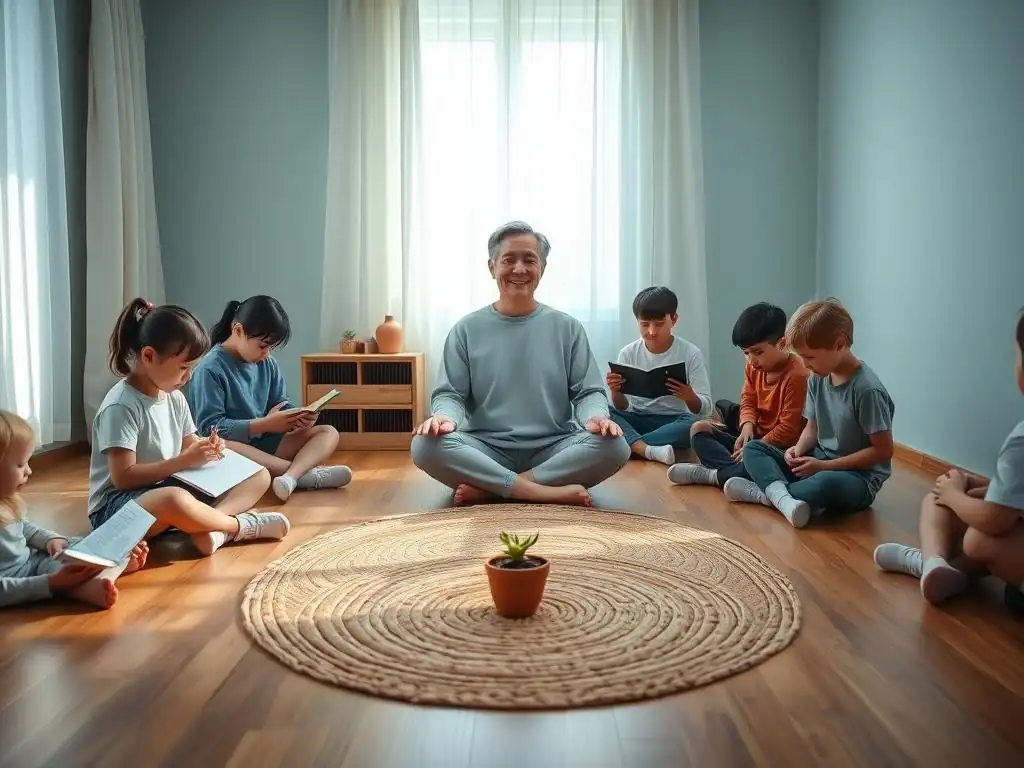
When teachers practice mindful teaching for educators, the benefits inevitably extend to their students, particularly in areas of focus and attention. A teacher who is calm and present creates a more settled classroom environment, which is less distracting and conducive to concentration. Furthermore, teachers can explicitly teach simple mindfulness techniques to students, such as mindful listening or a brief body scan before a test, to help them improve their own ability to focus.
Research has shown that even short mindfulness exercises integrated into the school day can improve students' attention spans and reduce mind-wandering. For instance, studies on school-based mindfulness programs often report improvements in students' executive functions, including attention control. By modeling mindfulness and providing students with basic tools, teachers empower them to better manage their own attention, leading to improved engagement with lessons and academic performance.
Promoting Emotional Intelligence and Self-Regulation in Students
Mindful teaching for educators plays a vital role in fostering students' emotional intelligence and self-regulation skills. Teachers who are mindful are better equipped to notice and respond to students' emotional states with empathy. They can teach students to identify their own emotions, understand their triggers, and develop healthy coping strategies.
By incorporating activities like feeling check-ins or guided discussions about emotions, teachers provide students with a vocabulary and framework for understanding their inner lives. When a teacher models mindful responses to challenging situations – demonstrating patience instead of anger – they provide a powerful example for students. This explicit and implicit teaching helps students develop greater self-awareness and the ability to manage their emotions constructively, skills that are essential for academic success and lifelong well-being.
Fostering a Culture of Kindness, Compassion, and Empathy in the Classroom
Perhaps one of the most profound impacts of mindful teaching for educators is its capacity to cultivate a classroom culture rooted in kindness, compassion, and empathy. When a teacher approaches their students and colleagues with presence and acceptance, they model these qualities. This creates a safe environment where students feel comfortable expressing themselves and are more likely to treat each other with respect and understanding.
Mindfulness practices often include exercises focused on compassion, such as loving-kindness meditation, which can be adapted for the classroom. Discussions about empathy, perspective-taking, and the interconnectedness of individuals can be woven into the curriculum. By intentionally fostering these qualities, mindful teachers help students develop stronger social-emotional skills, reduce bullying and conflict, and create a more supportive community where everyone feels valued. This ripple effect demonstrates the transformative power of mindful teaching for educators, impacting not just academic learning but the holistic development of young people.
Resources for Mindful Educators: Continuing Your Journey
Books, Websites, and Apps for Mindfulness in Education
Embarking on or deepening the journey of mindful teaching for educators is supported by a wealth of accessible resources. Numerous books offer practical guidance on integrating mindfulness into personal practice and the classroom, such as "Mindful Teaching and Teaching Mindfulness" by Deborah Schoeberlein David or "The Mindful Education Workbook" by Daniel Rechtschaffen. These texts often provide theoretical background alongside ready-to-use exercises.
Beyond books, a vast array of websites and apps cater specifically to mindfulness. Websites like Mindful Schools or the Greater Good Science Center at UC Berkeley offer articles, research summaries, and practical tips for educators. Mindfulness apps such as Calm, Headspace, or Ten Percent Happier provide guided meditations of varying lengths, suitable for busy schedules, some even offering specific content for educators or children. Exploring these resources allows teachers to find practices and information that resonate with their individual needs and context.
Mindfulness Workshops, Trainings, and Professional Development Opportunities for Teachers
For educators seeking more in-depth learning and practical experience, mindfulness workshops, trainings, and professional development programs are invaluable. These programs often provide hands-on practice, guided instruction, and the opportunity to ask questions and share experiences. Offerings range from single-day workshops focused on stress reduction to multi-day or multi-week courses on teaching mindfulness to students or integrating it into pedagogical practice.
Organizations specializing in mindfulness in education, such as Mindful Schools or the Mindfulness in Schools Project (MiSP), offer structured curricula and training programs designed specifically for the school environment. Many educational districts and regional professional development centers also offer workshops on teacher well-being and mindfulness. Participating in these programs provides a structured way for educators to build their skills, deepen their understanding of mindful teaching for educators, and gain confidence in applying these principles effectively.
Connecting with a Community of Mindful Educators: Sharing Experiences and Support
Connecting with other educators who are also exploring mindful teaching for educators can provide essential support, shared learning, and inspiration. Teaching can sometimes feel isolating, and sharing experiences and challenges with peers who understand the unique context of the classroom is incredibly valuable. Online forums, social media groups, and local meetups dedicated to mindfulness in education allow teachers to connect, ask questions, share resources, and celebrate successes.
Many mindfulness training programs also build in opportunities for participants to connect and form ongoing support networks. Some schools or districts may even establish internal mindfulness groups for staff. Engaging with a community reinforces practice, offers new perspectives, and combats feelings of isolation. Hearing how others are implementing mindful teaching for educators and navigating obstacles provides practical ideas and encouragement, fostering a sense of shared purpose and collective growth.
Conclusion: Embracing Mindfulness as a Path to Passion and Presence in Education
Reclaiming Your Joy in Teaching Through Mindful Practices
The journey into mindful teaching for educators is fundamentally a path towards reclaiming the passion and presence that may have become obscured by the inherent challenges of the profession. By intentionally cultivating awareness, acceptance, and compassionate action, teachers can transform their relationship with their work. Mindfulness practices provide the tools to navigate stress more effectively, reduce the impact of burnout, and foster a sense of calm amidst the daily demands of the classroom.
As educators integrate mindfulness into their personal lives and professional practice, they often report a renewed sense of purpose and connection to their students and the act of teaching itself. The small moments of conscious breathing, mindful listening, and intentional interaction accumulate, shifting the overall experience from one of being overwhelmed to one of being engaged and present. This process allows the inherent joy and meaning in teaching to surface, making the profession sustainable and deeply rewarding once again.
Creating a Lasting Impact on Students' Lives Through Mindful Education
Ultimately, embracing mindful teaching for educators has a powerful and lasting impact that extends far beyond the teacher's own well-being. A mindful teacher creates a ripple effect, influencing the emotional climate of the classroom, the quality of relationships, and the development of students' social-emotional skills. By modeling mindfulness, emotional regulation, and compassionate presence, teachers equip students with essential life skills.
Students in classrooms led by mindful educators are more likely to develop better focus, understand and manage their emotions, and interact with their peers with greater empathy and kindness. These skills are not only crucial for academic success but are foundational for navigating the complexities of life. Thus, mindful teaching for educators is not just a strategy for teacher self-care; it is a transformative pedagogical approach that nurtures the well-being and potential of every student, contributing to a healthier, more compassionate school community and society.
Frequently Asked Questions
How can mindful teaching benefit educators?
Mindful teaching helps educators reduce stress and burnout, improve emotional regulation, and foster stronger relationships with students.
What are some practical strategies for incorporating mindfulness into the classroom?
Strategies include mindful breathing exercises, body scan meditations, and creating a calm and supportive classroom environment that encourages presence.
How can mindfulness help teachers manage classroom stress and challenging student behaviors?
Mindfulness provides tools for self-awareness and emotional regulation, allowing teachers to respond to challenging situations with calmness and empathy rather than reactivity.
Where can educators find resources and training to learn more about mindful teaching practices?
Mind Care Guide offers articles, workshops, and online courses dedicated to mindful teaching, providing educators with practical skills and ongoing support. You can also find resources from other mental health organizations.
What are the potential long-term benefits of mindful teaching for both educators and students?
Long-term benefits include improved mental well-being for teachers, enhanced learning outcomes for students, and a more positive and supportive school culture overall.
Final Reflection: Cultivating Presence, Rekindling Passion
The relentless demands of modern education often leave teachers feeling depleted, their initial passion dimmed by overwhelming workloads and systemic pressures. This article explored the transformative power of mindfulness as a tool not just for stress reduction, but for reclaiming joy and presence within the classroom. It's a crucial conversation, because the well-being of educators directly impacts the quality of education our children receive.
The journey towards mindful teaching is not a destination, but a continuous process of self-discovery and growth. It's about recognizing the interconnectedness between our inner state and our ability to connect authentically with our students. This resonates deeply with me, as I've witnessed firsthand the positive ripple effect of mindful practices on both teachers and students. When we teach, we learn.
This ancient proverb highlights the reciprocal nature of the teaching process, and mindfulness allows us to fully embrace this exchange, enriching both sides.
Now, I invite you to consider how you can integrate mindful practices into your own teaching journey. Start small – perhaps with a few minutes of deep breathing before class, or by consciously choosing moments of presence throughout the day. Remember, the cultivation of inner peace is not selfish; it's an act of self-care that empowers you to be the best possible educator you can be. Embrace the opportunity to reconnect with your passion, to foster a more compassionate classroom environment, and to inspire the next generation with your renewed energy and presence.
Ignite Your Teaching Passion: Take the Next Step
Thanks for taking the time to explore mindful teaching practices! We hope you found valuable insights to reignite your passion and presence in the classroom. Now, let's put those ideas into action.
- Prioritize one mindful practice: Choose just one technique from the article – deep breathing, a short meditation, or a mindful walk – and commit to incorporating it into your daily routine this week. Even 5 minutes can make a world of difference.
- Share your experience: Connect with fellow educators! Share your experiences (both challenges and successes) with this new practice. Let’s build a supportive community together.
- Explore further: Delve deeper into mindfulness resources. Search online for guided meditations specifically designed for teachers or explore mindfulness exercises tailored for stress reduction.
Ready to transform your teaching experience and create a more fulfilling and present classroom? What small step will you take today to prioritize your wellbeing and enhance your teaching?