
Quick Mindfulness Breaks: Energize Students and Teachers in Just Minutes


Welcome to Mind Care Guide, your trusted companion on the journey to mental well-being.
Feeling overwhelmed? Exhausted? You're not alone. Discover how quick and easy mindfulness breaks for students (and teachers too!) can revitalize your day. Let's explore simple yet powerful techniques to cultivate calm and focus, and unlock the potential for a more balanced and resilient mind. Ready to recharge? Let's begin!
- Quick Mindfulness Breaks: Energize Students and Teachers
- Understanding the Need for Mindfulness Breaks in Schools
- Benefits of Incorporating Mindfulness Breaks for Students
- Practical Mindfulness Break Ideas for Students
- Mindfulness Breaks for Teachers: Prioritizing Self-Care
- Implementing Mindfulness Breaks Effectively: Tips and Strategies
- Overcoming Challenges and Addressing Concerns
- Resources for Mindfulness in Education
- Conclusion: Cultivating a Mindful School Environment
-
Frequently Asked Questions
- What are mindfulness breaks and why are they important for students?
- How long should a mindfulness break typically last for maximum effectiveness?
- What are some examples of quick mindfulness exercises that students can easily incorporate into their day?
- How can teachers effectively integrate mindfulness breaks into their classroom routine?
- What are the long-term benefits of regularly practicing mindfulness for students' mental health?
- Final Reflection: Cultivating Calm in a Chaotic World
- Unlock Your Inner Calm: Simple Steps to a More Mindful Day
Quick Mindfulness Breaks: Energize Students and Teachers
Mind Care Guide: Fostering Well-being Through Mindfulness in Education
At Mind Care Guide, we understand that the educational environment can be demanding, placing significant stress on both students striving to learn and teachers dedicated to guiding them. Our mission is to provide accessible, practical strategies for enhancing mental well-being. Mindfulness, the practice of being present and fully engaged in the current moment without judgment, offers a powerful tool to navigate these challenges. It's not about adding another burden to already packed schedules, but about integrating simple, effective practices that can transform daily experiences.
Mindfulness in education is gaining traction as a vital component of a holistic approach to learning and teaching. It equips individuals with skills to manage stress, improve focus, and cultivate emotional resilience. By introducing mindfulness breaks for students and providing resources for educators, Mind Care Guide aims to contribute to creating school environments where well-being is prioritized, leading to better learning outcomes and healthier, happier communities within the school walls.
Understanding the Need for Mindfulness Breaks in Schools
The Impact of Stress and Anxiety on Students and Teachers
The modern educational landscape often presents significant stressors. Students face pressure from academics, social dynamics, extracurricular activities, and sometimes challenging home environments. Research consistently shows rising rates of anxiety and depression among school-aged children and adolescents. For instance, a 2018 study published in the Journal of Developmental & Behavioral Pediatrics found that anxiety diagnoses in children and adolescents increased significantly over a decade. This chronic stress can impair cognitive function, reduce motivation, and negatively impact physical health, making it harder for students to learn and thrive.
Teachers are also under immense pressure, dealing with large class sizes, demanding curricula, administrative tasks, and supporting students with diverse needs, all while managing their own personal lives. Teacher burnout is a serious issue, with surveys frequently reporting high levels of stress and dissatisfaction. A 2017 study by the Yale Center for Emotional Intelligence found that nearly half of teachers reported high daily stress.
This stress impacts their effectiveness in the classroom, their ability to connect with students empathetically, and their overall job satisfaction, contributing to high turnover rates in the profession. Addressing this pervasive stress is crucial for the health of the entire school system.
Why Short Mindfulness Exercises Matter
Incorporating short mindfulness exercises into the school day offers a practical and accessible way to counteract the effects of stress and improve overall well-being for both students and teachers. These aren't lengthy meditation sessions requiring significant time commitments; instead, they are brief, often lasting just one to five minutes, designed to be easily woven into transitions, the start of a class, or moments of heightened tension. The power of these short breaks lies in their ability to quickly interrupt stress cycles, bring individuals back to the present moment, and create a sense of calm amidst chaos.
Even a minute of focused breathing or a brief body scan can help regulate the nervous system, reducing the physiological symptoms of stress like rapid heart rate and shallow breathing. For students, these quick mindfulness breaks for students can serve as reset buttons, helping them transition between subjects, refocus after distractions, or prepare for a challenging task.
For teachers, a brief mindful pause can prevent reactivity, enhance patience, and provide a moment of self-care in a demanding schedule. The cumulative effect of these small practices throughout the day can lead to significant improvements in attention, emotional regulation, and overall resilience.
Benefits of Incorporating Mindfulness Breaks for Students
Improved Focus and Concentration in the Classroom
One of the most immediate and observable benefits of implementing mindfulness breaks for students is an improvement in their ability to focus and concentrate. In a world filled with constant digital stimulation, cultivating sustained attention is increasingly challenging for young minds. Brief mindfulness exercises, such as focusing on the breath or a sensory experience, train the brain to stay present and resist distractions.
Regular practice, even in short bursts, strengthens the neural pathways associated with attention regulation. For example, a classroom that begins each lesson with a two-minute mindful breathing exercise might see students settle more quickly, listen more attentively to instructions, and persist longer on tasks. Studies, such as those conducted by organizations like Mindful Schools, have indicated that students participating in mindfulness programs show enhanced executive functions, including improved attention span and working memory.
Reduced Stress and Anxiety Levels Among Students
Stress and anxiety are significant barriers to learning and overall well-being for many students. The pressure to perform, social anxieties, and external stressors can create a constant state of unease. Mindfulness breaks provide students with concrete tools to recognize the physical and emotional signs of stress and anxiety and develop coping mechanisms.
By practicing techniques like deep breathing or body scans, students learn to calm their nervous system and create space between a stressful trigger and their reaction. Anecdotal evidence from schools implementing mindfulness programs often highlights students reporting feeling calmer, less overwhelmed, and better equipped to handle academic and social pressures. While individual results vary, providing these tools universally can help create a school culture where students feel more emotionally secure and capable of managing challenging emotions.
Enhanced Emotional Regulation and Self-Awareness
Emotional regulation is a critical skill for navigating social interactions, managing frustration, and responding constructively to challenges. Mindfulness practices cultivate self-awareness, helping students identify and understand their emotions without immediately being overwhelmed by them. Through mindful observation, students learn that feelings are temporary states, not fixed identities.
This increased self-awareness allows students to pause before reacting impulsively when feeling angry, frustrated, or upset. Instead, they can choose a more thoughtful response. For instance, a student who feels frustrated with a math problem might learn to take a few mindful breaths rather than tearing the paper or giving up immediately. This skill not only improves classroom behavior but also enhances peer relationships and equips students with lifelong emotional intelligence.
Increased Empathy and Compassion
Mindfulness extends beyond self-awareness to cultivate awareness of others. Practicing mindfulness can foster empathy and compassion by encouraging individuals to pay attention to their own internal experiences and, by extension, become more attuned to the experiences of those around them. Exercises that involve kindness or compassion towards oneself can naturally extend to others.
When students develop a greater understanding of their own struggles and emotions, they are often better able to recognize and empathize with the struggles and emotions of their peers. This can lead to a more supportive and inclusive classroom environment, reducing instances of bullying and conflict. Simple practices like a brief loving-kindness meditation, even if just directed towards classmates, can subtly shift the classroom dynamic towards greater understanding and connection.
Better Classroom Management and a More Positive Learning Environment
The collective impact of individual student benefits – improved focus, reduced anxiety, enhanced emotional regulation, and increased empathy – contributes significantly to better classroom management and the creation of a more positive learning environment. When students are calmer, more focused, and better able to manage their emotions, there are fewer disruptions and more opportunities for genuine engagement with the curriculum.
Teachers who incorporate mindfulness breaks for students often report smoother transitions between activities, fewer behavioral issues, and a greater sense of connection within the class. This creates a virtuous cycle: a calmer environment supports students' learning, which in turn reduces stress for both students and the teacher. A more positive atmosphere fosters curiosity, encourages participation, and makes the classroom a more enjoyable place to be for everyone.
Practical Mindfulness Break Ideas for Students

Here are several practical and quick mindfulness breaks for students that can be easily implemented in the classroom or at home.
Breathing Exercises for Classroom Calm
Focusing on the breath is one of the most accessible ways to practice mindfulness, as the breath is always available. Simple breathing exercises can quickly calm the nervous system and bring students into the present moment.
Box Breathing Technique for Students
Box breathing is a simple, four-step technique that is easy for students of various ages to visualize and follow. It involves inhaling, holding the breath, exhaling, and holding the breath again, each for the same count, typically four.
To guide students through box breathing: Instruct them to sit comfortably with feet flat on the floor. Ask them to imagine drawing a box with their breath. "Breathe in slowly for a count of four, like drawing the first side of the box." Pause. "Hold your breath gently for a count of four, like drawing the top of the box." Pause.
"Breathe out slowly for a count of four, like drawing the third side." Pause. "Hold your breath out for a count of four, completing the box." Repeat this cycle three to five times. This structured approach provides a clear focus and helps regulate breathing patterns, effectively reducing feelings of stress and anxiety.
Alternate Nostril Breathing (Nadi Shodhana) Simplified
A simplified version of Alternate Nostril Breathing, or Nadi Shodhana, can be introduced to older students or those comfortable with basic breathing practices. This technique is traditionally used to balance the nervous system.
A simplified approach for students might involve using one finger to gently close one nostril. "Close your right nostril with your right thumb. Breathe in slowly through your left nostril." Pause. "Now, close your left nostril with your right ring finger, release your thumb, and breathe out slowly through your right nostril." Pause.
"Breathe in through your right nostril." Pause. "Close your right nostril, release your ring finger, and breathe out through your left nostril." Repeat this cycle for one to two minutes. This exercise requires slightly more coordination but is excellent for calming the mind and improving focus before a test or challenging task.
Body Scan Meditation for Relaxation
Body scan meditation involves systematically bringing attention to different parts of the body, noticing sensations without judgment. This practice helps students become more aware of physical tension and learn to release it.
Guided Body Scan Scripts for Younger Students
For younger students, a body scan should be brief, playful, and focus on simple sensations. A script might guide them to "wiggle your toes and then let them be still," "notice how your feet feel on the floor," "imagine sunshine warming your knees," and move up the body, spending just a few seconds on each area.
A simple script could begin: "Let's take a few quiet breaths. Now, bring your attention down to your feet. Can you feel your socks on your feet? Wiggle your toes. Now, let them be still. Notice how your feet feel right now. Now, move your attention up to your ankles... your lower legs... your knees." Continue this process, gently guiding attention up through the body to the top of the head, finishing with a few quiet breaths, encouraging students to notice how their whole body feels. This helps them connect with their physical presence and release gentle tension.
Body Scan for Older Students: Cultivating Present Moment Awareness
For older students, the body scan can be slightly longer and encourage deeper observation of sensations, thoughts, and emotions as they arise during the scan. The focus is on non-judgmental awareness.
A script for older students might start: "Find a comfortable position, seated or lying down if possible. Close your eyes gently if you feel comfortable, or soften your gaze. Bring your awareness to your breath, noticing the gentle rise and fall of your chest or abdomen. Now, gently shift your attention to your feet.
Notice any sensations here – warmth, coolness, tingling, pressure. Just observe, without trying to change anything. If your mind wanders, that's okay; just gently guide your attention back to your feet." Guide them slowly through the legs, torso, arms, neck, and head, encouraging awareness of physical sensations and any accompanying thoughts or feelings, reinforcing the practice of returning to the present moment.
Mindful Movement Activities
Mindfulness doesn't require sitting still. Gentle movement can also be a powerful way to connect with the body and the present moment.
Mindful Walking in the Classroom or Outdoors
Mindful walking involves paying deliberate attention to the physical sensations of walking – the lifting of the foot, the swing of the arms, the feeling of the ground beneath the feet. This can be done in place, around the classroom perimeter, or outdoors.
Instruct students to walk slowly, paying attention to each step. "Feel your foot lift off the ground. Notice the slight shift in weight. Feel your other foot swing forward and land on the floor. Notice the pressure as you put your weight down." Encourage them to notice the rhythm of their steps, the movement of their body, and any sounds around them. Even a two-minute mindful walk around the classroom can help students release restless energy and refocus their minds.
Gentle Stretching and Yoga Poses for Students
Simple, gentle stretches or basic yoga poses can help students release physical tension while bringing awareness to their bodies. Poses like Cat-Cow, child's pose, or a simple seated forward fold can be done easily beside their desks.
Guide students through a few simple movements, encouraging them to notice the sensations in their muscles and joints. "Let's do a gentle stretch. Reach your arms up towards the sky, feeling your spine lengthen. Now, gently lean to one side, noticing the stretch along your ribs." Or, "From your seated position, gently fold forward, letting your head hang heavy. Notice the stretch in your back and legs. Breathe into the sensation." These mindful movements provide physical release and a break from sedentary activity while fostering body awareness.
Sensory Awareness Exercises
Engaging the five senses is a direct way to anchor awareness in the present moment. These exercises can be simple and require no special materials.
Mindful Eating: Focusing on Taste and Texture
If snacks are part of the school day, a mindful eating exercise can be a great way to practice sensory awareness. Even a single raisin or cracker can be used.
Instruct students to take one piece of food and examine it closely with their eyes, noticing its color, shape, and texture. Then, they can smell it, noticing any aroma. Next, place it in their mouth without chewing immediately, noticing how it feels. Finally, instruct them to chew very slowly, paying attention to the changes in taste and texture, and swallow mindfully, noticing the sensation as it goes down. This brief exercise, perhaps lasting three minutes with a small piece of food, slows down the hurried pace of eating and heightens sensory awareness.
Sound Scavenger Hunt: Tuning into the Auditory Environment
This exercise encourages students to become aware of the sounds around them, both near and far, without judgment.
Instruct students to close their eyes or lower their gaze and simply listen for one minute. "What sounds can you hear right now? Listen closely. Can you hear sounds inside the classroom? Outside? Are there sounds that are very close? Sounds that are far away?" After the minute, you might ask them to share one or two sounds they noticed. This exercise is particularly helpful for settling a noisy classroom or transitioning after a stimulating activity, redirecting scattered attention to the present auditory environment.
Visualization Techniques for Relaxation
Guided visualization can help students calm their minds and create a sense of peace by imagining tranquil scenes or positive outcomes.
Guided Imagery: Imagining a Peaceful Place
Guiding students to imagine a peaceful place can be a powerful way to reduce stress and promote relaxation. This can be a place they know or an imagined place.
A simple script could be: "Close your eyes gently and take a few deep breaths. Imagine your most peaceful place. Where are you? Is it a beach, a forest, a cozy room? What do you see there? What do you hear? What do you smell? How does it feel to be in this place? Spend a moment enjoying the feeling of peace and calm in your special place." After a minute or two, gently guide them back to the classroom. This mental escape provides a momentary respite from stress and activates the body's relaxation response.
Positive Affirmations for Self-Esteem
Using positive affirmations mindfully can help students build self-esteem and counter negative self-talk. This isn't just repeating phrases but saying them with intention and awareness.
Instruct students to repeat simple, positive phrases silently or quietly to themselves, focusing on the feeling the words evoke. Examples include: "I am capable," "I am kind," "I can handle this," or "I am enough." Guide them to say the phrase and then pause, noticing how it feels in their body. Repeating an affirmation like "I am calm" while taking a deep breath can reinforce the feeling of tranquility. Spending one minute repeating a chosen affirmation can provide a quick boost of confidence and positive self-regard.
Mindfulness Breaks for Teachers: Prioritizing Self-Care
The Importance of Teacher Well-being
Teacher well-being is not a luxury; it is a fundamental necessity for effective teaching and a healthy school environment. Teachers who are stressed, burned out, and emotionally exhausted are less able to be patient, creative, and present for their students. Their well-being directly impacts the quality of instruction and the emotional climate of the classroom. Investing in teacher self-care through practices like mindfulness is an investment in the entire educational system.
High levels of teacher stress contribute to absenteeism, job dissatisfaction, and ultimately, teachers leaving the profession. This turnover disrupts student learning and places further strain on remaining staff. Prioritizing teacher well-being through accessible tools like quick mindfulness breaks helps mitigate these issues, fostering resilience and sustainability in the teaching profession. It models self-care for students and reinforces the message that mental health is important for everyone, regardless of role.
Quick Mindfulness Techniques for Teachers During the School Day
Teachers have incredibly demanding schedules with little downtime, making quick, accessible mindfulness techniques essential. These practices can be integrated into the few moments available between classes, during a brief planning period, or even while supervising quiet work.
Mindful Breathing Before and After Class
Taking just three conscious breaths can shift a teacher's state significantly. Before students arrive or before starting a lesson, a teacher can pause, close their eyes for a moment, and take three slow, deep breaths, focusing only on the sensation of the air entering and leaving their body.
Similarly, after students leave a class, taking a minute to simply breathe and notice any physical or emotional residue from the lesson can help process the experience and prepare for the next task or group of students. This simple act creates a small buffer zone, preventing the accumulation of stress throughout the day and allowing for more presence in each interaction.
Body Scan Meditation During Breaks
Even a five-minute break between meetings or during lunch can be used for a brief body scan. While seated, a teacher can quickly scan their body, noticing areas of tension – perhaps in the shoulders, neck, or jaw – and consciously invite relaxation into those areas with their breath.
This abbreviated body scan helps teachers become aware of physical stress they might be holding unconsciously. By acknowledging and gently releasing this tension, they can feel more grounded and less physically burdened by the demands of the day. It's a quick way to check in with oneself and practice self-compassion amidst a busy schedule.
Gratitude Practice: Appreciating Small Moments
Shifting focus to gratitude, even for a moment, can profoundly impact mood and perspective. During a quick break, a teacher can take 30-60 seconds to silently acknowledge three things they are grateful for in that moment – perhaps a student's smile, a successful lesson segment, a quiet moment, or even just the comfort of their chair.
This simple practice redirects the mind away from stressors and towards positive aspects of the day, however small. Regular gratitude moments can help cultivate a more positive outlook, increase resilience, and remind teachers of the rewarding aspects of their profession, even amidst the challenges.
Longer Mindfulness Sessions for Teacher Self-Care
While quick breaks are vital for in-the-moment stress management, longer mindfulness sessions outside of the immediate school day can support deeper self-care and resilience building for teachers.
Guided Meditation for Stress Reduction
Committing to a 10-20 minute guided meditation session a few times a week can significantly reduce accumulated stress and improve emotional well-being. Many apps and online resources offer guided meditations specifically for stress or burnout.
Teachers can integrate this practice into their morning routine before school, during their commute (if not driving), or in the evening. Consistent practice helps train the mind to be less reactive to stress triggers and build a greater capacity for calm and presence, which directly translates into their effectiveness and satisfaction in the classroom.
Mindfulness Workshops and Training for Educators
Participating in mindfulness workshops or formal training programs provides teachers with a deeper understanding of mindfulness principles and practices, as well as strategies for integrating them into their professional and personal lives.
Many educational organizations and wellness providers offer programs tailored for educators, sometimes even provided through school districts. For example, a district in California implemented a pilot program offering 8-week mindfulness training to teachers, reporting positive feedback on reduced stress and improved classroom climate. Such training not only benefits the individual teacher but also equips them to potentially share mindfulness breaks for students more effectively.
Implementing Mindfulness Breaks Effectively: Tips and Strategies
Successfully integrating mindfulness breaks for students and teachers into the school day requires thoughtful planning and consistent effort. It's not just about doing an activity but creating a culture that supports well-being.
Creating a Dedicated Space for Mindfulness
While many mindfulness breaks can happen anywhere, having a designated quiet corner or area in the classroom or a staff room can signal the importance of these practices and provide a calming visual cue.
This space doesn't need to be elaborate – perhaps just a cushion, a calming poster, or a small plant. For students, it could be a "peace corner" where they can go for a few minutes to calm down using guided breathing cards. For teachers, a quiet spot in the staff lounge away from busy areas can offer a place for a quick mindful reset. The existence of the space itself reinforces the value placed on pausing and finding calm.
Setting Clear Expectations and Guidelines
Introducing mindfulness breaks works best when students (and teachers) understand the purpose and expectations. Explain why you are doing these activities – to help everyone feel calmer, focus better, and manage big feelings.
Establish simple rules, such as keeping eyes closed or gazing softly at the floor, being quiet, and respecting others' practice. For instance, before a breathing exercise, you might say, "Now we are going to take two minutes to just breathe quietly together. This helps our brains get ready to learn. Please sit comfortably and close your eyes if you like, or just look at your hands." Consistency and clear, age-appropriate instructions are key.
Integrating Mindfulness Breaks into the Daily Schedule
Mindfulness breaks are most effective when they become a regular, predictable part of the school day, rather than an occasional add-on. Look for natural transition points where a quick reset would be beneficial.
Consider incorporating a one-minute mindful breathing exercise at the start of the day to help students settle in, a quick stretch after recess to transition back to focused work, or a short body scan before a challenging subject like math or a test. For teachers, schedule a mindful pause before a difficult meeting or build in a few minutes of quiet breathing before the first class begins. Routine helps these practices become habits.
Modeling Mindfulness Practices as Teachers
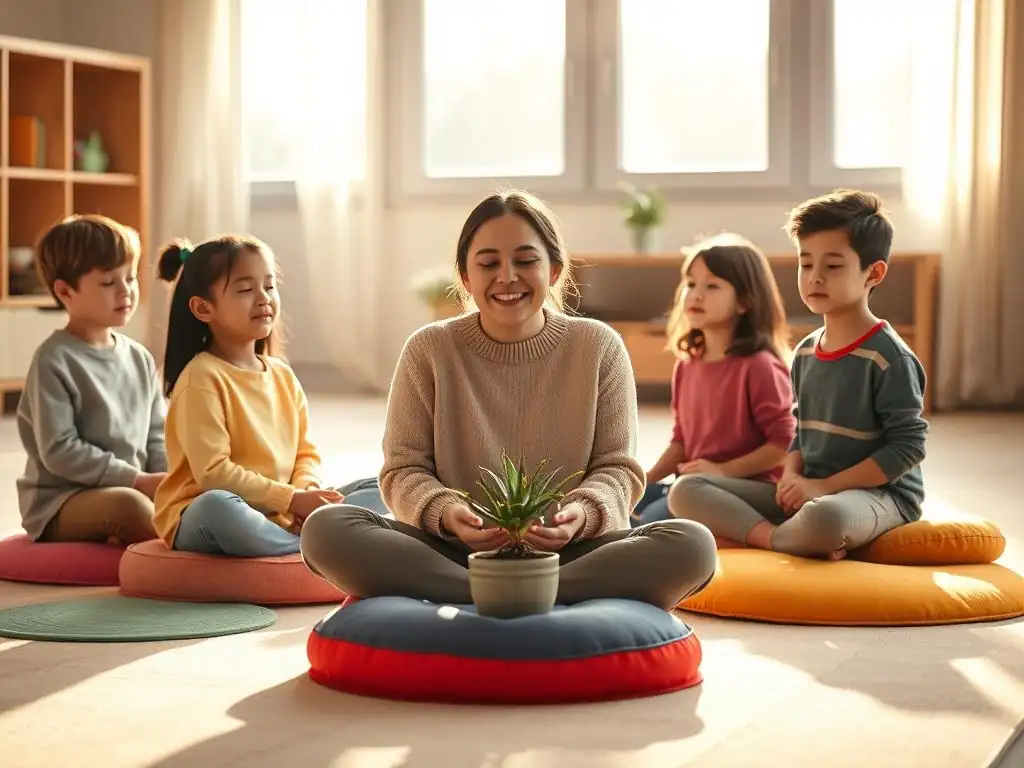
Teachers are powerful role models. When teachers openly participate in mindfulness breaks alongside their students, or share how they use mindfulness in their own lives, it lends credibility and encourages student engagement.
Simply saying, "I'm going to take three deep breaths now to feel calm before we start," and demonstrating the practice shows students that it's a valuable tool for everyone. Sharing personal, age-appropriate examples of how mindfulness helps manage stress can make the concept more relatable and encourage students to try it themselves. Authenticity and participation are much more effective than simply instructing students to practice.
Making Mindfulness Fun and Engaging for Students
While mindfulness is a serious practice, the activities can be introduced in ways that are enjoyable and engaging for students, particularly younger ones. Frame it as a tool to become "super listeners" or "calm explorers."
Use creative language, incorporate movement, or turn sensory exercises into games (like the sound scavenger hunt mentioned earlier). For example, "Spaghetti Spine" can be a fun way to introduce mindful stretching – first sitting up tall with a "straight spine like uncooked spaghetti," then relaxing into a slumped posture with a "floppy spine like cooked spaghetti." Making it enjoyable increases participation and positive association with the practice.
Overcoming Challenges and Addressing Concerns
Implementing mindfulness in schools may encounter resistance or challenges. Addressing these proactively and empathetically is crucial for success.
Addressing Skepticism and Resistance
Some individuals – students, parents, or even colleagues – may be skeptical of mindfulness, viewing it as "fluff" or unrelated to academic rigor. Resistance might also stem from discomfort with stillness or introspection.
Address skepticism by clearly articulating the research-backed benefits of mindfulness breaks for students and teachers, focusing on concrete outcomes like improved focus, reduced stress, and better emotional regulation, which directly support academic goals. Share examples of schools that have successfully implemented mindfulness programs. For resistant students, offer choice where possible (e.g., "You can close your eyes or look at your hands") and emphasize that it's okay if their mind wanders – the practice is simply noticing and returning. Patience and consistent, gentle introduction are key.
Adapting Mindfulness Practices to Different Age Groups and Learning Styles
Mindfulness is not one-size-fits-all. Practices need to be adapted to be developmentally appropriate and accessible to students with diverse learning styles and needs.
For very young children, mindfulness might involve playful sensory games or simple movements. For adolescents, it might involve discussions about brain science and stress management. Consider students with attention challenges; shorter, more active mindfulness breaks or guided practices with clear visual cues might be more effective. For students with sensory sensitivities, provide options – perhaps allowing them to sit slightly apart or use a different position. Be flexible and willing to modify practices based on student feedback and observation.
Ensuring Inclusivity and Accessibility
It's vital that mindfulness practices are introduced in a way that is inclusive and respectful of all students' backgrounds and beliefs. Mindfulness, as taught in secular school settings, focuses on universal human experiences like breathing, sensation, and emotion, separate from any religious or cultural origins.
Ensure language is neutral and avoids any specific cultural or religious terminology. Offer variations in posture or participation to accommodate physical needs or preferences. For example, some students may be uncomfortable closing their eyes; offer the alternative of a soft gaze. Make it clear that participation is voluntary and that the intention is simply to help manage stress and improve focus, skills beneficial to everyone.
Resources for Mindfulness in Education
While this article provides an overview and practical ideas, many excellent resources are available to support schools, teachers, and parents in implementing mindfulness.
Recommended Books and Articles on Mindfulness for Students and Teachers
Numerous publications offer deeper dives into the theory and practice of mindfulness in educational settings. Look for books that provide age-appropriate activities and guidance for educators. Articles in educational journals and publications often share research findings and case studies from schools implementing mindfulness programs, providing valuable insights and evidence of effectiveness.
These resources can offer structured curricula, scripts for guided practices, and strategies for integrating mindfulness into various subjects. They often include sections on addressing common challenges and measuring the impact of mindfulness initiatives within a school context.
Online Mindfulness Apps and Websites for Guided Meditations
Technology offers convenient access to guided mindfulness practices for both students and teachers. Many apps and websites provide libraries of guided meditations of varying lengths, specifically designed for stress reduction, focus, sleep, and other needs.
Some platforms offer specific content for children and adolescents, using age-appropriate language and themes. Teachers can use these resources for their personal practice or to guide students through exercises in the classroom (ensuring compliance with school technology policies). These digital tools make mindfulness accessible anytime, anywhere.
Organizations Offering Mindfulness Training for Educators
Several reputable organizations specialize in providing mindfulness training tailored for educators and school staff. These programs often combine personal practice with pedagogical strategies for teaching mindfulness to students.
Participating in such training can provide teachers with the skills and confidence needed to effectively lead mindfulness breaks for students and model mindful behavior. These organizations may also offer resources, support networks, and guidance on implementing school-wide mindfulness initiatives, contributing to a more sustainable and impactful integration of these practices.
Conclusion: Cultivating a Mindful School Environment
Integrating quick mindfulness breaks for students and prioritizing teacher well-being through similar practices is a powerful step towards creating school environments that nurture mental health alongside academic achievement. These brief pauses offer valuable opportunities to reduce stress, improve focus, enhance emotional regulation, and build a greater sense of connection and empathy within the school community.
While implementing mindfulness requires intention and consistency, the benefits for both students and teachers are substantial and far-reaching. By making mindfulness a regular, accessible part of the school day, educators can equip young people with essential life skills for navigating challenges and foster a more positive, supportive, and engaged learning atmosphere for everyone.
The Long-Term Benefits of Mindfulness in Education
The long-term impact of cultivating mindfulness in education extends well beyond the classroom walls. Students who learn mindfulness skills early are better equipped to manage stress, cope with challenges, and maintain emotional well-being throughout their lives. They develop greater self-awareness and resilience, which are crucial for success in college, career, and personal relationships.
For teachers, sustained mindfulness practice can lead to reduced burnout, increased job satisfaction, and a greater sense of purpose. A mindful teaching force is better positioned to create positive learning experiences and serve as compassionate guides for their students. Ultimately, integrating mindfulness breaks for students and supporting mindful teachers contributes to building healthier individuals and stronger, more compassionate communities.
Frequently Asked Questions
What are mindfulness breaks and why are they important for students?
Mindfulness breaks are short periods dedicated to focusing on the present moment and cultivating self-awareness. They're important because they help students manage stress, improve focus, and enhance their overall well-being.
How long should a mindfulness break typically last for maximum effectiveness?
A mindfulness break doesn't need to be lengthy. Even just 1-5 minutes can be highly effective. The key is consistency and focused attention during the break.
What are some examples of quick mindfulness exercises that students can easily incorporate into their day?
Examples include deep breathing exercises, focusing on sensory experiences (like noticing the sounds around them), or a brief body scan to connect with physical sensations. These are all easily accessible to students.
How can teachers effectively integrate mindfulness breaks into their classroom routine?
Teachers can schedule short breaks between activities, use transition times, or incorporate mindfulness as a morning routine. Leading by example and participating themselves is also key.
What are the long-term benefits of regularly practicing mindfulness for students' mental health?
Regular mindfulness practice can lead to reduced anxiety and stress, improved emotional regulation, and increased self-compassion, contributing to better mental health and academic performance over time.
Final Reflection: Cultivating Calm in a Chaotic World
The need for quick mindfulness breaks in education is not just a trend; it's a vital necessity. In today's fast-paced, high-pressure learning environments, both students and teachers are grappling with unprecedented levels of stress and anxiety. The techniques explored in this article—from simple breathing exercises to mindful movement—offer a powerful antidote, providing readily accessible tools to improve focus, reduce stress, and foster a more positive learning atmosphere.
The impact of incorporating mindfulness into the school day extends far beyond improved academic performance. It cultivates a culture of self-awareness and emotional regulation, skills crucial for navigating the complexities of life. These practices equip students and teachers with the resilience needed to cope with challenges and build stronger, healthier relationships. As Jon Kabat-Zinn wisely stated, Mindfulness means paying attention in a particular way: on purpose, in the present moment, and non-judgmentally.
This simple yet profound definition encapsulates the transformative power of even the shortest mindfulness break.
Now, consider how you can integrate these practices into your own life, whether you're a student, teacher, or parent. Start small. Choose one technique from the article and dedicate just a few minutes each day to experiencing its benefits. Observe the shift in your energy levels, your focus, and your overall well-being. Remember, the journey towards a calmer, more mindful existence begins with a single, conscious breath. Embrace the opportunity to cultivate inner peace, not just for yourself, but for the benefit of those around you.
Unlock Your Inner Calm: Simple Steps to a More Mindful Day
Thanks for taking the time to explore the power of quick mindfulness breaks! We hope you've discovered new ways to energize yourself and your students. Ready to integrate these practices into your daily routine?
- Prioritize one mindfulness technique: Choose the exercise that resonated most with you – the deep breathing, the body scan, or the mindful movement – and schedule just 5 minutes to practice it tomorrow.
- Share this article: Spread the word and help others discover the benefits of incorporating short mindfulness breaks into their day. Share this with your colleagues, friends or family!
- Reflect on your experience: What were the immediate benefits you noticed? Try making a quick note about your experience and how you felt before and after the practice. This can help track your progress!
What simple step will you take today to make mindfulness a part of your daily life?