
Demons, Humors, or Divine Wrath? Medieval Beliefs on Mental Illness Causes

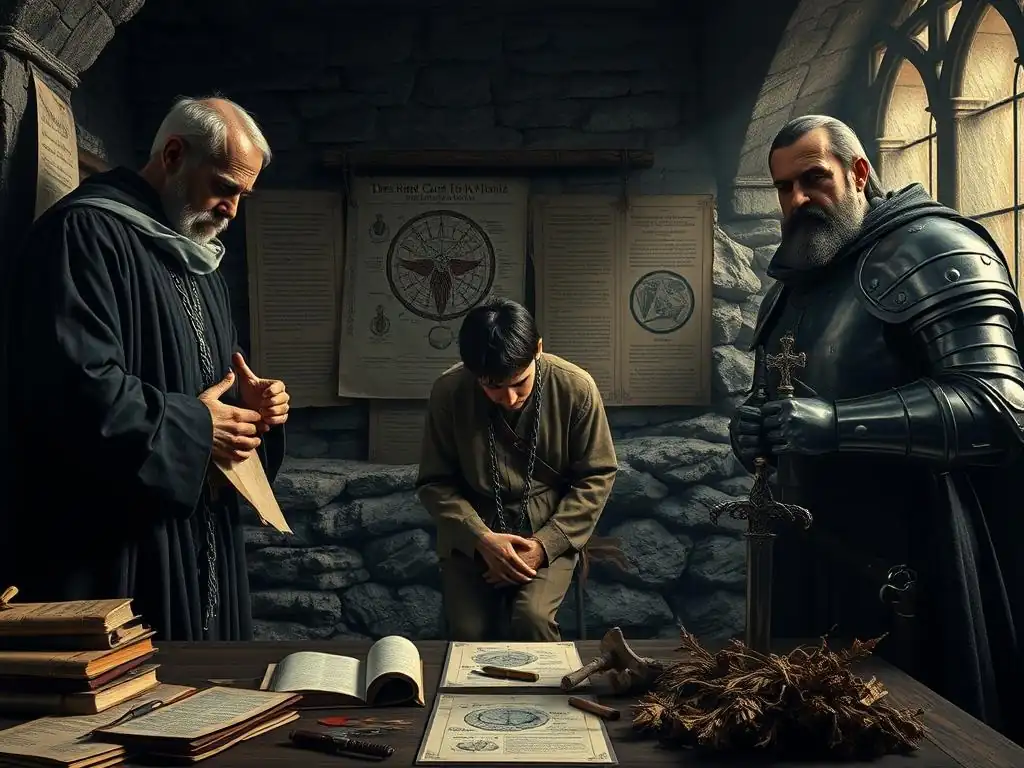
Welcome to Mind Care Guide, a sanctuary for understanding and nurturing your mental well-being. Ever wondered how our ancestors grappled with the complexities of the mind? Delve into the past with us as we explore the fascinating and often bewildering world of Medieval mental illness causes. Were demons, humors, or divine wrath truly believed to be the source of suffering? Uncover the historical perspectives that shaped our understanding of mental health, and perhaps find surprising echoes in our modern-day struggles. Let's embark on this journey together...
Demons, Humors, or Divine Wrath? Medieval Beliefs on Mental Illness Causes
- Introduction: Understanding Medieval Perspectives on Mental Health
- The Influence of Religious Beliefs on Explanations of Mental Illness
- The Humoral Theory: A Medical Approach to Understanding Mental Imbalance
- Societal Attitudes and Perceptions of the Mentally Ill in the Middle Ages
-
The Interplay of Religious, Medical, and Social Factors
- Integrating Beliefs: How Demons, Humors, and Divine Wrath Interacted in Explanations
- The Role of Folk Medicine and Superstition in Addressing Mental Health Issues
- Case Studies: Examining Specific Examples of Medieval Mental Illness Treatment: The Case of Joan of Arc
- Case Studies: Examining Specific Examples of Medieval Mental Illness Treatment: Royal Afflictions - Charles VI of France
- The Legacy of Medieval Beliefs on Mental Health Understanding
- Conclusion: Reflecting on Medieval Perspectives on Mental Health and its Causes
-
Frequently Asked Questions
- ### What were some common beliefs about the causes of mental illness during the Medieval period?
- ### How did the theory of humors influence the understanding of mental health in the Middle Ages?
- ### Besides demons and humors, were there any other explanations for mental illness in Medieval times?
- ### How were individuals with mental illness treated in the Medieval era?
- ### What resources existed for understanding medieval perspectives on mental illness?
- Final Reflection: Unraveling the Medieval Mind's Understanding of Illness
- Uncover Your Ancestors' Understanding of Mental Health
Introduction: Understanding Medieval Perspectives on Mental Health
Setting the Stage: The Medieval Worldview and Mental Wellbeing
The Medieval period, roughly spanning from the 5th to the 15th century, was characterized by a worldview deeply intertwined with religion, superstition, and a nascent scientific understanding based on ancient texts. Understanding Medieval mental illness causes requires stepping into this complex world where the supernatural, the physical, and the divine were not separate realms but integral parts of existence. Life was often challenging, marked by plagues, famine, and conflict, which undoubtedly impacted psychological states, yet the explanations for profound mental distress were often sought outside purely material circumstances.
In this era, the concept of "mental health" as understood today did not exist. Instead, conditions we might recognize as depression, psychosis, or anxiety were categorized and explained through the dominant frameworks of the time: religious doctrine and humoral theory derived from ancient Greek and Roman physicians like Hippocrates and Galen. These frameworks provided the lens through which unusual behaviors, altered states of consciousness, or persistent melancholy were interpreted, shaping both the perceived causes and the proposed remedies for what were considered afflictions of the mind or soul.
The Challenge of Diagnosing and Treating Mental Illness in Medieval Times
Diagnosing what we now call mental illness in the Middle Ages was a complex process, often relying on observable behaviors interpreted through the prevailing belief systems. There was no standardized diagnostic manual; instead, symptoms like irrational speech, violent outbursts, withdrawal, or visions could be attributed to a variety of causes, from physical imbalances to spiritual forces. A person exhibiting symptoms might first be seen by a local healer, then perhaps a physician trained in humoral theory, or potentially a cleric or exorcist if the symptoms suggested demonic influence or divine displeasure.
Treatment approaches were consequently diverse and often combined elements from different systems. A physician might prescribe herbal remedies, dietary changes, or bloodletting based on humoral theory, while a cleric might recommend prayer, pilgrimages, or exorcism. Families and communities played a significant role, sometimes offering care and support, while in other instances, fear and misunderstanding led to isolation or even persecution. The lack of a unified understanding of the causes of mental illness meant that individuals experienced vastly different responses depending on where they lived, their social status, and the specific interpretation of their symptoms.
The Influence of Religious Beliefs on Explanations of Mental Illness
Demonic Possession as a Cause of Mental Disorder: The Power of the Devil
A prevalent belief regarding Medieval mental illness causes was that of demonic possession. In a deeply Christian society, the Devil and his demons were seen as active forces capable of influencing and corrupting human beings, body and soul. Strange behaviors, irrational speech, physical contortions, or blasphemy could easily be interpreted as signs that a demon had entered an individual and was controlling their actions. This view was particularly common for conditions that involved dramatic changes in personality, fits, or apparent resistance to religious symbols.
Explanations for why someone might become possessed varied. It could be seen as a consequence of sin, a failure to resist temptation, or simply the Devil targeting a vulnerable soul. The primary treatment for suspected demonic possession was exorcism, a ritual performed by priests or other authorized clergy aimed at expelling the demon from the afflicted person. Accounts from the period describe exorcisms involving prayers, holy water, relics, and commands to the alleged demon, reflecting the strong conviction in the spiritual battle being waged within the individual.
Divine Punishment: Mental Illness as God's Wrath or Test
Beyond demonic influence, another significant religious explanation for Medieval mental illness causes was divine intervention, specifically as punishment for sin or as a trial sent by God. Mental suffering could be interpreted as a consequence of an individual's own transgressions, the sins of their ancestors, or the collective sins of a community. This perspective framed mental illness not purely as an affliction, but potentially as a moral or spiritual failing.
Alternatively, some religious views saw mental distress as a test of faith or a means for spiritual growth. Suffering, including mental suffering, could draw an individual closer to God or provide an opportunity for repentance and salvation. In this view, conditions like profound melancholy might be seen as a period of spiritual reflection or penance. Treatment in such cases often involved prayer, confession, fasting, pilgrimages to holy sites, and seeking the intercession of saints, all aimed at spiritual purification and reconciliation with the divine.
The Role of Saints and Miracles in Healing Mental Distress
Within the religious framework concerning Medieval mental illness causes, saints and miracles played a crucial role as sources of hope and potential healing. Saints were revered individuals believed to have a special connection to God, and their relics or shrines were considered sites of divine power. People suffering from various ailments, including those interpreted as mental afflictions, would undertake pilgrimages to the shrines of saints known for healing, praying for miraculous recovery.
Specific saints became associated with the healing of particular conditions. For example, Saint Dymphna is traditionally invoked as the patroness against mental disorders. Accounts of miraculous cures at shrines provided powerful validation for the belief that divine power could alleviate mental suffering. These miraculous healings were seen not just as remedies but as signs of God's grace, reinforcing the religious explanations for the causes of affliction and the spiritual path to recovery.
The Humoral Theory: A Medical Approach to Understanding Mental Imbalance

The Four Humors: Blood, Phlegm, Yellow Bile, and Black Bile
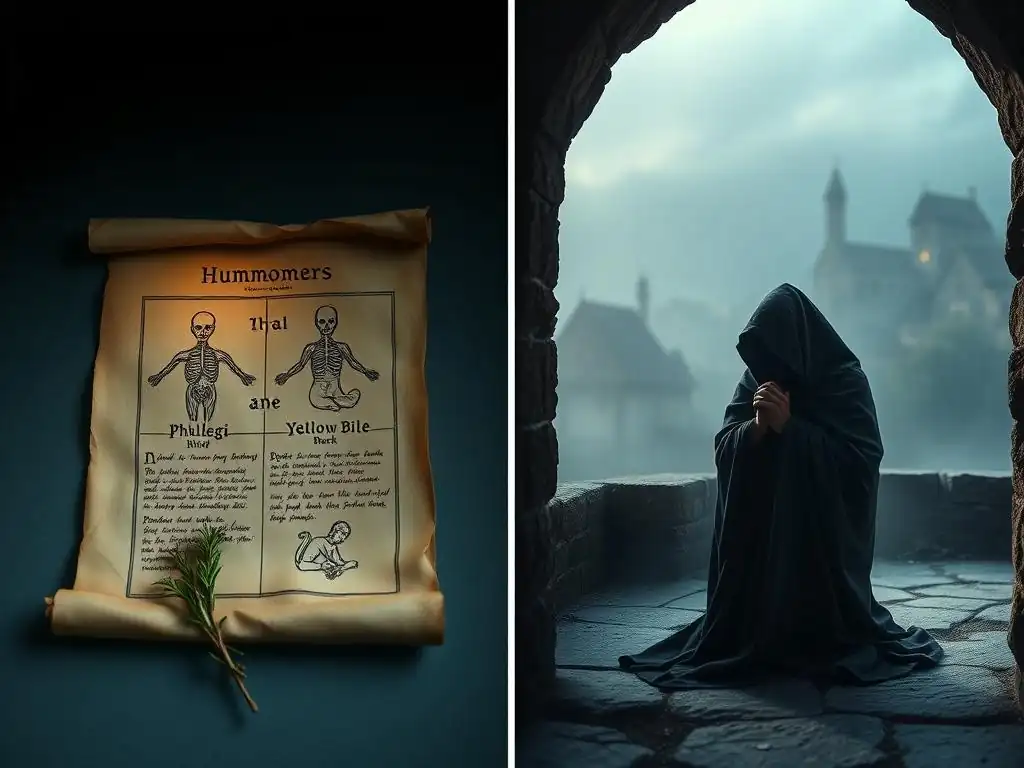
Alongside religious explanations, the dominant medical framework for understanding health and disease, including Medieval mental illness causes, was the humoral theory. Inherited from ancient Greek physicians like Hippocrates and codified by Galen, this theory posited that the human body was composed of four primary substances or "humors": blood, phlegm, yellow bile (or choler), and black bile (or melancholy). Each humor was associated with specific qualities (hot, cold, wet, dry) and linked to particular organs and temperaments.
Maintaining health, both physical and mental, was believed to depend on the proper balance of these four humors within the body. An excess or deficiency of any humor, or an imbalance in their qualities, was thought to lead to illness. This complex system provided a physiological explanation for a wide range of conditions, offering a medical alternative or complement to purely spiritual interpretations of suffering.
Imbalances and Their Impact on Mental State: Melancholy and Mania
According to humoral theory, specific imbalances were directly linked to different mental states. An excess of black bile, for instance, was believed to cause melancholy, a state characterized by sadness, fear, introspection, and sometimes irrational thoughts or delusions. This humoral explanation for depression was widely accepted and described in medical texts throughout the Middle Ages.
An excess of yellow bile was thought to cause choleric temperament, prone to anger and irritability, and in extreme imbalance, potentially lead to states resembling mania, characterized by agitation, restlessness, and irrational behavior. Phlegm was associated with a phlegmatic temperament, leading to sluggishness and apathy, while blood was linked to a sanguine temperament, associated with cheerfulness and optimism. Thus, understanding Medieval mental illness causes often involved identifying which humor was out of balance based on the patient's symptoms.
Balancing the Humors: Medieval Treatments Based on Humoral Theory
Treatments for mental illness based on humoral theory aimed to restore the balance of the humors. These treatments varied depending on which humor was believed to be in excess or deficient. For conditions attributed to an excess of black bile (melancholy), treatments might include dietary changes (avoiding foods thought to increase black bile), herbal remedies (like hellebore, believed to purge black bile), purgatives, or bloodletting to remove excess humors.
For states resembling mania, thought to be caused by excess yellow bile, treatments might focus on cooling the body and reducing heat, again potentially involving dietary adjustments, cooling herbal poultices, or bloodletting from specific veins. Other treatments included baths, exercise, and even changes in lifestyle or environment, all prescribed with the goal of bringing the humors back into equilibrium and thereby restoring mental balance.
Societal Attitudes and Perceptions of the Mentally Ill in the Middle Ages
Societal attitudes towards individuals exhibiting signs of Medieval mental illness were varied but often included elements of stigma and fear. Behavior that deviated significantly from social norms, especially if it was aggressive, unpredictable, or blasphemous, could evoke fear because it was poorly understood and sometimes attributed to dangerous supernatural forces like demons. This fear could lead to social exclusion, shunning, and sometimes harsher treatment.
The stigma associated with mental disorder was also fueled by the belief that it could be a consequence of sin or a sign of moral weakness. Individuals and their families might face shame and social isolation, making it difficult to find support or understanding. While some individuals were treated with compassion, particularly if their symptoms were interpreted as a test from God or a physical ailment, others faced suspicion, ridicule, and even persecution if their behavior was deemed threatening or aligned with witchcraft or heresy.
Care and Confinement: Institutions and Community Support for the Mentally Ill
Care for individuals with Medieval mental illness varied widely. Most people were likely cared for by their families or within their local communities. Neighbors and religious orders sometimes provided support, offering food, shelter, or simple remedies. However, for those whose behavior was deemed too disruptive or dangerous, or who lacked family support, confinement was sometimes necessary.
While dedicated "asylums" as we understand them today were rare, some hospitals, monasteries, or municipal institutions might house individuals with severe mental disturbances. For instance, St. Mary Bethlehem Hospital (later known as "Bedlam") in London began admitting patients with mental afflictions in the late 14th century. These institutions often provided basic care and shelter, but treatments could be harsh, reflecting the limited understanding and resources of the time.
Legal and Ethical Considerations: Laws Regarding Guardianship and Property Rights
Medieval society did develop some legal frameworks to address the status of individuals deemed mentally incapacitated, reflecting a recognition that their condition impacted their ability to manage their affairs. Laws and customs often addressed issues of guardianship, particularly concerning property rights. If a person was judged to be incapable of managing their estate due to mental infirmity (sometimes referred to with terms like "idiocy" or "lunacy"), the Crown or a designated guardian might take control of their property to ensure it was not squandered.
These legal considerations, while primarily focused on protecting property and social order rather than the rights of the individual, indicate a degree of societal acknowledgement of severe mental impairment. However, the criteria for such judgments were often subjective, based on observable behavior and the prevailing understanding of Medieval mental illness causes, and the process could leave vulnerable individuals susceptible to exploitation by their guardians.
Integrating Beliefs: How Demons, Humors, and Divine Wrath Interacted in Explanations
Understanding Medieval mental illness causes requires recognizing that religious, medical (humoral), and social explanations were not always mutually exclusive. A person's symptoms might be interpreted through multiple lenses simultaneously. For example, a physician might treat melancholy with bloodletting based on humoral theory, while a cleric might also recommend prayer and confession, believing the underlying cause could still be spiritual, perhaps a result of past sin that led to the humoral imbalance.
Similarly, strange visions or utterances could be seen by some as signs of demonic possession requiring exorcism, while others might attribute them to an excess of black bile affecting the brain. The societal response would then be shaped by which explanation gained prominence – fear and potential persecution if seen as demonic, or more compassionate care if seen as a physical illness or divine test. The interplay of these factors meant that the experience of mental illness and its treatment was highly variable.
The Role of Folk Medicine and Superstition in Addressing Mental Health Issues
Beyond the formal religious and medical systems, folk medicine and superstition also played a significant role in how Medieval mental illness causes were perceived and addressed. Local healers, wise women, and community members often employed traditional remedies, charms, amulets, and rituals passed down through generations. These practices were often intertwined with beliefs about the natural world, sympathetic magic, and localized superstitions regarding spirits, fairies, or curses.
For instance, certain herbs were believed to ward off evil spirits or calm restless minds. Amulets inscribed with prayers or symbols might be worn to protect against demonic influence or restore balance. These practices reflected a pragmatic approach to alleviating suffering, drawing on available knowledge and beliefs, and highlighting the diverse ways people sought to cope with mental distress when formal medical or religious interventions were inaccessible or ineffective.
Case Studies: Examining Specific Examples of Medieval Mental Illness Treatment: The Case of Joan of Arc
The historical figure of Joan of Arc (c. 1412-1431) provides a compelling, though complex, case study relevant to Medieval mental illness causes and interpretations. Joan claimed to hear the voices of saints and angels guiding her mission to support the Dauphin of France. These auditory and visual experiences were central to her identity and actions.
During her trial, her claims were interpreted by her accusers primarily through a religious lens, but one that focused on demonic influence rather than divine inspiration. The court sought to prove her voices were not from God but from the Devil, effectively branding her as a heretic or sorceress. While modern perspectives might consider psychological or neurological explanations for her experiences, her contemporaries debated whether they represented divine communication, demonic deception, or perhaps a physical affliction affecting her senses, illustrating how the religious framework dominated the official interpretation of unusual mental phenomena.
Case Studies: Examining Specific Examples of Medieval Mental Illness Treatment: Royal Afflictions - Charles VI of France
Charles VI of France (1368-1422), known as "Charles the Mad" (le Fou or le Fol), offers another significant example of how Medieval mental illness causes were understood, particularly within the humoral framework. Charles suffered from recurrent episodes of severe mental illness, beginning around 1392. His symptoms included periods of violent rages, memory loss, delusion (he sometimes believed he was made of glass), and refusal to recognize his wife or children.
His physicians and advisors attempted various treatments based on humoral theory. They tried remedies intended to balance his humors, such as poultices, special diets, and potions. They also sought magical or spiritual cures. His condition was often interpreted as a physical illness affecting the brain due to humoral imbalance, specifically an excess of black bile or other humors causing extreme melancholic or manic states. His case highlights the application of humoral medicine to severe, chronic mental disorder in a high-status individual.
The Legacy of Medieval Beliefs on Mental Health Understanding
From Medieval Explanations to Modern Psychiatry: A Historical Perspective
The journey from Medieval mental illness causes explained by demons, humors, and divine wrath to modern psychiatry is a long and complex one. The Renaissance saw a gradual shift towards more naturalistic explanations, though humoral theory persisted for centuries. The Enlightenment brought a greater emphasis on reason and observation, leading to the development of early psychiatric institutions and theories focusing on moral treatment and later, biological and psychological factors.
While modern psychiatry rejects demonic possession and humoral imbalances as direct causes, studying Medieval perspectives is crucial for understanding the historical evolution of mental health concepts. It shows how societies have grappled with explaining and responding to mental suffering, laying some groundwork (however flawed) for institutional care and medical inquiry, while also revealing the deep roots of stigma and fear that have historically surrounded mental illness.
Lessons Learned: Understanding the Evolution of Mental Health Care
Examining Medieval mental illness causes and treatments provides valuable lessons for contemporary mental health care. It underscores the profound impact of prevailing worldviews and societal attitudes on how mental distress is perceived and treated. The shift from purely spiritual or humoral explanations to biological, psychological, and social models reflects a growing, albeit still incomplete, understanding of the multifaceted nature of mental health challenges.
Furthermore, the historical treatment of the mentally ill in the Middle Ages, ranging from community care to confinement and harsh remedies, highlights the importance of compassionate, evidence-based approaches. Understanding this history encourages reflection on how far mental health care has come, while also reminding us of the persistent challenges in combating stigma and ensuring equitable access to effective support and treatment.
Acknowledging the Complexity of Medieval Mental Illness Causes
It is essential to acknowledge the complexity and limitations of our understanding of Medieval mental illness causes. Historical records are often incomplete, biased, and filtered through the belief systems of the time. We cannot definitively diagnose Medieval individuals using modern criteria, as their experiences and the language used to describe them were shaped by their cultural context.
However, by studying the available evidence – medical texts, religious writings, legal documents, and personal accounts – we can gain valuable insights into how mental suffering was conceptualized and managed in the Middle Ages. This historical perspective enriches our appreciation of the long human history of grappling with mental health issues and provides context for the ongoing evolution of understanding and care.
Conclusion: Reflecting on Medieval Perspectives on Mental Health and its Causes
Summary of Key Beliefs and Practices
Medieval mental illness causes were primarily understood through two dominant, often overlapping, frameworks: religious beliefs and humoral theory. Religious explanations attributed mental disorders to demonic possession, divine punishment for sin, or divine tests, leading to treatments like exorcism, prayer, and pilgrimages. The medical approach, based on humoral theory, explained conditions like melancholy and mania as imbalances of the four bodily humors, prompting treatments aimed at restoring balance through diet, herbs, and procedures like bloodletting.
Societal responses ranged from fear and stigma to community care and institutional confinement, influenced by how an individual's symptoms were interpreted. Folk medicine and superstition also offered alternative or supplementary ways of addressing mental distress. The interplay of these religious, medical, and social factors created a complex landscape for understanding and responding to mental illness in the Middle Ages.
The Significance of Understanding Historical Context in Mental Health
Understanding the historical context of Medieval mental illness causes is crucial for appreciating the trajectory of mental health care. It reveals that societies have always sought explanations for profound psychological distress and developed systems, however rudimentary or flawed, to address it. Studying these past perspectives helps us recognize the cultural construction of mental illness and how scientific, religious, and social beliefs shape diagnosis, treatment, and societal attitudes.
This historical knowledge provides perspective on the progress made in understanding the brain and behavior, while also highlighting the enduring challenges, such as combating stigma and ensuring humane care. It reminds us that our current understanding is the product of centuries of evolving thought and practice.
Future Directions: The Study of Medieval Medical Texts and Archaeological Evidence
Future research into Medieval mental illness causes can continue to shed light on this period. Further study of surviving medical texts, including Arabic, Latin, and vernacular treatises, can reveal more nuanced humoral explanations and treatment practices. Analysis of religious texts and court records can provide deeper insight into the application of spiritual interpretations and legal responses.
Archaeological evidence, such as skeletal remains showing signs of procedures like trepanation (drilling holes in the skull, sometimes believed to release evil spirits or excess humors) or the physical layouts of early hospitals and monastic infirmaries, can offer material evidence complementing textual sources. Integrating these diverse sources will continue to enhance our understanding of Medieval mental illness causes and the lives of those who experienced mental suffering in this distant era.
Frequently Asked Questions
### What were some common beliefs about the causes of mental illness during the Medieval period?
Medieval society often attributed mental illness to supernatural forces, such as demonic possession or divine punishment for sins. The imbalance of bodily humors was another widely accepted explanation.
### How did the theory of humors influence the understanding of mental health in the Middle Ages?
The theory suggested that an imbalance of blood, phlegm, yellow bile, and black bile directly affected a person's temperament and mental state. Treatments often aimed to restore balance through dietary changes or bloodletting.
### Besides demons and humors, were there any other explanations for mental illness in Medieval times?
Yes, some believed mental illness could be caused by witchcraft or sorcery, leading to persecution and accusations. Others saw it as a test of faith or a manifestation of moral weakness.
### How were individuals with mental illness treated in the Medieval era?
Treatment varied greatly. Some were cared for by family or religious orders, while others faced ostracism, imprisonment, or even execution, particularly if believed to be possessed.
### What resources existed for understanding medieval perspectives on mental illness?
Historical texts, such as medical treatises and religious writings, offer insights into the period's beliefs. Modern research in medical history and medieval studies provides further understanding and context.
Final Reflection: Unraveling the Medieval Mind's Understanding of Illness
The enduring legacy of medieval understandings of mental illness continues to shape our modern perspectives on mental health, reminding us of the crucial need for empathy and informed approaches to care. While seemingly distant, the beliefs explored in this article – from demonic possession to humoral imbalances – resonate with contemporary discussions about the mind-body connection and the societal stigma surrounding mental illness. The historical context illuminates the evolution of our understanding, highlighting how far we've come and how much further we still need to go.
The impact of these historical beliefs extends far beyond the dusty pages of medieval texts. The fear and misunderstanding surrounding mental illness, rooted in these ancient explanations, have tragically persisted through the centuries. Madness, once a stigma, is now a diagnosis.
This simple statement captures the profound shift in understanding, yet the lingering effects of past prejudices remain a significant challenge. The struggle to destigmatize mental illness and provide adequate care is a direct consequence of the historical narratives, and understanding these narratives is crucial to overcoming them.
Consider the implications of these historical perspectives on your own understanding of mental health. How do the medieval explanations, however flawed, inform our current approaches to treatment and care? Take a moment to reflect on the importance of empathy and informed dialogue in fostering a more compassionate and supportive environment for those struggling with mental illness. Let the journey through the medieval understanding of mental illness inspire you to actively challenge stigma and advocate for better mental healthcare for all.
Uncover Your Ancestors' Understanding of Mental Health
Thanks for exploring the fascinating world of medieval mental health beliefs with us! You’ve now gained a unique perspective on how our understanding of the mind has evolved. Ready to delve deeper?
- Share this article with friends and family—spark a conversation about the history of mental health and how far we've come!
- Research a historical figure known to have suffered from a mental illness and explore how their condition was perceived in their time.
- Explore local historical societies or museums for further insights into the history of mental healthcare in your area.
What unique perspectives on mental illness have you encountered in your own research or family history?